
Darris McNeely
This transcript was generated by AI and may contain errors. It is provided to assist those who may not be able to listen to the message.
Well, good afternoon, everybody. Good seeing all of you, and some that we did not see this morning if you had to go home and others come. So it makes a nice balance. I want to welcome everybody here. Looking around, certainly I want to say thank you to Courtney. Courtney, I am not going to be able to sing that high until I have the glorified body that this day depicts. Thank you very much. It's not every time that the Mormon Tabernacle has an opportunity to sing with Courtney Carlson. So very, very nice. Well, it has been a joyous day. Again, thank you all for those that provided the facilities for us and got down here early and served hard on a Sabbath day to make the feast day the feast day for all of us. God always certainly knows how to put the high in the high day. And thank you again very much for the generous offering that you brought forward before your God this morning. You are certainly a very gracious people, very giving people, very visionary people. And we say thank you. The United Church of God as a whole has, in a sense, been able to hold its own during these economic times. Not all nonprofit organizations are able to do so. And that's a credit to all of you by the ties and by the offerings and by your commitment to honor God by what He states in the Bible and where you feel that God is performing that part of His work here in the United Church of God. So thank you very, very much. I can say, as one individual, pastor for many, many years, that I never take for granted the giving of God's people to recognize what you do so well on behalf of God's Spirit in all of you. It's very much up to us then, we that are pastors, and we're even with the other responsibilities that I have to to make sure that that money is spent directly and correctly to what you hold near and dear. So thank you very, very, very much. I want to move right on with the message. I thought I'd bring a watch up here. I didn't want to cause anybody to lose faith here. So I thought I'd put a watch up here. Make sure we get out here by six o'clock tonight. Of course, you know, with the Feast of Trumpets, we move from time and space into eternity as far as the firstfruits. So, and you're already halfway there. So I thought I'd at least stretch it till 6 p.m. I want to welcome those that may be here for the very first time attending a Church of God service, maybe hearing the messages about the Feast of Trumpets for the very first time. It's always certainly very encouraging and powerful when we're able to open up the Word of God directly and to learn directly from Him as the Spirit guides us. Such is the case with the Apostle John. Two thousand years ago, the Apostle John proclaimed a resounding declaration that I would like to share with you on this, the Feast of Trumpets, 2009. John, by that time, was an aged man as he was writing the epistle of John. But the Spirit of God moved him greatly, and he came forth with this declaration. He said, We shall see God as He is. We shall see God as He is. And that is the title of my message this afternoon. It is one of the rewards that Mr. Sharp spoke about this morning. A reward that is so profound and so incredibly dynamic when you recognize the history of the Bible and what lies ahead of each and every one of us, that you and I are going to have a personal encounter with God and to see Him as we cannot see Him right now. To see Him as we cannot see Him like no other individuals have ever seen Him in the past.
Now, this morning, the subject or the topic term—allow me to say that—of the beatific vision was brought up. And in a sense and in a type, there is a vision that God is going to allow us. Is it beatific? I'll leave that to you. I think it's more than beatific. I think there's much more than simply a simple thought of always being in the glow of the beatific vision and thinking that is enough. I think there's much more to it, and I'd like to describe that to you this afternoon. But let us not, brethren, diminish the incredible privilege that you and I are going to have one day to see God as He is. For a moment, let's just think about it. If you're with me, just imagine personally seeing the Godhead. Being able to block eyeballs—if I can use a graphic phrase—with God the Father and of you, God the Father.
We talk to God the Father. We've heard about God the Father. We might even, in a way, have a thought or an idea in a spiritual manifestation of what God the Father might be like. But no man has seen God the Father. And you and I are going to have the opportunity to see and experience in a close encounter of the right kind, to literally see Jesus Christ right in front of us. And there's going to be more that I'll be talking about later on.
We can read what He appears to be in Revelation 1. We can wander our fingers over to Revelation 4. But have you ever thought about viewing, seeing God simply as He is? The Feast of Trumpets is designed to bring us, in part, into this awareness and into this remembrance of this promised encounter that the Apostle John spoke of 2,000 years ago.
There are many, many, many, many facets of the Feast of Trumpets. That's why we have to come back every year and take another little facet, take a little different nuance, as we've heard today, with Mr. Clark and Mr. Sharp, Mr. Kozer, all the different facets of this jewel called the Feast of Trumpets. But this afternoon, but for an hour, I want to discuss with you something that God wants you to experience, and that is to see Him as He is. Let's wed that thought of seeing God as He is. That comes out of 1 John. Let's wed it with a different scripture and with a different thought for a moment.
Join me, if you would, over in 1 Timothy, 1 Thessalonians 4. And let's pick up the thought in verse 15 to understand when we are going to see God as He is. In 1 Thessalonians 4 and verse 15, for this we say to you, by the word of the Lord, that we who are alive and remain until the coming of the Lord will by no means precede those who are asleep.
Now, there's all sorts of deep significance between those that are alive and those that are dead, and I've spoken to that. I've written about that recently. That is not what I want to center upon in verse 15. What I would like to look at for a moment is the phraseology of the coming of the Lord. Perhaps you and I have at one time or another read over that, and we have not really been able to fully appreciate what Paul is writing to us because we don't really come out of that culture.
It is here that, in speaking of the coming of the Lord, that Paul is using a familiar term to the the audience of his day that I'd like to acquaint you with for a moment. At that time, it was called the perusia. It almost sounds like an Italian ice cream, but it is not. The perusia. We're going to be talking a lot about perusia this afternoon. Oftentimes, cities would build special arches outside of their town walls when an imperial dignitary was going to visit them.
When they knew he was coming, be it a Titus or be it a Hadrian, all you have to do is go to a book on Rome, and you'll see a normally a squared city.
There might be an an arch on the on the outside of the walls. The perusia was a very special event that the entire city went out of the walls and went out to meet the imperial dignitary, whether it be Caesar and or whether it might be a general.
They would go out, and they would, in a sense, by their audience, embrace the visiting dignitary on this very, very special occasion, and they would welcome him and they would escort him back into the city. It was an event that was celebratory in nature. It was the coming. It was the perusia. It happened in Rome oftentimes. Other cities of the empire, it would happen when there would be an imperial dignitary that visited them. It is this grand imagery, then, that Paul is using in his discussion about the resurrection to the Thessalonians.
That in that sense, that we will go up as the divine dignitary, the Christ, comes to this earth, and then we, in a sense, escort him as he leads us back down to earth. What I want to wed here in thought with you and me on this afternoon, it is that this specific divine perusia that we, when we encounter that special visitor called Jesus Christ, it is then that we shall indeed see him as he is. With that stated, why were the words, we shall see him as he is, written to the original audience? And what may we learn on this, the Feast of Trumpets, 2009, as to how New Covenant Christians will experience this biblical promise?
Rest assured, friends, I might say saints. If Mr. Clark were up here, and that is well, and that is fine, this is our destiny. This is a part of the reward that we are indeed going to see God as he is. When we think about John writing this in his epistle, and we will turn over to 1st John 3 and verse 1 and verse 2 a little bit later, but when John wrote that we shall see God as he is, and we take it that this was under the auspice of the Holy Spirit, sometimes when the Holy Spirit moves you to say something or to write something, sometimes though humanly we are indeed taken back and we go, what did I write?
And we step back from it and we think for a moment, what is being written here and what is being said. Perhaps if we can wander for a moment in our minds and ponder and speculate, you might say that John might have sat back in his chair, maybe even walked around his room a little bit in that darkened cell or wherever he was and said, what have I written? This is powerful stuff that we are going to see him as he is. Why would John have been taken aback?
Why would he have maybe started to walk for a while and said, did I really write that? Is that really from God or is that from me? Well, the reason I say that is he realized, as did every man that was born a Jew, that his God was not to be considered in terms of image and or personal likeness. The all-knowing and the all-present deity that the Hebrews and the Israelites and the Jews had worshipped was one that could not be confined to space, was one that, as it says in the book of Isaiah, inhabited eternity. The God of the Jews was not considered to be delineated by personalized features, like even though it would speak about in Scripture, but because there was no image, because of the Second Commandment, because there was that prohibition against graven images, it was somewhat hard to put eyes and a nose, a beard, a non-beard, a chin on this, the God of Israel.
And even so, an ancient believer's view of God was far different than John's declaration. In former times, God had not revealed himself so much as informed as it was with the attributes of his sovereignty or his covenant desire towards the patriarchs of old. When he dealt with Job, and all we have to do is go through Job 39, Job 40, Job 41, with those marvelous attributes. When God is speaking to Job, and he says, well, excuse me, young man, and I'm not saying that Job was young, but may I ask you a question?
Where were you? And then he begins to line out all the incredible features of space, stars, moon, and earth. Thus, God did not reveal himself in the sense of personhood, but of deity, of eternity, of creator. There was not in that sense a close encounter of the personal kind. Like you ladies sometimes when you get together, and you're maybe at tea together, or you're at a lunch together. Have you ever watched two women talking at lunch, and how they lean forward, and they're almost right into one another's face for hours, just chatting, just sharing, just connecting?
You know, men, men don't do that. Men are always just kind of side by side, shoulder by shoulder, ugh, that's about it. Would you say, way to go? Women, they lean in. Women always speak face to face. Guys will just kind of go by one another. Hey, how you doing, big guy? Shove, push, you know, sorry, a little contact there. But women, eye to eye, person to person, heart to heart. That relationship had not yet developed with the God of Israel to the covenant people.
John might have walked around a little bit longer, kept on thinking, what if I write? I said that we shall see him as he is, and he couldn't help but think of Moses, that in a time of personal trauma and great agony and wonderment, when Moses was really depressed about his future and the future of Israel, he said, God, show me your glory. Show me your glory. Show me who you are. Show me the one that brought Israel out of Egypt. I've got to know. God said, fine. I'll tell you what. You get behind the rock, and I'm too much for you, for no man has ever seen me face to face and lived. But I'll tell you what I'll do. I will move my presence as you are behind the rock, and I will tell you what. I will give you just my backside, and for now, in 1400 or 1500 BC, that will be enough. And thus, Moses was able to agree, to a degree, absorb the glory of God, the presence of God.
John might have continued to think about this. Maybe he went outside a little bit.
Maybe it was towards dusk with the sunset, and he looked up, and he could see that beautiful canopy or tapestry of clouds, and might have brought back the thought of Ezekiel. When God revealed, again, his glory to Ezekiel in Ezekiel 1. You can jot that down. You can read it in full later. And he might have thought of that time that had been told to him, as that had been told to every Jew of when God, in a sense, passed before Ezekiel in that tremendous vision of that portable throne of his being driven, in that sense, by the caravans, by those great spiritual beings.
And the reason why God had done that, the reason why God had done that, is because he was portraying, as he opened up the window of heaven, but for a moment, the holiness that is alone his, and the holiness that Israel had rejected. And he was showing the prophet what his people had rejected, that they had rejected the Creator. They had rejected the covenant God. They had rejected the God of all power that had brought them out of Egypt. But even in that sense, as John lingered and thought, but for even that sense, God projected himself, portrayed himself as a, shall I say, a cosmic deity. One that was at a distance. One that was not necessarily personable. One that was not necessarily tangible. But why then did John come to this profound declaration, probably written about 85 or 90 AD as he wrote the first epistle, what we call the first epistle. It was now towards the end of the first century. And the reason why he wrote it, friends, was to encourage the audience then, and to encourage anybody that will read and believe today, that no matter what we are going through, no matter where this world is headed, no matter how bleak it seems, there is a promise out there that you and I can claim. There is a reward that you and I are going to inherit and be given by our God, and that is indeed that we shall see him as he is. Around 85, 90 AD, whenever this was written, things were looking bleak for the Christian community. The followers of Jesus Christ were perhaps staggering. The long-awaited return of Jesus had not manifested itself. He said he would come, back that is, but he had not come.
The original disciples, the original apostles that were given indeed a unique calling, were fading one by one, were being martyred, were no longer around. There had been a persecution, a human generation before under Nero. That was horrible enough, but now under Domitian, it seemed to be unbearable. The church was under constant attack. This was the time of when Revelation was written. There was a beast power that was extant. Christians were going to the lions. Christians were being boiled into oil. Christian children were losing their mothers and fathers, that is, unless they went into the arena with them. And here was this man, John, who was indeed the only sole human link back to Jesus. Think about it for a moment. He had been one that had witnessed the life, the death, the resurrection. He was the one that had, as it says in 1 John, had seen him, handled him, touched him, had a close encounter.
He was the one that what James and Peter had, in a sense, seen the glory of God through the transfiguration, had, in a sense, as much at least as Moses had, had a taste of that which is divine. He was growing older. He might not be here too much longer. That is why God inspired the Apostle John while he was still alive. The man that had seen Jesus flesh to flesh and eye to eye and person to person said, we, plural, shall see him as he is. Special times have special needs. Demand special writings. It was time to stir the heart. It was time to let them know what God had in store. May I say that in this day and in this age, 2009, I do not think that we are too far behind that first century, Ecclesia, with what we're going through, the struggles, the trials, health issues, emotional issues, financial issues, spiritual issues. Dealing with that battleground that is between our ears, which is bigger than any Waterloo, takes up all of our space and up all of our time. And our battles seem to be the biggest. And sometimes we can wonder if God has gone off and left us alone. That the God that called us and told us why we were born told us that he not only has a purpose, but he has a plan, that he has provisions, and that he has promises. Sometimes that can seem so far away. Sometimes we can be pulled into actions that are not Christ-like. And yet we might still think that we shall see him as he is.
Zero plus one does not equal two. There are expectations, as Mr. Sharpe brought out today, there are responsibilities of saints that Mr. Clark brought out today.
The issues that face us today are just the same as I was listening to Mr. Sharpe this morning, that was saying, well, you know, I came into this way of life 45 years ago. I never thought that I was going to get this hold. I never thought that I was going to feel this way. I used to study the glorified body. Now I want that glorified body as we get older and older and older and older.
That's why we're talking about this today. Let's turn to 1 John 3 in verse 1.
Because understanding that we are going to see him as he is has got to be understood by the preamble of the verse before it. 1 John 3.
Verse 1. Behold. You might say, whoa, stop.
Look at this. What manner of love the Father has bestowed on us that we should be called children of God, and therefore the world does not know us because it did not know him. Now when you look at that phrase, you have to kind of understand the background of the original tongue that it was spoken in the Greek. It's saying, basically, behold, where does this love come from? Because it sure doesn't come from around here. That is what the Greek conveys. This is not earthbound. This is not earth grown. This is extraordinary.
What manner? It's like, how did this land here? And how did this land in our lives? 4. Behold, what manner of love the Father has bestowed or manifested or displayed, poured out as it were, that we should be called the children of God? Very important when we look at the words that flow out of this verse. The love is connected with the relationship. Remember our classes? God says that we are children. He doesn't say that we're going to be family in the future. God sees things as if they already are. God sees us already as members of his family. Sometimes, when we move into the Feast of Trumpets, we are thinking of, shall we say, futuristic events. Stay with me for a second, if you would. That we look at events that are yet going to occur in the future that are going to come towards us or that we are going to move towards. We mistake the intention of the festivals if we do. For there is always a positive tension in the Bible between the present and the future. It is as taught as a wire. There's always a tension between that which is present and that which is future. And God says, you are already in the will. You are already my children. I look at things as if they already are. You're my family.
Now, as we've heard this morning, the full inheritance is not yet ours. That is what is yet to occur. Are you with me? The full inheritance, the full bequeathment of what our Father above desires to give us as we pass from one age into another, one body into another, as we move from mortality to immortality. Yes, that is yet to occur. But God sees things as if they already are. Behold, what manner of love that we should indeed be called the children of God. Quite incredible. It's interesting, too, that it says here. Let me see if I can pick up the thought here. Beloved, now we are the children of God. Now. That's a verse that rang out, I think, this morning from Mr. Sharpe's sermon. Now, now. It might be interesting. If you want to do a Bible study, and of course a message at church is only a springboard to your own study, go and look up the word now in a commentary and see how often God says, now is the time, now is the moment, now is the opportunity, now go do it.
You don't find the word manana mentioned in Scripture. It's always about the now. We are the children of God and it has not yet been revealed, but notice what we shall be. But we do know that when he is revealed, when he is manifested as the Greek brings out, when he is brought forth, we shall be like him, for we will see him as he is.
Thus, the apostle here reminds his audience and reinforces their sagging enthusiasm by inserting the visual fact of that when he is revealed. That as he said, that as the angel said, that as he goes up, indeed he is going to come back. The Feast of Trumpets always brings us into alignment, friends, that indeed there is a second coming. Let's not lose that as a church community. We don't simply look at, as members of the body of Christ, as the second coming, simply being something that is captured in a Renaissance picture or perhaps up at the top of a vault in a basilica as we look up. We look at it as a reality. We look at it as if it is already here. But as this verse alludes to, friends, the revealing that is going to come about. We realize that as the heavens open and Jesus Christ begins to proceed down to this earth, yes, that mankind, to a degree, is going to see that perusia, that entrance of that imperial divine dignitary. But I suggest to you that what is being mentioned here is as we go up into that air, as those that are either living in Christ or dead in Christ, I believe this speaks of a greater vision. Because it is then that we have the immortal eyes. It is then that we are spiritual in nature. It is then that we are going to see Him as He is, not behind a boulder like Moses, not up in the sky like Ezekiel, not as some cosmic force abstract and ahead of the time of the individual being spoken to as was Job. But you and I are going to be able to see Jesus Christ in a way that no being has ever been able to see Him. And I want to tell you something. It is just going to be absolutely marvelous and absolutely incredible. And no matter what you and I are going through right now, may I share something with you? You don't want to miss it. It's like nothing that we have ever seen. In fact, that's why God has to change us, because we can't see Him in this configuration. We can't experience Him with our physical eyes, with our physical ears, with these physical bodies. You think of the most beautiful thing that you have ever seen. I know some of you are well traveled in this room. You think of the most awesome sights that you have ever seen, and then you just multiply that times a thousand, times a million. And you know what? May I share something with you? When I say to multiply and I can think of different things that I've had the privilege of seeing over the years, or Susie and I together have. Be at the Grand Canyon, be at the the Canadian Rockies, and others of you can throw in your wherever you have been.
But you've got to recognize something. When we say that, and then I say multiply that times a thousand times or a million times, it doesn't work. For what have I done? I am talking of that, which is in caught in time and space, just to begin with. And I'm multiplying by numbers, which again is what? Caught in time and space. And we're talking about a spiritual world that has such incredible spiritual happenings going on that you and I are just simply not prepared to handle it in this physical form. Because if we did, as God said back to Moses, no man has ever seen me and lived. And to recognize that that's one of the rewards that God wants to give us to be able to see him as he is. You know, it's interesting that John's fellow Apostle Paul had similar illusions to his parousia and that divine dignitary that leads it. A human generation before John wrote that we shall see him as he is, John also wrote something quite tremendous. Join me if you would in 1 Timothy 6. And let's pick up the thought in verse 15.
Paul, speaking of the one that is designated to come back at the sound of the trumpet. Let's pick up the thought in verse 14. I apologize to those that are taking notes and already written down in verse 15. Verse 14, that you keep this commandment without spot blameless until our Lord Jesus Christ appearing, which he will manifest. That means openly demonstrate in his own time. He who is the blessed and the only potentate, the King of Kings, the Lord of Lords, who alone has immortality, dwelling in unapproachable light, whom no man has seen nor can see, to whom be honor and everlasting power. Amen. This is the Christ that one day will, shall I use the phrase in a colloquial or, what's the word I want? I'll use the word colloquial since, is going to peruse earth and come down. The perusia. It is this same Christ, this King of Kings, this Lord of Lords, this potentate, is one day going to appear in the power of all of the universe as the Lord of Lords, the King of Kings, and bring with him all the attendant consequences. He's going to bring judgment upon the nations, and he's going to bring a radical transformation when he comes to this earth. To simply put it, he's going to shake up things. He's going to shake up empires. He's going to shake up commonwealths. He's going to shake up individuals, and so much so that he is going to even shake up and wake up the dead. Sovereign nations are going to crumble before him.
The grip of death will be broken. The prophecies of old will come to pass. Job, who is awaiting his change, will meet his Maker. Incredible things are going to happen that we which are alive are going to see. Join me if you would for a moment in Isaiah 26, and let's pick up the thought in verse 19.
Sometimes the graphicity, and that means the Bible being graphic, the graphicity of the Bible is, frankly, quite incredible. Unfortunately, sometimes we rush over it, and we don't completely get the power of the phrase that's being used. But notice Isaiah 26, picking up the thought in verse 19. Speaking of a time in the future, speaking of a time in the future, your dead shall live together with my dead body. They shall arise. No question, no doubt, only assurity. Awake and sing, you who dwell in the dust. This is what the Feast of Trumpets reminds us of, friends, that there are going to be those who awake and they sing who dwell in the dust, for your dew is like the dew of herbs. And notice, this is really neat, and maybe you've never seen this before. And the earth shall cast out the dead if that is not ever neat. The earth is going to go, let's all look, this is the PowerPoint, let's all look up here, please. The earth is just like that with sound effects. Just going to cast out. The dead, in a sense, figuratively, are going to be propelled out of the grave.
There's such sensuality that brings all of our senses, the ears, the eyes, the all that is there that God has put in us to understand what is going to happen as the one that leads the perusia is not only leading an event, but he's putting his presence, he's putting a spirit. For perusia is not simply an event, it also depicts a presence that intervenes. It will bring the nations down, it will raise the dead up. That is why Jesus Christ is Lord of Lords, King of Kings, and the potentate. This is quite incredible. This is the power of the inspired scriptures. This is the power of the gospel message. This is why emperors put early Christians to death. Their message said that Christ was Lord. Christ was Soter, S-O-T-E-R. He was supreme. He was sovereign. He had taken the name of Caesar. He was more powerful than Caesar. And this Christ, this Jewish carpenter from Nazareth had supplanted the sovereignty of Caesar in the mind of the Christian believer who looked forward to the perusia, who looked forward to the event of when they would, as the Christ came, would go up and then come back down as a part of his escort. And that, yes, he would come back one day and supplant all the pretenders that are here on all the pretenders that are here on earth. Why is this so powerful? What you and I read as Christians and saints on this feast of trumpets, 2009, no other text from that period of Paul and John speak such plain language of that coming, of that perusia, of his sovereignty, of his lordship over that which is alive and dead, for it is indeed only one realm to him. He is the king of both the dead and the living. He does not see a gulf between them. When you read Peter, when you read John, when you understand the fullness of the feast of trumpets, then you begin to understand why the emperors of Rome lost sleep over these people and didn't know what to do with them except put them to death. The emperors of old never lost sleep over the Gnostic gospels with their endless genealogies or with their endless quest towards some esoteric knowledge. But this, what we rehearse, what we experience on the feast of trumpets, it made the seizures of old lose sleep. They knew their time was up. Misery loves company, and therefore they put our brothers and our sisters in Christ to death during that time. Why? Because they did get it loud and clear. Now, with all of that spoken, can you imagine, friends, your personal invitation and experience at the resurrection of being welcomed, touched, and embraced by none other than Jesus Christ, and to move through that unapproachable light? Because you no longer have a mortal body, but God by His grace has granted you immortality. And that just as much as Christ did to the Apostle John and reached out and touched Him, that was only a foretaste, I believe, personally of Jesus Christ, touching each and every one of us. And don't worry, He's got a lot of time because we've got all eternity. And if you feel like He's missed you, don't worry, He hasn't. He knows who you are, for after all, He died for you. So He'll get around to you, because after all, we have eternity. But such opportunity, such reward, does not come without a price. Join me back in 1 John as we begin to conclude. 1 John 3. God says that, or John, speaking of God, says, what manner of love is this?
And He says that we are the children of God now. And if that be the case in verse 3, and everyone who has this hope in Him, not in us, but in Him in Christ, as that is exactly where the Father wants us to put our hope, everyone who has this hope to see this revealing from heaven and to see Him as He is, purifies Himself, purifies Himself just as He is pure.
When you and I understand, friends, what God has in store for us, we begin to do something about it. It's a hope that stays alive in our everyday interactions and troubling circumstances. Troubling circumstances, personal interactions, again, whether they be of a spiritual, mental, physical, emotional, financial, human nature, battle in and out, that sometimes we can get trapped up in the moment, we can get trapped up with everything that this world has to offer that seems so real, because it's right in front of us, and seeing is believing. And we reach out for it just as much as Eve reached out for that fruit, because it looked mighty, mighty good.
What are we on the Feast of Trumpets 2009 looking at, reaching out for, or embracing, that is, oh, so much such a poor substitute, for that day in which Jesus the Christ wants to reach out, touch us, embrace us, and welcome Him to His Father's Kingdom. We must never allow that which seems urgent to displace that which is important. Jesus said long ago on that Mount, he said, the way that we're going to be able to see God as He is, He said in the Beatitudes, He says, blessed are what? The pure in heart. And He said, for they shall see God. Join me if you would, in the Book of Colossians, the Book of Colossians.
I want to show you a fascinating, kind of what we might call a double entendre here in the Book of Colossians. When you go to Colossians, you say, well, boy, it sure does read like Ephesians. Yeah, they're all in the Bible. But I want to show you a fascinating, kind of what we might call a double entendre here in the Book of Colossians. Yeah, they're almost like twin epistles in so many ways. Verse 1, if then you were raised with Christ, seek those things which are above, where Christ is sitting at the right hand of God, and set your mind on the things that are above, if not on the things of the earth. That is such a beautiful verse and such a neat one we've heard so often, until those things on earth are right smack. Are you with me? Dab in front of us.
And for but that moment, they just block out anything that I'm talking to you about today, because that seems more real than the eternity of God.
That's why God calls us together to read the scriptures and to be encouraged and exhorted as much as those first century Christians were with the words of John, set your mind on the things above and not on the things of the earth. Realize what God is calling us to when we talk about that we're going to see God as God as God, and that you and I are going to be in that sense able to move into that unapproachable light. That doesn't just mean a beatific glow. That means that when you take the fullness of Scripture, when it talks about in the book of Revelation, and it says that I am going to take you, and I am going to allow you to be a pillar right in the throne room of God. He's not talking about you being a piece of concrete. He's not talking about you being just a hunk of wood that looks pretty to look at and looking at the beatific vision. What he is stating is that you are going to be in the throne room of God. A pillar in antiquity was used to display the aura and what the temple was about. It was often laced with beautiful garlands or beautiful paintings or beautiful wrappings. It was a demonstrable projection of that which it represented. Christ is the rock. The pillars go on that rock, and they display, they manifest, what the rock is all about.
You and I are not because of who we are, but by God's grace. As the firstfruits of those in the body of Christ are under the new covenant, are being given such an incredible destiny, brethren, it just takes your breath away to recognize that God is calling us to literally be a part of his throne room, to experience him, to be front and center of that love that proceeds from him that radiates out through the universe from that throne room. Then you talk about being up close and personal. We are not only going to be able to see him as he is, but we are going to be able to see what he is doing. What an incredible destiny! What an incredible responsibility we have today for notice. For you died and your life is hidden with Christ and God. Verse 3, we are no longer our own person. We have basically vammused. We have vanished. Our life is now hidden in Christ.
When Christ, who is our life, and on the Feast of Trumpets, we must ask ourselves, my friends, what is our life? What does our life consist of? When Christ, our life, our all, our waking moments, our sleeping moments, the way we walk, the way we talk, the way we talk about one another, the way we talk about people that are not quite like us, the way we talk about things that we don't know about, that we think that we know about, but we don't. When our life is hidden in Christ, and notice as it says, who is our life appears, notice now, that is parousia. That is as he enters. When he does appear in that future, then you, that speaking of you and me, also will appear with him in glory. But the appear that is placed upon the individual Christian, you and me, is a different appearance than that of parousia. The appearance that is being spoken of here is of a manifestation. You know, you can appear before people, you can appear as to be something that you are not. Have you ever run into somebody like that? Or am I the only one?
We can be the hypocrite. We can pretend to be something that, well, we are not. But what is really powerful about this, let's reboot and go back. Then you also, as you do appear, all that you are will be manifested. All that you are will be laid out before God. And what does it say? With him and glory.
Christ, when he does come back, and that divine parousia is coming back to discover himself and to find himself in you. Sometimes, sometimes, we on the feast of trampolites can look at events as being, again, distant, cosmic, and far away. But consider this, if but for a moment.
Jesus Christ, throughout his ministry, especially in the book of Matthew, spoke so often that the kingdom of heaven is at hand. It's almost like a anvil. Excuse me, it's almost like a blacksmith's hammer on the anvil, pounding away. The kingdom of heaven is at hand. The kingdom of heaven is at hand. Remember what I spoke of when I spoke of the positive tension between that which is now and that which is in the future. So often, we think of trumpets as a future event, and indeed, it is in all of its fullness for what God desires to do with humanity. But also, it is almost as close in that sense as recognizing that you have surrendered yourself now to God the Father and to Jesus Christ, and that that spirit of Christ, synonymous with the Holy Spirit, does reside in us.
Thus, to recognize that at that grand perusea in the future, for a way that have been looking for Christ all along in every action of our life, he'll know right where we are. He'll know where home is.
And he will make into grand reality, which is but a portion right now.
I hope that on this feast of trumpets 2009, as we wrap up, we've had some tremendous messages today.
We've heard today that you and I are in a sanctified state now. We're holy. That's why God calls us saints. It is indeed the power of the Scripture. Saints are not necessarily simply just mummies and dead folk. They're living. They're all alive. But they're hidden in Christ. We've heard today that our good God, the one that is full of grace and gives us the gift of eternal life, also has some sweeteners on the side. They're called rewards. Something in human nature loves a reward. We love gifts. We love rewards. God made us. In that sense, He knows we need both. We've also heard from young Kozer today the aspect that our Christ spoke about that acceptable year of the Lord. We heard how He proclaimed in the synagogue about the wonderful future that lies ahead when the yoke of Satan will be broken and the year of Jubilee will be declared, which in that sense commences, as we think about it, with the Feast of Trumpets and with the Day of Atonement. And I hope he'll take home with you on this afternoon just a thought, just a simple phrase, and build upon it in your own study, recognizing that God puts it out there to encourage us, to move us forward, to galvanize that spirit, to allow us to remain hidden in Christ. And he says to you, and he says to me, you that are here today in Temecula, for you indeed shall see Him as He is. Mr. Barica.
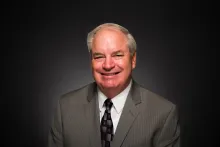
Robin Webber was born in Chicago, Illinois, in 1951, but has lived most of his life in California. He has been a part of the Church of God community since 1963. He attended Ambassador College in Pasadena from 1969-1973. He majored in theology and history.
Mr. Webber's interest remains in the study of history, socio-economics and literature. Over the years, he has offered his services to museums as a docent to share his enthusiasm and passions regarding these areas of expertise.
When time permits, he loves to go mountain biking on nearby ranch land and meet his wife as she hikes toward him.
