
Paul Moody
This transcript was generated by AI and may contain errors. It is provided to assist those who may not be able to listen to the message.
Good afternoon, brother! It's wonderful to be back with you. I had to sneak in the back and get a quick drink. I find I'm still rehydrating. You go from winter, I think it was 16 degrees the night I left, or the night before, and I arrived at 95 degrees Fahrenheit in West Africa. You give them an idea what the temperature was at home, and it's beyond comprehension. The thought is we must be just dropping dead everywhere from the cold. It's always interesting to have such a swing in temperatures, but God's people are here, and God's people are there. So, wherever you are, the climate is temperate, shall we say. I bring you greetings from our brethren over in Nigeria and Ghana. It was certainly wonderful to go and see them again, and I extended to them your love as well. They said, please, to tell you how deeply appreciative they are to all of you. A number of you connect and communicate with them regularly, and are even online and friends through Facebook and other means. A number of you as well have helped and contributed to a number of the needs that there are over there, and that reality isn't lost on them. They are very grateful for what it is that you do help and provide. They said, please give our love and greetings to the brethren here at home upon my return. For the sermon today, I will be showing a few slides from my travels. I find that the more I travel to West Africa, the fewer pictures I take. I think because a little bit of the shocked off actors sort of worn off a little bit. I used to take pictures of anything and everything, and now it's more people and specific circumstances. But I would like to share some of my trip with you today. But in doing that, I also want to combine it with the message that I feel is relevant for this time of the year as we approach the Passover and the days of Unleavened Bread. So hopefully as we go, I can blend these two concepts into a message that will, I think, be useful for us.
In 1 Corinthians 5, the Apostle Paul was addressing an issue that existed in the Corinthian church. It was open sin, essentially, that was taking place in their midst. It was something that the church was tolerant of. More than that, I think they were actually maybe patting themselves on the back a little bit at the level of their acceptance and tolerance.
And Paul takes them to task over this, and right in the middle of Paul's response to the situation, I think we indeed find a very important statement for us to dwell on this time of year. So I do want to start today in 1 Corinthians 5, and we'll pick it up in verse 6. I do have a few slides to go along with these scriptures as well today. 1 Corinthians 5 and verse 6, Paul says, "...your glorying is not good." They felt good. They felt actually we're tolerant, we're modern, we're progressive, maybe whatever that would have been. But they were enduring these things. But he says, "...your glorying is not good. Do you not know that a little leaven leavens the whole lump?" He says, "...therefore purge out the old leaven that you may be a new lump, since you truly are unleavened." That is the condition that their life should have been. He says, "...for indeed Christ our Passover was sacrificed for us." Verse 8, "...therefore let us keep the feast, not with old leaven, nor with the leaven of malice and wickedness, but with the unleavened bread of sincerity and truth." Paul said, "...Christ our Passover was sacrificed for us." And so what we find is right in the middle of the theme of the Passover and the Days of Unleavened Bread is the sacrifice of Jesus Christ. It is the life that He laid down in service to all of mankind. It is His death that is wrapped up in that sacrifice. And it's also the freedom.
It's the freedom from sin that comes as a result of living under that sacrifice continually.
And, brethren, I don't think we can overstate the level of blessing that God has extended to us through that event, the fact that He laid His life down willingly so that you and I can live.
And I've used the analogy before. Think of it as if we were imprisoned and we were on death row, and the sentence and the judgment has been made, and we're simply awaiting the carrying out of that judgment against us. And it's like God came along with the key, and He unlocked the door, and His Son stepped into that cell in our place, and we were allowed to walk free.
Walk free to go on and live our life, to carry on and to be, again, a set free. What would our lives, what should our lives look like in light of that experience? You know, if you were in that place on a dead-end road, so to speak, and someone took your place and you walked free, how would that impact your life from that point forward? How would you live day to day in response to that liberty?
Again, Christ our Passover was sacrificed for us. John chapter 3 and verse 16, one of the most well-known scriptures in the Christian world. There John tells us that God so loved the world that He gave His only begotten Son, that whoever believes in Him should not perish, but have everlasting life. And so life is the overwhelming outcome, the result of the sacrifice that was made on our behalf through repentance, through baptism, through coming into covenant with God, through that sacrifice. And this was Jesus Christ's focus as He walked the earth. He knew why He came.
From day one, He knew why He was here. You know, at 12 years old, at the Passover and His parents packed up after that pilgrimage feast and they're heading home and Jesus isn't in the caravan of people and they go back to Jerusalem to find Him and He's there at the temple and He's talking with the Jewish leaders and He's like, well didn't you know I would be about my Father's business?
So Jesus knew from the beginning what His purpose was, why He was sent to this earth, and indeed what it is He would accomplish through the laying down of His life, and He did so willingly.
Mark chapter 10 and verse 45. Mark 10 verse 45, Jesus stated that the Son of man did not come to be served but to serve and to give His life a ransom for many. And so we see a clear pattern here, brethren, throughout these scriptures. Christ our Passover was sacrificed for us. God gave His only begotten Son. Jesus Christ came to serve. It's a matter of a life that was poured out and given selflessly on behalf of you and I so that you and I can live. And as we approach the Passover once again this year, let's consider the question in light of so great of a sacrifice, what are our response to be? In light of so great of a sacrifice that was made for us, that life that willingly took our place and set us free, what ought our response to be? Do we have any responsibility in the matter? As we move forward from the Passover, do we have an obligation before God to live in any particular way or have we just been set free to go back to doing what it is that we were doing before? In light of so great a sacrifice, what ought our response to be? Well, we find at least a portion of the answer spelled out for us here in Romans chapter 12 and verse 1. I do want to turn there. Romans chapter 12 and verse 1. These are the words of the Apostle Paul who, frankly, himself was, shall we say, hit with a lightning bolt between the eyes, literally, blinded on the road to Damascus and had a change of direction put upon him very front and direct. And in Romans chapter 12 verse 1, Paul gives us what I believe our response to this calling must be. He says, I beseech you therefore, brethren, by the mercies of God, that you present your bodies a living sacrifice, wholly acceptable to God, which is your reasonable service. He says this is a service that is so incredibly reasonable based upon what it is that you have received. Paul says a life was laid down for you so that you could walk free, and your response must be to live a life of sacrifice as well. And he says it is indeed our reasonable service. And, brethren, it is the title of my message today, our reasonable service. It is to live a life of sacrifice, a life that mirrors what was given for us so that we carry forward in our service that which Jesus Christ gave for us.
So what does it mean to be a living sacrifice? What exactly are we talking about here? You know, Paul isn't telling us that we go and we literally lay down our life on the altar before God, because, again, this is a living sacrifice. Living is the operative word here, okay? What it means is that we give our lives over to God to use as he sees fit. He's extended incredible mercy to us, incredible blessing. Again, open the door so that we could walk free. Therefore, our response needs to be the offering of ourselves, all that we are, all that we have to give in service to God, to His people, and to the work of God. It is our reasonable response to the mercy and the forgiveness that's been extended to us. This is, brethren, for you and I, our reasonable service. And as we approach the Passover this year, I believe it's important for us to reflect on this life that he lived.
I appreciated Mr. Blue's sermonette very much because it ties in very directly to what I'm talking about today because this is a heart of humility, number one, that was willing to lay his life down for us. But it has to be a heart of humility that we all take on as well, if we're going to reflect who and what Jesus Christ is to the world. This is our life. We've been called to live a life of a living sacrifice. In Philippians chapter 2, the Apostle Paul helps us to understand what a life of sacrifice looks like and how it is that we ought to be living and demonstrating in our nature and our character today. Philippians chapter 2 and verse 5, Paul says, let this mind be in you, which was also in Christ Jesus. So this is the mindset we're to live by.
And he goes on to describe what that is. He says, verse 6, who being in the form of God did not consider it robbery to be equal with God, but made himself of no reputation, taking the form of a bond servant and coming in the likeness of men. You know, he who had the greatest of reputations, right? God with God from eternity laid that down willingly, came in the form of man, subject to the frailties of this flesh. He didn't cease being divine, okay? He was still God. He was God with us, Emmanuel. But he laid aside his glory and his power, that which he had as a God being with the Father from eternity. And he came in the frailty and the temporary physical nature of man for the purpose of laying his life down as a sacrifice. And verse 8 says, and being found in appearance as a man, he humbled himself and he became obedient to the point of death, even the death of the cross. Jesus himself went through a humbling to go from being God with God to born in the flesh, grow up as a baby, a child, then into adulthood, and to go through the things that we go through in the flesh. I mentioned Jesus being 12 at the Passover and his parents come looking for him. That's the last time Joseph, his physical father, is mentioned. You know, God was his father. Joseph was, though the one who raised him as a son along with Mary, appears that Joseph died at some point during that. In Christ is, the firstborn had to step in and assume the responsibility of the firstborn as a carpenter and a family with other siblings. And so he knows what it means to live this life in the flesh and he understands the struggles that we go through.
In order to gauge in a life of acceptable service before God, you and I need to take on this same mind of Jesus Christ, the mind of humble service, a mind of sacrifice. It was a mind that was willing to be, shall we say, set all comforts aside, set all desires for the self and self-fulfillment in the flesh aside in order to serve the purpose for which he came. And Paul says, this is the mind that is to be in you, that humility, that service, that heart of sacrifice.
If we go back to verse 3, Philippians chapter 2 verse 3 says, let nothing be done through selfish ambition or conceit, but in lowliness of mind let each esteem others better than himself. You know, that's easier said than done in most cases. Verse 4, let each of you look out, not only for his own interests, but also for the interests of others. Again, let this mind be in you, which was also in Christ Jesus. And so to be a living sacrifice means that you have the best interests of others at heart, and you give of yourself for those things to be fulfilled.
You see your brother, your sister, your spouse, your children, your physical family, your family and the faith, and you give of yourself to propel them forward in a way that's productive and leads to their well-being and their growth. And so oftentimes it happens even at the expense of maybe an opportunity you could have had. I can gain an advantage here. I can get ahead there, but no, I can use the ability that I have to help propel others forward in a proper direction. That's what Jesus Christ did. Humble service, steaming others, looking out for their own interests, setting them first. Paul said, let this mind be in you. Why do you think he said, let? Why let? Why do we have to let the mind of Jesus Christ be in us? Well, because it doesn't come naturally. You know, the carnal nature resists this mind, the mind of humility and sacrifice. I mean, it's easy to sacrifice when I'm the beneficiary, right, of that sacrifice. I can sacrifice for me my needs and my wants and my desires, but to set that aside and the sacrifice for the benefit of everyone else, again, that is the mind of someone who lives their life as a living sacrifice. That's what a sacrifice is. It's giving up of something that is a value to you in order to serve a greater purpose. That was the mind that was in Christ. And as we come up to the Passover and we reflect upon what He has done for us, it must be the mind that is being developed and is growing in us as well. And that's what I saw happening on this trip through Ghana and Nigeria. I saw servants. I saw people who were willing to give of themselves for the benefit of others. People who sacrificed without pay, without compensation, who gave of themselves in order to further the work of the church and to be a blessing to others in their midst in the congregation of God. And so I'd like to share some of that with you as we go forward in the message. I want to start with Ghana. That was my first stop on this journey, and I've updated the map. I've shown this to you in the past, but we've actually added three congregations there in the green since August of last year. When I began traveling to Ghana, my first trip I believe was 2014, we had one congregation, and that was in Accra, that associated with the United Church of God. And these other congregations had at one time affiliated with us and had departed, but over time they've returned and have sought to be reconciled and unified with us again. So my trip, I used to go there and I could visit everybody in one or two congregations, and it became four, five, six congregations. Now it's nine congregations, and I can't get everywhere to everybody on each trip, but I at least try to, where I can, spend time with the leaders, reinforce them, help them in their service to the brethren. So on this trip, Henry Aikens and I arrived in Ghana, which is there on the most southeast end, and we traveled down the coast of Ghana, then out to Takarati on the far end, able to spend time, at least with the leadership of five different congregations there.
And the way the country is established is, Accra is the headquarters. You know, that is sort of our home office of Ghana. That is where our traditionally and historically solid congregation is, going all the way back into the time of the worldwide Church of God. A number of our members there have a long history with the church, and as we've reabsorbed a number of these congregations back with us, many of which are village congregations, so many of the men and the young adults from Accra have gone out in support and service to all the other groups, and they're speaking, and what it is that they've done then to reinforce and assist those groups as they've been joined back in with the United Church of God. And it's been a very wonderful work and effort and service out of the Accra congregation.
This is Winneba. I've showed you pictures from Winneba before. We have here on the right, Peter Bonzi. He's the deacon of our Winneba congregation, along with a few of the other young men that serve in the congregation with him. This was on a Wednesday, I believe. We were visiting Winneba, so they took time out of their jobs to come and meet with me and discuss the condition of the church and the various things that are taking place there. I see my responsibility, again, to reinforce leadership. I don't even speak the same language as a number of the members in these congregations. When I go to a Ghana congregation outside of Accra, I have to be translated. Some speak English and some don't. So if I can work with the leadership and bring them along, they work with the brethren, and the connection is there. But we were discussing the Holy Days, service of God's people, the Passover. Peter here has run the Passover service for a number of years here in Winneba. Three or four congregations have come together to keep that, but this year everyone is keeping it in their congregations, and the local leaders are going to be progressing with delivering the Passover locally. So part of our meeting here, and Peter has held meetings with those leaders to walk them through how we conduct a service and the significance of that. And what they showed us on this trip, as a blessing, is translations.
They've begun translating various articles, various parts of literature into the Akkayan language. Again, everything we do in the church is based in English primarily. I mean, we have French and Spanish, but this is English-speaking West Africa, because they were a British colony until their independence 66 years ago in Ghana. But the native tongue is what a lot of the people in the village speak, and we really don't have literature and things that actually can move in and support them in the native tongue. So the Akkayan language here, this is a translation of actually our manual for keeping the Passover kind of instructions. And this is Peter held the class, then that instructed the leaders of the other congregations that they can now handle it out in their areas. And these will be the guidelines by which they'll conduct a Passover service.
But the Akkayan language is, again, something that's very, very difficult to reach. So he took time.
Stephen Koussi, who is a member that attended ABC here in the U.S. and is currently living in Ghana, took time. He and Peter sat down and translated this, and I've spoken to them about the fact that to have the fundamental beliefs of the United Church of God would be a booklet that would be phenomenal to have in the Akkayan language, because we can circulate that through all our brethren out in these scattered congregations, and they can have it in their own tongue. So they said, we can sit down, we can work on that, it'll take some time. But they're not paid. We have two employees in all of Ghana, those nine congregations, we have two employees of the church, and everybody else is volunteer, and everybody else serves for the good and the benefit of others. And the translations as well is an act of sacrifice and service for the fulfillment and the furthering of their brethren. So that's a blessing. It's a blessing to have that. Peter works in construction, and his men that work with him are in construction, and they have a construction project going on at the property in Winnebuh, because that small hall that they had serves a congregation of 55 people, and as you can imagine, they are crammed in there very tight. So they've begun a project of expanding with this is set off to the side of the current hall with additional rooms that will actually have bathrooms, can have a parents room and a Sabbath school room, and then eventually they'll bring this construction around to include a meeting hall. But this is a project of multiple years that will take place. But again, this is all done on, as funds are available, on a volunteer service of their own time and of their own energies, again for the benefit of all.
Talking about laying our life down as living sacrifices. What it is that we do serve others, pardon me, get a little punchy on this button here.
Back one more.
Maybe.
Yes, can you manually back it one?
Okay, thank you. Radio piece. This is in Winnebuh. This is Stephen Koussi and Peter Bonsie. They've had a radio program on radio piece in Winnebuh. Ran this last year from roughly March through December. They were on for an hour every Friday night, broadcast radio, and they were preaching Indian Kian language. And so they're reaching the community in the language in which they speak, and they're giving doctrines to the United Church of God. They've taught programs around Passover and the Holy Days, Easter and Christmas, why we don't keep certain observances. And honestly, they received a lot of positive feedback from the area. Again, they say we've not heard anything like this. And there's other religious programming. This is radio piece. It's a religious broadcasting station, and they've had literally call after call into the station because they haven't broadcast for about three months now. They took a break, and people are saying, where are these guys? We want to hear more of what it is that they have to say because we've never heard anything like this.
So again, Steve Koussi and Peter Bonsie, they're not employees. They take of their time to put together an hour-long radio program every week. Stephen travels from Accra out to Winnebuh, and it's an overnight trip, and they present these programs. But if you sit and talk to him, he said, you know, when I went to ABC, they said, take what you've learned and bring it home, and use it as a blessing to those whom you have interaction with. And he says, I feel that's my calling to do so.
And so he spends an enormous amount of time writing these scripts and then presenting, again, what it is that it is that we teach in the United Church of God. And we have a congregation there that can receive people as they have interest. So, they traveled up the coast. You notice it is dark here. That's because these gentlemen, Alex Coleman on the left and John Nietzsche on the right, they work other jobs. But these are the leaders of the Cape Coast and the Almena congregations who came out to meet with Henry and I. And again, we had the ability to sit down and discuss with them. This is my first time actually getting to know them. Cape Coast, Almena, and Tecorati were groups then that returned in August. I met them at one meeting in August, and this is the next time I've had opportunity to go back and get to know them. So, part of this process has been sitting down, just simply getting to know them, seeing how we can support them and the congregations that they serve. And they serve, again, voluntarily. They have jobs, other professions that they do.
Those two congregations are currently meeting together, but we've made arrangements because of the distance for brethren to travel. It's very difficult. They're going to be able to set up and establish as their own independent groups. Over to Tecorati, then. This is Ashaun Plange on the right, the pastor of the group out there in Tecorati. It's a congregation of 70-plus people. Next to him is Daniel Teti, and they're broadcasting on Good News Radio.
Interesting name, because that was the name of our publication and our radio program here in the US for years. Good News Radio. Again, a religious broadcasting station, and it's a place where we can outreach with the gospel, and we have a congregation that can support those who respond with interest. And they have had people that have walked in the door, and in one case, an individual that sat down and has been a long-term member of the congregation and now serves in many ways as a result of the program.
Mr. Shawn serves on a Wednesday afternoon time slot as well on a panel of multiple pastors from different church denominations. They bring them in, and they have a radio program discussing the events of the day, world events, current news in their areas, and it's something that is given as a benefit to the community, because our service is not just inward. And Jesus Christ's service was not just inward. It says, He came to His own, and His own did not receive Him in terms of the Jews by and large, but the life He laid down was for all, and the sacrifice that He gave.
And what it is that we've been called to give as a church freely as well. It's not just internal. It goes out, and it's intended to be a blessing to the world as well. And so these gentlemen work this, again, volunteer, and in a manner that is to the benefit of others. So again, that's a blessing. We were able to spend the afternoon together and get to know each other a little more. This picture may not look terribly exciting to us, but it's exciting.
This is back in Accra, and this is church property that was just recently purchased and will literally be the home office for Ghana. As I mentioned, the Accra congregation serves all these other congregations. Their young men go out, they speak, and they reinforce the needs of the other congregations. We've had building projects in the other congregations. We've had the tractor project. We've had many other things that have taken place to support the other congregations. The Accra has never received anything in that. They've always been givers and servers and served outside themselves. But you see, they live in an area that is very busy.
It's the capital of Ghana, very expensive, and they've been bounced over the years place to place to place as having a meeting facility. So Henry Aikens reached out to me last year at the time frame of May, and he said, there's this property that's become available, and we'd like to see about what would be in terms of the ability to purchase it. And it's something that they're converting. The building on the left is being converted to their church hall. On the right, we'll eventually be able to set up offices and maybe even somewhere that I'll stay when I go over and visit. Obviously, it needs some work, but it was in range of purchase.
But understand this congregation is a congregation that has been, again, serving outside of themselves continually. And so I approached Good Works and said, look, if there's a way that we can help with them in the purchase of this, it would be a blessing not only to them as a group, but to the country and to our work going forward in Ghana. And so funds were provided. But see, the unusually part is that Accra had their funds as well.
They had roughly about $20,000 that was sitting in the count that they had as well saved over the years, which is very, very rare. None of the other congregations there even had a nest egg, and they, again, served outwards from their funds and their manpower. So Good Works came in and supplied what would be matching funds, then, for the purchase of this. And when they reached out to me in May, the property was roughly in U.S. dollars about $40,000, $42,000 would have been the equivalent, again, across a very expensive place.
And as I've explained to you, the financial and economic crash that has taken place with the Ghana CD over time, each returning visit in May, a dollar is worth 7 CD. In August, last year, a dollar was worth 10.5 CD, and it just continued to expand from there.
So we entered into an agreement to purchase this property, and we were waiting for the owner from the U.K. to come to seal the deal. Well, it kept getting delayed, kept getting delayed, and kept getting delayed, and the dollar kept growing stronger and stronger and stronger against the CD. Understand that is hard for the people in Ghana, because everything is so expensive.
Everything is on the dollar scale. Anything that's imported on the dollar scale is so expensive on the CD scale, but God opened a door and opportunity, and the owner of this property eventually was able to make it in November on the very... there was a two or three week span where the CD crashed dramatically against the dollar, and it went up to over 14 CD to the dollar. Okay, we started at seven, and the price of the property was in CD. So God opened this blessing of opportunity where we were able to take the funds that were given matching, purchased the property for roughly 25,000.
That would have been 40, and then now the Accra congregation can follow through with their funds, work with their hands, do their own rebuilding of the structure as it needs. So they've entered in now, they've torn out the old wall, they've started to reconstruct with the needs that are there, and the brethren now have their own congregational building in which they can meet and fellowship, and it's a huge blessing.
You know, they were getting bumped out after services very quickly, very little time to fellowship, and now they have a place they can call their own in which they can rejoice together on the Sabbath day. And again, these are servants. These are workers. These are people that have served so many others, and now the blessing is that it has come back to them in a way that not only serves them, but the whole country.
So this is what they've done with the interior of, they've removed a couple of walls and really put a lot of work into it in just about a couple months period of time, and God has blessed the efforts of their hands. We're very grateful for what He has provided.
But again, sacrifice ultimately brings joy, right? That's, you know, Christ said, for the joy that was set before Him, He endured the cross, despising the shame, having sat down at the right hand of the throne of God. The joy set before Him at the crucifixion was not that, okay, I'm going to get this over, and I can be glorified again and out of the pain of the flesh. Though the joy that was set before Him was the abundance and the mercy that would be extended to us through His sacrifice, and that is the outcome of a heart of humility and sacrifice.
It ultimately brings joy.
All right, just a shot of a cuteness factor.
The brethren in Nigeria and Ghana are so friendly, and the children just smile all the time. They have big families. There's many children at church. Aaron was talking about the children and observing the children. I just love watching the children run and play in their activities, and frankly, they have no concept of really what their world is compared to the world at large. They just know they're at church with mom and dad, and life's good.
For time, I'm going to keep going. Life wasn't so great for me. At this day, I spent my first visit to a clinic in West Africa, and I can tell you that story at another time. But I'll just say, after the day unfolded, Henry Aikens wasn't going to let me out of his sight. So I said, we'll take Hannah out for ice cream. This was Independence Day, 66th Independence of Ghana.
But again, there is blessing in service. There's fulfillment in service. And laying our life down as a living sacrifice means we give of ourselves for the benefit of others. Jesus Christ was our perfect example of what an acceptable sacrifice ought to be. Not only was the sacrifice by his death, but he was a sacrifice by the way he lived his life, day in and day out. And when you read through the scriptures, I encourage you to look through that. As he went through his ministry, as you go through the Gospels, look not only at what he knew he was going to do at his death. Look how he lived his life and how it laid it down day by day by day for the good and the blessing of others. Luke chapter 9 verse 23. Luke 9 and verse 23, words of Jesus, and he said to them all, if anyone desires to come after me, you know, be my disciple, follow me, be one of mine, okay, he says, let him deny himself, take up his cross daily, and follow me. For whoever desires to save his life will lose it, but whoever loses his life for my sake will save it. Sounds like we're talking about a sacrifice here. The cross that Christ is describing, or the stake, or the tree, you know, the Bible references that a number of ways. It was the Roman instrument of death. It was very destructive, very torturous way for an individual to die. The Romans mastered that. You could travel around the empire and you could see, and people were crucified on capital T's, on what we call small t, kind of like what people display as a traditional cross. They were crucified on trees, they were crucified on stakes, on fence posts, and if they wanted to do a lot of people at once, they essentially built scaffolding and pinned people up on it. But the point was Jesus submitted willingly to it for us all. And so the question that comes to us, because he says, if anyone wants to come after me, you're going to deny yourself, take up your cross daily, and follow me. The question for us is, are we a people who are willing to lose our own life in service to God as well?
Are we willing to follow in those footsteps? And you know, I'm not necessarily talking about literally laying down our physical life unto death, although some have done that historically.
And as the Bible shows, some will do it again in service to God and Jesus Christ. But the question is, are we a people who are willing to commit our dreams, our desires, our ambitions in this life to the calling we have from God? Are we willing to take our life's focus and dedicate it to the good of others, to the good of the work that God is doing in sacrifice above what would simply be solely for ourselves? Jesus' example of sacrifice for his fellow man and his submission to the will of his father and his example of intimate love and service and humility that has been demonstrated for us. John chapter 4 and verse 34, Jesus said to them, My food is to do the will of him who sent me and to finish his work. And so doing the will of God is what sustained him.
Read through the accounts. Jesus often went without the luxuries of this life.
Right? What did he eat? Well, there were times where he was hungry, the disciples went off to get food, but he had an opportunity to visit with the Samaritan woman at the well. And he's like, I have food to eat that you don't know about. It sustained him literally to do the will and the purpose of God. He sacrificed his meals, he sacrificed his lodging, foxes have holes, birds of the air have nests, but the Son of Man is nowhere to lay his head. He sacrificed his comforts, his personal quiet time, his time with his father, even. There were times where Jesus Christ went alone to pray and even to mourn because John the Baptist was his cousin. John was beheaded and the Word came to him and Christ went away to a private place to mourn John and yet the crowds followed him because that's what happens when you perform miracles and you heal people and you resurrect people from the dead. The crowds followed him and in compassion, as it says, he had compassion.
He had to put his own personal needs aside in order to help serve what it was that the people needed. So the question for us is, are we willing to do the same? As the people of God, are we willing to make real sacrifices in order to serve and support the work that God is doing today? And is that the food that ultimately sustains us? Is that what gives us a charge and satisfaction and gives us, shall we say, for the joy that is set before us, knowing that what we're laying our lives down for is for the blessing and the benefit of others. The work we engage in as a church is not only to preach the gospel, but it is also to prepare people for the kingdom of God. And that's on our logo. It's right here on the front of the lectern. Right? Preaching a gospel, preparing a people, and there's many forms that that takes. And there's many forms it takes right here in the congregation. And many of you sacrifice, many of you serve to fulfill what is needful. To come to church early and to set up the hall for Sabbath services is a sacrifice. You know, Saturday morning is... that's a nice morning, isn't it? Especially when you've worked six days a week to just have a leisurely morning and a quiet breakfast. But the people that come and set up the hall, they're out, they're early, and you know, they have a plan and they have a purpose, but that takes sacrifice. To run the sound system, to set up and run the webcast is a sacrifice. But the blessing of that goes out to so many others. To present Sabbath school to the children is a sacrifice. To work in the kitchen, to sweep the hall, to greet at the door is a sacrifice. But it is, again, actually a service that people have humbled themselves to do and they love it because of the joy it brings at serving others. To prepare sermonettes and sermons is a sacrifice. Just ask any of the wives that get neglected while their husbands are working on their message for the week. It is a sacrifice, but it's a blessing to us all. To prepare and present special music is a sacrifice.
We're coming up on the Holy Days again and it's a time where it's a blessing and a delight to have special music that's produced locally. And we reach out to those who have ability and God-given talents and we understand it is a sacrifice. And it takes time to prepare. To visit the widows and the orphans and the infirmed is a sacrifice. And so there's so many things that we engage in on the local level that contributes to the overall accomplishment of the work of God. And if you serve in those areas, and many of you do, thank you. Thank you for what you do because I can't do this all myself and no one person can. We can only do what God has called us to together. And it's a life of service one to another. Thank you for your resource. Thank you for your energy. Thank you, as we see in some of these pictures, as being people who take what is your time and your resource that you could put and dedicate to something that benefits you. But instead, you benefit in the whole with what it is you offer. Thank you. It is what it means to be living sacrifice.
I was able to venture over as well following Ghana to Nigeria, just about a 45-minute hopper flight over. We have three congregations in Nigeria, Legos being our headquarters. That's where Dari lives. That's where I stay primarily when I'm over there visiting. We also have a sort of a small northerly congregation, approximately 150 members in Nigeria. We have about 375 in Ghana. Dari Akimbo, he's been here. Many of you know him. Travel across Nigeria has become increasingly difficult. Kidnappings are on the rise, various other incidents, as frankly, the world gets more desperate. People become more desperate as well. So for us to hop a flight is much quicker and a much safer mode of transport. So here we've jumped over to Benin City.
Dari's a servant, and you know that. Dari has given so much of his life and sacrifice to the church there. He is an employee of the church, but he runs a business on the side, and what he does, frankly, through his company, is such a support to the church beyond anything that could ever be offered, frankly, by financial support that comes from here. Dari employs young adults in his business. He educates and he sponsors scholarships for young adults that are going through school, and he in tone, his wife, have worked together to literally lift up the whole of the congregation in the country of Nigeria and open the door of opportunity that would not be possible in any other way. And Dari and his family are a huge blessing. Here we're visiting the Benin City, a small group. This is during the week, so some are visiting and can't make it, but it's a small congregation. But as those that are maybe connected with us today that are in small congregations, you know, every member has a part to play, and every member serves for the whole. And when somebody is missing, there's a gap. There's a space. And so, you know, these members are very faithful and dedicated and lift one another up. On the right there is Ralph Nadeuka. You know, we've heard about him for years. Ralph, after he was ordained a deacon probably 12 years ago, his wife Agnes, you remember, died suddenly. His daughter Yvonne, who was 19 at the time, developed cancer and died. It's been difficult, but Ralph is a faithful member, and he has served for the benefit of this small group and helps to hold it together in faithful fellowship.
So we're very grateful to what is provided. Again, Jesus Christ laid his life down in sacrifice and service, and it wasn't just to serve himself, it was for the blessing of all. And Legos, Dari, and I had the opportunity to go house to house and visit a number of people.
This is Samson. Samson plays the piano in the Legos congregation. I believe that keyboard was hauled over from Spokane a number of years ago. They're still using it. We pack it out onto the boat and take it across the water out to camp on the ocean front in the salt air, and we haul it back. And it's amazing the life and use we've gotten out of that. But visiting with Samson, I just said, when did you learn to play the piano? And he said, well, when I grew older, I saw, you know, it's important we sing hymns at church, and what an important part it is to have music and live music. And I said, I learned to play the piano. I took lessons. And I said, as an adult? And he said, yes, as an adult. And his point was literally, here's a way you can serve the church in a way that is beneficial. And he has dedicated himself in that way. We made a number of home to home trips, because as I expressed before I left, Nigeria is in somewhat of a chaotic circumstance at the moment. The government decided we're going to change all the currency, which is the Naira. So they recalled all the Naira in and set February 10th as the deadline that on February 10th, the old currency is worthless and we're rolling out the new currency. Sounded like a great idea, except there was no new currency hardly to be had when that deadline came along. And they collected up the cash in the system, and voided it, and now it led to a desperate, desperate place. So I'd never seen the roads so empty when I was in Lagos. It's a cash-driven society, by and large. There are some digital transfers, but again, you just suck every bit of cash out of the economy of what is used to simply even buy food at the market, by transportation to work, and it literally brings everything to a grinding halt and leaves people in desperate circumstances. This is a Zaba service in Lagos, and only about half were able to attend. Again, they couldn't get transport, they couldn't get cash. And a number have given help to be left behind. I left Dari aid for the brethren over there, and he emailed me just yesterday, and he sent me some messages. He says, this has been very helpful. He says, here's some messages I received this week, and they were to the tune of, please, sir, can you help? We are the last of the rice in the house, the last of the gary in the house. I'm still working, but our employer can't pay us. There is no cash. Our employer laid off three quarters of their employees. Please, we can't work, and we can't even transact business to to feed ourselves. Can you help? And so what Dari's been able to do with funds that have come over and been donated is, you know, he's a step up on a number of things, and he can digitally and electronically make large-scale purchases. He can buy fuel at the petrol station, where people can then power their generators and vehicles if they have them, and he can buy food at market in bulk through digital transactions than to be distributed to the brethren. So I would just say thank you for what your sacrifice and service has been to help them along the way, because really it has been somewhat of a desperate circumstance and is going to take some time before it relieves itself for the cash to move out into the system again.
Here's on the Sabbath. Imagine if we had a problem like that here.
You know, ladies are back teaching Sabbath school, and these are the men sitting around. It was just interesting to look and observe a circumstance that's literally a crisis in their time and place, you know, and the men sit around and just talk about the circumstances of their time.
It's very, very serious and sobering times, honestly, to consider.
This is in Dari's house. As I've said, he's got a three-level house. In the bottom level, he built into the church hall as many rooms, and it's been an incredible blessing. The point is sacrificial service. What are we able and willing to give of our own resource that helps to bring others along in a productive way? We had Sabbath school. It was being taught by a number of the young adults, many children in our congregations locally. But again, the blessing is not just for us. The blessing is to you and to your children and all who are far off, as many as the Lord our God should call. So this is not enclosed, self-centered, self-focused. What we are doing is to the service of God. So here's the Aqimbo's. Again, the family. The family is growing, and I'll just say I have been impressed so much over the years of their love and their service. Dari and Tone, through Dari's business, have had the way open to immigrate to Canada. Big Corporation has said, we'll open the way for you. We want what you do in Nigeria to be done here. Come here, move here, and bring your family. And you know what? Anybody that gets an out out of Nigeria, anybody I have ever known of, takes it. If you can get out, you get out. But Dari and Tone have had the door open to them more than once. Canada, the UK, and the specific reason they have not gone is because we cannot leave the Church of God. We cannot abandon God's people here. And frankly, everything they do is an offering and a sacrifice of service to bring others along. Again, he's an employee. That's just a drop in the bucket compared to what he's been able to do with his resource and Tone with hers to bring everybody along in that country with them. And it's a blessing that would be irreplaceable. And they literally have stayed and stayed in that circumstance for their service to God's people. They are an incredible blessing.
Brethren, the giving of a sacrifice is the giving of something that has real value to you.
You know, it's easy to kind of donate something, send it off to goodwill. I don't need this anymore. But a sacrifice is something that is truly of value to you and you offer it to the benefit of others. If you were a shepherd in ancient Israel, a perfect lamb or a perfect goat without spot in blemish, which was sacrificed, right, was a real value to you. It might have been an asset for your breeding program. It might have been something you could take to market to sell out a profit to your benefit. But to give that animal up as a sacrifice had a real impact in terms of value to that individual and the spiritual sacrifices that we offer before God are much the same.
It is the giving up of things that have real and true value to us and benefit to us, something that I could take and use in my life for my family, for myself, that would bring benefit and pleasure. And we say, I take this and use it in service to the benefit of all. It could be our time, it could be our finances, it could be our prayers, it could be an avenue of opportunity, frankly, that would lead to an advantage that would put us ahead. And we say, no, I'm actually going to offer that to you for your benefit and your blessing. It's the veiling of ourselves in close relationships, close enough even to be of confidence to one another. Whatever it is we can offer, if it's done to the glory of God and to the benefit of His people, it is a sacrifice which is well pleasing to God and it is in the likeness of His Son, Jesus Christ. In the process of being a living sacrifice, though, we gain something as well. When we lay our life down for others, this is outgoing, but Christ said, it's the joy set before me. So He would receive in return that which He extended out and the blessing of having the family and the people of God. And we receive as well when we extend ourselves in sacrifice. First John chapter 3 and verse 16 says, By this we know love because He laid down His life for us. We also ought to lay down our lives for the brethren. You know, it's easy to tell someone you love them. Words are easy, but it takes more work to show it and to display it. Darla and I went to bed last night. It was close to midnight, and we have this little routine which is I go to bed, my head hits the pillow, and I'm almost asleep, and Darla comes to bed and her head hits the pillow and she says, oh, I forgot something in the living room. Do you want me to get up? No, I feel too guilty.
And then I start thinking about my sermon, and I get up, right? But it's easy to say I love you, but to do, right? To follow through. That takes effort. That takes commitment. And when we do that, though, we come to understand the love of God for us. It's a sacrifice of love to run to the store for someone who can't get out for themselves, to bring them groceries. It's a sacrifice of love to put our evening plans on hold and go and sit with someone who's not feeling well or who needs a listening ear. It's a sacrifice of love to let someone squeeze into our car for a road trip, even if it means we're giving up our own privacy as a couple or as a family. It's a sacrifice of love to do something nice for someone who just stepped on your toes. Maybe they offended you.
I'm not going to do that for them after what they did to me. Though he was reviled against, he did not revile in return, right? Jesus Christ laid his life down for those who were of, shall we say, the most offense in terms of their behavior towards him. Of course, he took no offense. He literally died for them as well. So ultimately, we're talking about the bushwashing attitude here, right? When we come together at the Passover and we get down and we wash one another's feet as a part of that service, we're talking about the humility and the love and the giving of ourselves. But you see, that's not just a five-minute event, brethren. That is symbolic of what our heart is to be towards one another at all times. And Christ says, you are to do as I have done to you.
So hopefully we're very willing to do these things, and many of you do. And again, thank you. It is a sacrifice that is well pleasing to God. Jesus Christ declared during his ministry that he did not come to be served, but to serve. When we serve one another in small ways or big ways, we are imitating him.
Hebrews chapter 13. Let's conclude there today.
Hebrews 13 and verse 15. Again, what are we willing to give for the service of God and one another?
It says, therefore, by him, by Christ, let us continually offer the sacrifice of praise to God, that is the fruit of our lips, giving thanks to his name. So the words that we share, the encouragement that we offer to one another, the praise that we give to God, the prayers that we give to God, our hymns, our songs that we sing, are literally the sacrifice of praise that we extend to God. Verse 16, he says, but do not forget to do good and to share with such sacrifices. God is well pleased. It is a sacrifice, again, when we give of ourselves in those ways.
Brethren, God so loved the world that he gave his only begotten Son, that whoever believed in him should not perish but have everlasting life. Jesus Christ did not come to be served but to serve and to give his life a ransom for many. And indeed, Christ, our Passover was sacrificed for us. In so light of a great of a sacrifice, what ought our response to be?
Well, it ought to be to respond in kind, to give of ourselves, to give of who we are, to give of all that we have to offer in humility, pouring out our lives and service to God and one another for the joy that is set before us, for the acknowledgement that what God is producing is so much greater beyond anything that we could produce for ourselves. To live a life of service will lead us to a point where we, too, will come to understand the love of God and Christ and that expression that was behind the sacrifice. Brother, living lives of service, living as a sacrifice, and taking on the nature of our elder brother is what we are called to do. It is what we're reminded of clearly as we approach the Passover again this year. So, thank you for all you do and for your care, for your service. Thank you for your sacrifice. And as Paul says, it is our reasonable service.
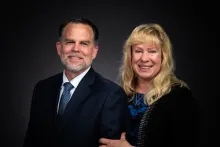
Paul serves as Pastor for the United Church of God congregations in Spokane, Kennewick and Kettle Falls, Washington, and Lewiston, Idaho.
Paul grew up in the Church of God from a young age. He attended Ambassador College in Big Sandy, Texas from 1991-93. He and his wife, Darla, were married in 1994 and have two children, all residing in Spokane.
After college, Paul started a landscape maintenance business, which he and Darla ran for 22 years. He served as the Assistant Pastor of his current congregations for six years before becoming the Pastor in January of 2018.
Paul’s hobbies include backpacking, camping and social events with his family and friends. He assists Darla in her business of raising and training Icelandic horses at their ranch. Mowing the field on his tractor is a favorite pastime.
Paul also serves as Senior Pastor for the English-speaking congregations in West Africa, making 3-4 trips a year to visit brethren in Nigeria and Ghana.

