

Don Ward
This transcript was generated by AI and may contain errors. It is provided to assist those who may not be able to listen to the message.
Title, What Am I Thankful For? Or you could say, Yeah, What Am I Thankful For? What are you thankful for? What am I thankful for? On Thursday of this week, we sat down to Thanksgiving dinner somewhere. The table was filled with food, and about an hour later we stood up with a full stomach. But did you sit and then arise with a thankful heart for what God has called you to? Of course, we thank God for the food before we ate, one of our family traditions before we sat down for Thanksgiving dinner is to gather the family together, and we form a circle, and we propose a toast in which each member of the family has the opportunity to state what he or she is thankful for during the previous year. And the first one to speak was a great-grandchild who said, I'm thankful for my family. I'm thankful for family. And this bit here after we do the toast, we say the blessing on the meal, and that little part there seems to be pretty much the highlight of the day. I want now to read mainly this brief history of how Thanksgiving came to be a national holiday in the U.S. and go from there. The tradition of Thanksgiving is a time to focus on God's great blessings and grace. And grace, of course, is his divine favor. That's not their writing but mine. The Greek word for grace is charis, which means divine favor. Through God's divine favor, he has intervened so many times in our lives, times in which we were not even aware of, that God intervened and he saved us from whatever the impending danger might have been. A Day of Thanksgiving dates back almost four centuries in the U.S. Collin has held Thanksgiving services in Texas in 1541, in Florida in 1565, and in Virginia in 1607 and 1619 at Jamestown. But it's from the pilgrims that we derive the current tradition of a Thanksgiving that includes prayers to God, a meal with friends, and a time, at that time, they would have after they had eaten athletic competition. The pilgrims arrived in December of 1620, and of course, you know, to arrive at Plymouth Rock off the coast of Massachusetts in December is a very harsh time, usually with the weather. And a harsh winter of extreme hunger and starvation came upon them, and half of them died. The following summer, the pilgrims reaped a bountiful harvest, and after the harvest, the governor, Edward Winslow, said, God be praised! We had a good increase of corn, and by the goodness of God, we are far from want. The grateful pilgrims, therefore, declared a three-day feast in December of 1621 to thank God and to celebrate with their friends. Ninety Wampanoag Indians joined the pilgrims for three days of feasting, and to list some of the things that they ate. Turkey, cornbread, berries, deer, and other foods, and then some talk about the athletic games, the Wampanoags engaged in races, wrestling matches, and other athletic events. Of course, today we have a cowboy is losing and looking pitiful.
Back to junior high. This celebration was America's first Thanksgiving festival. It was the origin of our Thanksgiving Day. The first national Thanksgiving was proclaimed in 1789. So as many years later, 1789, that's like 150 years later by President George Washington, but after Washington, national Thanksgiving proclamations were sporadic and most unofficial. Thanksgiving observances occurred at the state level. In fact, by 1815, state governors had issued some 1,400 official prayer proclamations. Can you imagine governors today issuing prayer proclamations? Let's start with the governor of California and see if we have any prayer proclamations, almost half of which were for days of Thanksgiving and prayer.
In the first half of the 19th century, Mrs. Sarah Josepha—and that's her name—Joseph Fajale, Sarah Josepha Hale, the editor of Godsey's Ladies' Book, a popular Ladies' Book containing poetry, artwork, and articles by American leading authors began to lobby for a national day of Thanksgiving. For nearly three decades, she contacted presidents after president until Abraham Lincoln responded in 1863 by setting aside the last Thursday of November for Thanksgiving. Over the next 75 years, presidents faithfully followed Lincoln's precedent, annually declaring a national Thanksgiving Day, but the date of the celebrations varied widely from proclamation to proclamation. In 1933, Franklin Delano Roosevelt celebrated Thanksgiving on the 4th Thursday of November and maintained that date year after year throughout his presidency. Then, in 1941, Congress passed and established the 4th Thursday of November as a national Thanksgiving holiday. So the history of Thanksgiving in this country goes back 400 years and has been a part and parcel of the tradition of so many of our people that have gone before. But it seems that we have lost sight of being thankful in what is called the Land of the Free and the Home of the Brave. As with all things that have to do with mind, heart, emotion, attitude, and spirit, there's a difference between mouthing the words of Thanksgiving and being truly thankful from the heart. It's easy to say thank you. And one of the things that I am praying for is a thankful heart, a heart that is truly thankful and understands we all are here. You know, the Apostle Paul wrote, I am what I am by the grace of God. In 1 Corinthians 15, he stated that I am what I am by the grace of God. By God's divine favor, we are what we are. One of the reasons why the majority of the human race lost sight of God was because they were and are unthankful. And we go now to 2 Timothy chapter 3 and verse 1. In 2 Timothy chapter 3 and verse 1, we see the often quoted here scriptures. Let's read them. 2 Timothy chapter 3 and verse 1. This know also that in the last days perilous times shall come, and surely we are seeing that now. For men shall be lovers of their own selves, covetous, boasters, proud blasphemers, disobedient to parents, unthankful, unholy. Of course, holy things have God's active presence in them. Sacred things point to a higher reality. Without natural affection, trucebreakers, false accusers, incontinent, fierce despisers of those who are good, traitors, heady, high-minded, lovers of pleasure, more than lovers of God. Having a form of godliness. Oh, you can just say thank you, or you can come to services, or you can do all kinds of things, but is it from the heart? From the heart where you not only know it and do it intellectually, but you feel it emotionally. Having a form of godliness, but denying the power thereof from such, turn away. What is the power thereof? The power thereof is the Holy Spirit of God working within us, giving us a new mind, a new consciousness that we have talked about whereby through that new mind, that new consciousness, the new man can rule over the old man and keep the old man crucified.
So the land of the free and the home of the brave, they have forgotten to be thankful, and almost like with any national holiday in America today, it becomes just a time of a time of just what I'm at loss for a word to describe it. Just doing your own thing, having fun, not really understanding what the meaning of the day is all about. From the 4th of July to all kinds of things that are national holidays, so many people tend to take what they have for granted. Sometimes we even take our spouse for granted. We take each other for granted.
And we're not thankful and don't appreciate what God has generously blessed us with. Do we really understand and appreciate? Being unthankful is nothing new. Let's note in Luke 17 and verse 11, after Jesus healed the 10 lepers in Luke 17 and verse 11, and he came to pass as he went to Jerusalem that he passed through the midst of Samaria and Galilee, and he ended in a certain village and there met him 10 men that were lepers, which stood afar off. They had social distancing.
And they lifted up their voices and said, Jesus, master, have mercy on us. And he saw them and he said unto them, Go, show yourselves unto the priest. And it came to pass that as they went, they were cleansed. And one of them, when they saw that he was healed, turned back and with a loud voice glorified God. And he fell down on his face at his feet, giving him thanks. And he was a Samaritan. He wasn't a Jew, he was a Samaritan. And of course, this ties hand in glove with the story of the good Samaritan who helped the person along the way who was beaten up and needed attention. Not a Jew, not one who knew about God and about the covenants, taking that for granted, feeling superior to everybody else, but not really being converted from the heart. And Jesus answering said, Were there not ten cleansed, but where are the nine? There are not found that returned to give glory to God save the stranger. And they said unto him, Arise, go your way, your faith has made you whole. So being unthankful goes back in antiquity. Actually, by the behavior in Adam and Eve, they showed God that they were not thankful for what God had done for them. God created them, placed them in perfect environment, with a perfect teacher, and they were easily, it seems, seduced and swayed by Satan the Devil. The greatest of all blessings are spiritual blessings, and people tend to thank God for physical things, but the greatest blessings are spiritual blessings. Life is all about attaining to the kingdom of God. I mean, no matter what happens in this life, the goal is to be in the kingdom of God, to be a glorious, radiant, resurrected spirit being in the kingdom of God. Let's go to Ephesians now, chapter 1. Ephesians chapter 1 and verse 3.
We see that spiritual blessings are the greatest blessings, and that God has set us in heavenly places with spiritual blessings. In Ephesians chapter 1 and verse 3, blessed be the God and Father of our Lord Jesus Christ, that is established time after time in Paul's epistles, who has blessed us with all spiritual blessings. These are the blessings that really count. I mean, the material things may come and go. You know, one of the more difficult things has to do with family, with friends, and you know what was read to you, what you were told at baptismal counseling, all of us, was what Jesus says, if any man come to me and love not to last, Father, Mother, kinsman, and so on, and yea, even his own life, he's not worthy to be called my disciple.
So, blessed is the God and Father of our Lord Jesus Christ, who has blessed us with all spiritual blessings in heavenly places in Christ, according as he has chosen us in him before the foundation of the world, that we should be holy without blame before him in love. Having predestinated us to the sonship of children, old King James says, adoption by Jesus Christ to himself, according to the great pleasure or good pleasure of his will. Once again, I talk about the seeing of adoption. The correct translation is sonship. Why is it sonship? Because the same essence that is in God is in Christ is in us, just as when we begat children, the essence of the mother, the essence of the father, is in that fetus. And so, the essence of God is in us in the begotten state. So, we are begotten sons and daughters of God. So, we could ask ourselves, do we take the truth, the church, the brethren, the sermons, the teachings, for granted, thinking there will always be here? And one of the great fallouts of this COVID mess is going to be people becoming lukewarm or, I might say, more lukewarm and cold if they are not diligent. If they are not diligent, don't take anything for granted. Strive to do everything you can. Do you grasp what a great blessing it is? Do I grasp what a great blessing it is to be called into God's marvelous light? Look at 1 Peter chapter 2 and verse 9. It uses that terminology. In 1 Peter 2 and verse 9.
But you are a chosen generation, a royal priesthood, a holy nation. This is one of the few places where the church of God... See, God's goal is to bring all nations into the Israel of God, a holy nation, a holy nation that is led by God and Christ. And the saints in the kingdom of God, a purchased people that you should show forth the praises of Him who has called you out of darkness into His marvelous light. You are free from fear, ignorant superstition, and the dogmas of man. You know that there is not a never-burning hell. You know that you don't go to heaven when you die. You know who God is, what God is, what is His purpose of bringing sons and daughters to glory. You know the purpose of humankind. I mean, do we take any or all of that for granted? Are you thankful to God for calling you into His marvelous light? Are you like Esau who treated His birthright, the birthright of the firstborn, who gave it away, who Esau gave it away to his brother for a bowl of soup? He gave it to Jacob for a bowl of soup. Whereas the bowl of soup represents that which is of the flesh, it is profane, secular, and of the present evil world. The bowl of soup people are thankful for the physical, but somehow do not comprehend that the opportunity to inherit the blessings of the firstborn is one of the greatest opportunities one can receive. You know, I know a lot of people. My family, like my mother, read all of the correspondence courses I had done and said if she could find a Baptist church and met on Saturday, she'd go there. But they run away from the truth, thinking that they have to give up so much. But really, you don't have to give up so much because you receive, upon repentance and faith and baptism and laying on of hands, the very essence of God into your being. The birthright is of God. It is God-given. Since it is of God, it is holy. It is sacred. Let's look at 2 Timothy, 2 Timothy 1, verse 8, 2 Timothy 1, verse 8. In 2 Timothy 1, verse 8, Be not you therefore ashamed of the testimony of the Lord, nor of me his prisoner, Paul was in prison, one of the prison epistles, but be you partaker of the afflictions of the gospel according to the power of God, who has saved us and called us with a holy calling. It is a holy calling because it is of God. You remember what we read from Ephesians, who foreknew us before the foundation of the world, who has predestined us to eternal life through Jesus Christ, paraphrasing from Ephesians chapter 1, who has saved us and called us with a holy calling, not according to our works, but according to his own purpose and grace divine favor, which was given to us in Christ Jesus before time began. And then in James chapter 1, we see even more directly, perhaps, the fact that of God's own will, he begat us with the word of truth. He knows you. He is called you. He is called me.
In James 1 verse 17, every good gift, every perfect gift is from above, comes down from the father of lights with whom his own variableness, neither shadow of turning of his own will begat he us with the word of truth. See, God is involved. God knows those that are his, that we should be a kind of first fruit of his creation. We shall also be among the firstborn. Jesus is the firstborn from the dead. If you just turn forward there a few pages of Revelation 1.5, you'll see that. And also this affirms that birth into the kingdom of God is acquainted with resurrection, or resurrection is acquainted with birth, whichever way you want to say it. In Revelation 1 verse 5 and from Jesus Christ, who is the faithful witness and the firstborn of the dead. Prototichos is the Greek word, the firstborn of the dead and the prince of the kings of the earth and him that loved us, washed us from our sins in his own blood. Now we go to 1 Corinthians, and we see that we too will be part of that firstfruits that we read about there in James. We want to go to 1 Corinthians 15, and we see that Jesus Christ is the first of the firstfruits. In 1 Corinthians 15 and verse 19. 1 Corinthians 15 and verse 19. In this life only we have hope in Christ, we are of all men most miserable. Of course, there were some in Corinth even saying that there was no resurrection from the dead. But now has Christ risen from the dead and become the firstfruits of them that slept dead. For since by man came death, by man came also the resurrection of the dead. For as an Adam all die, even so in Christ shall all be made alive. But every man in his own order Christ the firstfruits afterward they that are Christ at his coming. So those who are being called now can be a part of that assembly of people, the firstfruits from the dead.
God commands us to enter into his presence with thanksgiving. We consider all of the things that God has done for us in the spiritual realm. Of course, there are a lot of things that God does for us in the physical realm as well. But in Psalm 100, we shall read now in Psalm 100 and verse 1. The things that God has done for us should humble us to the point of, regardless of the situation, we can be thankful. Realizing what is the ultimate goal? The ultimate goal. You know, you can be in the greatest whatever profession you want to name. You can be the leader of the free world, so-called. Whatever title you want to hang on. If you're not in the kingdom of God, if you don't make it to the kingdom of God, then it's all a vain. In Psalm 100 verse 1, Make a joyful noise unto the Lord all you lend. Serve the Lord with gladness. Come before his presence with singing. Know you the Lord. He is God. It is he that has made us, and not we ourselves. We are his people and the sheep of his pasture. Enter into his gates with thanksgiving, and into his courts with praise. Be thankful unto him, and bless his name. For the Lord is good, his mercy is everlasting, and his truth endures to all generations. It's not going to pass away. It's not going to be here today and gone tomorrow. It will last forever. The thank offering under the terms of the Old Covenant was a voluntary offering. We want to note that quickly in Leviticus 22-29. Leviticus 22-29. The thank offering under the terms of the Old Covenant was a voluntary offering. Of course, they could say thank you. And sometimes, you know, when I'm giving thanks to God, it seems rather trite to just say, thank you, God, thank you, God, for this, that, or the other. It's just words, see, with us. But it is counted as a spiritual sacrifice if it is from the heart. But under the terms of the Old Covenant, they actually brought a thank offering. Leviticus 22 verse 29. And when you will offer a sacrifice of thanksgiving unto the Lord, offer it of your own will, a voluntary thanks offering. Of course, they could say thank you, but to actually be able to say, here's what I've got, I'm offering this to you. In Psalm 107 verse 21, Psalm 107 verse 21, in Psalm 107 verse 21, all that what men would praise the eternal for his goodness, seems like we sang that, and for his wonderful works to the children of men. And let them sacrifice the sacrifice of thanksgiving, even though we just say the words, thank you. But if we realize and understand it from the heart, it is counted as a sacrifice. And let them sacrifice the sacrifices of thanksgiving and declare his works with rejoicing.
Thanksgiving reveals the condition of the heart and the understanding of who you are in relationship to God. See, thanksgiving and giving, like in tithing or giving an offering, also is testimony to the fact that you understand who God is, what he is, and that he owns everything. Now we want to go to Psalm 50. Psalm 50, one of the greatest chapters in the whole Bible. In Psalm 50, in verse 7, we will pick it up. Hear, O my people, and I will speak, O Israel, and I will testify against you. I am God, even your God. I will not reprove you for your sacrifices or your burnt offerings. See, those were physical things to have been continually before me. I will take no bullock out of the house nor the goats out of your foals, for every beast of the forest is mine, and the cattle upon a thousand hills. See, what we use is, in the ultimate sense, belongs to God. In his generosity, he lets us use it. We say we own it, but he actually owns it. I know all the fowls of the mountains and the wild beasts of the field are mine. If I were hungry, I would not tell you, for the world is mine and the fullness thereof. Will I eat the flesh of bulls or drink the blood of goats? Offer unto God thanksgiving, and pay your vows unto the Most High, and call upon me in the day of trouble. I will deliver you, and you shall glorify me. See, it is the glory of God to deliver us when we are in trouble. Now, notice that about this part about sacrifice in Hebrews chapter 13, that the fruit of our lips is counted as a sacrifice. We don't bring an actual offering, as they did under the terms of the Old Covenant, but the fruit of our lips is considered a sacrifice in Hebrews 13 and verse 14. For we have no continuing city, but we seek one to come. By him therefore let us offer the sacrifice of praise to God continually, that is, the fruit of our lips, giving thanks to his name, but to do good and to communicate forget not, for with such sacrifices God is well pleased. So we ask ourselves today, what am I thankful for? So let's look at our handout. Put your hand out. Pick it up.
Before we read the handout, and some of these sort of run together, but let's just, we'll go through this really hurriedly because you'll have it and you can look at the scriptures and look it up later. Also as a preface to this, when I reflect back over the years of my life and what gives me the greatest satisfaction and sense of comfort, God's grace, his divine favor, his love, his mercy, the support of my wife and family, support of the brethren, the response of God's people and the character that is reflected in each of their lives.
You know, Paul writes in 2 Corinthians chapter 3 verses 1 through 6, he says, you are our epistle, written and known to all men. So we are a book that goes about and people can read us. You've heard the old expression, I can read him like a book. Sometimes we misread, but hopefully we manifest that which is right and every one of us needs to work on manifesting that which is right, especially in times of stress.
You know, in times of stress, what do we tend to do? What do I tend to do? Revert to our lowest form of behavior. In times of stress, we tend to just blurt it out and revert to our, and then we catch ourselves. I talked about that earlier. So things to thank God for every day. Let's look at your hand out. I knew that I've got 12 things listed here. As I said, it's not an exhaustive list, but things that you can study, meditate on, contemplate, add to.
Thank God for calling us into His marvelous light. We talked about that. We read 1 Peter 2 verse 9, your chosen generation, royal priesthood, holy nation, purchased people, called into His marvelous light, an understanding of why you were born. You were born to become a glorious radiant spirit being in the kingdom of God. You know who God is, what God is, what is His purpose. You know who man is, what man is, what is His purpose. We are heirs of God and joint heirs with Jesus Christ.
That's what it says in Romans 8-17. A lot of people read over that first part. The first part of Romans 8-17 says, we are heirs of God and joint heirs with Jesus Christ. Number three, opportunity to know God and have a relationship with Him and Christ.
Let's turn to that scripture there in 1 John. I'm still in James. I don't know where you are, but in 1 John 1, 1 John 1, and verse 1. One of the main purposes for John writing 1 John was to combat Gnosticism. Gnosticism means knowledge, the belief that through knowledge you could attain to the kingdom of God by learning genealogies and going through various bands of angels and genealogies back to the light.
The Gnostics taught that God didn't really exist in the flesh. The Gnostics taught dualism. Basically, the whole religious, especially the world of Christianity, teaches a form of dualism. That is, you have this pure good and mortal soul that's placed in this body, sinful body. Then, of all things, God turns around and says, the only way you can save your soul and live forever is, I'll have to send my son. He'll die on the stake to create it to save your soul, which I placed in a sinful body to begin with. Does that make sense? No. God is not that cruel. That which was from the beginning, which we have heard, which we have seen with our own eyes, said the Gnostics, said that Christ just seemed to be, which we have looked upon with our hands, have handled of the word of life.
We actually put our hands on his real being, lived in the flesh. The flesh was made flesh dwelt among you, John 1.14. For the life was manifested, and we have seen it, and bear witness, and show unto you that eternal life which was with the Father and was manifested unto us. That which we have seen and heard declare we unto you, that we also may have fellowship with us, that you also may have fellowship with us, and truly our fellowship is with the Father and his Son, Jesus Christ.
In order to have fellowship with the Son and with the Father, you have to do what we were just talking about earlier, out of the prayers of sacrifice, the fruit of our lips, giving thanks. And these things write we unto you, that your joy may be full. This then is the message which we have heard of him, and declare unto you that God is light, and in him is no darkness at all.
Of course, the Gnostics taught that God was pure light at one level, and then succeeding bands of angels finally came. You would come down to the Demiurge, which created the earth, the physical part. That's why he said, in him is no darkness at all. If we say we have fellowship with him and walk in darkness, we lie and do not the truth. But if we walk in the light, as he is in the light, we have fellowship one with another, and the blood of Jesus Christ, his Son, cleanses us from all sin.
So fellowship, the opportunity to know God and have a relationship with him and Christ. Another big thing is the intercessory work of the high priest. If you turn back there a page or two, maybe five or six or whatever, am I already there? To Hebrew 725.
Wherefore he is able to save them to utter most that come unto him, seeing that he ever lives to make intercession for them. So, thankful for the intercessory work of Jesus Christ, our high priest, do you at times in your prayer say, ask that Christ would intercede for you? You know, it says in Romans and also in 1 John that he does make intercession for us according to the will of the Father. Number five, thank God that he will never leave you or forsake you. You may leave God, but he won't leave you. You leave him. God's providence. What does God's providence mean in everyday language? It means that he's looking out for your best interest years in advance. That scriptural reference there in Genesis is in reference to when the brothers of Joseph came down into Egypt and they were so afraid. Joseph eventually said, Be not afraid, my brethren. You didn't send me here, though they had sold him to the Midianites. Joseph went through all those horrible years from being in the pit and then in prison and finally second in the land under Pharaoh. But Joseph said, You didn't send me here, brethren. God sent me here that he might preserve a posterity. So the providence of God means he's looking out for your best interest years in advance. Hebrews 11.6 says, For he who would come to God must first of all believe that he is, and that he is a rewarder of them that diligently seek him. So the providence of God who looks out for your best interest. Thankful for the brethren, forsaking not the assembling of yourselves together, as it says in Hebrews 10, 21 through 25, and drawing strength from each other and fellowship. More and more studies are coming out showing that isolation leads to mental problems for a lot of people. In fact, I was sent an article in which, in this particular state, the governor was talking about another lockdown, and this woman said, I can't face another lockdown, so she committed suicide. The next one, number eight, thankful for wife and family. Thankful for my wife and family. Generally speaking, this is a very important thing here in the church, out of the church. When all is said and done at the end of our days, it is usually, maybe I should have put usually in there, it is your family that will bury you, mourn your death, and miss you. Scores of people may come to your funeral and pay your respects, as they say, but for most people, it is out of sight, out of mind. He was a good old boy, but now he's gone. In God's provision, which is similar to God's providence, in Matthew 6, these verses say, if God so clothed the grass of the field and the lilies and so on, how much more will he not clothe you, O ye of little faith? Thank God for his encouragement and comfort. Thanking him that things are as well with us as they are. All things could be a lot worse. I'd never forget that prayer that this fellow prayed and rested when we first went over there. Every time he said the prayer, he would say, thank God that things are as well with us as they are. They can always be worse. And of course, you've heard the expression, cheer up things could get worse. I cheered up, and sure enough, things got worse. Thank God that things are as well as they are. Thank God for opportunities, experiences, and trials, responsibility to have actually been in the arena, and grapple with triumph and defeat.
So let's turn now to 1 Peter, chapter 5. In all of these, I hope you will follow up with the scriptures that are listed here. Think about it, study it, because the greatest blessings, as we have said, are spiritual blessings, where we have been allowed to sit in the figurative sense in heavenly places. In 1 Peter, chapter 1, verse 6, Wherein you greatly rejoice, though now for a season, if need be, you are in heavenness through manifold trials, that the trying of your faith, being much more precious than a goal that perishes, though it be tried with fire, might be found under praise, honor, and glory in the appearing of Jesus Christ. This thing about rejoicing in trials. Now we go back to James chapter 1, just back a page or two, in verse 2, James 1, 2, My brethren, count it all joy when you fall into different trials, knowing this, that the trying of your faith works patience. But let patience have her perfect work, that you may be perfect and entire, wanting nothing. How is that so? Because you know, and you know that you know, no matter what happens, God will deliver you. So, that reminded me of Theodore Roosevelt's little paragraph here on the critic. It's not the critic who counts, not the man who points out how the strong man stumbles, or where the doer of deeds could have done them better. The credit belongs to the man who is actually in the arena, whose face is marred by dust and sweat and blood, who strives valiantly, who errs and comes up short again and again, who spins himself in a worthy cause, who at best knows in the end the triumph of high achievement, and who at the worst, if he fails, at least he fails while daring greatly. And for many people, they stand back and they never dare greatly. They never get in the arena and fight. Then, number 12, we have here, I am grateful for the gifts of God, the gifts he has given me because I know where I was without them. And I would imagine each one of you could say the same thing. Where was I before God called me into his marvelous light? The gifts of God's Spirit, the gifts of knowledge, wisdom, discernment, all of those gifts that are listed there in 1 Corinthians 12.
So I hope you'll keep that hand out there, of course, and steady and meditate on it. The times we live in are stressful, to say the least, and uncertain. You may say that as an understatement of gross proportion, stressful times. You can defeat stress and discouragement through thanksgiving and enthusiasm. Once again, you can defeat stress and discouragement through thanksgiving and enthusiasm. Now let's look at a person who had a few trials. We look at 2 Corinthians 4 and verse 8.
2 Corinthians 4 and verse 8.
We're troubled on every side. Some might say that.
Yet not distressed. We are perplexed but not in despair. Now we go to 2 Corinthians 4 and 9. Persecuted but not forsaken. Cast down but not destroyed. Always bearing about in the body the dying of the Lord Jesus, that the life also of Jesus might be made manifest in our body. We're supposed to reflect the life of Christ. For we which live are always delivered unto death for Jesus' sake, that the life also of Jesus might be made manifest in our mortal flesh. Of course, time after time, Paul and his compatriots were delivered from death. They were at death's door, so to speak, and they were delivered. So then death works in us but life in you. We have in the same spirit of faith according as it is written. I believe and therefore I've spoken. We also believe and therefore speak, knowing that he which raised up the Lord Jesus shall raise up also, shall also raise up us also by Jesus, and shall present us with you. For all things are for your sakes, that the abundant grace divine favor might through the thanksgiving of many redound to the glory of God. For which cause we faint not, but though our outward men perish, the inward man is renewed day by day. And we know the recipe for renewing the inward man day by day. Pray, study, fast, meditate. God's greatest creation is the work that he is doing in those he has called into his marvelous light. His greatest work. Look at Ephesians 2, verse 10. Ephesians 2 and verse 10. For we are his workmanship. You remember the scripture from Isaiah 64.8 says, You are the potter, I am the clay, Mole me, make me, shape me after your way. Ephesians 2.10, We are his workmanship. We have been on the Master Potter's spinning wheel. We are his workmanship created in Christ Jesus unto good works, which God hath before ordained that we should walk in them. And now to 2 Corinthians 5 and verse 16. Back to 2 Corinthians 5 and verse 16. We talked about this to some assembly recently in the sermon, that we are a new creation.
Verse 17, 2 Corinthians 5 and 17. We are his workmanship created in Christ Jesus. Therefore, if any man be in Christ, he is a new creation. That is the Greek word there is kisis, it means the act of creating and should be translated creation. He is a new creation. All things are passed away. Behold, all things are new. The inward man is God and Christ is in us. They give us his mind through the word of God. Remember what Jesus said in John 6, 63. The words I speak, they are spirit and they are life. Christ in you, the hope of glory. That's what Paul writes in Colossians. So are you enthusiastic? Am I enthusiastic about being a new creation? Am I thankful for being a new creation? I want to focus now on this word, enthusiasm. Enthusiasm has its roots in the Greek language. It literally means the God within. It literally means the God within. We say that God is within us. His spirit is in us. His essence is in us. The spirit of God and Christ is in us. John 14, 23 says, We both will make our abode in you.
The etymology of the word reminds us of the divine source of a feeling called enthusiasm. An enthusiastic person is someone who is positively focused in an extraordinary fashion.
And it is through that enthusiasm engendered by the spirit of God, the word of God. Here's what an unknown author wrote, along with my editing. Enthusiasm is the thrill and tremble you feel when you take the risk of being yourself. Enthusiasm is a wave emanating from the inner person, lifting you up and taking you along. It is the very life energy that freely flows through you when you dare to be yourself. Enthusiasm can be seen in the twinkling of your eyes, the determination of your step, the strength of your hands, the irresistible energy pull of what you have decided to create. When you feel enthusiastic, nothing can stop you.
You must and will go on, no matter what others are pulling out of their hat to stop you. When you are working towards your goal with enthusiasm, nothing can hold you back. You jump out of bed early in the morning because your goal, your dream, is calling you. The entire day, you're working for the achievement of your goal, losing track of time without being hungry. You live in another dimension, carried along at aloft by a divine energy. The material details of life seem small and insignificant, and they can no longer distract you, for you have more important things to do. You have a veritable life goal, something that entails your whole being and your whole doing. When you are one with your life goal and God, you feel the divine energy carrying you. It is called enthusiasm. You are still in this world, but you are no longer of this world. You are able to accomplish large amounts of work that others may consider humanly impossible. It is this very divine energy flowing through you that enables you to accomplish the impossible. Enthusiasm. Remember what Christ said when Paul wrote in Philippians? I believe it says, I can do all things through Christ who strengthens me.
Enthusiasm is the elevating force that lifts your dreams up to the stars. The world evolves by grace of the powerful thrust of highly motivated, enthusiastic people. Enthusiasm is a wondrous engine of life. Enthusiasm is directly linked to passion. You have to find your passion in order to feel enthusiasm. Keeping the big picture of the joy that is set before you is one of the great keys for maintaining enthusiasm. Now, let's see if this is verified by Scripture. Let's go to Hebrews 12 and verse 1. I want to read that last sentence again.
Keeping a big picture of the joy that is set before you is one of the great keys for maintaining enthusiasm. What is the great joy set before you? Kingdom of God, family of God, eternal life.
In Hebrews chapter 12 and verse 1, let's see if Jesus says the same thing. Wherefore, seeing we also are compass about with so great a cloud of witnesses, let us lay aside every weight in the sin which has so easily beset us, and let us run with patience the race that is set before us. Looking unto Jesus, the author and finisher of our faith, who for the joy that was set before him endured the cross, the joy set before him, seeing you in the kingdom of God, a glorious, radiant spirit being, despising the shame and is set down at the right hand of the throne of God. The joy set before him, and we have the joy set before us. We know that God is in us, the hope of glory is in us, so how thankful are we that God, through His grace, His divine favor, has made their abode in us. So as we press forward after this Thanksgiving, let us not reflect on the past, let us not mourn for the past, the so-called good old days, but let us reflect on the inspired words of the Apostle Paul. So we go to Colossians for those inspired words, chapter 3 verse 14. In Colossians 3 and verse 14.
And above all things put on charity Agape love, which is the bond of perfectness, and let the peace of God rule in your hearts, to which also you are called in one body, and be you thankful. Let the word of Christ dwell in you richly in all wisdom, teaching and admonishing one another in songs and hymns and spiritual songs, singing with grace in your hearts to the Lord. And whatsoever you do in word or deed, do all in the name of the Lord Jesus, giving thanks to God and the Father by Him.
So brethren, we have that great joy set before us. So let us not reflect on the past and let the past be greater than the future. A pity him who thinks that his past is better than the future. No, the future for us is the Kingdom of God. And we shall not be satisfied with anything less than the Kingdom of God. So let us reflect on the great prayer that is recorded in Ephesians 3, beginning in verse 14, and we'll close with this prayer. Ephesians 3 and verse 14 will start. This great prayer, 3, 14 of Ephesians, for this cause I bow my knees unto the Father, the Lord Jesus Christ, of whom the whole family in heaven and earth is named, that he would grant you, according to the riches of his glory, to be strengthened with might by the Spirit in the inner man, that Christ may dwell in your hearts by faith, that you being rooted and grounded in love may be able to comprehend with all saints what is the breadth and length and depth and height, and to know the love of Christ, which passes knowledge, that you might be filled with all of the fullness of God. Now unto him that is able to do exceeding abundantly above all that we ask or think, according to the power that works in us, and to him be glory in the church by Christ Jesus throughout all ages, world without end. Amen.
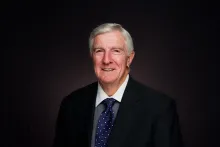
Before his retirement in 2021, Dr. Donald Ward pastored churches in Texas and Louisiana, and taught at Ambassador Bible College in Cincinnati, Ohio. He has also served as chairman of the Council of Elders of the United Church of God. He holds a BS degree; a BA in theology; a MS degree; a doctor’s degree in education from East Texas State University; and has completed 18 hours of graduate theology from SMU.
