

Don Ward
This transcript was generated by AI and may contain errors. It is provided to assist those who may not be able to listen to the message.
On Thursday of this coming week, everyone, basically everyone in this room, will sit down to Thanksgiving dinner somewhere. The table will abound with food, and you will arise with a full stomach. But will you sit and arise with a heart filled with Thanksgiving for what God has given you? One of our family traditions—we started this several years ago— before we sit down for Thanksgiving dinner is to have the family gather around in a circle, and we pour everyone a little glass of Wanda's favorite fine wine, Martinian Rossi Osti Spamanti. And then we give each one an opportunity to say what they're thankful for during the previous year. I started off, and then we go from there. And this seems to be the highlight of the day, that after that we ask the blessing, and we sit down and eat.
You know, he who eats with an unthankful heart will eventually choke on his selfishness and his narcissistic attitude. Today we want to talk about Thanksgiving and what it should mean to us. In a sense, what it has meant to this nation historically. So I'm giving a brief history of Thanksgiving, which I will mainly read to keep it concise. The tradition of Thanksgiving as a time to focus on God and thank him for blessings dates back almost four centuries in America. Colliness held Thanksgiving services in Texas in 1541. According to this account of history, Texas was the first place in the United States where people set aside a day to observe a Thanksgiving. In Florida in 1565, in Virginia in 1607, and in 1619. But it is from the pilgrims that we derive the current tradition of Thanksgiving that includes prayers to God, a meal with friends, and oftentimes involving athletic competition. The pilgrims arrived in America in December 1620, experienced a harsh winter of extreme hunger, starvation, in which half of them died. The following summer, the pilgrims reaped a bountiful harvest. A pilgrim, Edward Winslow, who later became their governor, affirmed, quote, God be praised. We had a good increase of corn, and by the goodness of God, we are far from want. End of quote. The grateful pilgrims therefore declared a three-day feast in December of 1621 to thank God and to celebrate with their friends.
90 Wampanoag Indians joined the 50 pilgrims for three days of food, which included shellfish, lobsters, turkey, cornbread, berries, deer, and other foods, and athletic games. The young pilgrims and the Wampanoag men engaged in races, wrestling matches, and other athletic competition and prayer. This celebration, America's first Thanksgiving festival, was the origin of the holiday that Americans now celebrate each November. The first national Thanksgiving was proclaimed in 1789 by George Washington. Of course, that was not long after the bloody Revolutionary War, but after Washington's national Thanksgiving proclamations, the proclamations were sporadic. Most official Thanksgiving observances occurred at the state level. By 1815, state governments had issued no less than 1,400 official prayer proclamations, almost half of which were for days of Thanksgiving and prayer. In the first half of the 19th century, that's the 1800s, Mrs. Josephi Hale, the editor of Gotti's Ladies' Book, a popular Ladies' books containing poetry, art, work, and articles by America's leading authors, began to lobby for a national day of Thanksgiving, and for nearly three decades she contacted president after president until Abraham Lincoln responded in 1863 by setting aside the last Thursday of November to observe Thanksgiving. Over the next 75 years, presidents faithfully followed Lincoln's precedent, annually declaring national Thanksgiving Day, but the date of the celebrations varied widely from proclamation to proclamation. In 1933, Franklin Delano Roosevelt celebrated Thanksgiving on the fourth Thursday of November and maintained that date year by year throughout his presidency. It was in 1941, fairly recent, that Congress permanently established the fourth Thursday in November as the national day of Thanksgiving. But it seems that we have lost sight in what we call the land of the free and the home of the brave of what Thanksgiving is really all about. As with all things that have to do with mind, heart, emotion, attitude, and spirit, there's a difference between mouthing the words of Thanksgiving and being truly thankful from the heart.
And one of the things that I'm praying for and have prayed for throughout my life, basically, is for a thankful heart. I believe that God views a thankful heart very favorably.
You may be surprised to learn that one of the reasons why the majority of the human race lost sight of God was because they were unthankful. Let's go now to Romans chapter 1, verse 16 will begin, and we shall see this, that because of them being unthankful for taking the knowledge of God for granted, that God gave them over to a reprobate mind.
You know, it is so easy to take the knowledge of God and the blessings of God for granted. We have people who attend services, I'm sure, that take the knowledge of God, the opportunity to sit here every Sabbath, and they take it for granted. Don't ever take the knowledge of God and His calling for granted. Don't ever treat it as something profane, as did Esau when he treated his birthright blessing as profane. And because of that, he gave it over to his brother Jacob. Of course, I know there was the deception and all of that involved, but he had made the agreement already with Jacob that, you know, if you give me this bowl of soup, then you can have the birthright. What good is the birthright if I starve to death? Well, what good is life if you only live the few years that we have, some 70 to 80, maybe even up to 90 years in the flesh, and lose out on eternal life? In Romans 1, verse 16, For I am not ashamed of the gospel of Christ, it is the power of God unto salvation to everyone that believes, to the Jew first also, to the Greek. For therein is the righteousness or the faithfulness of God revealed from faith to faith, as it is written, the just shall live by faith. For the wrath of God is revealed from heaven against all ungodliness and unrighteousness of men who hold, and that's a mistranslation there, not complete translation. That next word there, which says hold, really means hold back, who hold back the truth in unrighteousness.
Many people hold back the truth in unrighteousness. They know better, and some people try to spin things just to suit their situation, and they hold back the truth in unrighteousness, because that which may be known of God is manifest in them where God has showed it unto them. God revealed Himself to Adam and Eve in the Garden of Eden, and He revealed Himself to various people through the ages, and people had an opportunity to really know God.
For the invisible things of Him from the creation of the world are clearly seen being understood by the things that are made. You look at the creation itself, and the wonder, and the beauty, and the splendor, and the technicality of it, and how all things work together in the universe. And just looking at that, you should know that there is an intelligence far greater than man, and this didn't just happen by chance. Understood by the things that are made, even His eternal power and Godhead, so that they are without excuse. You have the testimony in nature itself, because when they knew God, they glorified Him not as God, neither were thankful.
So being thankful to God for knowing Him is one of the places where thanksgiving really begins. But instead of that, they became vain in their imaginations, or foolish heart was darkened. Professing themselves to be wise, they became fools and changed the glory of the uncorruptible God into an image made like to corruptible man into birds and four-footed beasts and creeping things. Wherefore, God also gave them up to uncleanness through the lust of their own hearts and dishonor their own bodies between themselves, who changed the truth of God into a lie and worship and serve the creation more than the Creator, who is blessed forever.
Amen. So we see very clearly here that one of the reasons why humankind is gone the way that it is gone, that when they knew God, they were not thankful. And as a result of that, God gave them over to a reprobate mind. And of course, one of the great keys for not being deceived is to love the truth.
And once again, so many people take the truth for granted. And they're not thankful. They don't appreciate what God has generously blessed them with. And it seems they don't seem to grasp what a blessing it is to be called into God's marvelous light. Notice 1 Peter chapter 2, 1 Peter chapter 2 verse 9.
The first part of the chapter, Peter is admonishing us to become a living sacrifice, to offer up spiritual sacrifices. And in 1 Peter 2, 9, you are a chosen generation, a royal priesthood, a holy nation, a purchased people, that you should show forth the praises of Him who's called you out of darkness into His marvelous light. Chosen generation, each one of us is here because of the grace of God.
Why did He decide to call you or me at this particular time and not call others in our family? In some cases, even our own sons and daughters, people that we love, friends, associates. But He called us, a chosen generation. You're called, and it is because of God's divine favor that He is called you. If you're a young person, you sit here because God has called your parents. You're not cut off from the congregation of God. You're not cut off from the tree of life at this time. You are a chosen generation, a royal priesthood, a holy nation, a purchased people, that you should show forth the praises of Him who has called you out of darkness into His marvelous light, which in times past were not a people, but are now the people of God, which have not obtained mercy but have now obtained mercy.
Brethren, I hope that we never take that for granted, being called out of darkness, being called out of the way of this world into God's marvelous light and having access now to the tree of life. God commands us to enter into His presence with thanksgiving. Let's notice two or three places in the Psalms about this in Psalm 100. Psalm 100, a very short psalm.
In Psalm 100 verse 1, Make a joyful noise unto the Lord, all you lands, serve the Lord with gladness, come before His presence with singing. So that's one of the things that we do to begin Sabbath services. Come before His presence with singing, and one of the main things that they did when they would sing would be, of course, to praise God and to give thanks.
Know you not that the Lord, the eternal L'Yavai, He is God, He is Elohim. It is He that made us, and not we ourselves. We are His people, the sheep of His pasture. Enter into His gates, into His presence where He is, with thanksgiving, and into His courts with praise. Be thankful unto Him, and bless His name. For the Lord is good, His mercy is everlasting, and His truth endures to all generations. Another place in the Psalms, we go to Psalm 107 and verse 22. Psalm 107 verse 22.
In Psalm 107 and verse 22, we see here that thanksgiving and sacrifice are related here.
Psalm 107 and verse 22. And let them sacrifice the sacrifices of thanksgiving, and declare His works with rejoicing. Also, forward to Psalm 116 and verse 17. Psalm 116 and verse 17. I will offer to you the sacrifice of thanksgiving. So God views our giving of thanks as a sacrifice. And as I mentioned, it says in 1 Peter 2, that we are to offer up spiritual sacrifices. I will offer up spiritual sacrifices, or I will offer you sacrifice of thanksgiving, which is a spiritual sacrifice. And we'll call upon the name of the Eternal. Now we go back to Leviticus 22. Leviticus 22 and verse 29. We'll note here that sacrifices were to be of free will, to be voluntary. That is the sacrifices of thanksgiving. Of course, if you committed a sin and you wanted it covered under the terms of the Old Covenant, then you would offer that sacrifice. You were commanded to do so. But notice this in Leviticus 22 and verse 29. Leviticus 22 verse 29. And when you offer a sacrifice unto the Lord, a sacrifice of thanksgiving unto the Lord, offer it at your own will. So, God wants us, as we have seen, to come before His presence with thanksgiving. But He wants it also to be of our own volition, of our own free will.
Now from the New Testament as well, let's go to Colossians.
We're hitting some of the highlights here. It is very clear from the Bible what God thinks about thanksgiving. If we were to title this today, our title would be What Am I Thankful for? For thanksgiving, what am I thankful for? In Colossians chapter 3 and verse 1, If you then be risen with Christ, seek those things which are above, where Christ sits at the right hand of God. Set your affection on the things above, not on things of the earth. For you are dead, that is, the old man, the old person, the old way, and your life is hid with Christ in God. When Christ, who is our life, shall appear, then shall you also appear with him. Then in verses 5 through 11, Paul goes through a long list of things to put off, but I'm not going to focus on the things to put off right now. Let's go on to verse 12, where he talks about the things to put on. Obviously, those things that he says to put off are those things that have to do with sin. But notice he says, put on, verse 12, put on therefore, as the elect of God, holy and beloved bowels of mercies, kindness, humbleness of mind, meekness, long suffering, forbearing one another, forgiving one another, if any man ever quarrel against any, even as Christ forgave you, also do you. And above all things, put on charity agape, spiritual love, which is the bond of perfectness. And let the peace of God rule in your hearts, to the which also you are called in one body, and be you thankful. Let the word of Christ well in you richly in all wisdom, teaching and admonishing one another in psalms and hymns and spiritual songs, singing with grace in your hearts to the Lord. So we see from the New Testament, and there are other places, of course, where we are to be thankful that God views thanksgiving as a sacrifice. You know, thanksgiving reveals the condition of the heart. An unthankful heart reflects a miserable, narcissistic kind of attitude, where a person's focus is on self. Of all the things that God is, He is a loving and giving God. And if we're not thankful, then we deny that He is a loving and giving God. Because if you recognize that He is generous, that He is giving, that He is loving, then surely you would be thankful. Let's notice now Psalm 50. Psalm 50 in verse 7. We'll begin there. The first part of Psalm 50, God talks about coming again, and He talks about those who've made a covenant of sacrifice with Him. And we pick it up in verse 7.
Here, O my people, and I will speak, O Israel, and I will testify against you. I am God, even your God. I will not reprove you for your sacrifices or the burnt offerings that have been continually before me. That's really not what I'm after first and foremost. You remember I gave a sermon on that God loves mercy more than sacrifice. I will take no bullock out of your house, nor He goad out of your folds. For every beast of the forest is mine, the cattle upon a thousand hills. In these verses, of course, God makes it clear that He owns everything anyhow.
I know all the fowls of the mountains, wild beasts of the field are mine. If I were hungry, I would not tell you. For the world is mine, and the fullness thereof.
Will I eat the flesh of bulls or drink the blood of goats? So what does He want? Verse 14. Offer unto God thanksgiving. This is what He really wants, a humble and contrite heart that is filled with thanksgiving. Offer unto God thanksgiving and pay your vows unto the most high. Call upon Me in the day of trouble. I will deliver you, and you shall glorify Me. God is glorified when we call upon Him, when we look to Him for deliverance, and He delivers us. And then if we are thankful and give Him due praise and thanks, He is glorified in the process. Then He contrasts the wicked with that. Notice in Hebrews chapter 13. I've already referred to this, that how God views thanksgiving. He views it as a sacrifice. Here it is brought out very clearly how He views thanksgiving. In Hebrews 13, and we'll begin in verse 12. Hebrews 13 and verse 12. Wherever Jesus also, that He might sanctify the people with His own blood, suffered without the gate. Let us therefore go forth unto Him without the camp bearing His reproach. For here we have no continuing city, but we seek one to come. By Him, therefore, let us offer the sacrifice of praise to God continually. That is, what is it? The fruit of our lips, giving thanks to His name. So one of the main ways that you can offer up spiritual sacrifices, the fruit of our lips, giving thanks to His names. Verse 16, But to do good and to communicate, forget not, for with such sacrifices God is well pleased.
So we ask ourselves today, a few days before a day that is set aside in this nation, that is called Thanksgiving, what am I thankful for?
Now here are some of the things that I'm thankful for, that I want to share.
The opportunity to know God and have a relationship with Him. The opportunity to know God and have a relationship with Him to be called at this time in one of the most critical crucial junctures in the course of human history. Let's notice Jeremiah 9 verse 23, Jeremiah 9 and verse 23.
Jeremiah 9 verse 23.
Thus says the Lord, Let not the wise man glory in his wisdom, neither let the mighty man glory in his might, let not the rich man glory in his riches, but let him that glories glory in this, that he understands and knows me, that I am the Eternal.
You know, what a different world it would be if people knew God and recognized the facts that are contained in these verses, that I am the Eternal, who exercises loving kindness, judgment, and righteousness in the earth, for in these things I delight, says the Eternal. So I'm very thankful for the opportunity to know God and have a relationship with Him. I'm very thankful for my family. My family, my wife, and my parents before their death, my brother, my sister-in-law, my children, my grandchildren, they've always been there. They've always been there. They have always supported me.
And brethren, when all is said and done, at the end of our days, your family will mourn your death, and they'll probably be the ones that lay you to rest.
So the family is very important. The family is very important to God, and it's something to be very thankful for.
If there is alienation in families, of course, that is one of the most grievous burdens that can be borne. And so I would encourage anyone and everyone who might have some kind of breach in the family that you do everything that you can to heal it. Because, as I said, you know, when all is said and done, when you are on your deathbed, sometimes, of course, we meet death very unexpectedly. But whichever way it comes, it will come, of course, unless Christ comes in your lifetime.
And there will be these people gathered together, and they will lay you to rest. Chances are it will be mainly your family in the church, out of the church. Family is very important.
I'm very thankful for the brethren. In some cases, like Jesus said, one asked, you know, who are your brothers and your sisters? And he pointed out there to those disciples who were following him who do the will of God. Of course, that spiritual family. Notice in Hebrews chapter 10 how important it is for us to assemble each week on the Sabbath, to assemble on the Sabbath, and to draw strength one from another. And there is great strength in brethren dwelling together in unity, brethren fellowshiping, brethren sharing their lives, talking to one another, trying to edify, to comfort, to exhort. In Hebrews 10.21.
And having an high praise over the house of God, let us draw near with a true heart and full assurance of faith, having our hearts sprinkle from an evil conscience. And our bodies wash with pure water, let us hold fast the profession of faith without wavering. For he is faithful that promised. And let us consider one another to provoke unto love and to good works, not forsaking the assembling of ourselves together as a manner of some is, but exhorting one another and so much the more as you see the day approaching. And brethren, if we believe the day is approaching, now is the time not to be lax in Sabbath service attendance. You know, so many times I've heard through the years some brethren say, well, you know, really all they do there is give concordant sermons or warmed over material, have heard it for 30 years, I can learn more staying at home and studying my Bible. Well, maybe I can do that, but what about other people? What does your life reflect and mean to them? What about the example you set to your family, to your children, and to the brethren? What about the strength they can draw from you? Do you want to be a source of life and light? Or do you want to say, well, I can stay home, study the Bible myself, you know, I know much as they know, and maybe you know more. But that's not the point here, forsaking not the assembling of yourselves together, and so much the more as you see the day approaching. So brethren, it is very important, and that's one of the things that I am very thankful for, the brethren. You know, we read these thank-you cards almost every week here, and it exemplifies that love, care, and concern, one for another. I'm very thankful for friends. You know, it talks about in Proverbs that there is a friend that sticks closer than a brother. Now, I am to the point in my life now, I at one time, I had, of course, I wasn't in the church at this time, I had many, many friends, and amazingly, at some of these friends, and I only knew some of them, like, very intimately for two or three years. Some I were teammates on the football team back in college, and I know that one of them recently told my brother a few years ago, because my nickname in college was, I had two nicknames in college, corn stock and slim. I weighed a grand total of 175 pounds, but 175 pounds, I looked about like a trot line, about big as my little finger, but anyhow, one of the teammates said, he found out that I was in the ministry, said, well, when I die, I want to slim do my funeral. And there, and my brother still tells me about, well, I saw such and such the other day, and they ask about you. And it's been two or three years, I know it's been a long time, since I've ever even laid eyes on them. Another thing I'm very thankful for, and of course, as I say, the things that I'm thankful for, I hope it gives you cause to pause and think, you know, what am I thankful for? And that's our main thrust of the sermon today. What am I thankful for? And what am I really going to focus on in giving thanks? I'm very thankful for the opportunities, the experiences and trials and responsibilities that God has given me in the arena of life to grapple with and to face triumph and disaster, because it seems in many cases there's been more defeat than triumph, but we go on. And from these, hopefully, we learn. I'm also thankful for the gifts of God's Spirit. Let's go to 1 Corinthians 12.
God gives all of us various gifts. As Paul points out here in 1 Corinthians 12, one of the basic problems in Corinth was that they had a big division over spiritual gifts. Spiritual gifts are given to Edithi, everybody, as he explains here in chapter 12. But the Corinthians were very boastful and hung up, I would use the term of the vernacular, over spiritual gifts. They were more spiritual than other people because they had the gift of speaking in tongues or understanding another language.
And Paul explains the purpose.
1 Corinthians 12.7, the manifestation of the Spirit is given to every man to profit everybody. For to one is given by the Spirit the word of wisdom, to another the word of knowledge, by the same Spirit to another faith, by the same Spirit to another the gifts of healing, by the same Spirit to another the working of miracles, to another prophecy, to another discerning of spirits, to another different kinds of tongues, to another the interpretation of tongues.
But all these works that one in the selfsame Spirit, dividing to every man, are given to every man severally as he will, and the purpose is to edify the body of Christ. Then Paul gives the analogy of the human body, and he comes down and he asks the question in verse 28.
And God has set some in the church, first apostles, secondarily prophets, thirdly teachers, after that miracles, gifts of healings, helps, governments, different tongues or languages. Are all apostles? No. Are all prophets? No. Are all teachers? No. Are all workers of miracles? No.
Do all have the gifts of healing? Do all speak with tongues? Do all interpret? No, they don't. And then verse 13 is an inset chapter that shows the more excellent way. And Paul says that I'm going to show you a more excellent way, and that's chapter 13, and that is the way of love, to become love as God is love. So I'm very thankful for the gifts that God has given me. I know what I was like before God gave me some of his spiritual gifts. There's nothing like spiritual gifts. Of course, you may have had the natural proclivity of whatever it is, but are we thankful for what God has given us? I'm also thankful for God's encouragement and comfort. Encouragement and comfort. There are many nights that I go to bed, and it seems that it usually comes to a head on Friday evening where I've been thinking about, through the week, sometimes I prepare a sermon before the Sabbath or before Friday. Usually, Friday, I really get down to it, and sometimes I just think, well, boy, I'm so worn out. How can I go before people tomorrow and give a sermon? And then something happens overnight, and seems like you're filled with new energy and whatever for the Sabbath. Let's note 2 Corinthians chapter 1. 2 Corinthians chapter 1 verse 3, Blessed be God, even the Father of our Lord Jesus Christ, the Father of mercies, the God of all comfort. So I said thankful for God's encouragement and His comfort.
Who comforts us in all our tribulation, that we may be able to comfort them which are in any trouble by the comfort wherewith we ourselves are comforted of God. And we have to accept that comfort. Sometimes that comfort is not what we think the comfort should be. But if we really know God, if we really trust God, if we really believe God, we know that He will deliver. For as the sufferings of Christ abound in us, so our consolation also abounds by Christ. And whether we be afflicted, it is for your consolation and salvation which is effectual in the enduring of the same sufferings which we also suffer, or whether we be comforted, it is for your consolation and salvation. And our hope of you is steadfast knowing that as we are partakers of the suffering, so shall you also of the consolation. So through suffering and trials, you're able to identify with, you know, Jesus Christ, when He lived in the flesh, He experienced all the trials, troubles, difficulties. And He's now at the right hand of the Father making intercession for us. And He knows what it's like to comfort and to be comforted. You know, there are five things that I think about almost every day and thank God for.
One is, God will never leave you or forsake you. That's an absolute promise. Let's go to Hebrews 13.5. We were in Hebrews 13 earlier. In Hebrews 13 and verse 5.
Let your conduct be without covetousness, be content with such things as you have, for He has said, I will never leave you nor forsake you. And of course, when Christ gave the Great Commission in Matthew 28 verses 19 and 20 to go out into all the world, to disciple all nations, and baptize in the name of the Father and the Son, the Holy Spirit. And He said, lo, I'm with you even to the end of the age. So, I think about every day that God has promised that He'll never leave you nor forsake you. Another thing I think about, and hopefully thank God for every day, is God's providence. What does that mean, God's providence? Well, God's providence means that He's always looking out for your best interest. You remember the first article of faith is Hebrews 11.6. Those who would come to God must, first of all, believe that He is and a rewarder of those who diligently seek Him. Now, let's go to Genesis 45 and verse 4. This is the account of when Joseph's brothers came to buy grain down in Egypt during the famine. Joseph has now been promoted to second in command in the land. He's really the minister of economics, and only Pharaoh is over him. And Joseph's brothers come. Jacob sent them down to buy grain because there had been seven years of drought. There was no harvest back in the land of Israel. And so, you remember, of course, that Joseph's brothers were jealous of him because of the dream he had that indicated that he would rule over them. And they eventually sold him into slavery. And he winds up second in command in the land of Egypt. And the brothers come down to buy grain. In Genesis 45 and verse 4.
And Joseph said unto his brethren, Come near to me, I pray you. And they came near, and he said, I am Joseph, your brother, whom you sold into Egypt. And therefore be not grieved nor angry with yourselves that you sold me here. For God did send me before you to preserve life. In other words, it was the providence of God. For these two years hath the famine been in the land, and yet there are five years in the land which there shall neither be earring nor harvest. And God sent me before you to preserve you of posterity in the earth and to save your lives by great deliverance. So now it was not you. Don't boast yourself that sent me here, but God.
And he hath made me a father to Pharaoh, and the Lord of all his house, and a ruler throughout all the land of Egypt. And sometimes, could we hang in there like Joseph did? Now being accused of rape, being in prison, so many different things that happened to Joseph, and yet God was with him through all of that because Joseph never lost sight of the providence and the faithfulness of God. Another thing I'm thankful for is God's provision that God provides for us. In Matthew 6, let's go there. Matthew 6.
In Matthew 6, verse 27, Which of you, by taking thought, can add one cubit unto a stature?
And why take you thought for raiment? Consider the lilies of the field, how they grow, they toil not, neither do they spend. And yet I say unto you that even Solomon, in all his glory, was not a raid like one of these. Look at these flowers. Who could create that kind of beauty, life, other than God? Man can imitate it with what they call artificial flowers. It's not the same.
Wherefore, if God so clothed the grass of the field, which today is, and tomorrow is cast into the oven, shall he not much more clothe you, O you of little faith? Therefore, take no thought, what we shall eat, or what we shall drink, or how shall we be clothed? For after all these things to the nations, seek, for your heavenly Father knows that you have need of all these things. Seek you first the kingdom of God and his righteousness, and all these things will be added unto you.
Take therefore no thought for the moral, which means anxious care, filled with anxiety. For the moral shall take thought of the things of itself, sufficient of the day as evil thereof.
So thankful for God's provision for us, you know, in the Lord's Prayer, give us our daily bread, that God allows us to have food, clothing, and shelter. Another thing that I'm thinking about, that those with problems around this world, the problems that they have, make mine look very small. I don't have any problems at all compared to so many people on the face of the earth. Let's go to Hebrews chapter 12. Hebrews chapter 12, and notice here the example of Jesus Christ and the sufferings that he went through, the example that he set. In Hebrews chapter 12, to some degree, the author here, Paul, is reflecting back on chapter 11, the faith chapter. Wherefore, seeing we also are encompassed about with so great a cloud of witnesses, let us lay aside every weight in the sin which doth so easily beset us, and let us run with patience the race that is set before us. Looking unto Jesus, the author and finisher of our faith, who for the joy that was set before him, see, he kept the picture, the big picture, burning brightly in his mind, he kept the big picture so brightly before the mind, in his mind, that he endured the cross for the joy that was set before him, despising the shame, and has sat down at the right hand of the throne of God. For consider him that endured such contradiction of sinners against himself, lest you be wearied and faint in your minds. You have not resisted unto bledged, striving against sin, and you have forgotten the exhortation which speaks unto you as unto children. My son, despise not the chastening of the Lord, nor faint when you are rebuked of him. Rebuking the chastening, the things that I've experienced, does not compare even in the most remote sense to what Christ experienced and what so many people are experiencing in this world, this very hour, all around the world. So you think about how much you're blessed.
Another thing that I think about is an understanding of what life is really all about.
What is life really all about? What is it like? What are the things that you go through in this life? Of course, life in the ultimate sense, the purpose of it is, as we know, to be in God's family. But on the way to God's family, there are so many things that we have to deal with. I love this poem here by Rudyard Kiplin, which this poem to some degree describes many of the things that we deal with in life. And do we really understand and keep our eyes on the big picture? This poem is titled, If, by Rudyard Kiplin. If you can keep your head when all about you're losing theirs and blaming it on you, if you can trust yourself when all men doubt you but make allowance for their doubting too, if you can wait and not be tired by waiting or being lied about, don't deal in lies, are being hated, don't give way to hating, and yet don't look too good nor talk too wise, if you can dream and not make dreams your master, if you can think and not make thought your aim, if you can meet with triumph and disaster and treat those two impostors just the same, if you can bear to hear the truth you've spoken twisted by knaves to make a trap for fools, or watch the things you gave your life to broken and stoop and build them up with worn out tools, if you can make one heap of all your winnings and risk it all on one turn of pitch and toss and lose and start again at your beginnings and never breathe a word about your loss, if you can force your heart and nerve and sin you to serve your turn long after they are gone, and so hold on when there's nothing in you except the will which says to them, hold on, if you can talk with crowds and keep your virtue, or walk with kings nor lose the common touch, if neither foes nor loving friends can hurt you, if all men count with you but none too much, if you can fill the unforgiving minute with sixty seconds worth of distance run, and yours is the earth and everything that's in it, and which is more, you'll be a man, my son.
So when I reflect over the years of my life, what gives me the greatest sense of comfort, satisfaction? It's God's love and mercy, the support of my family, the support and response of God's people, and the character that is reflected in the lives of the people that you have tried to help on the road to eternal life. I would like for us now to go to 2 Corinthians chapter 3. 2 Corinthians chapter 3. A big part of the backdrop of 2 Corinthians chapter 3, and the reason why Paul wrote it, was to answer many of his critics. One thing had to do with him, this fellowshiping, the incestuous fornicator. Now he's telling them to receive him again, and they were talking about Paul. He didn't collect tithes. He wasn't really one of the original apostles, and that he was small in stature and with a squeaky voice, and yet his letters were weighty and heavy. Just a lot of criticisms.
Then Paul's part of his response here, 2 Corinthians chapter 3. Of course, Paul was thankful for this, and those of us who labor especially in the gospel are very thankful for the epistle that is written in the hearts and minds of the people that we try to teach and serve, similar to what you heard in the sermonette. 2 Corinthians 3.1. Do we begin again to commend ourselves, or need we, as some others, epistles or letters of commendation to you, or letters of commendation from you?
You are our epistle written in your hearts, known and read of all men.
For as much as you are manifestly declared to be the epistle, the letter of Christ ministered by us, written not with ink, but with the Spirit of the living God, not in tables of stone, but in fleshly tables of the heart. In other words, we are all living letters, living epistles, and God has written what He's written in our hearts, and we reflect that to the world. So Paul said, we don't really need a letter in writing. Your life is the epistle.
And such trust how we threw Christ to Godward, not that we are sufficient of ourselves to think anything as of ourselves, but our sufficiency is of God, who also hath made us able ministers of the New Covenant, not of the letter, but of the Spirit, for the letter kills, but the Spirit gives life. Now he concludes. Let's go to verse 17. Now the Lord is that Spirit, and where the Spirit of the Lord is, there is liberty. But we all with open face, beholding as in a glass the glory of the Lord, are changed into the same image from glory to glory, even as by the Spirit of the Lord. So he uses the analogy of the mirror, that God is that Spirit. He gives that Spirit to us, and then we are to reflect that back, and we are His epistle. Red of all men. Now, brethren, we live in stressful and uncertain times, and you may say this is an understatement of gross proportions. You can defeat stress and discouragement through thanksgiving and enthusiasm. Let's notice now in 2 Corinthians 4, just across the page, what Paul writes beginning in verse 8. Once again, I say we can defeat stress and discouragement through thanksgiving and enthusiasm. Verse 8, 2 Corinthians 4, 8. We are troubled on every side, yet not distressed. We are perplexed, but not in despair. Persecuted, but not forsaken, cast down, but not destroyed. Always bearing about the body of the dying of the Lord Jesus, that the life also of Jesus might be made manifest in our body.
For we which live are always delivered unto death, for Jesus say that the life also of Jesus might be made manifest in our mortal flesh. Once again, this living epistle. So then death works in us, but life in you. We, having the same spirit of faith, according as is written, I believe, and therefore have I spoken. We also believe and therefore speak, knowing that he which raised up the Lord Jesus shall raise up you also by Jesus and shall present us with you. For all things are for your sakes, that the abundant grace might through the thanksgiving of many, redound to the glory of God. For which cause we faint not, but though our outward man perish, yet the inward man is renewed day by day. See, God's greatest creation is the work that he's doing in those who he has called into his marvelous light. He is creating his holy, righteous spiritual character within us. We are new creations. Now in chapter 5, 2 Corinthians 5.
Verse 14, for the love of Christ constrains us, because we thus judge that if one died for all, then all were dead. We were dead, sins and trespasses, the wages of sin is death. And that he died for all that they which lived should not henceforth live unto themselves. He would be the minister of sin, but unto him which died for them and rose again. Wherefore, brethren, know you know man after the flesh, yea, though we have known Christ after the flesh, yet now henceforth know him, we him no more, that is, after the flesh. Therefore, if any man be in Christ, he is a new creation. Now this word here for creation in the Greek is chistis, k-t-i-s-i-s, and it means the act of creating or creation. I don't know why the King James... it could mean a creature that has been created, but it basically means the act of creating or creation. We are a new creation.
The inward man is God within you. Paul said the inward man is renewed daily, this new creation. So I said you can defeat stress, discouragement, despair, and all of that through thanksgiving and enthusiasm. Now I want to read to you what this person wrote about enthusiasm.
The word enthusiasm has its roots in the Greek language. It literally means the God within, and we've talked about renewing the inward man.
The etymology of the word reminds us of the divine source of the feeling called enthusiasm.
An enthusiastic person is someone who is positively possessed in an extraordinary fashion by the Spirit of God. Enthusiasm equals passion. It is the thrill and tremble you feel when you take the risk of being yourself. Enthusiasm is a wave emanating from the inner being, lifting you up and taking you along. It is a very life energy that freely flows through you when you dare to be yourself. Enthusiasm can be seen in the twinkling of your eyes, the determination in your step, the strength in your hands, the irresistible energetic pull of what you have decided to create. When you feel enthusiastic, nothing can stop you. You must and will go on, no matter what others are pulling out of their hat to try to stop you. When you're working toward your goal with enthusiasm, nothing can hold you back. You jump out of bed early in the morning because your goal, your dream, is calling you. The entire day you're working for the achievement of your goal, losing track of time without feeling hungry. You live in another dimension, carried along in a loft by divine energy. The material details of life seem small and insignificant. They can no longer distract you, for you have more important things to do. You have a veritable life goal, something that entails your whole being and your whole doing.
When you are one with your life goal, you feel a divine energy carrying you. It is called enthusiasm. You're still in the world, but you're no longer of the world. You're able to accomplish large amounts of work, and others may consider that others may consider humanly impossible. It is this very divine, flowing energy, though, that enables you to accomplish the impossible. Enthusiasm is the elevating force that lifts your dreams up to the stars.
Enthusiasm is a wondrous engine of life. Enthusiasm is directly linked to passion.
You have to find your passion in order to feel enthusiasm. You won't be able to generate enthusiasm by endlessly repeating something that you hate doing. You have to stop hating the things that drag you down. You have to start doing what you need to do. I know, brethren, if we were to look at this from a theological point of view, there may be some things we would take exception to, but enthusiasm is almost indefinable. But God within you, that passion for doing whatever it is that He has called us to do, we know that God in us, the hope of glory, is the answer for all things. That through His grace, through His divine favor, He makes His abode in us. He does live within us if we have His Spirit.
Thus, we should exude with enthusiasm and passion. One of the things that Paul warns us about in Galatians is, don't let us become weary with well-doing. We have to try up over this Babylonian kind of world and economy and society. In some ways, somehow, we need to come to that point where we once again renew that divine spark that is within us, that we rekindle that enthusiasm, that passion. So, as we observe Thanksgiving, let us not reflect on the past. Let us not pay homage to the past, but let us with heads lifted high come into His presence with thanksgiving and praise. And let us reflect on the great prayer that is recorded in Ephesians 3.14. Let's read that and conclude with that great prayer in Ephesians 3 and verse 14. For this cause I bow my knees unto the Father of our Lord Jesus Christ.
Of course, on Thanksgiving Day, we will be bowing our heads and giving thanks unto God, realizing that He it is who made us without us. Without Him, we wouldn't have life. Life is our most precious gift because without life, we would never have an opportunity to be in God's family. So, you have to live in the flesh to ever be in God's family. See, God's family of sons and daughters of His very essence are not created beings. They are given life in the flesh and then born into the family of God and born of Spirit at the resurrection. So, in Ephesians 3.14, For this cause I bow my knees unto the Father of our Lord Jesus Christ, of whom the whole family in heaven and earth is named, that He would grant you, according to the riches of His glory, to be strengthened with might by His Spirit in the inner man, that strength the inner man from which should come enthusiasm and passion for the goal for the kingdom of God, and to give thanks and to offer up spiritual sacrifices the fruit of our lips, that Christ may dwell in your hearts by faith, that you being rooted and grounded in love may be able to comprehend with all saints what is the breadth and length and depth and height, and to know the love of Christ which passes knowledge, that you might be filled with the fullness of God. Now unto Him that is able to do exceedingly abundantly above all that we ask or think, or according to the power that works in us, unto Him be glory in the church by Christ Jesus throughout all ages, world without end. So brethren, let's be thankful, and I hope you have a very happy Thanksgiving.
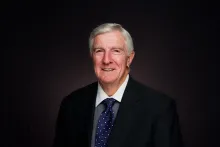
Before his retirement in 2021, Dr. Donald Ward pastored churches in Texas and Louisiana, and taught at Ambassador Bible College in Cincinnati, Ohio. He has also served as chairman of the Council of Elders of the United Church of God. He holds a BS degree; a BA in theology; a MS degree; a doctor’s degree in education from East Texas State University; and has completed 18 hours of graduate theology from SMU.
