
Greg Thomas
This transcript was generated by AI and may contain errors. It is provided to assist those who may not be able to listen to the message.
Well, thank you, Mr. Hooper. I'm not sure what that means, but I do thank you for the compliment. By the way, there was a gentleman whose last name was Hooper who signed the Declaration of Independence, so you'll have to ask Mr. Hooper if he's related to that individual. Well, good afternoon. Yesterday, indeed, was the 232nd anniversary of the birth of the United States. And what a blessing this nation has become to the entire world because of our commitment and dedication to democracy and freedom for peoples, for giving them an opportunity in a secular world to have self-determination and to be able to make their own choices and decisions, including ourselves, who in a world that is contrary to our religious beliefs, to live in a nation, to live in a political philosophy that allows you and I to worship any way that we please without government or local interference.
This is all possible, brethren, because in 1776, a small group of British citizens in North America banded together to declare their independence from one of the world's superpowers. Can you imagine how difficult that would be to declare your independence from a superpower? Can you imagine how difficult it would be to reject the thousands of years of political governance that your heritage is used to, and to basically stand up to a very powerful system, a nation that had one of the strongest armies on Earth, and at that time, one of the strongest political systems in the world, and say, we want to do something differently.
We want to change. We want to rebel against what we've always lived under and what our forefathers for generation after generation after generation lived under. We want to rebel. We want to revolt. We want our independence. What a courageous thing it was for them to do that. They wrote about their intentions and the reasons for their rebellion in a document that's become known as the Declaration of Independence. And I won't rehash what I said last year about this time, but the Declaration of Independence in three areas within that document mentions God. Because Jefferson, who was the primary author of it, realized that it was God that gave this nation the right to rebel against Great Britain.
It was that God who would give this nation Providence, divine protection. It was that God who would be the supreme judge of their actions and everything that they did regarding rebellion against an established authority. And so for seven years, and that's how long the Revolutionary War lasted, until the Treaty of Paris was signed, which gave the United States its documented independence from Britain, this struggling nation almost died in its infancy a number of times. At the beginning of the war, the Continental Army lost battle after battle.
And there were times when our founders were greatly discouraged and disheartened. If you've ever read some of the letters that George Washington wrote, particularly the state of New Hampshire, begging them for more troops, begging them to send more men to help them, you can just sense and see and feel the discouragement that they had in their hearts. Yet, miracle of miracles, they persevered, and through a number of opportunities of divine intervention, the United States of America was born. And the miracles were many. First of all, there were strange weather patterns that occurred throughout unique battles that gave the United States the advantage.
Many considered the turning point of the war when Washington was most discouraged because he decided to attack Hessons, Hesson soldiers who were at Trenton. The Hessons were German mercenaries. They were German people, spoke German. Most of them didn't even speak English. But the King of England hired them to be mercenaries to come to this continent and to fight against the rebellious Americans. What they didn't tell Washington, what they forgot to tell him, was that every day the Hessons were very good at having individuals camp out Hesson soldiers along the Delaware River as protection for their little group.
But the weather, as they attempted to go there on Christmas Day, was so bad. It was so terrible, and Washington barely got his men across the Delaware River. But the weather was so bad, and that one unique evening before, the Hessons did not have anyone guard the river. They thought nowhere in their right mind would cross this river in this weather. And because of that, they were completely caught off guard, and by surprise, Washington was able to win that little skirmish.
That was what lifted up their hearts and their spirits and began to turn around the war. So strange weather was one of the things that caused the miracles that made the United States possible. Another was sharpshooters. There were times in battle when the British would have sharpshooters who particularly would aim at the American generals. And one British infantryman mentioned how he had Washington directly in sight. He was as good as dead, had him in his sight, pulled the trigger, click, the gun misfired.
That was incredible, because the main rallying point of the army was George Washington. Without his leadership, without his commitment, without his presence, things probably would have turned out differently. There were uncharacteristic blunders by the most professional army on earth, the British army. They made stupid mistake after mistake to the advantage of the American people.
Finally, at the last possible second, at the very last when the United States was ready to collapse financially or militarily, suddenly the Dutch and the French were willing to help, providing either finances or provided ships or other military means for us to be able to continue the war when the hour was most dark. But I think, in my opinion, that the greatest miracle of all, and I'll challenge anyone to come up with something contrary to this, I believe the greatest miracle of all was the assembly of so many great thinkers, so many talented and brilliant people who God put together in history at the same point in time. That has never, ever been duplicated. They were patriots. A patriot is defined in the dictionary as a proud supporter or defender of his or her country and way of life. I'd like to mention a few of the early American patriots today and some of their qualities before we get into the heart of the sermon. And the reason I want to do this is I want you to consider the fact that you, my friends, are spiritual patriots. You see, we have banded together. We are in the middle of a great rebellion. We are fighting the ultimate superpower known as Satan the Devil, who has held this entire world in slavery and in bondage for thousands and thousands of years. And the battle is still raging. And even though you and I have declared our independence, and we suffer the persecution and the trials and troubles for that declaration, even though you and I have done that, most of this world needs our revolutionary spirit, needs our commitment, needs our compassion so that we can win the greatest revolutionary war that will ever occur in the history of mankind. To remind us why that's so important, I'd like just to mention some of the characteristics, some of the great qualities that the founding fathers and founding mothers of this nation had. In some cases, I'll just comment off the fly on some of these individuals, and in a few cases, I'll read directly from some encyclopedia quotes and even some statements I found on the Internet. But here goes, and this will take me about to probably 10-15 minutes before I get into the heart of the sermon. One thing you'll notice about every American patriot is that they were not a perfect people. Like you and I, these patriots had flaws, and they had weaknesses. Yet every one of them had qualities that stood out in a powerful and a profound way and submerged the fact that they were human. They had problems just like you and I. Perhaps the first thing that comes to people's minds is when they think of a founding father or a patriot of George Washington. What was so unique about George Washington? He was a man who was willing to give up power twice.
Now, I live in a world where most everyone I've seen wakes up every day trying to figure out how they can grab more power, how they can have the executive title, how they can have more money, how they can control people, how they can receive praise and adulation. That's the world that I grew up in, and I'm sure you did too. So it's amazing to think of a man who was both a general and a president and served for a while and said, thank you, you can have the power back.
I don't want it. It's not for me. It's not what I'm about. And that's what made him an incredibly great man. First of all, he was the general of the victorious army after the revolution, and in 1783 he gave his sword back to Congress. He said, it's time for me to follow the example of the Roman dictator, Cincinnatus. Cincinnatus was a dictator in Rome who served for a while. He had been given dictatorial powers by the Roman Senate and then gave his sword back and went back to farming, and that's the example that George Washington wanted to follow.
Just think about this man. He was a wealthy plantation owner. He already had it all, as far as in terms of material possessions in his beloved plantation in Virginia, he had very little to gain and everything to lose by being part of the rebellion against the British Empire. Yet, after the war and after a constitution was created and he was made President of the United States, some asked him to be President for life. Some asked him, begged him, if he would continue or accept even the title of King of the United States, but he served two terms.
He gave a farewell address and he went back to his beloved plantation where he lived out the rest of his life before he died. You see, one thing that he did not want to repeat was a mistake that had occurred in the British Empire a hundred years before we rebelled. Most people forget the fact that there was an English Civil War a hundred years before our own American Revolution.
And the King of England was toppled and a gentleman was put in place named Oliver Cromwell and his title was the Lord Protectorate. England actually was a republic while he was Lord Protectorate, but he served for life. And when he died, his son took over and became Lord Protectorate. And it was so miserable that after that the British Parliament begged the lineage of the King to come back and restore the monarchy.
It failed, and it failed miserably because he was unwilling Cromwell to give up power to better people, to more talented people, to another generation. Washington knew and understood that to him it wasn't about power, it was about service. In his writings, one of his writings, he referred to the United States as, quote, the second land of promise. He saw the possibilities that our nation holds. And for the reason that he was willing to give up power, he is an incredibly great man.
Another individual was John Adams. I could spend the rest of the sermon today talking about the qualities and all the contributions that John Adams made to this country. He, of course, was the second President of the United States. He was an early advocate for independence. Massachusetts chose him to be their representative for both the first and second Continental Congress. The best thing that could be said about John Adams is he was a powerful and influential thinker, a very stubborn man, a man with a terrible amount of vanity and pride, but a brilliant thinker, a good negotiator, a man who could drive home a point within the Continental Congresses to rally people around an idea or a cause.
Then there was his wife, Abigail. It was only ten years after they were married that the American Revolutionary War broke out. John was sent to Europe to negotiate with the French and eventually to negotiate the Treaty of Paris. And while he was gone for many years, Abigail took care of the family and the farm, keeping the family from bankruptcy. You see, in those days, the idea of public service was that these individuals who served in the government were very poorly paid, and they could not live on his salary while he was off in Europe doing the work of the United States.
She basically was a single mother trying to raise five children all by herself on a very mediocre income that he received, being forced to farm and manage an entire farm herself while he was gone. She wrote him a letter while he was serving in the Continental Congress telling him, quote, to remember the ladies when making the nation's new laws. So we could say that she was the first woman to be concerned with equal rights for women. But unfortunately, the Continental Congress was controlled by men and they soon forgot the ladies and unfortunately forgot other segments of our society.
But they all remembered the foundational location and occupation of the next founding father, another one of the Adams relatives, Samuel Adams. The Adams family was deeply blessed with talented people. Sam Adams was actually the second cousin to John Adams. He was an American statesman, a politician, a writer, a political philosopher, but deep in my heart I appreciate the fact that he was also a brewer. He was instrumental in garnering support for the colonies for rebellion against Great Britain. Here's what the Encyclopedia said about his role as a founding father. Encyclopedia Britannica, quote, "...for more delegates to protest the attacks in Massachusetts." Continuing, it says, "...Adam's written set of instructions was the first public document to question Parliament's authority to tax the colonies.
The document also served as the first call to unite the American colonies in opposition to England. Adams' instructions were published in newspapers and pamphlets." So because of his work, the idea of rebellion left Massachusetts and filtered because it was printed through all of the colonies. Another individual, one of my favorite, because he was so quirky, was Benjamin Franklin.
He was the oldest member of the Continental Congress and a very mature senior statesman. He was one of the true Renaissance men of his age. Even though he was self-educated, unlike many of the other founders that I mentioned here, he never went to college. He was self-educated. But he was a leading author, a printer, a satirist, a political theorist, a politician, a scientist, an inventor, a civic activist, a statesman, and a diplomat.
One of my favorite lines is, after they signed the Declaration of Independence, they were all gathered in the room, and John Hancock said that they must all hang together. And Franklin is credited to having said, yes, we must indeed all hang together, or most assuredly, we shall all hang separately. You see, they knew the Declaration of Independence was a death warrant. If they were caught, it was a declaration of treason against the British authorities, and if they were caught, within days they would be hung or executed for treason against the British Crown. It said on the Internet that I like this phrase. It said in Wikipedia and the Internet, Franklin is credited as being foundational to the roots of American values and character, a marriage of the practical and democratic Puritan values of thrift, hard work, education, community spirit, self-governing institutions, and opposition to authoritarianism, both political and religious.
He was instrumental in gaining France's support during the Revolutionary War. What I liked about Ben Franklin is his ability to flex, to be a very flexible man. It drove John Adams nuts when he went to France, and he went to spend time with Franklin, who was negotiating with France in order to secure financial and military support for the rebels.
He went to France, and Franklin was doing what you had to do in France to get the attention of the aristocracy and ultimately the king. He would leave his house about 9, 10 o'clock at night. He would go and party with the French aristocratic women all night. He'd come home in the wee hours of the morning, and he'd sleep until noon, 1 o'clock. Now, the very disciplined and Puritanical John Adams was upset by this. John Adams says, wait a minute, wasn't this the guy in Poor Richard's Almanac that said, early to bed, early to rise, makes a man healthy, wealthy, and wise? He saw Franklin doing all of these things that were contrary to Poor Richard's Almanac. But Franklin knew what it took to win over the French people with their culture, with their rather closed, intimate culture. And over a period of time, he was able to win the support of the French because he was flexible enough to deal with them in a way that they could appreciate it and understand it. He also was part of a congressional committee that was to come up with the idea of the great seal of the United States. In congressional committee, he suggested that the great seal of the United States would be Israel crossing the Red Sea with Pharaoh in hot pursuit.
Unfortunately, that was not chosen. Another patriot, founding father, was Thomas Jefferson, who was the third president of the United States. Another great renaissance man and the primary author of the Declaration of Independence. He received distinction, among other things, as a horticulturalist, statesman, an architect, an archaeologist, a paleontologist, an author, an inventor, and a founder, the founder of the University of Virginia. He was an incredibly gifted man. He proposed, he sat in the same committee as Franklin, and he proposed that the great seal of the United States would be Israel being led by a pillar of cloud by day and a pillar of fire by night.
An incredibly gifted individual. One of my favorite quotes of all-time history is something said by President John F. Kennedy in 1962, when he welcomed 49 Nobel Prize winners to the White House. They sat down in a room, and he said to the 49 Nobel Prize winners, quote, Now that's a compliment. James Madison was the fourth president of the United States. Madison was the last founding father to die. He's considered the father of the Constitution. He was the principal author of the document. In 1788, he wrote over a third of the Federalist Papers. Now, we know what a Bible commentary is. The Federalist Papers are considered the commentary on the Constitution, how it was developed, and the thinking behind the creation of our Constitution. He wrote over a third of it. As a leader of the first Congresses, he drafted many laws and was responsible for the first ten amendments to the Constitution. For that reason, he's known as the father of the Bill of Rights. Then there was his lovely wife. One of my favorites is, well, Dolly Madison. Now, most of you young people are saying, oh, great donuts, Mr. Thomas. Wonderful cookies. I know who Dolly Madison is. No, this is the original Dolly Madison. During her husband's political life, Dolly Madison was noted as a gracious hostess whose sassy, bouncing personality and passion for snuff seemed at odds with her Quaker upbringing. Where her husband was stern, sour, reflective, introverted, Dolly Madison as setting the example of a great First Lady was bouncy, enthusiastic, energetic, someone that everyone liked. However, her most lasting achievement is her rescue of valuable treasures, including important state papers and the famous Gilbert Stuart painting of President George Washington from the White House just before the British arrived in 1814 during the War of 1812. They burnt down the White House. She saved important state documents and the painting of Washington. Now, she had a problem because the painting of Washington was screwed to the wall, so she had someone take a knife and they literally cut the fabric of the painting out from the frame and took it with them. But, according to Margaret Truman's book First Ladies, quote, Dolly Madison was enraged at how American soldiers fled rather than fought the oncoming British and even slept with a saber near her bedside should a British soldier show up in the middle of the night. Dolly Madison remained a popular figure in Washington, D.C., long after her husband's presidency ended and was the only private citizen, much less a woman, to be allowed to sit in on Congress on the congressional floor while it was in session. That's quite a distinction as well. Alexander Hamilton, the financial wizard, he was the first United States Secretary of the Treasury, a founding father, an economist, and a political philosopher. He was one of the first individuals to call for a Philadelphia convention, so he was a patriot very early on, and he was one of America's first constitutional lawyers.
He also wrote a large part of the Federalist Papers, which remembers a commentary on how the Constitution was written.
A number of things he's noted for. First of all, he founded the United States Mint, the first national bank, and a system of cutters. Now, you might say, what is a system of cutters? Well, we now know it as the United States Coast Guard.
And he also established an elaborate system of duties, tariffs, and other taxes. In five years, he replaced a very chaotic system that had produced financial instability in a government that literally was bankrupt and turned it around into a modern system, which gave the new government stability, but more importantly, gave investors, including those from Europe, sufficient confidence to invest in government bonds.
So he was the financial wizard who put legs under the democracy so that financially it could continue to survive.
Hamilton prematurely died in July of 1802 after being shot in a duel with Aaron Burr.
It was probably not a wise thing to do in his part.
Patrick Henry, one of the most influential and radical advocates of the American Revolution and republicanism.
He is known for a famous speech he gave on March 23, 1775, to the Virginia House of Burgesses.
The British were sending an army to Virginia. Should we field an army? Should we not field an army? Should we give up? Should we fight? What should we do?
And he stood up and said his famous words, Is life so dear or peace so sweet as to be purchased at the price of chains and slavery? Forbid it, Almighty God. I do not know what course others may take, but as for me, give me liberty or give me death.
That changed the entire tone of the meeting, and the House of Burgesses decided to send a military force.
Betsy Ross. John and Betsy Ross were up upholsterers by trade. The Rosses were financially stressed at the outbreak of the Revolutionary War. The fabrics they depended on grew very scarce, and they were no longer able to make a living. So John joined the Pennsylvania militia and was seriously injured in an ammunition explosion, and he soon died very early in the war.
Oral history is supported by 19th century affidavits, and here's what it recounts. It says that Ross met Betsy Ross with George Washington and Robert Morris at her upholstery business in Philadelphia in May or June of 1776, a meeting said to have resulted in sowing of the first U.S. Stars and Stripes. According to the story, it was at this meeting, quote, to silence the men's protest that the new five-pointed stars would be unfamiliar and difficult for seamstresses to make, which obviously had a little male chauvinism in it, that she folded a piece of paper, made a single scissor snip, and revealed a perfect five-pointed star. End of story. Okay, you got the job. After her first husband's death, Ross joined the Fighting Quakers, which, unlike traditional Quakers, supported the war effort. In June of 1777, she married again, and following the Battle of Germantown, she nursed both American and British soldiers. So she was a remarkable person in her own right, one of our founding mothers. Brethren, a list of founding parents, founding fathers, founding mothers, could go on and on. The fact is that so many gifted and dedicated individuals were brought together at the same place, at the same time in human history, is nothing short than divine intervention. They're living proof that a small handful of people committed to a great cause can change world history.
So how about you and I, fellow patriots, fellow spiritual patriots? Have we forgotten that a small handful of people committed to a great cause can change world history? Have we forgotten that we are revolutionaries and in the middle of the greatest revolutionary war in the history of mankind? And though we've declared our freedom, thanks to the shed blood of Jesus Christ, that most of our fellow countrymen are confused, blind, lost, but struggling with the same slavery that we struggled with until God opened our hearts and opened our minds? Are we patriots for the kingdom of God? Just what kind of patriot are you and I?
Do you and I have the qualities of the people that I just mentioned? Do we have what it takes to change the world like our founding fathers and founding mothers had? For the rest of the sermon, I'd like to ask ourselves some questions, all related to patriots, patriotism, tied in, of course, with what our founding fathers of this secular nation did, and ask ourselves some questions.
So here's point number one. A patriot becomes disillusioned with their native country and wants a separation. Again, point number one, a patriot becomes disillusioned with their native country and wants a separation.
Our founding fathers got to the point, due to being treated unfairly, with taxation without representation, feeling like they were abused and abandoned and taken for granted, and not able to exercise the true God-given freedoms that they were entitled to. They became disillusioned with Great Britain, and they wanted a separation. They wanted to leave Great Britain and to forge a new country, a new nation.
Well, how about us, brethren? Let's turn to Ephesians 2, beginning in verse 1. Because you see, brethren, there is a very powerful country that we're fighting against. It's a spiritual nation. It's controlled by the prince of the power of the air, who powerfully emanates attitudes and thoughts and signals, and has most of this world in slavery. Most of this world in bondage, painfully struggling with life, day after day, generation after generation, a world that needs a new country, a world that needs a separation from Satan the devil. You and I have had the benefit that we became disillusioned long ago. We call it conversion. We saw what the world has to offer, the pain and the suffering, the duplicity, all the deceit, the violation of God's laws, which produce incredible unhappiness all over the world. And we said, I don't want to live like that anymore. I don't want to be part of that nation. I'm disillusioned with that lifestyle, with that value system. I want a separation. And so that separation grew into repentance, and that grew into baptism. And the rebellion in our lives against the prince, the power of the air, Satan the devil, began. And as long as you and I draw breath, that battle continues. Ephesians chapter 2, beginning in verse 1. And so for that reason, we continue to have rampant disease. We have war in the world. We have people who should be joyful. We have people with phenomenal material wealth who are unhappy and turn to their fifth wife or drugs or other material things in order to somehow find happiness, even though they've been given so much. Verse 3, among whom also we all once conducted ourselves in the lust of our flesh, fulfilling the desires of the flesh and of the mind, and were by nature children of wrath just as the others. So we once were part of that mother country, weren't we? We lived that way of life. We were part of that world. But we came to a point that we became disillusioned.
Let's go now to Galatians chapter 5 and verse 19.
As I mentioned a minute ago, there came a time when we recognized that not all is well in this world that we live in.
We Americans have to be very careful because we live lives that are so good compared to the rest of the world that we can become calloused to all the suffering that goes on in most of the rest of the world. But Paul gives us a good reminder here of what the world lives under its present superpower, that is Satan the devil.
Galatians chapter 5 and verse 19.
Sounds like the front page of the Cleveland Plain Dealer.
Sounds like CNN headline news, doesn't it? Sadly, it does. It truly does. And this is the slavery. This is the bondage that the world finds itself in because it's still tied and pays allegiance to the ultimate superpower, Satan the devil. Let's continue here. He says, And long suffering and kindness and goodness, faithfulness, gentleness and self-control against such there is no law, and those who are Christ have crucified the flesh with its passions and desires. If we live in the spirit, let us also walk in the spirit.
Brother, do we still understand and see the pain and suffering that exists all over the world, or have we become callous to it because God's given us this little cocoon in a nation that has so much wealth and so much going for it? Do we yearn that the rest of the world and that others can be declared free like we have? That others can take off the shackles of spiritual slavery like we've asked and like we struggle and have asked Christ to take off those shackles of spiritual slavery by His shed blood? Do we understand that the world we were born into is still extremely violent? That every day millions of people, mostly children, die of curable diseases? Every day thousands of people starve to death, mostly children and the elderly, because they don't have enough to eat? Every day literally hundreds of people die in one of the many, many ongoing wars that you won't find in your local newspapers or local tribal violence. And this occurs every day, day in and day out and has for the last 6,000 years. Or have we isolated ourselves in our little comfortable worlds, in our little cocoons and forgotten just how bad this world is? Do we understand that money or material possessions can't buy happiness or contentment? Look at all the actors and actresses and celebrities who supposedly should have it all. They have fame, they have money, they have everything that a human being should strive for, being part of the world government of that super power, yet they're unhappy. Every day in the news, either one of them caught drunk driving or a terrible split up in some relationship in their lives, or they're addicted to a drug, or just one problem or another because money can't buy happiness. Achieving material things doesn't make a human being happy. But that's the false message that's been given to this world by its prince, by its present king. Have we separated ourselves from the works of the flesh? Let's now go to Hebrews 11 and verse 13.
Hebrews 11 and verse 13. We know that earlier here in Hebrews it talks about the example of the faithful who went before us, and after listing a number of patriarchs in the Scriptures, it says beginning in verse 13 here of Hebrews 11, These all died in faith, not having received the promises, but having seen them afar off, were assured of them, embraced them, and confessed that they were strangers and pilgrims on the earth. Have we separated ourselves enough from this spiritual influence that we are now considered strangers and pilgrims on the earth? Do we long for a different country? A better country? Let's read about that. Verse 14, For those who say such things declare plainly that they seek a homeland, and truly, if they had been called to mind that country from which they had come out, they would have had opportunity to return. But now they desire a better, that is, a heavenly country. You see, they rejected the motherland, just like our founding fathers. The patriarchs of the faithful rejected the world as it is, and they desired to be citizens of a heavenly country. And, of course, the rewards of that heavenly country will be brought back to earth with Jesus Christ when He returns. Therefore, God is not ashamed to be called their God, for He has prepared a city for them.
Do you consider yourself a stranger and a pilgrim on earth, or have we compromised our values to please ourselves, or to please our neighbors, or to please others? Is our homeland, is the homeland that we seek the kingdom of God, or are we claiming dual citizenship to kind of have the best of both worlds? To have all the goodies now, and to enjoy all the physical and material things now, and then, just at the last second, repent and get on the stick and do the things we want to do and should do, and find ourselves in the kingdom of God, because we cannot claim dual citizenship. There's one spiritual citizenship, and we're either part of a heavenly country that will be ruled by Jesus Christ, or we're part of the prince, or the power of the heir, and part of His kingdom, His country, and have citizenship there.
The second point. A patriot seizes upon a mission and a value system that excites them. A patriot seizes upon a mission and a value system that excites them. It isn't blase, it's not boring, it's not something that they used to believe in, used to get excited about, that has faded away. It's a passion within their hearts and within their minds that still excites them, all through the battle, all through the revolution, from the early days of the revolution until the revolution is complete.
They are on fire with their mission and a value system that excites them. Let's turn to Matthew 6, verse 19. Matthew 6, verse 19.
Now, in this discourse by Jesus, I'm going to read it from the New Century version, because many of us have read this so many times from the King James or the New King James.
It can lose its punch. So I'm going to read it from a different translation, and please follow with me whatever you have with you. Matthew 6, verse 19.
Jesus said, Where is our heart? Where, brethren, is our treasure?
Are we waking up each day with the main goal in life of just acquiring more toys, more physical things? In the email I saw this week that it says that the one who dies with the most toys wins, but they're still dead.
So what good is it? Or do we wake up seeking and longing for the kingdom of God?
Now, that doesn't mean that we can't enjoy the blessings that God gives us, because He wants us to be an example to the world. He wants us to be blessed. He wants people on the outside to see that His way of life is a positive way of life that works and that people are blessed for living it. It's a matter of where our priorities are. What are our goals? Are they just to acquire more? Is that our primary goal in life? Or is it the kingdom of God? He says in verse 21, your heart will be where your treasure is. The eye is the light for the body. If your eyes are good, your whole body will be full of light. But if your eyes are evil, your whole body will be full of darkness. And if the only light you have is really darkness, then you have the worst darkness. When you're lost, when you're blind, when you're in darkness, you can't find your way out, can you? It's frustrating. You just can't seem to find your way out of it. Verse 24, no one can serve two masters. The person will hate one master and love the other, or will follow one master and refuse to follow the other.
So where do our loyalties lie, brethren? Which master? The king of the kingdom of God, or the prince of the power of the air, who works in the sons of disobedience. Who is our master? Verse 24, again, no one can serve two masters. The person will hate one master and love the other, or follow one master and refuse to follow the other. You cannot serve both God and worldly riches. So I tell you, don't worry about the food or drink you need to live, or about the clothes you need for your body. Life is more than food, and the body is more than clothes. Look at the birds in the air. They don't plant or harvest or store foods and barns, but your heavenly Father feeds them. And you know that you are worth much more than the birds. You cannot add any time to your life by worrying about it. You cannot add any time to your life by worrying about it. So where, brethren, is our treasure? Is it in spiritual things? Every day do we make a spiritual investment to prayer and study and communication with our loved ones, and thinking about God meditating in the world and the good things that He offers us? The fact that we are free, that through the shed blood of Christ we've been given forgiveness. Are those the things that we dwell on? Or is it about our 401k and moving into even a bigger house or getting an additional car or adding on the fifth bathroom, even though only you and your wife live in the home any longer? What are the kinds of things that we are focusing on? Have we learned to concern ourselves with only the things we can change and let God worry about things that we have no control over? Or are we worry-warts? Are we anxious about everything? Are we being controlled by the prince of the power of the air with anxiety and fear, rather than seizing and taking control and saying, No, I'm going to work on the things that I have control over and I'm going to give the rest to God. I'm going to let Him work it out. Let's go to 2 Peter chapter 1 and verse 1. As I mentioned in my second point, a patriot seizes an omission and they have a value system that excites them. Here's our value system, explained in the way that only Peter could. 2 Peter chapter 1 and verse 1. Let's see how close this fits with our present value system today. Simon Peter, a bondservant and apostle of Jesus Christ, is those who have obtained like precious faith with us by the righteousness of our God and Savior, Jesus Christ. So we're all banded together as a band of brothers and sisters with a common cause and a common mission. And that is to make this revolution successful, to win all battles until the return of Jesus Christ when the entire world receives its freedom and liberty from sin and from saint and the devil. Verse 2, Grace and peace be multiplied to you in the knowledge of God and of our Lord Jesus Christ, as His divine power has given to us all things that pertain to life and godliness, through the knowledge of Him who called us by glory and virtue, by which have been given to us exceedingly great and precious promises. Brother, that's a mission statement that should excite us. These are values that to this day, twenty years after baptism, thirty years, fifty years, no matter how long it's been, those precious promises of what God has in store for you and I should excite us to this very day.
Continuing by which you have been given exceedingly great and precious promises that through these you may be partakers of the divine nature, having escaped the corruption that is in the world through lust. But also to this very reason, giving all diligence, that means we don't quit, we don't abandon our post, we don't turn back. Giving all diligence, add to your faith virtue and to virtue knowledge and to knowledge self-control and to self-control perseverance, to perseverance godliness. Our mission statement continues, verse 7, to godliness, brotherly kindness and to brotherly kindness, love.
For if these things are yours and abound, you will be neither barren nor unfruitful in the knowledge of our Lord Jesus Christ. For he who lacks these things is short-sighted even to blindness and is forgotten that he was cleansed from his old sins. Therefore, brethren, be even more diligent to make your call and election sure. For if you do these things, you will never stumble. For so an entrance will be supplied to you abundantly into the everlasting kingdom of our Lord and Savior Jesus Christ. Peter, right here, tells us what our value system should be based on. This is the value system of the kingdom of God, which he says there in verse 11, that we're being equipped abundantly so that we can enjoy and be part of that everlasting kingdom. Is our value system including qualities like diligence, knowledge, self-control, perseverance, godliness, brotherly kindness, love? Is that part of our value system? Because that's what it takes. That's what it takes to be a true patriot, to be willing to die for your cause and to be willing to be committed with every part of your very being to make sure that this revolution is successful. Does overcoming and becoming more like our elder brother Jesus Christ still excite us, or have we grown weary and discouraged the battle? Have we been doing this so long we're burned out? Do we no longer have any zeal or enthusiasm for the war that we're engaged in? I hope that isn't the case. But if it is, then we need to go back to our general and have a talk with the general. And that's not General George Washington. That's Jesus Christ. We need to go back to the general and allow him to inspire and encourage us through prayer so that once again we are committed and devoted patriots to the great cause. The third point regarding a patriot is that a patriot is committed toward their cause and they're willing to die for it.
Now, history records a lot of our founding fathers of our secular nation, and most of them lived, which was a good thing. But many of them died. Some of the signers of the Declaration of Independence died, either through poverty or disease or the results of battle during the Revolutionary War.
Some people gave their all so that you and I could enjoy the freedoms that we have today. John, chapter 15 and verse 20. John, chapter 15 and verse 20. How committed are we to our cause? John was inspired to write regarding the words of Jesus.
How committed to a cause that there's going to be some pain involved. And for our founding fathers, many of them suffered financial loss. I believe it was a few years ago Mr. Hooper gave a sermonette and spoke about how some of the signers of the Declaration of Independence basically lost everything they had during the Revolutionary War.
Talk about persecution. Many of them were chased. Their very lives were in jeopardy. Again, if they were caught by the British, they would have been hung immediately for treason, executed for treason against the British crown. Well, how about us? Are we willing to accept persecution? Are we willing to take crude remarks from our former friends, maybe some of our family members, or maybe former members of the Church of God who no longer believe what we believe?
Do we realize that that's part of the price that we pay for being a patriot and a revolutionary, as that people will make crude and snide, arrogant judgmental comments towards people of faith? And it's only going to get worse. I can tell you in this beloved nation that I live in that the media is almost to the point where anyone who has a religious view is immediately scoffed at, ridiculed and laughed at as being old-fashioned, out of date, out of touch with the Church of God. They're completely out of touch with the 21st century because they still believe in the superstition called God. Brethren, it's only going to get worse and worse. Are we willing to accept the humiliation? The persecution, the humiliation like Jesus did as he was crucified, as people mocked him as a jabbed a crown of thorns on his head? He said, if you're a great king, get off that cross. If you're the Son of God, do this and do that. And he accepted it all without complaint. Are we willing to stand up to school boards, employers, government officials or others who interfere with our constitutional right to worship freely? Are we willing to go to jail for our religious beliefs if that day comes, if that should happen? Others gave their lives so that you and I have these religious freedoms. Others gave their all so that you and I have those freedoms written in law today. Are we just going to give those up? Are we going to allow all that's been done to this point to fade away if persecution starts against against Sabbatarians or against people who believe in a God? Because eventually our society will get to that point. Let's go to John 16, verses 1 and 2. This is kind of a warning from other people who are deeply religious who don't agree with us. John 16, verses 1 and 2, Jesus said, Those are pretty powerful words. I know it seems a contradiction in our mind that a Christian or someone who claims to believe in Christ would kill another Christian. But there's coming a time when that's exactly what is going to happen. Are we even willing to die for what we believe? In the past, I've said my favorite quote from Dr. King, and I say it again because I think it's rather remarkable. I think I've told his story a couple of times before, but I'll relay it again. He was meeting with a group of individuals, and he was encouraging the members of this black church to rise up in civil disobedience. He was getting nowhere. Everyone had a reason why they wouldn't want to do it. One person rose their hand, and they would be beaten. Another person wrote, I'll lose my job. Another rose, we'll have firehose set on us. Another person said, well, they might set this church on fire next week. Everyone had valid, good reasons and why it would be risky to have civil disobedience against unfair laws that were occurring throughout the South. He listened, and he listened, and he listened, and then he got to the point where he was a little frustrated.
He said, you know something? He said, if you're not willing to die for something, you're not fit to live. And you know, brethren, if we're not willing to die for the greatest cause that has ever been known, that is the ushering in in the kingdom of God and this earth, then shame on us. Then what is life all about anyway? What is eternity? Eternity about anyway. If we're not willing to do what we must do, whatever the cost and whatever the price is to be committed patriots in this revolution, to usher in the freedom that's only possible by the kingdom of God. Acts 5 and verse 26. Acts 5 and verse 26. Very early, after the death of Christ in his resurrection and the gospel being preached, the original disciples faced opposition. They were beaten. They were humiliated. They were thrown in prison because of what they believed.
And this is another example of it here in the book of Acts. Acts 5 and verse 26.
It's an interesting story leading up to this. They had already been warned once not to preach the gospel, not to preach the name of Jesus.
And they did it again. In spite of the warning, in spite of the threats, in spite of the intimidation, they refused to be silenced. Acts 5 and verse 26. Then the captain went with the officers and brought them without violence, for they feared the people, lest they should be stoned.
And when they had brought them, they set them before the council. This was a religious council. And the high priest asked him, saying, Did we not strictly command you not to teach in his name and look? You have filled Jerusalem with your doctrine and intend to bring this man's blood on us.
Didn't we tell you once already? Don't you get the point? Don't you understand? You are not allowed to do this.
And Peter replies, he said, We ought to obey God rather than men.
Is that part of our mission statement? Are we willing to obey God rather than men, and even suffer the physical or the material consequences of doing what's right? Doing the right thing? Are we willing to be persecuted? Are we willing to take whatever is thrown at us because of our beliefs?
Here's the fourth point. A patriot doesn't compromise their mission or give up if offered money or glory.
Perhaps no better place in the Bible as this highlighted than the King of Kings, the example of Jesus Christ, the Lord of Lord, and King of Kings in Matthew 4.
Let's take a look at that very quickly because Satan basically offers Christ, particularly in the third example, instant kingship.
He says, You know what, Jesus? You don't have to die. You don't have to suffer. You don't have to be beaten, crucified.
Have whips with stones and nails dug into your flesh and your face. You don't have to have a crown of thorns jammed on your head.
You don't have to go through those things. Just worship me and I'll give the world to you now.
And you know what, Jesus? It's mine to give. And it was his to give. It still is Satan's to give.
To this day, he said, you can have it all now, instantly, without having to go through everything else.
Let's read about it. Matthew 4, verse 1.
Now the tempter came to him and said, If you are the Son of God, if...
I'm trying to challenge his vanity a little bit. If you're the Son of God, command that these stones become bread.
Warm, steamy, fresh out of the oven bread. After 40 days, does that kind of seem maybe tasty?
You and I think it's a little struggle after seven days not to eat leavened bread during the spring holy days. Imagine going 40 days without any food. Do you think the thought of bread would be enticing to you? You bet it would.
But he answered and said, It's written, Man shall not live by bread alone, but by every word that proceeds from the mouth of God.
Verse 5. Then the devil took him up to the holy city, set him on a pedestal in the temple, and said to him, If...
Again, trying to dig at his vanity a little bit, implying that he wasn't. Prove it. If you're the Son of God, prove it.
If you're the Son of God, throw yourself down, for it is written, He shall give his angels charge over you, and in their hands they shall bear you up, lest you dash your foot against the stone.
And Jesus said to him, It's written again, You shall not tempt the Lord your God. Again, the devil, though those are two times.
Now, this is the ultimate. This is Satan's last shot. The greatest temptation of all.
I'm going to pull out all stops to give this king to compromise his mission, to give it up for glory, now.
Again, the devil took him up to an exceedingly high mountain and showed him all the kingdoms of the world and their glory.
From a mind's view, he could look out and see all the riches, the gold, the people under control, the buildings, the agricultural fields. Everything can be yours.
It's all yours right now. And he said to him, All these things I will give you, if you fall down and worship me.
Then Jesus said to him, Away with you, Satan, for it is written, You shall worship the Lord your God, and him only shall you serve.
Then the devil left him, and behold, angels came and ministered to him.
Have you ever thought of the fact that Jesus, already before he came to earth, had it all?
It's mentioned in Philippians 2, verse 6, that he basically already had all the glory.
He emptied himself of his divinity, of the Godhead, to come down and walk in this earth as a man. He had nothing to gain by doing that, and everything to lose.
All he had to do was give into temptation one time, and it would all be lost, all be gone.
You imagine what incredible love it takes to have nothing to gain by doing something, and you do it.
And you have everything to lose personally, if you screw up just once and make a mistake.
But Jesus Christ was willing to do that. He already had it all.
And here he was. He had been made flesh. He had been hungering for 40 days, and Satan challenged him under three strongest instincts that any human being has.
First, one is self-preservation. We have a strong instinct.
One of the strongest in a physical human life is self-preservation, and he said, go ahead and eat.
Turn these stones into the bread. The second most powerful instinct is self-perpetuation.
He said, you could die, you could jump off here and show me that you're the Son of God, and you won't die.
What was Satan trying to do? He was trying to get Christ to kill himself prematurely before his mission was accomplished.
Then what would have happened to you and I? What would our fate be if Jesus would have taken the bait and jumped and died prematurely before he completed his mission?
Self-perpetuation is the second strongest instinct, and the third is self-determination.
Satan said, you don't have to struggle. You don't have to go through trials. You don't have to go through problems.
I can give you instant power and glory right now.
So he appealed to self-determination.
Let's now go to 2 Corinthians 11.
Again, a patriot doesn't compromise their mission or give it up if they see a chance to seize money or glory for personal gain.
But unfortunately, in the history of the world, and even in the history of so-called religious people, that has become a common trait.
And I say that in a very embarrassing and shameful way, that that's become a common trait among some who once believed in Jesus Christ.
2 Corinthians 11 and 12. I'm going to read this scripture from the translation of God's Word for today.
He says, Paul, but I'll go on doing what I'm doing.
This will take away the opportunity of those people who want to brag because they think they're like us.
So he's beginning to warn them about religious people whose pride and vanity has led them to abandon whatever they knew about Jesus Christ so that they could feel important, so that they could take people's money, so that they could receive titles and prestigious religious titles.
Verse 13, people who brag like this are false apostles. They're dishonest workers since they disguise themselves as Christ apostles.
And no wonder even Satan disguises himself as an angel of light. So it is not surprising if his servants also disguise themselves as servants who have God's approval.
In the end, they'll get what they deserve.
Again, that's from the translation of God's Word for today. Paul warns us not to fall prey to charlatans.
Sadly, there are a lot of people in the world, and even some who have been in the fringes of the church throughout history, who want office for selfish and deceitful reasons.
You know, this very day there are individuals out there who claim to be one of the two witnesses who once fellowshiped with us.
I have to tell you, in my lifetime, I've personally known eight of the two witnesses. But there's something in warped people's minds where either they didn't get enough attention as children, or something has gone wrong in their heads, where they're so desirous of glory, or some false title, or five minutes worth of praise, that they're willing to sell their souls.
They're willing to abandon the mission that God gave them so they can receive a little bit of praise or glory, or get to control people.
But brethren, a true patriot doesn't betray their cause for personal gain.
Sadly, in my lifetime, I've known too many spiritual Benedict Arnold's, including some in the ministry.
You may remember Benedict Arnold. He originally fought for the American independence from the British Empire, and was a general in the Continental Army during the American Revolutionary War, until he obtained the command of the American fort at West Point of all places, West Point, New York.
And it was then that he switched sides, and he plotted unsuccessfully to surrender West Point to the British.
And because of that, he has been branded throughout history as a gutless coward and betrayer of the American Revolutionary cause.
And spiritually speaking, sadly, there have been those who have done the same thing within the Church of God.
And that is very sad. Please remember that the truth that we have been given by God is a spiritual endowment.
It is our calling to value it, and to teach it, and to pass it on to the next generation.
It's not about us. It's about caring and giving to others. And I hope that's a point that we'll never forget.
Let's now look at the final point, point number five.
A patriot is willing to suffer depravity and personal loss because of their mission.
A patriot is willing to suffer depravity and personal loss because of their mission.
Romans 12 and verse 1. Romans 12 and verse 1.
Paul wrote to the Roman congregation that I beseech you therefore, brethren, by the mercies of God, that you present your bodies a living sacrifice wholly, acceptable to God, which is your reasonable service.
Do not be conformed to this world, but be transformed by the renewing of your mind, that you may prove what is that good and acceptable and perfect will of God.
For I say, through the grace given to me, to everyone who is among you, not to think of himself more highly than he ought to think, but to think soberly, as God has dealt to each a measure of faith.
Brethren, are we daily a living sacrifice? To be a sacrifice means that you give something up.
Contrary to what you may desire, contrary to your will, contrary to what you really want, you say, no, it's not about me. I'm going to give that up, whatever that may be.
That's what a living sacrifice is.
Do we realize that being a patriot requires a great amount of sacrifice?
As I said before, many of the founding fathers personally faced bankruptcy because their possessions were seized by the British during the war.
Some were so poorly paid for their public service that they faced tremendous financial distress.
Do you realize and do we appreciate the fact that to be a child of God requires sacrifices?
First of all, it requires a financial sacrifice.
And that's not always easy, especially when the economy goes down, especially when our spending power decreases, when the price of gas goes, the four dollars a gallon, when we're under financial pressures to meet all of our obligations.
It's very difficult to sacrifice financially so that the gospel can be preached.
I understand that, and it is a voluntary sacrifice. I realize that.
But are we willing to make that sacrifice? How about our sacrifice of time? Have you ever thought of it that way before?
To be a Christian is a sacrifice of time.
Every day, to take time out in our busy schedule, in our very hectic pace, for prayer and Bible study and personal reflection, meditation time, that's a sacrifice, a donation of time.
If you believe the faith that we believe, you have a tremendous sacrifice of time.
One out of every seven days, you take that entire day and you observe God's Sabbath.
Most people don't do that. Even most religious people who believe in Holy Days only go to church on their Sabbath.
And then they go back and they watch the ballgame, or they put up the fence in the yard, or they mow the lawn. They don't dedicate an entire 24-hour period every week, like we do.
And in our busy world, that's a difficult thing to do sometimes.
God has instituted a lot of Holy Days, including travel time during the Feast of Tabernacles and other Holy Days during the year that the world doesn't observe.
Some of us in the past have had our jobs threatened because we kept the Sabbath, or Holy Days.
That's a sacrifice. Are we willing to suffer depravity and personal loss because of the mission that we believe in?
I've known brethren who have lost jobs, who have lost their families, inheritances, who have lost executive positions, and who have lost their wealth because of the truth of God, because of our beliefs.
Are we willing to personally suffer and sacrifice for the Kingdom of God?
In conclusion, today, over 230 years after the American Revolution, generation after generation, each generation remembers the courage and the personal stories of those who gave so much so that future generations like ours could experience liberty and freedom in a secular world.
Brethren, you and I have been given even a greater calling, and the stakes of our revolution is far, far higher than the one in this secular world.
The outcome of the revolution that you and I are involved in will affect the entire human race, and world history is being recorded right now.
Like Dolly Madison, like George Washington, like Betsy Ross, like Thomas Jefferson, what we do is being recorded so that it can be recited to future generations to appreciate the commitment that we were willing to give so that the Kingdom of God could come to this earth, so that the revolution that was started through Jesus Christ dying on that cross and shedding His blood, so that the first fruits could be called and begin a world-wide revolution so that that revolution could continue and ultimately be successful.
Our final scripture, Revelation 11, verse 15. Revelation 11, verse 15.
John wrote in his beautiful prophecy that is yet ahead.
Then the seventh angel sounded, and there were loud voices in heaven, saying, The kingdoms of this world have become the kingdoms of our Lord and of His Christ, and He shall reign forever and ever. And the twenty-four elders who sat before God in their thrones fell on their faces and worshipped God, saying, We give you thanks, O Lord God Almighty, the one who is and the one who was, and the one who is to become, because you have taken your great power and reigned. Verse 18. The nations were angry, and your wrath has come, the time of the dead that they should be judged, and here is the important part of the scripture, and that you should reward your servants, the prophets and the saints, and those who fear your name, small and great, and should destroy those who destroy the earth.
Brethren, we are the saints spoken of here in this scripture. We are the saints who, when Jesus Christ returns to earth, that He has a tremendous reward for those revolutionary patriots who were willing to give their all so that the ultimate revolution and freedom from Satan and the slavery of sin could be finally accomplished on this earth.
It's a fight against Satan the devil for control of the human race, and you and I are personally involved in that revolution today. It took the shedding of blood for the American revolutionary patriots to win their freedom, and in a spiritual way, it takes the shed blood of Jesus Christ to give us our freedom, brethren, but most of the human race is not yet free. The battle continues. Please don't grow weary of the battle and retreat back into the world. Remember the example of those who went before us, and never forget that the world is counting on us to be part of the kingdom and the family of God in the world tomorrow. Ten thousand years from now, they'll be telling stories about how we overcame obstacles, how our faith encouraged God to intervene in world events. People will admire our strength in spite of our personal troubles and, yes, our personal weaknesses. Our names will be written in an area of heaven, the glory those saints who gave their all in this physical life, who battled an uphill battle against Satan, the world's spiritual superpower, and prevailed. And who, because of divine intervention, they too were able to complete the mission that God had given them to do. Brethren, to repeat the words of Patrick Henry from a spiritual perspective, is life so dear, or peace so sweet as to be purchased at the price of chains or slavery? Forbid it, Almighty God! I know not what course others may take, but ask for me, give me liberty, or give me death.
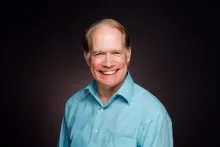
Greg Thomas is the former Pastor of the Cleveland, Ohio congregation. He retired as pastor in January 2025 and still attends there. Ordained in 1981, he has served in the ministry for 44-years. As a certified leadership consultant, Greg is the founder and president of weLEAD, Inc. Chartered in 2001, weLEAD is a 501(3)(c) non-profit organization and a major respected resource for free leadership development information reaching a worldwide audience. Greg also founded Leadership Excellence, Ltd in 2009 offering leadership training and coaching. He has an undergraduate degree from Ambassador College, and a master’s degree in leadership from Bellevue University. Greg has served on various Boards during his career. He is the author of two leadership development books, and is a certified life coach, and business coach.
Greg and his wife, B.J., live in Litchfield, Ohio. They first met in church as teenagers and were married in 1974. They enjoy spending time with family— especially their eight grandchildren.
