
Rick Shabi
This transcript was generated by AI and may contain errors. It is provided to assist those who may not be able to listen to the message.
Brethren, today I've used two major sources in preparation for the sermon. The first was the preacher's outline in sermon Bible commentary. And also, I'm greatly indebted to an article by Andy Cook, who wrote an article entitled, Trusting God After the Worst Day of Your Life. In the early days of the church, many people who witnessed the murder of Stephen felt that it was the worst day of their lives.
Stephen had been one of the most popular and effective men in the early church. And now, he's gone. Let's take a look as we lay a foundation here for the material I want to cover with you. Let's turn over to Acts 6 and see why it was that the early church was so taken by Stephen, and rightfully so. Acts 6, there was a need for men to take care of the widows in the church. Certainly, there were men, the apostles, who were going to take care of the church on a spiritual basis. But there was a need for a physical ministry as well.
And here we see that taking place. A number of deacons here are going to be selected and ordained. Notice what it says here in Acts 6, verse 5. And the saying pleased the whole multitude, and they chose Stephen, a man full of faith and the Holy Spirit.
So let's just notice some salient points about this man, Stephen. He was a man of faith, a man full of God's Holy Spirit. We drop down to verse 6. And Stephen full of faith. A marginal note says it could mean grace. A man full of grace and power did great wonders and signs among the people.
So here we see Stephen was a man full of faith, the Holy Spirit. That was allowing him, with God's help, to do a great number of signs and wonders. Verse 9. Then there rose among some that is called the synagogue of the freedmen, disputing with Stephen. And they were not able to resist the wisdom and the spirit by which he spoke. So here's a man who understands the truth of God, the Bible, God's grace, God's favor, the faith of God, who were able to work in this man to do powerful things.
Stephen was a one-of-a-kind man. People looked up to him. Thousands of new believers worshipped in Jerusalem. They know him. Probably several saw his ordination. And with that, we turn to the very end of chapter 7 of Acts. Stephen is having this discussion with the religious people of his day, some of them. Acts 7, verse 54. And when they had heard these things, Stephen was relating some of the history of Israel and the way God was working with his people.
When they heard these things, they were cut to the heart. They gnashed at him with their teeth. You may have had people you had disagreements with in the past. I don't think too many people have just walked up to you and started gnawing on your arm. But he, being full of the Holy Spirit, this is verse 55, being full of the Holy Spirit, gazed into heaven and saw the glory of God in Jesus standing at the right hand of God. Jesus Christ knew what was coming down. In a few minutes, Stephen would be dead. This is a tremendous trial. And we don't see Jesus Christ sitting on a throne.
When he knows that this man is going through this tremendous trial, he says that Jesus was standing. Brethren, when you are going through tremendous trials, understand that Jesus Christ is standing there with you. Remember the story in the Old Testament, Shadrach, Meshach, and Abednego? Three guys were thrown into the fiery furnace, and then they said, wait a minute, there's a fourth one in there. When you're going through a hard time, you're not by yourself.
You've got somebody there who's there for you, with you, standing at your side. That doesn't mean that you're not thrown into the fiery furnace. That doesn't mean that you don't meet a fate like Stephen here is going to meet. Just because God's standing with you doesn't mean that things aren't going to go the way you and I would like them to go.
But they go the way God wants them to go, for God's own purposes. Verse 56, he said, Look, I see that heaven is open and the Son of Man standing at the right hand of God. So here's Stephen seeing a glimpse of the kingdom of God, in essence, God's throne room. And yet, Stephen's still going to go through some very difficult times.
His life is going to end here. So it shows even though you're a man full of grace, full of truth, full of God's Spirit, have done wonderful things, wondrous things in your life, bad things still happen to good people. Verse 57, Then they cried out with a loud voice, stopped their ears, and ran at him with one accord.
And they cast them out of the city and stoned him. And the witnesses laid their clothes at the feet of a young man called Saul, who later would change his name to Paul, the apostle. And they stoned Stephen as he was calling on God and saying, Lord, Jesus, receive my Spirit. And he knelt down and cried out with a loud voice, Lord, do not charge him with this sin. And when he had said this, he fell asleep. Here's a deeply converted man, close to God. But that closeness didn't allow him to go through the worst day of his life. But I want to talk about that today.
What do you and I do after the worst day of our life? And I want to expand that. Sometimes it's not just the worst day. It could be the worst week, or the worst month, or the worst year, or the worst patch. And as you and I go through life, we don't just have one of those necessarily. You know, as we go through life, there might be a point in life in our 30s where you went through the worst time in your life. But then you get into the 40s and you go through other periods of time that are the worst times of your life.
What do we do? What happened to the New Testament church here? Stephen dies. The church could have just folded right there and then if it was just a church of men. If it was a church of emotion and not the Spirit of God. The killing of Stephen opened the door for all kinds of persecution, for men, for women, for teenagers, for boys, girls.
People would run for their lives. Some of them couldn't run fast enough. Take a look here at Acts 8, verse 1. Now Saul, and again this is the one who became the Apostle Paul. This is Saul, this is him before his conversion, before the road to Damascus. Now Saul was consenting to his death, to Stephen's death. At that time there was a great persecution against the church, which was at Jerusalem. And they were all scattered throughout the regions of Judea and Samaria except for the apostles.
You know, back in those days there were no social nets for anybody. When you left your home, somebody else was going to take it. When you left your belongings, somebody else would take those. And so these people were scattered to the winds, the Christians. And development carried Stephen to his burial and made great lamentation over him. For Saul, he made havoc of the church. He made havoc of the church, entering every house, dragging off men and women, committing them to prison. Years ago when I went to Ambassador College, the library back then, back there and then, was a tremendous treasure trove in itself of old books. Some of the books in the Ambassador College Library were well over 100 years old. Now remember, take a look at the book. It's called The Book of the Apostles. It was so fragile, I almost hated to turn to pages for fear that the pages would tear or disintegrate. The book was so old, and the paper was of such quality that it was a very fragile book. But the book talked about the Apostle Paul and his life. And the author made the point, says, you know, Paul was known as a man who could be all things to all people. But he didn't just learn that after his conversion. Paul used that wonderful ability to be all things to all people here as Saul of Tarsus. He would go into the highways and byways. He would learn where the Christians were meeting. He would palm himself off as a brother in the faith. He was taking names. He was getting locations. And then when he got enough names, enough locations, he got the authorities together and they would make a raid on homes, on churches. And people like us would be dragged off to prison. When the Apostle Paul talked about how he was chief of sinners, he was insane for some sort of special effect. When Paul was saying that he realized that there probably were still people in prison, Christians, that he put there, and they're still there. Now his life has changed. He's now preaching to people, maybe the relatives of some of the people he's put in jail. Mothers and fathers and brothers and sisters. And now he's out and he's converted. He's got to go to these congregations and preach to family members as they're looking at him, and you know, like you're looking at me right now. What if I had put your mother or your father or your brothers and sisters in jail and they're not coming out? It'd be rather tough to come here for services. This man says he's a Christian. And of course he was. But there was a lot of things that happened that were very bad. Acts 22. We're taking a look at the background here, you know, the time of Stephen, the time of the Apostle, or Saul of Tarsus. The Christians were going through the worst times of their life right now. We're going to see what they did about that, what we can do about that. Acts 22. So I said, Lord, they know that in every synagogue I am prison and beat those who believe on you. And when the blood of your martyr Stephen was shed, I also was standing by, consenting to his death, and guarding the clothes of those who were killing him. He wasn't just standing by guarding clothes. He was probably the guy who blew the whistle on Stephen. But again, here's the man who beat the Christians. Chapter 26 of the book of Acts. Acts 26. Verse 10.
What would it take for you to blaspheme God's name? It says here, Paul compelled them. Paul wasn't above torture. He wasn't above beating. He wasn't above taking women and girls as well as men and boys. And carrying them off to jail. It says here, He wouldn't let up. He wouldn't let up. Back in those days, if you were a Christian, you thought, wow, what do I do now?
You know, in my life, I can honestly say I've known several worst days or worst patches. I'm 61 years old now, and I've known my sheriff, those kinds of things. Those of you who have got an age on you, probably every one of us in this room, can think right now as I'm talking about this subject, about times that have been very bad in your life. I'm thinking about the events prior to and leading up to 2003 in my life. This is one example. In September of 2003, after 29 years and one month of marriage, I got divorced from my college sweetheart.
29 years! Getting a divorce. Those are really tough times. It wasn't just the day of my divorce. It was a tough time. All those frankly years and months leading up to that point were very, very difficult. A lot of stress. So much so as I wonder, I was taking a trip one day with Mr. Wreckerly down to Toledo to watch a Mud Ends game, a minor league baseball game. 330 on a Thursday afternoon, going down to Toledo. It's like somebody flipped a switch on this left ear.
Most of my hearing went. I had two specialists look at that ear and they say, well, stress does that. Stress does that. The doctor told me, the one doctor told me, that he had a friend who was a doctor himself. This doctor was going home, entering into his house. On one side of the door, he had great hearing. As he walked into his house, he lost hearing in both of his ears.
Completely down. It's called sudden hearing loss syndrome. They don't know what causes it, other than perhaps stress. Very stressful time for me. I'm thinking, well, how can I even pastor a church if I've been divorced? A church who believes so much in family and the sanctity of family. And here I am. I remember the Sabbath. I announced it to the congregations. Made it a point, if not wanting to announce this during the announcement period, but to let the whole church service go by.
Then I had the song leader seat everybody down after the closing prayer. Then I came up and I announced both Ann Arbor and Detroit. And I can't relate to you how supportive both congregations were to me. I remember the hugs that I received here, the tears that were shed in both congregations. So that delayed my fear. One person in Ann Arbor said, Mr. De Los Angeles, you're concerned about being a divorced man.
Look how many divorced people you've got that you're pastoring. But those were some really dark times. Really dark times. In 1999, my wife Mary went through a five month period that was exceedingly hellacious. From May of 1999 to September of 1999. These are just examples you've got your own that you can relate. In May, Mary's step-brother Peter had a liver transplant. A lot of wringing of hands when something like that's going to happen within the family. In July, Mary also had a very difficult divorce from her husband. The next month, in August, her step-father Lloyd, who you met, I think, had a quadruple bypass. And then the very next month, September, Mary's brother Todd was killed in a car accident.
Todd was 33 years old. Todd was probably Mary's best friend, in addition to her brother. So May, July, August, September of 1999. A very, very dark time for Mary. You've all had your dark times. Chances and prophecy says we're going to have a lot of dark times in the future. What do we do with these dark times? What do we do with them? What will we do in the wake of the worst moments of our life at the time of tragedy or crisis?
Well, those have been so many people. Will these tragedies drive us away from our faith? Or will these tragedies drive us to a closer relationship and trust in God? Last Sunday, Mary and I had some meetings over at our home from the Ann Arbor congregation. We were counseling with one of the people later on who, this individual, had gone through their share of very difficult times. Very difficult times. And this person made mention, like a number of people over the years have to me, that, you know, Mr.
D'Alessandro, these have been just horrible, horrible times. But I've developed such a closer relationship with God as a result. You couldn't pay me to take, you know, I wouldn't want to go through those things again. But having gone through those things, they were able to reveal to me where I was, where I needed to be, and I've got a much closer walk with God.
And that's where it's all about. Brother, when it comes to your worst day, know this. It's possible to trust God after the worst day in your life, as a matter of fact. Trusting God after that day is your only hope. It's your only hope. So today I want to ask and to some degree answer the question, what do you do after the worst day in your life?
Number one, what do you do? Do you remember who God is? Remember who God is? I'm sure that as I've been reminiscing about my life, Mary's life talking about this subject, talking about the early New Testament Christians, you and your hearts and minds have been thinking about times in your life where it seemed everything went wrong. Everything seemed to go wrong. And then, again, what do we do? Why us? Here a couple of weeks ago I went to a funeral.
I wasn't conducting the funeral. It was somebody else conducting the funeral. And the person who died was relatively young. The person who died was a couple of months younger than myself. Grandmother had accomplished a great deal in life. The grandchildren got up and they were showing videos of what Grandma had done with them. There was a slideshow presentation. One of the granddaughters came up and was remarking about how wonderful Grandma was.
The minister said that people many times at times like this, was, why me? The truth of the matter, brethren, is why not us? We're Christians. We're told we're going to walk in the paths that Christ walked. Are we any better than Jesus? Of course not.
We're not perfect. Just ask your mate how perfect we may be. None of us in this room are perfect, and yet we are deserving. If we want to be Christians, we are deserving of walking the same walk as we did in the first Thessalonians 3.
1 Corinthians 3, verse 3, verse 4, The Bible says that if we live long enough, chances are something in our life is going to nearly crush us. Nearly crush us. It could be something that happens to us. It could be something that happens to our children or our grandchildren or all of the above. And like I said, it doesn't just happen once in a lifetime. We can go through some hellacious times and many occasions in our life. But know this. On the worst day of our life, nothing is too hard for God to handle. Write that down.
On the worst day of your life, nothing is too hard for God to handle. Jeremiah chapter 32, verse 4, Jeremiah chapter 32, Jeremiah chapter 32, verse 27, Jeremiah chapter 32, verse 27, Jeremiah chapter 32, is there anything too hard for me? So what you're going through too hard for God to cope with, too hard for God to envision, let's understand something. What you and I go through in life, God is allowing.
Yes, it may be painful for us, just like when we are raising our children. We look at those children, we've got a little one there in the back, a very precious little one. We look at our children, the sweetness in their face, but sometimes our kids, and I'll talk about mine too. They could be stinkers. And sometimes you've got to discipline those kids. And they're crying real tears, and it hurts that you've got to discipline them. Sometimes you've got to corporal punch, other times you take away privileges. But why do we do that?
Because we love them. Because we want them to be better people as they grow. And God does the same for us. He wants us to be like Him, and sometimes He's got to spank us.
Sometimes He's got to deny us privileges. Things we would like to have, and God would love to give them to us. But because we have been kind of cranky, ornery kids, we've been spiritual stinkers, God says, oh, well, no, not right now.
We're going to have to deny you some privileges. But on the worst day of our life, nothing is too hard for God to handle. Isaiah 40. Some people call this the wild chapter. It shows how powerful and mighty awesome our Father is, how awesome and powerful Jesus Christ is. Isaiah 40, verse 12, talking about God who has measured the waters and the hollow of His hand, measured heaven with a span, and the dust of the earth in a measure.
Wade the mountains in a scale, and the hills in a balance. I like to watch these geeky specials on TV. Blue Planet was on just last night. I love watching that stuff. They show what's in the ocean depths and how things survive. They're showing these fish that, up until recently, no one even knew they were down there, and how brightly colored some are, how many are. You can see right through them. God created each one of those, and He functions just so.
It's a beautiful thing to watch. It says here, God's measured the waters in the hollow of His hand. How powerful is that? How beautiful is that? I've taken vacations in different places. I'm out in the water, and a couple of handfuls of water go down my throat the wrong way, and I'm floundering around. But God's created all the oceans in the palm of His hand.
Measured heaven with a span. Our minds aren't even to the place where we can name the various bodies out in the universe. God calls them all by name. It's how powerful, how wonderful He is. And so, that God of that power, that wonder, that majesty, nothing is too hard for Him to handle. Nothing. Verse 15, Behold, the nations are as a drop in a bucket, and are counted as a small dust of the scales. Look, He lifts up the isles like a very little thing. We tend to think, well, our boss is really fearsome, not compared to God. There's no human being that's more fearsome than God, or more powerful than God, or more influential than our father, or our elder brother.
So, on the worst day of our life, remember, nothing is too hard for God to handle. Remember this as well. On the worst day of your life, or the worst time in your life, the nature of God doesn't change. The nature of God, just because you're going through hard times, doesn't mean God doesn't love you. Many times it shows how much God does love us. He doesn't want us to remain the way we are, because we're flawed.
And so God wants to take, and He wants to polish us off, and knock off the rough edges. He wants to refine us. We took a look at the time in the Book of Acts, during the time of the early New Testament Church, the time of Stephen. That probably would have been in the early 30s A.D. Let's fast forward about 30 years.
Let's go into the 60s A.D., toward the end of Peter's life, the end of Paul's life, and take a look at what was happening to the church then. The churches there also were going and having a lot of persecution. Many times they were being scattered.
They can only take what they could carry in their arms, clothes on their back. They never felt safe. All you've got to do is look at the Book of Hebrews, chapter 11, and see how people wandered about on sheepskins, goatskins, living in caves. People don't live in caves unless they have to. Today, when services are done, you're going back to your home. I'm sure you're not going to some cave someplace. Given a choice of going back to some cave, drafty, damp cave, or going back to your home with your color TV and your fridge full of food, you're going to want to go back to your homes.
I've done this before, but I want to do it again. First Peter, chapter 5, verse 7. Let's take a look over there. See the nature of God. On the worst day of our life, God loves us tremendously. God doesn't hate. God never hates. God only is a God of love. That's what He is. Whatever He does for you and I in our lives, it's done out of love, ultimately.
I'm going to read 1 Peter 5.7 and a number of translations, which I've done in the past, but I think it's such a lovely, encouraging, and inspirational way of looking at that particular verse. When you look at other translations, you put the thoughts together. You see the beauty of God's love for each and every one of us.
The first translation I'm going to read out of 1 Peter 5.7 is from the Amplified Bible, where it says, casting the whole of your care, all your anxieties, all your worries, all your concerns, once for all upon Him, for He cares for you affectionately and cares about you watchfully. I would draw your attention to that last phrase. He cares for you affectionately and cares about you watchfully. Same verse in the Living Bible. Let him have all of your worries and cares, for he is always thinking about you and watching everything that concerns you. I think sometimes we're like Hagar. We think that God doesn't see our troubles or our problems.
We're like Hagar. We want to go off someplace and just die. Yet the Bible says He's always thinking about us. He's watching everything that concerns us. Think about, most of us in this room are parents. Think about our kids. Think about the way we think about our kids, our grandkids. We're always concerned. We're always thinking about our kids. We're concerned about what's happening in their lives. We want to be there for them when they're suffering.
We want to hold them when they're suffering. We want to rejoice when they're rejoicing. That's us with our limited ability to love. Now, in the Phillips translation, one that you don't find very often in the Phillips, 1 Peter 5, 7 says, you can throw the whole weight of your anxieties upon Him, for you are His personal concern. That just stands out. To think that this great God who created the entirety of the universe, this beautiful planet we live on, or at least the way God created it, that we are God's personal concern.
So on the worst day of your life, or the worst time in your life, remember, God cares for you affectionately, watchfully. He's always thinking about you and everything that concerns you, and that you are His personal concern. Also, realize on the worst day of your life that God's love for you is not diminished in any way. God's love for you is not diminished in any way. Romans chapter 8. You know the scripture we're going to. I enjoy reading this so much.
It's one of my favorites to read. Romans chapter 8 verse 35. Romans 8, verse 35. Who shall separate us from the love of Christ? Nothing. Shall tribulation, or distress, or persecution, or famine, or nakedness, or peril, or sword? You know all these things that could be considered the worst times of our life, is that going to separate us from Christ? For as it is written, for your sake we are killed all day long.
We are counted as sheep for the slaughter. Yet in all these things we are more than conquerors through Him who loved us. For I am persuaded that neither death, nor life, nor angels, nor principalities, nor powers, nor things present, nor things that come, nor height, nor death, nor any created thing, referring to Satan, any created thing, or human beings, shall be able to separate us from the love of God, which is in Christ Jesus our Lord.
So, on the worst day of our lives, number one, remember who God is. Number two, on the worst day of our life, remember what God can do. Remember what God can do. It's so easy for us to, I've done it, we've all done it, I'm sure, to go through a really hard patch. Our eyes, our minds are on ourselves. That's the human nature. That's the way we're wired. But let's take a look at how the New Testament Church handled these very difficult times. Acts 8, verse 4. Paul is persecuting these people. They are losing their homes. They are losing their possessions. They are walking away or running away from their families, their friends. Horrible times are facing these people. Verse 4, Acts 8, 4. Therefore, those who were scattered went everywhere, and they never made mention of Jesus Christ. They went everywhere, and if they had Bibles, of course they didn't, but if they would have had Bibles, they would hide them. No, no. Therefore, those who were scattered went everywhere preaching the Word, preaching the Word. That little sentence represents an incredible movement in God's people. They are facing the worst times in their life, and yet they didn't allow that to stop them from living the life God wanted them to live. And because of the worst days of their lives, other people were experiencing the best days of their lives. Other people were introduced to the Gospel of the Kingdom of God. Other people were introduced to Jesus Christ as a Savior. And when they found out, these new people found out about Jesus Christ, that was the best day of their life. So sometimes we've got to look at the whole picture, not just us and our own personal sufferings. What can that personal suffering do for other people? We need to focus. They focused. They realized that God had called them for a reason. They weren't just because they were in pain. They weren't about to walk away from the purpose that God had called them. They focused, laser-like, on what their purpose was. Their purpose was to spread the Word of God. Now, it could have been easy for them to think, Why did God let me down? He's all powerful. He says He loves me. Why all the pain? Why didn't God rescue Stephen? Why, if God was going to give Stephen a glimpse of the Kingdom and all of those wonderful things he was able to do, why let a guy like that die? People would say, you know, it doesn't make any sense. Where's God? Where's God in a time like that?
Did God just walk off? No. God loved the New Testament church. He was very much with them and for them. He was standing with Stephen. And here's the point, brethren. At that point, when Stephen was dying, these other people were being persecuted, like the people in Hebrews 11. God was at work in very difficult situations. And sometimes when you and I are going through hell on earth, we are so focused on our pain and our suffering, we don't notice what God is doing as a result of our pain and our suffering.
Here with Stephen, people are being persecuted. They're going out, but they're preaching the Word of God. And the truth of God is going out. And that's what God wanted to take place. Spread the Word! So we spread the people. Well, how do we spread the people? In this case, we're going to give them some persecution.
It's going to strengthen them, and new people will come to a knowledge of the truth. God was working in a difficult situation. But you know, people who were suffering may not have seen that immediately. They may not have seen it in many years. Or they may not have seen it at all in their lives. They may have gone to their grave, never really truly understanding why it was God was doing what He was doing.
But He was doing something. He was doing something very powerful. He was working in a very difficult situation. Faith is believing that God is at work during the worst days of our life, even when we don't know why. Even when we don't know why. We, as human beings, especially here in our modern age where we've got technology everywhere, we've got it in our hands.
Some of you don't even bring a Bible. Some of you bring your little smartphone, and you've got your scriptures right there. I remember for a couple of years when those smartphones first came out, I got really ticked as a minister. I'm looking at the audience. They don't have the Bible. They've got their phone there, and I think they're texting people. And I finally come to find out they're not texting people.
They've got their Bible read in their phone. And I say, with John 3, verse 5, and they've got John 3, verse 5 right there, I thought they were texting their friends! But in this technologically wonderful age, we want information. We want it yesterday. Yet there are times when God doesn't always give us the information as fast as we would like, because He wants to develop trust in Him, faith in Him, patience in Him, reliance upon Him.
No questions asked. But you know, as these people are going through these very difficult times, there are lessons they learned. I was just thinking about that as I put the message together. Lessons that it's good for all of us to learn. That this world and all it represents is not to be desired. When I go to that Veterans Hospital to visit Howard Hagan or whoever I'm visiting in any hospital, and you're walking down the halls and you're seeing the people and all the misery that is there, all the crime that is there, this world, when we're young and we're strong and we're vibrant, we have a certain view of life.
Then we begin to age. And we begin to see that flesh is just not to be desired. We begin to see that as strong as we thought we were when we were kids, we are powerless in the face of life. Time doesn't stand still for any of us. We are powerless. On the other hand, we see that God is all-powerful. We see that God is a God who says in the book of Job, he has a desire to the work of his hands.
Every time I do a funeral, I read Job 14, the oldest book in the Bible is the book of Job. Job asks, if a man die, will he live again? And Job answers that question by saying yes. All the days of my hard service, you will call, Father. You will call. You will have a desire, the work of your hands.
Job 14 verses 14 and 15. We realize as we go through these troubling times in our lives that salvation only comes from God. It doesn't come from any other source.
As well-intentioned as various sources could be, salvation only comes from God. As wonderful a nation as this is, and we all believe that the United States of America is a wonderful nation, we look for the Kingdom of God. We look for the Kingdom of God. Jeremiah chapter 29 verse 11. Let's take a look at God's thinking. Jeremiah 29 verse 11. God says, For I know the thoughts that I think toward you.
And let's take this personally, individually, all of us. For I know the thoughts that I think toward you. Put your name in the blank there. Says the Lord, Thoughts of peace and not of evil, to give you a future and a hope. Then you will call upon me and go and pray to me, and I will listen to you. And you will seek me and find me when you search for me with all of your heart. I will be found by you. This is always what God wanted from the days of Adam and Eve. But Adam and Eve wanted to run away and hide from God. So God had to perform this 6,000 year experiment to show mankind in the only way mankind would ever appreciate and really fully get.
But God's ways are the things that really count. So point number two, remember what God can do.
And lastly, we're asking the question, what do you do after the worst day of your life? Number three. Number three. You allow God to keep working through you.
You allow God to keep working through you.
Go back to Acts chapter 8 again, please.
The brethren have been scattered. We saw there in Acts chapter 8 and verse 4, they're going different places of preaching the Word of God. Let's expound on that a little bit more here. Acts chapter 8 starting here in verse 5. Acts 8, 5.
Then Philip went down to the city of Samaria and preached Christ to them.
Now let's hold on a minute. Hold on a minute.
When we read earlier about the people who were ordained as deacons, let's put a finger here in Acts chapter 8. Go back to chapter 6 for a moment.
Acts chapter 6 verse 5.
And the saying flees the whole multitude, and they chose Stephen a manful of faith and Holy Spirit. And Philip was named right after Stephen. It could well have been that Philip and Stephen were best buds. I'm sure they probably stood shoulder to shoulder through some very difficult times. I'm sure that they served the church with great zeal tirelessly. I'm sure there were many times that they would sit down to break bread and eat one with another, and they would talk about the day's activities, how exhausted they were, and they truly loved one another.
But after Philip's friend Stephen was martyred, Philip then just put his tail between his legs and go somewhere and just sulk.
After one of the worst days in Philip's life, what did he do?
Philip went down to the city of Samaria and he preached Christ.
We've got a choice when bad things happen to us. We can sulk, we can have a pity party, and I've had party favors in my pity parties. There was a time I've had... I'm pretty good at that.
I'm sure there are probably a number of us in this room who are probably pretty good at having pity parties. You'll have the little hats, the little things that blow out there.
But what's wrong with you? I'm pitying myself. Woe is me. Philip didn't do that.
Philip went down to the city of Samaria and preached Christ to them.
And the multitudes with one accord gave heed to the things spoken by Philip here and seen the miracles which he did. Had Philip not put one foot in front of another, taken a breath, if he would have just caved into the circumstances, then these people would not have seen and heard the miracles. They wouldn't have been touched by God's Spirit in a powerful way.
And so are we going to allow Satan to rule us? Are we going to allow Satan to fence us in because we're having bad times? Or are we going to be the fighters God called us to be?
The multitudes with one accord gave heed to the things spoken by Philip here and seen the miracles which he did. Verse 7, For the unclean spirits crying to the loud voice came out of many. Unpleaning spirits, demons. Had Stephen just folded, that would not have happened.
And many who were paralyzed and lame were healed. Miraculous healings. Miraculous healings.
Philip focused on what was needed. And brethren, after the worst days of our life, for the worst, roughest patch of our life, we need to focus. Focus on what God wants us to do. A laser-like focus. Recalibrate our minds. Re-adjust our thinking. Making sure that we are doing the things that God would have us do.
You know, as I said earlier in the sermon today, we can either abandon our faith, we can sit down on the sidelines, we can cry, we can pout, we can have our pity parties, or we can move forward. We can take a breath. We can put one foot in front of another foot. Sometimes when you go through a crushing time in your life, you literally feel that's what you have to do. One foot in front of another. Very slow progress, but you're going to keep on moving. You're not going to sit down. And you know, if you do those things, God will be with you there to support you, to be there for you. On the other hand, if you sit down, God says, well, you know, I can't help somebody who's not going to help themselves.
Hebrews chapter 10. We've been talking a lot about Hebrews. Let's go back to Hebrews chapter 10. We want to look at the end of the 10th chapter, which is the beginning of the introduction to the faith chapter. Hebrews chapter 10, verse 38.
Now the just shall live by faith, shall live by it.
Not succumb to the negativity of the life around us, but the just shall live by faith.
But if anyone draws back, my soul has no pleasure in him.
And once again, we can ask ourselves if life has treated us, given us a bad hand of cards, are we pulling back? Are we drawing back?
But we are not of those who draw back to perdition, but of those who believe to the saving of the soul.
We're not victims, brethren. We're overcomers, and there's a difference.
We're not victors, we're overcomers.
Chapter 11, now, the faith chapter. Now, faith is the substance of things hoped for, the evidence of things not seen. Maybe right now you're going through such a period, a rough patch in your life, and you don't understand why, or somebody that you love is going through a rough patch, and you don't understand why.
And maybe God simply has not revealed why at this point.
But we realize, in faith, that it's for our, because of who we know God is, it's for that person's best, or our best. And at some point in the future, if not in this world, in the kingdom, God will reveal why we're going through what we're going through.
Verse 3, by faith we understand that the worlds were framed by the word of God, so that the things which are seen were not made of things which are visible. In other words, what Paul is saying here in verses 1 and 3, is there is a spiritual dimension that we as Christians live in, a spiritual dimension. Faith deals with unseen factors. There is a spiritual dynamic at work that sometimes we, as physical people, just don't see. Sometimes our mind doesn't comprehend. But faith realizes that God is doing His will, and we're going to abide by that. Let me give you a few practical things we can do when we feel numbed by our trials. A few practical things we can do when we feel numbed, when we feel like we can't move forward, we can't take another step. Romans chapter 15.
Romans chapter 15 verse 4, For whatever things were written before were written for our learning, that we through the patience and comfort of the Scriptures might have hope.
Through the patience and the comfort of the Scriptures. The Scriptures give us comfort. The Scriptures are the thoughts of God in black and white, in writing. It's a portion of His mind, and He gives us hope when we are numbed by what has happened in our life.
So we want to keep our nose in the Word of God and read it over and over. So many times the people who are going through these difficulties will read the book of Psalms and will read them over and over. And why? Because the people who wrote the Psalms are real people. They experience real things, and God loved them for it. When they were like David, there were times David was just angry with God.
God said, I can work with that. I can work because God knew that David, he would have his little fit, then he would repent, he'd come back to where he needed to be. David was whole, when he was angry, he was wholehearted in his anger. Wouldn't want to be around that redhead. You know?
David was a redhead. I know a little bit about redheads.
Of course, she's never angry. But when David was loving, David was a loving man. He was a giving man. When he was singing, he was praising God with his whole being. And you go through the Psalms, and you see that over and over. Regardless as to who wrote the various Psalms you're looking at.
And God likes to see that in us. That we are people who are changeable and moldable, that we can be worked with. But we've got to keep our nose in the Scriptures. Psalm 55.
Psalm 55.
And verse 17.
Psalm 55 verse 17. Evening and morning and at noon I will pray and cry aloud, and he shall hear my voice, praying at all times. You know, there are a number of different times in the New Testament where it talks about be fervent in prayer, be instant in prayer, pray at all times, those sorts of things. Here we see, you know, three times a day. When you start your day, midday at the end of the day, talk to God, pour out our hearts, pour out our feelings. Let God know what's on your heart and mind. And then as you study, God will start directing you to what you need to be studying.
And help you to see things that maybe you've not seen there before.
Ephesians chapter 5. Another practical thing to say is praying and studying. Ephesians chapter 5.
Ephesians chapter 5 verse 20.
You know, it's not enough just to pray and to study. God wants us to gather our wits about us, to spend time and actually thank God for what we're going through. Realizing His love for us, realizing that these things are for our betterment, and these are difficult things to do.
You might be talking about a death of a loved one. You know, a number of us have experienced that in the recent past.
Other issues, you know, people who are just dreadfully sick. These things are not easy to go through, especially if there's people who are dreadfully sick, or maybe younger people, or things of that nature. But we give thanks to God not because they're sick, we give thanks to God because God has a plan. Because God has a plan. And that's what we're going through. Not because they're sick. We give thanks to God because God has a plan. Because God has a kingdom.
And this flesh won't always be here. But God's kingdom will come, and there'll be another world, a better world. And the people that we care about, you know, probably 99.9% of all people who've ever lived will have that opportunity for salvation and accept it. Probably just a very few will reject God over the years. So we can have faith and hope in that. One other thing I would add over here, Hebrews chapter 10. And this is something that many times can go by the boards for too many Christians. This particular thing that we see here, a practical thing we can do when we feel numbed.
Hebrews chapter 10.
Verse 23.
Let us hold fast the confession of our hope without wavering, for He who promised us faithful, and let us consider one another in order to stir up love and good works, not forsaking the assembling of ourselves together as the manner of some, but exhorting one another, and so much the more you see the day approaching.
Over the years I've seen so many who say, well, I just don't want to go to church.
I don't feel good. I don't want to go to church. I'm just going to take a mental health day, and then that comes into two or three. We need one another.
We need to be here for one another. Listening to a CD at home is good if you're sick, but if you're not sick, you need to be here. You need to be here. You need to ask God to give it to you to be here. And again, I know that as you go through crushing trials, and I've had my share, you know, it was no great fun for a number of years for me to come to services every Sabbath and preach when my life was falling apart. It was difficult. It was very difficult. A lot of prayer went into a lot of those sermons because, you know, I felt, who am I to be giving, you know, my life is falling apart here. At least I felt it was falling apart. You probably had times when you felt your life was falling apart, and you wanted to be a... you felt like you were being a hypocrite by coming to church. Now you're not a hypocrite. That's why we've got the Passover. Passover shows we're all sinners, and we have need. We have a tremendous need for our Savior.
Now, brethren, there are no quick fixes for these worst days, these worst patches. When they come, they come. We have to wade through them. But just as Jesus Christ stood with Stephen, just as Jesus Christ stood with Shadrach, Meshach, and Abednego, please understand that God will stand with you. The trial's not... doesn't mean the trial's going to go away. It doesn't mean the trial will be lessened to any. But God will be there to help you, to guide you, and to be there so that you can be a victorious overcomer.
One last scripture for today, and we'll end early. Acts chapter 8. Let's go back there one last time.
Acts chapter 8. We saw Paul at the beginning of the first three verses, persecuting the church. Or, Saul's name was at that point. Persecuting the church. Churches are being scattered. We see the membership, the rank and file in verse 4, going every place, preaching the Word. So, out of this awful tribulation, something good is coming here. Then we see verses 5, 6, and 7, where Philip, a close personal friend of Stephen, he doesn't allow what happened to Stephen just to cave him in. He doesn't give in to the emotion of the moment. Emotion is a wonderful thing, but we don't cave into emotion. We live by God's Spirit, the strength of our minds. But now notice, verse 8. Acts chapter 8 and verse 8. And there was great joy in that city.
So where there had been great lamentation, now there is great joy, we can turn the worst day into something very positive.
I remember so distinctly in 2003, getting that divorce. But I also remember that in 2003, I met somebody called Mary.
So what are we going to do? We can take the worst day of our life and be crushed. Or we can take the worst day of our life and with God's help turn it into a great joy.
It's up to us. Only we know the answer to what we're going to do.
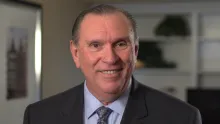
Randy D’Alessandro served as pastor for the United Church of God congregations in Chicago, Illinois, and Beloit, Wisconsin, from 2016-2021. Randy previously served in Raleigh, North Carolina (1984-1989); Cookeville, Tennessee (1989-1993); Parkersburg, West Virginia (1993-1997); Ann Arbor and Detroit, Michigan (1997-2016).
Randy first heard of the church when he was 15 years old and wanted to attend services immediately but was not allowed to by his parents. He quit the high school football and basketball teams in order to properly keep the Sabbath. From the time that Randy first learned of the Holy Days, he kept them at home until he was accepted to Ambassador College in Pasadena, California in 1970.
Randy and his wife, Mary, graduated from Ambassador College with BA degrees in Theology. Randy was ordained an elder in September 1979.
