

Rick Shabi
This transcript was generated by AI and may contain errors. It is provided to assist those who may not be able to listen to the message.
Brethren, in the early days of the church, many people who witnessed the murder of Stephen felt it was the worst day of their lives. Stephen had been one of the most popular and effective men in the early church. Let's turn over to Acts 6, where we're going to be introducing ourselves to Stephen. Acts 6.
Acts 6, verse 1.
Then at 12, summon the multitude of the disciples, and said, It is not desirable that we should leave the word of God and serve tables. Therefore, brethren, seek out from among you seven men of good reputation, full of the Holy Spirit and wisdom, whom we made a point over this business. Now, please note, we're about to see the ordination of the first deacons in the church. And notice, the office of deacon, even though we ask our deacons to do physical duties, it's not, you know, the qualifications are largely spiritual in nature. They are to be men full of the Holy Spirit and wisdom. So, it's not just that a deacon is somebody who just does physical labors, and that's all. We can hire people to do physical labors. Our deacons and our deaconesses are men and women of good, solid, spiritual standing, who also want to serve the needs of God's people. Verse 4. But we will give ourselves continually prayer into the ministry of the Word, and it's saying, Please the whole multitude, and they chose Stephen, a man full of faith and the Holy Spirit. So, here we see something about Stephen. We see in verse 3, where it talks about how they need to be full of the Holy Spirit and wisdom.
And here in verse 5, they say, Here's a man who is also full of faith. Full of faith. We drop down to verse 8. And Stephen, full of... And the word here that you see in your New King James, for faith could be translated, Grace.
And Stephen, full of grace and power, did great wonders and signs among the people. So, this early New Testament church was familiar with Stephen. They loved Stephen. He was a man full of wisdom, faith, and grace. He was a man that did great wonders and signs. Verse 9. Then there arose from what is called the synagogue of the freedmen, Cyrenians, Alexandrians, those from Silesia and Asia, disputing with Stephen, and they were not able to resist the wisdom and the spirit by which he spoke. Now, we see that today in our Beloit congregation. We've got men who are ordained men, elders, elder, and deacons, who are wise individuals.
They are full of God's Holy Spirit, and they speak to us of things we need to hear. We're very thankful for those men who serve the Beloit congregation. And the people back then were very thankful for people like Stephen. Stephen was kind of a one-of-a-kind sort of a fella in many ways, much respected. People looked up to him. Thousands of believers now are probably familiar with who he was. But take a look now at chapter 7.
The end of chapter 7, we're going to see where Stephen is martyred. Acts chapter 7, starting in verse 54. Prior to going to verse 54, I just want to relate that Stephen gives a message to the people there. This is the longest recorded message in the whole book of Acts. It's the longest one single recorded message in the whole book. The message deals with God's grace, God's mercy to Israel. Israel would rebel and sin, and God would forgive them, expect them to live properly and righteously, but they would rebel again, and so forth.
Stephen gives this address, a very long address, but something Luke felt was necessary as he wrote the book of Acts. Verse 54, Now when they, the crowd, heard these things, they were cut to the heart and gnashed at him with their teeth. How angry do you have to be at somebody to go up there and start biting them?
But he, being full of the Holy Spirit, gazed in heaven and saw the glory of God. And Jesus standing at the right hand of God. Brethren, when you are going through trials in your life, I want us to appreciate something. And I want us to appreciate the fact that Jesus is not just twiddling his thumbs as you are going through some really rough patches in your life. He's not just sitting around. It says here, Jesus was standing at the right hand of God. There are those in this room right now who are going through health issues, all sorts of other kinds of issues, interpersonal issues, maybe all of the above.
And Jesus Christ is standing with you as you go through your trials. Verse 56, He said, Look, I see the heavens open and the Son of Man standing at the right hand of God. So as we go through our trials, verse 56 says that God wants to encourage you in those trials. You and I need to look for that encouragement as we go through our trials. God will give it to us. Then they cried out with a loud voice, stopping their ears, ran at him with one accord.
They cast him out of the city and stoned him. Brethren, can you imagine how much pain and anguish that would be to be stoned? And the witnesses laid down their clothes at the feet of a young man named Saul, who later on God would convert and he would go by the name of Paul, Paul of Tarsus.
And they stoned Stephen as he was calling on God and saying, Lord, Jesus, receive my Spirit. Then he knelt down and cried with a loud voice, Lord, do not charge them with this sin. Now, who does that sound like? Well, it sounds exactly like Jesus Christ, doesn't it? And when he had said this, he fell asleep.
Now, the killing of Stephen opened the door for all kinds of persecution. Men, women, teenagers, boys, girls, no matter what the age, no matter what the social or economic standing they had, they were, many of them, running now for their lives. And many of them couldn't run fast enough. Let's take a look at chapter 8 of the book of Acts. Now Saul was consenting to his death, to Stephen's death. At that time, a great persecution arose against the church, which was at Jerusalem. And they were all scattered throughout the regions of Judea and Samaria, except the apostles.
They were scattered. Again, understand something, brethren. These people didn't have a social safety net. When they left their homes, they left everything. They might have been able to pick up a few things, throw it in a wagon, but maybe not. And so what these people were looking at is financial ruin. They may have had to leave families behind, because not everybody in their family was a Christian.
Verse 2, and devout men carried Stephen to his burial and made great lamentation over him. As for Saul, he made havoc of the church, entering every house, dragging off men and women, committing them to prison. We know the Bible talks about how Paul had the ability to be all things to all people. But understand something, brethren. Paul had that ability prior to his conversion. Understand that as Saul was seeking to persecute the Christians, he was also being all things to all people. He was also going to groups, acting like as though he was a believer, getting inside of the groups, taking names, turning in names, having people persecuted, beaten, thrown in jail.
Is it any wonder when Paul was writing to Timothy, he said, I am of the sinners, I am chief? Because as Paul then, after his conversion, began to go to local congregations like this, this is probably a fairly typical congregation back in New Testament times, these kinds of numbers. Can you imagine standing here, if you were Paul, and looking at the audience, realizing this one's husband you threw in jail, that one's mother you had beaten, and some of those people were still in jail.
Here is Paul talking to them. Can you imagine, brethren, if you were in those churches and you were in that audience, and the fellow who was giving the sermon was the one who beat your mom or your dad or had a relative thrown in jail, can you imagine how difficult that would be to listen to that sermon? These people went through an awful lot. An awful lot. Chapter 22 of the book of Acts. Chapter 22 of the book of Acts. Verse 19. So I said, Lord, they know that in every synagogue I am imprisoned and beat those who believe on you. And when the blood of your martyr Stephen was shed, I also was standing by, consenting to his death, and guarding the clothes of those who were killing him.
Chapter 26 of the book of Acts. One last short discussion about Saul. Acts 26, verses 10 and 11. This I also did in Jerusalem. This is Acts 26 verse 10. This I also did in Jerusalem, and many of the saints I shut up in prison, many of the saints I shut up in prison, having received authority from the chief priests, and when they were put to death, I cast my vote against them.
I punished them often in every synagogue and compelled them to blaspheme. Brethren, what would it take for somebody to compel you to blaspheme? Think about that for a moment. Think about the pain and the anguish you would have to be put to, to have that happen in your life, and compel them to blaspheme, and being exceedingly enraged against them, I persecuted them even to foreign cities.
Brethren, if the early church had written a book entitled, The Worst Days Ever, I'm sure that many a chapter would be written during this period of the church history with Saul of Tarsus persecuting the church. Over the course of my life, I've known many days I would say have been the worst day of my life. We're coming up to an anniversary of one of them. And of course, as you live life and you lived any kind of a life, you go through life and there will be a period where that's the worst time of my life that you may live another few years.
Well, that's now the worst time of my life. But on August 28th last year, they wheeled me into a room that was nice and clinical and bright and white. They put me to sleep, cracked open my chest, stopped my heart, put me on a machine, did four bypasses, then they had to kickstart the heart and give me medications so my heart would know what to do again because you have to retrain the heart. I'm still on those medications. I could say that was one of the worst days of my life.
Today, brethren, I'm going to ask a question and hopefully begin to answer that for us. What do you do after the worst day in your life? What do you do? What do you do after the worst day in your life? Now, let me define day here for a moment. I want to define it here and then not have to go back to that definition.
The worst day would include any time period in your life that was very painful. It could be a day, it could be a worst week of your life, it could be the worst month of your life, or it could be a number of years. It could be a number of years in your life that were just awful. In 1999, my wife Mary went through a five-month period that was the worst five-month period in her life to that point.
In May of 1999, her step-brother Peter had a liver transplant. In July, she got ahead of divorce. A very difficult situation. In August, next month, her step-father Lloyd had a quadruple bypass. The next month, September, her brother Todd Snyder, who used to give sermonettes in Chicago, Todd was killed in a car accident at age 33. That's a rough five-month period. Those are some of the worst days of her life. So again, brethren, I ask a question. What will you and I do in the worst times of our life at that time of tragedy or crisis?
Will those days drive us from our faith? Or will those days drive us to a new depth of faith and a new trust in God? At the end of the age, we're going to see both. As Satan takes his turn getting at mankind, and especially getting at the church, we're going to see some Christians being driven from their faith and other Christians being driven to a new depth of faith and a new trust in God. What do you do after the worst times of your life? It is possible to trust God.
In fact, trusting God during those times is the only hope you and I have. So I've got three points here for you today. We're asking the question, what do you do after the worst times in your life? I'll substitute times per day and make it a little easier. What do you do after the worst times in your life? Number one, you remember who God is. You remember who God is. Because God doesn't change.
We can go through some really wretched times, but He's still God. We remember that He's still God. I think there are times when, especially many years ago when we were all a lot younger in the faith, I think some had the impression that real Christians, real believers, people who were deeply converted, never got depressed.
We should always go through life with a smile on our face. I remember some people going through life like that, and I always felt like I needed to grab them and shake them. So you know, life's just not like that. They were trying to have a good attitude. I appreciate that. Real Christians can be blue. They can be depressed.
I'm not talking about clinical depression here. I'm talking about people feeling down, depressed. Look at 2 Corinthians 1. 2 Corinthians 1. Think Paul ever felt down. Think Paul ever felt blue. 1 Corinthians 1. We want you to be ignorant, brethren, of our trouble which came to us in Asia, that we were burdened beyond measure, above strength, so that we despaired even of life.
Sounds like he was down there, doesn't it? Sounds like he was having a rough patch in his life. He was burdened beyond measure and above strength. In 1 Corinthians 1, he talked about how God would not give us a trial that he won't deliver us from. But that's the key. When we're going through these times that are beyond measure, above strength, if we try to do it on our own, we will break. But we must do it with God's help. We must do that with God's help. We must allow those trials to drive us closer to Him.
1 Thessalonians 3. 1 Thessalonians 3. 1 Thessalonians 3 and verse 3. 1 No one should be shaken by these afflictions, for you yourselves know that we are appointed to this. We are appointed to trials. We are built for trials and afflictions. Verse 4. In fact, we were told before when we were with you that we would suffer tribulation. So Christians, you as a believer, me as a believer, we were designed to go through trials.
So when I say, when you're going through one of the roughest patches in your life, what do you do? 1. Remember who God is. Remember who God is. And let's drill down a little more specifically about that. And if you'd like to take notes, I'll even outline this for you.
Letter A. On the worst day of your life, nothing is too hard for God to handle. Nothing is too hard for God to handle. Let's go to Jeremiah 32, verse 27. Behold I am the Lord, the God of all flesh. Is there anything too hard for me? God says, is there anything too hard? Brethren, what Mount Everest are you staring up at right now? What Mount Everest? Some in the room have health issues.
Some in the room have interpersonal issues. Some in the room may have job issues. As I said, some of you may have all the above and more than that. But is any of that too hard for God? Is any of that too hard for God? Of course not. Of course not.
Let's look at what some people call the WOW chapter of the Bible. It's over here in Isaiah 40. Isaiah 40. Let's take a look at Dad. Our Dad. Our Father. Isaiah 40, verse 12. God talking about himself. Who has measured the waters and the hollow of his hand. Measured heaven with a span. Calculated the dust of the earth as a measure. Weighed the mountains and scales and the hills and the balance. Truly, WOW, our God, is a tremendous God. Verse 15. Behold, the nations are as a drop and a bucket. And are counted as the small dust on the scales. So do we have people issues? Notice how God views the whole world full of people. Look he lives up the isles. There's a very little thing. Dropping down to verse 22. It is he who sits above the circle of the earth. Brethren, this is written when people thought the earth was flat. And here we have a scientific fact. He who sits above the circle of the earth. And its inhabitants are like grasshoppers. Who stretches out the heavens like a curtain and spreads them out like a tent to dwell in. You know, I'd like to expound a little bit on the end of verse 22. Who stretches out the heavens like a curtain and spreads them out like a tent to dwell in. I'd like to advertise something. If you have a computer and you like to go watch video clips and what have you. There is one that a member sent me from the Detroit church back when I was in that area. The name of the video is The God of Wonders. You might want to write that down. The God of Wonders. This video clip goes an hour and 25 minutes. It's not a shorty. It's like a full length movie. It's done excellently. What you have there is great pictures. You've got great video. The thing that makes this so interesting is all of this is done by very learned people in their fields. There are various PhDs and so on and so forth. None of these scientists are evolutionists. All of these scientists believe in God. All of them believe in creation. To give you an example, there was one clip where they showed our sun and our earth. They showed how our earth looked like a little pebble compared to a big beach ball, which is our sun. Then they took our sun and they put it next to the next biggest star. Our sun looked like a pebble and the other star looked like a beach ball. They did that several times until you got to the place where they said, now let's take a look at our sun and the other planet. You almost couldn't see our sun. I think they said you could put one million of our suns in the other star. Our dad made that!
That's why they would go through in that movie and show all about birth, what takes place in the woman, and how the babies grow and develop. They go through seven different types of disciplines showing how that could not have evolved. It was so good that when all of a sudden done, I made mention of various clips during the course of a couple of weeks, two or three weeks, the brethren in Ann Arbor, Detroit, said, we want to buy that thing. Let's get together as a group. So we ordered 125 of those. When you ordered 125, we got the cost of that down to $2.88 of DVD. I still have mine at home, and we watch that occasionally. So it's really something very good. But on the worst day of our lives, let's remember there's nothing too hard for God to handle. On the worst day of our life, or the worst times of our life, let her be. Let us remember the nature of God doesn't change. The nature of God doesn't change. We talked about the believers during the Paul or Saul persecuted. Also, there were believers in Peter's time, same time as Paul's time. They also were facing terrible persecution. They had been forced to flee for their lives. They had to leave everything behind, homes, jobs, possessions. They could only take perhaps what they could carry. So they were bereft of so many things before they had. So Paul, or excuse me, Peter wrote 1 Peter with that in mind of what some of the believers were going through. And I've quoted this to you before, and I'll quote it to you many times before I leave the area, whenever that's going to be. But you might put Jot down in your notes 1 Peter 5 and verse 7.
I'm going to read this in three different translations, probably none of which you've got sitting on your lap. 1 Peter 5.7 in the amplified. 1 Peter 5.7 in the amplified. Casting the whole of your care, all your anxieties, all your worries, all your concerns, once and for all on him, for he cares for you affectionately and cares about you watchfully. Notice the phrasing, cares for you affectionately and cares about you watchfully. Same verse, 1 Peter 5.7 in today's Living Bible. Let him have all your worries and cares, for he is always thinking about you and watching everything that concerns you. I don't know about you, but those phrases encourage me that God cares for me affectionately and cares for me watchfully, that he is always thinking about me and watching everything that concerns me. And being God, he can do that for each and every one of us. And lastly, my favorite, and I've quoted this before, 1 Peter 5.7 in the Phillips, which is just a New Testament translation. 1 Peter 5.7 in the Phillips says, you can throw the whole weight of your anxieties upon him, for you are his personal concern. In my notes here, I put all those phrases that mean so much to me in red lettering, for he cares for you affectionately and cares about you watchfully. He's always thinking about you and watching everything that concerns you, for you are his personal concern. You know, when you feel down, when you feel blue, when you feel life is, you know, you're hanging by a thread. Please remember, on the worst times of your life, the nature of God doesn't change. Let her see, let her see. On the worst day of your life, God's love for you is not diminished. On the worst day of your life, God's love for you is not diminished. Romans 8, you know, if we all had a dollar for every time somebody read Romans 8, the verse that I'm about to quote, probably make a pretty good car payment or house payment. Romans 8, verse 35. Romans 8, 35. Who shall separate us from the love of Christ? Shall tribulation or distress or persecution or famine or nakedness or peril or sword?
No. God's love for us is not diminished. For as it is written, for your sake we are killed all day long. We are accounted as sheep for the slaughter. Yet in all these things we are more than conquerors through Him who loved us. Notice, more than conquerors. More than conquerors. Not because of our strength. More than conquerors through Him, through Christ, who loves us. For I am persuaded that neither death nor life nor angels nor principalities nor powers nor things present or things to come nor height nor depth nor any other created thing which easily could refer to Satan shall be able to separate us from the love of God which is in Christ Jesus our Lord. So brethren, on the worst day of your life, or the worst times of your life, please remember who God is. That nothing is too hard for God to handle. That the nature of God doesn't change. And God's love for you is not diminished. That's point number one. Point number two. The worst times of your life, what do you do? Number two. You remember what God can do. We are remembering who He is, but now we are remembering what He can do.
Let's go back to Acts 8 again. Acts 8. We saw in those first three verses how Saul was making havoc of the church, persecuting the church, driving people into all sorts of cities. They were facing financial ruin, families being split up and broken up. So what did those people do? Am I talking pie in the sky here, or do we have biblical record for what those people did during the worst times of their life? Verse 4. Acts 8. Therefore, those who were scattered went everywhere preaching the Word. Preaching the Word. You know, in my Bible, it's just a short little sentence, but that short little sentence represents an incredible movement by God's people. They spread the Word. Biblical studies were started. Churches were raised up. People were baptized. People were married in the faith. And a lot of that was taking place because they had been scattered. People can say, why did God just simply put an end to this? You know, why did God let them down? Why did God let Stephen die? Why didn't God rescue Stephen? If God was going to allow Stephen a glimpse of the kingdom, why not simply stop those people from throwing rocks? Well, the bottom line is, we are appointed to trials and tribulations. And, brethren, let's also be honest about something. Just because we're in a church doesn't mean we are in some special category. You've got plenty of friends and relatives and next-door neighbors who go through trials. They're probably not in the church. They go through things, too.
But we are blessed because we know why we go through a trial. And we also know not only why, but how to go through a trial successfully. Now, some of these Christians, perhaps, it took years. It took years to answer the questions in their own hearts and minds why God would allow Saul of Tarsus to so persecute a group of people and then have Saul of Tarsus preach to them and serve them.
Probably took a number of years for them to understand all of that. Just like if you remember back to when you first read Mr. Armstrong's autobiography. And you remember reading where Mr. Armstrong saw that he needed to keep the Holy Days.
He didn't know what they represented, but he knew he needed to keep them. So for seven years, he kept those Holy Days not understanding why. Just like Abraham, Abraham was told to go into a fire country. He didn't understand why. But, brethren, that's what it means to live by faith. When you live by faith, you don't have all the answers.
When you live by faith, you do what God in the book says by the principles that the book shows us. Faith then is believing God is at work during the worst times of our life, even when you can't understand why you are going through what you're going through.
Having faith is recognizing he can bring good out of the worst days of your life. Having faith is realizing God is in control, and God is good, and God has your best interests in mind. The worst times of our lives teach us many valuable lessons. Many valuable lessons. Just this last week, my wife and I were visiting a woman in the Chicago congregation. She can no longer attend services. On the 15th of this month, she'll be turning 94. She's losing her hearing. Thankfully, my voice resonates pretty well, and she is able to hear me pretty well. A lot of people have to basically yell into her ears so she can hear them.
One of the things she reminded me of—I didn't need to remind you, but she made it a point to make sure this young guy was 64 years old. She's 94. I'm 64. I'm a kid. You don't hear that very often unless somebody is in their 90s and they want to talk to you. When I was in North Carolina, we had a lady. Her name was Mrs. Armstrong. No relation to Mrs. Armstrong. She was in her 90s. One day, she walked up to a group of deacons who were sitting there talking about how we needed to do this or that in the local church.
She walked up to these—she's 90-something—50-something-year-old deacons and said, Boys, what are we going to do about this? Not too many people in her 50s think they're boys, but she did. During the worst times of our lives, we realized that this world and all it represents is not to be desired. This world and all it represents is not to be desired. We've got some believers, we've got some baptized people who kind of enjoy this world. I've heard people say it. Normally, those are young people in their 20s. They're rising up the corporate ladder. They're making a big buck. They've got a nice house, a nice car.
They've got good health. I tell them, trust me, as you begin to park your teeth on the nightstand next to you, when you get up and you have to see which part of you works and which part of you doesn't, then you realize that this world and all it represents is not to be desired. We also realize, in the face of trouble, we are powerless. That's why God allows us to age. In the face of such trouble, we are powerless. The older we get, the weaker we get, the more we are supposed to be driven to God and His power. It is God we are to look to.
We learn that salvation can only come through God, no other source. God wants us, because we're going through all these things, to focus with a laser-like focus on His Kingdom. Let's go back to Isaiah 40, the WOW chapter. Isaiah 40. Isaiah 40, verse 28. Have you not known? Have you not heard the everlasting God, the Lord, the Creator of the ends of the earth? Neither faints nor is weary. His understanding is unsearchable. He gives power to the weak, and to those who have no might, He increases strength. Even the youth shall faint and be weary, and young men shall utterly fall.
But those who wait on the Lord shall renew their strength. They shall mount up with wings like eagles. They shall run and not be weary. They shall walk and not faint. Those who wait on the Lord. A couple of weeks ago, I gave a Bible study that I sent out via email about waiting on the Lord. The next week, I gave a Bible study about humble prayer. There's a reason I send out those studies in the order in which I do. I know what I want to give as sermons. And a lot of those Bible studies are in preparation for our upcoming sermon. So what do we do after the worst times of our life?
Number one, remember who God is. Number two, remember what God can do. And lastly, number three. Number three, we allow God to keep working through us. We allow God to keep working through us.
Let's go back to Acts 8.
We saw in those first three verses, Saul wreaking havoc on the church. We saw in verse 4 how that allowed the brethren to be scattered. But they preached the word, and the church was growing and thriving. But now let's take a look at Acts 8. Then Philip went down to the city of Samaria and preached Christ to them. Now, which Philip is this? Is this Philip the disciple or Philip the deacon? Well, we see in chapter 8 here, very first verse, you know, so they were all scattered throughout the region of Judea except the apostles. So the apostles weren't going around any place. So verse 5 is talking about Philip the deacon. He was the one listed right after Stephen. He knew Stephen. He probably loved Stephen. They were comrades. They were friends. Brothers in arms, so to speak. You don't think he felt bad that one of his best friends, maybe somebody he really looked up to, was taken out and stoned? But what did he do after his best friend, perhaps, was stoned? Verse 5, He went down to the city of Samaria and preached Christ to them. And the multitudes with one accord, he did the things spoken by Philip, hearing and seeing the miracles which he did. Now, this man eventually would become an evangelist. I don't know what his status is here in terms of ordination, but God was allowing him to perform miracles, because he was a mighty man of God. Verse 7, For unclean spirits, crying with a loud voice, came out of many who were possessed, and many who were paralyzed and were lame or healed. Perhaps by this time he was an evangelist. By chapter 21 he certainly is. We know that by what it says there. Verse 8, And there was great joy in that city. So what do you do after the worst times in your life? Years ago when I was living in West Virginia, I was pastoring two churches. One, they were both right on the border. One was on one side of the Ohio, and in Ohio, the other was on the other side of the Ohio River in West Virginia.
There was a lady in West Virginia who had gone through all sorts of difficulties and trials in her life. I was visiting her one day, and as she was chronicling all that she had gone through, and we were just kind of amusing on that, I said, Wow, you've really been through a lot in your life. She said, You know, Mr. Del Sandro, I have been through a lot in my life. I've been really victimized in my life.
And then she said something that, you know, this was in the mid-90s, I believe, late 80s, mid-90s, somewhere in there, when I was in that area. Because I've been victimized in my life, but I can choose to go through life as a victim, or I can choose to go through life as an overcomer, and I choose to go through life as an overcomer.
Wow.
I will never, ever forget her saying that. I will go through life, I choose to go through life as an overcomer.
Philip did something that all of us need to do when we go through some of the worst times of our life.
We need to keep breathing. We need to keep moving. We need to keep living. We need to keep serving. We need to make plans for the next day, for the next week, and the next month.
We need to keep our faith. We need to trust in God. We need to do all those things. Philip focused, with a laser-like focus, on what needed to be done.
And what needed to be done was to preach the Word.
Get the Word out. Now, if you and I would read Acts 8 and verse 5 out of context, we might not have an idea that Philip had just lost a trusted friend and ally.
We might have no idea that the church has suffered through a nightmare and was now continuing to suffer through a nightmare. It would for some time, with Paul making havoc in a church and throwing people in jail, beating them, causing them to last faint.
But no, Philip moved forward, just as we need to move forward.
Brethren, if you and I can make the courageous decision to keep putting one foot in front of the other, after the worst times in our life, if we can make the important step of faith to make sure that we're being driven closer to God, then we will understand a tremendous reality.
That God can take the worst days of our life and turn them into new areas of strength.
Because when you go through those worst days and you're doing it God's way, the way He outlines in the Scriptures, then you will develop faith and you will develop patience and you'll develop long suffering and you'll develop compassion and a whole host of other fruits.
Hebrews chapter 10.
Hebrews chapter 10. Hebrews chapter 10.
Let's take a look at the very last couple of verses here.
What we have here in these last couple of verses in Hebrews chapter 10 is kind of like a preamble or a introduction to the faith chapter.
Hebrews chapter 10 verse 38.
Now the just shall live by faith.
We're going to live by faith.
If anyone draws back, my soul has no pleasure in him.
Now we're not going to draw back.
We're not going to hang back.
We're going to do just what Philip and the people in the New Testament did in Acts chapter 8.
We're going to move forward.
Times are hard.
Okay, times are hard, but we are going to move forward.
Verse 39.
We're not of those who draw back to perdition, but of those who believe to the saving of the soul.
We're not going to go through life as victims.
We've been victimized, no doubt about that.
But we're not going to have that mindset that we're victims.
We've got too much of that in society today, don't we?
Everybody's a victim.
No? We want to look at ourselves as overcomers.
Chapter 11 now, the faith chapter, verse 1.
Now faith is a substance of things hoped for, the evidence of things not seen.
In other words, faith is a special dimension, a spiritual dimension that you and I live in.
Faith deals with unseen factors.
There's a spiritual dynamic at work that the physical eye doesn't see.
People around us don't see. They don't understand. They don't comprehend.
But faith believes that there's another dimension apart from our senses.
And that's the dimension God works in.
That's the dimension God works in.
Now faith is a substance of things hoped for, the evidence of things not seen.
For by it the elders obtained a good testimony.
The elders, all those listed below here, not elder necessarily, in the sense of a minister, but elder in the sense of people who had gone before.
For by the elders obtained a good testimony. By faith we understand that the worlds were framed by the Word of God, so that the things which are seen were not made of things which are visible.
We've got a great God. He's invisible. He extends us all sorts of spiritual help that's not visible to the naked eye.
But that help is there nonetheless. So when you wake up, or I wake up in the morning after some of the worst days of our life, let's do this. Romans chapter 15.
Romans chapter 15. And verse 4.
So on those days that are really rough, those days, weeks, months, or years, we want to make sure we're keeping our nose in God's Word.
I'm sure we're praying. Those floorboards are probably warping with our tears.
But we need to have God talk. It's not just a one-way conversation. We don't want to just talk to God. We want Him to talk back to us.
We want Him to give us information, help. And we can have patience and the comfort of and by and through the Scriptures and have hope through the Scriptures.
Yes, we want to make sure we're praying as well. Psalm 55.
Psalm 55, the Psalm of David.
Verse 17.
Psalm 55 and verse 17. Evening and morning and at noon I will pray and cry aloud, and he shall hear my voice. Notice. Evening and morning and at noon. A state of prayer all the time. Now, he's listening three specific times, but Paul also talked about how we should be people of prayer when we're praying silently all the time.
As we're driving our car.
You know, over the years I've known a number of... I'm talking about the Scripture. I've known a number of people say, Oh yeah, Mr. D., I understand that. I said, when I drive to work, I can't sing for anything.
I don't have a... Mr. Morrison here. I don't have a nice singing voice.
Other people would say, yeah, I can't sing for sour apples. I can't carry a tune. And over the years I've known men and women that can alter the course of a song service by their singing.
I've seen it in a couple of occasions where in one case it was a fellow, in one case it was a lady, they got the whole crowd off key.
But you know what? Bless their hearts. They were staunch. They were standing there. They were making noises to the Lord. And they were noises, I'll tell you. And God was very happy with their heart.
And people told me that they've composed hymns to God. They sing in the car. Maybe they can't sing for sour apples, but they're going to sing in the car when no one else can hear.
And they praise God. They make up their own songs based upon their lives and what God has done for them. Those are wonderful things.
These are things we do during the worst times of our lives.
Ephesians 5.20 talks about that.
Ephesians 5.20, giving thanks always for all things to God the Father in the name of our Lord Jesus Christ.
Man, giving thanks always for all things. That's tough. That takes conversion.
That takes a different kind of mindset when you are going through some awful rough times to give thanks always for all things.
Because we know God in His own way is testing and teaching each and every one of us.
So when a Sabbath comes, we want to be here.
I know as we get older, it's tough. But if you've got the health to put one foot in front of another, if you've got a way to get here, be here.
And you know something? I'm preaching to the choir because I know a number of you in this room have got some significant health issues.
And I appreciate very much that you are here. And God appreciates very much that you are here.
Because He knows how much you're hurting and how easy it isn't to be here.
But there's no other place you would want to be today, starting at 1.30, then here in Beloit, in services.
And God thanks you. And He loves you for it. He loves you for it.
Brethren, when Philip allowed God to work with him after the worst days of his life, things happened very quickly.
He went down to his city in Samaria, proclaimed the message that Jesus Christ proclaimed.
He was able to do tremendous miracles because God allowed him to do that.
People were healed physically. They were healed spiritually.
And after the worst days of his life, let's go back one last time to Acts 8.
Acts 8.
In verse 8.
Again, verses 1 through 3, Paul or Saul making havoc of the church.
Verse 4, the word is spreading because of that.
Verse 5, 6, and 7, Philip doing all sorts of miracles, even though he had gone through the worst times of his life.
Verse 8, And there was great joy in that city.
There was great joy in that city.
And the wording here in the original means mega-joy, not just a half-smile.
No, this is a mega-joy.
A lot of joy. That's what the city had.
Why?
The overall lesson for today, brethren. Some of my last words for this sermon for today.
After the worst day of your life or mine, if we handle it God's way, the way the Scriptures tell us, if we handle those worst days of our life, God's way, we can experience some of the best days of our life.
We can experience some of the best days of our life, but we have to do it God's way, the way he instructs.
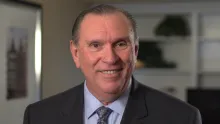
Randy D’Alessandro served as pastor for the United Church of God congregations in Chicago, Illinois, and Beloit, Wisconsin, from 2016-2021. Randy previously served in Raleigh, North Carolina (1984-1989); Cookeville, Tennessee (1989-1993); Parkersburg, West Virginia (1993-1997); Ann Arbor and Detroit, Michigan (1997-2016).
Randy first heard of the church when he was 15 years old and wanted to attend services immediately but was not allowed to by his parents. He quit the high school football and basketball teams in order to properly keep the Sabbath. From the time that Randy first learned of the Holy Days, he kept them at home until he was accepted to Ambassador College in Pasadena, California in 1970.
Randy and his wife, Mary, graduated from Ambassador College with BA degrees in Theology. Randy was ordained an elder in September 1979.
