
Gary Petty
This transcript was generated by AI and may contain errors. It is provided to assist those who may not be able to listen to the message.
Well, thank you once again, Mr. Spirit and Happy Sabbath, to each and every one of you. Well, it's that time again that all of you have been waiting for this season. What event is bloody? Celebrates evil, promotes make-believe, focuses on individuals who look like the living dead and even has some witches.
No, I'm not talking about Halloween. I'm talking about something even more spooky, another American midterm election. Yes, I'm sure you've been counting the days until Tuesday, the first Tuesday in November. So why do politics even exist? What should be our view and opinion about politics and elections? What does God say about human-controlled governments and the political culture that we are all immersed in today? Let's begin by going to the book of Psalms in chapter 2. Psalm is actually a prophecy about the world and its present state and how it will change when Jesus Christ returns.
Very beautiful prophecy. Psalm chapter 2, beginning in verse 1. The nations are angry. The nations have war with one another because beginning at the time of the rejection of God in the Garden of Edom, God basically said, fine, have it your way. You don't want me to be your father and your God. Create your own governments. Create your own religions. Try to solve your own problems your way since you won't do it my way and according to laws and values that would bless you and be a benefit to you.
Go ahead and do it your way, and that's exactly what we have done on this earth. It says, why do the nations rage? There's war. There are constant wars somewhere going on on the earth. There's violence. There are problems and issues going on among nations this week. We've been hearing about the difficulties in Saudi Arabia and Turkey and individuals who were hacked to pieces in an embassy. We live in a very violent world. Why do the nations rage and the people plot a vain thing?
That's what the nations of this world do. We're going to solve our own problems, so we'll just pass this law and things will get better. We'll throw a bunch of money over here to solve this problem that we have. We'll compromise and we'll just change and we'll flex and we'll do all of these things to try to solve our own problems, but the problems never seem to go away. So why do the people plot a vain thing?
The kings of the earth set themselves – the kings, the leaders of this world – they've appointed themselves. They're self-appointed. I have the answers, they say. Elect me or choose me and I'll solve all of your problems. So they set themselves and the rulers take counsel together. And we have the United Nations and we have all of these summit meetings, economic summits, and all of these things where the elite of this world all gather in order to decide monetary policy and virtually everything in the global environment that we live in today.
And the rulers take counsel together against the Lord and against His anointed saying, let us break their bonds and pieces and cast away their cords from us. They don't respect God, they don't respect His law. We want to do things our way.
That's what the nations say. He who sits in the heavens shall laugh. God looks down at puny human civilizations and all that we have done and all that we think we have achieved and He just laughs at us. We're like little lost children. And He laughs and the Lord holds them in derision. Then He shall speak to them in His wrath. There's coming a time when there's going to be a great tribulation in the day of the Lord.
And He shall speak to them in His wrath and distress them in His deep displeasure. And then verse 6, Yet I have set my King on my holy hill of Zion. I'm going to read these verses from the translation of God's word for today. Why do the nations gather together? Why do their people devise useless plots? Kings take their stands. Rulers make plans together against the Lord and against His Messiah by saying, Let us break apart their chains and shake off their ropes.
The one enthroned in heaven laughs. The Lord makes fun of them. Then He speaks to them in His anger, in His burning anger. He terrifies them by saying, I have installed my own King on Zion, my holy mountain. So for almost 7,000 years, humankind has devised hundreds of different forms of governments in an attempt to rule over ourselves, to get control of ourselves as a race of people, to create nations that are productive and live in peace and solve problems of poverty and solve the problems of disease.
We've been doing that for nearly 7,000 years. We want to rule ourselves. We want to control events. Yet, according to this prophecy, there's only one solution to the problems that this world has, and that is the King sitting on the holy hill of Zion. That is the kingdom of God. The most common type of government in human history, if you look throughout history, which I have done numerous times, I'm history nut anyway, the most common type of government in human history, but one that's been on the decline the last couple hundred years, is the ruler of a hereditary kingship.
This is a model where a single individual rules over a clan, a tribe, a nation, and doing that is as old as civilization. When you go back in history, even before there were nations, there were tribes, and someone would say, I'm bigger than everyone else here.
I'll be the leader. I'm stronger. I've got a bunch of people to protect me, and together, we want to rule everything and everybody. It's all about me. I am your king. I am your leader. That goes back to the earliest days of civilization, of humanity. Now, that doesn't mean that it's the best. Being a king doesn't mean that's what God intended. It simply reflects the most basic instinct in human nature, the instinct to acquire things that aren't mine, to control everybody, and to dominate others. That's what kingship historically has always been about.
So now let's see where ancient Israel came to a point after they left Egypt, where they had to make a choice on the kind of government they wanted to have.
Would they follow God and allow God to be their king and allow God to appoint individuals like Samuel to instruct them from the word of God? Or, on the other hand, did they want to be like everyone else? Did they want to just walk down the lemming trail and be like every other nation and have a king? Let's see what happened. 1 Samuel chapter 8. If you'll turn there with me, again, that's 1 Samuel chapter 8.
There is certainly politics going on here in this scripture. Anytime you get human beings together, you end up getting politics. I'm going to speak very candidly about politics today. 1 Samuel chapter 8. Now, it came to pass when Samuel was old that he made his sons judges over Israel. The name of his firstborn was Joel, and the name of the second was Abijah, and they were judges in Beersheba. But his sons did not walk in his ways. They turned aside after DeSaunus' gain, took bribes, and perverted justice. I'm going to go into this in a little more detail in a few minutes. The problem here? The problem here is a system that promoted nepotism. You see, his sons, they didn't earn the roles that they had.
They hadn't worked hard to deserve the roles that they had as priests. They were there because of daddy. They were there because they were related to someone, not because they had earned, through character, the position that they had. Continuing here in verse 4, Then all the elders of Israel gathered together, and came to Samuel at Ramah, and said to him, Look, you were old, and your sons do not walk in your ways. Now make us a king to judge us like all the nations. We want to be like everyone else. We no longer want God telling us what to do through you. We want a human being to control us and dominate us and tell us what to do. Verse 6, But the thing displeased Samuel, because he took it personally. He took it as personal rejection, what they said to him. He displeased Samuel when they said, Give us a king to judge us. So Samuel prayed to the Lord, and the Lord said to Samuel, Heed the voice of the people in all that they say to you, for they have not rejected you, but they have rejected me, that I should not reign over them. So God said, Don't take it personal, Samuel. This isn't about you, it's about me. They don't want me as their God to be their king, to lead them, to guide them. They want a human being, to lead them and guide them, because that's what human beings want. Since the time of the Garden of Eden, human beings have wanted to do it their way, and not my way. Verse 8, According to all the works which they have done, since Dad brought them out of Egypt, even unto this day, this isn't a shock, God says, they have been rebelling against me from day one, which they have forsaken me and served other gods. So they are doing to you also. I think it's important here to notice that God desired to rule over them to be their king. That's really what he wanted, but they wanted to be like everyone else. It wasn't God's will to give them a king, they wanted a king. So God allowed them to have a king contrary to what his will was for them. And this isn't a shock to God. Back in Deuteronomy chapter 17 and verse 14, and I'll read this, it says, When you come into the land which the Lord your God is giving you, and possess it, and dwell in it, and say, I will set a king over me like all the nations that are around me. So that had been said earlier by God to Moses. This wasn't a shock to him, it probably was disappointing, but God wasn't shocked by this at all. And them having their own king, it wasn't God's will, but his allowance that permitted them to be like other carnal nations and have a king. However, God is a God who likes to teach us things, and he wanted to teach his people a lesson. And he wanted to teach them a lesson by how he chose their first king. He gave them what they wanted and what they deserved. And throughout history, you'll find, usually, that people get the kind of leadership that they deserve.
So let's go now to 1 Samuel chapter 9 verse 1 here, and let's see what happens.
There was a man of Benjamin whose name was Kish, the son of Abiel, the son of Zoror, the son of Vekoroth, the son of Ephiah, a Benjamite, a mighty man of power. Now this is talking about Kish, this is talking about the father of Saul. He was obviously very important and very influential.
And verse 2, and it hasn't changed in 3,000 years, this is the same thing people look for today in their political candidates. And he had a choice and handsome son whose name was Saul. There was not a more handsome person than he among the children of Israel from his shoulders upward. He was taller than any of the people. So God is giving them the kind of king that they want, the kind of king that they deserve. He's giving them someone who's physically appealing, tall, handsome, charismatic. This is the kind of people that we are wired to be attracted to. And here again, 3,000 years later, when you look at our modern day elections, statistics have shown that it's usually taller people who get elected, it's usually people that are considered better looking, that have more hairspray and thicker layers of makeup, and all of those things tend to be the folks that get elected today. And it's not just true today, it's been true throughout history. What did George Washington and Thomas Jefferson and Abraham Lincoln all have in common? They were unusually tall for their day. They were people that were so tall in their day that they were looked up to. Even in business, now this thing that I did 10 years ago in an article that I read in some studies about 10 years ago showed that most CEOs and top executives are taller than the average height. So again, we're almost wired to be attracted to admire people that are tall, big, big people. So God's trying to teach them a lesson. It doesn't matter what a person looks like on the outside. That's what foolish human beings look for. What really matters in a leader is how they think. Their character. Their values. I know of a religious leader who near the end of his life openly regretted the choices he had made of evangelists and ministers early in his career.
He admitted very candidly that earlier in his ministry he looked in the outside when he chose people because they were good looking. They looked well in a suit. They were good speakers. They had all of these qualities and he chose them for those positions. And as he grew older, he realized how foolish that was. He admitted that he looked in the outside of people and not enough on the inside of people before he put them in the ministry and it had come back to haunt him.
Well, Saul failed miserably as a leader because he lacked character. God hoped that the people would get the lesson on what good leadership and good governance is really all about through what happened in this story of Saul. We don't have time to go into that in detail today.
So for the next king of Israel, he did something entirely different because this time it was going to be his choice. First king, he gave them what they wanted. They wanted to be like other nations. So they wanted a king who was big and tall and good looking and so that everyone could look at him and go, wow, I'm impressed. So that's what they wanted. The second time around, he was going to do it a different way. Let's take a look at that in 1 Samuel 16 beginning in verse 1. It says here in 1 Samuel 16, we should already be in the book of Samuel, verse 1, Now the Lord said to Samuel, How long will you mourn for Saul? I might add here that God chose a replacement for Saul while he was still alive. So in context here, he is sending Samuel to anoint the replacement for Saul. Saul is still alive. Of course, that replacement will be David. Now the Lord said to Samuel, How long will you mourn for Saul, seeing that I have rejected him from reigning over Israel? Fill your horn with oil and go, and I am sending you to Jesse, the Bethelmite, for I have provided myself a king among his sons. And Samuel said, How can I go if Saul hears that he'll kill me?
And the Lord said, Take a heifer with you, and say, I've come to the sacrifice to the Lord. Then invite Jesse to the sacrifice, and I will show you what to do, and you shall anoint for me the one I named to you. Verse 4. So Samuel did what the Lord said and went to Bethlehem, and the elders of the town trembled at his coming and said, Do you come peaceably? There's obviously a lot of political tension. There's a lot of fear among the people at this time. Verse 5. And he said, Peaceably, I have come to sacrifice to the Lord. Sanctify yourselves, and come with me to the sacrifice. Then he consecrated Jesse and his sons and invited them to the sacrifice. So it was when they came to him that he looked at Eliab and said, Surely the Lord's anointed is before him. We can't help to be human. First one, it shows good-looking tall. He may have been the oldest. I didn't double-check that. He may have been Jesse's oldest son. I'm not for sure, but it's human. Whoa, that's the one. Yeah! But the Lord said to Samuel, Do not look at his appearance or the height of his stature, because I have refused him for the Lord does not see as a man sees, for a man looks at the outward appearance, but the Lord looks at the heart. What God is interested in is not how well your hair is blow-dried, how many inches of makeup you have in your face, how tall those platform shoes make you in front of a microphone. What he cares about is character. What is in an individual's heart?
And in verses 11 through 13, we won't read it. David was chosen and anointed the future king with oil. So let's recap what we've seen so far. First, God never preferred Israel to even have a human king. They are the ones who clamored for it. They wanted a king. God considered himself to be king, and he desired to appoint religious leaders like Samuel over them to be an intermediary between God and the people. Then the people wanted a secular king like the other nations, and God gave them Saul, a man with the physical traits and qualities that they were looking for. After Saul failed, God chose a short, ruddy-looking young man named David because David had a good heart and loved God's law. Did he have problems? You bet, and you can read about those in the rest of his lifetime. Did he have struggles? Sure, he did, but he loved God's law. Now this does not mean that God endorses human kinship more than any other kind of human-devised government that's ever been created. No, all forms of human-devised government are flawed, and all fall short of the glory of God's will. Some human governments just work a little better than others, but they are all flawed. Any form of human government is mediocre and inferior to what God has planned for all of us and for humanity in the kingdom of God. So I don't want us to think, and that's kind of a misconception, a myth that I've heard from the past, that somehow the idea of kingship comes from God. Any human form of government is flawed. Now someone may say, well, wait a second, Mr. Thomas, isn't Jesus coming back as a king? Well, sure he is, but his divine rulership has qualities no human being is capable of. Christ shares everything that he has with his saints. In his kingdom, there is no competition, no internal politics, there is no palace intrigue, there are no factions, there is no quest for power. The kingdom of God is not about control of others, it's about service to others.
So the fact that Jesus Christ is coming back as a king, which he is, does not endorse the human institution of kingship as if it's somehow better or superior or something that's God's will.
Let's go to Proverbs chapter 28 and verse 14.
Proverbs 28, 14, it warns us about what happens when you have a poor ruler or a wicked ruler.
Proverbs 28, 14, happy is the man who is always reverent, that means respectful, but he who hardens his heart will fall into calamity. Like a roaring lion and a charging bear is a wicked ruler over poor people. A ruler who lacks understanding is a great oppressor, but he who hates covetousness will prolong his days. So when you have poor rulership, people suffer. When you have poor government, that doesn't work. It's the simple people, the common people, who take the brunt of the abuse. I'm going to read this from the translation, the New Century version. Those who are always respectful will be happy, but those who are stubborn will get into trouble. A wicked ruler is as dangerous to poor people as a roaring lion or a charging bear. A ruler without wisdom will be cruel, but the one who refuses to take dishonest money will rule for a long time.
So we took a look at ancient Israel, and now what I'd like to do is fast forward 3,000 years from the time of David and Samuel, and look at our world today, because it's certainly incredibly different than the world that they lived in. If you're a student of history, you will clearly know and understand that an original Greek concept called democracy has overtaken the world. The last two to three hundred years, the number of kingships declined, and the number of democracies in the world increased. Democracy is a system of government decided by all eligible members of a country, typically through their elected representatives.
It's never spoken of or discussed in scriptures. The Hebrews were unaware of the entire concept of democracy. That was something that was happening in Greece, but it never is mentioned in the Bible.
Winston Churchill once said, and I'll quote him, no one pretends that democracy is perfect or all wise. Indeed, it has been said that democracy is the worst form of government, except for all those other forms which have been tried from time to time.
Our modern democracy was created by the American founders to provide checks and balances on human nature. They knew, and if you ever read some documents when they were constructing the Constitution called the Federalist Papers, they knew that power corrupts and absolute power corrupts absolutely. They did not trust human nature. They understood the dark, power-hungry side of human nature, and they worked very hard to develop a system in which there would be checks and balances to protect against sudden knee-jerk impulses in government. They wanted leaders to be held accountable for those that they claimed they were going to serve. They wanted a system that could remove the corrupt. They wanted decision-making among many, not just a single individual or a handful of elite. That's what they wanted. And interestingly enough, God certainly understands the deep level of corruption that naturally exists in human institutions. So after Israel rejected him as king, he also instituted checks and balances in Israel's human government. I'd like to talk about that for a minute. He inserted, he created three different areas of influence in their culture to be counterweights to each other, to protect the fact that power could not be assumed by any one individual or any one tribe. So let me briefly mention what these three influences were. Number one, he said the Levites would be the priest. And he said in Deuteronomy chapter 8 verse 1, the priests, the Levites, and all the tribes of Levi shall have no part or inheritance with Israel. They shall eat the offerings of the Lord made by fire and his portion. So the first influence, these are his checks and balances that God instituted, the first influence is this appointment of the tribe of Levi, a very influential power in the nation. They alone would be priests. So that's one major influence. Obviously, when you control the rites going on in the tabernacle, later the temple, that's pretty influential in any culture.
All right, here's the second. The second was the monarchy, the king. The king would never be from the tribe of Levi. You see, God wanted to have a counterweight. It says in 1 Kings chapter 4 verse 45, but King Solomon shall be blessed and the throne of David shall be established before the Lord forever. So first of all, Saul was a Benjamite, not a Levite. After his death, David's family from the tribe of Judah would inherit civil authority. This kept the Levites from assuming too much power.
So you've got a power base religiously with the Levites. You've got a different tribe with influence for the monarchy. And then God had the wild card. God had something that was truly unique, the third influence, the counterweight, the checks and balances. And that third influence were the independent prophets. In the Old Testament, there are seven female prophets and 46 male prophets, the best that we can count. And they were from various tribes all over the place, from northern Israel and from Judah. They were the conscience of the nation. The role of the prophet was not an inherited office. There was no risk of nepotism like you could have from a Levite or from the monarchy. It was not an inherited office. They were chosen by God independently of any profession. Some of them were very simple farmers, shepherds.
It was independent of a tribal membership. They didn't have to be part of a certain tribe.
For example, Elijah, who confronted Ahab, was from Gilead, which depending, Gilead kind of moved into Rubengad and Manasseh. But yet again, these were unique tribes. Nathan the prophet, remember Nathan the prophet? He was the one who confronted David regarding his sin of adultery. David tried to hide it and cover it up. Who provided that counterweight? The independent prophet marched into David and said, I have a message to you from the Lord. And he gave him a parable about the man and the sheep who took the one valued sheep that belonged to someone else.
So my point here is that God himself, knowing the corruption of human nature and what it tends to do and how it tends to degenerate and desire power within ancient Israel, even had counterweights, even designed a system in which no one tribe or one people could amass too much power. All right, let's get back to the world that we live in today for a minute. Politics and a democracy are harsh. They're nasty. It's because it's a civilization's alternative to civil war.
That's why it's harsh. That's why it's nasty. If you don't have politics like we have today, what you do is you have people storming the White House every three or four years and killing off everyone in it to seize power. You have military dictatorships. You have constant revolutions like France went through for quite a period of time. Every two years is a mini revolution in the United States. Every seat in Congress and the House of Representatives can be changed every two years. It's up to the people. Every four years for the office of the president. Every six years for a senator. There is a mini revolution in the United States. The president and senate can be changed. And this process that we call democracy that is not mentioned in the Bible has given the nations who have embraced it a slight edge on the earth since it was introduced by our own founding fathers and copied in many ways with alterations around the world. Years ago, when I was studying for my master's degree in leadership, I had a personal goal. It was part of my studies, and that was to read a biography of every king of England and Wales and Scotland who ever existed, beginning with King Engelbert of Wessex around 800 AD.
Now you may say, why would you want to do that? Probably because I have brain damage.
I told you earlier that I'm a history nut, did I not? So I read a biography on every one of those kings. There might be a hundred of them if you add up all three of those kingdoms. And here's what I, in my mind, here's what became very clear. Number one, when you look at the kings who have existed, there are a few that were truly great, a few that were truly evil, and most of them were mediocre. No one would have missed them if they'd never even been born. They did nothing.
The other thing I learned is that the major problem with hereditary kingship is that when a nitwit ascends to the throne, he or she rules until they die. That can mean 20 to 40 years of inept, destructive governance in a kingship. In a hereditary kingship, individuals ascend to the throne not because they're good, or they're competent, or they're wise, but because they were related to someone. So when you get a bad king, you get a bad king for a lifetime, and it's interesting. The bad ones seem to live forever. And what it is about that, they just seem to go on and on and on and never kick. The third thing that you come to realize when you do that is that Proverbs 11 chapter 4 is exactly right in what it says. In a multitude of counselors, there is safety. Parliaments or congresses make better decisions. Decisions are slower. They're often more heated. But on average, decisions are better than when made by a single individual. And businesses today understand that most businesses' decisions are made by groups of people, by committees. Because when you get a group of very smart, talented people together in a room, some of those people will bring up things that had never been thought of. In the implementation of the decision or policy, people will bring up things that one person alone could not possibly know, or understand, or grasp. Now in contrast, that's kingship. A functioning democracy also, like a kingship, has a few that are truly great, a few that are evil, and in democracies, most of their leaders are mediocre, just like kingships. But when a nitwit or a bad individual is elected to the House, or the Senate, or a governor, or president, or any other office, they can be, and often are removed. In my own lifetime, a number of individuals, for example, a number of presidents in my lifetime, only served one term, including Jimmy Carter and the first George Bush. It's not all that uncommon. A democracy has a slight edge because poor leaders may not even be chosen to serve. They may campaign and not even be elected, and if they are elected, they can be removed, and this reduces the amount of damage that a poor leader can do in a nation.
So the end result of what we live by today, what we could call democracy, is that they are the most stable governments in the world. Their citizens have the highest standard of living. The fewest wars among each other. It's rare that two democracies have a war with one another. They have the most durable economies and the greatest personal freedoms, like the freedom we have to worship here today, even though we have a minority of religious views compared to most people in the world. Let's now go to Romans chapter 13. See Paul talking about government and governing authorities. Romans chapter 13, if you'll turn there with me.
Now, I have to give you some background because to understand what Paul is saying here, we have to know what's going on in the world. That's why I love history. So by this time in history, he's writing this about 56 AD, Nero was the deviant emperor of Rome, and he'd been emperor for a number of years. In this time, the Jews had endured temporary expulsion by the Roman government. There were slaves who were in danger of execution if their masters were killed. There were citizens subject to the exploits of tax collectors. And it was during this time, all this turmoil, all of this backdrop of years of poor rule, and the adulteries of Nero, and the injustices by the rulers of the Roman Empire, that the Christians in Rome received a letter from the apostle Paul. Let's pick it up. Here's, let's see what he said. Romans chapter 13, beginning in verse 1.
He said, let every soul be subject to the governing authorities, for there is no authority except from God. And we need to understand here that this word here, authority, doesn't mean that these governments are God's will. These governments are not God's will, they are what God allows.
Since the time of the Garden of Eden, God has allowed human beings to create their own governments, to create their own nations. None of that was according to his will.
So continuing, there is no authority except from God, and the authorities that exist are appointed by God. This word appointed comes from the Greek word taso, and it means to arrange in an orderly manner, to assign something. The context here that I want to emphasize is being subject to governmental authority, not being subject to an individual, a king, per se, but being subject to governmental authority. This does not say that God approved of Hitler, or Stalin, or Idi Amin, or Saddam Hussein. God established and upholds the principle of government, even though some governments and some individuals do not fulfill his desires. Without government, organizational structure, or without laws, people become tribal and they act like animals.
You don't believe me? Just read the book of Judges and see what happens. Any culture, any society on earth that does not have a governmental structure and does not have laws and organization that people quickly degenerate in the tribalism and they act like animals.
This is what Paul is concerned about, because he wants the Brethren in Rome, in spite of the fact that Nero is the emperor of Rome, and that there are all of these problems. He's saying, look beyond that and respect the principle of governmental authority, because it keeps order where you live. Verse 2, Therefore, whoever resists the authority resists the ordinance of God, and those who resist will bring judgment on themselves, for rulers are not a terror to good works. Paul said the Christians should work hard, they should live quiet lives, they should worship, they should serve in their communities. That doesn't violate any laws, and in virtually all cultures, if you're willing to do that, you won't run into any problems with the authorities. Just that rulers are not a terror to good works, and good works include kindness and service to others, but to evil. I don't care if it's a Christian government or a non-Christian government. Every government I know says that you can't kill someone, and if you do, you're going to pay a price. You can't steal something from someone that doesn't belong to you, because if you do, you're going to pay a price. You can't, in a court of law, lie about someone in order to get them condemned, because if you do, there's a price to be paid. So this is what Paul's talking about here. Rulers are not a terror to good works, but to evil. Do you want to be unafraid of the authority? Do what is good, and you will have praise from the same. So again, Paul taught the brethren to be peaceful, to be hardworking citizens, respecting the authority of the government as much as possible. Verse 4, for he, and again in context, this is talking about the government authority, not narrow, certainly not narrow, for he, that is the government, the organization, the structure that exists, is God's minister. If you have the New King James, like I do, it should be better translated, as most translations do, the word servant. He's God's servant to you for good, but if you do evil, be afraid, for he does not bear the sword in vain. If you break those laws, you're going to pay a price. For he is God's servant, an avenger to execute wrath on him who practices evil. Therefore, you must be subject not only because of wrath, but also for conscience's sake. So he's saying, be subject to the organized principle of government in which you live. First of all, because you don't want to suffer a vengeance of the breaking laws, and secondly, he says for conscience's sake, it's the right thing to do, to live quietly, peacefully, do your job, to serve others, and not get deeply immersed in trying to change the world. That's the right thing to do. Verse 8, for because of this, you also pay taxes, for they are God's ministers, servants, attending continually to this very thing. And that very thing is order. It takes money to have a police force. It takes money to have a judicial system. It takes money to pay the salaries for all of these wonderful bureaucracies that we create in our American culture. So Paul is saying, render therefore to all their due, taxes to whom taxes are due, customs, we would call that today, fees. Like when you get a driver's license or virtually anything else that you get involved in the government today, there's a fee, or tolls, customs to whom customs, fear or respect to whom should be respected, honor to whom honor, oh no one anything except to love one another, for he who loves another has fulfilled the law.
Let me read from Schofield's Bible notes here. It's regarding these verses I just read. Verses 1 through 4, the apostle points out that orderly government is part of God's provision, even in a wicked world. No ruler exercises control except God permits. Under normal circumstances, the Christian is to be obedient in the law of the land. This does not mean that he is to obey regulations that are immoral or anti-Christian. In such cases, it is his duty to obey God rather than men. And they refer to Acts chapter 5 and verse 49 when it was said that we will choose to obey God rather than men. Okay, so we can apply this scripture that we just read from the apostle Paul to the Romans congregation in the 21st century by making sure that we are respectful of government authority. And I think most of us are. We understand that it's a government of humans. We understand that it's flawed. But as far as I know, most of God's people are respectful of government authority. We have to realize that there is a balance there. We should never degenerate into a mob mentality thinking our Christian duty is to force a change on the government. We should not be like cowards wearing masks, walking around in streets, destroying property, or disrupting our culture. We shouldn't be doing that. We shouldn't be jamming the halls of the senate or any other building with placards and screaming at people and running into their offices and running into elevators. We shouldn't be doing all of that. That's not what God wants us to do. We're not of the world, but we're in the world. And it's natural that we have our own views on political parties and on politicians and political agendas. I would expect us to. Because if you're a thinking person, you have political views. And I respect that, and I honor that. I would guess that in our congregation is probably a reflection of the general population. Those of you sitting here, I would expect that that means some of us are left-leaning, some of us are right-leaning, and a large number couldn't care less. They're leaning back, closing their eyes right about now, rather than left or right. And the reason I say guess is that I don't really know. And you know what? That's okay, because what your political views are is none of my business. What your political views are is your right. But I do want to encourage all of us, brethren, to be careful in how we express them. There's been a difference, a shift, in American politics since I was young. I'm going to tell you what America was like when I was young. You know, I even hate saying this. Growing up, I would hear these people, yeah, back in 49! You know, and I don't want to ever be that way. Truly, I don't. But when I was younger, America had a middle. And most politicians from either party were slightly left or slightly right of center of the middle. And therefore, they could talk to each other. They were civil. They could negotiate things and get things done. But unfortunately, what's happened is there's very few people in the middle. And if you dare be near the middle, you will be plummeled by your own party if you don't vote lockstep with whatever party you belong to.
And so everyone has been driven to the edges. There's very few people in the middle. Therefore, there's very little discussion. There's very little civility. And we find ourselves in the problem that we have today. But I want to relate it to our congregation here, this Church of God. There's an old saying that you may have heard. The old saying is, I never talk about religion or politics.
Now, the reason that old saying exists is that these topics are personal, and they are very sensitive. These topics can and they do divide even close friends and divide families. Growing up, my mother was a Roosevelt Democrat. My stepfather was a Republican. So I remember the lectures. I remember the arguments. I remember all of those things, even in my own family, simply because my parents had different political views. So again, this can divide even close friends and families. And for that reason, I think it's very important that our conversation here, particularly our messages to sermons and sermonettes, should not be political. They should be based around moral and ethical issues and doctrines of the church, but they should never ever sound like an endorsement of a political party or an agenda. If a biblical moral principle happens to be the platform of one party and is rejected by another, well, that's life. That's understandable. That's going to happen. But the discussion should always be on the biblical teaching, not on politics, not on a political party, and not on any party's platform. And that's really the heart of my message today. I want us to encourage all of us to be very careful to realize that just as sensitive as religion is, and I'm sure in your lifetime you've had some arguments over religion, with a few people, you can have that same kind of division talking about politics. Recently, the Supreme Court Chief Justice John Roberts, I think this happened about four days ago, made the following statements that I think were really wise. Here's what he said about the Supreme Court. We work together in a collegial way. I'm not talking about mere civility, although that helps. That collegiality is expressed in a century-old tradition, he said, of justices shaking hands before going to the bench to hear arguments. It's a small thing, perhaps, he said, but it's a repeated reminder that we do not sit on opposite sides of an aisle. We do not caucus in separate rooms. We do not serve one party or one interest. We serve one nation. End of quote. By the way, that'd be a good principle for some churches I know to have as well. We serve one God, don't we?
Now, you may have very strong political views. That's fine, and I respect that, but I ask you to realize that politics can divide a church almost as fast as having ministers who are hirelings can divide a church like we had a number of years ago. Those two issues are very sensitive, and they can divide churches. Religion? Politics. So we have to be very careful of them.
Again, if you favor a political party or an individual or a political agenda or if you choose to vote, none of that is my business or anyone else's business for that matter. The Bible doesn't discuss democracy. It's no worse than any other form of human-created government. What you do regarding your political views and your beliefs is between you, God, and your conscience.
Period. However, I do ask that we refrain from political discussions in church and from people that we don't know well because it's very easy to offend someone, to offend one of the brethren, either unknowingly or unknowingly, by getting into a political discussion with them. It's caused a lot of hurt over the years in the Church of God. One final scripture today, Philippians chapter three and verse 20. Philippians chapter three and verse 20. We are ambassadors for Jesus Christ, and we have a spiritual citizenship in the Kingdom of God, but the truth is that we also have a temporal citizenship in the United States. We have dual citizenship. Each and every one of us, we have citizenship that is spiritual, and we have citizenship that is earthly. Philippians chapter three and verse 20. For our citizenship is in heaven, from which we also eagerly wait for the Savior, the Lord Jesus Christ, who will transform our lowly body, that it may be conformed to his glorious body, according to the working by which he is able even to subdue all things to himself. So in conclusion, yes, indeed, we have dual citizenship. We, physical human beings, most of us sitting in this room, are citizens of the United States. And you know in Acts chapter 22, when Paul upset some authorities and they were getting ready to scourge him, he stopped them in their tracks by saying, is it legal to beat a Roman citizen who's un-condemned? And the people went, whoa, whoa, we didn't know you were a Roman citizen. Whoa! What's Paul doing? Paul was taking full advantage of his Roman citizenship, and he wasn't shy about doing that. But far more important than our citizenship as human beings in the United States and the rights that we are given in this world, as Americans, far more important than that, and what we should be focusing on, is our citizenship in heaven. The way the news is today, it's easy to get wrapped up in the politics of this world. There's something said by some politician every day that I guarantee will upset you.
If you read all that stuff, there's something that will be said. There's some idea, some word said, some policy suggested. There will be something every day to keep you in a constant state of aggravation if you allow it to. But, brethren, it's all in vain. The real solutions begin when all the politics end and when the reign of Jesus Christ begins. I wish all of you a wonderful and fulfilling Sabbath day.
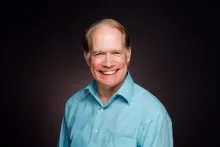
Greg Thomas is the former Pastor of the Cleveland, Ohio congregation. He retired as pastor in January 2025 and still attends there. Ordained in 1981, he has served in the ministry for 44-years. As a certified leadership consultant, Greg is the founder and president of weLEAD, Inc. Chartered in 2001, weLEAD is a 501(3)(c) non-profit organization and a major respected resource for free leadership development information reaching a worldwide audience. Greg also founded Leadership Excellence, Ltd in 2009 offering leadership training and coaching. He has an undergraduate degree from Ambassador College, and a master’s degree in leadership from Bellevue University. Greg has served on various Boards during his career. He is the author of two leadership development books, and is a certified life coach, and business coach.
Greg and his wife, B.J., live in Litchfield, Ohio. They first met in church as teenagers and were married in 1974. They enjoy spending time with family— especially their eight grandchildren.
