
Don Ward
This transcript was generated by AI and may contain errors. It is provided to assist those who may not be able to listen to the message.
So, have you ever stopped and asked yourself, what does God think of me? Do you ever just stop and ask that? What does God think of me? What does God think about what I am thinking right now and what I'm doing right now? Is this what He would have me to do during this moment, during this period of time? Is this the right thing to do? There are x-ray machines, there are MRIs, there are CAT scans that can allow men to look on the inside of your physical body. But none of these can really read the motives and intents of the heart and of the mind.
God is not interested in the physical as much as He's interested in the thoughts and intents of the heart. Proverbs 23 and verse 7 is the scripture hopefully we have committed to memory. I'll quote it here. The last sentence there says, As a man thinketh in his heart, so is he. And we have heard over and over, so a thought, reap an action, sow an action, reap a habit, sow a habit, reap character.
That's what you become. What you think and what you do, that's what you are. In short, you become what you think and what you do. The Word of God is God's great scanner, all wrapped into one. It'll take care of x-rays, MRIs, scanners, and the whole lot. Let's go to Hebrews 4, verse 12, where we see that clearly.
Of course, this instrument, the Word of God, is free. It's available to all of us at any time if we want to see ourselves. The scripture reveals to us what we really are. In Hebrews 4, verse 12, For the Word of God is quick. That word quick, better translation would be living. It's living. It's alive. It's active. The Word of God is living and powerful and sharper than any two-edged sword, piercing even to the dividing and center of soul and spirit and the joints and marrow, and is a discerner of the thoughts and intents of the heart.
So if you want to examine yourself, of course, if you want a spiritual examination, a spiritual diagnosis, the Word of God reveals it. Neither is there any creature that is not manifest in his sight, but all things are naked and open unto his eyes of him with whom we have to do. You cannot hide anything from God. Of course, he knows us spiritually and he knows us physically.
He knows us inside out, as some might say. Scientists are feverishly working on machines that not only can see on the inside of you in the physical sense, but can read your mind. And in some cases, some of the artificial intelligence reports say that man has begun to be able to profile the thoughts of people, and they, if you do profiling, and I'm sure they do, profiling might get on a list. Well, watch this person because here's what he's thinking.
Not only are we rapidly going toward George Orwell's brave new world, we are really in the midst of it in one sense, but it's going to get a lot more difficult.
People are already pretty much controlled physically. The next big step will be to control their thinking. You know what states in Genesis 11 and verse 6, when God had to intervene and stop the building of the tower of Babel, they were of all one language, and God went down and He said, Nothing will be restrained from them, of which they imagine to do. So He confounded the languages, and He divided the languages according to the sons of Jacob and the table of nations that you find in Genesis 10 and 11.
But I don't believe you can control the mind and spirit of a spirit-begotten believer, a true believer, a true Christian. So make no mistake about it. The battle is to control your mind and every deceptive device conceived by man is being employed. Every deceptive device is being deployed to try to control your very being, not only your physical being, but your mental being as well. So once again, our question today, what does God think of me personally and individually? Let's note how God is aware of us all. Let's go to Psalm 139 and verse 14. How aware is God of His creation?
In Psalm 139 and verse 14, we'll begin. Psalm 139 verse 14, Of course, man is made of the dust of the ground and the image of God, of the substance of the earth, the 16 basic elements, but lacking the spiritual essence of God, that is, the Holy Spirit. Your eyes that see my substance, not yet being unperfect, and in your book all my members were written, which in continuance were fashioned, when there was none of them.
One of my majors in the doctoral program was physical education. You had to take kinesiology, physiology, anatomy, and all kinds of courses having to do with the physical body, and memorize all of the bones of the body. There are 612 bones. Some books might vary a little bit. Of 612 bones in the body and all the various muscles in the body, you need to know all of those. How precious also are your thoughts unto me.
This is our key verse. How precious are your thoughts. How precious are your thoughts unto me. O God, how great is the sum of them. If I should count them, they are more in number than the sand. When I awake, I am still with you. Surely I will wake. Surely you will wake. I'll get it right in a minute. Surely you will slay the wicked, O God. Depart from me, therefore you bloody men. God is keenly aware of each one of us, his thoughts ever toward us. That's one of the questions I want to ask. How can God listen to so many prayers at one time?
How can he be so aware of all of the creation, not even a sparrow falling to the ground unless he is aware of it? Let's go now to Luke 12. What we're doing now is showing how aware God is of his creation. Our rhetorical question is, what does God think of me? In Luke 12, and verse 4, God is keenly aware of his creation, and is aware of each one of us. Now let's go to Hebrews 13. What we're establishing here is how aware God is of us, and how aware God is of us, and how aware God is of us, and how aware God is of us, and how aware God is of us, and how aware God is of us, and how aware God is of us, and we should be asking ourselves, and asking, what does God think of what I am doing?
In Hebrews 13, verse 5, Let your conduct be without covetousness, be content with such things that you have. For you said, I will never leave you nor forsake you, that you may boldly say, the Lord is my helper, and I will not fear what man shall do to me. Of course, we're living in an age of fear where the media is pitched toward making everybody afraid.
And of course, we need to exercise common sense, and we need to be our brother's keeper. More about that later in the sermon. But we're not to live in fear.
We're not to live in fear. We're not to be gripped by fear. There are so many things, frightful things, that are on the world scene. But we have read here the promises of God, His thoughts are ever toward us. Even the hairs on your head are numbered. I will never leave you. I will never forsake you. Those are promises that must be claimed. They must be internalized in our being. But sadly, in our world, we tend to be more fearful of what man can do to us than what God can do. But it says right here, fear not what man can do, what we read back in Luke, but fear Him who is able to destroy both body and soul, your life potential, and get a head of fire, which is the second death, from which there is no resurrection.
And ironically, we are sometimes more interested in pleasing man rather than God. God knows everything we're doing anyhow. He's the most important one, God and Jesus Christ.
Now in Acts 5 and verse 22, in Acts 5 and verse 22, in those early days after Christ was crucified and He ascended back to heaven, the apostles were in and out of the temple. They are teaching and preaching the Word of God on a daily basis, and they were preaching Christ and Him crucified the gospel, and they were brought into question by the council, by the Sanhedrin, by the religious rulers of the day.
And if it hadn't been for intervention, they would have probably been martyred right then. And they had quite the challenge before them.
But Acts 5, 29, which is a bedrock scripture for us in the Church of God, in Acts 5 and verse 29, and shall come forth they that have done good under the resurrection. I'm reading from John. It doesn't work, does it?
In Acts 5 and verse 29, we set the background of the persecution the apostles were enduring during the early days after Christ's ascension. In Acts 5 and verse 29, then Peter said, and the others apostles answered and said, we ought to obey God rather than man. It's always been amazing to me that people seem to be far more interested in what men think about them than what God thinks about them. Even in the Church, sometimes the work of the pastor is more difficult because people have a certain idea about the pastor or about elders in the Church and think that you have to be a certain way around them because they are above you or what? They're not above you. We're all flesh and blood. We're all subject to the same things that everybody else is.
But it's always been amazing how people are more concerned about what man thinks than what God thinks. You know, you can have a running dialogue, a conversation with God all day long.
Have you ever wondered about this Scripture? This is back in Genesis. It says that Enoch walked with God for 300 years. Enoch walked with God for 300 years. How did he walk with God for 300 years? I think he did this by an ongoing conversation with God. Of course, it was, I would assume, for the most part, I don't know if God actually spoke to Enoch or not. I know that Enoch was eventually translated to a different place. Transported might be better than translated to a different place.
I think he did that by an ongoing conversation with God. He was keenly aware, 24-7, of what God thinks of him. You can fool people to some degree as to what you think about them. However, if you have much discernment, you'll be able to pick up vibes as to what people really think about you. And of course, the Bible tells us that we are even to love our enemies.
Oftentimes, the perception that people have of you is totally wrong. You're not that way at all, but for them, that is the way you are. And as the saying goes, the truism perception is reality. For them, their perception is their reality. But God's view of you and me is not based on perception, it's based on truth. Truth, we are all laid bare before him. There is no fooling him. And as I stated earlier, people will do all kinds of things to look good in the eyes of others, even if it means disobeying God. Why would people do that? The inner man is the true self, and I believe one of the principal methods of penance among members of the Church, and other places as well, is to hold themselves in contempt.
If they can walk around mournfully, woefully, in a regretful kind of state of being, oh, I'm so worthless, I'm so this, I'm so that, holding themselves in contempt. Remember, last week, or two weeks ago, we had the sermon, Have You Forgiven Yourself?
And for some, hopefully very few, hold others in contempt. Not only do they hold themselves in contempt, and they really don't think they are holding themselves in contempt, but really they are, because they will not let go. They will not come to believe and place faith in and act according to the promises. So far as He removed our sins from us, as far as the East is from the West, if we have repented. So God does not want us to hold ourselves or others in contempt. God desires that we have a clean slate in our view of ourselves and others. And if that is not the case, He exhorts us to do something about it.
Some think that if they wallow in their own self-contempt, that this will pay for their character flaws and mistakes. It won't do anything but make it become more deep-seated in your mind and in your being. False humility will not profit anyone. There is no veneer, no pretense that we can use to deceive God and His view of us.
He sees us the way we are. But to hold yourself in contempt is really a lack of faith in God's mercy and forgiveness. And of course, forgiveness is predicated on repentance. If you hold yourself in contempt, you cannot love as God gave commandments. So let's turn to Matthew 22, the two great commandments. Matthew 22, trying to trick Jesus, they came and asked Him, Master, who are the two greatest commandments in the law? And Jesus summarized the law with these two great commandments. Matthew 22, verse 36. Master, which is the greatest commandment in the law? Jesus said unto them, unto him, You shall love the Lord your God with all your heart, with all your soul, and with all your mind. This is the first and great commandment. And the second is like unto it, you shall love your neighbor as yourself. There is a kind of right self-love, and there is a kind of wrong self-love. We talked some two weeks ago about the wrong kind of self-love, lovers of themselves, the narcissistic view in which they continually espouse that they are better than everybody else.
We'll repeat this probably later, but you know, in Philippians 2 it says, Let each man esteem others better than themselves.
The second is like unto it, you shall love your neighbor as yourself. On these two commandments, these two commandments are to some degree summarizing the whole Bible. On these two commandments hang all the law and the prophets, all the ramifications of fulfilling those two commandments. Satan the devil and humankind have held God in contempt, from Satan's rebellion to Adam and Eve's rebellion in the Garden of Eden.
We see definitely that this nation, there has never been a cultural shift, as we have seen, in a matter of months, weeks, and days kind of thing.
Beginning with this virus and the shift, it has been so traumatic and dramatic, it's unbelievable. And things that you would never think that you would hear uttered from someone in a leadership position are uttered as if it is the truth.
Once again, Satan the devil and humankind have held God in contempt, from Satan's rebellion to Adam and Eve's rebellion in the Garden of Eden.
Adam and Eve believe Satan's lie, but there is a shortcut. There is a better way. They decided to choose for themselves what is right and what is wrong. To disobey God is to hold him in contempt. For some reason, humankind cannot come to understand that they owe their very existence to God the Father and his only begotten Son, the Lord Jesus Christ.
No matter what circumstances are that allowed you to sit here today, it is a sacred privilege and you are the recipient of the most sacred privilege of our age. It is to be called into God's marvelous light at this time to know the plan and purpose of God.
Let's go to James once again, James chapter 1, verse 17, first time today, but we read this scripture many times. In James 1 and verse 17, Every good gift and every perfect gift is from above and comes down from the Father of lights, with whom is no wearableness. God's character, his being, never changes. Some people stretch this to say that God's dealing with humankind never changes. He never changes his mind. But he does, upon repentance, change his mind in some cases, as in the case of Hezekiah, told that he was going to die. Hezekiah turned his face to the wall with a repentance and heartfelt prayer, and 15 years were added to his life.
So when it says no wearableness has to do with God's character, his being of who he is, he is holy, he is just, he is a holy, just, loving God. That never changes.
Neither is there any shadow of turning in him or change, of his own will, but yet he us with the word of truth, that we should be a kind of first-fruits of his creatures. And that's why I say you are the recipient of the most sacred privilege of our age. That is, to know God's purpose and plan for humankind and for you individually and specifically. Let's note the words of the Apostle Paul. Some misunderstand this. Paul is not excusing or saying you cannot render a judgment, but that you should let the past go. Remember Paul's background? When Stephen was stoned and killed, they laid his clothes down at the feet of one named Saul, who became Paul.
And Paul was a great persecutor of the church. But now he's an apostle to the nations. And we're in 1 Corinthians 4 verse 1. Let a man sow account of us as ministers of Christ and stewards of the mysteries of God.
Of course, you'd really need the background of... One of the main problems in Corinth was choosing who is the greatest minister. Some say I'm of Cephas, some saying I'm of Paul, some saying I'm of Apollos, and some saying I am of Christ. They're all just men, laborers in God's ministry, except for Christ.
Christ was more than just a man. He was also God in the flesh. So let a man sow account of us as of the ministers of Christ and stewards of the mysteries of God. How in the world can human flesh become a spirit being? To me, that is the greatest of all mysteries. Moreover, it is required in stewardship that a man be found faithful, but with me, it is a very small thing that I should be judged of you or of man's judgment. Yes, I judge, not my own self. So Paul didn't go around holding himself in contempt, but he did judge himself with regard to sin. In one place, he writes of sinners, I am chief. He knew that he was a sinner, so he got that out of the way. We're all sinners, all of sin, and come short of the glory of God. All of man's righteousness is his filthy rags in the sight of God. But God wants us to accept, accept his mercy, his forgiveness. Verse 4, If you're not rewarded now for all the good that you are doing, you will be laying up treasure in heaven.
And his reward when he comes is with him. And these things, brethren, I have in a figure transferred to myself and to Apollos for your sakes, that you might learn in us, not to think of men above that which is written, that no one of you be puffed up for one against another.
And from Genesis to Revelation, as we quote often, you are your brother's keeper. On the other hand, humankind claims to desire peace and peace and order, to be free of fear and to feel secure and feel like they are part of something larger than themselves. The irony of history, the history of humankind, is to think that he can achieve all these things by doing his own thing, by rejecting the author of life, the one that created him for a great purpose and plan.
Freedom from fear and freedom to true security can only be embraced and lived through God and Christ, the Word of God, because the Word of God reveals the mind of God and Christ.
Of all the scriptural passages that describe the current state of mind of the masses, I believe it's probably 2 Peter beginning in chapter 2 verse 9. Back many years ago, I don't know exactly how old I was, back in the 50s that I remember, there began to appear at the checkout counters at your grocery stores and drug stores and other places, a publication of rag journalism, yellow journalism as they called it, the National Tattler. People couldn't wait to read the dirt of the rich and famous, from those in Hollywood to those in political life to those in the sports world, anybody that was a so-called celebrity. And then that thing has progressed through the years, that one publication after another, magazines, revealing the lives of the rich and famous. It's not only in publications, it's also in electronic media. So that many people now, they can be in Thailand and dressed in their polyester. A polyester brought the world up to a standard level of dress, I guess you could say. They can be polyesters practically indestructible. They can live their lives vicariously, no matter how poor they are. They've got their TV set, they've got a magazine or something, they read about all the things that are going on in the world and all the faults and flaws of the rich and famous, the celebrities. And they live their lives vicariously through that.
In 2 Peter 2 verse 9, the Lord knows how to deliver the godly out of trials and to reserve the unjust under the day of punishment to be punished. But chiefly them that walk after the flesh in the lust of uncleanness, despise government, presumptuous are they, self-willed, they are not afraid to speak evil of dignities, no one is spared.
Whereas angels which are greater in power and might bring not railing accusation against them before the Lord. But these as natural, brute beasts, made to be taken and destroyed, speak evil of the things that they understand not, and shall utterly perish in their own corruption, and shall receive the reward of unrighteousness as they that count it pleasure to riot in the daytime. Spots they are in blemishes sporting themselves with their own deceivings while they feast with you.
We have so many people mixed in our nation today with every ideology that you can think of. And we are told to come out and be you separate. The irony of human history is to think that humankind can achieve peace and to be totally liberated by doing his own thing, by rejecting the author of life and his plan for achieving peace. There have been many divisive issues in the Church of God through the history of the Church.
In fact, in 1 Corinthians, and I've given Bible studies and determined on that even in this area back in the long time ago, the Corinthians were divided on just about everything you can name, from their calling to the resurrection, some even saying there was no resurrection from the dead. The Corinthians were divided on just about everything you can imagine, from their calling to, as I mentioned, the resurrection.
But whoever thought we the brethren in the Church of God would be divided over trying to care for one another in a crisis such as the coronavirus. And whether it be a hoax or real in your mind, it is a reality. It is something that is before us that we have to deal with. We must learn that Father Google, Father Google, you know, they had a hearing this week in Washington, and the great technology companies were there, the streamers and the dreamers and so on. Amazon, Bezos, is the richest man in the world, Amazon.
And you had Facebook, you had Twitter, they were there. And they were trying to give them, Congress was trying to ask them to give account for their actions. And basically what they're doing is that they are throttling the words of what we would call the conservatives and allowing the words of the liberals to run rampant. And so people are censored and not able to speak on various platforms. Google is, I guess you would say, the most powerful in one sense, but there are others that are rapidly challenging. Perhaps the greatest and most frequent point of judgment having to do with what does God think of you will be based on how we treat our fellow man.
From the days of Cain and Abel to the present day, God says, yes, you are your brother's keeper. We have people who leave the church, and many people obviously have left the church thousands. And many of those won't eat pork to this day. And they won't do X, Y, or Z.
But it just seems we can't learn to walk in a truly reconciled position with our neighbor. And to a large degree, that is what God is judging us on. To walk in a reconciled position with him and Christ and with our neighbor. If you would turn now to James chapter 3. Some have dubbed this malady the green-eyed monster. You know what the green-eyed monster is? In short, it's envy. Shakespeare wrote a play about it. In James chapter 3, verse 13, For where envying and strife is, there is confusion in every evil work, beginning with Cain and Abel, and continuing to this day.
Cain envied Abel. Abel's sacrifice was accepted, his was not. And when Cain was confronted and even told, You know, if you do right, you'll be fine. But oh no, he wouldn't accept that. But the wisdom that is from above is first pure, then peaceful, gentle, easy to be entreated, full of mercy, and good fruits, without a partiality and without hypocrisy. And the fruit of righteousness is sown in peace of them that make peace. So the second part of the Great Commandment states, Let's turn to Philippians chapter 2.
Now, I mentioned this earlier, but we didn't turn there. Let's turn to Philippians 2 and read it. Philippians is a book about humility, about true humility, Christ who humbled Himself and died on the stake. Philippians 2, verse 1, If there be any consolation in Christ, if any comfort of love, if any fellowship of the Spirit, if any bowels and mercies, fulfill you my joy. You know, Paul appealed to every emotion on the inside of a person.
Foolful you my joy that you be like-minded, having the same love being of one accord, one of mine. Let nothing be done through, but strive for vain glory. But in lowliness of mine, let each esteem other better than themselves. Let not every man on his own things, look not every man on his own things, but every man also on the things of others. Now, that's the Scripture. We can believe it, we can do it, or we can ignore it, obviously. We boast of living in the home of the brave and the land of the free. But the home of the brave and the land of the free does not preclude common sense.
So the second part of the commandment is, you shall love your neighbor as yourself. And then, this goes a step really beyond that. Let each esteem others better than themselves. If you hold yourself in contempt, awaited by guilt, you cannot love as Christ loved us. You cannot be reconciled to God if you hold others in contempt. Let's be reminded once again of Matthew 6.15. What is Matthew 6.15 says? If you will not forgive your neighbor, brother, sister, whomever it is, neither will God forgive you. You know, I think about sometimes how sobering the Scriptures really are when you really get down to it.
Let's read what Christ's commandment concerning that kind of love that we're talking about. The kind of love we should have for one another. Let's go to John 13.34.
John 13, the first part, is taken up with Christ, washing the feet of the disciples, Judas departing.
John 13.34, a new commandment I give unto you. Now, notice that word, new. It has a...the element of it is still based on the same thing that's found in the Torah.
But the element of it is a new commandment I give unto you that you love one another as I have loved you, that you also love one another.
So how much did Christ love us? So we turn a page or so and we go to John 15 and verse 12.
This is my commandment, that you love one another as I have loved you. It is not just rote obedience. Greater love hath no man than this, that a man lay down his life for his friends. You see, we may be quick to lay down our lives for our friends physically, to rush into the burning house, to rescue, to drag somebody out of an automobile, to take food to the hungry. But to be reconciled to your brother? Well, that's a horse of a different color, as they say. You are my friends if you do whatsoever I command you. Henceforth I call you not servants, for the servant knows not what his Lord does, but I call you friends for all things that I have heard of my Father I have made known unto you. Brethren, the only thing that we can do is to preach the Word of God, and by our presence here we say that we believe the Word of God, and that we're going to strive to obey the Word of God.
In today's world, plastic surgeons are busy with trying to reshape and enhance every feature on a person's body. They have facelifts, they have breast enhancement, they have lift and do this and do that. Even preaching children having plastic surgery to improve the way they look.
And you know, one of the main reasons, much of the bullying that goes on among the youth is based on outward image that a person projects. Oh, you have a big nose. Oh, your lips really protrude. You have big ears. They flop. You sure don't have much hair, and it just goes on and on. You're really fat. You're really thin. Are they starving you? You're really goofy. And it just goes on and on. Whereas Christ commanded us to become perfect even as our Father in Heaven is perfect, God is spirit, and we have to focus on nourishing the inward man. If you have faith in God and really understand that you're a child of God, that you have been set free from fear, ignorance, superstition and the dogmas of man, you should have great confidence and boldness.
But you don't have license to flaunt your freedom. You should not be intimidated by any person on the face of the earth.
You ever thought about, what if I come face to face with the President? What if I come face to face with you feeling the blank? Are you going to wobble into knees and shake? You know, it says eventually we're going to be able to look on the face of God. Revelation 22, it says, and they shall look on his face.
So why would you let anything linger between you and God or between you and your neighbor? God is more interested in us being good rather than looking good. You have knowledge and hope abiding in you that can only come from the most powerful being in the universe. There is no greater being.
So we're trying to look good in the eyes of others. One of the identifying signs of the Pharisees. Surely we don't want to be labeled as a Pharisee. Let's go to Matthew 23.
In Matthew 23 verse 25, this time we're going to come back to 23 later. 23, 25. You blind Pharisees, cleanse first that which is within the cup and platter, that the outside of them may be clean also. 25 Woe unto you scribe Pharisees, hypocrites, for you are likened to whited sepulchers, which indeed appear beautiful outward, but within full of dead men's bones and of all uncleanness. 26 Even so, you also outwardly appear righteous unto men, but within you are full of hypocrisy and iniquity. And it goes on to castigate to point out woe unto you scribes, Pharisees, hypocrites. Yes, Jesus Christ confronted the leaders of his day. And that day they were both political and religious.
People say you can't involve yourself in politics. Polity means the people. And supposedly in a democracy the people rule. You have to make judgments about what is right and what is wrong. There is no perfect administrator of anything that you can name. You know, John the Baptist, when he was in prison, he confronted Herod and said, now the woman you're married to, she's not your real wife, she's your brother's wife. And what did she do?
She asked for John the Baptist's head on a platter, and she received it. But John didn't back down.
So once again, there are two main ways that God develops his opinion of what he thinks about us. Do we love him of all our hearts, mind, and soul? Do we love our neighbors as ourselves? The two great commandments cannot be viewed in isolation. That is, you cannot love God apart from loving your neighbor. You cannot truly love your neighbor apart from loving God. You go hand in hand. They're reciprocals. We cannot play games with God. He knows what we think about him, and he knows what we think about our brothers and our sisters. Look at Zechariah 7. Zechariah talks about Israel going Judah, in this case going into captivity. What was the main reason why they went into captivity? Well, it tells you right here what the main reason was. Some people might not really get it.
Zechariah 7, verse 8. The word of the Lord came unto Zechariah, saying, Thus speaks the Lord of hosts, saying, Execute true judgment, show mercy and compassion, Every man to his brother. Oppress not the widow, nor the fatherless, the stranger, nor the poor. Let none of you imagine evil against his brother in your heart. But they refused to listen, pulled away the shoulder, stopped the ears that they should not hear. Yes, they made their hearts as adamant stone. Oh, I know better than that! I have been set free, I have been liberated, I can think for myself. I can do whatever I want to do.
Lest they should hear the law and the words which the Lord of hosts has sent in his spirit by the former prophets, therefore came a great wrath from the Lord of hosts. Therefore it has come to pass that as he cried, they would not hear, so they cried, and I would not hear, says the Lord of hosts. You know, there comes a period of time in which God takes hands on and he lets things go.
Is that what is happening in the nation today? Are we actually sighing and crying for the abominations that we see? I scattered them with a whirlwind among all the nations whom they knew not. Thus the land was desolate after them that no man passed through, nor retained, nor returned, for they laid the pleasant land desolate. You can diligently perform the letter of the law in several aspects of your life, and yet fail because of your relationship with others. You can attend every Sabbath service. You can tithe. You can do. You can do. You can do. But if you're not reconciled with God and with Christ, it is all in vain. I understand, you know, 1 Corinthians 13 we mentioned so often, though I have the gift of prophecy, I understand all mysteries, how faith that I can remove mountains, have not love becoming love is God is love, and prophets mean nothing. So now we go back to Matthew 23, 23. Matthew 23, 23. It is akin to what we read from James 13 through 18 of where in being in strife is, there is confusion in every evil work.
In Matthew 23 and verse 23. One who ascribes Pharisees, hypocrites, for you pay tithe, the men, Annas and Cumming, have omitted the weightier matters of the law, judgment, mercy and faith. These ought you to have done and not to leave the other undone.
The exercising of judgment, mercy and faith is the spiritual and relational domain of our being.
What it means is we are reconciled to God Christ, each member of the body of Christ.
That is why these are called the weightier matters of the law. They go way beyond the physical do's and don'ts. Some of them are called the weightier matters of the law. They go way beyond the physical do's and don'ts. Somehow, some way, the members of the body of Christ must move from being corporate Christians to being God and Christ-centered Christians.
God expects us to lay down our lives one for another. As the thank-you card from the BAME said, we love all of you so much. My wife and I love all of you so much. We really appreciate all the prayers and all the things that you do for us, especially in time of trouble.
In 1 Corinthians 12 and verse 25, There should be no schism in the body, but that the members should have the same care of one for another. Whether one member suffers, all the members suffer with it. Or, one member of one member be honored, all the members rejoice with it. Now, you are the body of Christ. You see, when you do anything to the body of Christ, you are actually doing it to yourself, if you are a member of the body of Christ. That's why Paul used the analogy from toe to head before he said this. But if the big toe hurts, it affects the whole body. If any member hurts, it affects the whole body. We're baptized into one body and are joined together by the Spirit of God. Now, we go back a few verses in the same chapter of verse 12. Whereas a body is one and has many members, and all the members of that one body being many, so also is Christ. For by one Spirit we all baptize into one body, whether we be Jew or Gentile, whether we be bond or free, and have been made all to drink into one Spirit.
How many lives lie in Satan's junkyard? Because of our refusal to exercise judgment, mercy, and faith with our brothers and sisters. It begins at the top kind of thing and through the years, all the way down through the ages. How many people are in Satan's junkyard because of that? And to some degree, we are responsible. They're in Satan's junkyard because they didn't do what they should have done. We have an admonition in Revelation 3.11, let no man take your crown. If there were not men, knowingly or unknowingly, agents of the devil, who are trying to take your crown, you see, a lot of people who may have offended you or me through the ages may not even know that they did it. But you know and you let it fester and you let it become a thing that sends you to Satan's junkyard. Oh, I'm through with that. I'm through with that.
And so a man, unknowingly, takes your crown. Some people let others take their crown, and the person that they perceive as their great enemy is not even aware of the grudge that another person is holding against them. Sometimes I wonder if the terrors know that they are terrors. Note the warning that Christ gave concerning the offending of one of the little ones.
We go back now to Matthew 18. Matthew 18 and verse 7. Woe into the world because of offenses, for it must needs be that offenses come, but woe to them by whom the offense comes. Wherefore, if your hand or your foot offend you, cut it off, cast it from you, it is better for you to go enter into life halt or maim rather than having two hands or two feet to be cast into everlasting fire. It is an analogy.
It is not literally. Get rid of whatever it is. Don't let it hold you back. If your eye offends you, pluck it out, cast it from you. It is better for you to enter into life with one eye rather than having two eyes cast into the end of fire. Take heed that you despise not one of these little ones, for I say unto you that in heaven there are angels who always behold the face of my Father, which is in heaven. Now back to verse 1, 18.1. At the same time the disciples came unto Jesus, saying, Who is the greatest in the kingdom of heaven?
And Jesus called a little child unto him and sent him in the midst of them, and said, Barely I say unto you, except you, be converted and be calm as little children. You shall not enter into the kingdom of heaven. Whosoever therefore shall humble himself as this little child, the same is the greatest in the kingdom of heaven. And whosoever shall receive one such little child in my name receives me. But whoso shall offend one of these little ones, which believes in me, it were better for him that a millstone were hanged around his neck, than he were drowned in the depths of the sea.
We must become humble ourselves, become as little children. Another way that God judges us is based on how we respond to the trials and difficulties that come in our lives. There are times in life, great trials, the case of Abraham with Isaac, told to sacrifice his only son, the three Hebrew children thrown in the fire's furnace, Daniel and the lion's den, and so many others that are not recorded.
There are, I'm sure, thousands. All of these pass with flying colors, as they say. And there are times in which we may not even discern we're being tried, but God is viewing us every moment, and he has an opinion of us. Look at an example here in John 6, in which this person didn't even know that this scenario was set up by Jesus to try him. In John 6.1, after these things, Jesus went over the Sea of Galilee, which is the Sea of Tiberias.
A great multitude followed because they saw his miracles, which he did of them that were disease. Jesus went into a mountain, and there he sat with his disciples. The Passover, a feast of the Jews, was at hand. When Jesus then lifted up his eyes and saw a great company come and said unto him, he said unto Philip, Where shall we buy bread that these may eat? And this he said to test him, to try him, for he himself knew what he would do. Jesus knew there were no stores around. He knew that he would perform a miracle and provide. Philip answered him two hundred penny worth of bread is not sufficient for them that every one of them may take a little.
And one of his disciples, Andrew Simon Peter's brother, said unto him, There's a little lad with the loaves and the fishes, and they were fed. See, Philip didn't even know that he was being tried. We oftentimes forget that we're standing daily before the judgment seat of Christ. We're on trial every day, and God is getting to know us. He is performing an opinion of us. God is trying to bring us to the point that flesh is crucified, that we totally surrender and submit to the will of God. One of the greatest aspects of being a Christian is that you can be transformed into the image of his dear son.
Your sins can be forgiven. You can crucify the flesh and walk in the Spirit. You don't have to be limited to your ego and your flesh. You can be everything that God expects you to be. You can transcend the mundane limits of the flesh and be exalted to live in the heavenlies now. Look at Ephesians chapter 1 verse 1. How encouraging is this? Ephesians chapter 1 and verse 1.
This is the case where it's better to have it cut and paste immediately, not break the flow. Ephesians 1, Paul and Apostle Jesus Christ, by the will of God, to the saints which are in Ephesus, to the faithful in Christ Jesus, Christ Jesus Christ, be unto you in peace from God our Father, from the Lord Jesus Christ.
Blessed is the God and Father of the Lord Jesus Christ, who has blessed us with all spiritual blessings in heavenly places in Christ. We're recipients of that even now. As we should be able to see that one of the great keys to crucifying the flesh is to come to understand the nature of flesh and surrender our pride to the will of God. In recent times, I've kept reminding myself of what Christ said.
That is, when the Pharisees said, oh, we have Abraham to father.
What did Christ say? He said, God can raise up stones to Abraham. If God can raise up stones to Abraham, He can surely raise up stones to each one of us. God wants us to come to a relational position with Him that Abraham did. So let's look at James 2, verse 18. James 2, verse 18.
In one place, in Genesis 18, it is written, Abraham, God said of Abraham, I know him. In James 2, verse 18.
I wish that James had used obedience instead of Ergon. When he had offered Isaac his son upon the altar, because that's what Abraham did. He believed God. He did what he said. See, you have by faith wrought with his works obedience, and by works obedience was faith made perfect. And the Scripture was fulfilled which said, Abraham believed God. And it was reckoned unto his account for righteousness that he was called the friend of God.
All of us want to be called the friend of God. You see then how that by works of man, our obedience is justified and not by faith alone. So as you sit here today and God says of you and me, can he say of you and me? He, she is my friend. I know him. I know her.
So how does God view you? How does he view me? Hopefully we can all say he views me as his precious son or daughter, and he yearns to say unto me, Well done, you good and faithful servant. Enter into the joy of the Lord.
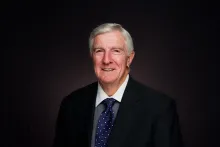
Before his retirement in 2021, Dr. Donald Ward pastored churches in Texas and Louisiana, and taught at Ambassador Bible College in Cincinnati, Ohio. He has also served as chairman of the Council of Elders of the United Church of God. He holds a BS degree; a BA in theology; a MS degree; a doctor’s degree in education from East Texas State University; and has completed 18 hours of graduate theology from SMU.
