

Mario Seiglie
This message focuses on three roles a Christian fulfills from their commitment at baptism. These are the personal relationship with God the Father, Jesus Christ, and the Church.
This transcript was generated by AI and may contain errors. It is provided to assist those who may not be able to listen to the message.
This past week, I had a chance to talk to one of my daughters, who attends a UCG congregation, and she was concerned that the church had to be more than just obedience. It can seem cold and mechanical at times, especially for a young person.
And it has to involve a loving relationship with God the Father and with Jesus Christ. It has to be real, and we have to be living it. Notice what it says in Jeremiah chapter 9, verse 23 and 24. Jeremiah 9, 23 and 24. I'm going to read it in the amplified, classic version. It says, Thus says the Lord, Let not the wise and skillful person glory and boast in his wisdom and skill, let not the mighty and powerful person glory and boast in his strength and power. Oh yeah, people can be muscle-bound, just like there are a lot of people that are very intellectually gifted. But God says, don't boast about that. Let not the person who is rich glory and boast in his temporal satisfactions and earthly riches. A lot of people, they're very proud if they're rich. But let him who glories glory in this, that he understands and knows me personally, and practically, directly discerning and recognizing my character, that I am the Lord, who practices loving-kindness, judgment, and righteousness in the earth. For in these things I delight, says the Lord. In other words, if we have something to boast about, it's our personal relationship with God the Father and Jesus Christ. It can't just be this typical just obedience from far off. No, this is a family relationship that we need to feel and appreciate. So knowing the truth of God is not enough, for it must include love. As Ephesians 4 verses 4 through 7, let's go to Ephesians chapter 4.
Because I have seen people that have just focused on keeping God's laws and thinking that's enough, and it really isn't. It needs, you not only need truth, but you need love as well. And it says in Ephesians chapter 4 in verse 4, it says, Then in verse 4, it says, There is one body and one spirit, just as you were called in one hope of your callings. So there's one body, one church, and one spirit that we share given by God. Just as you're called in one hope of your calling, one Lord, one faith, one baptism, one God and Father of all who is above all and through all and in you all. Then it goes on to say, But to each of you, of us, grace was given according to the measure of Christ's gift. What kind of gift did Christ give to us? Notice in verse 11. It says, And he himself gave some to be apostles, some prophets, some evangelists, and some pastors and teachers for the equipping of the saints. In other words, instructing, training.
You are the ones that are being developed, and we are working on developing spiritually all of these gifts for the work of ministry, for the edifying of the body of Christ. Till we all come to the unity of the faith and of the knowledge of the Son of God to a perfect man, which means fully mature spiritually talking, to the measure of the stature of the fullness of Christ, that we should no longer be children.
And then in verse 15, it says, But speaking the truth in love may grow up in all things into him who is the head Christ. And so there are people that have love, but they don't have God's truth. That's not enough. And there are people who have God's truth, but if you don't have love, that's not enough.
You need both. How do you develop that? That's what this message is about. As the fall feasts are around the corner, the key to knowing and properly fulfilling the roles we accepted at baptism, we can focus on three of these very important things to have the personal relationship with God the Father and Jesus Christ as we grow in grace and knowledge. So what are those roles?
Number one, first, we need to develop a personal and intimate relationship with God the Father. It will then lead to the right personal relationship with Jesus Christ. And we should never take that tremendous privilege of knowing God the Father and Jesus Christ as revealed in God's Word and through God's Spirit. Notice in Matthew 11, we should never take this tremendous privilege of truly knowing the Father and the Son as they are revealed in Scripture. Notice in Matthew 11, Matthew 11, in verse 25, Christ said, At that time Jesus answered and said, I thank you, Father, Lord of heaven and earth, that you have hidden these things from the wise and prudent and have revealed them to babes.
So he hasn't revealed it to the most intelligent, the most capable. He has revealed it to ordinary people like you and me. Even so, Father, for so it seemed good in your sight. All things have been delivered to me by my Father, and no one knows the Son except the Father, nor does anyone know the Father except the Son and the one to whom the Son wills to reveal Him.
So we have this tremendous privilege unmerited to understand the relationship with God the Father and Jesus Christ as they desire it to be. In Ephesians chapter 3 and verse 14, this is something that most people that go to church do not have this understanding. From Ephesians 3 verse 14, Paul says, "'For this reason I bow my knees to the Father of our Lord Jesus Christ, from whom the whole family in heaven and earth is named.'" Yes, God is in charge of everything, and He has a family.
His Son is Jesus Christ, but that family is growing. It says, "'From whom the whole family in heaven and earth is named, that He would grant you, according to the riches of His glory, to be strengthened with might through His Spirit in the inner man.'" So this is why Paul is so grateful. God is the one that provides us with that Spirit, "'that Christ may dwell in your hearts through faith, that you, being rooted and grounded in love, may be able to comprehend with all the saints what is the width and length and depth and height, to know the love of Christ which passes knowledge, that you may be filled with all the fullness of God.'" Again, we have that relationship.
How many have ever heard that God is a growing family? You don't hear that. What do they teach you in the traditional Christianity? Oh, God's a Trinity. It is one being, and there are three persons involved here, and it is hermetically sealed. In other words, that's it. We can never be part of that family. It's already a closed system. That's not what God says. It is an open system. Christ is the firstborn of many brethren, it tells us.
And that's why God has hidden these things to the world, and it is Christ who chooses to reveal these things to those he wishes.
I'd like to read from this book, God Among Sages, Kenneth Richard Samples. He's a Biola professor, and yet he has a wrong concept of the relationship of God the Father and Jesus Christ. Notice he says here in verse 6, he says, in other words, one's relationship with Yahweh, or God, depended on one's relationship with Jesus. Thus, to interact with Jesus was to interact with the Father and vice versa. And so they believe since God is one being, well, if you relate to the Father, you're relating to Jesus Christ. And that is not correct, because they are separate. They are two divine beings that share the Spirit and that oneness of mind. How can you prove that? Let's go to 1 Timothy. 1 Timothy chapter 2. This is one of the proof scriptures you can use. 1 Timothy chapter 2 verse 5. It says, for there is one God and one mediator between God and men. The man Jesus Christ, who gave himself a ransom for all to be testified in due time. So again, each one, God the Father and God the Son, they have different roles. Christ is a mediator. So if you go to Christ, it's not the same as going to God, because God the Father is another being. And Christ is between us and God the Father. So He helps us. He intervenes and is our intercessor. But to say, oh, we just have to go to Christ and automatically it's like going to God the Father. See, it's not one being. It's both that we need to develop the right relationship. And that is so important to understand. Notice in 1 Corinthians chapter 11. 1 Corinthians chapter 11 and verse 3. It says, but I want you to know that the head of every man is Christ. The head of women is man and the head of Christ is God. So if it's just one being, how can one be the head of another one? No, it has to be separate. These are two divine beings that have, they share that oneness of mind. And certainly when we go to Christ, God the Father is pleased. And we go, when we go to God the Father, Christ is pleased. But it's not one being. It is two.
We need to have a relationship with both. Notice in Matthew 22 verse 37. What is the first commandment? If we want to obey God and keep the first commandment, Matthew 22 and verse 37.
Christ said, you shall love the Lord your God with all your heart, with all your soul, and with all your mind. This is the first and great commandment. And the second is like it, you shall love your neighbor as yourself. On these two commandments hang all the law and the prophets. So again, it's so important to understand the roles. When we are baptized, it is stressed. You know what role you have to play. You know what role God the Father has to play. You know what role Jesus Christ has to play. So God the Father is first. Jesus Christ is second. It is not the same. To go to one has to go to the other. They all have different roles to carry out. Notice in Romans chapter 8, and although people can have relationships, especially like they mentioned about having a relationship with Jesus Christ, but they don't talk about God the Father. Where is God the Father in all of this? Why don't they stress that if God the Father is first? Well, they say, well, it's the same thing because it's one being with three persons inside. And that's where the deception lies. In Romans chapter 8, in verse 14, this is the relationship that God wants from us. It says, for as many as are led by the Spirit of God, these are sons of God. We are potential family members that have this relationship. For you did not receive the Spirit of bondage again, one of the world with its sins, taking us to bondage, to fear, but you received the Spirit of adoption or sonship, as it should be translated, by whom we cry out, Abba, Father. Abba is an endearing term. In Hebrew, it means daddy. Is that the way we go to God? Do we feel that intimate relationship that we can go to Him, just like a loving Father that receives the child? And I can't ever conceive or remember any time that any of my children ever came to me, and I said, no, I don't want to hear you. I don't want to talk to you. Never! It's 24-7. Whenever they call, I don't care what time of day or night, they have access to me. I'm right there. What can I do? How can I help? And so, how much more God the Father with us? Abba, Father. He doesn't want some cold aloof being, that there's no real personal and intimate relationship. So you see, that's where our faith becomes weak, because we have not built enough that closeness to God the Father and to Jesus Christ, and be able to have that confidence, and to have the strength that comes from that relationship.
In the same book that I mentioned here, God Among Sages, it does have a good comment in page 30. As you know, I'm a bookworm. Love to read. Always have a book next to me. But that's the way I learn, so I can share things with you. I don't do it for my own self, I do it for all of you, because I know I don't have the time for reading more. But it says here, the Fatherhood of God is the title. Jesus' wonderful message about God the Father's kingship is that people can readily enjoy the connection and intimacy with the Father that Jesus enjoys. Goes on to say, when speaking of this incredible access to the Father, Jesus used the intimate Aramaic word, Abba. No one in the history of Judaism had ever spoken of Yahweh in such familiar terms. Jesus implored people to view God as their intimate and loving Father, who is beyond measure and generosity, compassion, and trustworthiness. This new meaning to the Fatherhood of God that Jesus introduced stands in strict contrast to the way God is viewed in other religions of the world. Here again, the author of Green offers this contrast. Jesus brought an entirely new picture of God into the world. He was Father. You can search Islam and you will not find the name of Father among the 99 names of God that they have. And so that's the relationship we need to develop in our lives. Notice in John chapter 1 in verse 18, Jesus Christ and God the Father have a very loving and intimate relationship. Notice in John chapter 1 verse 18, it says, no one has seen God at any time. Talk about God the Father. He's up there in heaven. He hasn't come down. Christ did. He says, the only begotten Son who is in the bosom of the Father, He has declared them. In that term, bosom actually means a very intimate because when people ate in those days, they didn't use chairs and tables. They would lay on the side and with a pillow, and so they are always next to the other person's chest. And it was a sign of friendship and intimacy. I'd like to read this verse in the Passion Translation, which fully expresses the thought. It says, no one has ever gazed upon the fullness of God's splendor except the uniquely beloved Son, who is cherished by the Father and held close to His heart. Now He has unfolded to us the full explanation of who God truly is. So that's one of the roles that Christ had, to reveal the right relationship. But we have to not only listen, we have to apply it in our lives. See God the Father that way. Merciful, generous. In James 1, 17, it says that every good and perfect gift comes down from God the Father, where there is no variation. He is that way, the great giver. And so now we go to the second application, which is our personal and intimate relationship with Jesus Christ.
This is fully described in verses in verse 20 of Galatians 2. Let's go there. This is one of the verses that I learned by heart when I came into the church. It just impacted me so much. Galatians 2 verse 20. It says, I have been crucified with Christ. It is no longer I who live, but Christ lives in me. And the life which I now live in the flesh, I live by the faith in the Son of God, who loved me and gave himself for me. So is that love and dedication in us? And it is producing those fruits, love, joy, peace, patience, kindness, goodness, meekness, self-control. That's what we are developing. And we know different stages in our life, but that's the goal. Notice in Matthew chapter 6, what did Jesus Christ say? Are we just supposed to take him into consideration? And people address Jesus Christ all the time.
With prayers and other things. There are times when you can hear a whole message and never hear about God the Father. This is what Christ said in Matthew 6 verse 6. It says, But you, when you pray, go into your room, and when you have shut your door, pray to your Father, who is in the secret place, and your Father who sees in secret will reward you openly. Because it's very easy to try to impress others with your prayers, and many have eloquent prayers, and they've invented very poetic type of prayers. But Christ said, No, it's to God the Father. It's not to all the public around you that you, even if you say, Oh, I'm not trying to impress them. That's still not the way to do it. That's why our main focus should be private prayer before God the Father, so that it won't be ostentatious. It won't be something that builds pride and vanity. Then he goes on to say in verse 9, he says, In this manner therefore pray, our Father in heaven hallowed be your name. So he said, this is the way to pray. So does he say, pray to me? No, he says, go to the Father and then say everything at the end in the name of Jesus Christ by him. He's the one that's there. He's our mediator. But he doesn't want the limelight on him.
Just like in the baptismal ceremony, when I talked to the person about preparing for baptism, there's a section there which talks about the five titles a person accepts when they're baptized. And it has to do with Jesus Christ as the one who's going to be over you with these five different titles or roles that he plays. He's our personal Savior. This isn't something that we should look at. Abstract. He is our rescuer. He paid the price to redeem us. And so the first thing we ask, have you accepted Jesus Christ as your personal Savior, not some aloof being? No, he died for you. If you were the only person on earth, he would have still had to die to forgive your sins. Now, there are a lot, many of us. Thankfully, his sacrifice extends to every human being because his life is worth more than all human beings put together. And so I remember a good friend of mine, he was one of my mentors in the Spanish department when I worked in Pasadena. And he was a Mexican. One of those super talented guys like Enrique reminds me of him. And he and his wife took me under the wing. And Cottie knew him when he visited Chile because he'd go for the Spanish department. But there was a, one of those crises that show up in the church and sometimes something is not well. And we have people that sometimes will fall away and not continue in the faith. And they're one of the ones that are on the top. And at this time, one of those fell away. And my friend thought so much of him. And he was so disillusioned that he just left the church, just dropped everything, went back to Mexico City. And I remember visiting him because I was serving in the Mexico City Church back in 1976. And I stayed with him. And when we were talking late into the night, and I said, what happened? Why did you leave the church? And he said, the problem was that I had raised this organization up in such a pedestal that when it disappointed me, I became disillusioned. And I remember the answer. I said, what happened to your personal relationship with God the Father and Jesus Christ? They are greater than this organization. And he stayed quiet. He realized he had made a mistake, but he wasn't ready to say, you know what? I put my trust in people, in human beings, and not in God. And some years ago, I visited him. He was in San Diego. He had cancer, and he died. And here's a wonderful person with so many talents. And so you need to develop that personal relationship above all things. In Jeremiah chapter 17, Jeremiah 17 tells us, don't make that mistake. We are an imperfect church because we are made up of imperfect people. And if we just rely on people and just have faith in human beings, you will be disappointed. Jeremiah 17. It says in verse 5, Thus says the Lord, cursed is a man who trusts in man, and makes flesh his strength, whose heart departs from the Lord. And then he goes on to say, verse 7, Blessed is the man who trusts in the Lord, and whose hope is the Lord. So we cannot make that mistake. And so Christ is our personal Savior, no other human being. You are not baptized into some minister's name. You're baptized into the name of God the Father and Jesus Christ.
So the second title is Christ is Lord. He is our owner, our boss. One thing I learn as a soldier of Christ, I just go and say, yes, sir. Those are the orders. Yes, sir. You want me to keep the feast of trumpet? Yes, sir. Because he's my master. He's my owner. He's my rescuer. If he put this down as his will, who am I to say, oh, I'll do something else. I've got something else. No, it's yes, sir. You take it very seriously, because he is our boss. And he's going to be our boss when he comes back. The third title, he is our master, which means our teacher. And the Bible is the textbook.
The fourth title, he is our high priest. Notice in Hebrews chapter 4. Hebrews chapter 4.
Verse 14.
It says, seeing then that we have a great high priest who has passed through the heavens, Jesus the Son of God, let us hold fast our confession. For we do not have a high priest who cannot sympathize with our weaknesses, but was in all points tempted as we are, yet without sin. Let us therefore go boldly to the throne of grace, that we may obtain mercy and find grace to help in time of need. If somebody knows perfectly well what we're going through, and he wants to help us. But is he your master? Is he your teacher? Is the Bible the textbook?
And finally, the fifth title, our coming king and bridegroom in the church. So yes, that's a kingdom we're looking forward to. That's what we're preparing for. We're not preparing for any human king now. We're looking for that king that comes, and that's going to solve all the world's problems. Notice in Ephesians chapter 5, how our coming king and bridegroom deals with us. Ephesians 5 verse 22, it says, Wives submit to your own husbands as to the Lord. For the husband is head of the wife, as also Christ is head of the church, and he is the Savior of the body. Therefore, just as the church is subject to Christ, so let the wives be to their own husbands and everything. Husbands, love your wives, just as Christ also loved the church and gave himself for her, that he might sanctify and cleanse her with the washing of water by the word, that's God's word, that he might present her to himself a glorious church, not having spot or wrinkle or any such thing, but that she should be holy and without blemish. And by the way, that's something God does, because he's going to perfect us. He's going to remove the human nature from us, and he's going to give us a Christ-like character. So that's how it works. And so we need to have that intimate relationship. It tells us in John chapter 14, John chapter 14 is one of the most powerful chapters that describes the relationship between God the Father, Jesus Christ, and us. I just marvel at how much it said here. Let's go to John chapter 14 verse 6. Verse 6. It says, Jesus said to him, I am the way, the truth, and the life. No one comes to the Father except through me. There's no other Savior. It's the only way to be saved. If you had known me, you would have known my Father also. And from now on, you know Him and have seen Him. Why? Because they share the same attitudes, the same mentality. Philip said to him, Lord, show us the Father, and it is sufficient for us. Jesus said to him, have I been with you so long, and yet you have not known me, Philip? He who has seen me has seen the Father. So how can you say, show us the Father? He's saying that they have the same attitude of love, same characteristics. And then he goes on to say in verse 19. It says, a little while longer and the world will see me no more, but you will see me because I live, you will live also. At that day you will know that I am in my Father and you in me and I in you. That's the relationship. See all three. He who has my commandments and keeps them, it is he who loves me. So it's not just a sentimental or emotional. It's how we express our love to God respectfully, lovingly. And he who loves me will be loved by my Father, and I will love him and manifest myself to him. Verse 22, Judah is not as scary as said to him, Lord, how is it that you will manifest yourself to us and not to the world? Jesus answered and said to him, if anyone loves me, he will keep my word and my Father will love him and we will come to him and make our home with him. So that's how you develop that personal relationship. Yes, you need baptism, you need God's Spirit, but once you're connected, you have to work on it. You have to grow closer to God in prayer, in meditation, in Bible study, in occasional fasting as well, that we need to be close to God to be filled with that Holy Spirit. Doesn't come automatically. Instead of elbow grease, we need knee grease.
And that takes us to the third role, which is our loving relationship with a brethren into church. First John chapter 4. This is also connected to what we have been talking about. First John chapter 4, because some people say, oh, I love God, I love Jesus. It's a people I can't stand, because that's easy, right? You're not going to offend God the Father, Jesus Christ. They're up in heaven. It's dealing with human nature and human beings. Brethren, in first John chapter 4, verse 7, John says, Beloved, let us love one another, for love is of God, and everyone who loves is born of God and knows God. He who does not love does not know God, for God is love. You see, just not knowledge, but it is character. It is the expression of that sacrificial love. In this, the love of God was manifested toward us, that God sent his only begotten Son into the world that we might live through him. And then he says, verse 11, Beloved, if God so loved us, we also ought to love one another. That's the relationship we have. And you will be tested. There will be some that will just come into the church and go out of the church. It tells us in 2 John, 1 John chapter 2. It's right here, a little bit. 1 John chapter 2. It says in verse 19 about people that are in the church. It says, They went out from us, but they were not of us. For if they had been of us, they would have continued with us. But they went out that they might be made manifest, that none of them were of us. And so you have to persevere. You have to maintain that personal relationship with God the Father and Jesus Christ, because Satan wants to knock us out, wants to discourage us, wants to focus on just the problems and not who's in charge. God the Father and Jesus Christ. And we will be tested because not all are of the faith. Paul talks about false brethren, and we have experienced that in the past. So our relationship with God the Father and Jesus Christ is not about boasting or getting sentimental. It's too important that deep, rich, and personal relationship. And the fruits will show it. Whether God is working in you or not. The fruits of the Spirit will show it. And so in Hebrews 11 verse 6 we see this faith in action. Hebrews chapter 6, 11 verse 6.
It says, but without faith it is impossible to please Him. For he who comes to God must believe that He is, that He exists, and that He is a rewarder of those who diligently seek Him. You're gonna see that. God's not gonna abandon us, but we can abandon God. And so let's finish now in Romans 8, 31. Last verse, last passage here. Romans 8, 31 through 39, describes the roles of God the Father, Jesus Christ, and us. Romans 8 verse 31. It says, what then shall we say to these things? If God is for us, who can be against us? God is stronger than anybody. He who did not spare his own Son, but delivered Him up for us all. How shall He not with Him also freely give us all things? That's what He wants to do. Who shall bring a charge against God's select? It is God who justifies. Jesus Christ paid the price. We can be forgiven. Who is He who condemns? And furthermore, Jesus Christ who died, and furthermore is also risen, was even at the right hand of God, who also makes intercession for us. So both of them are on our side. Who shall separate us from the love of Christ? Shall tribulation or distress or persecution or famine or nakedness or peril or sword? Verse 37, yet in all these things we are more than conquerors through Him who loved us, not by our own strength, but He who's living in us. For I am persuaded that neither death nor life, in other words, if I live or die, it's not going to make any difference. I've already been running my race. That'll end. But you know what? I'm still connected. I've still got God the Father and Jesus Christ who are there, nor angels, nor principalities, nor powers, Satan included, nor things present, nor things to come, nor height, nor depth, nor any other created thing, shall be able to separate us from the love of God which is in Christ Jesus our Lord. And that's the way we can have living faith. That is the way. That's what it means to have Christ living in us.
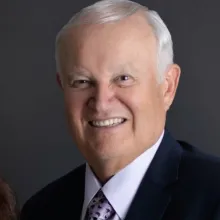
Mr. Seiglie was born in Havana, Cuba, and came to the United States when he was a child. He found out about the Church when he was 17 from a Church member in high school. He went to Ambassador College in Big Sandy, Texas, and in Pasadena, California, graduating with degrees in theology and Spanish. He serves as the pastor of the Garden Grove, CA UCG congregation and serves in the Spanish speaking areas of South America. He also writes for the Beyond Today magazine and currently serves on the UCG Council of Elders. He and his wife, Caty, have four grown daughters, and grandchildren.
