
Rex Sexton
This transcript was generated by AI and may contain errors. It is provided to assist those who may not be able to listen to the message.
One thing that I have loved through the years as we study the Bible, I love difficult scriptures, because that is just a challenge to see how God, who says that scripture cannot be broken and that the Bible interprets itself. It's like a riddle. It's something that you have to study the scriptures deeply. If everything was just given and everything in such simple terms, people might get bored, but know there are always questions that come up. And here's one that is found in 1 Corinthians 6, verse 1.
This one certainly makes a lot of people scratch their heads. 1 Corinthians 6, 1-3. Paul is talking to the Corinthian congregation, and he says in verse 1, There any of you, having a matter against another, go to law before the unrighteous and not before the saints? Do you not know that the saints will judge the world? And if the world will be judged by you, are you unworthy to judge the smallest matters? Do you not know that we shall judge angels? How much more things that pertain to this life? What does he mean by judging angels? Certainly in the traditional Christianity, they don't have an idea about this because people are supposed to just go up to heaven.
God's going to do everything, and yet here it says that one day we will be involved in the process of judging angels. Well, again, the Bible interprets itself. If we go to 2 Peter 2, 4, it tells us about that judgment. 2 Peter 2, 4. It says, For if God did not spare the angels who sinned, but cast them down to hell, the term here, Tartarou, means a place of confinement, and delivered them into chains of darkness to be reserved for judgment.
So they have a judgment day ahead of them. They are going to be judged, these fallen angels. And Paul is revealing that in the church we are all training to judge those angels, to evaluate and be part of it. It isn't just going to be God, the Father, and Jesus Christ, but it tells us we are going to have a part of it.
After all, we have been offended and damaged by Satan and his angels. And one day they're going to have to pay a price for that. Because we have all been, in a sense, victims to his deceit and how much damage he's doing to human beings. He doesn't want human beings to know the truth about God's kingdom and how all of these saints, these members throughout history, will one day reign with Christ as kings and as priests.
And it says judgment will be given to them. One of the unique features that we have in the church is that we don't consider members of the church just as listeners. People that come, and many of them, it's a type of a routine that you do in traditional Christianity and you listen.
No, we treat people here as future kings and priests of the coming kingdom. And so the church is a training ground for these future judges and kings and priests, both men and women. Because when you're transformed, you're not transformed into some other physical feature. We are going to be spirit. We're going to shine like the sun. And so we all are potential children of God, and we will be under Jesus Christ for those thousand years.
And then later, beyond that, this is important because God is training you for positions in the kingdom of God. And if you're faithful over little, then you will be faithful over much. And God's not calling the great and the mighty in the world into the church. Notice in 1 Corinthians chapter 2, 1 Corinthians, here's another important truth. Why does God call humble people? The ordinary people in 1 Corinthians chapter 2. I'm sorry, 1 Corinthians chapter 1, verse 26. 1 Corinthians chapter 1, verse 26, it says, For you see your calling, brethren, that not many wise according to the flesh, not many mighty, not many noble, are called.
But God has chosen the foolish things of the world to put to shame the wise, and God has chosen the weak things of the world to put to shame the things which are mighty and the base things of the world. What the world doesn't consider as important, talented, brilliant, he says, and the things which are despised God has chosen, and the things which are not, they're not the high and the mighty and powerful.
Why? He gives the answer to bring to nothing the things that are, that no flesh should glory in his presence. So anybody who thinks, oh yes, God had to call me because look at all the talent and ability and everything. No, that's not the case. God is not doing that because he wants us to know it comes through him. Anything that we can achieve is to God's glory, not to one's glory. And we have to yield ourselves.
So God can use us and train us and educate us. So this is what I learned coming back from the general Council of Elders and the Council of Elders itself. We have opportunities to serve now, to discern in our own lives, to judge, to make decisions. Because according to decisions we make, God sees whether we are learning wisdom, if we're learning to do it his way, or we're still doing it our way.
As part of the Council of Elders, there was one word that was given to me, which I really didn't pay much attention. I didn't really even know too much. But when I had to sign there that as the board, we are responsible. If the church is attacked by the state or legally or something, we have a fiduciary responsibility to defend the church above our own welfare.
The term fiduciary in the Latin comes from the word fides, where we get the word fidelity or faithful. And then the term fiduciary means inspiring trust. So it's somebody faithful that inspires trust, that you can give them responsibilities to protect you and to defend the church with your own life if necessary. And you put the church's welfare above your own.
I take that very seriously. And the decisions made. And pray that it is God's will that is done and not our own. We're not seeking our own interest. And this guiding principle applies to all the members of the church. They should, quote, inspire trust and fidelity. That putting the welfare of the church that we were placed in to protect, to love, to help as we can.
So the health and the well-being of the church is very important to the point where you do it with fear and trembling, because I'm going to have to pay a lot for the responsibilities given. I'm going to have to give an accounting. And so no decision is made lightly. And as members, the same way we should examine things and discern how things are done, because you are being trained. You are being mentored into being part of God's kingdom in the future.
And if we can't even judge among ourselves in the right way, how are we going to judge angels, much higher creatures? Let's see some biblical examples. First in the Old Testament. Let's go to Deuteronomy chapter 1, because God never had the idea, oh well, I'm just interested in the leadership. I'm not interested in the rest. God never was that. When He chooses, everybody is important. Everybody has a responsibility. Notice what it says in Deuteronomy chapter 1 verse 9. Moses, now toward the end of his life, he reminds him at the beginning. He says, verse 9, And I spoke to you at that time, saying, I alone am not able to bear you. He couldn't do it all his own.
He wasn't a one-man show. The Lord your God has multiplied you, and here you are today as the stars of heaven in multitude. May the Lord God of your fathers make you a thousand times more numerous than you are and bless you as He has promised you. And basically, it's that way. The Israelite churches from this period multiplied, and now they are around the world. It's not just the Jewish people in Israel and other parts. That's only Judah and Levi and a bit of maybe Benjamin. But the other ten tribes, God knows where they are, and He has blessed them physically. We just had the enthronement of King Charles.
And if you notice that throne that He was coordinated in, it has this stone. It's called the Stone of Stone. Basically, that goes back to the time of Jacob when he had his sleep that God promised him that he was going to be used, and that he saw angels going up and down this ladder. And he used that stone and poured oil, sanctified it. And then, through time, the prophet Jeremiah, who fled with the king's daughters, went to Ireland, went to Scotland, and eventually came to England.
And upon that throne, King Charles was coordinated under that stone. So it says that God would multiply, and He certainly has. And so let's go on. It says in verse 12, It says, Then I commanded your judges at that time, saying, Hear the cases between your brethren and judge righteously, between a man and his brother or the stranger who is with him. You shall not show partiality in judgment. You shall hear the small as well as the great.
You shall not be afraid of any man's presence. For the judgment is God's. The case that is too hard for you bring to me, and I will hear it. And so we have this system where if I can't come up with the answer, I don't have the knowledge, I don't have the wisdom, I'll go to my superior who has more knowledge and wisdom. And if he can't solve it, he doesn't have enough wisdom and knowledge, he'll go up to whoever it is, the president, and the council of elders, and if the council of elders and the president, they can't get the answer, they'll go directly to God and have to wait until God answers, and Christ is the head of the church.
So we take them into account. But it's this system, and it goes down to even leaders among just 10. The people that are willing to step in, step into the gap, see where there's a need, see how they can help out, because we're all in training. That was part of our baptismal covenant with God, that we were going to allow him to use us and to develop us, and the opportunities are in the church. God is watching. Notice in Exodus 19. Exodus 19.
And verse 3.
And Moses went up to God. This was on Mount Sinai. And the Lord called to him from the mountain, saying, Thus you shall say to the house of Jacob, and tell the children of Israel, You have seen what I did to the Egyptians, and how I bore you on eagle's wings, and brought you to myself. Now therefore, if you will indeed obey my voice, and keep my covenant, then you shall be a special treasure to me above all people, for all the earth is mine, and you shall be to me a kingdom of priests and a holy nation.
So it wasn't just a few. The idea was everybody get involved. Everybody help out. Everybody develop their talents and abilities to do what they can. Because God selectively is choosing each one of us to see how we're going to do it in the kingdom. How we have been faithful over little, so we can be faithful over much. See, I didn't know that about any church. I thought it was just, you do this routine, and just go through all of trying to be a nice person in life. This thing about training, and judging, and serving under Jesus Christ. What a great opportunity! Are we going to miss it? Are we going to miss out on it? Notice what it says in Revelation chapter 3.
Can we get the vision? Can we accept the vision? Notice in Revelation chapter 3, talking about the Philadelphia church, which we believe we are living in this era of the Philadelphia. It says in Revelation 3 verse 7, it describes the history of our church.
This is basically a hundred years ago that the church started with the open doors of radio, later television, and printing. And God's truths were spread throughout the world, and they continue to be. He says these things, says, He who is holy, He who is true, He who has the key of David, He's the one that opens the doors. And He's the one that, through David's descendants and all of this knowledge of the tribes of Israel, He who opens and no one shuts, and shuts and no one opens. So Christ is the one that opens the doors, and nobody's going to shut the doors if Christ wants them open. And He shuts some doors as well. I know your works. See, I have said before you an open door. So this is the open door, getting the gospel to the world.
A century ago, basically there wasn't any way to get around. You're still almost, let's say at the beginning of the 20th century, most people had horse and buggies. Radio was hardly existed. There was no way to get to the world like we are now. It says, and no one can shut this door, for you have a little strength. We're not the strongest church because of the world we live in. There's too much distractions. There's too much going on that they didn't have to worry about in the first century. But you have kept My word and have not denied My name. So you have been keeping the commandments as God wants them. And then He goes on to verse 10. It says, Because you have kept My command to persevere, we prevail, we continue to overcome, I also will keep you from the hour of trial which shall come upon the whole world to test those who dwell on the earth. So there's going to be a test like there was during the time of Noah, where the intervention came and God had to protect His people. The same thing happened at the time of Sodom and Gomorrah, where God protected Lot and His family, His wife virtually just wanted to go back to Sodom in those ways. She didn't make it. But now we're going to come to a time when God is going to say, enough is enough. And once He opens those seals, it's too late. The world is going to be shaken and will know there is a living God. And He has said, enough is enough. And so He says, I will keep you from the hour of trial, which shall come upon the whole world to test those who dwell. Behold, I am coming quickly, says Jesus Christ. Hold fast what you have, that no one may take your crown, your position, your future position. Because if you leave, you go off, what's God going to do? He will call somebody else to replace you, to have that crown of being a king and a priest and a judge, and to receive a job under Jesus Christ for a thousand years. Don't let anybody take that crown. Do you see there's a crown for each one of you that God is preparing, an opportunity to serve under Him? Do we have that vision? Do we want that crown? Not to, lord it over, but to serve and to receive the training and mentoring from Jesus Christ Himself. You'll be there with the apostles. You'll be there with all the saints from the time of righteous Abel. You'll be working with Moses. You'll be working with Joseph. You'll be able to hear all these stories and Abraham, his faith. How would you like to hobnob and be around them? And when Jesus Christ said, well, we have this job to do. See that area there in Africa? Well, we're going to clean that whole place up. We're going to now remove the curse upon the land, and we're going to make it into beautiful places. And people say, okay, just tell me what to do. I want to be there. I want to renew the face of the earth. And so let's go to 1 Peter chapter 2.
Peter says the same thing that Moses received from God about a kingdom of priests. It's not just a few. If anybody gets in, you can have an important position in God's kingdom. In 1 Peter chapter 2 verse 4, it says, Coming to him as to a living stone, rejected indeed by men, but chosen by God and precious. He's the foundation, the cornerstone. You also, as living stones, we're like being placed in this temple of God, as living stones are being built up a spiritual house, a holy priesthood, to offer up spiritual sacrifices acceptable to God through Jesus Christ. And again, we are that way. So it's just a matter of opportunities, taking advantage of them. The church is a training ground for those who want to serve and who are surviving and overcoming and don't give up. Notice in Revelation chapter 20, it tells us about those positions of service under Jesus Christ. Revelation 20 verse 4, when Christ comes back, Satan has been removed. That's explained in the first three verses of chapter 20. Verse 4, when Satan and his demons are all removed, it says verse 1, And I saw thrones, and they sat on them, and judgment was committed to them. Then I saw the souls of those who had been beheaded for their witness to Jesus and for the word of God, who had not worshipped the beast nor his image, and had not received his mark on their foreheads or on their hands. So many were martyred for the faith. Others, though, it says they were witnesses to the word of God. They lived their lives in privacy following God. And it says, And they lived and reigned with Christ for a thousand years. Then in verse 6, it says, And so that's what God is doing. We all came into the church. We're all baptized. But it just depends. What do we do with what God gives us? Being able to serve Him. We do it for His glory, not for ours.
We are a nation that is training to be under Jesus Christ. And this is a church of Jesus Christ. And He's using it to teach us all of these lessons. Notice in Ephesians 4, it tells us a little more about the organization of the church. Ephesians 4, verses 1-4. Paul, certainly he learned so much. He was a powerful instrument in God's hands to teach the truth, train others.
He says, verse 1, And then skip to verse 11. Talking about Jesus Christ, and He Himself gave some to be apostles, some prophets, some evangelists, and some pastors and teachers. For the equipping of the saints, for the work of the ministry or service from the aconos, which means serving, for the edifying of the body of Christ. So we are here to mentor, to equip, to have more people learn how to do it God's way. Prepare for that coming kingdom. It says, No, we already know how to discern when somebody is lying to us or not. When these are spiritual lies and false doctrines and false teachings.
We don't put up with that because we've been able to look in God's word exactly what He expects of us. It says, We're speaking the truth in love. So you need both. You can have the truth, but maybe you don't speak it in love. Or you can have love and not have truth. That doesn't work either. You need to know the truth, but express it with love and kindness.
Continuing on, it says that we may grow up in all things into Him who is the head Christ, from whom the whole body joined and knit together by what every joint supplies, according to the effective working by which every part does its share. It causes growth of the body for the edifying of itself in love. So that's the key scripture where we get our vision statement. I'll read it to you. It says, A church led by God's Holy Spirit, joined and knit together by what every member supplies, with all doing their share in growing in love, to fulfill God's great purpose for humanity, to bring many children to glory. So you see, we're all working. Whether it's at the council level or local level, we all have a part.
We all have a role. And many times, some people can do a better role in what they're doing than others that maybe have more of this name recognition. We always say, there are widows that are going to receive ten cities in the kingdom, and there are going to be some who look like they were so prominent, but spiritually, they really weren't up to the task.
God is the judge. He knows the heart. And so, in Acts 5.29, this is the principle that we all have to apply. This principle has helped me in life so much. In Acts 5.29, when the apostles were threatened, it says, but Peter and the other apostles answered and said, we ought to obey God rather than men. We're going to put God first. I'd rather get in trouble with men than get in trouble with God. And you find out, let's do just what God says.
Trust Him. It's going to work out. Instead of what we think, and then calling God to bail us out because we didn't do things as He expected. So members are being trained today to judge, to discern, to judge the things in this world, in their own lives, in the church, and in the world to come. Preparing for that. You will even participate in judging angels when they come up and they will be accused and they will be indicted and eventually expelled for never again damaging anyone.
But today, Satan is still loose. He's doing so much damage. But it's just temporary. When Christ comes, that ends. And so, let's look at some action steps. Let's look at how we can put some of these things into practice. Number one, don't be passive. Don't be a passive member. Familiarize yourself with the church, the system, how it works. We have all kinds of home office updates. We have all kinds of information because we're very open.
Learn how to judge things. Just like a lawyer. Before he gets his bar accreditation, he has to know the laws of the land. We have to know God's laws. If we can apply them first to us and then to others. As Christ mentioned, we don't want that saying, physician, heal thyself first. It's easy to give recipes and all kinds of formulas, advice. But if somebody's all sick, you're not a very good example to others of how to live. So we have to apply it first before we give recipes. Know more about God's laws. The 20 fundamental beliefs of the church are based on the Ten Commandments. So examine them, check them out, know them well. And then, secondly, participate, volunteer. Find a need to fill in the church. I remember what was my first job? It was making sure the speakers had water. It was my first job. I was the one that had to get there early, make sure he got water. Boy, I felt important. I may be able to do this for this minister or whoever speaks. And I took it very seriously. I didn't even have a car at that time. I had a bicycle. I had to go from the place where I was renting, which I didn't have enough money to pay for a big rent. So I worked in landscaping on Sundays, and they gave me this little cabin next door. And I'd have my bicycle and go in my suit. And I'd go to church and get an open thing and make sure, okay, the water's there. I'm scot-free. It's fine. So you start out with whatever is needed, but you continue being faithful over little. You'll be faithful over more. You look at the church hall. You look at the coffee social. Is it clean? Does it need to have a little bit of cleaning involved? Greeders. What kind of train do we need? We just need a nice smile and welcome and get to know people. But we do need greeters. We need ushers. We need openers and closers just once a month. Oh, you like sound and video? Well, we got mentors in the back. We'd love for somebody to get involved there. And so it doesn't matter what it is. It's being part of it. Being part of the team. And so as I came back from the Council of Elders and GCE, I felt the weight of that fiduciary responsibility. I know I'm not deserving of it, but I'm appreciative because I'm learning. And you learn from mistakes as well, sometimes better than when you do things right. But the thing is, continue learning, growing in grace and knowledge. So let's finish in Luke chapter 19, verse 17. This is what we are striving to do. We can have all the money in the world. We can have all the fame in the world. But what is that person going to feel like when he goes before Christ? I don't think that matters to Christ very much. This is what matters to Christ. In Luke chapter 19, verse 17, it says, after he came back, Jesus Christ came back. In verse 17, he came to the first, and this person had developed God's Spirit tenfold, ten times from the time of his baptism, because you're talking about responsibilities. And he said, in verse 16, Master, your mina, which is an amount of money, which is symbolic of God's Spirit and giving us gifts, abilities, says, has earned ten minas. And what did Christ said? Verse 17, and he said to him, well done, good servant, because you were faithful in a very little, have authority over ten cities. So he's delegating cities in his kingdom. And that's what we are striving for Christ to say, well done, servant, what you did in this life. Come, receive the kingdom, receive the privilege of being mentored by Jesus Christ and helping those people in the world tomorrow learn of his ways. In other words, it's to please God in everything we do.
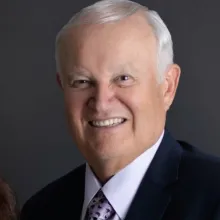
Mr. Seiglie was born in Havana, Cuba, and came to the United States when he was a child. He found out about the Church when he was 17 from a Church member in high school. He went to Ambassador College in Big Sandy, Texas, and in Pasadena, California, graduating with degrees in theology and Spanish. He serves as the pastor of the Garden Grove, CA UCG congregation and serves in the Spanish speaking areas of South America. He also writes for the Beyond Today magazine and currently serves on the UCG Council of Elders. He and his wife, Caty, have four grown daughters, and grandchildren.

