

Chuck Smith
This transcript was generated by AI and may contain errors. It is provided to assist those who may not be able to listen to the message.
Here we have a Holy Day, the first day of Unleavened Bread. Each of God's Holy Days are very special. Each of God's Holy Days, in part, very specific knowledge for us. They're inspirational, they're educational. Let's begin by giving our bearings here properly, by turning to Leviticus 23. Leviticus 23.
And see how God does instruct us. Leviticus 23.1 And the Lord spoke to Moses, saying, Speak to the children of Israel, and say to them, The feasts of the Lord. You know that we always pause there, and as appropriately pause there, these are not feasts of mankind, these are nothing that people have put together. These are God's feasts, the feasts of the Lord, which you proclaim to be holy convocations. Very special toward God. Very special meetings. These are my feasts. And we drop down to verse 6. And on the 15th day of the same month is the feast of Unleavened Bread. To the Lord, seven days you must eat unleavened bread. On the first day you shall have a holy convocation. You shall do no customary work on it, but you shall offer an offering made by fire to the Lord for seven days. The seventh day shall be a holy convocation. You shall do no customary work on it. So here we see something that's very informative, educational for us, and that is we have a feast that runs seven days.
Now, of course, we've got the feast of tabernacles that go seven days, but here we've got a holy day at the beginning and a holy day at the end of those seven days. And also something else that's interesting, and that is God gets our attention by a very physical means, but there's spiritual impact here. And that is that we are to eat something very special. Unleavened bread. We are to get the leavening out of our premises, out of our homes, and eat unleavened bread for seven days. Now, in Scripture, seven has its literal numeric meaning, but also in Scripture, seven also figures to refer to spiritual maturity. It can refer to completeness. It can refer to wholeness.
So here we see at the very beginning of the holy days of God. Of course, we've got the weekly Sabbath that's discussed here. We see this idea that we need to get out leaven, which pictures sin. We need to bring in unleavened so that we can be spiritually mature, spiritually complete, spiritually whole. So we are coming out of sin. We're taking in of God's righteousness. Now, here we have this in the Old Testament. Let's turn our attention to 1 Corinthians 5. New Testament. 1 Corinthians 5. 1 Corinthians 5.6. Your glory is not good. Do you not know that a little leaven leavens the whole lump? Therefore purge out the old leaven that you may be a new lump, since you truly are unleavened, for Christ our Passover was sacrificed for us. Therefore let us keep the feast, not with all leaven, nor with the leaven of malice and wickedness, but with the unleavened bread of sincerity and truth.
So here we see in the Old Testament, Leviticus 23, a discussion about getting out the leaven, bringing in the unleavened. We see the same thing here in the New Testament. But it's interesting when you take a look here in verse 7, where it says, purge out the old leaven. Purge out.
It's talking about getting in the original tongue, getting rid of it completely, getting rid of any evidence of the old yeast, of the old person.
Regarding old, one of the lexicons refers to old and defines old as the older former pattern of behavior, the old self, the old pattern of life. These need to go. These need to go. And of course, we need to get rid of any pattern of life that is not according to what God says for us to be doing.
So we see both now Old Testament, New Testament, getting out, coming out of sin, taking in of God's righteousness.
Let's continue on with this thought over in 1 Peter, chapter 2. 1 Peter, chapter 2. I'm giving us a foundation here to work with. 1 Peter, chapter 2.
We read this on Passover evening. We read this quite frequently. 1 Peter, chapter 2 and verse 21.
We covered that on Passover evening.
2 Peter, chapter 2. We are handing our lives over into the control of our great God. Our elder brother, Jesus Christ. We want very much to be, as we discussed on Passover evening, when we each took of that little piece of unleavened bread, representing Jesus Christ.
And we put that in our mouth and we ate that and we swallowed it and it becomes a part of who we are.
We want to follow Jesus Christ in every way, shape, and form. His example. His steps. We commit ourselves to Him.
These days of unleavened bread. Just as Passover pictures our renewing a covenant with God.
These days of unleavened bread also picture a renewal of a covenant to be unleavened people before the great God. To be the people God has called us to be. Let's take a look at what I call one of the most important scriptures in the New Testament here in Ephesians, chapter 4.
I turn to this quite frequently. Since I've been here, I've turned to this several times already.
In the ten months or so we've been here. Ephesians, chapter 4. Here is the goal that we have in terms of being unleavened people. Ephesians, chapter 4, verse 13.
Till we all come to the unity of the faith and of the knowledge of the Son of God, to a mature or a perfect man, to the measure of the stature of the fullness of Christ. This is what our heart's desire is. As I made mention on Passover evening here in Chicago, a very unique atmosphere, a very unique gathering.
Not that other groups weren't gathering all around the world as Passover came to them, and they were celebrating on the 14th properly.
God's people all around the globe, whether in groups or individually in their homes, if they couldn't make it to a larger group, were going through the Passover. Were washing feet, as Christ told us to do. Eating bread, drinking the wine, rededicating ourselves to what? To what end? Rededicating ourselves so that we can be growing to the mature individual, so that we can be growing to the stature of the fullness of Jesus Christ.
So that we become unleavened people in God's hands. This is what you and I are called to do.
I know you as people here in Chicago, and those who are visitors, you want to do this. This is your desire. It's your desire to follow God.
You've gone through all sorts of things with employers, getting off for the holy days, getting off for the Sabbath.
In your own personal life, there's things you've had to jettison, so that you can properly follow the great God.
This is your heart's desire to do this. In these days of Unleavened Bread, it just reinforces in our minds what our calling is.
Now, Jesus Christ gives us an action plan.
And for the rest of the sermon, I want to take these two verses apart and take a look at the action plan that our Lord and Savior, our elder brother, gave to us.
We find it over here in Mark 8.
Mark 8.
Mark 8, verses 34 and 35.
And when He had called the people to Himself with His disciples also, He said to them, Whoever desires to come after Me to be Unleavened, to be that living sacrifice, we heard Mr. U had talked about.
Whoever desires to come after Me, let Him deny Himself, let Him take up His cross, and let Him follow Me.
For whoever desires to save his life will lose it, but whoever loses his life for My sake, and the Gospels will save it.
So here in these verses is an action plan.
I'm not going to turn there, but in your notes you might want to jot down Luke 9. Well, let's turn there.
Luke 9.
Luke 9 and verse 23.
Luke 9, 23. Then He said to them all, If anyone desires to come after Me, let him deny himself and take up his cross daily.
Take up his cross daily and follow Me.
So here we've got our marching orders. Here we have an action plan from our Lord and Savior, Jesus Christ, one to whom we have dedicated ourselves. We have accepted Him as our Lord and Savior. Now today, if you like to take notes and you want to write down the theme statement for what I want to cover today, it would be a question. The question is this.
What does it mean to take up our cross and follow Christ?
What exactly does that mean from a biblical perspective?
What does it mean to take up our cross and follow Christ? Obviously, on these days of Unleavened Bread, this should be something that we want to do and we need to be doing.
But there are some things we need to also appreciate that we shouldn't be doing.
My first point for you is this, that we need to know the difference between carnal and spiritual commitment.
There's a lot of folks out there who've got all sorts of outstanding commitment. But it's commitment to a physical, in a physical realm.
We have been called to a spiritual commitment.
Mark chapter 8, let's go back there.
Mark chapter 8, starting here in verse 31. Mark 8, 31.
And He began to teach them that the Son of Man must suffer many things and be rejected by the elders and the chief priests and scribes, and be killed, and after three days rise again.
He spoke this word openly. Then Peter took Him aside and began to rebuke Him.
But when He had turned around and looked at His disciples, He rebuked Peter, saying, Now, Peter had a tremendous amount of commitment.
But his commitment wasn't a commitment he needed to have spiritually.
It was a carnal, physical commitment.
He was committed to Jesus Christ establishing the kingdom on earth at that time.
He was committed to throwing off the yoke of the Lord. He was willing, I'm sure, to take up arms and do battle.
I'm sure He was willing to give His life in that battle.
He was a very committed, dedicated individual.
But He was going a direction that God didn't want Him to go.
God wanted Him to be having a spiritual commitment.
And He was willing to give His life in that battle. That's His commitment!
When Peter saw Christ was arrested, when Peter saw that things weren't going to pan out the way Peter thought they should pan out, his human perspective got in the way.
And, brethren, there are times in our lives, as you and I sincerely desire to follow God, there are times in our lives where our human perspective isn't what it should be. Our perspective is on the physical, as opposed to being on the spiritual. So he had tremendous commitment, but not going the right direction. Satan is always, always, whispering in our ear, trying to get our focus off of the spiritual and onto the physical.
Trying to get our focus off of the things of God and onto our own things. In this particular moment of time, Peter was not considering God's purposes, only his own human feelings. He wasn't thinking about what we read on Passover evening in Isaiah 53. All the things that Jesus Christ had to do for him and for the rest of humanity, in terms of being our Messiah.
Satan wanted to deter that sacrifice, bring it to nothing. And that's why Christ said to Peter, get behind me, Satan.
In Jesus Christ, as I look at my life and I'm sure as you look at your life, we appreciate, as the people of God, that Christ is not interested in shallow discipleship.
You and I have not committed ourselves to being a shallow Christian, to being a shallow disciple.
We understand. We counted the cost.
Again, as we may have mentioned on Passover evening, we counted the cost. But once we've counted the cost, we've got to be willing to pay the full price.
And I know that we are. I know that we do. It's just that sometimes we need to be reminded of that full price. Now, Jesus Christ gave a couple of parallels, a couple of examples to help us understand this more fully. Something that I certainly want to understand more fully, and I'm sure you do as well. Let's look at Luke chapter 14.
Luke chapter 14. Luke chapter 14 verse 27. And whoever does not bear his cross and come after me cannot be my disciple.
For which of you, intending to build a tower, does not sit down first and count the cost, whether he has enough to finish it, lest after he has laid the foundation and is not able to finish, all who see begin to mock him, saying, this man began to build and was not able to finish.
I may mention on Passover evening, and I know some of you were not there, but we assembled as a special group of God's kids.
Each of us there were there because we had a special, individual invitation by our Father God.
We didn't come in because we bought a ticket. We didn't come in because some group asked us to be there.
We came because Jesus Christ, God the Father, had thought about when it would be the best time to call you or me.
And then they said, well, now is the best time for them, and you were given that tremendous invitation.
That being the case, and as we've accepted Christ as our personal Savior, as we are now ambassadors for Jesus Christ, we want to make sure that everything we do upholds our family, our spiritual family tradition of being God-like, being Christ-like. We carry the name Christian. We say we are in God's church.
And so we have to make sure that we don't want people mocking our walk with Him.
It says here, if we don't count the cost properly and we don't do what we should be doing, then we will be mocked.
And I don't know about you, but I really hate when I hear when I see God's church being mocked.
I know that none of us in this room are perfect, but I really hate to see when that sort of thing takes place, when we make such poor use of the name of God by perhaps our personal example at times, where perhaps we have people coming into our service and maybe we don't set the best of examples at times.
You don't want to see that? I don't want to see that. You and I want to be bright, brilliant lights.
We don't want to be black light. We want to be bright, white light.
Let's go on in here, chapter 14, verse 31.
Or what king, going to make war against another king, does not sit down and consider whether he is able with ten thousand to meet him who comes against him with twenty thousand?
Or else while the other is still a great way off, he sends a delegation and asks conditions of peace.
So likewise, whoever he does not forsake all that he has can't be my disciple.
Forsake all that we have.
That's easy to articulate and not so easy to do.
A deeply committed individual is what God is looking for in you and in me.
I read a story once about the missionary by the name of David Livingston.
Perhaps you've heard of that name. He lived many, many years ago.
A missionary society wrote to him, and I thought the story was an interesting one.
This missionary society that was funding his work in Africa wrote to him, and they said, Have you found a good road where you're at? If so, we want to send other men to you.
Livingston replied, If you have men who will come only if there's a good road, I don't want them.
I want men who will come if there's no road at all.
A tremendous level of commitment.
And so as you and I think about the cost of de-leavening our lives, the cost of following Christ, two things for us to consider.
Number one, following Christ, unleavening our lives, costs all that we are.
Costs all that we are.
Let's take a look at Ezra 7 for a moment.
Ezra 7.
One of the things that costs us as disciples who are following Christ and giving our all and commitment is our heart.
What does it cost? It costs our heart.
Ezra 7. For Ezra had prepared his heart to seek the law of the Lord and to do it and to teach statutes and ordinances in Israel.
He had prepared his heart, I'm sure, through a great deal of prayer and fasting.
And as he prepared that heart, as he sought the law of God to understand it, to look at the mechanics of it as David did upon his bed, as he learned lessons by meditating on the law of God, and as he did it, this is all part of the preparation, this is all getting the heart ready.
He learned so much he was able to teach the law of God.
So when we talk about counting the cost, it costs our heart.
Something else it costs is our mind.
It costs all we are. It costs our heart. It costs our mind.
Let's take a look at John 3.
I've commented on this in our In Home Bible studies.
I've always thought this was a tremendous verse. It's a very short little verse.
John and Baptist here talking about Jesus Christ.
Talking about a mindset.
John 3, verse 30.
John and Baptist says, He must increase, but I must decrease.
He must increase, but I must decrease.
Doesn't that capture the essence of Christianity? Jesus Christ must increase in us, and we must decrease. We must get rid of. We must throw away, jettison out things that shouldn't be there.
So it costs our heart. It costs our mind. It costs our eyes.
Psalm 101.
Psalm 101.
Psalm 101, verse 3.
I will set nothing wicked before my eyes.
I hate the work of those who fall away. It shall not cling to me.
I will set nothing wicked before my eyes. Because the eyes are the portal that comes right directly into our mind, to feed our mind.
So when we count the cost, when we want to take up our cross and follow Christ, as it costs everything, our heart, our mind, our eyes, it costs so much more.
It costs our ears. What do we listen to? How do we listen to those things? Too many times, I know in my life, I've not always listened properly to what I should listen to, or maybe I've listened to things I shouldn't have listened to, to my hurt. Now, you analyze in your life if maybe you've done the same thing.
I've got to realize that it costs my ears. It costs my hands. Things I'm going to do or not do. Types of actions I'm going to do or not do. The same way it costs my feet where I'm going to go or not go.
Certainly, it will cost my mouth. Let's take a look at Matthew 12. Matthew 12. Something that all the fellas in the Spokesman's Club have learned by heart. Matthew 12, verse 34, How can you, being evil, speak good things? For out of the abundance of the heart, the mouth speaks. Out of the abundance of the heart, the mouth speaks.
So I've got to watch my mouth. Because I want the things to come out, glorify God, be pleasing in His sight. So I say it costs two things when we take up our cross and follow Christ. It will cost us all that we are. And also, secondly, cost all we have. Cost all that we have. If you go back to Luke chapter 14 again. Luke chapter 14.
Luke chapter 14, verse 33, So likewise, whoever of you does not forsake all that he has, cannot be my disciple. Forsaking all that we have. In other words, it's a matter of priorities in life. God is always the priority, number one. Not family. Family is very important, but not above God, or even equal to God. Friends, home, the comforts of home, job, job security, none of those things are on the same level or above God.
So it costs us all of these things. Now, to the degree that you and I commit ourselves to Christ, to the degree we allow ourselves to have Christ help us in the delevaning process, we see John chapter 10 and verse 10 coming into play. John 10, 10. John 10, 10. The thief does not come except to steal and to kill and to destroy. All these negative things. This is what Satan wants to do in our life. But by contrast, Christ says, I have come that they may have life, and they may have it more abundantly.
This is the abundant life. This is the great life. This is the spirit life. You know, in this world, people who have got great possessions and great things, so many times they want to hoard it for themselves. They don't want to share. They want to keep. And yet, God the Father and Jesus Christ gave you a personal invitation to be in His family. They want to share the brilliance of the life that they now possess. They want to share all things with the family. Truly the abundant life. Ephesians 3. Let's take that thought a little further. Ephesians 3. Ephesians 3, verse 14, For this reason I bow my knees to the Father of our Lord Jesus Christ, from whom the whole family in heaven and earth is named.
They would grant you, according to the riches of His glory, to be strengthened with might through His Spirit in the inner man. Well, notice the phraseology there. The riches of His glory, to be strengthened with might. God's Holy Spirit. That Spirit that created all things. Through His Spirit in the inner man, that Christ may dwell in your hearts through faith. That you, being rooted and grounded in love, may be able to comprehend with all the saints what is the width and length and depth and height.
To know the love of Christ, which passes knowledge, may be filled with all the fullness of God. This is real life. This is what God wants for each and every one of us as we take up our cross and follow Christ. As we allow God the Father and Jesus Christ to help us in this de-leavening process. Of getting out those things that hurt us and harm us.
Get rid of those things. The first thing we have to appreciate if we're going to take up our cross and follow Christ is the difference between a carnal and a spiritual commitment. We've taken a look at what a spiritual commitment entails. Now, let's go back to that action statement. Let's go back to Mark 8. Let's take that verse apart. Mark 8, verse 34. I thought it was interesting. William, Mr. Ewitt, had told me briefly what he was going to be covering today for his message.
And I think what he was covering, what I'm covering, really worked well together. Mark 8, verse 34. When he called the people to himself and his disciples also, he said to them, Whoever desires to come after me, let him deny himself and take up his cross and follow me.
The first thing we see as we begin to drill down now into this action list, the first thing we see is having a will to come. In the Greek, the word for will means to desire, to design, to purpose, to resolve, to determine. It's a determined resolve, a determined resolve to be Christlike, to follow Christ. To come after him. Let's put a marker here, because we'll be coming back.
Let's go over to 2 Corinthians, chapter 7. 2 Corinthians, chapter 7. I could just as easily use this Scripture for a sermon today, but maybe sometime in the future I will. 2 Corinthians, chapter 7. Let's begin in verse 9. Now I rejoice not that you were made sorry, but that your sorrow led to repentance.
For you were made sorry in a godly manner, that you might suffer loss from us and nothing. For godly sorrow produces repentance, leading to salvation not to be regretted, but the sorrow of the world produces death. So again, we have to understand how to properly take up our cross. We have to properly understand what true repentance is. And in verse 11, we've got seven different fruits of what true repentance is. Verse 11. For observe this very thing that you sorrowed in a godly manner.
And notice one of the points here that we see in terms of the various seven points. We've got diligence. We've got a clearing of ourselves. We've got indignation. We've got fear. But then look at the next one. What vehement desire. A very strong desire. A desire that won't be set aside. A desire you can't say no to. A desire where we say, we want to do this and nothing is going to get in my way. Much like when we went through the sermon here a few weeks ago talking about the dedication of Jesus Christ.
We went through various aspects of his life and he had a laser-like focus that he was going to do God's will. Nothing was going to get in his way of doing God's will as a loving individual. And we need to have that laser-like focus.
We need to have that type of vehement desire. So if we're going to take up our cross, the first thing we have to have is an attitude. A proper attitude. A godly attitude. The attitude that we are going to have the will. We've got the desire to do what is asked. Let's go back now to Mark chapter 8. Three things.
After we have this desire, this vehement desire. And we can ask God for this. We can ask God to grant us this desire. We can ask God to grant us this repentance. This was a plan to my notes, but let's take a look at 2 Timothy chapter 2 for a moment. 2 Timothy chapter 2. For those typing, I'm sorry, it's not in my notes, but calling an audible here.
2 Timothy chapter 2 and verse 24. And a servant of the Lord must not quarrel, but be gentle all, able to teach and patient. Now, that's part of my job description. And maybe someday you can tell me how well I'm doing on that portion of my job description. In humility, correcting those who are in opposition. Not in opposition to me, but my job is to show you if and when you are in opposition to what God wants.
If God perhaps will grant them repentance. So brethren, here we have it. We can ask God to grant us the proper kind of attitude. Now, there's work for us to do. You know, God will grant us things, but we've got to take the ball and we've got to run with it. God perhaps will grant them repentance so they may know the truth. Not just the truth of the Bible, but the truth of where we need to change.
Where the leaven is in our life that we need to get rid of. Verse 26. That they may come to their senses, spiritually speaking, and escape the snare of the devil. He doesn't want us. Satan doesn't want us to have the proper attitude. He doesn't want us to ask for repentance. Having been taken captive by him to do his will. So first off, we need to have this very special desire, this vehement desire. We go back now to Mark 8. I said there's three things in terms of taking up our cross and following Christ. Last part of verse 34. Whoever desires to come after me, let him deny himself.
Letter A. Let him deny himself. Again, the word there, if you look at the various lexicons for defining that word, it means to disown, to forsake, to renounce. This is talking about how we are to view ourselves before the great God. We disown who we are. We disregard what our thoughts are. We forsake, we renounce, we reject, we refuse. We disclaim, we do without.
Very simply, it means to say no to self and yes to God. To say no to self but yes to God. It means to be yielded.
And of course, this means so much more than just being negative. Giving something up or doing without something, it means that we are to be proactive. What is it God wants us to do? Well, these days of unleavened bread are very instructive. We not only get rid of the leaven, we bring in the unleavened bread of sincerity and truth. Unleavened bread of sincerity and truth.
So we can properly, not only deny ourselves, but having God put ourselves on the proper track. Luke chapter 18. Luke chapter 18.
So we said, verse 29, Luke 18, 29, So we said to them, Assuredly I say to you, there is no one who has left house or parents or brothers or wife or children for the sake of the kingdom of God. In other words, having the proper priorities, who shall not receive many times more in this present time and in the age to come eternal life. Proper priorities, spiritual priorities, taking up our cross properly and following Jesus Christ. Philippians chapter 3 and verse 8. Philippians chapter 3 and verse 8. Talk about an attitude. Now here's a tremendously unleavened attitude. Philippians chapter 3 and verse 8. Yet indeed I count all things loss for the excellence of the knowledge of Christ Jesus, my Lord, for whom I have suffered a loss of all things, and count them as rubbish that I may gain Christ. All this leavening that the world wants to grasp and hold onto and bite into, Paul says here, he very much considers it nothing so that he can have the excellence of the knowledge of Jesus Christ and live in him. Live according to the bread. Here you have a mindset of denying oneself and accepting whatever God's will is. Again, easy to articulate, right? Easy to articulate saying, I'm going to do God's will, but when God's will seems to be hurting or hard or difficult or very challenging, sometimes that seems to be a different matter, doesn't it? As we go back to Mark chapter 8, we'll take a look now at the second item here on the three-part list. Whoever desires to come after me, let him deny himself, letter A, letter B, and take up his cross. People in Jesus Christ's day knew exactly what that meant. They saw scores of criminals who had been crucified. They had been executed. They had witnessed any number of those kinds of executions. They realized that a cross was symbolic of death. And that you and I as Christians have to crucify things in your life and mine that should not be there to let those things go. The cross doesn't merely mean, you know, bearing our particular hardships in life. I think, you know, I'll grant that it can mean that's a small part of it. But the larger part of it is that we need to die to the self.
We need to die to the self. Philippians chapter 2. Philippians chapter 2 verses 5 through 8. Let this mind be in you, which is also in Christ Jesus, who, being in the form of God, didn't consider robbery to be equal with God, but made himself of no reputation, taking the form of a bondservant and coming in the likeness of men, and being found in the appearance of the man. He humbled himself and became obedient to the point of death, even the death of the cross. Jesus Christ literally took up the cross. We need to also take up our individual cross and crucify those things that just shouldn't be there. Second Corinthians chapter 10.
And God will give us all the help, all the help that we need.
He doesn't leave us powerless. He doesn't strand us. He doesn't tell us all these wonderful things to be doing and doesn't give us the help we need. Second Corinthians chapter 10 and verse 3.
Notice what it says next in verse 5.
Every piece of leaven, get all of that out, every high thing that exalts itself against the knowledge of God, anything that would separate you or I, you and me, from our great God, bringing every thought into captivity to the obedience of Christ. Every thought. Every thought.
The Christian is to die mentally in terms of just giving up our perspective and just making sure we merge with God's perspective. We are to deny ourselves on a daily basis.
I think Mr. Ewitt may have mentioned this. Romans chapter 6. Let's turn to Romans chapter 6. Romans chapter 6. When I'm counseling people for baptism, I have them read this chapter over and over.
Some call this the baptismal covenant chapter.
It's a contract that we have with the great God. It's the fine print, what we say we're going to do when we say we're going to take up our cross and follow Christ. I want to call your attention to just a couple of verses, two or three verses here, verses 11 through 13. These are some ways, not all the ways, but some ways that we crucify ourselves. Romans chapter 6 verse 11. Likewise, you also reckon yourselves to be dead indeed to sin.
As a way of life, we're not going to break the law of God. But alive to God in Christ Jesus our Lord. So again, notice the contrast. We are dead to the leavening, but alive to the unleavened way of thinking. Verse 12. Therefore, do not let sin rain in your mortal body.
We're going to kill off anything that is any kind of an attitude that is a perpetual attitude, a bad habit, a way of thinking that has engulfed us. We're not going to let that rain in our mortal body, that we should obey it in its lusts. And do not present your members as instruments of unrighteousness. Verse 13. But present yourselves to God as being alive from the dead.
We were baptized. We went into that watery grave. We came out of that watery grave. Our sins were forgiven. We had hands laid on us. We had God's Spirit placed inside of us in our minds. Our names are written in the Lamb's Book of Life. As alive from the dead and your members as instruments of righteousness to God. One more time, going back to Mark 8. Mark 8. Last part of Mark 8. Whoever desires to come after me, we have that vehement desire. Let him deny himself. Let him take up his cross. Let him be. And let her see. We must follow Christ. We must follow Christ. The word follow means to be a disciple. The idea of seeking to be in union, deep union with Jesus Christ. At one-ment with Jesus Christ. I read earlier today about Christ setting us the example, being a pattern, walking in his footsteps. Galatians 2. Galatians 2. Something I refer to during the Passover service here in Chicago. Galatians 2.20.
Let's turn our attention as we begin to wind down the sermon now over to Luke 14. Luke 14. Luke 14.27. And whoever does not bear his cross and come after me cannot be my disciple. Dropping down to verse 34 and 35. Salt is good, but if salt has lost its flavor, how shall it be seasoned? It is neither fit for the land nor for the dunghill, but men throw it out. He who has ears to hear, let him hear. So Jesus Christ here gives us some final information about our commitment, our being able to take up our cross and follow him. It says three very important things in these verses we've just read. Number one, is it a half-hearted choice, a half-hearted commitment? It's worthless. And each of us has to ask ourselves in our own hearts and minds, where is our commitment? How strong is our commitment? How deep is our commitment? Are we shallow Christians? Luke 9, verse 62.
But Jesus said to him, No one having put his hand to the plow, and looking back is fit for the kingdom of God. We don't want to be like Lot's wife. We don't want to be looking back over our shoulder at the world. We don't want to be longing for the world. We don't want a half-hearted commitment. We want to be all in, in terms of following the great God. Going back to those verses we read there in Luke chapter 14, regarding commitment, it says that a half-hearted choice, a half-hearted commitment, is going to be cast out. We don't want to be cast out of God's kingdom. We want to be there. We want to enjoy what is there. John chapter 15.
John chapter 15. John chapter 15 and verse 6, If anyone does not abide in me, he is cast out as a branch and is withered, and they gather them and throw them into the fire, and they are burned. You and I don't want that. We don't want that kind of commitment that meets with that kind of result. And the last thing Christ said in those few verses there in Luke 14 is that we need to hear, to really hear, the invitation that we are given. 1 Thessalonians chapter 2 and verse 13.
1 Thessalonians.
1 Thessalonians 2.13, For this reason we also thank God without ceasing, because when you received the word of God, which you heard from us, you welcomed it, not as the word of men, but as it is in truth, the word of God, which also effectively works in you who believe.
That's where we want to be. God says it, we understand it through the use of His Spirit, and we do it through the power of His Spirit. We take up our cross during these days of unleavened bread. We crucify those things that shouldn't be there. We kill those things off. Final Scripture. Matthew chapter 25.
Matthew chapter 25.
Verse 21. This is where we want to be. His Lord sent him well done. Matthew 25, 21. The Lord said, I'm well done, good and faithful servant. You are faithful over a few things. I will make you ruler over many things. Enter into the joy of your Lord. Brethren, as you and I take up our cross and follow Christ, as we live an unleavened life, Christ says, enter into the joy of your Lord.
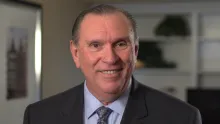
Randy D’Alessandro served as pastor for the United Church of God congregations in Chicago, Illinois, and Beloit, Wisconsin, from 2016-2021. Randy previously served in Raleigh, North Carolina (1984-1989); Cookeville, Tennessee (1989-1993); Parkersburg, West Virginia (1993-1997); Ann Arbor and Detroit, Michigan (1997-2016).
Randy first heard of the church when he was 15 years old and wanted to attend services immediately but was not allowed to by his parents. He quit the high school football and basketball teams in order to properly keep the Sabbath. From the time that Randy first learned of the Holy Days, he kept them at home until he was accepted to Ambassador College in Pasadena, California in 1970.
Randy and his wife, Mary, graduated from Ambassador College with BA degrees in Theology. Randy was ordained an elder in September 1979.
