

Rick Shabi
This transcript was generated by AI and may contain errors. It is provided to assist those who may not be able to listen to the message.
Let's get our spiritual bearings on this. Let's go over to Leviticus 23.
Why do we do this? Those outside of these doors don't understand these days. Why do we understand these days? Why do we do what we do? Let's take a look at that. Leviticus 23, starting here in verse 1. And the Lord spoke to Moses, saying, Speak to the children of Israel, and say to them, The feasts of the Lord. Now, there are those who would want to say, These are Jewish feasts. These are things we are not to keep. This is something in the Old Testament. This is Old Covenant. We don't need to be doing this because they're Jewish. Well, they're not Jewish. Never have been Jewish. These are the feasts of the Lord. Always have been. Always will be. These are the feasts of the Lord, which shall proclaim to be holy convocations, just as holy as the weekly Sabbath. They are an appointment with God. A special appointment with God. A special summons, if you will. And when you get a summons from a judge, you know what you are to do with that. You are to obey that, take care of that. Same thing is true with our meeting together for one of God's holy days, one of God's holy convocations. Again, in verse 2, it says, these are my feasts. Okay. Dropping down to verse 6, more specifically. In on the fifteenth day of the same month is the feast of unleavened bread to the Lord. Seven days you must eat unleavened bread. On the first day you shall have a holy convocation. That's today. You shall do no customary work on it. You know, if this day fell on a day of the week, we would not be working on a Monday or Tuesday or whatever day it would have fallen. But you shall offer an offering made by fire to the Lord for seven days. The seventh day shall be a holy convocation. So on the very ending day of this period, there is also another holy convocation. And of course, this year it falls on Friday. And again, we won't be going to work on Friday. We'll be doing what is God's bidding on that day, and that's to have a service for the last day of unleavened bread. The seventh day shall be a holy convocation. You shall do no customary work on it. Now, people say, okay, that's Old Testament. That's Old Covenant. Well, let's take a look into the New Testament, the New Covenant. Let's go to 1 Corinthians chapter 5.
1 Corinthians chapter 5. This was written in the mid-50s AD by the Apostle Paul to a church there in Corinth. We're well into the New Covenant era. Jesus Christ had died and been resurrected many years before this. Notice what Paul writes to the church in Corinth. 1 Corinthians chapter 5 verse 6. Your glorying is not good. Do you not know that a little leaven leavens the whole lump? Therefore purge out the old leaven, that you may be a new lump, since you are truly unleavened. For indeed, Christ our Passover was sacrificed for us. And we read a couple of evenings ago how that we are, according to what it says there. Well, let's take a look. 1 Corinthians chapter 11.
Let's see, where do I want here?
Verse 24. When he given thanks, he broke the bread and said, Take, eat, this is my body, which is broken for you. Do this in remembrance of me. In the same manner, he also took the cup after supper, saying, This cup is a new covenant in my blood. This do as often as you drink it in remembrance of me. For as, verse 26, For as often as you eat this bread and drink this cup, you proclaim the Lord's death until he comes. Doesn't say we are to proclaim his birth. Doesn't say we are to proclaim his resurrection. It says we are to proclaim his death. And so that's what we do on Passover. Going back now to 1 Corinthians chapter 5.
Verse 7, Christ our Passover. Okay. The Bible is not at war with itself. The Old Testament and the New Testament, you know, there are differences. You know, we no longer sacrifice animals, because we've got the sacrifice of Jesus Christ. But the Bible is one beautiful whole. It's a continuing story. God gave us holy days in the Old Testament. We are to keep them in the new, because of their deep meaning. And we're going to talk about that as the sermon progresses today. Christ our Passover was sacrificed for us. Verse 8, Therefore, let us keep the feast. Let us keep the feast. Not with old leaven, nor with the leaven of malice and wickedness, but with the unleavened bread of sincerity and truth. We are to keep the feast. Now, let's drill down a little deeper into this section of Scripture. In verse 7, it says we are to purge out. Purge out. Therefore, purge out the old leaven. That phrase, purge out, means to get rid of completely. Expositor's Bible commentary says this about that section, that phrase, clear out of the house, get rid of any evidence of the old yeast. Now, we certainly want to do that spiritually. Leaven is a type of sin in the Scriptures. And it says we need to get that out of the house. We need to get rid of any evidence of that. And of course, the house we're speaking about would be the temple of God's Holy Spirit, our bodies, and our minds, our hearts.
Therefore, purge out the old leaven. Again, from the Greek-English lexicon based on a somatic domain, it has this comment, the old or former pattern of behavior in contrast with a new pattern of behavior which people should conform to. So we are to get out the old individual, the old man. I hate to say the old woman. That never sounds good. But the old person, and we are to bring in the new person, we are to get rid of the leavening and bring in the unleavened attitudes of God the Father and Jesus Christ. Therefore, purge out the old leaven. And the word there from Thayer's Greek lexicon says, metaphorically, habitual, mental, or moral corruption. So we are to get out of our hearts and minds the sin that so easily ensnares us, as Scripture talks about. So these days, why would we not want to keep days to talk about getting rid of sin, walking in a light as he is in a light? Why would we want to stop doing that? Because that is exactly what God wants for us. He doesn't want us to live in sin. He doesn't want us to continue to do the wrong things and be in rebellion with him. So this is something that is a beautiful Holy Day season to observe. Now, let's take a look, again, drilling down even more. Let's go to 1 Peter 2, something we read on Passover evening, Thursday evening. 1 Peter 2.
1 Peter 2, verse 21. For to this you were called, because Christ also suffered for us, leaving us an example that we should follow his steps. Now, we know we are to follow Christ's example in all things, but this particular Scripture is explicit in that it's talking about us following his example along the lines of what we are about to read. That Christ suffered for us, leaving us an example. And I've told you in the past, there's a word picture here, there's two word pictures here, the example. Mr. Gillespie talking about things that our little kids give us. We put on the refrigerator. We've all, I'm sure in the past, taken our hand as a little kid, put it on a piece of paper, and drawn a circle. That's exactly what this, the word example here, it means a pattern. And we are to follow the life of Christ and trace out our life around his, and be a pattern in that way, an example. And when it says we are to follow his steps, there's another word picture in the Greek. You know, you've seen, or heard the poem about two sets of footprints on the sand, and all of a sudden, there's one set of footprints. Well, the reason there's one set is because one person has put their foot where the right foot of the other person went, and the left foot where the other person put their left foot. And so you can't tell two people walked down the beach. When it's talking about following his steps, we are to walk just like Christ walked, just like he walked. So now, in terms of what? Okay, let's continue to read here. Who committed no sin. Now, Christ was God in the flesh. He was able to do this. You know, we're weak, fleshly, clay beings, and we do sin. But Christ committed no sin. There was deceit found in his mouth. Now, here's where the tire meets the road here, verse 23. Who, when he was reviled, didn't revile in return. This is the lesson we need to learn. That Christ had committed himself to live by God's way no matter what.
He was going to make sure he was not sin. And you and I need to make sure that that leaven doesn't get into our lives. Who, when he was reviled, did not revile in return when he suffered, did not threaten, but committed himself to him who judges righteously. The word committed here from the Greek-English lexicon based on the somatic domain says this, to hand someone over into the control of another, to deliver to the control of or to hand over to. We are to hand our lives over to God. We are to give ourselves over to God.
That's a beautiful meaning. And that's what these days are about, giving ourselves over to God in every way we possibly can. Christ said that he was committed. He committed himself to him. He committed himself to God. He was handing himself over to God. That's what we do during these days of unleavened bread. This is what these days picture. Why would we not want to keep days that represent that? Who committed him to him who judges righteously, who himself bore our sins in his own body in a tree that we, having died to sin as a way of life? Now, we're sinners. We're weak. We're carnal. We understand what Paul said in Romans, chapter 7. The things he didn't want to do, those are the things he did. We understand all that. But as a way of life, you and I have turned our back on that. We keep the Sabbath day. We keep God's holy days. We do the things that please God as a way of life. Does that mean we're all perfect and sinless? Of course not. We understand that. But as a way of life, we're following God. As a way of life, we're getting leaven out of our lives. As a way of life, we're bringing unleaven into our lives that we might live for righteousness by whose stripes we were healed. So we want to take part if God has his righteousness in us through the sacrifice of Christ. Through, you know, when we had that little piece of bread on Passover, either Thursday evening, when you took that little piece of bread, when a trade came to you and you took that piece of unleavened bread and you began to put it in your mouth and you began to chew that and swallow that, that bread represented the life of Christ. And that bread represents the fact that you've got that now inside of you. And you want to live the way Christ lived and think the way Christ thought to get rid of the leaven in our lives and to bring in, as it says here, the righteousness of God. Ephesians chapter 4. Ephesians chapter 4. Ephesians chapter 4. Ephesians chapter 4. Ephesians chapter 4. Ephesians chapter 4. Ephesians chapter 4. Ephesians chapter 4. Ephesians chapter 4. Ephesians chapter 4. One of my favorite scriptures. I've said this to you many times.
I think there's a very powerful verse here. Chapter 4 and verse 13. Till we all come to the unity of the faith we're at one with God. We're at one with Jesus Christ. We're at one with one another in the faith. Till we all come to the unity of the faith and to the knowledge of the Son of God. And knowledge is of no use unless we put it into action. To the knowledge of the Son of God. To a mature man. To the measure of the stature of the fullness of Christ. That's our goal. That's where you and I want to be. And it's a lifelong endeavor. It's a lifelong challenge. Now, there is a formula I want to discuss with you today. Up till now, all I've given you is an introduction. Been a long introduction. But there's a formula I want to discuss with you today. It's found over here in Mark chapter 8.
Mark chapter 8. We've in our in-home Bible studies, we went through the book of Mark. Now we're starting to go through the book of Acts.
Mark chapter 8.
Verses 34 and 35.
Mark chapter 8, verse 34 and 35. When he had called the people to himself, with his disciples also, he said to them, whoever desires to come after me. Okay, we want to be Christian. If we want to be unleavened, if we desire to come after Christ, let him deny himself and take up his cross and follow me. For whoever desires to save his life will lose it, but whoever loses his life for my sake and the Gospels will save it.
What does it mean, brethren? And this is a question I want to ask and answer today. This is the theme of the sermon today. If you like to take notes, you want to put this across the top of your paper. What does it mean to take up our cross and follow Christ? What exactly does that mean?
I'm not going to turn there, but over in Luke 9 and verse 23, it says we are to take up the cross daily. Take up the cross daily, so it's even more instructive. This is not something we do in a haphazard manner. What does it mean to take up our cross and follow Christ? The first thing we need to come to understand is the context here. Let's take a look at Mark 8, verses 31 through 33. Mark 8, verse 31. And he began to teach them that the Son of Man must suffer many things, and be rejected by the elders and chief priests and scribes, and be killed, and after three days rise again. He spoke this word openly. Then Peter took him aside and began to rebuke him. But when he had turned around and looked at his disciples, he rebuked Peter, saying, Get behind me, Satan! For you are not mindful of the things of God, but the things of men.
Now, Christ never did anything that was unloving.
You and I might think, well, calling somebody, you know, Satan, that's not too loving, but the way Christ was instructing him, it was very powerful instruction. And Christ was loving Peter. But the problem Peter had, and it's a problem you and I can have if we're not careful, the problem he had is he didn't know the difference between a carnal and a spiritual commitment. He didn't know the difference between a carnal and a spiritual commitment. Peter declared his loyalty to Christ because he thought Christ was bringing the kingdom of God now. He thought the Roman yoke of occupation would cease to exist. Peter was willing to take up arms and go to war. He was willing to die to fight battles.
So Peter did not know the difference between a carnal and spiritual commitment. And brethren, I would tell you this. There are times where I've fallen victim to that, and there may have been times when you've fallen victim to that, where we're committed, we're deeply committed, but our commitment isn't where it's not centered where it should be. And we've got to be very careful about that. A carnal commitment proposes and desires to have earthly and material things. It's a physical commitment. And some of those are not bad. They're not all evil. But in comparison, a spiritual commitment purposes and desires to have spiritual and eternal things. It looks at the bigger picture. So it's a matter of orientation. And Peter's orientation here, as it says there in verse 33, you are not mindful of the things of God, but the things of men. And, brethren, you and I can ask ourselves, how true is that of us? As we go through our lives, how true is that of us?
When Peter saw Jesus Christ arrested, he began to cave. He began to deny. He was personally crushed because his orientation was centered in the wrong thing. It was centered on the fact that he thought Christ was going to bring the kingdom now. He wasn't looking at all the prophecies that talked about Christ's first coming. He was centering his life on... And in some ways, it was natural. No one wants to live under foreign domination. You and I wouldn't want that. We've never had to experience that. But he had had experience, and for generations they hadn't experienced that. But again, that was the wrong perspective. And he was crushed. He succumbed to temptation because of his lack of the proper orientation, a lack of the proper commitment. His purpose, his motivations were physical in nature. And we can't allow that to be our situation, where our purposes and motivations are physical in nature. Brethren, Satan is always trying to get us to leave God, to leave God out of the picture, for us to think, well, what should we be doing and leaving God out of... Now, there's a partnership we have with God. I've discussed that from time to time. I've discussed that on many occasions. You know, God gives us the power. We're not robots. He expects us to do things for ourselves, with his help. And we're not going to be able to do that. Peter had the wrong orientation.
Totally the wrong orientation. Satan wants to deter us from sacrifice. He wants to deter us from service by telling us that our difficulties are meaningless, our pain is futile. Why even try? Why don't you just give up? Walk out the doors of the church. What's it ever done for you?
People say, well, I tithe, and God's supposed to bless me. Well, I didn't get blessed like I thought. Well, where does it say God's going to make you a millionaire if you tithe? It doesn't say that. It doesn't say that God's going to give you the Taj Mahal to live in. It doesn't say you're going to drive the biggest, fanciest car. Again, those are physical things. But God will bless us, and God many times blesses us physically. And I want to say that that's not the case. But that's not our motivation. Christ is not interested in shallow discipleship. Please write that down. Christ is not interested in shallow discipleship.
Salvation and discipleship involve tremendous cost. They involve supreme sacrifice. You count the cost, and then you pay the whole price.
One that is and has the motivation following Jesus Christ. Let's take a look at a couple examples here in Luke 14. You know that is the count the cost chapter. Before you were baptized, the minister probably went through this with you. Or I should have gone through this with you. Luke 14, verse 27. And whoever does not bear his cross and come after me cannot be my disciple. For which of you, intending to build a tower, does not sit down first and count the cost, whether he has enough to finish it? Lest after he has laid the foundation, he is not able to finish. And all I'll see it begin to mock him, saying, this man began to build and was not able to finish. We want to be a tremendous example for God. We want to be a light to the world. We're called to be lights to the world. And yet, if we don't count the cost properly, then the world can mock God the Father. And the world can mock Jesus Christ. And the world can mock Christianity. And instead of giving glory to the great God, we can bring great pain to the name of the family of God. The world can begin to think that true believers are powerless. The world can begin to believe that we're following a powerless God. Perspective believers may say, well, if that's what real Christianity is, I don't want any part of that. We can be offensive to people. People, real believers, can get discouraged. There's a lot of things that happen if we don't properly count the cost. Let's take a look at a second example right here, same chapter, starting here in verse 31. Or what king, going to make war against another king, does not sit down first and consider whether he is able with ten thousand, to be him against one with twenty thousand? Or else, while the other is still a great way off, he sends a delegation and asks for conditions of peace. So likewise, whoever you do who does not forsake all that he has cannot be my disciple.
The point of the two parables is clear. A man must pay, or a woman must pay, the ultimate price. Must forsake all that we have, all that we are, to be deeply committed. There is a story, and I don't know whether this is factually accurate, but I've read it a number of places, so I'm assuming it's probably true. A missionary society was deeply impressed by the commitment of David Livingstone. The society wrote to Livingstone, Have you found a good road where you are? If so, we want to send other men to join you.
Livingstone replied, If you have men who will only come if there is a good road, I don't want them. I want men who will come if there is no road at all. Powerful words. Powerful words. Deeply committed to the task at hand, to the challenge. When we talk about counting the cost, and what it's going to cost us, there's two major things to think about. When I'm counseling people for baptism, I go through these things. Number one, when you're counting the cost, it's going to cost you all that you are. All that you are.
You must be willing to center your life around Christ and his mission. So it's going to cost you your heart. Which is a picture of your total devotion and commitment. And in your notes, you might want to jot down Ezra, chapter 7, verse 10. We're talking about how Ezra prepared his heart to seek the law of the Lord and to do and teach it. So it's going to cost you your heart. It's going to cost you your mind. John the Baptist said that he had to decrease, but Christ had to increase. And that's certainly true of our hearts and our minds. It's going to cost you your eyes. Which you allow your eyes to look at. Which you allow your mind to be fed through your eyes. It's going to cost you your ears. Which you're going to allow your mind to be fed through your ears. What you're going to hear. Are you going to be somebody who's hearing lots of gossip? And it's just like the proverb says, it's like a tasty truffle. It's going to cost you your hands. Your life's actions. Your life's activities. It's going to cost you your feet. Watching where you go and what you do. The way you walk in life.
It's going to cost you your mouth.
Matthew 12, 34. Out of the abundance of the heart, the mouth speaks. People are many times betrayed by what comes out of their mouth. Because that's the innermost part of their being. Their heart comes out through that orifice. It's going to cost you your desires. You know, what do you desire? It's going to cost your energy. What are you committing your strength to? So, calling a cost means it will cost you all that you are. But it's also, secondly, going to cost you all that you have. All that you have. You must be willing to give up everything for Christ. Everything.
Luke chapter 14. Let's revisit verse 33. Luke 14, 33. So likewise, whoever you do not forsake, all that he has cannot be my disciple. These are tough things.
Being a Christian is not an easy thing to be. If you follow Christ, you may need to give up your family, and many people have. Some people have had to give up parents, grandparents, spouses, because, well, I'm keeping the Sabbath now. Or, I'm not keeping Christmas and Easter now. Or, I'm keeping the Holy Days now. And your family doesn't understand. God's not called them to understand.
So it may cost you your family. It may cost you your friends, because, you know, you don't close bars down on Friday and Saturday nights with your friends. You don't tell all those racy stories anymore. You've cleaned up your mouth.
May cost you your home.
As you keep God's laws, it may cost you your job, which would cost you your home. And yet, brethren, the reality is that as you obey God, God will be there for you. We may lose some things, but we gain other things. I remember, as I was after I graduated from Ambassador College and went back home to my home in Detroit, there was a man who came into the church. He worked for one of the big three auto companies. He was a supervisor. He was married, had four young kids. And began to keep the Sabbath. And he was a supervisor on one of the shifts. And he said, Ralph, you've got to be here Friday night. He said, can't do it. Keeping the Sabbath. Well, you've got a choice. You can be here, keep your job, good pay, good benefits, big three company. Or you can hit the road and your family will starve. He said, well, God will take care of me. And so he quit that job. And within a short time, I forget now the interval, but within a short time, got a job at another one of the big three automakers in the Detroit area. Same kind of position, more money, just as good of benefits, because he obeyed God. And this was a man of faith. I remember so very clearly when he had a heart attack. Later on, a number of years later, this was back in the 70s, where before you could be seen by a doctor in a hospital, you had to show your medical insurance. Well, he didn't have it on him. And so he's sitting in a waiting room, feeling really bad, but his doctor comes down, checks him out, sits next to him, says, Ralph, right now you're having a heart attack. And right now, I can't do anything to help you. So right in the waiting room, having a heart attack, his doctor sitting right next to him, because of the way things were structured back in those days, back in the 70s. He survived that because he was a man of faith. He was a man who gave everything he had. God loved him. God spared him. God blessed him. And the same thing will be true for you. Brethren, to the degree we choose to be spiritually committed will be the degree God can bless us. To the degree we choose to be spiritually committed will be to the degree God will bless us. Now, if we choose not to be committed, then the blessings aren't going to flow like they could. Let's go to John 10.
John 10.
In verse 10, John 10, 10, the thief does not come except to steal and to kill and destroy. Well, that's talking about Satan. That's what Satan wants for us. And if we don't commit ourselves to God, then we're playing right into his hands, and this is what he wants to do to us. He wants to steal our happiness. He wants to kill our joy. He wants to destroy our lives. But notice, if we fully commit ourselves as these days of unleavened bread picture, then Christ says, I have come that they may have life and that they may have it more abundantly. As we get rid of the leavening, as we partake of the unleavened bread of sincerity and truth, then we can have the more abundant life, the much more abundant life. So we have to know the difference between a carnal and a spiritual commitment. So I simply ask you, where are you? I have to ask myself, where am I as we look at that? Now, last part of the sermon is this. How does a person go about making the right choice? How do you go about making sure you have the right commitment, a spiritual commitment, not just a carnal? How do we do that? What's... Well, we're going to go back to that formula. Let's go back to Mark chapter 8, and let's put a marker there because we're going to go to different other places.
Mark chapter 8.
There is a good chance I'll go overtime today. It's a holy day. My wife always smiles when I say that. She says, don't sell them that. At five minutes to three, they're going to check out. Well, I know... She's teasing. She knows you better than that. But I still have a number of pages of notes to go. And I've only got 10 more minutes if I want to quit at five till, so we'll go a little longer. How does a person go about making the right choice? Let's look at Mark chapter 8, verse 34, because here we've got a formula.
In my Bible, I'm going to read just the red section there, the words of Christ. Whoever desires to come after me, point one, let him deny himself, point two, take up his cross, point three, and follow me, point four. There's a formula right there, that one verse. Whoever desires to come after me, and the word keyword there is desires. Whoever desires, point one, deny himself, keyword there, himself. Point two, take up his cross. Now, many people think taking up your cross is, well, I can't see well, I can't hear well, I'm handicapped. Those are life's challenges. That's not taking up your cross. That's not what the Bible is referring to when it's talking about taking up your cross.
And follow me, point four. So let's break this down. Let's drill down deeply into this. It says here, whoever desires to come after me, there must be a desire here. When you look at the word here for desire, it means a desire. It means design. It means purpose. It means a resolve. It means determination. It's a deliberate willing, a deliberate choice, a determined resolve. I mean, those are a lot of different ways of phrasing the same thing. Determined, resolved, to follow Christ.
It's a voluntary choice. It's not forced upon anybody, but we have to really desire it. And, brethren, you know that you've never accomplished anything in your life that you haven't desired to do. You want to lose weight? You got a desire. You want to, back in the old days, you want to stop smoking? You have a desire to stop smoking.
Keep a marker here. Let's go to 2 Corinthians chapter 7.
2 Corinthians chapter 7 talks about repentance. Paul had to speak very straight from the shoulder of the church here in Corinth. There were a lot of issues in this church, and he had to be very corrective in the first epistle he wrote to them.
Very, the strongest words of any of the epistles he wrote. But in 2 Corinthians, he toned it down because people were repenting. And notice what he says here, 2 Corinthians chapter 7 verse 9. Now I rejoice, not that you were made sorry, you know, after he wrote to them, they were sorry for what they had been doing, but that your sorrow led to repentance, for you were made sorry in a godly manner that you might suffer loss from us in nothing.
For godly sorrow produces repentance leading to salvation, not to be regretted, but the sorrow of the world produces death. And so we want to make sure we've got the right kind of sorrow. We want to make sure we've got the right kind of repentance. We want to make sure that we've got the true gold, not the fool's gold. So in verse 11 it says, for this very thing, for observe this very thing, that you sorrowed in a godly manner.
So how do we know if we got the right kind of sorrow? Verse 11 gives seven fruits. Now it's a sermon all to itself. Seven different fruits, and when I'm counseling somebody for baptism, I go through this. It's important to understand how do we know if we're repentant? What diligence have produced in you? Number one, what clearing of yourself?
Number two, what indignation? Indignation against sin? Number three, what fear? Fear of God? Number four. Notice number five, what vehement desire. You have to have, I have to have a vehement desire. If we're going to take up our cross and follow Christ daily, we must have a vehement desire to do that. A desire that outruns, outlasts, outguns Satan's desires in our hearts and minds. Because there's all sorts of things Satan wants you and I to do and think, but we've got to have a vehement desire to go the other way.
So number one, a man, a woman must be willing, have a desire to come. We go back to Mark chapter 8 and verse 34. We look at the second part of this formula. Not only desire, but it says, let him deny himself, deny himself. And the word deny here in the Greek means to disown, to disregard, to forsake, to renounce, to reject, refuse, to disclaim, to do without. And that regarding ourself. There are things we carnally want and we shouldn't want to have those things because they're not proper for us to want those things. Those are sinful things.
They're godly things for us to want, but they're sinful things. We have to deny ourselves those sinful things. Very simply, it means to say no. But notice also, it's not just to say no to some thing, it's to say no to self. Say no to self. We are to deny ourselves. Man's tendency is to indulge himself, to do exactly as he desires. And of course, all the various advertisements we see on TV, you've got to write for this, you've got to write for that, you've got to write for everything under the sun. Of course, advertisers love that. You deserve a break today. You deserve this.
If you bought everything you deserve from TV advertisement, you would have been broke long ago. Right? We are not to indulge ourselves like little kids. No, little kids are sweet. Last night we had, where we were having the night to be, we had four little kids. And when Mary and I left, one of the youngest one, I think maybe three, something like that. And she, I don't know if she knew our names, but as we were walking out the door, she said, Bye boy!
Bye girl! You know, just so sweet. Bye boy! Bye girl! Well, she nailed it. We're boy and girl. She wasn't wrong, any of that. But just so sweet for the little tiny thing about up to my knee. To say that. But, you know, little kids like that, they feel they can indulge themselves. Well, we're not little kids. We are brothers and sisters of Jesus Christ. I made that point on Passover evening as I was conducting the Passover in Chicago, that we have a family name to live up to. We are God's kids. We're brothers and sisters to Jesus Christ.
There's a family tradition for us to live up to. We find it in every word of Scripture. So many times when I'm thinking about what I think are my trials in life, and I want to put on my little party hat and have my little kazoo thing and throw a pity party, I love to turn to Hebrews chapter 11 and read about how our people had to...were tortured, were privation, all the things they went through.
I'm thinking, De'Lestandro, what are you going through? You know, what are you going through that's so terrible? And I've gone through some trials. You've gone through your share of trials, but when I look at what our family has gone through, when I look into Scriptures and see what our family has gone through to fight Satan, I say to myself, man, I've got to battle harder.
I want to be a part of this family. I've got to battle harder. It's not that we're earning our salvation. We don't earn anything. We only earn death. But God has called us to good works. God has called us to set an example and to be a light. So our priorities are spiritual. We must deny ourselves. The third thing that says...let's go back to Mark chapter 8.
Let him deny himself number two. Number three, let him take up his cross. Now, I may mention the cross is not your particular hardship in life, such as poor health, abuse, unemployment, parents that didn't love you. Those are all challenges in life, to be sure. But that's not taking up your cross. In Christ's day, when people saw a cross, they knew exactly what that represented. A cross was an instrument of death. We must take up that instrument in death and kill anything in us spiritually that shouldn't be there. We need to get rid of all the leaven that is there to get it out of our property, out of our hearts, out of our minds. Let's take a look at Philippians chapter 2.
Philippians chapter 2, verse 5, where it says, Let this mind be in you, which is also in Christ Jesus. Okay, and then we're going to define this mind, who, being in the form of God, didn't consider it robbery to be equal with God. So here we see the great stature of Jesus Christ, spiritually speaking, but made himself of no reputation, taking the form of a bondservant and coming into likeness of men. It was he who began to pass over service by washing feet. It was he who initiated that service of washing of feet. And we need to have that same frame of mind to wash feet, even washing the feet of a Judas's carriot. Are you willing to wash the Judas's in your life? We all have them. I doubt that we probably can have a nice conversation as to how many Judas's we have. How many people in our lives are trying to do us in or do us harm or whatever. But, you know, and these are big words for me to say, easier for any of us to live by, but to be able to have that foot washing attitude, as Christ said. Verse 8, And being found in appearance as a man, he humbled himself, and became obedient to the point of death, even the death of the cross. He was going to obey no matter what. If it was going to take his life, and he knew that it would, you know, Mr. Gillespie and I were, I don't know if it was last night we were talking about this or today talking about this. I think maybe it was last night. How would you like to know in great detail how you're going to die? How would you like to know that? I would not like to know that. I don't know how much sleep I'd be able to get if I knew how I was going to die. You know, if I was going to die in an auto accident, you know, between Mary and I, we've had four members of our family killed in car accidents, drowning, whatever, choking to death, any number of things you can imagine. I wouldn't want to know those things. And, yeah, Christ knew in great detail what was going to happen, and yet he was a man full of joy. He was a man full of love. He loved even those people who were torturing him. He died for them. He died for us. He was obedient to the point of death. He didn't sin once, despite all that he went through. He took up his cross. 2 Corinthians chapter 10.
2 Corinthians chapter 10. 1 Corinthians chapter 10. Verse 3. For though we walk in the flesh, we do not war according to the flesh, for the weapons of our warfare are not carnal, but mighty in God for the pulling down of strongholds, casting down arguments in every high thing that exalts itself against the knowledge of God, bringing every thought into captivity to the obedience of Christ. So when we ask ourselves, what does it mean to take up our cross? Verse 5 is a tremendous definition of that. Every thought, every thing that shouldn't be there that's sinful, needs to be killed, needs to be executed, needs to be done away with. Every thought into the captivity of to the obedience of Christ.
It takes positive, active behavior to will to do this, to deny ourselves, to take up our cross, to follow Christ. We've got to act, we've got to work, we've got to get to it. We can't be lazy.
Romans chapter 6. Romans chapter 6, what many call the baptismal covenant chapter. The chapter that we read, I have people read before they are baptized and receive God's Holy Spirit. This is the fine print, if you will, as to what we're agreeing, as you and I have a one-on-one covenant with the great God. Romans chapter 6, starting here in verse 11. Likewise, you also reckon yourselves to be dead indeed to sin, but alive to God in Christ Jesus our Lord. How do we die to self? Verse 11 gives us one way. We're dead to sin as a way of life, but we live to God as a way of life. Verse 12, therefore do not let sin reign in your mortal body that you should obey it in its lusts. Here's another way that we crucify or take up our cross. The believer does not let sin reign in his body. What bad habits do we have?
Typically, we don't baptize somebody who's a smoker, typically.
Why? That's death on the installment plan. That's a type of self-suicide in many cases. And yet, for those who smoke, sin is reigning in their bodies. Do you or do I have something that's reigning in our bodies? That needs to go. Verse 13, and do not present your members as instruments of unrighteousness to sin, but present yourself to God as being alive from the dead and your members as instruments of righteousness to God. The believer doesn't yield his body to do anything that's sinful, but he does yield his body to do things that are pleasing in God's sight. He comes to Sabbath services. He attends and comes to the Holy Day services. He or she prays and fasts and meditates and studies and follows the life and teachings of Jesus Christ. These are all ways that we take up the cross daily. Let's go back to Mark chapter 8 one last time. Mark chapter 8, again in verse 34, whoever desires to come after me, let him deny himself, take up his cross, and follow me. Follow me. The word follow in the Greek means to be a companion, means to be a disciple, the ideas of seeking to be in union, in the likeness of Jesus Christ, to be just like him. He's our older brother. You know, so many times it's not always the case. You know, there are family issues and difficulties, but so many times people want to follow the example of an older brother or an older sister. And certainly in our case, no better example to follow than that of our older brother, Jesus Christ. And, Brendan, again, this is not something that's passive. This is something that's aggressive. This is something that's active. We must make an active commitment to walk that way, an active commitment to do what it says here and to follow him, to truly follow him. Galatians chapter 2.
Galatians chapter 2 and verse 20. I have been crucified with Christ. So here's a discussion about somebody who knew what it meant to follow and be crucified and what that means. Take up the cross. I have been crucified with Christ. It is no longer I who live, but Christ lives in me. That's why every time I conduct a Passover service, I say, when you're taking that piece of bread, which represents the body of Christ, it's symbolic of Christ living in you. It is no longer I who live, but Christ lives in me. In the life which I now live in a flesh, I live by the faith in the Son of God who loved me and gave himself for me.
Second Corinthians chapter 6. Second Corinthians chapter 6.
Last two verses of chapter 6 verse 17. Second Corinthians 6, 17. Therefore come out from among them and be separate, says the Lord. Do not touch what is unclean, and I'll receive you. I will be a father to you, and you shall be my sons and daughters, says the Lord Almighty. So we have a true family relationship.
A true family relationship. One last thought, brethren. Let's go back to Luke 14, the Counting the Cross chapter.
We'll be keeping it too much longer. Dinner is not far off.
Luke 14 verse 27.
Luke 14, 27. Whoever does not bear his cross and come after me cannot be my disciple. Dropping down now to verse 34. Salt is good, but if the salt has lost its flavor, how shall it be seasoned? It is neither fit for the land nor for the dung hill, but men throw it out. He who has ears to hear let him hear. So my last thought for all of us, brethren, is we're talking today about commitment. My last thought is don't make a half-hearted commitment to God. Don't make a half-hearted commitment.
Christ said a number of things about people who make a half-hearted commitment. So let's look at Luke chapter 9. Last verse in that chapter, Luke chapter 9 verse 62.
Luke 9, 62. No one having put his hand to the plow and looking back is fit for the kingdom of God. Don't have a half-hearted commitment. It's worthless.
You know, what does it say in the Old Testament? If Baal be God, serve him. If not serve the true God, don't be stuck in neutral someplace where you're not serving either entity. Of course, we want to make sure we're serving God.
John chapter 15.
If anyone does not abide in me, he is cast out as a branch and withered, and they gather them and throw them into the fire, and they are burned. A half-hearted commitment is going to be cast out. We don't want to be cast out. We don't want to be in a lake of fire. We don't want to be in a lake of fire. We don't want to be in a lake of fire. We don't want to be consumed and never have existence ever again throughout all time.
Last scripture today, Matthew chapter 25. What we do want, as you and I properly take up our cross and follow Christ, as we take a look at the formula that we saw today in Mark chapter 8 and verse 34, as we put that into practice in our lives, here is what we want to hear from Jesus Christ Himself. Matthew 25 verse 21. His Lord said to him, Well done, good and faithful servant. You are faithful over a few things. I'll make you ruler over many things. Enter into the joy of your Lord. We will be able to enter into the joy of our Lord if we take up our cross and follow Christ. If we do what these days of Unleavened Bread picture, and we, with God's help, remove sin and replace it with God's righteousness. Brother, let's enjoy the rest of this day.
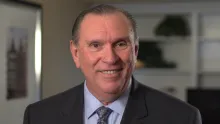
Randy D’Alessandro served as pastor for the United Church of God congregations in Chicago, Illinois, and Beloit, Wisconsin, from 2016-2021. Randy previously served in Raleigh, North Carolina (1984-1989); Cookeville, Tennessee (1989-1993); Parkersburg, West Virginia (1993-1997); Ann Arbor and Detroit, Michigan (1997-2016).
Randy first heard of the church when he was 15 years old and wanted to attend services immediately but was not allowed to by his parents. He quit the high school football and basketball teams in order to properly keep the Sabbath. From the time that Randy first learned of the Holy Days, he kept them at home until he was accepted to Ambassador College in Pasadena, California in 1970.
Randy and his wife, Mary, graduated from Ambassador College with BA degrees in Theology. Randy was ordained an elder in September 1979.
