

Steve Shafer
This transcript was generated by AI and may contain errors. It is provided to assist those who may not be able to listen to the message.
Well, thank you very much, Mr. Rose and Anna and the ensemble. Very, very appropriate songs, very beautiful musics. Thank you so much for preparing that and for presenting that to us. And I also want to really thank Mr. Blackwell for his sermonette. There have been a lot of memories here over the last 50 years. And again, like he said, it seems like a long time. But boy, when you look back, it just goes by like a fly. It just seems like it wasn't any time at all. You go from there to there. I never thought... I actually came here in 1989, so we've been here 28 years, but I never thought I would be here and see grown, almost grown grandchildren singing special music. And so you don't know how time goes by and things happen. But it's been a wonderful journey. I mean, we have, like Mr. Blackwell said, we've had a lot of great moments. Campouts and different things we've done over the years and a lot of wonderful memories we've had over these past years. We've been here for 28 years, though. So it's great to have this special celebration here today. It does bring back a lot of memories. So happy to have all of you here visiting from other areas as well. So very enjoyable.
Last month, on July 22nd, Ann Arbor celebrated their 50th anniversary as a Church of God congregation. And of course, today, all of us here are celebrating our 50th anniversary as a Church of God congregation. Just another...let's see...the day is what? The 19th? So another eight days. Evelyn and I will celebrate our 50th anniversary. So we've got a lot of fifties going on here today.
I came into God's Church in 19...I didn't say this, but I came to God's Church in 1964. And Evelyn came in a year before me. So she's one year older than I am spiritually. She came in in 1963. So I've been in God's Church now for 53 years and Evelyn for 54 years. And many of you have been here many years, too. I'm 20, some 30, some 40, and a few of you over 50 years. And as Mr. Blackwell mentioned in his sermon, there have been some challenging times at times. During those 50 years and throughout those 50 years, we've had to endure many trials. You look back and hardship sometimes losses. And it takes a lot to just stay around and still be there and be faithful. That's one song on being faithful. That was a wonderful song that ties into 50th anniversary celebration. But today, then, on this 50th anniversary of the Flint Church, I want to talk about endurance. What does endurance mean? What must we endure?
Why must we have to endure all these things? And what qualities or attributes must we possess in order to endure? So the title of my sermon here this afternoon is, What Does It Take to Endure to the End? What does it take to endure to the end? I want to start kind of an unusual place. You think about where are you going to start on a sermon about endurance?
I'm going to start at, might be an unusual place. I want to begin with the last verse of the Old Testament as it was originally arranged. Not our arrangement, but it was originally arranged. In the original order and arrangement of the Old Testament, the last book was the book of 2 Chronicles. And we'll see why as we look at it, as we can see why. But let's go back there to start off in 2 Chronicles. 2 Chronicles of the last chapter is chapter 36. And I'm going to start with the last two verses of the last book of the Old Testament in its inspired order and arrangement. And we'll see how this ties into endurance and that subject in a little bit. Notice the last two verses of 2 Chronicles 36. That's verses 22 and 23.
Now in the first year of Cyrus, king of Persia, that the word of the Lord by the mouth of Jeremiah might be fulfilled, the Lord stood up the spirit of Cyrus, king of Persia. So that he made a proclamation throughout all his kingdom and also put it in writing, saying, Thus says Cyrus, king of Persia, all the kingdoms of the earth, the Lord God of heaven, has given me. And he has commanded me to build him a house, or as my margins as a temple, at Jerusalem, which is in Judah. And then it ends with a question in his proclamation. Who is among you of all his people? May the Lord his God be with him and let him go up. Let him go up where to do what? And who among you will do that? In the original order and arrangement of the Old Testament, it ends with a question and with an exclamation. Who is among you of all his people? And then may the Lord God his God be with him and let him go up. Exclamation point. So this concluding verse of 2 Chronicles leads us kind of up in the air a little bit and looking for an answer. Where do we go to find the answer?
What book or books in the Bible does 2 Chronicles connect to that can give us the answer? Interesting here, it says Cyrus as the king of Persia became a world-ruling monarch. And it was given, it says, all the kingdoms of the earth. Now I just asked what book does 2 Chronicles connect to, it actually connects to two books. It connects to one physically and it connects to the other spiritually. In our arrangement, in our Bibles, let's go to the very next book across the page. In 2 Chronicles, my book of Bezr is right across the page. So let's just go to the book of Bezr, be across the page, and maybe the next page is some of your Bibles. But notice very carefully the first two verses or so, first two and a half verses of Ezra. See if this sounds familiar. Here's how Ezra begins, Ezra 1, verse 1.
This is an exact repetition of what we just read in 2 Chronicles 36, verses 22 and 23. Only Ezra then picks up where 2 Chronicles 36, 23 left off. Who is among you of all his people? May his God be with him and let him go up. Go up where? To Jerusalem, which is in Judah. It answers that for us right here in Ezra. To do what? Again, it answers here in Ezra. To build the house of the Lord God in Israel, to build the temple in Israel.
They go up to rebuild the temple of God. To rebuild Solomon's temple, which was destroyed by the Babylonians around 586 B.C. And with this proclamation of Cyrus in Ezra 1, the physical temple was rebuilt and restored.
It was completed in 515 B.C. 70 years after having been destroyed, as was prophesied and advanced by Jeremiah in Jeremiah 29, verse 10. Here's the point. Physical buildings and physical temples don't endure. And neither did this one.
After deterioration and destruction from wars, it was restored about 500 years later by King Herod. And it became known as Herod's temple, which was in existence at the time of Christ. But Christ himself prophesied that that temple wouldn't endure. You can read that in Matthew 24, the first two verses. So 2 Chronicles then connects to the book of Ezra regarding the rebuilding of the physical temple of God.
But it connects to another book regarding the building of God's spiritual temple. What book might that be? See, Cyrus was a type of Christ. It is to Christ that God the Father has given all the kings of the earth, isn't it? Cyrus says, all the kings of the earth are mine. The real one who's been given all the kingdoms of the earth is Jesus Christ when he comes back. He's the one who's given all the kingdoms of the earth. Cyrus was a type of Christ. What book then would 2 Chronicles connect to spiritually? Would it not connect to the book of the genealogy of Jesus Christ? Let's go to Matthew 1. See, in the original order of arrangement, the last book of 2 Chronicles and the first book of the new temple is Matthew. We have 2 Chronicles and then followed by Matthew in the original order of arrangement. Let's read Matthew 1, verse 1. The book of the genealogy of Jesus Christ, the son of David, the son of Abraham. Abraham begot Isaac, Isaac begot Jacob, and Jacob begot Judah and his brothers. Dropping down to verse 5, Psalm and begot Boaz by Rahab, Boaz begot Obed by Ruth, and Obed begot Jesse, and Jesse begot David, the king, and David begot Solomon, and so on. And going over to verse 17. So all the generations from Abraham to David are 14 generations. From David until his captivity in Babylon are 14 generations. And from the captivity in Babylon until Christ are 14 generations. And then verse 18. Now the birth of Jesus Christ was as follows. After his mother Mary was betrothed to Joseph, before they came together she was found the child of the Holy Spirit. See spiritually, 2 Chronicles 36.23, connects to Matthew 1.1 and to the genealogy of Jesus Christ, who went up to Jerusalem to begin to build the spiritual temple of God. Which he began building on the day of Pentecost in 31 A.D. without point of God's Holy Spirit. Which temple you and I are a part of. We are part of the spiritual temple of God. So spiritually speaking, and this proclamation by Cyrus, also extends to each and every one of us. Who is among you of all his people, a part of the spiritual temple of God?
Who is willing to help Christ build his spiritual temple? May the Lord is God be with him and let him go up to do what? To help build and maintain the spiritual temple of God. You know, physical temples, like I said, they don't endure. Harris Temple was destroyed in 70 A.D. and to date has not yet been rebuilt. But that's not going to be the case, I should say, with the spiritual temple of God.
It says in Matthew 16, 18, Christ himself said, The gates of Hades shall not prevail against it. It's not going to be destroyed, it's going to endure.
But what about us who have now been called to be members of God's spiritual temple?
What must we do in order to be saved so we can inherit the kingdom of God? Let's go to Matthew 24.
Matthew 24, verse 13 tells us, Christ's own words here, Matthew 24, verse 13, But he who endures to the end shall be saved. He just mentioned, you know, in the first part of this, that the physical temple is not going to endure. Verse 2, he said, Do you not see all these things, this physical temple that seems so grand? Surely I say it to you, not one stone shall be left on the other, that shall not be thrown down. Physical buildings don't endure. But he who endures to the end shall be saved. He's part of the spiritual temple of God who endures to the end shall be saved. Let me ask this question, then, next. What does it mean to endure? The Greek word translated endure, it's used here in Matthew 24, verse 13, means this.
It means to remain, to abide, to persevere, to endure, to have fortitude, to bear trials, to suffer, and to take patiently. It means all those things. Our English word endure has a similar meaning. It means to bear up under hardships, to put up with, to tolerate, to suffer without yielding, to continue to last. Thus there are many aspects of enduring that are very difficult, aren't there?
But as Christ said, he endures to the end, shall be saved. So who then will be saved? Well, he who bears up under hardships, he who puts up with things that are not always right, he who suffers without yielding his or her principles and convictions, he who suffers wrongfully and bears trials and takes it patiently, putting it into God's hands. He or she, I should say, who does all those things throughout their life and to the end of their life, shall be saved, shall inherit the kingdom of God. That is what it means to endure. Next question. I've already covered some of this, but let's elaborate on it a little bit more.
What must we endure? I'm going to cover it from what's just right here in Matthew 24. Because right here in Matthew 24 it tells us many of the things we have to endure. Matthew 24, verse 4, And Jesus answered, said to them, Take heed that no one deceives you. For many will come in my name, saying, I am the Christ, and will deceive many. We must endure and see through deception.
Verse 6, You will hear wars and rumors of wars. Sither you are not troubled, for all these things must come to pass, but the end is not yet. Nation will rise against nation, kingdom against kingdom, and there will be famines and pestilences and earthquakes in various places. We know how all this pertains to the world we live in and things that are going to happen leading up to Christ return as far as the world goes.
But I'm going to look at it spiritually as far as God's church and God's people are concerned. Looking at it spiritually, we at times have to endure wars. That is, conflicts in God's church. In various rumors, most don't hurt social unrest. Spiritual earthquakes, like splits and upheavals in the church, and those happen. We have to endure through that and hang on and be faithful, not be distracted by those things and go off in other directions.
Verse 9, They will deliver you up to tribulation and kill you, and you will be hated by all nations for my name's sake, then many will be offended and betray one another and will hate one another. In other words, looking at it spiritually as God's church, some are going to turn against one another.
It says down through the history. Some will have to endure hatred and maybe betrayal and awful suffering, and will have to endure being offended. When it comes to killing you, words can kill a relationship. We can kill or murder a relationship with our words, with the wrong kind of words. Verse 11, Then many false prophets will rise up and deceive many.
So at times we'll have to endure false teachers and false teaching. We'll have to be able to know the difference, what's right and what's wrong. We have to be able to discern the difference between false teaching and correct teaching, so we can always hold to what is true.
Verse 12, And because lawlessness will abound, the love of many will grow cold. At times we may have to endure things that are not right, or decisions that are made that to us don't seem right, to be a little awful decision, so to speak. Even with things that can happen in God's church. But that should not result in our love for one another to grow cold. But to endure the end we'll at times have to endure things that according to a deeper application of God's law may not be right.
That then are some of the things we must endure at times. But now let me ask this question. What must the spiritual temple of God, excuse me, not what but why, why must the spiritual temple of God have to endure all these things? Why? And there's one verse that kind of sums it up. There's a lot of reasons, but I want to point to one spiritual reason. Let's go to verse, 1 Peter 5, I should say.
Let's go to 1 Peter chapter 5 verse 8. This kind of sums it all up. 1 Peter 5 verse 8, towards the end of 1 Peter, where it says this. And I ask, why must the spiritual temple of God have to endure all these things? Here's one of the main reasons. Be sober, be vigilant, because you're adversary the devil walks about like a roaring lion, seeking whom he may devour. Over the years many have been devoured, which adds emphasis to the next verse back in Matthew 24, to the verse following Matthew 24, 12, which we just read.
He who endures to the end shall be saved. We're at warfare. Satan is the one who wants to destroy us. That then leads us to the heart and core of the message I want to bring here this afternoon. What does it take to endure to the end? And there are many things we could point out, and you could add some main things to what I'm going to give you here today. If I would like to narrow it down to three major attributes we have to possess in order to endure to the end.
And the first one I want to bring out is we must learn patience. We must learn patience. With the emphasis here being on the word learn, some people naturally have more patience than others, and most of us don't have a lot of patience. We have to learn patience. It's usually an attitude that must be learned. It's not something a lot of us naturally possess. How, then, is patience learned, and why is it so important? Here's an answer to both of those questions. We learn patience when things don't work out, as we would have wanted them to work out.
When things don't work out the way we want and they don't go the way we think they should, that's when it really requires a lot of patience. See, when that happens, especially in God's Church, what must we then do if we are going to endure to the end? When things don't work out the way we think they should, then we have to wait for God to work them out. We must wait for God to work things out. We learn patience by waiting and by not prematurely trying to work things out ourselves, which is the tendency we would like to do.
What does it mean if we try to work things out ourselves? Well, it means, in essence, that we don't have faith that God's going to work things out in His time and His way, and Mr. Blackwell covered that in the sermon, too. You have to wait for God to work things out in His way.
And you've been around God's Church for 50 years. You've seen that. It works out best when God does it in His own time and His own way. Why is patience so important? Because patience builds faith in God and requires a great deal of faith in God to endure to the end. It also works the other way around. That is, patience not only builds faith, but faith produces patience as well.
They both work hand in hand, and you can't really have one without the other. See, what more than anything else will test our faith? Let's go to the book of James. James 1. James 1. I'll begin in verse 2. All of us will begin in verse 1. James, a bond sermon of God and of the Lord Jesus Christ, the twelve tribes are scattered abroad. They have a lot of trials, and they were scattered, like the gospel people today are very scattered. It said, greetings.
And then verse 2. Seems like a strange verse. It's hard for us to really relate to this, but... It says, my brethren, count it all joy when you fall into various trials. Why count it all joy? Trials are difficult. They're painful. They're agonizing at times. But what do trials do? My brethren, count it all joy when you fall into various trials, knowing that the testing of your faith produces patience. See, trials test our faith.
They have a very important purpose. That's what we count it joy because it's something that ties in with God's purpose, that He's working in us. Trials test our faith, which then produces what? It produces patience. How then will patience work in our lives? Verse 4. But let patience have its perfect work, that you may be perfect, that you may become mature and complete, lacking nothing. See, what is James really telling us here? He's telling us that it's not when and how things work out that's important, but the work that God has accomplished in all of us.
That's what's important. What is God working in us when we go through these things? That's what's important. It's a very important part of our spiritual maturing. We're fulfilling what God wants all of us to be and be made into His spiritual image and likeness. Let patience have its perfect work. Again, what work is that? It's the work of bringing us to spiritual maturity so we can become spiritually complete, lacking nothing. So we can become like Jesus Christ. So we can develop His character and His patience and His love and His mind. How did Christ demonstrate His patience?
I'm just going to quote some Scriptures for you. It says, when He was reviled, He didn't revile and return. When He severed, He did not threaten back. 1 Peter 2, verse 23. What did He do instead? He required a great deal of patience. He committed Himself to Him who judges righteously. Same verse, 1 Peter 2, 23. Now, why did Christ patiently do that?
Why did He patiently commit Himself to Him who judges righteously? Because to this you were called, because Christ also suffered for us, leaving us an example that you should follow in His steps. 1 Peter 2, verse 21. So one of the main attributes we must all learn in order to endure to the end is patience. Patience to wait on God. Let's go to a second major attribute we must all acquire in order to endure to the end. So what's the second attribute? The second attribute is this. We must focus on spiritual things, not on physical things. We can adhere to the end.
To endure to the end, we must focus on the spiritual, not on the physical. Notice what the Apostle Paul wrote to Timothy. Let's go to 2 Timothy 3. 2 Timothy 3, and going down, we'll begin with verse 10 first. Sing in Timothy 3, verse 10. Paul wrote to Timothy, I should say. But you have carefully followed my doctrine. He's telling Timothy, Paul is.
My doctrine, manner of life, purpose, faith, long-suffering, love, perseverance, persecutions, afflictions, which happened to me at Antioch, at Iconium, at Lystra. What persecutions I endured. Now you have to ask the question, how was Paul able to endure all of that? How was he able to endure persecutions and afflictions in all of the ungodliness that surrounded him, and at times must have affected him personally? How was he able to do that? Verse 12. Yes, in all you who desire to live godly in Christ Jesus will suffer persecution. But evil men and imposters will grow worse and worse, deceiving and being deceived. But you, verse 14, must continue in the things which you have learned and been assured of.
What things had Paul and Timothy been assured of? And where did that assurance that could help them endure all things, including all kinds of wrongdoing, where did that assurance that they had, I should say, where did that assurance come from?
Verse 14. But you must continue in the things which you have learned and been assured of, knowing from whom you have learned them, and that from childhood, Paul is telling Timothy, from childhood you have known the holy scriptures, which are able to make you wise for salvation through faith, which is in Christ Jesus. Their assurance came from the holy scriptures.
Their assurance came from the Word of God and from focusing on the Word of God, which must be for all of us as well. See, to endure to the end, we must not focus on the physical, we must not focus on what's happening all around us, I should say. Don't overly focus on your present circumstances. Instead, focus on God's Word and God's promises. Why? See, because God's Word and God's promises are sure, they cannot and they will not fail.
You know, people can fail us, but God's Word will never fail us. Why is that? Because God's Word is spiritual and is never dependent on any physical uncertainties. Besides that, God is able to take care of everything else we really need in one way or another. Let's go to Matthew 6. Matthew 6, beginning in verse 19, Do not lay up for yourselves treasures on earth where moth and rust destroy, and where thieves break in and steal. But lay up for yourselves treasures in heaven where neither moth nor rust destroys, and where thieves do not break in and steal.
Verse 25, Therefore I say to you, don't worry about your life or what you are going to eat or what you will drink or about your body, what you are going to put on. Is not life more than food, and the body more than clothing? Look at the birds of the air, for they neither sow nor reap, nor gather into barns, yet your heavenly Father feeds them. Are you not of more value than they? What you do by warning can add one cubit to a stature.
So why do you worry about clothing? Consider the lilies of the field, how they grow, but they neither toil nor spin. And yet I say to you that even Solomon, in all his glory, was not arrayed like one of these. Now if God so clothes the grass of the field, which a day is, and tomorrow is sowing into the oven, will he not much more clothe you, O you of little faith? Therefore do not worry, saying, what shall we eat, what shall we drink, or what are we going to wear?
For after all these things, those who don't really believe in God and have that focus, and focusing on the spiritual, they seek these things. But your heavenly Father knows you need all these things. So what shall we then do? Verse 33? Focus on the spiritual. Seek first the kingdom of God and his righteousness, and all these other things will be added to you. They'll be taken care of. Therefore do not worry about tomorrow, for tomorrow will worry about its own things, sufficient for the days, its own trouble. But focus on the spiritual. Seek first the kingdom of God and God's righteousness.
Seek first to focus on the spiritual, not on the physical. And all these physical necessities will be added to you. God will take care of them one way or another. Let's go to a book of Colossians, which says the same thing, maybe a little bit more directly. Colossians 3, the first two verses.
Colossians 3, verse 1, If then you are raised with Christ, seek those things which are above, where Christ is, sitting at the right hand of God. Set your mind on things above, set your mind on the spiritual, not on things on the earth, not on the physical. So we must set our minds on things above and not on things on the earth.
Why? Because all the things on the earth are temporary. Aren't they? They're here today and gone tomorrow. But the things above are eternal. So to endure to the end we must focus on spiritual things, not on physical or earthly things. Now let's look at one additional major attribute I want to focus on today that can help us endure to the end. This may seem a little strange to say this, but here it is. We must become warriors.
To endure to the end we must become warriors. At our regional conference that we recently had in Youngstown, Ohio, Darris McNeely gave a presentation titled, Be An Elder at the Gate, referring to elders who have gone through many things and have a lot of experiences and have been around a long time and through a lot of things. At the beginning of this presentation he recommended a book titled, The Way of the Wild Heart, written by John Eldridge, E-L-D-R-E-D-G-E, The Way of the Wild Heart.
We ordered it, and Evelyn can I tell you, she'll be back shortly. She's home resting for most. She went to Ann Arbor with me. She's already read through it. I couldn't. I had a hard thing to get my hands on because she was so interested. She kept reading it. She just finished it, but I read two chapters. Chapters 8 and 9, I got in the middle of it.
She said those were amazing chapters, so I read chapters 8 and 9. Evelyn can tell you it's an amazing book. I will say chapters 8 and 9 are amazing chapters. Chapter 8 is simply titled, Warrior. In this chapter, the author shows that all Christian followers of Christ, all true Christian followers of Christ, must be warriors. This one chapter alone is worthy of an entire sermon, but I just want to give you two or three examples from that chapter.
Because we are living in very monumental times. Who knows what's going to happen in the next few years with North Korea, Iran, with all the horrible, horrible division and turmoil right here in our own country.
We are living in monumental times, and we must not be passive Christians.
Is God a warrior? Let me just quote a few scriptures, and there's many of them. I'll just quote three of them. The Lord is a man of war. Exodus 15, verse 3. The Lord shall go forth like a mighty man.
The Lord shall go forth like a mighty man. He shall stir up his zeal like a man of war. He shall prevail against his enemies. Isaiah 42, verse 13. Lift up your heads, O you gates, and be lifted up, you everlasting doors. And the King of Kings shall come in. Who is this King of Glory? Is the Lord strong and mighty? The Lord mighty in battle. Psalm 24, verses 7 and 8. See, God is a warrior. What about Christ? You know, most people don't picture Christ as a warrior. That's not what the pictures depict. What, was Christ a warrior? Let's go to John 2.
John 2, and let's begin in verse 13.
Now the Passover of the Jews was at hand, and Jesus went up to Jerusalem, and he found in the temple those who sold oxen and sheep and doves, and the money changers doing business. And when he made a whip of... How many people picture Christ as making a whip of cords? How many picture Christ as using the whip of cords? Like a warrior. And when he made a whip of cords, he drove them all out of the temple with the sheep and the oxen, he poured out the changers' money, and he overturned the tables, and he said to those who sold the doves, Take these things away!
Do not make my father's house a merchandise. I don't know what he said and how he said it, but he didn't say it mildly.
And his disciples remember that it was written, The deal for your house has eaten me up.
Quoting Psalm 69, verse 9.
See, that's not the picture most Christians have of Christ.
Most would not think of him as making a whip of cords.
See, Christ was a zealous warrior when it came to upholding God's ways.
How is Christ portrayed at his return? I saw heaven open and behold a white horse, and he said on him, And who you said on him was called Faithful and True, And in righteousness he judges and makes war. Revelation 19.11 And the armies in heaven followed him on white horses, And out of his mouth goes a sharp sword, And with it he should strike the nations. Revelation 19, verses 14 and 15.
Christ was, is, and will be a warrior.
What about all of us?
How did the Apostle Paul portray those who follow Christ? To what did Paul liken our calling? Quoting from 2 Timothy 2, verses 3 and 4. He said, You therefore must endure hardships as a good soldier, Jesus Christ. No one engaged in warfare entangles himself with the affairs of this life, That he may please him and elicit him as a soldier. He portrays us as being listed as soldiers going to battle, going to war. And we are in a spiritual warfare for our very eternal lives.
Our calling is likened to being that of a soldier engaged in warfare.
So we must also be warriors, which is why we must put on the whole armor of God. Ephesians 6.11 Why did Paul tell the Christians in Ephesus to put on the whole armor of God? He answers that in Ephesians 6.13. He said that you may be able to stand against the wiles of the devil, and that you may be able to withstand an evil day. Ephesians 6, verse 13.
See, we are in spiritual warfare for our eternal lives.
Now the one offensive weapon we have at our disposal, mentioned in Ephesians 6, is the sword of the Spirit, which is the word of God. Ephesians 6, verse 17.
So we better know our Bibles, and we must know how to properly use them.
But this is no enough time to be a passive Christian or to let down spiritually.
And we must also pray always and be watchful with all perseverance. Ephesians 6, verse 18. I want to, in the last ten or minutes or so, bring out two tragic examples in the Bible as to what can happen if we become passive.
One is the story of the Exodus, or what happened immediately following the Exodus. Let's look at that one first. Let's go back to Deuteronomy, chapter 1. The book of Deuteronomy, as you know, was written after the 40 years wandering in the wilderness. It was written right as about the entering into the land of Canaan, after the 40 years of wandering. Deuteronomy 1, verse 1. These are the words which Moses spoke to all of Israel on this side of the Jordan in the wilderness, in the plain of the Suf between Puran, Tofel, Laban, Hizoroth, and just Ahab. Notice verse 2. This is an amazing verse.
I always, I can never forget this verse.
It's 11 days journey from Horeb by way of Mount Cyr to Cates, Barnaiah.
I may need a little bit of geography to understand what that's saying.
But Cates Barnaiah was at the border of the land of Canaan. So this is written there, right there at the border of Cates, Cates, right across the border there, Cates Barnaiah, after 40 years of wandering. It's one step across the border of the land of Canaan.
And it was only an 11-day journey from Mount Horeb or Mount Sinai, where they received the Ten Commandments, an 11-day journey from where they received the Ten Commandments, to the Promised Land, to Cates Barnaiah.
We're going back to Mount Sinai. That's where God had given them the promise of becoming a Holy Nation, as you read in Exodus 19, verses 1-6, just before He gave the Ten Commandments, as we recorded in Exodus 20. But here's the question.
How long did it take for them to make that 11-day journey?
It took them 40 years.
Why did it take them 40 years?
In Deuteronomy 19, verse 19, again, this is written just as they're about to enter Cates, they're in Cates, about the end of the Promised Land. So we departed from this, looking back now, after those 40 years. So we departed from Harbin, went through all that great and terrible wilderness, which you saw on the way to the mountains of the Amorites, as the Lord our God had commanded us. Then we came to Cates Barnaiah, right on the doorstep of the Promised Land. And I said to you, you have come to the mountains of the Amorites, which the Lord our God has given us. Look, the Lord your God has set the land before you. Go up and possess it, as the Lord God our Father has spoken to you. Do not fear, be discouraged.
Verse 26, Nevertheless, looking back to Israel after the 40 years wandering, you would not go up, but you rebelled against the command of the Lord your God. Why would they not go up? Verse 28, beginning with the people. Because the people, they said, are greater than, taller than we, and the cities are great and fortified up to heaven. Moreover, we have seen the sons of the Anakin there. How did God respond to that? Verse 29, Then I said to you, do not be terrified or afraid of them. The Lord your God who goes before you, he will fight for you. According to all he did for you in Egypt before your eyes, if God is a warrior, I'll fight for you. But for that generation of Israel, here's a tragedy. He was too late for them.
Verse 34, And the Lord heard the sound of your words, and was angry, and he took a note, saying, Surely not one of these men of this evil generation shall see the good lamb which I swore to give to your fathers, except Caleb and Joshua. See, their decision not to fight, not to engage the enemy, led to their wandering in the wilderness for forty years. See, spiritually we are on the same journey. Only our promised land is not the land of Canaan, but it's the kingdom of God. But right now I believe that we are, at our, Kedesh Barnea. I think it's not that far away. I think we're close.
The only things that can stand in our way are Satan, fear, and discouragement.
Now, let's look at another example. Look at the other tragedy example of what can happen if we become passive. That other example took place, and I think this is probably the most tragic example in the Bible. It took place in the Garden of Eden. Go back to Genesis 3.
We're all familiar with this, but maybe we haven't focused on fighting this way before. Genesis 3, beginning in verse 1.
Hey, you have to believe God. You won't surely die. For God knows in the day that you eat it that your eyes are going to be opened. You'll be like God, knowing good and evil.
So when the woman saw that the tree was good for food and that it was pleasant to the eyes and a tree to be desired to make one wise, she took her fruit and ate. Here's the tragic part, the last sentence.
She also gave to her husband with her and he ate.
This is perhaps the most tragic scripture in the entirety of the Bible. She also gave to her husband with her and he ate. And yet Paul tells us, as recorded in 1 Timothy 2.14, that Adam was not deceived.
That begs this question.
If Adam was not deceived, why didn't he say something?
If Adam wasn't deceived, why didn't he do something?
Why did he remain passive and allow this to happen?
I want to think about this as it relates to marriage.
Habeneva had just been married, with God himself performing the ceremony.
What does every wife want?
She wants a husband who will fight to preserve that marriage and will not allow anything to destroy that marriage.
Every wife wants a warrior for her husband, a husband who has laid down his life for that marriage.
What does it take for a marriage to endure to the end?
It takes a husband who is a warrior, who is a spiritual warrior, who never is going to allow anything to come between them, to ever allow that marriage to be destroyed. He is going to take the lead to make sure that marriage is preserved.
In this sighting, anybody else, any other situation or circumstances, will allow it to be destroyed.
So he must become warriors.
In conclusion, he who endures to the end shall be saved.
So what three major qualities or attributes does it take to endure to the end? Number one, it takes patience and waiting on God. Two, it takes focusing on the spiritual, not on the physical, focusing on things above, not on things on the earth. And three, it takes becoming a spiritual warrior. That is what it takes to endure to the end.
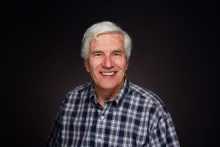
Steve Shafer was born and raised in Seattle. He graduated from Queen Anne High School in 1959 and later graduated from Ambassador College, Big Sandy, Texas in 1967, receiving a degree in Theology. He has been an ordained Elder of the Church of God for 34 years and has pastored congregations in Michigan and Washington State. He and his wife Evelyn have been married for over 48 years and have three children and ten grandchildren.
