

Steve Shafer
Look for part two on April 2nd.
This transcript was generated by AI and may contain errors. It is provided to assist those who may not be able to listen to the message.
And it's really great to see that. I want to talk a little bit about the transition from the Old Testament to the New Testament today, and some things we can learn from that that tie into, actually, part of the video.
Obviously, you see those kind of things that were emphasized in the video was God's word is so positive, and these kids look at it in a very positive way. And there's obviously a lot of joy and happiness there with the kids that go to camp, and a very positive attitude. And it's a very happy place. I want to show you how important that is, as far as the New Covenant is concerned here, a little bit later in the sermon.
The Old Testament was canonized by around 450 BC, somewhere in there, with Ezra being one of the main individuals involved in that process of canonization of the Old Testament Scriptures. And as a lot of you may know, originally the Old Testament was arranged differently than ours. It was the same books we have here, but it was arranged differently. It was arranged in three overall divisions, which were called the Law, the Prophets, and the Writings. That's what was originally arranged by Ezra when it was canonized.
And it originally consisted of 22 books instead of 39. Now, they were exactly the same books that we have. They were just arranged differently. So they came out to be 32 books instead of 39. For example, the 12 minor prophets were simply called the 12 minor prophets. That was one book. It was called the 12 minor prophets, the minor prophets. But that was consisted of one of those 22 books. So those 12 books were combined into one book. An example also of Chronicles. Our Old Testament ends with Malachi.
Originally, the Old Testament is inspired, ordered, and arranged. It ended with what we have in our Bible, the Second Chronicles. In the original arrangement, 1st and 2nd Chronicles was one book. It was just called Chronicles, the Chronicles of the Kings. It was just called Chronicles. But the last book of the Old Testament, in the way it was originally arranged... And by the way, I'll say it's inspired that way, too, as we'll see. It says it right in there that's inspired. It was God inspired that way to start with. It's very interesting how it ends. So the last scripture in the Old Testament, as originally arranged, was 2 Chronicles 36, verse 23.
Now, 2 Chronicles 36, it ends with the fall of Judah and Jerusalem by the Babylonians. And then it concludes with a proclamation by Cyrus, the king of Persia, who... I mean, the Persian Empire, I should say, conquered Babylon. And then they became the leading empire of the world. And Cyrus, the king of Persia, made a proclamation, which that proclamation stated at the very, very end of the way the Old Testament was originally arranged. The very last verse of 2 Chronicles 36 is a proclamation that Cyrus made, is written down there for us. The Jews who were previously in captivity to Babylon are now in captivity to the Medo-Persian Empire.
At this time, the time the Old Testament concludes. And the temple of Jerusalem is in ruins. It was conquered by, I'll say, Nebuchadnezzar, king of Babylon, and it was basically razed to the ground pretty much, and it's laying in ruins, having been destroyed by Nebuchadnezzar and the Babylonians around 586 BC. I want to now let's note, if you can be turned to 2 Chronicles 36, I want to note the last two verses of 2 Chronicles 36, and the last two verses that was originally the inspired order in arrangement of the Old Testament by Ezra and others who put that together.
We'll note how this proclamation, which it states here, was inspired by God. This proclamation was inspired by God, as Cyrus writes here, and how this directly links the Old Testament to the New Testament. It makes a direct link. 2 Chronicles 36, beginning in verse 22. Verse 22 and 23 being the last two verses. In the first year of Cyrus, king of Persia, that the word of the Lord by the mouth of Jeremiah might be fulfilled.
Now, notice the next part. It says, the Lord stirred up the spirit of Cyrus, the king of Persia. It says, God inspired this proclamation through Cyrus. The Lord stirred up the spirit of Cyrus, king of Persia, so that he made a proclamation throughout all his kingdom and also put it in writing, saying, verse 23, last verse of the inspired ordinar angel of the Old Testament.
Thus says Cyrus, king of Persia, all the kingdoms of the earth, the Lord God of heaven has given me. And he has commanded me to build him a house, or as my margin says, a temple at Jerusalem, which is in Judah. Who is among you of all his people? May the Lord his God be with him and let him go up. That's how it ends. Let him go up. Maybe you need just a little bit up in the air. Let him go up where? To build what?
Well, the insinuation is, let him go up to Jerusalem to rebuild the temple, which is now in ruins when this is written. In fact, we know that is what is meant by this scripture, because, excuse me, on the very next page in my Bible, right across in Ezra, Book of Ezra, this proclamation is repeated almost verbatim in Ezra, Ezra chapter 1. It picks up and completes a thought that 2 Chronicles 36, 23 leaves you with. It completes that thought in Ezra. So just go across the page, or the next page maybe in your Bible, to Ezra chapter 1. And let's look at verses 2 and 3. Now, compare verse 2 of Ezra 1 with verse 23, 2 Chronicles 36. Thus says Cyrus, king of Persia, all the kingdoms of the earth, the Lord God of heaven, has given me. And he has commanded me to build in my house at Jerusalem, which is in Judah. Who is among you of all his people? May his God be with him and let him go up. That's where it ends in 2 Chronicles 36, 23. Let him go up. It completes the thought over here in Ezra. And let him go up to Jerusalem, which is in Judah, and build the house of the Lord God of Israel, which is in Jerusalem. Now, as the Old Testament time period was closing, the Jews were allowed by Cyrus to go up to Jerusalem to begin rebuilding the physical temple. And that's documented in the rest of the rain parts of the Book of Ezra. It documents how they went up to rebuild the physical temple, beginning with this proclamation by Cyrus. As the temple is in ruins, now they begin rebuilding it because of this proclamation.
So, let me ask this question. It's very interesting that these last verses of 2 Chronicles almost is repeated verbatim in Ezra, although it carries the thought on to rebuilding of the physical temple. So, I want to ask the question then, why then do the last two verses of 2 Chronicles 36 and the last two verses of the inspired order and arrangement of the Old Testament, why do they end the way they do? Why did God inspire this proclamation? Why was it inspired order and arrangement ends in the Old Testament with that particular verse? And how does this particular ending here in 2 Chronicles 36 verse 23, how does that ending link the Old Testament to the beginning of the New Testament? Let's find out. Let's turn to the beginning of the New Testament.
First and foremost, what's the very first verse in the New Testament? Matthew 1 verse 1.
The book of the genealogy of Jesus Christ.
These are those who descend from Jesus Christ, but it's not talking about a physical descendancy. These are talking about those who are called by God and given God's Holy Spirit. This is talking about a spiritual genealogy.
The book of the genealogy of Jesus Christ, the son of David, the son of Abraham, of course, also Christ is the son of God as well. So how does this genealogy of Christ then tie into 2 Chronicles 36, 23 and the inspired proclamation by Cyrus?
The proclamation by Cyrus states, all the kings of the earth, the Lord God of heaven has given me and that shows me right there that Cyrus was a type of Jesus Christ, to whom all the kings of the earth will literally be given. Christ is going to come down when he's king, he's going to be king of kings, he's going to be king over all the kingdoms of the earth. They're going to be given to Jesus Christ.
And what is Christ now in the process of doing?
He's in the process of building his temple.
Of building his spiritual temple. See, Ezra talks about the rebuilding of the physical temple, but it leaves off in 2 Chronicles 36 because it links in the New Testament. Where in the New Testament Jesus Christ you find where he is now going to start to build a spiritual temple. Who makes up that spiritual temple?
And when it began? Christ began building that spiritual temple at Jerusalem with the calling of his 12 disciples. He called 12 disciples to train them so they could then go out and train others. That's where the spiritual temple building began with the 12 apostles.
But who makes up that spiritual temple? What did the apostle Paul say as recorded in 1 Corinthians 3.16? I'm not going to turn there, but here's what Paul said as recorded in 1 Corinthians 3.16. Do you not know that you are the temple of God and that the spirit of God dwells in you? We are the temple of God. We're the spiritual part of the spiritual temple. That Christ is building. See, Christ is now building a spiritual temple, and we are that temple.
We are now part of the spiritual genealogy of Jesus Christ, and we are now part of the spiritual temple of God. We now have our names written in the book of the spiritual genealogy of Jesus Christ, the son of David, the son of Abraham, and the son of God. And we are all those spiritual descendants that Christ is working with in building his temple.
Now, I want to go back to, let's remember the question in Cyrus' proclamation.
He said, Who is among you of all his people?
That question is directed to all of us who are now part of Christ's spiritual temple. It's directed to us. That question is then followed by a divine hope and a strong directive or command. The hope, may the Lord his God be with him. It says here in the proclamation, may the Lord his God be with him.
Of course, God the Father was with Jesus Christ, wasn't he? And his Christ began building a spiritual temple. How did he begin building it? By suffering and dying in our stead, by paying the price of our sins. And God the Father was with him through that entire process, as his entire ministry, to accomplish that goal. What then is God's directive or command to all of us who are of the spiritual genealogy of Jesus Christ, who are a part of God's spiritual temple?
The directive is, let us go up. Let us go up. Let's go up where? To do what?
Let us go up to spiritual Jerusalem. What spiritual Jerusalem? Spiritual Jerusalem is the Church of God. To build what? To build the spiritual temple or house of God.
So we are the temple of God with God's Holy Spirit and us doing the work. It has all been called to help build God's spiritual temple, be a part of that building process. But now here comes a question. As with proclamation, they began to rebuild the physical temple, which is in ruins at that time. They had to rebuild it stone by stone, brick by brick, lumber by lumber. They had to use physical tools, physical things they worked with to rebuild the temple. It took many years, a lot of work. But if you're building a spiritual temple, how do you do that? How do you build a spiritual temple? What kind of tools would you need to build a spiritual temple? Since it's a spiritual temple, you'd have to use spiritual tools. So what spiritual tools do we need? And did Christ tell us what those tools need to be? Did He show us what tools we need to build a spiritual temple?
As we're not once again approaching the Passover, it's a time we need to examine ourselves. So today, then, I would like to begin that pre-Passover examination by examining the spiritual tools we will need for building God's spiritual temple, and by asking the question, are we helping to build the spiritual temple of God? Are we utilizing these spiritual tools in our lives that are so very necessary in building a spiritual temple?
This is a huge subject, so I'm going to attempt to cover it in two sermons. I'm not going to cover it in two sermons. I'm going to begin to cover today, and I'll touch on some other things in the second sermon. So if you want a title for my sermon here, the Smoothing of the Temple of God, this morning, my title is Building the Temple of God, Part 1. Building the Temple of God, Part 1.
Now, it's very interesting when you look at the period between the Old Testament and the New Testament, there is about over a 400-year time period between the ending of the Old Testament and the beginning of the New Testament. And during that over 400-year time period, there was no prophet of God and no clear-cut word of God during that time.
Historically, it was somewhat of a chaotic period. First, the Babylonian Empire was overthrown by Alexander the Great and the Greco-Macedonian Empire, which was then divided by Alexander with no heir, so it was divided among his four generals, two of which became predominant. So it was divided between the Ptolemies to the south and the Seleucas to the north.
The kings of the north and south. This is what we talked about in the longest prophecy in the Bible, Daniel 11. It talks about the kings of the north and the south. The kings of the north were the Seleucas and the kings of the south were the Ptolemies. I'm reading a book right now, interestingly, talking about the last of the Ptolemies, and that was Cleopatra, who ruled as a king, but she was a queen.
The Ptolemy dynasty ended in 30 BC with the death of Cleopatra.
But during that time, during that time between the Old and New Testaments, the Ten Tribes of Israel were scattered, and they were later referred to by Christ, interestingly, as the lost sheep of the house of Israel. That's recorded in Matthew 10, verse 6. That's what Christ referred to them. He referred to them as the lost sheep of the house of Israel. But what I find interesting is, in what sense were they lost? Very important concept to understand. They were not lost in the sense that nobody knew where they were. Some take it that way, but that's not what it means.
Why, how do I know that? Because Christ told his disciples to go to them. He said in one place, he said, go to the lost sheep of the house of Israel. How could they go to the lost sheep of the house of Israel if they didn't know where they were? They had to know where they were. And Christ's disciples had to know where they were. And we know where they were. History records where they were. They were in Scythia, and they were in Parthia, other areas. They weren't lost in the sense that nobody knew where they were. They were lost in the sense that they had lost their true identity. They didn't know who they were. They didn't know that they were descendants of Israel. They had totally lost a relationship with God to such an extent they didn't know who they were. They didn't know they were God's people. They lost their true identity to a large extent. They had lost their identity as being the people of God, and they had lost their relationship with God. As Isaiah prophesied, just to quote Isaiah 1 verse 3, the ox knows its owner, and the donkey its master's crib. But Israel does not know.
My people do not consider. They don't know who they are. They've lost their identity.
They no longer knew God, and they no longer considered God's ways. Why? Because they had turned their way backward. Isaiah 1 verse 4. So the period between the Old and New Testaments is a dark period, spiritually speaking.
Judah during that period was also in decline and had become divided.
And many of the Jews during that time had opposed God by becoming Hellenized, they had adapted Greek culture, they had adapted the ways of the world. And there was no prophet to show them the way during that time, the correct path they were on. No clear prophet. Of course, similar to death of Cleopatra, last of the Ptolemies, the Roman Empire came on the scene, conquering the Greco-Blessed-born Empire, and the world grew darker yet. But then, as it's recorded in Ephesians 4, 4, 5 But when the fullness of the time had come, there was a time period there between the Old and New Testament where the way had to be prepared for Jesus Christ. That's another story. That's another sermon. But it says in Galatians 4, 4 When the fullness of the time had come, God sent forth his Son. When the world was ready, would have been prepared, Christ sent forth, God sent forth his Son, I should say. He sent forth his Son to do what? To give light to those who sit in darkness and the shadow of death, and to guide our feet into the way of peace. Luke 1, verse 79.
So for 400 years, the world had been at war, world wars.
And now it was time for Christ to begin building his spiritual temple to show the world the way of peace and how to have right relationships.
How do we do that? How can we help build the spiritual temple of God to show the world the way of peace and how to heal and to have the right relationships with one another? And what spiritual tools do we need to help build the spiritual temple of God? Now, as Christ was about to begin his earthly ministry, after over 400 years of silence, with no word of a prophet clearly being expounded, as Christ was about to begin his earthly ministry, what was the first thing that happened?
We all know. Matthew 4. The first thing that happened was Satan tried to stop it before he got started. He was tempted by Satan. And, of course, he overcame Satan, as we know there, Matthew 4. But what happened next? What happened after Christ's temptation by Satan? What happened next? Let's go to Matthew 4. And we'll pick it up right after that temptation ends in verse 11.
Well, verse 10 says, the final thing he said, he said, away with you, Satan. It is written, you shall worship the Lord your God, and him only you shall serve. Verse 11, then the devil left him, and behold angels came and ministered him, because he had been fasting for 40 days and 49 as we know. Verse 12, when Jesus heard that John had been put in prison, he departed to Galilee. And leaving Nazareth, he came and dwelt a Capernaum, which is by the sea, in the regions of Zebulun and Naphtali.
Who were Zebulun and Naphtali? They were two of the sons of Israel.
They were two of those lost tribes of the house of Israel. In the regions where those two tribes of the Washi felt, Naphtali and Zebulun.
Now, maybe they were still there. I don't know. They didn't know who they were. They lost their identity. Verse 14, that it might be fulfilled which is spoken by Isaiah the prophet, saying, verse 15, the land of Zebulun and the land of Naphtali, by the way of the sea beyond the Jordan, and this is Galilee of the Gentiles. I find that an interesting statement. Galilee of the Gentiles.
I think of that, and I look at it, and I think, well, that could have two meanings. One, that Gentiles or non-Israelites had moved into that area and now dominated that particular area. They were formerly possessed by Naphtali and Zebulun. Or, number two, another reason possibly, is that Israel had lost their true identity to the extent they had become like Gentiles, and had totally lost track of the fact that they were the people of Zebulun and Naphtali. They'd been unknown. They were even a descendant of those tribes anymore. They may have lost their identity, and they were just like the rest of the world, like Gentiles. I mean, look at the people of the United States today. Do we realize that many of us are descendants of Abraham, Isaac, and Jacob? No. Most people today who are descendants of Abraham, Isaac, and Jacob have lost their identity. They don't know who they are. They don't know that they did have that descendants. Well, that could have happened to Zebulun and Naphtali as well here. At any rate, we do know for a fact that they were a people who sat in darkness, verse 16, that people who sat in their in spiritual darkness, the people who sat in darkness have seen a great light, and upon those who sat in the region and shadow of death, light has now dawned. That light, of course, being Jesus Christ. Verse 17, from that time Jesus began to preach and say, repent, for the kingdom of heaven is at hand. Now, I find this very interesting verse. You know one person a long time ago, many, many years ago, this was 40 years ago, he was an elder. He left the church over this verse.
He says, look, the kingdom of heaven is at hand. The kingdom of God is at hand. Wait a minute, how can it be at hand? Two thousand years ago, God, by it hasn't come yet.
I can't trust the Bible. The Bible isn't true. God's kingdom is not at hand. He left the church.
You know, that has two meanings. But this statement, the kingdom of God, the kingdom of heaven is at hand, is as true today for all of us as it was for them two thousand years ago. And it's true in one of two ways. We can always say, we don't know when Christ is going to return, but His return and Christ's kingdom and God's kingdom may indeed be at hand. We don't know. It could happen in another 10, 20 years. We don't know. But what about being true then and being true now? You think about our lives. Our lives are temporary, aren't they? But how long do we live? 70 years. Maybe 80. And we all too soon get to the end of our lives. And as we get towards the end of our lives, guess what? For us, the kingdom of God is at hand. It's always at hand because we can die at any given moment. So we better be prepared now in this lifetime and not put that off. Because for any person at any given time in history, the kingdom of God is at hand because it's going to be at hand the moment they die. And that can happen at any time. Our lives could be taken from us.
Now, since you should repent for the kingdom of heaven is at hand, when it comes to repent, what are some key things we need to have as a part of our character? As a part of who we become as a result of our repentance.
Now, beginning in Matthew 5, Christ gives what is the longest sermon recorded in the Bible. And the most important sermon in the entirety of the Bible. Beginning in Matthew 5, Christ gives what is called the Sermon on the Mount. The mountain isn't named, so we don't know what mountain it was on, but it gives what is the Sermon on the Mount. It was given on a mountain somewhere to his disciples.
Let's go back and begin in Matthew 4, verse 23.
Jesus went about all Galilee teaching in their synagogues, preaching the gospel of the kingdom, healing all kinds of sickness and all kinds of disease among the people. Then his fame went throughout all Syria, and they brought to him all sick people who were afflicted with various diseases and torments, and those who were demon-possessed, and epileptics, and paralectics, and he healed them all. Great molders followed him from Galilee and from Decapolis, and Jerusalem, and Judea, and beyond the Jordan.
Now again, it's been over 450 years now, or over 400 years at least, since a clear word from a prophet had come to the people of God. No prophet had risen in Israel for over 400 years, and now that silence is broken. We have a prophet, Jesus Christ, the prophet of God is going to break that 400 years plus of silence by preaching the good news of the coming kingdom of God. Matthew 5, verse 1.
And seeing the multitudes, he went up on a mountain, and when he was seated, his disciples came to him, and then he opened his mouth and taught them, saying, so now after 400 years, a prophet opened his mouth. Before we get to what he said, the first thing he says, his very inner was William Barclay in his New Testament study Bible. He analyzes these first two verses of Matthew in a very interesting way and shows how when they were recorded, they would have a different meaning than they might have for us today, reading them 2000 years later. Barclay points out that three things are given here in these first two verses that give clues to the real significance of what he says, what's to follow in the sermon on the Mount in the next three chapters. The first thing Barclay points out is, number one, it says he began to teach them, it says, when he was seated. Of course, Christ was a rabbi, if you want to put it that way. And when a Jewish rabbi was giving official teaching, as Barclay points out, that was central to his belief and to important belief for all people to have, he sat down to teach. When a rabbi sat down to teach, that meant this is important, this is significant. The rabbi was just walking around with people or just walking casually, talking to them, then he could be, you know, giving things that were important. But if he sat down, that's official teaching. That's what I was looked on back then, 2,000 years ago. When a rabbi sat down, that was official teaching. It's important for everybody to know and understand. Next, in verse two, it says, he opened his mouth. Now that just does. How do you open his mouth? Begin to speak.
That might not seem significant to us in English, but according to Barclay, it was significant in Greek in two ways. One, it was used in Greek as a Solomon-most weighty saying. When somebody said, somebody opened his mouth, that means you better pay attention. You better listen. This is important.
Number two, it is used of a person's utterance when he is really opening his heart and fully pouring out his deepest thoughts. In other words, you might say, we might see he opened his mouth, but what's up with me and many in Greek at that time, he's now opened up his heart and thoughts, inner-most thoughts, to give you. So that makes it very significant, because these are thoughts and inner-most thoughts of Jesus Christ that we're going to read here next following these verses.
Third in this area here, in these verses, it says, next, he taught them.
The Greek verb taught is in the imperfect sense, as Barclay points out, which describes repeated an habitual action that is ongoing, which indicates then that what followed was not meant to be applied at particular times or on particular occasions, but that these two were teachings which must be universally applied at all times throughout our lives and on all occasions.
It also indicates that what Christ taught here is what Jesus habitually taught throughout his ministry and what he habitually demonstrated in his own life throughout his entire ministry in his life.
So, in this following message deals with also with the interstate and mind of Jesus Christ that is indispensable to the character of every true follower of Jesus Christ. Extremely important. Marianne Barclay points out just on those two introductory verses. That then leads us to the very first word spoken by the true prophet of God in over 400 years. And that 400 years plus of silence is broken by these words. Verse 3. Blessed are the poor in spirit, for theirs is the kingdom of heaven.
Now, I want to point this out. It ties in with the video. I hadn't seen the video when I gave this last week in the Gate Lord. But just as note the very first word that Christ used to break that 400 years plus of silence. Blessed. Or you could also say that very word. It means happy. Happy! He's going to show us a way to be happy. Happy or blessed is he? Are. Blessed are. Happy are.
Now, I want to analyze that for a moment because, you know, all those who are called to be part of the spiritual genealogy of Christ, the followers of Christ, spiritually speaking, to be a part of that spiritual temple. First thing he says is happy are. If you're going to be called to be part of this spiritual generation of Jesus Christ, if you're going to be called to be part of the spiritual temple of God, first of all, I'm going to show you how you can be happy. That's very, very important to understand. See, in what way should a true follower of Jesus Christ be happy? You know, we've all gone through life. You know, life has not always been happy, has it? That is, there are things that happen in life that are not happy. It can be very sad, very disturbing, very troubling. We have a lot of trials. Some things happen in life that are not fair, that aren't right, that upset you. A lot of things that are very difficult to deal with.
The two Christians are going to go through many very trying and difficult times. Yet the very first word spoken by the first prophet in over 400 years by Jesus Christ himself is happy or happy are. So he says, if you're going to be a true follower of Jesus Christ, this is going to describe your inner condition, not necessarily your outer condition, because things can happen outwardly that are not too happy. It can be very disturbing and upsetting.
But he's saying, if real fall or me is going to be happy inside, regardless of what happens on the outside, regardless of outside circumstances, a true follower of me is going to have inward happiness. That inward happiness is the result of what? It's the result of the work of God's Holy Spirit in us.
It's the result of the work of the mind of Jesus Christ in us. That's what can give us true happiness that can take us beyond anything that could happen to us in this life.
And we don't know. We look at the world around us. We look at what we might have to face in the years ahead. It might be very difficult. It might be very upsetting. It might be very trying. But we can still have happiness and joy because of God's Spirit working in us, inward happiness. And you think about it, that's where true happiness has to be. Because if you have something that's inward, no circumstance, no individual can ever take that away from you. Even if you have to face death, you can have happiness knowing that if they take your life, God is going to give it back to you the next second. And He's going to give it to you for eternity. So no circumstance can take away inward happiness because we know, even if we die, theirs is the kingdom of God. Which kingdom is going to last forever?
So what is the first spiritual tool we'll need then in order to be a part of and or to help build the spiritual temple of God? It says here, we'll need to be poor in spirit, which is the opposite of being proud or haughty in spirit. Well, again, this is talking about an inward attitude of our hearts and minds, of an inner quality that has to be a part of every follower of Jesus Christ.
Now, I think about that. What is it that should make each and every one of us poor in spirit? Which is another word for being humble. The very first clause is you need to be poor in spirit. What should humble us more than anything else?
See, as we now prepare for the Passover by examining ourselves, we all need to realize this reality.
We're all physical human beings, aren't we? We're subject to death. Now, what Christ says next year is recorded in Matthew 5, 6, and 7, those three chapters.
As we all understand here, that is not a formula for how we can be saved.
See, there's nothing any of us can do to save ourselves. Nothing. We have no power to change. After we die, we have no power at all. But we have no power to transform our physical bodies into spirit bodies. We have no power to give ourselves the gift of eternal life. No power whatsoever. Only God, only Jesus Christ, can do that. It can only be done by having our sins covered under the blood of Jesus Christ, being forgiven by God. We can only be saved by God's grace, mercy, and forgiveness. That's it. And by repenting of our sins and faults and shortcomings and by acknowledging our total dependence on God, we're all totally dependent on God.
And if you understand that, you realize that, there's nothing we can do. We have to do what we can. We try to follow God the best we can. We try to have the right attitude, the right mind. We try to keep all of God's laws and principles the best we can, but we all know we're going to fall short, and we can't save ourselves. We have to depend on God's mercy and forgiveness.
And that should give us peace and happiness to realize that, that we don't have to depend on ourselves, because if we did, we'd be in trouble.
So, happier are those who are humbled by the fact that we can only be saved by God's grace, mercy, and forgiveness. That should be a positive thought that we can all have, where we do the best to follow God as best we can.
But understanding that is the first step in examining ourselves. It's the first step for this first spiritual tool, I should say. We all need to help build the spiritual temple of God.
You think about the Old Testament. The temple of God was destroyed because of pride.
And the New Testament spiritual temple of God has to be built beginning with true humility. And happy are those poor in spirit. What comes next? Verse 4, Matthew 5.
Blessed are those who mourn, for they shall be comforted.
You know, you look at the situation in the world today, especially what's happened the last year or so. And it does. It just disturbs you. It causes you to mourn for those people. I mean, we have tens of thousands of people right now being driven from their homes. They're becoming, they're going across Europe. They're trying to, they're pouring into Germany. And now that Germany welcomed them for a while, all these refugees from Syria and from Middle East and from Iraq and Iran, they're pouring into different parts of Europe. They're pouring into Germany. Germany welcomed them for a while. But now Merkel is in big trouble. People don't like Merkel anymore, the Chancellor of Germany. She's having a real problem because these refugees are coming in there and they're causing problems. And there's so many of them, they're rushing across with thousands by the day almost. What do you do with them? Where do you, how do you house them? How do you feed them? How do you give them shelter? How do you take care of them?
It's, Germany's had the strongest economy in the world, just about, I mean, it's not the strongest economy in the world, the US has the strongest economy in the world. They have the strongest economy in Europe, but now that's faltering because of all these immigrants. So you have to mourn for these people. They don't have a home. Some of them have lost all their family. Some of those immigrants have lost all their family members. They've lost their husband or their wife or their children. Some of them, they're the only member left.
It has to cause you more for what's happening in the world. What's the solution? That's one of the big political things that's going on today in the United States and debating what do we do with all these people? How do you help them? You take them back and make a home for them back in their home country, some say, because where are they going to come? Are they going to eventually come to America? What are we going to do with all of them? There's tens of thousands of them pouring in here.
See, it's a huge problem and it causes you to mourn for what's happening in the world because of Satan being the god of this world and stirring all this up.
And of course, the situation is only going to go worse in time.
How did Christ respond to those who mourned and weep for him as he was being led away to be crucified? Let's go to Luke 23. Luke 23, beginning at verse 26.
What's going to happen? Right now, Judeo-Christian values are under attack. Right here in America. What's going to happen when those are neutralized?
What's going to happen when Judeo-Christian values no longer have the upper hand when they've been neutralized? Iseclarism. I had a member before me, something from the Heritage Action for America, an article about religion under attack in America, which it has been now for a while. It says, religious liberty is under attack in America. Acts of his judges have refined the very meaning of marriage.
And now, liberal politicians are targeting and prosecuting individuals and businesses simply for publicly defending their religious beliefs, their Christian religious beliefs. They're being persecuted.
Then they go on to say, this is not the America that our founding fathers envisioned.
Something else is scary. I don't want to get into the politics of the day, but you know, Trump was going to have a rally in Chicago a week or so ago. And these were professional protesters that came in there. But they came in there and caused violence and disrupted so much that he canceled the rally. And just yesterday, the day before, Donald Trump and one of his sons received death threats. They actually said, some group actually said, if you become president, if you don't get out of the race, we're going to kill one of your sons. Can you imagine that?
Can you imagine something like that happening in America?
I mean, it's scary.
What's going to happen when there are no longer any Christian values? When secularism takes over.
What if a spark sets the world on fire at a time like that? As it says here, we just read in verse 31, if they do these things in the Greenwood, what's going to happen when it's really dry, when there's no spiritual melody left in America? When secularism takes over? When people don't want anything to do with the Bible anymore, God's Word, what's going to happen then? When it's spiritually dried up?
Now, also, it's interesting here in these verses about the emphasis on the role of women. I like to emphasize that once in a while, because the role of all you women is not only important, it's essential to the building of the spiritual temple of God. Verse 27, A great multitude of people followed him. That great multitude would consist of both men and women, correct?
And women also mourned and lamented him. Now, you might say, oh, man, I think anything about that, but I thought about that for a moment. I thought, well, you know, it's a little bit incongruous in some ways, because these great multitude followed him would be men and women, but then it says, and women who also mourn and lamented him. Now, the reason I think that's a little bit strange is that women, they have the natural emotional tendency to mourn and lament for the loss of someone. A mother usually mourn and lament for the loss of a son or daughter more than the man will. They both lament. They're both mourn. It's a huge loss to anyone. It's a huge loss to anyone, but women, he mostly just tend to have that proclivity more than men. That's a natural proclivity of women to mourn and lament. It's not necessarily always a natural clivity to men to do so to the same extent.
So, why didn't it say there was a great mother who followed him and was so bad that there were even men who mourn and lamented over him? To me, that would make more sense, because that's not natural for men to mourn and lament like women do.
If you know what I'm getting at here.
So, why then is the emphasis placed on women who also mourn and lamented?
When that would be their natural tendency anyway.
Then, verse 28, but Jesus, turning to them, said, daughters of Jerusalem, do not weep for me.
So, Christ holds our attention on women, on the daughters of Jerusalem. Who would the daughters of Jerusalem be? Jerusalem is symbolic of the church.
So, the daughters of Jerusalem would be then symbolic of the church's offspring, of those called to be a part of the spiritual temple of God.
And those were called to help build the spiritual temple of God, which had made up, of course, of both men and women. So, why then does Christ emphasize, here, a major quality and attributes of women? Because many of the natural qualities and attributes of women are also given as qualities and attributes of God's Holy Spirit. God's Holy Spirit, the attributes of God's Holy Spirit, show a combination of the attributes and cause of both men and women, just like a man and woman to become one. So, God's Holy Spirit combines both of their attributes together to make us in one, like in one with God the Father and Jesus Christ.
Let's just look at those just real quickly. Galatians 5 verse 22 shows the fruits of God's Holy Spirit.
Galatians 5 verse 22, But the fruit of the Spirit is love, joy, peace, long-suffering, kindness, goodness, faithfulness, gentleness, self-control. Against such, there is no law.
Because all these attributes can be attributes of both men and women. They can be both masculine and feminine attributes. But love is more of a natural feminine quality than a masculine quality.
Think about it. Paul had to instruct men or husbands to love your wives. He said, Love your wives. Jesus Christ loved the church and gave himself for her. Ephesians 5, 25. Why did he have to instruct the men? He had to instruct the men, always love your wives, because women are naturally going to love their husbands. But sometimes men's focus can get distracted.
So here, Christ equated the church to a woman, to say that the church, overall, must have both masculine and feminine qualities here.
Joy. Both men and women express joy.
But when real joy occurs, you know, women can maybe express it more emotionally in a stronger way than men do. It's more of a natural feminine quality to be expressed more by women in a stronger way than men. It can be equal between both of them, too.
Peace. Peace is an essential quality for building the spiritual temple of God, learning the way of peace, and having peace in our relationships. Generally speaking, men are better at making peace overall, maybe, than women. Women can do so among their children, oftentimes, because husbands aren't there and they have to make peace among their children when disputes arise. But sometimes when a family dispute has to be settled, the husband has more of a role in that and to settle that than the wife does. Long-suffering your patients. Usually women are better at long-suffering your patients, overall. Not that men can't be very much. They can as well. Sometimes a man can actually be maybe more long-suffering. But more often, more often than not, the woman probably has more of that quality than the man. Maybe that's because the woman has to give childbirth and go through that pain of childbirth, which kind of has to be long-suffering to go through that.
Goodness. Both men and women can exhibit that quality.
So I wouldn't want to say that's one more one than another one. But there are some men who can be very mean. At times, not in God's Church. I'm not talking about that with God's Spirit, but I mean just out in the world. Faithfulness. Women are to be more faithful than men, oftentimes. Not necessarily, but at times they can be. It's more after a woman to be faithful to her husband than a husband or a man to be faithful to his wife. I'm talking about the world now, not God's Church or God's people. Just looking at the world, generally speaking. Gentleness uses more of a feminine quality. Women are more gentle than men are. Men can be kind of rough. Self-control is generally more of a quality of a masculine quality. Men can usually control their emotions a little bit easier than women can.
But the fruits of God's Holy Spirit reveal what needs to be produced to build the spiritual temple of God. And those fruits reveal how essential it is for all of us to characterize the God-given qualities and attributes of both men and women. Both contribute together. Those qualities and those fruits are produced by both men and women equally. It takes all of them. Going back to Matthew 5, 4, blessed are happy are those who mourn for they shall be comforted. We began looking at the spiritual tools that Christ gave us in the Sermon on the Mount that are needed to help all of us build the spiritual temple of God. I want to go back to Matthew 5, just for a moment here, just for a moment here, and read those first two spiritual tools again.
Matthew 5, 1, And seeing the multitudes, he went up to a mountain, and when he was seated, his disciples came to him, and he opened his mouth and taught them, saying, Blessed or happy are the poor in spirit, for theirs is the kingdom of heaven.
And blessed or happy are those who mourn, for they shall be comforted.
Now, we're part of building the spiritual temple of God. How much work is required for building the spiritual temple of God?
As I said, Matthew 5, 6, and 7 is the longest sermon in the Bible, and by far the most important.
If you want to count them up, Matthew 5, 6, and 7 consist of a total of 111 verses as they're arranged in our Bibles. And in my Bible, all but the first two verses and the last two verses are in red letters. So out of those 111 verses, 107 of them were spoken by Jesus Christ Himself as given in red letters. Those are the words of Christ Himself, from His own mouth. He opened his mouth and taught them, saying, Now, so far I've only covered two of those verses. So how many sermons could you get out of the other 105 verses? 107 are spoken by Christ. If I've only covered two, how many sermons could you get out of the other 105? You could keep going all year!
When it comes to building the temple of God, you all have a work cut out for us. You all have a work cut out for us. You know, look at this sermon on the Mount. I'm trying to learn how to apply that in our lives, rebuilding the temple of God.
But it shows that we have to start with humility by realizing that we can't do it of Him by ourselves. It's going to take the work of God's Holy Spirit, it's going to take the work of the mind of Christ in us to build a spiritual temple. It has to begin with humility.
And then by mourning for the condition the people of the world are in.
As a result of 6000 years of Satan's rule as the God of this world.
So these verses here give us a lot to think about between now and Passover.
Quickly now, in conclusion, don't be overwhelmed and discouraged. Well, how can I possibly do this?
God can. Christ can in us. He can do these things. But I just want to give you three positive scriptures here from Christ Himself. First, He said, I have finished the work that you gave me to do. John 17.4, in His final prayer there that we always read a Passover. Christ tells His Father and He prayed to His Father, I have finished the work that you gave me to do.
And He will finish the work in us as well. We are a work that God, the Father, has given Christ to do in us by having His mind in us. And He will finish that work. That's a promise from God's Word. Second, just before He died on the cross, He said, Father, forgive them for they know not what they do. Luke 23 verse 34.
And He's offered forgiveness and sins to the entire world. For anyone who will turn to Him and repent and try to follow God's ways the best they can, Christ offers forgiveness. He paid that penalty of sin for us.
So all our sins can be under the blood of Jesus Christ.
So we have that assurance. We have the assurance that we are forgiven once we repent and turn to God.
And third, He said, do not fear, little flock, for it is your Father's good pleasure to give you the kingdom. Luke 12 verse 32.
So just think of those three things. I finished the work. Father, forgive them as your Father's good pleasure to give you the kingdom.
We couldn't get any more encouraging words than that. So don't be discouraged because you fall short. Trying to apply all these things given here in Matthew 5, 6, and 7, we're all going to fall short. But Christ and God the Father will make up the difference.
So to summarize, then, the Old Testament ended with the destruction of the physical temple. It was then followed by 400 years of silence, with no prophetic words and no prophetic message during those 400 years. But after 400-plus years, the silence was finally broken by the Son of God Himself, who then came to build the spiritual temple of God that will never be destroyed. And you and I are part of that spiritual temple.
And Christ wants us to help build that temple using the spiritual tools that He gives us here in Matthew 5, 6, and 7 in His Sermon on the Mount. At the beginning of His three and a half years earthly ministry, Christ in whom He made these spiritual tools that are needed to build His spiritual temple. And He strived now to develop all those tools and those attributes in all of us as we are part of His spiritual temple and helping to build that temple at this time. So I'm in part one of this two-part sermon here, and you think, well, wait a minute. You can't possibly cover all the rest of this in part two. No, I can't. You're going to have to do that on your own. That'll be your assignment. But next time I do want to depend on four or five of the key things here in the rest of the sermon on the Mount that I think are very essential for us to learn and help me to build the spiritual temple at this time.
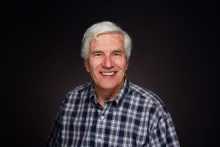
Steve Shafer was born and raised in Seattle. He graduated from Queen Anne High School in 1959 and later graduated from Ambassador College, Big Sandy, Texas in 1967, receiving a degree in Theology. He has been an ordained Elder of the Church of God for 34 years and has pastored congregations in Michigan and Washington State. He and his wife Evelyn have been married for over 48 years and have three children and ten grandchildren.
