

Jorge de Campos
This transcript was generated by AI and may contain errors. It is provided to assist those who may not be able to listen to the message.
I want to thank Pedro for reminding us of the special calling we have to be at the wedding supper.
Imagine how would you feel that you were not cold, but you are cold. You know, brethren, it's that sort of feeling, have you ever had that sort of feeling that you feel sad and maybe rejected because you are not invited to some activity?
You probably have experienced that. But God is not leaving you out. God is calling you. He has set you and I apart, and He's inviting us to His Sabbath and to His holy convocations. And you and I are so grateful. We are grateful for God's calling. In Exodus 31, we see that the Sabbath is a sign. Exodus 31, I'm just going to read a few verses, but you know probably this section, that the Sabbath is a sign. Verse 13, surely my Sabbaths you shall keep, for it is a sign between me and you throughout your generations that you may know me.
And it is a sign because God, as we say in verse at the end of this verse, that He says that you may know that I am the Lord who sanctifies you. God is the one that sets you and I apart and is set this day apart as the Sabbath for us. In verse 14 says, you shall keep the Sabbath, therefore, for it is holy for you. It is God that sets it apart. And therefore, are we being grateful for what is given us? Because the Sabbath was made for man and we need to be grateful for it. For it. Sure, we read about that it is holy. It says that in verse 14, and everyone who profines it shall surely be put to death. So we mustn't profane it, otherwise we'll be put to death. And then in verse 17 re-emphasizes it because it says it is a sign between me and the children of Israel forever. And it is a sign for God's people. You see, it's not just for Israel, but it's for the whole of mankind. We read in Hebrews chapter 4, starting in verse 4. We know we can see the story about the Israelites as they were going out of Egypt and through the wilderness, that they disobeyed God. And there it says, then for he has spoken in a certain place of the seventh day this day. God has rested on the seventh day. And again in this place says, they shall not enter my rest. Why? Because they of their disobedience. We see that in verse 6. And then in verse 7 it says, again, it designates a certain day, saying in David, and that is in Psalm 95, that is, quoting, today, after such a long time, as it has been said, today, if you will hear his voice, do not harden your hearts. And then it says in verse 8, if Joshua had given them a rest, then he would not afterwards have spoken of another day. And so we then conclude, or add there in verse 9, there remains therefore a rest for the people of God. The Greek there is sabatismus, which is a keeping of a Sabbath for us. So the Sabbath is for us as well. God never changes. He set this day apart as a special time from sunset to sunset for us to have fellowship within. You know, don't you like when somebody invites you and you have time of fellowship with those people? And God is giving us this special time every week to have fellowship with us.
Now, part of this fellowship within, part of it, part of the time, is respectful, is obviously a day to be honored, but a lot of the fellowship during the Sabbath is, let's call it, informal. But during the Sabbath, we do have a time of fellowship which is formal. You see, because in addition to the 24-hour Sabbath rest that you and I have, God calls us for a formal meeting.
A formal meeting. He invites you and I, and you are not left out. And so you and I should be very grateful that we are invited to His special convocation. The first time that it's mentioned about this invitation to a holy convocation is in Exodus 12 verse 16. And in Exodus 12, it's talking about the first and the last day of unleavened bread. And in Exodus 12 verse 16, on the first day there shall be holy convocation.
In Hebrew, it says, holy convocation does not have, to my understanding, the definite article. And on the seventh day there shall be holy convocation for you. And so we do have a call to have a formal holy meeting. In Leviticus 23, where it's talking about both the weekly Sabbath and annual Sabbaths, it mentions 11 times about this holy convocation. And in Numbers 28 and 29, it mentions another six times about the holy convocation. And so God commands us, calls us, invites us to formally assemble on the Sabbaths.
And I understand that sometimes some people cannot formally assemble. You know, sometimes people have difficulties, they have physical challenges. We call them maybe shut-ins, maybe people have health issues, maybe there's other concerns people have. I'm not yet to tell yea or nay. It's obviously, God knows the heart, and we respect those people and we love them. But these assemblies we call today Sabbath services or services. And basically, in the format that we have today, I could define it from the opening hymn to the closing prayer. This, let's say, hour and a half of services. The question I have is, what does God expect from you and I?
In other words, what does God expect from us during these cold assemblies that He has given to us? Now, the church realized that, and the Council of Elders realized that we really did not have any brief education, basic instruction about that. And so, the Council asked the Education Committee to address this subject from the scriptures, and the outcome of it is a new study paper which is on the church's website, which is out for a few weeks, and you're welcome to read it and study it for yourself, entitled, Keeping a Holy Convocation.
The purpose is not to, by any means, set up any new format for services or any new policies. It's by no means a way to judge and criticize others. That's not the intent. The intent is to highlight what God says in the scriptures about the Holy Convocation, about His expectation, and for you and I to introspectively look at ourselves and say to yourself, to myself, am I striving to not only keep the Sabbath the right way, but in addition to it, am I pleasing God in my conduct during the Holy Convocation?
Because remember, it's a special calling by God, and you and I have not been left out, so we are grateful, and therefore we should show a degree of gratitude, by the way we act and do. The word Holy Convocation comes from Hebrew, I know Holy is Kodash, and Convocation is Mikra, but I said it Mikra Kodash, because I understand in Hebrew it said the Mikra first and the Kodash.
If I'm wrong, please feel free to correct me. But Mikra is Convocation, which is a special gathering, or a coming together, or a calling. It could even be termed a summons. In other words, an instruction, but it is an instruction in love for us to get together for our good. And Kodash is Holy, which means he's set apart for a sanctified condition, and only God can set it apart. And so what we have is a meeting called by God, which he has sanctified, to which you and I are very grateful to be invited.
And so I just want to highlight four simple points about that. In first place, I am referring to the Holy Convocation, I'm not referring to the full Sabbath 24-hour period. Sure, the Sabbath is a holy time, but I'm talking about the Holy Convocation, Mikra, Kodash.
And that's what we call services, as I mentioned, from the opening hymn, and particularly from the opening prayer to the closing prayer. The second point that I want to highlight is that it's not our meeting. Sometimes, accidentally, in an opening prayer, we may say, we're inviting God to come and to be present today. Well, it's not God that is invited. It's not us that is inviting God. It's God that is invited us. He has called this Holy Convocation. And so, it's not our meeting. We are not inviting Him. He is inviting us. It is His sacred meeting. The third point that I want to highlight is that it is something that God has called holy. In other words, God has sanctified, has set apart.
The principle can be looked at in 1 Corinthians chapter 3 verse 17. You even now understand, in 1 Corinthians 3 verse 17, He's not talking about the same specific, but the principle of making sure we don't profane. Anything that God has sanctified is applicable there. In 1 Corinthians 3 verse 17, it talks about if anyone defiles the temple of God. It was anything that God has sanctified. Obviously, I specifically talk about the temple of God. God will destroy it. Because the temple of God is holy, which temple you are. And God is calling us to a very special gathering meeting that He is dedicating time to be present. Therefore, we are not to profane it or defile it or maybe be ungrateful about it. And so, how do we act on it? In Isaiah 58, talking about the Sabbath and how we should respect the Sabbath and honor it, in Isaiah 58 verse 13, it gives a couple of points that are applicable also in parallel to the Holy Convocation. In Isaiah 58 verse 13, it says, if you turn away your foot from the Sabbath, from doing your pleasure on my holy day, and call the Sabbath a delight, the holy day of the Lord, honorable, you shall honor Him, not doing your own ways, nor finding your own pleasure, nor speaking your own words, by comparison or an analogy, we could actually apply this to the Holy Convocation. Are we paying attention? Of course, I know you are. But what we need, and what I'm asking is, we need to always be asking ourselves, are we paying attention? And likewise, the minister that is speaking for God as presenting, we need to be careful and pray always to make sure we convey God's Word accurately and correctly, because we are representing God at His Holy Convocation. And therefore, that says, not speaking your own words. We need to be careful. Are we doing our own things? Are we talking during church? Are we walking around, unnecessary or unnecessarily? Now, again, please, please, I am not judging anybody. Please don't misunderstand me. There are people that sometimes do need to walk. For instance, you may have a terrible back pain, and you may just need to stand up and walk. You may have to have an urgent need to go to the restroom. You never know. Sometimes you could have an urgent need. You could have a child that suddenly needs attention, and you have to take care of that. You could have a handicapped child that you need to go, and even though you're paying attention to the sermon, you need to walk. And so, please, brethren, I am not saying that you cannot do this, that, or the other. But I'm just saying that we need to be introspective, evaluate ourselves, and if we have to do something, we need to minimize and make sure that we are in our hearts doing what is pleasing to God. Because it is a formal meeting that we are coming to before the very king of the universe. He is present. He is watching us. And so, are we doing that? Now, there are many brethren that wish they could be young.
But for this instance, they cannot be together. And so, we have the blessing for those that are very far away, or those that are ill, or those that have various difficulties. We have the blessing of webcasting, or doing the services via Zoom, because some of these brethren would love to be able to be young. I mean, I know today we're webcasting the sermon, and there are a number of brethren that are connected, listening in from Brazil. And it's being translated for them live as I speak. They would love to be young. They would love to be young. And so, we would love them to be young, too. But God has given us a way when there are specific situations today with technology today, we can try and bridge a little bit of that gap. And that is a blessing. That is a blessing. That is a blessing. And so, once again, the point that I'm saying is, the intent is for us to examine ourselves.
The intent is to look at ourselves, not to evaluate others or judge others.
I get sad when people come to me and say, well, so-and-so is doing this, or so-and-so is doing that. It really hurts me, because in first place, if the people have a question, maybe they should have a relationship with that person and go to him or her directly and speak to him. But quite often, it's because people don't understand that people have sometimes certain needs, and we need to be compassionate. And we need to consider in loving care the others. But the point is, evaluate yourself. Evaluate yourself. And the last fourth point that I want to highlight is that in this holy convocation, the agenda is not ours. It's God's. And he sets up, quote-unquote, the spiritual menu for us. And therefore, we come here to worship him. We come here to listen attentively. Look at John chapter 8. John chapter 8. John chapter 8. I think it's verse 47, but let me just get to it in case I wrote in the wrong verse. Yeah, it's 47. It says, He who is of God hears God's words. Therefore, you do not hear because you're not of God. We come here to listen attentively to God's words. And we as servants, giving sermons and sermonettes, we are very conscious and we pray. And we want to make sure that we are speaking God's words carefully. Also in Romans 10, Romans 10, verse 14 through 17, Romans 10, verse 14 through 17, it says, How shall we call on him in whom we have not believed, and how shall we believe in him whom we have not heard? And how shall they hear without a preacher? And how shall they preach unless they are sent? God's ministers are sent. And again, we are here to listen carefully to the word because at the end of verse 17 says, faith comes by hearing and hearing by the word of God. And so we use God's word as the basis and preaching is required, is necessary, is the way God set it up. And we have to be faithful to that preaching and we need to pay careful attention. Again, it is his convocation. So it is at his time, it's at his place. And in this convocation, there are many ways we can worship him. I've mentioned about listening attentively. There could be other ways. For instance, singing with enthusiasm. Do we sing with enthusiasm? Are hymns? Because that's part of showing honor and respect to God. Our music, special music, and I thank for the special music we have today. But our special music is to honor God. It's not to honor the singer or the person that is playing, it's to honor God. Our attire is respectful before the king. Now, I'm not going to tell you that you got to wear specifically this way or that way, because that changes from culture. That changes from nation to nation. And also, at the days of Christ, I'm sure that they do not dress exactly like we dress today. But are we dressing respectfully the best we can, because we're coming before the king? And also, during the Holy Convocation, it is a time that we have, around the Holy Convocation, we have also informal time before and after services for fellowship. And so, the fellowship you and I have with God during services is extended before and after services with the brethren. And that gives us an opportunity to stir up love to hear what challenges people have. For instance, if you turn with me to Hebrews chapter 10. In Hebrews chapter 10, verse 24 and 25.
You see, as we are able, Hebrews chapter 10 says, Let us consider one another in order to stir up love and good works, not forsaking the assembling of ourselves together. And so, if we can, not only in church, but if we can get together with brethren, even at other times, that gets us to know one another better. And that stirs up love towards one another. We get to hear about the problems and the challenges other people have, and we can pray for them more effectively. Brethren, this act, or this opportunity that God has given us of fellowshiping with him, is an opportunity of us becoming one with God and one with men.
If we look at John chapter 17, verses 22 and 23, here is Christ praying at the night before he was betrayed after the possible symbols.
And in this prayer, he mentions here in verse 22, And the glory which you gave me I've given them that they may be one as we are one. You know, brethren, through the Holy Convocation, we are at one with God in spirit. But also, during the informal time, let's just call it informal time, after services, we learn to be at one with the brethren. You see, that's why it says then in verse 23, I endem you and me that they may be made perfect in one, perfect in unity. And how can we build this bond, this relationship? What is better way than having Christian fellowship? And yes, it does not have to be on the Sabbath. Yes, we need to have, as much as we can, Christian fellowship on the Sabbath. For instance, the brethren in Brazil, I encourage them to phone one another, even though they're very far from one from the other. Like one is, for instance, equivalent to being in Florida, and the other one's in California. You know, Brazil is the size of the United States, and we're talking there about a dozen people scattered through a landmass the size of the United States. And so, how can they have fellowship with one another but calling and telephoning and chatting to one another? And obviously, the feast is a wonderful opportunity where they can get together. But we need to build this bond by fellowship, a bond of peace to become like Christ. That's why we read in Ephesians chapter 4. Ephesians chapter 4.
Ephesians chapter 4. We read in verse 3, endeavoring to keep the unity of the Spirit in the bond of peace. Brethren, when we have Christian fellowship, we do it in a bond of peace. And that is by showing and demonstrating love and care for one another. And you read a little bit more in verse 13. In verse 13, also still in Ephesians chapter 4. Till we all come to the unity of the faith and of the knowledge of the Son of God, to a perfect man, to the measure of the statue of the fullness of Christ. That is our goal, brethren, for us to be and become like Christ. And he is the image of the Father. That is our goal. And so, brethren, God has blessed us with a wonderful opportunity of the Sabbath. And in addition to that, the actual Sabbath service is within. God is teaching us through his servants. Yes, imperfect servants. Yes, I am imperfect. We all that talk here, we are imperfect. But we are trying our best to serve God. And God expects us, you and I, to praise and honor him by attentive listening, by singing hymns and psalms to his glory and honor, and being unified in prayer. So the question I have in conclusion, brethren, is, are we consciously analyzing ourselves and examining ourselves? Am I, during, for instance, services, but during our whole lives, but particularly during services, doing and acting as God expects me to do and act? It is an individual answer in your heart and in my heart, according to your and my individual situation. And why? Because each one of us has a different physical and emotional situation, or let's call it trial. So, brethren, please, let's give God thanks for his grace and loving care that through his Spirit he has called us to this holy convocation and prayed that he guides us and that we follow that guide to do and act as he expects us to do and act.
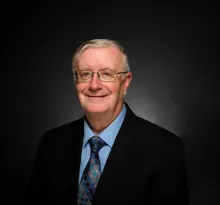
Jorge and his wife Kathy serve the Dallas (TX) and Lawton (OK) congregations. Jorge was born in Portuguese East Africa, now Mozambique, and also lived and served the Church in South Africa. He is also responsible for God’s Work in the Portuguese language, and has been visiting Portugal, Brazil and Angola at least once a year. Kathy was born in Pennsylvania and also served for a number of years in South Africa. They are the proud parents of five children, with 12 grandchildren and live in Allen, north of Dallas (TX).
