

John Elliott
This transcript was generated by AI and may contain errors. It is provided to assist those who may not be able to listen to the message.
God created a wonderful system of life, and that system involves having and raising young. We see it in all aspects of life. Examples include the feeding and the nurturing of little animals. They're young. My wife and I and some of you in this room have seen some of the animals in Africa with their little ones, like the cheetah, which the little ones have long hair coming off the back.
They kind of look like weeds lying in the grass. And the mother cheetah will be there, sort of wrapped around and watching them play. We can see lionesses with their young having so much fun trying out their claws and climbing on branches. Just a few days or weeks ago, my wife and I were watching little baboons, the baby ones, the really, really ugly ones. They get uglier as they go to old, but the babies are so ugly. But jumping and trying to swing by a branch and learning to use a tail when they're so small.
But the parents are always there watching, always there helping them. And so it is. There's a spider here in Arizona, a nice big spider that seems to have a real big abdomen on the back. But when you go and get close to that spider and you want to touch it or move it, a thousand little babies come off of that abdomen, which suddenly becomes quite small. Because the mother was packing hundreds of little baby spiders that looked just like pepper out of a pepper shaker.
Suddenly, you see all this black pepper running. But she just packs these spiders around somehow. You're familiar here with quail, I'm sure. And how the quail are born or hatched out of little eggs, probably under little trees. You can never see a quail, it seems, until they want you to. But these little tiny baby quail, they're so tiny. They're just like a little round thing with two little legs underneath when they're small. They're almost like a little shadow. God made them where you can hardly see. It's hard to focus on a baby quail when they're in the desert.
But you see these little shadows in the line buzzing along behind the mother. And the mother will come to something tall, and the little shadows all of a sudden are up there with her. I don't know how it happens. They're there and then they're there, and they keep going. I made them with little springs, I guess. But don't mess with a baby quail. You know what it's like when some of the birds have a nest, and they have young in the nest. And the bird which normally eats the bird that has a baby in the nest has reversed the course.
And the little bird is now chasing the big bird, chasing it away without any fear of being eaten all of a sudden. And that bird duly complies and moves along. That's the circle of life, as it's called. These are examples of a wonderful system that God has created that show His purpose for you and me. Because God also feels that way about us. Turn to Luke 13, verse 34. We see Jesus Christ becoming very emotional, very focused on those who would become the children, those who are the children of God or the potential children of God.
In Luke 13, beginning in verse 34, He says, O Jerusalem, Jerusalem, the word O, it's an exclamation. It's passionate. The ones who kill the prophets and stones those who are sent are not acting properly. You're acting the wrong way, having the wrong response. How often I wanted to gather your children together as a hen gathers her brood under her wings. I wanted to bring you in and nurture you, not only protect you, but feed you and train you and rear you in the godly way for the godly family.
Like children, children of our family. You are God's little child. If you have the compliant, obedient, praising attitude of wanting what God has created you for, what is God's goal for you? How does Christ's Church, the body of Christ, meet that goal? And how are you interfacing with that church?
Let's ask the question today, what is the church? What are some of the purposes of God's Church? What is its commission? What is the focus of the church? Let's put aside tradition. Let's put aside any ideas that maybe we've come up with. Let's look in the Word of God today at the answers for what God's Church can do for you. What can God's Church do for you? If you will let it. Not everyone will let it. Just as we read, Jesus said, oh, Jerusalem, if you would only let me. But you wouldn't. We can fall into that category sometimes. Sometimes we can dismiss the church. Sometimes we can disregard the church. Sometimes we can reduce the value of the church. And we can end up saying, no, don't really want that. But if we just clear our minds and ask the question, what can God's Church do for me? It's amazing what the potential is. Let's go right to the heart and the core for the purpose that Christ had in creating His church and for it to being here today. Here are some quotes from Scripture. I'll just pass them out real fast.
He seeks godly offspring. He called some to be firstfruits. The elect were chosen before the foundation of the world. You are being engendered from above. We're born again, Gennaiot and Nothin. The Jerusalem from above is the mother of us all. Do we begin to get the picture here? God is creating a family. He is calling children. You are His sons and daughters if you are being led by His Holy Spirit.
God, in that sense, is an expecting parent. He and Jesus Christ are expecting parents. Now, expecting parents put everything they can into the developing child or children, don't they? And God is no different. God has put everything—all of His focus, all of His attention, all of His efforts, all of His creation—into developing children, including giving His firstborn son's life for those developing children. God has done so much, and so it is only fitting that we recognize that, that we appreciate what He has done and is doing. And we also praise Him for that. But it is also important that we respond, not just praise and appreciate, but we respond, and that we grow into that which He is wanting us to develop into. In Hebrews 2, verses 9-11, we see this great process that God is taking us through, these opportunities that He is making for us, and they are really astounding. Hebrews 2, verses 9, but we see Jesus, this one who was the God of the Old Testament, the one through which the Father created everything, the one who has been so busy with His Father, working on developing you and me as children, He was made a little lower than the angels. This individual is committed for the suffering of death, really committed, crowned with glory and honor, that we should really appreciate, that we should worship, that we should really give Him not only lip service, but also follow Him and let Him bring us under His wings and feed us and teach us and rear us, that He, by the grace of God, might taste death for everyone. He is trying to save us from eternal death. For it was fitting for Him for whom all things, whom are all things, and by whom are all things, He created everything, and for all things, He is going to receive everything in bringing many sons to glory. It's not just this life. They want to bring us into their family, into glory, to make the captain of their salvation complete through sufferings. For both He who sanctifies and those who are being sanctified, all are of one, for which reason He is not ashamed to call them brethren. We call each other brethren, brothers and sisters. He calls Himself our brother. He's our senior brother. He's the firstborn among many brothers and sisters.
He thinks of us as family. I hope you and I stop and realize, yes, we need to get under those wings. What is the value? What is the benefit of getting under the wings of Jesus Christ? That's a good question. That's another way of asking the title of the sermon. What can the church do for you? What would being under those wings benefit me? How would that benefit me? What would it do? What can this church of Jesus Christ do for you?
The church, the meaning of the Greek word ekklesia, means a group. If you look in like Theers, Greek, and lexicon, you'll find it can be applied to all kinds of groups. It means an assembly. Where it's referring to the church, it means an assembly of God's children. An assembly of the people that God is dealing with. So when we say church, we're talking about God's children. His group, His assembly, the Sabbath is one of the festivals which are called holy assemblies.
So the group assembles on the Sabbath day and on the feast days. The body of Christ we're called. It shows what this group is. It's not of people, it's not of men, it's not my group, it's not any human's group. It's the body of Christ. It's who's with Him, as it were, under those wings in that analogy that He used. You can use it as a human body. It's the various parts. He's the head. And we're attached. But we are of the group, the assembly of the family. If we're being led by the Holy Spirit in the way that God is trying to rear us.
Again, He is at work saving people. Talk about an individual who is wonderful. He's saving people. He's better than what you see Spidey or Superman or some of these guys can do. He's able to actually save you and elevate you into something really great. Captain of our salvation. That's what salvation means. Literally getting saved. Not just getting saved, but literally getting saved from burning fire that's going to burn us up. That's a pretty good guy. We can be thankful to him.
So we can give thanks and offer praise in a meaningful way. Not just a religious way, but just a real literal way. Thank you. I'm going to get on board the ship. I'm going to get under the wings. I'm going to get in the body. I'm going to make this trip with you.
That should be our response. Children have to be fed. All those little animals, including our own children, precious children, mothers have precious children. It's about regenerating life. Indeed, we are a type of that. God's church is a type of what mothers are to their children and fathers are to their children. Those are the terms that we use within the church.
We are to be fed by our spiritual parents. When you have a baby, you don't give them a spider to raise. It doesn't work that way. You raise them yourself. You feed them yourself. You don't give them dog food. You give dogs dog food. They're dogs. There are certain animals who like certain things. Ravens, they just don't like fresh meat. You just don't. You can't give a carrion bird a nice fresh steak. It's like, eww, that's disgusting. It's fresh. Let's let it age a week or a month in the hot sun.
Some aroma going there and some stuff growing on that. Some color in it. Oh, now we're talking. Oh, yeah. We're coming from hundreds of miles for this one. Different food. God's children need special food. They don't need corrupt food. Things that are decayed. They need things that are holy for the holy children of God. So children are to feed from Jesus Christ.
He is our bread. He is the food. He is the source of the food that we need. Jesus Christ is the source of what you need. And any other thing that you eat is not going to help you at all. It's going to hurt you. It's just not going to work out. Let's go to Revelation chapter 3 and verse 18. Sadly, many don't turn here to listen to Jesus talk about the source of food.
But you and I can today, and we can really listen to him. Because his message here needs to apply to me. I don't know about you, but I know I need it. Revelation chapter 3 and verse 18, he says, I counsel you to buy from me gold.
The whole point here that's often lost on people is Christ wants to feed you. He wants to be your bread. Pure gold. Gold that's refined and it's got all the stuff. It's a bride who's made herself clean. She's gotten rid of all the other stuff. Get it from me, he said. The problem with this seventh lesson to the church was that these people had become lukewarm in godliness because they were getting their food from a different source. Laodicea had no water supply of its own, no wells. And so it tapped from several kilometers away somebody else's source of water and piped it in above ground on those Roman aqueducts.
And when it got there, it was always room temperature. It wasn't local. And so he says, I want you to buy from me. Don't get it from somewhere else. You can't grow and get into the kingdom of God and come into my family getting food from some other source. You try that, he says, I'll vomit you out of my mouth. It's not going to work. There's a sermon that I gave some time in the past. Are you listening to him? We need to listen to Jesus Christ. He is our bread. Screen out all this other noise.
Just because it has his name on it doesn't mean it comes from him. You need to listen to him and let him be our bread. He feeds us to grow up like him. Christ-like. That's what Christian means. Christ-like. We're to grow up into Jesus Christ. Let's go to Ephesians 4, verse 11. He provides, as one aspect of the church that I'm going to cover today, food. He is the food. He provides the food. He's got the right diet for us.
It's found in the church within the body. Here's how he sets up the feeding program of his children. It says, He Himself gave some to be apostles. When we look at what he is doing here, we find that he Himself, the food, the feeder, the great shepherd Himself, set up and is overseeing the feeding program.
The sheep are only going to hear His voice, and they're not going to listen to any other. So the food is going to come through to the true sheep. Now, I have to ask myself the question. John Elliott, are you a true sheep? Or are you listening to something else? Are you wanting to be out from under the wings? Are you wanting to do your own thing? Use the name Jesus.
But be rebellious. That's a question all of us ought to ask. But he Himself has given some to be apostles. Some prophets, some evangelists, some pastors, some teachers. What we're seeing here is how He feeds. When we look at the term apostle, the only definition I'm aware of in Scripture comes from Ephesians, the first chapter, where Peter is choosing.
For some reason, Peter decided to choose a replacement apostle for Judas. He didn't say God inspired it. He doesn't even mention God through the whole process. But he decided that there needed to be a 12th apostle, and he defined it as being a minister or ministry of one who was an eyewitness of the sufferings of Christ. So an apostle wasn't just a title or an individual off to themselves, but it's someone directly associated with Jesus Christ who could minister, who could serve. The word minister means servant or to serve.
So that was a serving of the body. Some evangelists. An evangelist is one, as we understand, that would preach to a large group, like preaching the gospel. Like he said, I will make you fishers of men to spread that gospel out. Some prophets. Prophecy is motivational. You and I know it's coming. It kind of gives us a little motivation to be serious, doesn't it?
So God tells us what's going to be fall, what's going to happen, and uses it as warnings to us as well. Some pastors. The term pastor means pasturer. It's a term for cattle. Cattle meaning sheep, goats, cows, whatever. It's one who would provide pasture or feed for animals. You and I are called sheep. So a pastor is a pasturer, the one whereby they would be fed. And of course, he says, and teachers.
Why? Why did he provide these things for his church? Well, as you know, you and I need to be fed. And it says in verse 12, for the equipping of the saints. Where do we get our food from? Can we get it from anywhere? Can we get it from over the hill and pipe it in? Can we get it from any source we want? Can we go out on the Internet or can we go to other churches? It doesn't really matter. Can we just get it from the Bible? Can we sit at home? Can we soak it up? Can we imagine it?
How do we get it? Well, he just told us. Through those who he himself sends the food. Now, if we get it from another source, then you and I become like the lesson in Laodicea. Where he says, no, no, no, you're not going to grow right. You're going to be lukewarm.
That's how you're going to end up, because you didn't get it from me. You need the pure stuff. God's Word is pure. God's Word is true. There's nothing more pure on the planet that I know of than the Bible. That's pure. And that's the real goal that you and I need to get from God.
So, we find in verse 12 going on, For the work of serving, of the ministry, for the edifying, for the growth of the body of Christ. We as children are being called and fed in order to grow. That's what the word edifying means. If you look in the margin, it may say, building up, adding block to block, building up. Until we all come to the unity of the faith and the knowledge of the Son of God, to a perfect man, to the measure of the stature of the fullness of Christ. That's what the Church can do for you and me. It can provide us with the food and help us to grow. It's very important that you do not, in any way, marginalize or allow Satan to discredit this process that Jesus Christ has set up. Or me, either. It's very important that we, as individuals, always look for the fruits of the lives of those that Jesus has placed. And always find respect and honor within His Church. And give Him the glory and the honor, because this goes back up to God. It's not about any human being. It's about Jesus Christ, all that He and the Father have given. And we do not want to say, oh, I don't want to be under those wings. I'll be somewhere else. Because this is where life comes to you and me from. It comes from a process, a system that God has set up. What summarizes the work of God, or the Church of God? John 21, verses 15-17 is about as core as I think you can get concerning the mission, the purpose, and the work of the Church. Here's Jesus Christ speaking to the one whom He called Petros. His name was Cephas. And He tells him when He's about to leave this physical life, this physical earth, in the last chapter of John, after He's going to leave the physical interface up to human beings, that He's going to inspire apostles, prophets, evangelists, pastors, teachers. Here's what He says to them. John 21, verse 15, Jesus said to Simon Peter, Simon, son of Jonah, do you love me more than these? And He said to him, Yes, Lord, you know that I love you. And he said to them, feed my lambs. Now, lambs are precious. Lambs are also delicious.
You are on somebody's menu. You know that. Satan is like a roaring lion. You're the tasty ones of everybody that's on the planet. You're God's lambs, His little ones. And in that situation, God loves us very much.
And He wants us to grow, and He tells Him, feed my lambs. And He said to him again, the end of verse 16, tend my sheep. What is the purpose of the church? Feed and tend the children of God. There's nothing more precious to the God family than His children. Nothing more precious than the little ones, the lambs, the harvest that's coming on, the opportunity. That's what they've given everything for. That's what Christ sacrificed His whole life for, was from these little ones. And He said, whoever offends one of these little ones or causes them to offend Me and cuts out their opportunity to be in our family. And He says to Him a third time in verse 17, do you love Me? And Jesus said to Him, feed my sheep. Feed. The purpose and the focus of the church, then, primarily is the spiritual growth of its members. There is nothing more precious to God than the fruit that you are producing in your own life. There's nothing more precious than that fruit that is harvestable, you being able to be in His family. There's no other thing, item, concept, and existence to God than that. And He has given His own blood and life for that one thing alone. Shounen, Jesus' commission to the apostles, where He said, teaching them to observe all things that I have commanded you. And lo, I am always with you, even to the end of this age. In other words, I am always directing you in this. I am the head of this church. I am the one who is feeding. It is my body, my bread, my blood. And you are to teach them to observe all these things that I have commanded you. This is the knowledge, the teaching, the wisdom from above. And that is the commission to the church in Matthew 2820. I'd like to pause here just a moment. We've got this framework, really what God is doing within this body and through the church. I'd like to introduce or insert a concept of a corporate church. It is kind of a recent phenomenon. And I am going to do this so that you can see a little different humanized perspective of what a church can be. All of a sudden, rather than the body of Christ, you might have a name, Inc., you know, incorporated. You might have legal documents and legal forms. You'll have trustees, you'll have board members, you'll have this person doing that. You'll have a corporate headquarters with offices. You'll have trademarks, seals, all kinds of things like that. Now, those things aren't necessarily negative. They're part of the process of doing God's work in the modern age. There's nothing wrong with the corporate structure, but here's the question. Who tends to be the focus of a corporation? Any corporation. Pick one. Who's the focus of Microsoft? You know, you probably put a name there. Who's the focus of Apple? Computers, you know. You probably put a name there. And so on and so forth. Who's the focus of a corporation? Well, it tends to be its headquarters. You'll probably know where the headquarters is. You know, you say, this company, that's headquartered in Seattle. This company, that's headquartered there. You might even know what the buildings look like. Sometimes corporations will design buildings that look a certain way. The famous landmark was the Chrysler Building in New York. You know, it's one of those beautiful design things of the 1930s.
And it was associated with Chrysler, or Pan Am, back when it was built. You know, you just saw Pan Am, or the Sears Building. There are some examples here in this country. You can get a certain image from a building, as our church has, many years ago. It had a building, in fact. It was sort of its landmark. It was almost a symbol that it was recognized by at times.
I'm just talking here about the focus of a corporation. The director and the managers of the corporations will tend to look upward to the chairman, or the CEO, of the corporation. And those directors have managers under them, often field managers. And the field managers will serve the wishes and look toward the directors who are looking towards the CEO of the company.
And then you'll have some field personnel. And those field personnel are busy shuffling the policies and pleasing the managers, who are pleasing the directors, who are pleasing the chairman. And so it goes typically with corporations. Now, in a church corporation, who's the focus on?
I think it's an important concept for us, because as I've shown, the focus of the body of Christ is on the lambs. And the director, I shouldn't say the director, but the CEO, told the directors, focus on the lambs. And the directors went out and ordained elders, managers, and told them, go focus on the lambs. And they appointed them in every city. And that's the focus.
Now, too often, in a church corporation, it can be easy for us as humans to all be focused on the headquarters, on the CEO, on the managers. And where are all the backs turned? They're turned to the members. Is that what Jesus Christ wanted? Is that what he pleaded? Is that what he commanded? Is that what he gave his blood for, for us all to turn our backs on the members? I'm not saying we do that. I'm just saying there's a tendency in corporate structures for that to happen. And yet, that is not what God is doing. Too often, the members can be incidental contributors. I have, in my life's experience in the Church of God, heard members told that they had no real role or focus other than pray and pay for the headquarters operation.
That is not what the Bible is speaking to here. Rather, we are doing the work of feeding God's sheep, of teaching his sheep and developing fruit for the harvest.
I think that's an important concept for you and I to understand because we live in a 21st century corporate world where everything is structured differently. They didn't used to be corporations. Indeed, the body of Christ is not a corporation. The body of Jesus Christ is composed of those who have and are being led by the Holy Spirit. Those are the sons of God.
If you want a brand, an icon, and a model, it should be Jesus Christ. It should be Him. It should be bread. It should be God the Father, the kingdom of God. Now, the Church that we have, there's nothing wrong with that. We do focus on the name of the Church. We do focus on the principles and the teachings of God. We point people through our literature. That's the whole thrust behind our Gospel message. But if we're not careful, we might start thinking the purpose of the Church is to start printing all this stuff. It's to build a building. It's to make policies. It's to have cabinets and positions and people.
And pretty soon, Baxter turned towards the sheep. Brethren, you are the most important thing that exists in God's eyes. You are the apple of His eye. And let me tell you, God's Church does love you and does want you to be in God's kingdom more than anything. I'd like you to turn with me to 1 Corinthians 12 and verse 27. And let's see where some of the physical corporate administrations might fit. Again, from the Bible, not from tradition.
In 1 Corinthians 12 verse 27, Now you are the body of Christ. Notice that. You. You're the body of Christ. Not buildings. Not some, you know, bunch of people who are more important than you, more famous than you. No, you. You are the body of Christ. That is important. That is what Christ lives for. That's what He died for. And members individually. You're not just part of a group. He knows how many hairs are on your head, as does the Father.
He knows what's on your mind. He knows what your needs are before you even ask. He knows what your wants and desires are before you even ask. And He can do those things if you're a responsive child. If you're under the wing, if you're living and growing, He says, Matthew 6, 33, you seek first the kingdom and my righteousness and God's righteousness and this other stuff. Parents know how to give good gifts to their kids. So do we. How much more can we do it for you? So here we find in 1 Corinthians 12, 27, your individual members in special parts of the body.
We had a young man up here giving a sermonette a while ago. Wasn't that a fine message? Weren't we taught by that? Each individual in the body contributes in unique ways. We're not all speakers. We're not all singers. We're not all ushers. We're in the body where God can use us for the edifying of which every part does its share.
Ephesians 4, 16. Continuing on, verse 28, And God has appointed these in His church. First, apostles. Ephesians 4, verse 11. He himself placed some to be in the church. First, apostles. And back in the day when there were eyewitnesses to the resurrection of Jesus Christ, that's at least Peter's definition of what an apostle was, we had individuals like the apostle Paul and Barnabas, who were eyewitnesses taught by Jesus Christ personally.
It wasn't just a speculative choosing, or wonder if God was there, or wonder if that whole lots thing was even supported. Blinded on the way to Damascus. A special miracle is where He was going to go, who was going to teach Him, and then teaching Him two years in the wilderness. Yes, there you have a really strong example of an apostle. The other part I just don't know. Like I said, it just never mentions God at all. But there we have an apostle. First, apostles. We don't have any apostles today. And I don't know that that's the only definition.
That's the only one I know of in the Bible. Second, prophets. Again, prophecy motivates, just like we saw before. Third, teachers. Teachers that feed in pasture. After that, miracles. Now, what are miracles? Miracles can help people. They can inspire. They can help people with their faith, issues of faith. In a God that's invisible, a God that doesn't just show up in literal form. Miracles are precursors of faith. And then gifts of healings, which can be the same thing. It can be a very personal miracle. Healing is a little different than a miracle, because when it happens to you, it's like, wow, hey, I got that one.
That moved me. That was very personal. I not only know there's a God, I think he's doing something in my life with me. And then comes helps. Helps is a general term. The Greek means laying hold of.
Helps, the laying hold, picking up things, maybe chairs. Maybe that's referring to a deacon. I don't know. Maybe it's just all of us helping out. Helps. Helps in the church. And then comes administrations. See where God puts administrations? It's kind of different than the corporate model. If we just go by first, second, third, fourth, there it is. It's after helps. And before, varieties of tongues or languages, foreign languages, or the PA system. In other words, it helps people hear the sermon, the message. It could be a modern version of the PA system. Just so that we can either hear in our own language or be able to hear. But you see, don't ever lose the fact of how important you are as a child of God.
There is nothing more important. Don't put anything before that to say, Oh, I'm not going to be under the wings. Oh, I'm not going to respond to my calling. Oh, I'm not going to eat that food because I would rather get food from my own source or elevate myself. I think I'll get into the corporate world and play some politics. I think I'll make this about people or position or buildings or policies or something else and lose our focus. To where he comes back and says, Who are you? Who am I? Well, I had an office. You know, on the third floor.
You're supposed to be a sheep. You're supposed to be growing here. You're supposed to have fruit. You're supposed to be becoming like me and like your Father in heaven. You're the most important thing there is.
Focus on that. Why does the church preach the gospel? Again, in my church experience, sometimes we've elevated the preaching of the gospel beyond and an exclusion to teaching, feeding. What is the purpose of the church preaching the gospel? Can we let Jesus tell us that?
Can we let the Bible tell us that? Can we sort of skip our own ideas for a minute and just look in the scripture? Ask yourself, How did I get here, by the way? I know how I got here. It was because the gospel was on a radio station in South Texas, in an oil field my dad was working on. And that's how I got here some 65 years later. How did you get here? What's the story of how you got here? It's some connection with the gospel being preached, with Jesus casting a net, and those whom the Father is drawing were brought in by that net.
The church teaches people to believe the gospel and to obey the gospel. The gospel isn't just the good news of the coming kingdom of God. The gospel also is the laws of the kingdom of God, the leaders of the kingdom of God. And in two places in the New Testament, it warns us we'd better be obeying the gospel. It's not just sort of letting it go out there only. It's also a response that we have to have towards that kingdom. Now let's go back to 1 Thessalonians 2 and verse 9. You remember, brethren, our labor and toil. Paul here is telling the church about his and other ministers' labor.
What was their work? What's the work of God? What's the mission of the church, as it were, from the evangelists and the apostles' standpoint? For laboring night and day that we might not be a burden to any of you, we preached to you the gospel of God.
You are witnesses in God also how devoutly and justly and blamelessly we behaved ourselves among you who believe. As you know how we exhort, comfort, charge every one of you as a father does his own children, that you would walk worthy of God who calls you into his own kingdom and glory. Wow, that just says it all, doesn't it? That's what the gospel is for.
So we can bring you into the church, exhort, comfort, charge one of you like a child of God that you would walk worthy of God who calls you into his kingdom and glory. That's what the church can do for you. That's the overall purpose of the church. It's quite a blessing. Jesus gave the purpose behind our preaching of the gospel as that. Let's go back to Matthew 28, verses 19-20. Let's read the commission that he gave to the church. We say to the church, it was given to the apostles. The apostles are mentioned first in the order of responsibilities in Christ's body.
Matthew 28, beginning in verse 19. Go, you therefore, and make disciples of all the nations. That's what it's about. Go preach the gospel in all the world so that you can make disciples in all the world. Make disciples. Those are students. Go, therefore, make students from all the nations, baptizing them in the name of the Father and the Son, the Holy Spirit, teaching them to observe all things that I have commanded you.
And lo, I am with you in this to the very end of the age. That's the commission of the church. Yes, we preach the gospel. Why? So we can teach people. We preach the gospel so they can become disciples, and they can be baptized, their sins forgiven, receive the Holy Spirit, and they can be taught, and they can grow and develop fruit and be in the kingdom of God, reigning with Christ.
It's a wonderful, wonderful blessing that the church brings. Do you see how you can't do it without God, and you can't do it without the church? You can't do it without the gospel being preached? Who's going to hear the gospel if nobody preaches? Who's going to understand if nobody teaches? The apostles cast the net. They are the fishers of men, gathering in those whom the Father was drawing. Let's see this in Acts 14, verse 21-22. Acts 14, verse 21. When they had preached the gospel to that city, what were they doing? They were going to all the world. When they preached the gospel to that city and made many disciples, what would Christ say?
Go into all the world, make disciples. Is that it? Going on. Verse 22, strengthening the lives of the disciples, exhorting them to continue in the faith, and saying, We must through many tribulations enter the kingdom of God. It's the gospel. It's bringing in the disciples, baptizing, teaching them, helping, exhorting them to produce fruits so that they can be in the kingdom of God.
Brethren, this is a process you and I can't do without. It's not something we can say, Oh, I got it now. I can just go do my own thing. I can now get my own river of water. I can bring in my own food. I can choose myself where I'm going to get it from. Oh, the source may be obscured at times for some because of events that happen. We'll get into that another time.
Jesus said, My sheep will always hear my voice, and another voice they will not listen to. It's always there. It's always going to be there, even mixed in with false teachings, false apostles, and goats, and other things. But we don't have to worry about that. We're really tuned into Jesus Christ, to His word, and listening for the fruits of what He's saying.
The other voices will always have this component. You can do it your way. And when you hear that and you think, Oh, yes! Say, Oh, no! That's a nice message. Real tempting, but that's wrong. You don't have to think only godly thoughts on the Sabbath, and only worship God, and only not do any form of outside work on the Sabbath. No, you can think your own thoughts. You can dabble and do and stretch and bend and just kind of get the general gist of the day.
Ding! That sounds easy. Something wrong. That's the big wide highway, isn't it? That's the easy route. That's the path that goes to destruction. That's always going to be there. That's why Jesus said there's going to be false apostles that, if possible, could deceive the very elect. But he says, My sheep won't hear them. They will not follow another voice. So, Jesus gave a separate end-time prophecy.
He said, And this gospel of the kingdom will be preached in all the world as a witness to all nations, and then the end will come. That's from Matthew 24.14. That's a prophecy. That wasn't a direction of the church. That's the Olivet prophecy stuck in with the events of the end of this age. Now, if you go over to Revelation 14, you'll find also the events at the end of this age, starting at Revelation 7, it marches right on down. Revelation 14.6. Let's just pick it up there, just so you can see here. I want to give you the other side of the focus, sometimes this big focus on the gospel.
Revelation 14.6. This is John writing what Jesus told him to write and what he showed him.
Then I saw another angel flying in the midst of heaven, having the everlasting gospel to preach to those who dwell on the earth, to every nation, tribe, tongue, and people. Jesus said in Matthew 24.14 that this gospel will be preached in all the world, and then the end will come. We see this angel preaching the gospel to all the world. What's in the next two verses?
Verse 8. The angel says Babylon is fallen because she has made all nations to drink of the wine.
Verse 7. The next verse said, Fear God and give glory to him, for the hour of his judgment has come. That's the end. The end of Satan's age. The gospel is preached to all the world, then the end comes.
The gospel that was commissioned to the church, the primary reason for it, as we see, is because God is focused on precious fruit of the kingdom, the first fruits, the first children who are going to reign with Christ.
Preaching of the gospel, the corporate church, that's great. Let me tell you, it works fine. It gets the job done. But the focus is on the development of she. The church is going to go into all the world. Let's go to Colossians 1 and verse 23.
Colossians 1 and verse 23. But you haven't heard this verse in a sermon before. No, I haven't. It's probably my fault. Colossians 1 and verse 23.
If indeed you continue in the faith, grounded and steadfast, and are not moved from the hope of the gospel, which you heard, notice now this is the topic we're talking about, which was preached to every creature under heaven, of which I, Paul, became a minister. It says it's been preached to every creature under heaven. And that's what we as a church try to do. Someday that will be fully accomplished. I don't think Paul, we know Paul's journeys. And I haven't seen China in there, the Philippines, Australia, North-South America, Central America, all the Polynesian islands, or the thousands of islands that exist over in the South China Sea. I don't think he got there. India, Russia, Africa. We don't read of his journeys there. But he said he was preached to every creature under heaven as much as he had opportunity. And we do that as well, as much as we have opportunity. I just point these things out so that you and I and the church can remain focused on the sheep. Jesus' commission was to find the sheep, make disciples of them, baptize them, feed them, prepare them for their judgment. That's what's coming. It's what all the judging is about. Did the sheep produce fruit? Did they become like me? And when the church becomes about who's in the corporate administration or the policies or the buildings or the jostling, we've lost our focus. So don't do that. Stay focused on what we're here for. We don't want to eat the wrong food.
In James 3, verse 13, we find out true food and food that's not good for us. And I want to encourage you to eat the bread of life and leave the other stuff alone.
James 3, verse 13, says, Who is wise and understanding among you? Wise, godly wisdom, comes from the knowledge that we are taught through the leaders that Christ has placed in his church. It comes from the understanding of those who then begin to keep God's laws and a good understanding of those who keep God's commandments. You come up with wisdom, which is the application then in your life and mine.
And he says here, Who is wise and understanding among you? Let him show by good conduct. This is the righteous deeds of righteousness. Godly action that comes from following Godly teaching. That his works are done in the meekness of wisdom. Not some other source, not some other idea, not some other thing.
But on loving God with your heart, soul and might, love your neighbor as yourself, as God has taught us to. The doctrines were given by Jesus Christ. They were codified by the Apostle. They've been here a long time. There's no new pages getting added. It's locked down. It's been being lived for 2,000 years. We need to show by good conduct that our works are done in the meekness of Godly wisdom. Verse 14, But if you want to eat something else, if you want to get your water from afar and get it piped in from Rome, if you have bitter envy and self-seeking, that's carnal action from carnal wisdom. There's a lot of carnal wisdom that goes on right now. It's election time. You hear a lot of carnal wisdom out there, don't you? We could say, bitter envy and self-seeking. If that's in your hearts, don't boast and lie against the truth. God's teaching is truth. Don't boast and lie against the bread, the Prince of Peace. This wisdom, so-called, does not descend from above. Verse 15, But is earthly, sensual, demonic, for where envy and self-seeking exist, confusion and every evil thing are there. But the wisdom that is from above, that's God's teaching, which Christ puts into His church, and the shepherds feed the sheep, and you and I are supposed to be excited about and focused on, becoming like Jesus Christ. That creates good things. Verse 17, the wisdom that is from above is pure. Pure. I don't do anything pure. I don't think anything pure. I don't ever say anything pure. I never write anything pure. It gets so frustrating to not be pure. This is pure. Sometimes I ask God for inspiration to speak to you or to write to you, and afterwards I'll say, Oh, I use this word or that word, or I miss that. Oh, how imperfect I am. But that's okay, because when we pray, we start our Father in Heaven. What does Jesus say in Matthew 5.48? Become you, therefore, perfect like your Father in Heaven is perfect. That's the goal. It's not about me. It's about Him. I'm trying to be like Him. And I long for the day when everything I think, do, say, touch is perfect. I really do. I just long for that day. Paul said, I wish we, he says, don't we wish to be absent from the body and with the Lord? There is that time of perfection that's coming. And we can't judge one another now. If you want to look at something perfect, don't look at me. But we should be receiving the food, the true, pure food, and growing by it, to grow up into Him. So the wisdom that is from above is pure. Then peaceable, harmony-making, gentle, willing to yield, full of mercy and good fruits without partiality, without hypocrisy, without saying, oh yes, I'm of God and I'm going to beat you up. Remember what your calling is. You need to run through it real quick. Here's your calling. Become like your Father in Heaven.
Love God with your heart, soul, and might. Love your neighbor as yourself. Love others as He loved us.
That's a sign of who are His. You'll be judged by the fruits of the type of food that you are growing by. And you will be harvested if that fruit is godly fruit. You'll be burned if that fruit isn't. That's our calling.
And the purpose of God's Church, not the human elements here, the purpose of Christ creating a body and calling out ones, is to teach us all truth and to inspire and encourage us to use that truth to grow up into Him so that we'll have fruit for the harvest.
This process of Jesus facilitating fishers of men who then cast the net of the Gospel, bring those drawn by the Father, the ministers baptize them, they receive the Holy Spirit, the pastures feed, and you and I, the sheep, grow.
And we grow up into the great shepherd, the head of the sheep. And God will harvest us as the first fruits of His children and His family. Let's see all of this shown in 1 Corinthians chapter 3, verses 6 through 9.
1 Corinthians chapter 3 and verse 6.
Paul says, I planted, Paulus watered, but God gave the increase.
It's really not about who the physical people are, is it? It's about God. He's the one that gives the increase.
We're just workmen. We're just helping out with the chores, as it were.
Verse 7.
So then neither he who plants is anything. It's not about us.
He who waters, they're one.
And each one will receive his own reward according to his own labor.
For we are God's fellow workers. You are God's field. You are His building. You are what it's all about.
The focus is finding, feeding, and growing the members, and growing them up into this holy temple of God, where Jesus Christ is the chief cornerstone, the apostles and the prophets of the foundation.
In other words, they have fed us, haven't they?
They've been principal ones in the pipeline of food that comes to you and me.
Let's finish up by reading a summary of your calling.
Psalm 23. Beautiful, beautiful poetry often set to music.
But in actual fact, a very literal...
maybe a soliloquy or a type, a literal type, of what you and I are in this church, to God, to Jesus Christ, to the Father.
Psalm 23.
The Lord is my shepherd.
I am a sheep.
I am a lamb.
I am a child. I don't know that much.
I'm meat in that I don't know what to eat. I don't know what to drink. I don't know where to go. I don't know how I'm going to get protected.
But Jesus Christ is in charge. I submit to Him.
And I shall not be in want, or I shall not lack, the margin says.
He, if I get under the wings and allow Him to, He makes me to lie down in green pastures.
Guess what sheep like to eat?
They like to eat grass.
Goats don't eat grass.
They eat bushes.
Different diet.
But the goats are in with the sheep.
So don't get, you know, somehow confused by what the food is. The sheep are going to always eat the grass.
It's good. It may have been around for 2,000 years.
It may be the same thing.
It may not just be as zippy and, you know, all exciting as what the goats are over there tearing into, the latest new bush or thorn bush or whatever.
Or old shoe.
But it's good. It continues to be just what you need to grow.
So don't be itchy about new stuff.
Like the Israelites were after eating manna for 40 years. They were just real itchy about the quail.
Didn't work out real well for them. Psalm 23, verse 2.5, He leads me beside the still waters.
I've heard it said, I've read that it's stated, that sheep can't drink out of bubbly, you know, flowing waters.
They need still water.
God gives us the still water, the Holy Spirit.
Just what we need. Just fitting for God's children. He restores my life.
He leads me in the paths of righteousness for His name's sake.
Yea, though I walk through the valley of the shadow of death, I will fear no evil for you are with me.
Your rod which corrects me, your staff which pulls me back from danger, that protects me from outside.
They comfort me.
And what child of God doesn't receive correction once in a while? Though sometimes we don't want to receive it. We want to rebel against it.
You prepare a table before me in the presence of my enemies.
Yes, He who and I are about to get a table prepared for us and served at our resurrection by Jesus Christ, who is going to gird Himself and serve us in the presence of the remains of this society.
You anoint my head with oil. My cup runs over. We are going to be priests of Christ in the Kingdom of God.
And I will dwell in the house of the Lord forever. So what can the Church do for you?
It can feed you.
It can plant you. It can water you.
It can encourage you, stimulate you, motivate you into becoming like your Father.
And like our elder brother, Jesus Christ, who has already been here, done that, and is fully resurrected as the first fruit.
And to that end, the Great Shepherd is Biltish Church.
He directs His ministry to feed my sheep.
What are you eating? Where did it come from?
Make sure you're getting true food, the bread from above.
Make sure you're receiving it and eating it and growing by that.
And if your focus is on that, you will never fail.
In a future sermon on what God's Church can do for you, we'll examine some other things, including perfecting us as the bride of Christ.
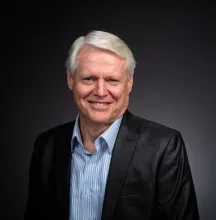
John Elliott serves in the role of President of the United Church of God, an International Association.
