
Ben Light
This sermon was given at the Kelowna, British Columbia 2010 Feast site.
This transcript was generated by AI and may contain errors. It is provided to assist those who may not be able to listen to the message.
Thank you very much for that beautiful piece of special music. That's an extremely moving song and especially effective with acoustic guitar as accompaniment. Thank you very much. That was just very, very beautiful and very, very inspiring.
I'm glad that Mr. Graham, when he came up here, he said that his son is really into dinosaurs, because Mr. Shepherd and I are just that close to being dinosaurs ourselves. It's nice to know there's going to be somebody that's really going to appreciate it when we get there.
I'm not sure what age you become a dinosaur, but I've got to be getting close. I know Mr. Shepherd said that in his opening message that I think it was 47 feet of tabernacles. This is also my 47 feet of tabernacles and it's my wife's 48.
We're all getting up there in age. We're moving on. We certainly are enjoying the feast here in Kelowna. We were actually in Kelowna, not for the feast. The feast was in Penticton. They had the big tent, while you remember that, back in the early 70s. We actually stayed in Kelowna, I think, in 1973, about that time, and communicated between Kelowna and Penticton for the feast. That was a long time ago and I don't remember it.
I don't think there were any wineries here at that time that long ago. It was almost 40 years ago. We were going to be in Panama City Beach this year, but we ended up in British Columbia. This is my home territory. I grew up in the Pacific Northwest, so it's really wonderful to be back here. It's an extremely beautiful part of the country.
It's really nice to be back here in this area and to be keeping the feast in Kelowna. It's just a wonderful spot for a feast of tabernacles. We're telling my son about it. He's in Panama City Beach, but I think he's going to be looking forward to coming up here next year, maybe, because he loves wineries and that sort of thing. It's just a wonderful place to have the feast.
We're thoroughly enjoying it. We almost hate to have to leave tomorrow to go to Saskatoon, although we've never been to Saskatoon, so that'll be an adventure for us as well. How would you define the work of God? What is it? What is it that makes you a part of the work of God?
Is it your tithes and offerings? Does that make you a part of the work of God? What about those who can't give a lot in tithes and offerings? Have you lost your job? Maybe you're struggling financially and you can't contribute a lot and you feel, well, boy, I wish I could give more, because if I could just give more, I could be more a part of the work of God.
Is it our tithes and offerings that make us a part of the work of God? Can someone who can't give much, could only give very little, can they be as much or maybe even more a part of the work of God than somebody who can contribute a great deal financially? What about those who are employed by the church? Somebody thinks, well, if you're employed by the church, then that makes you more a part of the work of God, and maybe somebody who isn't.
Is that true? Can those of you who are not employed by the church be as much or maybe even more a part of the work of God than some who are? See, what is the work of God and what makes you and me a part of the work of God?
And what is the main way that you and I can personally contribute to doing the work of God? Let me ask one more question. We're here celebrating the trumpets. We celebrate the return of Jesus Christ, to become his King of Kings and Lord of Lords, to come and set up his colonial rule for 1,000 years. When Christ returns and sets up the kingdom of God on the earth for 1,000 years, will that then, the work of God at that time, then be completed?
Will that end the work of God? When Christ returns, will the work of God be over? Now, why do I ask that question? Well, I ask that question because in the past, a lot of us, years ago, we'll go back many years, a lot of us do, we would kind of define the work of God from a particular verse, which is actually a prophecy leading up to Christ's return.
Let's begin there. Matthew 24, a very familiar scripture. This is a scripture we often use to define the work of God. Matthew 24, and I'll just quickly begin in verse 3. As Christ said on the Mount of Olives, disciples came to him privately, saying, When will these things be? And what will be the sign of your coming at the end of the age? And one of the signs he gave here is in verse 14, a very familiar verse.
Verse 14 says, This gospel, the kingdom, will be preached in all the world as a witness to all nations, and then the end will come. Now, at times we've kind of defined the work of God in those terms, going before all nations, preaching the gospel to all nations. Should that be the primary definition for the work of God and for doing the work of God?
Certainly can be a part of it, but is that the primary way we should define it and look at it? And if that is the work of God, then the work of God will pretty much be completed by the time Christ returns, because this gospel, the kingdom, will be preached in all the world before Christ returns. It's prophesied to happen here. It will happen. But will that then be the end of doing the work of God?
So again, what is the real work of God and how do you and I really contribute to doing the work of God? That's what I want to address this morning on this third day of the Feast of Tabernacles, 2010. I want to address the questions, what is the work of God and how can you and I best contribute to the work of God? And what is it that really makes us a part of the work of God? So again, my title is, What is the Real Work of God? How should it be defined? Let's ask this question, how does the Bible define it?
How is it defined in the Bible? Can we define it in the Bible? How do God the Father and Christ define the work of God? How is it defined by one of our past presidents? It's very interesting. I kept a letter. A letter I thought was very, very significant, very important that Roy Holiday sent out when he was acting as filling out a three-year term as president some time ago.
The letter he actually wrote, he sent out in 2002, but I found it very, very interesting and very important, so I kept it. In that letter, Mr. Holiday made reference to one of the United's value statements. Here's part of what he wrote. One of the value statements in the United's strategic plan states, we value the relationships that our Father has given us the opportunity to build with Him, with Jesus Christ, with one another, and with all of His creation. Therefore, we value the immutable Word of God, which shows us how to build those loving relationships, and we will strive to live by the laws of God and develop those processes and programs that enable these relationships to grow.
Then he says, Mr. Holiday says, value statements guide how an organization functions. So one of the United's value statements addresses the value we all place and all need to place on our relationships, our relationships with God the Father, our relationship with Jesus Christ, our relationships with one another, and our relationships with all of God's creation, with all people, regardless of who they are or where they are.
Mr. Holiday stated eight years ago, therefore we value the Word of God, which shows us how to build those loving relationships. Then he adds this in this letter. I found this very, very significant. He says, frankly, that is God's work, relationships. His purpose is to bring many sons to glory, Hebrews 2, verse 10, to have as many in his family as would respond to his calling.
It is in this great work that he has given us a role. In doing so, we need to exemplify that humble, cooperative, caring spirit that produces love and growth, the example Jesus Christ showed us during his earthly ministry. Now let me ask you, is that true? Is that the real work of God?
Is the real work of God relationships, in building relationships, in growing in our relationships? Is that the great work that God has given all of us to do? Is that how the work of God grows? Does the work of God grow in direct proportion to how we grow in our relationships with one another? It's an extremely important question to address and answer. Why? Because if this is the real work of God, if the real work of God is growing in our relationships, then you and I become a crucial part of the work of God and how we are growing in our relationships with one another.
You and I have then become a crucial part of doing the work of God as we personally grow in our relationships with one another. If the work of God is relationships, then we become a part of the work of God by exemplifying, for example, humility, as Mr. Hooser said in his message, by exemplifying a cooperative, caring spirit that produces love, the love of God. We then become a part of the work of God and we contribute to doing the work of God through building closer and more loving relationships with one another and with our family.
So is that the real work of God? The work of God, that God Himself is doing and striving to do in each and every one of us whom He has called. Let's take a look at some examples of Scripture. What did Christ Himself tell us? What did He say in regards to the greatest thing that any of us can do? What's the most important thing that any of us can do? See, what is the greatest of all of God's commandments? See, if you could personally ask Christ that question, say, what is the greatest thing I can do to contribute to your purpose and to be a part of your work?
How would Christ respond? Well, we don't have to guess because someone did ask Christ that question and his answer is recorded for us in Matthew 22. Let's turn there to Matthew 22, just a few pages back if you're still in Matthew 24. Again, very familiar Scriptures. Matthew 22, verse 35, and then one of them, a lawyer, asked him a question, testing him and saying, teacher, what is the great commandment in the law? What is the greatest of all of God's commandments? What is the greatest thing any of us could ever do in pursuing God and God's purpose?
What if you come first? What's most important in pursuing God's work and what God Himself is out to accomplish? And Jesus said to him, He answered, verse 37, you shall love the Lord your God with all your heart, with all your soul, and with all your mind.
This is the first and great commandment. Now, stop and think about that for a minute. What is this first and great commandment? What does it have to do with? Does it involve relationship? See, the first and great commandment has to do with our relationship with God, doesn't it? It has to do with relationship. It has to do with our personal relationship with God and Jesus Christ. There's nothing more important than our relationship with God is defined by God's laws.
Verse 36 again, teacher, what is the great commandment in the law? And Jesus said to him, you shall love the Lord your God with all your heart, with all your soul, with all your mind. This is the first and great commandment. Now, what is the greatest of all of God's commandments?
That is, I should say, the greatest of all of God's commandments. What is the second greatest of all of God's commandments? And does that second greatest of all of God's commandments, does that involve relationships? Verse 39, and the second is like it, you shall love your neighbor as yourself.
Does that involve relationships? Of course it does. It involves our relationships with one another.
Now, let me ask this. Do all of God's commandments, all of God's laws, do they all hang on our relationship with God and on our relationships with one another?
Does our future in God's kingdom, as revealed by the prophets, hang on our relationships with God and our relationships with one another? What did Christ himself tell us? Well, he answers that for us in verse 40. He says, on these two commandments, on these two commandments involving relationships, your relationship with God and your relationship with one another, on these two commandments hang all the law and the prophets, God's entire plan and purpose, and everything God himself was out to accomplish hinges on our relationship with God and on our relationships with one another.
Now, Christ also made that abundantly clear by how he answered another question that was put to him. Just go back a couple chapters or a couple pages to Matthew 19. Matthew 19 verse 16.
Matthew 19-16 says, Behold, one came and said to him, Well, good teacher, what good thing shall I do that I can have eternal life? That's a pretty important question.
If you could ask a question to Christ himself, I think that'd probably be a very important question you'd like to ask. What is the most important thing that I can do to ensure my future, to be a part of God's kingdom, to have given the gift of eternal life in your kingdom?
What shall I do that I may have eternal life?
Does the answer that Christ gives here, does that answer have to do with relationships?
Verse 17, So he said to him, Well, why do you call me good? No one is good but one, and that is God.
But if you want to enter into life, keep the commandments. So he said to him, Well, which ones?
And Jesus said, You shall not murder. You shall not commit adultery.
You shall not steal. You shall not bear false witness. Honor your father and your mother, and you shall love your neighbor as yourself.
See, what is the most important thing we can do to ensure our future?
What shall I do that I may have eternal life?
And Christ's answer has to do with relationships. He in essence told the young man that he wanted to inherit eternal life in God's kingdom. The most important thing he could do, and the most important thing he could work on, was his personal relationships with others.
Now, let me ask this, is that a work? Is that a work? Do we all have to work in order to build and maintain close, loving relationships with one another? And must God himself participate in that work? Is that a work that requires the help of God's Holy Spirit? Is that a work that requires exercising the mind of Christ? Do we have to have the mind of Christ working in us in order to accomplish that? In other words, is that a work of God to build and maintain close, loving relationships? Is that a work which God himself is striving to accomplish in each and every one he calls? What did the Apostle Paul say? Turn to Philippians 2, what Paul said in regards to the mind of Christ as it ties into relationships in the work of God.
Philippians 2, verse 5, Christ said, let this mind be in you that was in Jesus Christ.
It was in Christ Jesus. Why do we need the mind of Christ? For what purpose?
For what work? To accomplish what?
Do we really all need the mind of Christ in us in order to accomplish what God wants to accomplish in us? See, why do we need the mind of Christ? What work does God want to accomplish in us by and through the mind of Christ? And does that have to do with relationships?
What did God's Holy Spirit inspire the Apostle Paul to say in that regard right here in Philippians 2?
Philippians 2, verse 1, Therefore, if there is any consolation or any encouragement in Christ, if there is any comfort of love, if any fellowship of the Spirit, of any affection, mercy, fulfill my joy by being like-minded, having the same love, being of one accord and of one mind.
That's quite a handful to accomplish that, isn't it? It takes the mind of Christ in us to do that, to reach that goal. But does that require work, to get to the point that Paul's describing here, just in verses 1 and 2? Does it require work and effort and sacrifice to become like-minded with Jesus Christ? Does it require work to exercise the same love that Christ exercised, for example? To what extent of Christ's love must we have in us?
Does it require work to learn how to love our enemies, to love those who hate us?
To do good to those whose spitefully uses and mistreats us? As Christ commanded in Matthew 5, 44, does it require work to become of one accord, of one mind, with hundreds of others who have different upbringings, different backgrounds, and may think differently than we do in certain areas?
Does that require work? Does it require the work of God and God working in us to do that?
See, you must not die of work in each and every one of us in order to be able to maintain close, loving relationships, especially with those who may differ with us or disagree with us. And is not all of this all about relationships that Paul is talking about here?
Relationships that we must have with one another through the mind of Christ in us.
Verse 3 of 4th Kings 2, you stop and think about these verses, and you think about how easy or how difficult it is to fulfill what Paul is writing here. Let nothing, let nothing be done through selfish ambition or conceit.
Why not? See, why should we let nothing be done through selfish ambition or conceit?
See, what happens if our motives is only for selfish ambition? What happens when we do things out of vanity, only to promote, maybe to protect ourselves?
What does that accomplish? See, what is the result of the work that's accomplished by being motivated by selfish ambition and conceit?
Well, the result is broken or destroyed relationships. When we operate with that motive, then that damages and destroys relationships. Nothing should be done through selfish ambition or conceit because selfish ambition and conceit destroys relationships, destroys relationships we have with one another or damages them. Does building and maintaining relationships require a humble, cooperative and a caring spirit and attitude in the frame of mind? Does it require the mind of Christ? Verse 3, let nothing be done through selfish ambition or conceit, but in lowliness of mind, let each esteem others better than himself.
That's a tall task.
Does that require work? Does it require work to esteem others better than ourselves? What comes naturally for all of us? What comes naturally is for us to esteem ourselves better than others. That's what comes naturally for all of us.
See, humility, lowliness of mind, and esteeming others better than ourselves does not come naturally. That is not our natural inclination. We face certain situations.
It goes contrary to the way our natural, carnal minds work.
See, esteeming others better than ourselves requires the working of the mind of Christ in us, which is what Paul is leading up to here. Verse 4, let each of you look not only out for his own interests, but also for the interests of others. Let each of you put others ahead of yourself.
That doesn't come naturally, does it? To put others first.
To have Mr. Armstrong many years ago define love as an outgoing concern for others, which is what Paul is talking about here, having more concern for others and their best interests than your own.
Promoting and building and helping to maintain post-personal relationships involves esteeming others better than ourselves and putting others ahead of ourselves.
It takes the love of God and the mind of Christ to do that. That's what Paul leading up to, verse 5, let this mind then be in you, which is in Christ Jesus, because that's the only way we can fulfill what Paul is talking about here. Building and maintaining post-personal relationships indeed is the real work of God, and it is a work. It's a work that only God can accomplish in and through us. We can't do it on our own without God's help, without God's Spirit, without the mind of Christ in us. You know, a lot of you many years ago, a lot of us here have been around for many, many years, and years ago we used to have spokesmen's club, and a lot of you men here were probably in spokesmen's club, and I think we had spokesmen's club just about every week. Of course, they taught us the spokesmen's club, how you organize a speech, and had four main components, and one of the components of every speech is supposed to have a specific purpose statement, one statement that would declare plainly what your purpose of your speech was. Where can we find a specific purpose statement for the Word of God? Is there a specific purpose statement for the Word of God, for the entire Word of God? Is there one specific scripture that gives us God's specific purpose statement for what His purpose is, as revealed in God's Word? See, what scripture can we turn to that would give us the bottom line purpose for which God created us? Well, it's fine what you expect to find it. Specific purpose statement always comes at the very beginning of the speech, after a short introduction, and that's really where we find it in God's Word, in the very first chapter of the Bible. Let's turn there and read it for ourselves. Go back to Genesis 1, and then again it's a scripture we're all very familiar with and have memorized. Genesis chapter 1 verse 26.
Here is really God's purpose for His entire Word, for creating mankind. Then God said, let us make man in our image according to our likeness.
See, God, this is really God's specific purpose statement for all of us, to make us into His image and His likeness, to be so we can come like Him. And to complete that purpose requires a spiritual work, it requires a spiritual process, requires the work of God's Holy Spirit in us to transform us into God's spiritual image and likeness. It's tremendous work, and it takes miracles along the way as well, to become like God the Father and like His Son, Jesus Christ. And it takes the work of God's Holy Spirit to convert us, convert our minds, or we can have the mind of Christ in us and be exercising the mind of Christ.
That is a spiritual work. And that ultimately is the real work of God, that God is doing, that God Himself is doing in and through each and every one of us whom He has called at this time.
And that's the work that God Himself set out to do from the very beginning, to make man into His spiritual image and likeness.
Does that specific purpose involve relationships and growing in our relationships?
As you can see, that could be the perfect statement for all of God's Word, but did Christ, in essence, kind of repeat a specific purpose statement that ties into that in the New Testament?
The Christ's Free State, Genesis 1.26, in a way, which tells us how we must grow in our relationships with one another in order to become like God, to become like God the Father and like Jesus Christ. Indeed, He did. Let's turn to the New Testament to John 17. I think we've been there before already, but let's turn there again. John 17. John 17, verse 1. Of course, there's Christ's words here just before He's been betrayed. I often read it Passover, Christ's final prayer to His Father, recorded it here for us, so we can benefit from that personal prayer that Christ had with His Father. Jesus spoke these words and lifted up His eyes to heaven and said, Father, the hour has come. Glorify your Son, that your Son may also glorify you. As you have given Him authority over all flesh, He should give eternal life to as many as you have given Him. And this is eternal life, that they may know you the only true God and Jesus Christ whom you have sent.
And that involves having a close relationship. You can only come to know God and know Jesus Christ through a relationship. You don't know some people who don't have a relationship with Him.
That involves having a close, loving, personal relationship with God and with Jesus Christ to come to know them. And that's the essence of eternal life. If we're going to become like them, we have to know them. Then what does Christ in this prayer, what did Christ specifically pray for?
And did what He prayed for have anything to do with our relationships with one another?
Verse 11 of John 17, He says, Now I am no longer in the world, but these are in the world, and I come to you. Holy Father, keep through your name those whom you have given me, that they may be one as we are. Verse 21, that they may all be one as you, Father, are in me, and I in you, that they may also be one in us, that the world may believe that you sent me.
And the glory which you gave me, I have given them, that they may be one just as we are one, I in them and you in me, that they may be made perfect or complete or mature in one, and that the world may know that you sent me, and have loved them as you loved me.
In essence, Christ here is restating God's specific purpose.
And he's basically restating and completing Genesis 1.26, where it said, Let us make man in our image according to our likeness.
And then we could add what he says here in John 17 verses 22 and 23, Let us make man in our image according to our likeness, that they may be made perfect in one, that they may be one just as we are one, yet that kind of unity become like God the Father, like Jesus Christ. And that work requires what?
What is required in order for us to become one, just like God the Father and Jesus Christ are one?
How can that be achieved? What does it take?
What is required in order for that purpose to be fulfilled and completed?
What must we learn and how must we grow in our relationship with one another become one like God the Father and Christ are one?
First, in our relationship with God, we must come to love God with all our heart, with all our mind, and with all our soul. That has to be accomplished first, as Christ told the lawyer in Matthew 22, 37.
And then secondly, in our relationship with one another, we must learn to grow to love one another as ourselves, as Christ said in Matthew 22, verse 39.
See, the work of God, that God himself is seeking to do in all of us, is to bring us all to spiritual maturity so we can become like God the Father and like Jesus Christ.
So fulfilling God's specific purpose requires growing and maturing in our relationships.
Maturing and growing in our relationship with God, and growing and maturing in our relationships that we all have with one another.
Now, you all know the answer to this, but this just dives the point home even more, how important that is. Who is going to try to keep us from accomplishing God's specific purpose that he has for all of us and all those who he has called?
Did Christ pray here about that, right here in his prayer to his Father?
Do you have that in mind? Did he know who would seek to keep us from accomplishing that goal?
John 17 verse 15, he said, I do not pray that you should keep them out of the world, but I do pray that you should keep them from the evil one.
Now, why would Christ pray that? Especially right here in this particular prayer, just in the context of him praying that we could become one like he and his Father are one.
See, he was the God of this world. We all know this thing.
Satan is the God of this world, isn't he?
Now, we know that God has a work that he's trying to do.
Does Satan have a work? Does Satan have a work that he is striving to do?
What would Satan's work be? Is Satan's work to try to destroy God's work? Does Satan understand from the very beginning that God's work, indeed, was relationships so he could build a family? Does Satan understand that?
Did Satan set out from the very beginning to destroy that work because he knew that was the real work of God? Let's go back again to Genesis. This time to Genesis chapter 3.
The very first thing, after God says, let us make man in our image according to our likeness, and he gives man instructions on what his boundaries should be, so on. Tree of life, the tree of knowledge of good and evil. He states his purpose for man, very beginning, and right off the bat, here comes Satan on the scene, Genesis 3, verse 1. And the serpent was more cunning than any beast of the field which the Lord God had made.
And he said to the woman, as God indeed said, you shall not eat of every tree of the garden. See, the very first thing that Satan set out to do was to destroy Adam and Eve's relationship with God.
Has God said? Hey, you have to do what God says. You must really die, verse 4. See, what else does this verse tell us here in regard to what Satan sought to destroy at the very, very beginning? To whom did God appoint to be responsible for the marriage and the family? Well, God appointed Adam to fulfill that role. But whom did Satan address here? Adam or Eve? He addressed Eve. And he said to the woman, he bypassed the man, went directly to the woman. In so doing, Satan was deliberately and very cunningly setting out to destroy the God-ordained roles of the husband.
Trying to get them confused and off track right from the very beginning. Seeking to destroy the marriage relationship, because Satan knew that was such an important part of accomplishing the work of God so we could become made into God's spiritual image and likeness and become one by a kid in Jesus Christ or one. Now after Satan sought to destroy Adam and Eve's relationship with God, and after he set out to destroy Adam and Eve's relationship with one another, where did he go next?
Whose relationship did Satan seek to destroy next? Next, Satan set out to destroy Adam and Eve's relationship with their children. Satan got keen to give in to his base human passions of envy and jealousy, which then led to animosity and hatred and eventually to murdering his own brother. And that destroyed that first family. Tore it apart, destroyed it. See, Satan immediately went to work to destroy the relationship within the first human family.
Why? Because Satan knew that the marriage and family relationships which God ordained were meant to be a type of the spiritual relationship that he wanted all those whom he was created and called. Satan knew that the proper marriage-family relationship was a physical plane relationship which was meant to model and parallel the spiritual plane relationship we all have with members of God's family in the kingdom of God. He knew that would be the means which he could destroy all of us becoming one, like God the Father and Jesus Christ are one.
Because Satan knew that God's work was to build strong family relationships so mankind could become one, like God the Father and Jesus Christ are one. And destroying family relationships has been Satan's primary goal from the very beginning. That's the first thing he set out to do. And now he knows he has but a short time left, doesn't he? So you think he's going to step that process up? Has he stepped it up? You know, at the present time, Satan is assaulting the family relationship I think probably never before in the history of mankind.
See, how many marriages now end in divorce? How many families are destroyed and devastated by things that go on in our society? How many couples a day don't even think it's important to be married? How many of them think, well, marriage is not that important. We can just live together. We don't need to have any commitment. We don't need marriage. We don't need a covenant of marriage. Satan is the God of this world.
He is the prince of the power of the air. People are tuned into his wavelength instead of God's wavelength. How many children today grow up without a father? How many fathers have deserted their families? How many single mothers are struggling on their own to try to raise their children without a husband? How many children grow up with a single parent, with a step-parent, or in some cases, how many children are being raised by their grandparents?
And then, of course, on top of all of that, how many children are aborted every year? Their life is taken from them before they're ever born? How many families are destroyed or devastated by drug or alcohol abuse?
See, Satan is insulting the family and the family relationship as never before because he knows he has but a short time left. And he knows he's out to accomplish his work, which is to destroy God's work, which is to destroy relationships. If he can destroy relationships, he knows he can destroy the real work of God. And that's what Satan is setting out to do. And you see evidence of that everywhere, not only in our countries here, not in the United States and here in Canada, but across the world, around the world.
And you see that because Satan's work could destroy God's work, and Satan knows that God's work has to do with relationships. Because he knows that God is striving to build his family. Now, let's take that one step deeper.
We're all part of God's church here. Is God's church a family? Is God's spiritual family kind of in its infancy right now? All trying to grow and mature so we can someday become a full-fledged part of God's family? Well, we all know that we are part of God's family, and it's kind of in its infancy. We're growing. We're maturing. We're trying to reach adulthood. But since Satan knows that, he knows that God's church is a family.
It's the infant family of God in the making. Would not then Satan do everything within his power to seek to destroy God's church before it can reach adulthood and maturity? By dividing us and turning us against one another, by destroying our relationships if he can? Would not Satan have a primary work and goal of trying to destroy relationships, especially within the church of God? Since that is his primary work and his primary goal.
Well, you bet. Satan wants to do everything he can to destroy our relationships with one another. Within the church of God. That's why the Feast of Tabernacles is so important. Because it brings us together as a family so we can build strong relationships with one another, we can learn to know one another deeper in a more meaningful way, by spending time with one another. But Satan wants to divide us against ourselves if he can.
Because he knows Christ is not going to marry a divided bride. Or as Mr. Erickson put it yesterday, he's not going to marry a bride, a warring bride, to bride this warring with himself. He knows that the bride of Christ must first learn to be one, as God the Father and Christ are one before he's going to marry that bride. That bride has to be brought to maturity.
Again, that's why the Feast of Tabernacles is so important. But it helps us build those kind of relationships that God wants with one another as part of God's family, and to grow and become one, as members of God's spiritual family. To learn to love one another, to learn to support one another, to get to know one another, to know how to be at peace with one another. Because family relationships around the world are now being destroyed, because that's what Satan's work is, to destroy relationships. Not only individually, but also collectively and nationally. You know, the world does not know the way to peace in their relationships.
The world does not know the way to happy, peaceful, loving relationships with one another. You know, as Isaiah 59.8 tells us, and I'll just quote it, Isaiah 59.8, the way of peace, they know not. They don't know. They don't know how to have peace in their relationships. Satan's got them all confused. He's got them all at war against one another, and divide against one another. And we have to learn the way of peace in our own personal relationships with one another. So we can then teach that way to the entire world when Christ returns.
It's going to be up to us to teach the world the way to have loving relationships and the way to have peace in our relationships, both collectively and individually.
Turn to Micah chapter 4.
Micah chapter 4. The mental scripture here we almost always read. A piece of tabernacles. Now we'll look at it from the point of view of relationships. Matthew 4. Excuse me. Micah 4. Micah 4 verse 1. Begin in verse 1.
Micah 4 verse 1. It shall come to pass in the latter days that the mountain of the Lord's house shall be established on top of the mountains and shall be exalt above the hills, and people shall flow to it. Many nations shall come and say, Come and let us go up to the mountain of the Lord, to the house of the God of Jacob. He will teach us his ways and we shall walk in his paths. For out of Zion the law shall go forth. And the word of the Lord from Jerusalem. Verse 3. He should judge between many peoples and rebuke strong nations afar off. They shall beat their swords and the plowshares and their spears into pruning hooks. Nations shall not lift up sword against nation, neither shall they learn war anymore.
They shall beat their swords into plowshares. You know, not all swords are made of steel.
Our words, our attitudes, our actions, and our own personal relationships can also be destructive swords.
We have to learn the way of peace in our own personal relationships so we can then teach the world that way of peace. And that is the only hope for this dying world that we are now living in, and that is the work of God. That God will not... the work of God that God wants to accomplish in all of us, and that's all of us to learn. And that is why the work of God will not end when Christ returns. Really, when you stop and think about it, the real work of God will begin when Christ returns, because that's when we will have to teach the whole world how to live in proper relationship with one another, exercising the love of God. Because the work of God, as Mr. Holiday said, is relationships.
It is learning how to love one another as Christ loved us. It's learning how to forgive one another as Christ forgives us. It's becoming one with one another as God the Father and Jesus Christ are one and they're relationships with one another.
In conclusion, then, what does all this really mean as far as you and I are concerned? Think about it. Obviously, from God's Word, that is what the work of God is, is God is building a family and we have to become one. We have to become like God the Father, like Jesus Christ in our relationships with one another and with God.
So what does all that really mean as far as we're concerned then? What does it mean in regards to how each and every one of us can contribute to and be a part of the real work of God?
It means we all have an equally important role regardless of our age, regardless of our circumstances.
Whether we can give much in the way of tithes and offerings or whether we can give very little in the way of tithes and offerings, we can still contribute greatly to the work of God and be a part of it. It doesn't matter whether we're employed by the church or whether we're not employed by the church. Regardless of our age or our circumstances, we can all contribute to the real work of God. How? By building and maintaining strong personal relationships within the church of God and without the church of God with others and with God Himself, of course. And we can do it among ourselves and for others, even not yet part of God's church, by praying for one another, by forgiving one another. When you forgive someone, you are contributing greatly to the work of God.
When you do good to someone who may not be doing good to you, you are contributing to the work of God. When you pray for someone, you are contributing to the work of God and you are developing the mind of Christ from the love of God towards that person.
By remaining positive, by remaining joyful during times of trial and despair, you are contributing to the work of God. You are being an example.
By always exemplifying the fruits of God's Holy Spirit in your life and your relationships with others, you are contributing to the work of God.
By exercising gentleness, by being kind, by exercising humility, self-control, love, and relationships, you are contributing then to the real work of God. See, we can contribute to and be a part of the work of God by loving God with all our heart, with all our soul, with all our mind, by doing that first. And then we can contribute to the work of God and be a part of the real work of God by loving our neighbor as ourself, by displaying the love of God in our relationships with others, and in our own personal relationships with one another in God's church.
We can contribute to the real work of God by exercising the mind of Christ so we can become at one with one another as God the Father and Jesus Christ are at one with one another in their relationship. Because, as Mr. Holiday said in that all-important letter he wrote over eight years ago, frankly, that is God's work. That is the real work of God, growing and maturing in our relationships.
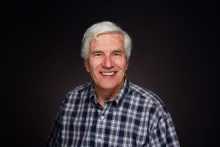
Steve Shafer was born and raised in Seattle. He graduated from Queen Anne High School in 1959 and later graduated from Ambassador College, Big Sandy, Texas in 1967, receiving a degree in Theology. He has been an ordained Elder of the Church of God for 34 years and has pastored congregations in Michigan and Washington State. He and his wife Evelyn have been married for over 48 years and have three children and ten grandchildren.
