

Steve Shafer
This sermon was given at the Branson, Missouri 2015 Feast site.
This transcript was generated by AI and may contain errors. It is provided to assist those who may not be able to listen to the message.
Well, good afternoon, everyone. I want to thank the choir for that just very, very beautiful and very inspiring piece of special music. I don't know if the piece of tabernacle seems like the special music is very, very special, very inspired, very powerful. And then, one appropriate selection for this first Holy Day, you start off this piece of tabernacles here in 2015. It's really great to be back here and even in this auditorium again here with all of you. We were here two years ago, 2013. In fact, I think that was maybe the first year they were using this auditorium, but we were here.
It was in this auditorium. But the day we arrived, coming from Seattle at that time, in Michigan now, we'd move back to Michigan, but we were living in Seattle 2013. We moved there just this past spring from Seattle to Michigan. And the very, very day we arrived, my wife, Evelyn, got a phone call. And we were here to celebrate the feast with her mother, Ruth Mishnick. And we're looking forward to that. And she got a call and found out that the day before they were going to leave, we got here a couple days ahead of time, that her mother died suddenly of a heart attack.
And that made it a little difficult feast for Evelyn and for all of us as part of the family. But it's great to be back here again anyway with all of you again. And the amazing thing is, I don't know if this is God's doing or what, because we didn't ask for the same facility we had before.
We stayed a thousand hills through two years ago, and we had a unit there, and we just put in for a thousand hills again. And we're here with part of Evelyn's family, with a brother and two aunts, aunt Nancy and aunt Margie from Arkansas. And we just put in for a room there. We got the very same room that we had two years ago. The exact same room. A thousand hills, all the rooms they have there. So I don't know if that's a coincidence or not, but it is wonderful to be back here with you.
The Feast of Tabernacles and the Eighth Day are the culmination of God's annual feasts and holy days. This is a very exciting and inspiring time, as we've already heard. It looks forward to and betrays the establishment of God's kingdom on this earth. And as you look around the world today, and all the problems have already been mentioned here, a little bit in the sermonette that we have. Just horrendous problems. They're just getting worse and worse all the time.
How much this world needs the kingdom of God here on this earth, the return of Jesus Christ. But as we've already heard also, this is a time when God wants to bless us, wants us to rejoice, regardless of who we are, regardless of what circumstances we may have at the present time. I know a lot of people are having problems and trials and struggles, and maybe losses of family members and so on.
But regardless of who we are and the circumstances we may find ourselves in, God wants us to rejoice here at the feast, again, as we've already heard. And I'm going to repeat a scripture already used here at the beginning of the feast from Mr. Arnold, Deuteronomy 16. Let's turn. I'm going to read it again, because I think it is so important that it sets the stage for my sermon as well, as it did for his sermonette here just earlier this morning. But Deuteronomy 16, and I want to read the same verses.
I think it's very important, verses, key verses for the Feast of Tabernacles. Verse 13 of Deuteronomy 16, you should observe the Feast of Tabernacles seven days when you gather from your threshing floor and from your winepress, and you should rejoice in your feast. Why don't you rejoice, no matter what your circumstances might be? You and your son and your daughter, your whole family, not just the head of the family, but the whole family.
And even your male servants and your female servants, if they're with you, and the Levite and the stranger. Strangers also could be guests, any guests that might be here. And fatherless, the people who are fatherless, children who have lost their parents. And the widow, the woman who may have lost her husband, who are within your gates. Seven days you keep a sacred feast of the Lord your God in the place which he chooses, because the Lord your God is going to bless you. He wants to bless you in all your produce and all the work of your hand, so that you surely rejoice through in the Feast of Tabernacles.
And again, God even desires that those who have suffered losses, those who are fatherless, maybe, or widows, they rejoice as well, and even strangers. God wants to bless those who've lost a loved one, and even strangers or guests. Because after all, the Feast of Tabernacles portrays a time when God's going to set out to save the entire world. His plan of salvation just starts here with Passover, Unleavened Bread, and so on, carries on through the Fall, Feast, and Holy Days.
But he wants to save the entire world. I want to start with this question. Why did God here in Deuteronomy 16 command us to observe the Feast of Tabernacles? And why does he want all of us here, all of us who can make it? I know a lot of you probably struggle to make it here. But why does he want all of us here, regardless of who we are, regardless of what our current circumstances may be, and regardless of what losses we may have suffered, either recently or over the past year? What does God desire more than anything else?
What is God's greatest desire? What does he desire more than anything else? And what does God's desire have to do with our observance of the Feast of Tabernacles? What does that have to do with why we're all here? That's what I want to take a look at today on this first Holy Day in 2015 Feast of Tabernacles in Branson. My title is, What is God's Greatest Desire?
What is God's Greatest Desire? Let's begin with this question here. When did God first set out to earnestly fulfill his desire? When did he first set out for doing that? We all realize it began with Christ's death and resurrection. But then after Christ's resurrection, what did he do in order to begin to fulfill his desire? He was touched on already quite a bit. Let's go to Acts 2. In fact, he was touched on even the sermon that touched on him very much here, at least right into the sermon.
Mr. Sharp just gave. Acts 2, verse 1, When the day of Pentecost had fully come, they were all with one accord and one place. Suddenly there came a sound from heaven as a rushing, mighty wind, and it filled the whole house where they were sitting. Then there appeared to them divided tongues as a fire, and one set upon each of them. And they were all filled with the Holy Spirit, with the power of God's Holy Spirit, as we just heard. And they began to speak with other tongues or other languages, as the Spirit gave them utterance. So God first began to earnestly fulfill his desire on the day of Pentecost by pouring out his Holy Spirit. And by making it available to a very diverse group of people, when you read this chapter here in Acts 2, made available to a very diverse group of people. These people came in there, and they couldn't all communicate with one another just naturally because they all spoke different languages. They had different nationalities. And they came from various ethnic and racial backgrounds. It says in verse 6, when this sound occurred, the multitude came together and they were confused. Because everyone heard them speak in their own language. They hadn't been able to do that before. They all understood each other. That's how important this was. In verse 8, how was it they said that we hear each one in our own language in which we were born? That we hear and understand in our own language. They only knew their own language, but they could all of a sudden understand other people. Then list various nations and nationalities who are represented here beginning in verse 9. It says, Parthians and Medes, Elamites, those dwelling in Mesopotamia, Judea, Cappadocia, Pontus, and Asia. Phrygia and Phamphilia, Egypt and parts of Libya, joining Cyrene. Visitors from Rome, both Jews and Proselytes, and Cretans and Arabs. We hear them speaking in our own tongues, in our own languages, the wonderful works of God. Then it says in verse 12, so they were all amazed. And they were perplexed, saying to one another, what in the world does this mean? Indeed, what could this mean? It never happened before.
When we read this, we think of it being a miraculous event, which it was. It was a miraculous event. But we think of it as being a miracle of languages, speaking and hearing in different languages, which it was.
But just that miracle that really occurred here, is a miracle that occurred here that even goes on in the world. It goes deeper than that, deeper than the hearing and speaking in different languages. See, what really happened here on this day of Pentecost? What really happened was that God was now beginning to strive to fulfill His greatest desire. And I'll begin on this day of Pentecost. What then is God's greatest desire? First, does this miracle that occurred on the day of Pentecost many years ago, in any way parallel God's church today, and parallel all of us who are here today as part of God's church? Well, today God has called people into His church from nearly every nation on the face of the globe. Many different nations, just like many different nations represented here in Acts 2, He's called a wide variety of people. And it's on that day of Pentecost, those who received God's Holy Spirit come from a wide variety of backgrounds, as all of you undoubtedly do, from different nations. And you look at God's worldwide feasts around the world, they come from different nations around the world, from different ethnic and racial backgrounds, from different classes of society, from maybe those that are more well-to-do, and been blessed in that way financially, maybe, to those who are poor and who struggle just to put enough together to get here, and maybe an old car is just barely held together. We have all levels of society represented here, all classes of society. Many of you just struggled just to get here. So we parallel those in Acts 2, and we are also a very diverse group of people, even as they were. We also parallel those groups of people in another way. As diverse as they were back there in Acts 2, and as diverse as we are here, we all have one thing in common. What was the one thing they had in common? It says in verse 1, I think this is one part of the real miracle that occurred here. In verse 1 it says in Acts 2, they were all with one accord in one place, with one accord in one place, even as we are here in Branson. And I think that is the real miracle that occurred on that day of Pentecost, and recorded back in Acts 2. So a diverse group of people could all be with one accord in one place, all moved there by God's Holy Spirit and by God Himself. How does all this tie into God's greatest desire? And how is it tying with why all of us are here today to be given the service of this piece of tabernacles? Let's find out. There are four scriptures, and there are probably more than four scriptures, and four scriptures I present to you today. Four scriptures which show us God's greatest desire and which each reveal an aspect of God's greatest desire. So let's ask a question and answer a question now. What is God's greatest desire? I want to give you four scriptures to illustrate that. The first scripture which reveals God's greatest desire is found at the very beginning of God's Word. We'll go all the way back to Genesis 1. We want to turn back there to Genesis 1. In a sense, this scripture is God's specific purpose statement for the entire Bible. The first scripture showing God's greatest desire is Genesis 1.26. And just read it quickly here. We're all very familiar with it. Genesis 1.26. Then God said, Let us make man in our image according to our likeness. And that, indeed, is the first aspect of God's greatest desire. To make mankind, to make all of us into his spiritual image and likeness. So we can become like God and so we can become like Jesus Christ.
What would it take in order to accomplish that? Well, as it says right here in the first part of Genesis, it would require partaking of the tree of life and rejecting the tree of the knowledge of good and evil.
So what happened? What happened? Genesis 3, verse 1. The serpent was more cunning than any beast of the field which the Lord God had made. And he said to the woman, Has God indeed said, You shall not eat every tree of the garden? Verse 6. So when the woman saw that the tree was good for food, to feel the knowledge of good and evil, and pleasant to the eyes, and that tree, desirable to make one wise, she took of its fruit and ate, and she also gave to her husband with her, and he ate. And every human being, sin and sin, has followed suit, and thus necessitating the very need for a supreme sacrifice to pay the death penalty of sin, which Christ has now made in our behalf and on behalf of all mankind, once they come to realize it, except that. But now God's Holy Spirit would be withheld until after that supreme sacrifice had been made, other than with a few exceptions in the Old Testament. But why does Satan lie by telling Eve, You shall not surely die? You ought to believe God.
Why do you tell her that? Because Satan has his great desire, too. He has his own greatest desire, and his desire is to thwart or destroy God's plan and purpose for mankind if he can. The last thing he wants is for mankind to be made into God's spiritual image and likeness to become like God and like Jesus Christ. The second scripture showing God's great desire is in 1 Timothy 2. Turn to me to 1 Timothy 2. 1 Timothy 2, and we'll look at the first four verses. 1 Timothy 2, verse 1 says, Therefore I exhort first of all the supplications, prayers, intercessions, and giving of thanks, be made for all men, for kings and all who are in authority, that we may lead a quiet and peaceable life in all godliness and reverence. For this is good and acceptable in the sight of God our Savior. Verse 4, Who desires all men to be saved, and to come to the knowledge of the truth. That then is also a second aspect of God's great desire, to save all mankind and to bring all mankind to the knowledge of the truth. And of course, Christ's Passover sacrifice made that possible for all of us and for all mankind. It made it possible for God to fulfill his desire for all men to be saved and to come to the knowledge of the truth. And there's a third scripture showing God's greatest desire, and this is a difficult one. It's one that many of us struggle with.
It's found in John 17. Of course, we're all familiar with John 17. We read that every year at the Passover. It's Christ's final prayer when he's up there in the Mount of Olives, just before he was going to be betrayed, to be taken and to be sacrificed. He went there alone, off from his disciples by himself on the Mount of Olives, and he gave this fantastic prayer, which is recorded for all of us in John 17. I was going to read a portion of it, John 17, beginning in verse 20, because this shows God's greatest desire for all of us who he has called. That they all may be one, as you, Father, are in me, and I in you. That they also may be one in us, that the world may believe that you sent me, and the glory which you gave me, I have given them, that they may be one, just as we are one. He said, this is God the Father and Jesus Christ, are one and unified. I in them and you in me, that they may be made perfect and one, and that the world may know that you have sent me, and you have loved them as you have loved me.
What does it take to accomplish that? For everybody who has got us called to have the mind of Christ, to be at one and have that kind of unity that God the Father and Jesus Christ have? What would it take for this greatly diverse group of people from all kinds of backgrounds, all kinds of various problems and challenges? What would it take that they may be one, just as God the Father and Jesus Christ are one? What would that take? Well, it would take the mind of Christ in every one of them, wouldn't it? And it would take God's Holy Spirit, the power of God's Holy Spirit that we heard about just a little while ago. On the Day of Pentecost in Acts 2, God began His quest for all of His followers to become one by giving them His Holy Spirit, by giving them just a portion of the mind of Christ that could be developed within them so they could become one. So they could become unified. Regardless of the various backgrounds, regardless of their upbringings and different things that happened to them in their upbringings, regardless of their faults and shortcomings and challenges they face in life, God gave them His Holy Spirit so they could become unified, regardless of their many differences. But to become unified is what?
That brings us to the 4th scripture, showing God's greatest desire, which is also the bottom line when it comes to God's greatest desire. To touch on that, let's go to Ephesians 3.
Ephesians 3 begins in verse 13.
Apostle Paul right here says, Therefore I ask that you do not lose heart in my tribulations for you, which is your glory. Verse 14, For this reason I bow my knees to the Father of our Lord Jesus Christ. And then verse 15, From whom the whole family and heaven and earth is named? See, God wants us to become unified so we can become eternal members of His family.
God wants us to live in His realm as members of His family.
You know, it's interesting, you look throughout the New Testament. Our relationship with God is depicted as being a family relationship.
I mean, just look at how Christ instructed us to pray. And I'll just quote it. He said, as recorded in Matthew 6, verse 9, He said, In this manner therefore pray, our Father in heaven. Our Father. Christ's Father is our Father because God wants us to be a part of His family.
And if God is our Father, and if Christ is the Son of God, which He is, He is God's Son, what does that make us? It makes us God's sons and daughters. It also then makes all of us spiritual brothers and sisters. We're all spiritually related as part of God's family. We're all spiritual brothers and sisters. So the bottom line aspect of God's greatest desire is that God wants to expand His family. He wants to build and expand His family, which is why we're here together to observe the Feast of Tabernacles. So we can all be a part of that family that God wants to build and expand. And we're here to become unified as those called to be members of God's family. So these four scriptures that I just read clearly reveal God's greatest desire. And they give us a glimpse of how God will set out to fulfill that desire. To begin in Genesis 1 with God stating, Let us make man in our image according to our likeness. Will that desire, that specific purpose statement that God made at the very beginning, will that desire be fulfilled? What does the conclusion of God's word tell us? Let's just jump to the conclusion for a moment. Revelation 21, which is very near the conclusion. Revelation 21, let's just look at a couple of verses there. Verse 3, I heard a loud voice from heaven, saying, Behold, the tabernacle of God is with men. God wants to live with His family. Just like we like living with our families. Behold, the tabernacle of God is with men, and He will dwell with them. And they shall be His people. They shall be a part of His family. And God Himself will be with them and be their God and their Father and our Father. Verse 7, He overcomes, shall inherit all things, and I will be His God, and He shall be my Son. God is going to fulfill His desire to build and expand His family. I will be His God, and He shall be my Son. Now that we have seen God's greatest desire, what it is, His desire to expand His family, and share eternity with that family, with all of us, so we can be with our God forever, and so we can be His sons and daughters. Now that we've seen God's greatest desire, let's move on to what this should mean to all of us, that God is called now to be a part of that family, His family. What this should mean to all of us who are here observing God's peace to tabernacles. But first, before I get to that, I want to get to something that I find very, very interesting. I heard a lecture on it a number of years ago. I gave this lecture, actually, in Michigan about six or seven years ago. A man who was an expert on ancient Hebrew, and he gave this lecture, and I thought it sounded interesting, so I went to it. It sounds fascinating. I got all the material I could that he'd written on it, because he's the world expert on attempts at researching ancient Hebrew, or one of the world's experts, anyway. So let me ask this question. What does it mean in ancient Hebrew, not modern Hebrew, but in ancient Hebrew, to be a brother or a sister? What does that mean? Because we're all called to be spiritual brothers and sisters. So what does that really mean? What are brothers and sisters supposed to be?
What is a brother and what is a sister?
What is the Hebrew word for brother first appear? I thought it was fascinating. Let's go back there and look at that. What is the word for brother, Hebrew word for brother, first appear? It appears back in Genesis 4. Let's go back to Genesis 4.
When we look at this very brief section of Scripture here in Genesis 4, we can find deep meaning. Especially if we look at it from God's perspective of striving to fulfill his greatest desire to build a family. Genesis 4, let's begin in verse 1. Just look at the first two verses here a little bit, first of all. Genesis 4, verse 1, Adam knew Eve his wife, and she conceived and bore Cain, and said, I have acquired a man from the Lord, from the Eternal. Verse 2, and then she bore again this time his brother Abel.
Now you can read that. You've probably already read that many times. Let's pause here and think about something that's said here. What's something that's said and what is not said.
Why is Abel introduced to us as Cain's brother? There's a reason for that.
Why not? Then she bore another son and called his name Abel. Could have stated it that way.
She says, God wants us to learn something from the way this is stated. Like how important it is for us to all become brothers and sisters.
In Genesis 4, 2, God is emphasizing that Abel was Cain's brother. Then tells us some of their differences. They had different vocations. They had different likes and dislikes. They had different attitudes toward God. Had different attitudes toward following God. They had different character traits. And they had different emotional makeups. Notice verse 6 and 7. So the Lord said to Cain, Why are you angry? Why are you so full of anger? And why is your continent fallen? Don't you realize if you do well, we want you to be accepted? Regardless of what your brother does? And if you do not do well, sin lies at the door and sin's desire is for you. But you should rule over it. You should rule over sin and that pull that we all have. Especially now we'll notice verse 8. Now Cain talked with Abel his brother, and it came to pass when they were in the field that Cain rose up against Abel his brother and killed him.
Do you all know something there? Something very important in regards to how this verse is worded? Notice what it does not say. It does not say, Now Cain talked with Abel, and it came to pass when they were in the field that Cain rose up against Abel and killed him. That's not the way it's worded. It doesn't say that. It could have stayed that way, but it wasn't. Instead it emphasized that Abel was Cain's brother. Now Cain talked with Abel his brother, and it came to pass when they were in the field that Cain rose up against Abel his brother and killed him.
Why does God truly draw our attention to Abel being Cain's brother here? What does He want us to learn from that? Now notice God's response to Cain in verse 9. Then the Lord said to Cain, Where is Abel your brother?
Why didn't God simply say, Well, where is Abel? Why did He say, Where is Abel your brother? Why did He say that? Cain then replied to God, I do not know. Am I my brother's keeper? Was he? Was Cain supposed to be his brother's keeper? Was the older brother? Was Cain supposed to watch out for his brother and have his brother's best interest at heart? Notice God's response to Cain's question in verse 10. And He said, What have you done? God says to Cain, The voice of your brother's blood cries out to me from the ground. Again, notice what God said and what He didn't say. He didn't say, The voice of Abel's blood cries out to me from the ground. He said, The voice of your brother's blood cries out to me from the ground.
In verses 2, 8, 9, and 10, God emphasizes the word brother six times. But that's not all. Notice verse 11. So now you are cursed from the earth, God tells Cain, which is opened his mouth to receive your brother's blood from your hand.
Not to receive Abel's blood, but to receive your brother's blood. This now being the seventh time in this short section that God emphasized the word brother. So I have to ask why. Why is that emphasized over and over again here? Is there something we should learn from this?
I mean, God's greatest desire is to expand His family by making all the spiritual brothers and sisters. So what is God telling us here? What's He wants us to learn as spiritual brothers and sisters? Here Satan is influencing Cain in the wrong direction. God's greatest desire is to expand His family by making his spiritual brothers and sisters. But here Satan is influencing Cain in the opposite direction. What then does God want us to learn from all this? What are brothers and sisters supposed to be? What should it mean for all of us to be spiritual brothers and sisters?
To look at that a little more deeply, I'd like to briefly touch on the original language of the Old Testament.
The Old Testament was originally written in ancient Hebrew, not modern Hebrew. Ancient Hebrew changed after the fall of Judah during the time we're going between the Old and New Testaments. Ancient Hebrew was changed into what we have today as modern Hebrew.
But ancient Hebrew is a fascinating language. It was what is called a word-picture language. Hebrew alphabet has 22 letters, and each letter of the ancient Hebrew alphabet, not modern Hebrew, but the ancient Hebrew alphabet, each of those 22 letters was drawn to picture something. Because each Hebrew word had a word-picture meaning. You wouldn't have to necessarily get a dictionary to find out what a word meant. You could just look at the pictures of the letters and you could put together a meaning of that word. The Hebrew word for brother is auk, a-c-h, in English.
In ancient Hebrew, a spell was just two letters, aleph, and the second letter is either kett or het. I'm not sure the pronunciation is pronounced either way by different ones. The spell was just two letters, aleph and kett or het. The second letter spelled either c-h-e-t by some, sometimes spelled h-e-t or h-e-t-h.
In fact, it's interesting you can go to Psalm 119. You know why there's 176 verses in Psalm 119? Turn to Psalm 119, your Bible, I'm not asking you to turn there, but if you turn there, sometimes you look. All 22 letters of the Hebrew alphabet are listed in Psalm 119. Verse 1 says aleph. Aleph is the first letter of the Hebrew alphabet. Then it gives eight verses under that. The reason that's done that way is because all eight of those verses begin. The first word of those eight verses begins with the letter aleph. Then it gets verse 9 and says bet, e-t-h. Each of those verses begins with that letter. If you go to Psalm 119 verse 57, you see the letter ket or het. My Bible is called he-t-h, which is the eighth letter of the Hebrew alphabet, which is the second letter in the word for brother. Aleph is the first letter of the Hebrew alphabet. It's very interesting that ancient Hebrew is very similar to our English letters. You could almost say that our English letters were derived from ancient Hebrew. Many of them. Aleph is the first letter of the Hebrew alphabet. It was drawn to picture the head of an ox with a yoke. It corresponds to our capital letter A. Take our capital letter A and just take that point of the A and you point it this way right towards the number 8 would be on a clock. You take that horizontal line and just draw it a little bit past the other two lines. You have the letter aleph. That's what was drawn in ancient Hebrew. It was drawn to picture the head of an ox. Aleph is also the Hebrew word for ox. As you know, the ox was the work animal of the ancient world. It was used for plowing the field. As such, aleph pictured or symbolized strength for what is strong. That's what it symbolized in ancient Hebrew. That's what an ox is. Ox is very strong. The second letter, the Hebrew word for brother, is, like I say, cats spelled C-H-E-T or also spelled H-E-T or H-E-T-H. This is in Psalm 119 verse 57. It was the eighth letter, the Hebrew alphabet. It was drawn very similar to our capital letter H. You just take our capital letter H and you draw another horizontal line toward the top of the H and one at the bottom of the H. So you've got two vertical lines and three horizontal lines. That was how the letter Het was drawn in ancient Hebrew, very similar to our letter H. Now, if you think of that, if you think of an H with three horizontal lines, what does that picture to you? What was it supposed to picture? It pictured a fence.
Even like our letter H could almost picture a fence today. What would Het or Het picture in a fence symbolize? What does a fence do? What is the purpose of a fence? A fence protects and guards your property. Thus the letter Het or Het, the second letter in the Hebrew word for brother, symbolizes protection. What, then, is a brother in ancient Hebrew? What is the ancient Hebrew word picture meaning of the word for brother, spelled aleph Het? Aleph pictures strength of what is strong, and Het or Het pictures protection. Thus a brother in ancient Hebrew is pictured as being a strong protector. A strong protector, strong guardian, strong fence, first line of defense. For the word picture meaning of the Hebrew word for brother answers Cain's question, Am I my brother's keeper? Should I guard and watch out for and protect my brother and have his best interests at heart? The answer, yes, he should have. Because a brother should be a strong protector, a strong guardian, a strong fence. If Cain had really been a brother to Abel, what happened in Genesis 4 wouldn't have happened. By the way, the Hebrew word for sister is akoth, which is simply the feminine form of ak, the Hebrew word for brother. So a sister and a brother basically have the same meaning in Hebrew. Sisters also portrayed or pictured as being a strong protector. So what does it mean in ancient Hebrew to be a brother or a sister? It means to be a strong protector. A strong protector of one another. Strong protector of the family. What does all this have to do with us?
Let's go to the book of Hebrews. Let's go to Hebrews 2.
Hebrews 2 begins in verse 6. Well, the writers of Hebrews say, But one testified in a certain place, saying, Hebrews 2.6, What is the man that you are mindful of him? Or what is the son of man that you take care of him? You have made him a little lower than the angels. You have crowned him with glory and honor, and set him over the works of your hands. You have put all things and subjection under his feet, quoting there from Psalm 8, verses 4 through 6.
Now let's drop down to verse 10. For it was fitting for him, for whom are all things, and by whom are all things, and bringing many sons to glory, to make the captain of their salvation perfect through suffering, and of course to Jesus Christ. For both he who sanctifies and those who are being sanctified are all of one, for which reason he, Jesus Christ, is not ashamed to call them brethren, saying, I will declare your name to my brethren. In the midst of this symbol, I will sing praises to you, quoting there from Psalm 22, verse 22, I will declare your name to my brethren. And the Hebrew word for brethren, back in Psalm 22, 22, from which this is quoting, is auk, the Hebrew word for brother. So Christ, who has suffered for us and set us apart in spite of all our shortcomings, is not ashamed, he says, he's not ashamed to call us brethren, to call us as members of his very family, as being his brothers and sisters. He's not ashamed to call us his brothers and sisters, because God's greatest desire for all of us has become eternal members of his family. Now the Greek word, let's look at the moment of the Greek word, is also quite interesting. The Greek word translated brethren here in Hebrews 2.12 is used in reference to the followers of Christ in the New Testament about 240 times. So much as emphasized that we're part of God's family, who can call for that purpose. Spiritually, then, we are all brothers and sisters in Christ. Even as the apostle Paul tells us, turn to Colossians, chapter 1. Let's go to Colossians, chapter 1. Just look at the first verse, a little bit of the second verse. Colossians 1, verses 1 and 2. Colossians chapter 1, verse 1. Paul says, Paul, an apostle of Jesus Christ by the will of God, and Timothy, our brother. One of the 240 times this word is used in reference to the followers of Christ. And Timothy, our brother, and to the saints and faithful brethren, or brothers in Christ who are in Colossae. Timothy, our brother, to the saints and faithful brothers in Christ. Of course, we're all to be faithful brothers in Christ, aren't we? With Christ as being our elder brother, which means what? See, what is a brother? A brother is pictured as being a strong protector.
With Christ being our elder brother, he is our strong protector. He's going to protect his family. He's going to protect his brothers and sisters. Christ is our strong protector. If we're following him and if we're just trying to display his mind and his love toward one another. See, all who are striving to truthfully follow Christ in accordance with God's will are spiritual brothers and sisters. As Christ himself tells us, notice Matthew 12. I'm sure you've all read this many, many times, but maybe look at it again. See something very important here. Matthew 12, beginning in verse 46.
While he, while Christ, was still talking to the multitudes, behold, his mother and brothers stood outside, seeking to speak with him. Seeking to speak with him. Then one said to him, Well, look, your mother and your brothers are standing outside. They want to speak with you. How did Christ respond to that? Christ is speaking spiritually. He's thinking of all of you, all of us. Verse 48, but he answered and said to the one who told him, He said, Well, who is my mother? And who are my brothers? Who are they?
And he stretched out his hand towards all of his disciples. Like if he was here, he stretched out his hand to all of you. He would say, Here are my mother and my brothers and my sisters. Here is my family.
Here are my mother and my brothers. For whoever does the will of my Father in Heaven is my brother and my sister and my mother.
Since we are all spiritual brothers and sisters, should we not also then be each other's strong protectors?
Should we not all be watching out for one another and pulling for one another, as though it's called to be a part of God's family? You know, look at blood, brothers and sisters. They tend to do that, don't they? They'll stick up for one another, regardless of their differences. They may fight, may disagree at times. But if someone even verbally attacks your brother or sister, you will probably come to their protection and their defense. That happened to me one time. I was shocked. I had a dispute with my brother-in-law one time. I won't go into it, but my sister, who was married to him, she stood up for me. All of a sudden, she came to the defense of her brother in a very dramatic way, which I won't go into. It's a long story. It all worked out in the end, but I was amazed.
See, brothers and sisters, they stand up for one another. They protect one another. They'll defend one another. A lot of brothers and sisters do that. They stand up for one another in spite of their differences. Why? Because that is what a brother is, and that is what a sister is. Brothers and sisters are a strong fence. They are strong protectors of the family and of one another, or they should be.
God's great desire to expand his family. He wants to bring many sons and daughters to glory, as we already read. And he wants all of us as his sons and daughters to be spiritual brothers and sisters. Let's look at three proverbs relating to a brother.
I'll begin to wind down here, but I won't go on for a little bit longer. Let's look at three proverbs relating to a brother. First one is Proverbs 17, verse 17. You may read this, and wonder, what does this really mean? Proverbs 17, verse 17, which says, A friend, a true friend, a true friend loves at all times.
And then the other part of verse 17, it says, And a brother is born for adversity.
What does that mean? A brother is born for adversity. What is a brother? A brother is supposed to be a strong protector. In times of adversity, we need a strong protector sometimes. And in times of adversity, we ourselves need to be a strong protector for somebody else. See, what does it mean, a brother is born for adversity? True brothers and sisters are God's gift during times of trouble. They're there to give you help, to give you love when you might need it, when you think you've lost everything, you're down, to give you encouragement, to give you protection during times of confusion, adversity, to be there for you and to help you when everything may seem to be going against you. That's when you need a brother. You need a strong protector to be there for you. Protect and uphold your faith, help you to uphold your faith, to help strengthen your faith during times of doubt and confusion, to help strengthen your resolve, to never quit, to never give up. Hang in there! I know this is a sore trial. I know you're very discouraged right now, but God will see you through it. He'll work it out. Don't give up now. Hang in there. Never return back. Never lose faith. A brother is born for adversity. In other words, a brother is born for times of adversity to help you, to help out another brother or sister.
Why? Because a brother is a strong fence, a strong protector. A second proverb that deals with a brother, just on the page over here, Proverbs 18, verse 24.
Proverbs 18, verse 24. A man who has friends must himself be friendly. But there is a friend who sticks closer than a brother. There are friends who can become like true brothers or sisters, who will be there to stick by you and to help you and encourage you and to be with you through any and all times you may be facing, who you can confide in for help without fear of being wrongfully judged, who will tell you things straight to help you. You can always turn to in a time of need, and you can then become your strong defenders and protectors of your faith.
You know, that is why God hates those who may try to weaken or destroy the relationship between spiritual brothers and sisters. And that takes us to the third proverb I want to look at, dealing with a brother. Let's go back a little ways to Proverbs 6.
Proverbs 6, verse 16. We'll start in verse 16. It starts out saying six things that God hates, and then he adds a seventh. And as you go through these six things, you can obviously see why God hates these first six things. But the seventh may surprise you. Proverbs 6, verse 16. Six things the Lord hates. Yes, but there's also a seventh. There are even seven that are abomination to him. One, a proud look. We can understand that. Pride leads to a person's fall. God hates a proud look. He hates a lying tongue, number two. You can understand why he would hate a lying tongue. That destroys your character. He hates hands that shed innocent blood. Four, he hates a heart that devises wicked plans. Five, he hates feet that are swift and running to evil. And six, he hates a false witness who speaks lies. But then notice the seventh one. Even seven God hates, they're abomination to him. He hates one who sows discord among brethren. Why? Why does God hate one who sows discord among brethren? Because God's greatest desire is to expand his family, to build and expand his family. And sowing discord destroys the family relationship. It destroys it. It works absolutely against God's greatest desire.
What was the very first thing Satan set out to do to thwart God's plan for making man into his spiritual image and likeness? What was the first thing he did? Ties directly here to point seven. The first thing Satan did was he sowed discord between Cain and Abel so he could destroy their family relationship.
The first thing Satan did was to destroy the family relationship, which is what Satan is still all too successfully doing today. You think about it, look around the world, look at the United States of America, look around the world. Satan is destroying family relationships by the millions.
Brothers and sisters should always be pointing for one another, and they should never allow anything to turn them against one another.
How does the Feast of Tabernacles relate to all of this? We begin by reading Deuteronomy 16, how God desires for entire families to rejoice at the Feast of Tabernacles. Even those who have suffered losses, like the fatherless and the widow, he wants those who have lost family members to gain new family members, thousands of new family members.
He wants all of us to become members of his family.
What will that be likened to? What is that likened? Revelation 21.
Revelation 21, this is alluded to already here in the Feast, but Revelation 21, verse 7, He who overcomes shall inherit all things, and I will be his God, and he shall be my Son, as we already read. But the cowardly, unbelieving, abominable, etc., etc., here, will have their part in the lake which burns with fire and brimstone, which is the second death. Then verse 9, Then when the seven angels who had the seven bowls, filled with the seven last plays, came to me and talked with me, saying, Come, I will show you the bride, the lamb's wife.
Becoming members of God's family is likened to a wedding feast. So God can then go on to greatly expand and build his family. So God can continue his quest to fulfill his greatest desire. How can we make ourselves ready to help God in fulfilling his greatest desire? How can we make ourselves ready to do that? One way we can help is by striving to become true brothers and sisters, to become strong protectors and supporters of one another, by loving one another even as Christ loved us.
But of course we all realize in this world we now live in, and right now, spiritually speaking, we have an enemy who will do everything within his power to thwart God's plan and purpose. And true brothers and sisters are God's answer to Satan's attempt to weaken or divide God's spiritual family, because a true brother or sister is like a strong fence, like a strong protector, a strong guardian against Satan. Now, is the Feast of Tabernacles laid to all of this? It relates to all this, but it happens to all of us to grow together as a part of God's family, to all begin to get to know one another as true brothers and sisters, to grow together as a family, as a family of God, as a family of true brothers and sisters. So we can uphold, protect, defend, and be there for one another, through maybe very troubling times that might be ahead of us. We don't know what we're going to have in the future, what does next year bring in the year after that? We don't know. The world is full of trouble, and that trouble could be at our doorstep by just a tenth that could happen very quickly. And all those who are part of God's family are going to need to be there for one another, to help one another through those times that may lie ahead of us. Becoming a true family of believers is what the Feast of Tabernacles and the Kingdom of God is really all about. And that is God's greatest desire, to transform us into true family of believers. So we can become eternal members of His family. In conclusion, then, what is God's striving to accomplish by bringing all of us together here to observe the Feast of Tabernacles? He is striving to fulfill His desire to build and expand His family. This is a family feast with emphasis on becoming a spiritual family. Utilize the time we have here to draw closer together to one another, get to know one another as a family, because that is God's greatest desire. His greatest desire is for all of us to become eternal members of His family.
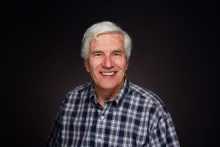
Steve Shafer was born and raised in Seattle. He graduated from Queen Anne High School in 1959 and later graduated from Ambassador College, Big Sandy, Texas in 1967, receiving a degree in Theology. He has been an ordained Elder of the Church of God for 34 years and has pastored congregations in Michigan and Washington State. He and his wife Evelyn have been married for over 48 years and have three children and ten grandchildren.
