
Steve Shafer
This transcript was generated by AI and may contain errors. It is provided to assist those who may not be able to listen to the message.
I want to talk a little bit about the situation in the world right now, especially here in the United States, but even in the world. Especially what we're seeing in the United States. We're seeing more and more division, animosity, hatred, and even violence. In fact, I don't know if I've seen this much of violence and hatred and animosity in my lifetime. It's what's taking place right now, even here in our country, and other places around the world as well. I don't think there's ever been a time that I could look at and see, and I've been around for the church for almost 50 years. In fact, I've actually been in the church over 50 years. I don't think there's ever been a time when you look and see, boy, the world really needs the kingdom of God more than ever. As portrayed by, as we brought out here in the sermon, at Mrs. Stewart and her upcoming Feast of Tabernacles.
But the situation in the United States, there's so much division right now, it's almost and I hope this isn't the case, but it's almost over on the verge of a revolution. I don't know. It's just, it's horrible. But today, I don't want to look at the situation in the world. I want to look on our calling, and I want God's desires from all of us, which ties in directly to God's feasts and holy days, especially the Feast of Tabernacles.
You know, God the Father and Jesus Christ made great sacrifices on our behalf. God the Father sacrifices only begotten Son, as we read there in John. And Christ was willing to give up His glory and His standing as God to come down here to be a human being. And He sacrificed His life to pay the penalty for our sins so that we could then have the opportunity to be given the gift of eternal life.
So what about you and I? I mean, you and me. What about you and me?
Is there a sacrifice that we can make, or that we need to make?
What would that sacrifice be, and what would be the purpose for making that sacrifice?
See, the world today is very deeply divided. And again, here in the United States, we are very deeply divided as a country, as a nation, probably more so than I can remember, in my lifetime. And you also, I look out and I say, what about the churches of God? What about the spiritual body of Christ? Any division there?
What about, even in some cases, individual congregations? I don't see that here, but there is division of some congregations, even.
Wouldn't it be great if we could all just live together in peace and harmony and unity and have that?
Wouldn't that be wonderful?
That's what I'd like to focus on today. How can we achieve unity, and what will it take in order to accomplish that?
And is there a sacrifice that we can make to help bring that about?
How can we personally be involved in helping to bring that about?
One of the main definitions of the word sacrifice is this. The act of giving up something valued for the sake of something having a greater value.
See, what must we sacrifice or give up that has greater value that we can give up for the sake of unity?
That's what I want to focus on today. If you want a title of my sermon here this afternoon is, What Sacrifice Must We Make For The Sake Of Unity?
What sacrifice must we make for the sake of unity?
I want to begin going back to the Psalms. There's a very interesting series of Psalms that follow Psalm 119.
And I want to begin with one of those Psalms. It's called a song. There's some Psalms there after. They're called Psalms of Ascent.
Psalms of Ascent. I want to start with a song of Ascent of David.
Following Psalm 119, there is a grouping of 15 Psalms, each labeled as being a song of Ascent.
Why are they labeled that? What's that mean? What's that mean?
Those 15 Psalms of Ascent are Psalms 120 through Psalm 134.
Now, the Hebrew word translated as sense literally means going up, going up or sending up.
This Hebrew word also in Scripture also designates and is translated as steps.
So it could be the song of Ascent, or if translated as another place of Scripture, it could be the song of steps.
Either it's the correct translation.
Now, the original intent, if you go do a little bit of research, the original intent of that is really unknown. But there are two common theories.
And this is the first theory, the most common theory, is that the Ascent refers to going up to Jerusalem.
We just read, I think the second Psalm we just read, going up to the of the Lile, going up to the mountain of the Lord, going up to Jerusalem, going up to the mountain of the Lord, to the temple mountain, which is the highest spot in Jerusalem.
So the Psalms of Ascent, they were assigned, as they were going up to the feasts in Jerusalem.
Jerusalem being the highest elevation in the Holy Land, and the temple or the Temple Mount of the House of God being the highest elevation in the city of Jerusalem. That's where the Temple Mount is, what's called Temple Mount, because it's the highest spot in Jerusalem.
So most feel these 15 songs of Ascent or songs of the Ascent were thus sung as the Israelites traveled up to Jerusalem for the feasts, especially with the Feast of Tabernacles, to observe God's festivals.
In Psalm 122, the third psalm of Ascent seems to indicate, and especially in verse 4, we've got one of the third psalms of Ascent, which indicates that that's what it means, going up to Jerusalem to keep the feasts. Let's notice Psalm 122, again being the third of these psalms of Ascent. This is a psalm of Ascent of David. There were four of these psalms of Ascent of the Trib where, in verse 4, this seems to indicate this is talking about ascending up to Jerusalem, where the tribes go up, the tribes of the world, where the Israelites went up there to the Temple Mount, and then to the House of God, and then up to Jerusalem. Why don't you go up to Jerusalem to absorb the feasts? Because Jerusalem is the highest elevation in the Holy Land.
And this is where the tribes went up, where they ascended.
So most feel that these 15 sets lead up to the main, 15 steps I should do, were people going up to Jerusalem to worship God at His festivals, which is what we all do when we go up to the Feast of Tabernacle. We go there to observe God's feasts in the Holy Days.
Now, that was the first thing that means going up to Jerusalem, which is the highest spot in the Holy Land to observe the feasts. The second theory is that since there were 15 steps leading up to the main, the 15th theory is that these were 15 steps leading up to the court of the Temple, to the main court of the Temple.
These 15 songs were then progressively sung on each of these 15 steps.
The theory was that going up to the actual Temple, there were 15 steps, and these were semi-circular steps, and they would go up. The first step they would sing the first song of the sabbath, then you go the second step and sing the second song. So it would be a choir that would sing that on each of these progressive 15 steps, and it would have got up to the Temple.
That's the second theory. But today, as we focus on this subject of unity, I want to begin with the 14th of these 15 songs of the ascents.
So let's go to Psalm 133.
Psalm 133 is the 14th of these 15 songs of the sense, and it's the 4th of these songs of the sense that says, the song of the sense of David. It's the 4th of those four.
But the 14th, overall, of the 15th.
The song of the sense of David.
Then verse 1. As I said, the subject of this day is unity. I want to begin with this psalm. Be old how good and how pleasant it is for brethren to dwell together in unity.
So the fourth of the four psalms of the sense of David, among these 15 psalms of the sense, focuses on the joy of brotherly unity among God's people. What a joy it is if everybody has unity, especially among the people of God's spiritual temple.
The joy of this unity is then likened to precious oil and the dew of hermon, in verses 2 and 3.
Then it ends in verse 3, by showing what this kind of unity will lead to, that it will lead to the result in life forevermore, end of verse 3.
Thus indicating to us that being able to come to unity and have unity is a matter of salvation, because you can learn to have unity, at least for life forevermore.
God brought his family to be unified. He doesn't want divided people in his kingdom.
God has commanded a blessing for brethren who learn to dwell together in unity. It says, the Lord commanded the blessing of life forevermore, verse 3. Now, it's interesting, you don't see this in English, but there's a key word in this psalm, which can easily be missed in our English translations, which appears three times in the Hebrew. It's the Hebrew word, yarad.
It appears twice in verse 2, where it is, the whole place of the word appears in verse 2, it's rendered running down in the New King James, running down. In verse 3, it is rendered descending, running down and descending. A deeper meaning, which this can indicate, is, you analyze, think about it spiritually, is it goodness and blessing? He's since mentioned here, in the blessing of life forevermore, they come down or descend from God. Well, God is the one that gives those blessings. He's the one that gives the blessing of life forevermore. He's the one who gives goodness and blessings. That goodness and blessings that get to be eternal life come from God above. They descend down from God.
Now, many feel David may have composed this psalm when the tribes of Israel agreed to unite under his leadership. You know, there was a United Kingdom at one time. Israel was united. Let's go back and read that. Let's go back to 2 Samuel, Chapter 5. 2 Samuel, Chapter 5, and I'll begin in verse 1.
Then all the tribes of Israel came to David, to Hebra. This David is about to be king. And again, for during the reign of David, there was a United Kingdom, and I think under Solomon as well. Then all the tribes of Israel came to David at Hebra and spoke, saying, We are your bone and your flesh. We're united with you, David. Also, in time past, when Saul was king over us, you were the one who led Israel out and brought them in. And the Lord said to you, You shall shepherd my people Israel and be ruler over Israel, and bring them together and unite them under your rulership. Therefore the elders of Israel came to the king at Hebron, and King David made a covenant with them at Hebron before the Lord. And the united king, excuse me, the united David king over Israel. David was 30 years old when he began to reign, and he reigned 40 years. In Hebron he reigned over Judah 7 years and 6 months, and in Jerusalem he reigned 33 years over all Israel and Judah. He united them together. All Israel and Judah then became united under King David's leadership. They became a united kingdom.
So some feel that David wrote this song of the sands here that we just read there. Psalm 133, at this particular time, is how good and how pleasant it is for brethren to be all together in unity, with everybody united together. So under King David, Israel became a united kingdom, and they prospered greatly as a result.
And as we read in that psalm, behold, how good and how pleasant it is for brethren to be all together in unity as it was during the reign of David for the most part. Now for people in Old Testament times, this psalm was understood in a sense of national unity for the nation of Israel. Today we in God's truth should understand it on an even deeper level, as having spiritual brotherhood through God's Holy Spirit.
Isn't that great? And how pleasant it is to have the spirit of unity by means of God's Holy Spirit working in each and every one of us, to bring us together and be a part of God's family, to be one family under God, under God's Spirit guiding direction. Now there's two similes used here in Psalm 133, verses 2 and 3. Precious oil, verse 2, and dew, verse 3. Of course oil and water, which dew is water.
Oil and water both can represent God's Holy Spirit in Scripture. And is God's Holy Spirit sent down and given to us by God that can transform us into His holy people? It only comes to us that only God's Spirit can unify us. And by using God's Holy Spirit, can we all dwell together in unity? Well, what does dwelling together in unity really mean? What does it really mean?
Does it mean we all have to think alike? Does it mean we all have the same views on everything? Well, let me ask it this way. I'm quoting Scripture now. This is a question direct from Scripture. Can two walk together unless they are agreed? Well, that question is asked and answered by God Himself in the book of Amos. We were really close to it just a moment ago, but let's just go to Amos.
I was going to say, we were in Job, and now we just want to march a book over to Amos. Let's go to Amos 3. Amos 3, beginning in verse 1. Hear this word, The Lord hath spoken against you, O children of Israel, against the whole family, which are brought up from the land of Egypt, saying, You only have I known of all the families of the earth. And in this context, it's not that He only knew Israel.
I only had knowledge. We're going to talk about it in different ways. You can look at verse, it can be used. But what it means here is, you only have I chosen of all people. God had a special relationship with Israel. Of all people on the earth, He chose Israel and Abraham's descendants, Israel. So really, the meaning is, you only have I chosen of all the families of the earth.
Therefore, I've given you a special covenant, as Blaine brought out in the sermon, and so if you don't follow that covenant, you're going to have to receive some consequences. I'll punish you for all your iniquities. But then He asks this question, verse 3. Can two walk together unless they are agreed? Well, God answers His own question with four follow-up questions, all of which have an obvious answer, verses 4 and 5. Can two walk together unless they agree? Then He answers that by asking four questions, but they have an obvious answer.
Will a lion roar in the forest when he has no prey? Will a young lion cry out of his den if he has caught nothing? Will a bird fall into a snare on the earth where there is no trap? Will a snare spring up from the earth if it has caught nothing at all? Well, the answer to all four of those questions are no. No, no, no, no. So then the answer, then, I guess you've got here, is, can two walk together unless they are agreed?
The answer would be no. But yet we know that there are no two individuals on the face of the earth who agree on all things. Is there? Evelyn and I have been married now for just over 50 years. I thank God. And we have not always agreed on all things. She's always right. But no. What is God then really telling us here? Well, we don't have to guess.
We have already read the answer in verse 1. See, what two parties is God talking about here in Amos chapter 3? Verse 1 tells us, the two parties God is referring to here are the children of Israel and God. So to walk with God and to be in harmony with God and to have unity with God, we have to be in agreement with God.
That's what this is talking about. But that still begs this question. Can two human beings walk together unless they be agreed? What does that think? And the answer to that question is, yes, they can. Very couples know that. If we're willing to pay the price, that is, and if we are willing to make the proper sacrifice.
See, what price must we pay to have unity with one another as human beings? And what sacrifice must be made for the sake of unity? So I want to get now out to the bottom of the line, and then I want to talk about. And that is, what sacrifice must we all be willing to make in order to achieve unity among ourselves? See, to achieve and maintain unity when we don't always agree on all things, there is a cost and there is a sacrifice we have to make.
What is that cost and what sacrifice must we make for unity? See, what must we be willing to give up in order to achieve and maintain unity? You know, you look at the world around us, we need to find that out, and that should be an example of that, because the world around us, they desperately need to find unity. And someday we're going to have to teach them how to achieve it and how to find it, so they can have peace.
The world needs to learn from us as its future leaders when it comes to how to achieve peace and unity. Christ's final prayer to His Father, just before He was taken to be condemned, is very interesting. We read this every time we pass over John 17. We read His final prayer. You notice one thing He emphasized in that prayer? He prayed for unity among His followers, among His disciples and all His future followers.
Let's go there to John 17. We'll just look at a couple of verses, because we read this every year at Passover. But John 17, verse 11, this is Christ's prayer. It's an important prayer that God preserved it for us. Christ said, now I'm no longer in the world, but these are in the world. He's up there on the Mount of Olives praying, knew He was about to be taken and condemned, and go through what He went through.
I'm no longer in the world, but these are in the world. And I come to you, Holy Father, keep through your name those whom you have given Me, that they may be one as we are. They may achieve the same unity that I have with you, Father. Verse 21, that they may all be one as you, Father, and Me, and I, and you, that they also will be one in us. But the world may believe that you sent Me, and the glory which you gave Me, that I have given them, that they may be one just as we are.
And if I say over and over again that they can have that same unity that Jesus Christ had with His Father. I and them, and you and Me, that they may be made perfect and one, that the world may know that you have sent Me, and have loved them as you have loved Me. Now, just prior to these words, Christ said this, John 17, verse 20, I do not pray for these the one that were there to hear Him.
The time He was working with us right there at that time, two thousand years ago, He said, but I also pray for this oneness, for this unity, for those who will believe in Me and do their word. His future followers are going to believe in Christ, through their word, as all of us are here two thousand years later.
We're part of that group. So Christ prayed that all His future followers would somehow learn how to be one, how to live in unity and harmony with one another. Jesus, He and His Father are one. Now, we all read this every year at the Passover, emphasizing that we all are part of one spiritual body. But why did Christ emphasize and pray for unity for all of His future followers? Why did He emphasize that so much in this prayer? Why is that so much on His mind? Because Christ knew that there's an enemy.
He knew there were Satan's there. And He said, we're going to do everything He could to influence God's followers, Christ's followers, in any way He could to bring this unity and turn them against one another, divide them, because He knows division can destroy. So He knew His disciples would have to be strong enough spiritually so as to not be enforced by the Prince of the Power of the Air, so to speak.
That His disciples would have to be kept away from the evil one. John 17 verse 15. I do not pray... This is on His mind, too, because He knew this is where the source of disunity comes from.
I do not pray that You should take them out of the world, but You should keep them from the evil one. Keep them from His influence, because He's the one who's going to try to disrupt unity and destroy them and divide them. And you look over the past history of the world, leaving the Church to some degree, you see, Satan's had a certain amount of success.
So how can we resist Him? What does it take, I should say, in order to be kept from the evil one, as it says here? Let's go to 1 Peter 5, and these are all verses we're familiar with. 1 Peter 5, verse 8, where Peter addresses this, he says, Be sober, be vigilant, because your adversary the devil walks about like a roaring lion, seeking whom he may devour.
Seek and whom you divide and conquer. How it can turn people against one another. It says, resist Him. Remain steadfast in the faith, knowing that the same sufferings are experienced by your brotherhood in the world. Everybody has to go through this experience. They all have to learn how to live together in unity and how to resist Satan from dividing them.
How can we resist Him so we can then remain steadfast in the faith? Going back here in 1 Peter 5 to verse 5 and 6, just before this, says, Likewise, you hunger. This is getting right to the heart and core of what it takes now. 1 Peter 5, verse 5, Likewise, you younger people submit yourselves to your elders. Yes, all of you be submissive to one another and be clothed with humility.
For God resists the proud, but He gives grace and favor and blessings to the humble. Therefore, verse 6, humble yourselves under the mighty hand of God, that He may exalt you in due time. See, we resist Satan and remain steadfast in the faith by being clothed with humility, by humbling ourselves under the mighty hand of God. What does it take in order to be clothed with humility? What does that require? How do you bring that about? What does it really mean? The sacrifice we almost make for the sake of unity is to be clothed with humility. That is the sacrifice we have to make. There can be no lasting unity without humility. It takes humility.
See, humility is a price we must all pay in order to achieve unity, but what does humility mean? I mean, humility requires a sacrifice, but what way do we have to sacrifice in order to acquire humility and be clothed with humility? See, to be humble requires giving up something that is near and dear to us. What would that be? So now that we know that humility is a sacrifice we must all make in order to achieve unity, let's take that to the next level by asking this. Why would humility be a sacrifice? Why is humility a sacrifice? To answer that question, let's go to the example of Jesus Christ. Let's look at the example of Christ.
What did Christ sacrifice, what did Christ give up, in order to exemplify humility? Remember that Peter wrote, to this you were called, Christ left us an example that we should follow in his depths. 1 Peter 2.21. So we need to look at what Christ did to humble himself, and we have to do the same thing. Let's go then to Philippians 2. Philippians 2 and begin in verse 5. Because we have to follow Christ's example, we have to have his mind in us in order to accomplish what it takes to make that sacrifice that will result in humility that can result in unity. Philippians 2 verse 5, let this mind be in you which was also in Christ Jesus. Verse 6, who being in the form of God did not consider robbery to be equal with God. But he made himself of no reputation, taking the form of a bondservant, and coming in the likeness of men, and being found in the appearance of a man, he humbled himself and became obedient to the point of death, even the death of the cross. So what sacrifice then did Christ make, and what price did he pay in order to humble himself? What did he give up in order to exemplify true humility? Let me read this again. I just want to read it as his paraphrase in the Living Bible. Living Bible paraphrases it this way. I think it's very apt the way it paraphrases it. This is paraphrased of Philippians 2 verses 5 to 8 in the Living Bible. Your attitude should be the kind that was shown by Jesus Christ, whose all he was God did not demand and cling to his rights as God.
But he laid aside his mighty power and glory, taking the disguise of a slave, and becoming like men. And he humbled himself even further, going so far as actually to die a criminal's death on a cross.
These verses here clearly show a surprise that Christ paid for unity and the sacrifice he made in order to humble himself. They also then clearly show us the sacrifices we have to make in order to truly humble ourselves. They show why humility, and they show why humility is a sacrifice. Now, in humbling himself, Christ sacrificed three things. And to achieve unity, we must also humble ourselves by making the same three sacrifices. And these two sacrifices are found right here in these two verses, in Philippians 2 verses 7 and 8.
So that's what we're going to be from now. We're going to concentrate on that, to expand on these two verses and what they mean. Number one is that he made himself of no reputation, or some margin's habit. He emptied himself of his privileges. Or again, his loving Bible paraphrased it. Though he was God, he did not demand and cling to his rights as God.
So in humbling himself, the first thing Christ sacrificed was his rights as God. He sacrificed those rights. And the privilege and the reputation he had as God, he sacrificed all of that. It'll be our Savior. See, to attain unity, we must be willing to make the same sacrifices. We must be willing to give up our rights, or what we feel are our rights.
I'm just taking this down to a human level for us now. We obviously ought to do the same things Christ went through, but to put it on our level, in principle, we must give up our rights, or what we feel is right at times, in order to have unity. We must not demand or cling to everything that we feel is right. Now, I want to clarify something here, because I'm not talking about the trunk of the tree here. We're not talking about the tent of man. Obviously, we cling to that. Those things are absolute. But we're talking about little things, that people can divide people, twigs, little branches, things that are not matters of salvation. And those are things you lead to divide people. About things that may not clearly be spelled out in God's word. About things that don't really matter in the long run, or about things that we really can't change one way or the other. Sometimes we want to cling to little things, because we feel, I know I'm right, and it can cause division. If we push too far. That's all right. You can cling to it in your mind, but to try to force it on others, that's where it becomes a problem. So, at times we must sacrifice and not cling to how we may feel about certain things, or in a way whereby we insist that others see things and understand things the way we do. That's what causes the division. If we assist, they see things the same way, understand things the same way.
We all have strong feelings. I wish everyone by themselves is okay. It's natural for all of us to have strong feelings about certain things. But don't expect everyone else to feel the same way, or have the same feelings. Even when it comes to God's word, the possible said, now we see through a glass of dark light. Now I know in part, 1 Corinthians 13 and 12, in time God's going to clear up all things, and give us understanding of all things. But right now, everything isn't perfectly clear to all of us. But until then, our attitude must be that, shown to us by Christ, who, though he was God, did not demand and cling to his rights as God. So that is the first sacrifice Christ made, and the first sacrifice we have to make for the sake of unity. To have that kind of humility, he is going to lead to unity. One of the second sacrifices Christ had to make when he humbled himself, says, Christ took on the form of a bondservant. Or, as the Logan Bible paraphrases it, Christ laid aside his mighty power and glory, taking the disguise of a slave. As a second prize, Christ paid for humility, and the second sacrifice he was going to make. He gave up his power, gave up his glory, gave up his majesty, and his position of authority. And though he is our master, as we know Christ is our master, and though he is our master, he came instead in the disguise of a slave. Of course, we know he died as a slave, and he died a slave's death. Now, we won't have to die as Christ did, but we must be willing to take on the form of a bondservant. That is also a prize we must pay in a sacrifice we have to make at times in order to obtain the kind of humility that can lead to unity.
However, our own natural minds are inclined to go the opposite direction. The natural mind wants to be master. It wants to be in control and wants to hold on to a position of power if it can't, if it has that. It doesn't usually want to lead, yield to somebody else, and serve somebody else for a time when necessary.
We want to work things out. We want to use it. People want to promote their own interests and their own ideas and their own understanding rather than yielding to others. But you know, you have to be willing to yield at times to others. Just let it go. God's going to rip it out. He's the judge. He knows everybody's hearts. He'll take care of it. He's going to resolve everything in time.
But you know, he took the form of a bonzer or a slave. See, a slave has no such power to demand any rights. A slave has no rights. A slave has to cry out to God and put matters into God's hands and then patiently wait on God for the answer to freedom of that slavery.
A slave has no rights to demand anything. A slave has to cry out to God, which is what Christ did. Christ took on the form of a bondservant and laid aside his mighty power and glory, taking the disguise of a slave. That's the price Christ paid for humility, and that is the price we must also pay at times. And the sacrifice we have to make sometimes in order to obtain the kind of humility that will lead to unity. Now, what was the third sacrifice that Christ had to make when he humbled himself for the sake of unity? It says he became obedient to death. Well, yeah, we have to be obedient to the rest of our whole lives, whatever that may be, right until the day we die. That's true. But the 11 Bible paraphrase this way, he humbled himself even further, going so far as actually to die a criminal's death on a cross. He didn't just die. He didn't just become obedient to death. He actually died as a criminal. And he was crucified as a criminal, as a traitor to Rome, to enter the world. It was a terribly, terribly wrongful death. Nobody died a more wrongful death than Christ did. He was perfect. He never sinned. He never did anything wrong. He never broke one of God's laws, not even in its intent.
Did he die as a criminal? Now, we're not going to die like that, but there is a price for mis-pay and a sacrifice we have to make for the sake of unity. What price is that and what sacrifice is that? So, in principle, then, what sacrifice did Christ make here that does apply to each and every one of us, even though we're going to have to die, as he died, hopefully. But the point is, he was willing to suffer wrongfully. He committed no sin, did nothing wrong, nothing to deserve anything that he went through. He was willing to suffer wrongfully. That was the third price Christ paid for humility and the third sacrifice he made. He was willing to suffer wrongfully. So then I have to ask him, what about myself? What about you and me? Are we willing to make that same sacrifice? See, in order to attain the kind of humility that can lead to past and unity, that is the price we must also be willing to pay at times. There are times when we have to be willing to suffer wrongfully and then put it into God's hands. I can't really change it. I can't do much about it. And if I do, it's probably going to cause more problems. So I'm going to put it in God's hands. God knows that people's hearts. He knows that wrongful suffering people go through. He knows how unjust things are in this world and how people treat each other wrongfully. Put it in God's hands. In due time, he's going to work it out. He's going to bring all things into justice. But it's very difficult. One of the most difficult things for us to do is to suffer wrongfully. That's hard. But at times it is necessary. It's one thing to suffer wrongfully when you can do nothing about it. That happens sometimes. That, by itself, is extremely difficult. But what's quite another matter is to go so far as to willfully and deliberately allow ourselves to suffer wrongfully, as Christ did. He allowed it deliberately, for our sake, to go through that kind of suffering, to be the penalty for that. It's very difficult to willingly want to give up what we feel is right for the sake of the group, for the blessing and benefit of achieving and maintaining unity. It does also a price we must pay at times and sacrifice we must make to obtain the kind of humility that will lead to unity. Again, it says, he humbled himself into further going so far as actually to die a criminal's death on a cross.
That is the price, excuse me, the price I should say, that Christ paid, the additional sacrifice he made. And sometimes we have to make that same sacrifice. We must be willing to, for the sake of unity, sometimes to suffer wrongfully and put in God's hands. We must sometimes be willing to also suffer wrongfully. And even as the Apostle Peter finally tells us that... Let's turn one more scripture here. We'll have one more after this, but let's go to 1 Peter 2.
Peter understood that. 1 Peter 2.
1 Peter 2, beginning in verse 18.
He says, Servants, be submissive to your masters with all fear, not only to the good and the gentle, but also to maybe those who are harsh. It's very hard to be submissive to because they don't rule properly.
And sometimes you have to suffer wrongfully because of that wrong kind of rulership over you.
He said, This is commendable because of conscience toward God. One endures grief, suffering wrongfully, if you can endure it, and put in God's hands. He says, God looks down and He says, Wow, there's somebody who really is using my Holy Spirit. I'm willing to suffer wrongfully and put in my hands. I need to work things out.
Because none of us can know that other persons' heart or what they've been through or why they may be that way, but God does.
For what credit is it if when you are beaten for your faults and you take it patiently, but when you do good and you suffer, you suffer wrongfully for it, and you take it patiently, He says, Wow, that's really commendable before God. I say, Wow, that's my son. That's my daughter. He's fallen in Jesus Christ. I want to suffer roughly just like Christ did and put it in my hands. For to this you were called, because Christ also suffered. He suffered wrongfully for us, believing us an example that we should follow in His steps. And yet He committed no sin nor deceit ever found in His mouth. When He was reviled, He did not revile in return. When He suffered, He didn't threaten back or try to take matters into His own hand or work things out. Instead, He committed Himself to Him who judges righteously, He committed Himself to His Father. We have to commit the whole thing to God the Father Jesus Christ, who judges righteously, who judges people's hearts, who knows their background, who knows what may have made them that way the way they are. Who Himself bore our sins in His own body on the tree. But there's a high price to pay, a difficult sacrifice to make for the kind of merely that will lead to unity. It takes also a great deal of faith, because you have to just put it in God's hands knowing that God's going to work it out. He knows the best answer and the best solution. It takes a great deal of faith that God will work out all things to the good in the long run. To those who love God, Romans 8, 28. Those in are three things Christ sacrificed in knowing Himself. He made Himself of no reputation. He took on the form of a bond server, and became obedient to death. He was willing to suffer wrong for Him. So in how many ourselves we have to be willing to make those same three sacrifices for the sake of obtaining lasting unity. Who's in today's world? You know, it's a very, very divided world. Very deeply divided. Right here in the United States today, I've never seen more division than we have right now here in the United States.
So the world and you, the people in the United States, God's people, they desperately need to have teachers who can show them how to live in peace and harmony and unity. Portrayed by the upcoming Peace and Tabernacles, which, you know, that's one of the reasons we go to the Peace and Tabernacles for one week, for eight days. We have unity. Nobody's worried about this, that, and the other thing. We just go there to worship God and be inspired, and we all live together in unity. Come from various backgrounds, doesn't matter what background, what ethnicity, where we lived, or even what church group we might be a part of.
In Peace and Tabernacles, we all experience that kind of unity as we reserve it. For eight days, we all live together in unity. That's one of the most valuable lessons any of us can ever learn, how to live together in peace and unity and harmony in our relationships. But there are sacrifices we must make to achieve that. But if we can learn the kind of humility that will lead to unity, this is going to be the result. So I want to conclude now where we begin. I want to include with the 14th Song of Ascent, this one, the Song of Ascent of David, Psalm 133. Let's just end by reading all Psalm 133. A song of Ascent of David. Behold, how good and how pleasant it is for brethren to dwell together in unity. It is like the precious oil upon the head, running down on the beard of Aaron, running down on the edge of his garments. It is like the dew of Herman, descending from the mountains of Zion. For there the Lord commanded the blessing, the blessing for achieving unity, life forevermore.
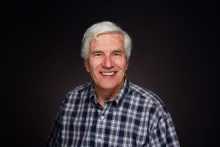
Steve Shafer was born and raised in Seattle. He graduated from Queen Anne High School in 1959 and later graduated from Ambassador College, Big Sandy, Texas in 1967, receiving a degree in Theology. He has been an ordained Elder of the Church of God for 34 years and has pastored congregations in Michigan and Washington State. He and his wife Evelyn have been married for over 48 years and have three children and ten grandchildren.
