
Steve Shafer
This transcript was generated by AI and may contain errors. It is provided to assist those who may not be able to listen to the message.
Well, I appreciated Mr. Stussman's sermonette, and it kind of leads into my sermon a little bit here, because, talking about conditions for salvation, I'm going to add one more to it.
Those are all, of course, good conditions, but I'm going to add a fourth one in my sermon here this afternoon. But today, as we look around the world, it's hard to watch the news, actually. If I watch it for a short time, then usually go to something else. But today we're seeing more division and animosity and hatred and violence, and I think I can never remember in my lifetime, especially here in the United States.
But I don't think there's ever been a time when the world has more needed the Kingdom of God, as it does right now. And, of course, the Kingdom of God is being portrayed by this upcoming Feast of Tabernacles that we'll soon be observing here, not too long from now. But the situation is so bad here in the United States, you look at it and you wonder, are we on the brink of a revolution? I don't know. I hope not. I hope that's not the case. But you see all the demonstrations of violence, it's hard to watch and hard to imagine where we are. But today, I don't want to look at the situation in the world, I want to look at something else. I want to look at our calling, and I want what God desires from all of us, which ties in directly to God's Feast and Holy Days, and especially to the Feast of Tabernacles, when we look forward to God's Kingdom coming down here to the earth. But God the Father and Jesus Christ have made great sacrifices on our behalf. Of course, we know God the Father sacrifices his only begotten Son, and Jesus Christ only gave up his glory, and he sacrificed his life to pay the penalty for our sins, so that not only we could be saved, but the whole world eventually could be saved and have that opportunity for salvation. But is there a sacrifice we need to make? What might that be? And what would the purpose for making that sacrifice be? You know, the world today, as we look, is deeply divided, and now here in the United States, it's so sad to see the division here in the United States. The United States is deeply, deeply divided, more than I've ever known in my lifetime, although I do believe. But then I want to look spiritually at the overall churches of God.
All of God's people might have God's spirits regardless of what corporate body they might be a part of. Look at all of God's people, all the churches of God. Are there any divisions there?
What about individual congregations? Any divisions in individual congregations?
You know, wouldn't it be great if all of God's people, regardless of who they are, where they are, what corporate body they're a part of, wouldn't it be great if we could all live in perfect harmony, unity with one another?
Well, that's what I want to focus on today. How can we achieve unity? And what will it take in order to accomplish that?
And is there a sacrifice that each and every one of us, as members of the spiritual body of Christ, is there a sacrifice each and every one of us can make that will help bring that about? One of the main definitions of the word sacrifice is this.
The act of giving up something valued for the sake of something having a greater value.
The act of giving up something of value for the sake of something having a greater value.
Now, you think of that, and then you have to ask this. What must we sacrifice or give up for the sake of unity? Unity is a great value. It's a great value to be able to have unity with one another as members of God's family.
But what sacrifice might we give up for that sake of having unity, which is a greater value than what we might have to sacrifice to achieve that? That's what I want to focus on today. The title for my sermon here this afternoon is, What sacrifice must we make for the sake of unity? What sacrifice must we make for the sake of unity?
I want to begin by going back to the Psalms of Ascent, they're called. You know, Psalm 119, as we know, is the longest Psalm in the Psalms, in the longest chapter in the Bible. 176 verses, and that's because there's eight verses, each devoted to one letter, the Hebrew alphabet, and there's 22 letters in the Hebrew alphabet, so 22 times 8 equals 176. That's why there's 176 verses in the book of Psalms, Psalm 119, I should say. But following Psalm 119, there is a grouping of 15 Psalms, each labeled as being a song of ascents.
Those Psalms are Psalm 120 through Psalm 134.
The Hebrew word translated as sense literally means going up.
That Hebrew word elsewhere in Scripture can also designate steps, and is sometimes translated as steps.
In the original Hebrew, there is a definite article, so it could be properly translated as the song of the ascents, or the song of the steps. Now, you can do a bit of research. The original intent of all that is really unknown, but there are two common theories.
The first theory, which is the most common theory, is that the ascents refer to going up to Jerusalem, to the mountain of the Lord, so to speak, and to the Temple Mount.
Jerusalem being the highest elevation in the Holy Land, and the Temple Mount, or where the House of God is, or where the Temple Mount is, being the highest elevation in Jerusalem, or where it was, at least, where the Temple Mount is, anyway. There's no temple there right now.
But most of these fifteen songs of ascents, or songs of the ascents, were thus sung as the Israelites traveled up to Jerusalem to keep the feasts in holy days, especially to keep the feasts to the tabernacles, that they would sing these fifteen psalms as they were traveling up going to the feast. As Psalm 122, which is the third psalm of ascents, seems to indicate, especially in verse 4, let's turn there, let's begin there in Psalm 122, which is the third psalm of the ascents, or psalm of ascents. Psalm 122, it says here, because you look at Psalm 120, 121 is the song of ascents. Psalm 122 says, the song of ascents of David, and of these fifteen psalms of ascents, four of them say psalms of ascents of David. And this is the first of those four. They're among these fifteen. A song of ascents of David, verse 1, I was glad when they said to me, let us go into the house of the Lord. Our feet have been standing within your gates, O Jerusalem, and Jerusalem is built as a city that is compact together. Will the tribes go up? Someone's talking about ascent. Will the tribes go up? The tribes of the Lord. So that verse 4 indicates that one meaning of the psalms of ascents was to go up to Jerusalem, keep the feasts. But there's also a progressive theme in these fifteen psalms of leaving the present evil world to join and worship God's temple in Zion. Because that's what we do when we go to the feasts of Tabardaz. We kind of leave this world behind for eight days and go up to worship God. Now the second theory is that since there were fifteen steps leading up to the main court of the temple, that these fifteen songs were progressively sung on each of those fifteen steps as they were about to enter the court of the temple. And the fifteen steps, according to some, were in the form of a semi-circle. So there would be a number of priests and so on, and the singers would stand on that first step in the semi-circle and sing the first psalm of the sin. Then they'd go up the second step and sing the second psalm as they progressively tried to go up to the court of the temple. That's the second theory. But today, as we focus on the subject of unity, I want to begin with the fourteenth of these fifteen psalms of ascents.
Or the fourteenth of these psalms of the steps, if you will. This is also the fourth and final psalm of the ascents of David. This is the fourth and final psalm of one of those. That's psalm 133.
So let's turn to psalm 133, where it says, A song of ascents of David. Verse 1, again, the subject is unity. It says, Behold how good and how pleasant it is for a brethren to dwell together in unity. So this fourth of the four psalms of ascents of David, among the fifteen psalms of ascents, focuses on the joy and unity that can be had among God's people, among the people of God's spiritual temple.
How can we dwell together in unity, part of God's spiritual temple? Then the joy of this unity is likened to precious oil and to the dew of hermit, in verses 2 and 3 of this three-verse psalm. Then it ends at the end of verse 3, by showing what kind of unity this kind of unity will lead to. It says it will lead to and resolve in life forevermore. So you think about that and analyze it and think about it.
This also then indicates to me that learning how to achieve unity is a matter of salvation. Because if you have to learn how to achieve that kind of unity, it says that they will get the Be-blessing life forevermore, eternal life. So it is a matter of salvation. God doesn't want people in his family, in his kingdom, that are divided against one another. They can't get along. They can't see eye to eye. They are pitted against one another. He wants everyone in his family to be unified. So God has commanded a blessing for the brethren who learned to dwell together in unity, for their Lord commanded deep blessing in life forevermore.
Verse 3. Now there is a key word in this psalm which can easily be missed in our English translations because this particular word that can be missed in our translation but appears three times in the Hebrew is the word yarad, Y-A-R-A-D. It appears twice in verse 2 where it is rendered both times. It is rendered running down. In verse 3, that same word is rendered descending. So a deeper meaning, which this could indicate, is that goodness and blessing and the gift of life forevermore, once you achieve unity, comes down or descends from above. It comes down or descends from above.
That goodness, blessings, and the gift of eternal life come from God. They come from God above. Many feel that David may have composed this psalm when the tribes of Israel agreed to unite under his leadership when he became the king. Let's just take a look at that. It's interesting to look at.
Let's go back and read that. Just five verses or so back there in 2 Samuel. 2 Samuel 5. You can read that in 2 Samuel chapter 5, the first five verses. 2 Samuel 5 verse 1. It says, Then all the tribes of Israel came to David at Hebron, and they spoke, saying, Indeed, we are your bone and your flesh.
Now, is it David? We are unified behind you as a king. We're a part of you. We're behind you 100%. We're unified with you. We are of your bone and your flesh. We're together with you. We're going to stand behind you as one. Also, in time past, verse 2, when Saul was king over us, you were the one who led Israel out and brought them in. And the eternal said to you, You shall shepherd my people Israel, and be ruler over Israel.
Therefore, all the elders of Israel came to the king at Hebron, and King David made a covenant with them at Hebron before the Lord. And anointed David king over Israel. David was 30 years old when he began to reign, and he reigned 40 years. In Hebron, he reigned over Judah 7 years and 6 months. And in Jerusalem, he reigned 33 years over all Israel and Judah. In other words, under King David, he became a unified kingdom. He reigned over all Israel and Judah as a unified kingdom. And they prospered greatly as a result. Under David, and being unified. That's what happened when you have unity, you prosper.
Behold, how good and how pleasant it is for brethren to dwell together in unity. Now, for the people in the Old Testament times, this psalm was understood in the sense of national unity. Psalm 133 I'm talking about now. But today, we in God's church understand it on an even higher level, or deeper level, if you will. As having spiritual brotherhood through God's Holy Spirit, and having spiritual unity. That's what is for us. We want to achieve spiritual unity as members of God's family. There are two similes used here in Psalm 133, verses 2 and 3. Precious oil, verse 2, and dew, verse 3.
Oil and water, dew, both can represent God's Holy Spirit in Scripture. And it is God's Holy Spirit sent down, given to us by God from above, that can transform us to be His special people, and to be unified as His special people. But only by using God's Holy Spirit can we all dwell together in unity. It has to be from God's Spirit.
It has to come from above, from God. But what does dwelling together in unity really mean? Does it mean we all have to think alike? Does it mean we all have to have the same views about everything? Let me ask it this way, according to Scripture that we're going to turn to now. Can two walk together unless they are agreed? Well, that question is asked and answered by God Himself in the book of Amos. Let's turn to the book of Amos.
Isaiah, Joel, Amos, something like that, and the minor prophets. Let's turn to Amos 3. Begin in verse 1. Amos 3, verse 1. Hear the word that the Lord has spoken against you, O children of Israel, and against the whole family of which I brought up from the land of Egypt, saying, You only have I known of all the families of the earth. Therefore I will punish you for all your iniquities. Now, in the context here, you only have I known really means you only have I chosen of all the families of the earth. God's relationship with Israel was an exclusive relationship back at that time. He'd only chosen Israel. They were His special people. He was chosen to have a relationship with Israel, the people of Israel, the descendants of Abraham, Isaac, and Jacob. But God then asked this question in verse 3. Can two walk together unless they are agreed?
And God answers His own question with four follow-up questions, each of which have an obvious answer. Verse 4, again, can two walk together unless they are agreed? Then He answers that by asking four questions. Will the lion roar in the forest when he has no prey? Will a young lion cry out of his den if he has caught nothing? Will a bird fall into a snare on the earth where there is no trap for it? Will a snare spring up from the earth if it has caught nothing at all? Obvious answers are no, no, no, and no. So then we ask the question, can two walk together unless they are agreed? And the obvious answer from this would seem to be no. No, they can't. And yet, we do know, there are no two individuals on the face of the earth who agree on all things. Not even a husband and wife. Evelyn and I have been married for over 50 years now. And there have been a number of things we have not agreed on. But we do dwell together in unity.
What then is God really telling us here in Amos 3? We don't have to guess. We have already read the answer in verse 1. Because we have to ask this question. See, what two parties is God referring to here in Amos 3? The two parties God is referring to here are, one, the children of Israel, verse 1, and two, God. Children of Israel and God are the two parties. So to walk with God and to be in harmony with God and to have unity with God, we must be in agreement with God in God's Word.
But that still begs this question. What about human beings? Can two human beings walk together unless they be agreed? And the answer to that is, yes, they can. It's possible. How's and why's do it all the time? While they do it during the course of their marriage, others do as well. Those of us here, we can all walk together, but we don't always agree on all things. So we can. But here's the other point. We have to be willing to pay the price, and we have to be willing to make a proper sacrifice in order to do that. For human beings to walk together in unity, they have to pay a price, and they have to make a sacrifice.
What price must we pay?
And what sacrifice must we make for the sake of unity? So let's get to the bottom line. What sacrifice must we all be willing to make to achieve unity?
To achieve and maintain unity when we don't always agree on all things? There is a cost, and there is a sacrifice that we all must be willing to make. So what is that cost, and what is that sacrifice?
There's something we must be willing to give up in order to achieve and maintain unity. What is it? You know, the world is greatly... You look at the world today, and it's greatly, greatly divided. The world desperately needs to learn how to dwell together in unity.
We're going to be the future leaders of the world. That's what God called us to be. What does the world need to learn from all of us as its future leaders when it comes to achieving peace and unity?
Christ's final prayer to His Father, just before He was taken to be condemned, He prayed for unity, for His disciples and for all His future followers. I mean, that's interesting. Here's His prayer, and what's He praying for? But this is not something that God can do by fiat. We have to be eager participants. We have a part to play. But notice Christ, He did. He prayed for unity. That was one of the main things He focused on in His final prayer.
He gave up there in the Mount of Olives before He was crucified. John 17, we're all familiar with that prayer. We read it every year at the Passover. Let's just look at a few verses here in John 17, in Christ's final prayer. He gave up there in the Mount of Olives in that evening, and He was condemned on that evening of the Passover.
John 17, verse 11, He said, Now I am no longer in the world, but these, my disciples, my followers, they are in the world, and I come to you, Holy Father. Excuse me, I come to you. Then He says, Holy Father, keep through Your name those whom You have given Me, that they may be one as we are, that they can achieve the same unity that I have with You, Father, and You have with Me.
Verse 21, I do not pray for these alone, these disciples right here that I have been working with the last three and a half years, these alone, but also for those who will believe in Me through their word, down through the ages, that they also may be one, as You, Father, are in Me, and I in You, that they also may be one in us, that the world may believe that You have sent Me. And the glory which You gave Me, I have given them, that they may be one, they may be unified, just as we are, just as we are unified. I in them and you in Me, that they may be made perfect in one, and that the world may know that You have sent Me, and have loved them as You loved Me.
Now, just prior to these words, Christ said this, chapter 17, verse 20, I do not pray for these alone, who are right here with Me at this time, but also for those who will believe in Me through their word, down through the ages, all of Christ's followers down through the ages, even up to our time today. So, Christ prayed that all of His future followers would also learn how to be one, just as He and His Father are one. Again, we all read this every year at the Passover, emphasizing that we are part of one spiritual body, that we are all part of one spiritual family, the family of God.
But why did Christ emphasize and pray for unity for all of His future followers? Why was that such an important part of this prayer? Because Christ knew that Satan would do everything within His power to disrupt and destroy unity any way He could. He knew His disciples would have to be strong enough spiritually so as to not be influenced by the prince of the power of the air, as He's called. His disciples would have to be kept away from the evil one.
Notice verse 15. John 17 verse 15, He said, I do not pray that you should take them out of the world, but that you should keep them from the evil one. Because right now, Satan is still the God of this world, and he's trying to destroy unity, if he can. But what does it take in order to be kept from the evil one? What does that take? Let's let Peter answer that for us in 1 Peter chapter 5. Turn to 1 Peter chapter 5, last chapter in 1 Peter. 1 Peter 5, and first we'll read verses 8 and 9. 1 Peter 5 verse 8. Well, Peter wrote this because he understood he had to fight this at his time.
Be sober, be vigilant, because your adversary, and everybody's adversary, our human beings aren't our adversary. Satan is. Be vigilant because your adversary, the devil, walks about like a roaring lion, seeking whom he may devour. Resist him. Be steadfast in the faith, knowing that the same sufferings are experienced by your brotherhood in the world.
Then the question becomes, how can we resist him, and how can we then remain steadfast in the faith? Faith, I should say. Excuse me. Well, he answers that in the previous two verses, verses 5 and 6. Here's the answer. Likewise, you younger people, submit yourselves to your elders. Yes, all of you, be submissive to one another. Everyone. We should all be submissive to one another. And honor one another and value one another as if we have ideas and views when we can. Be submissive to one another and be clothed with humility. For God resists the proud, but he gives grace and favor to the humble. Therefore, humble yourselves unto the mighty hand of God, that he may exalt you in due time. We resist Satan, and we remain steadfast in the faith by being clothed with humility.
And by humbling ourselves unto the mighty hand of God. What does that take? See, what does it take to be clothed with humility? You can't just go to your closet and put on something. What does it take to be clothed with humility? What does that really mean? The sacrifice all those must make for the sake of humility is to be clothed with humility. That's the sacrifice we have to make, but... And there can be no lasting unity without humility. So humility is the price we all have to pay in order to achieve unity. And humility does require a sacrifice.
It requires giving up something. To be clothed with humility requires giving up something that is near and dear to us. What would that be? Now that we know that humility is the sacrifice we all must make in order to achieve unity, let's take that to a deeper level by asking this. And this is an interesting question. Why is humility a sacrifice?
Why do you have to give up or achieve humility? Let's look at the example of Christ and find the answer to that. What did Christ sacrifice? What did Christ give up in order to exemplify true humility?
Remember what Peter wrote in 1 Peter 2 verse 21? I'm just going to quote it. 1 Peter 2 21 Peter wrote, To this you were called, Christ left us an example that we should follow in his steps. And he left us an example of how to achieve true humility. No one humbled himself more than Jesus Christ did.
Let's go to Philippians 2.
Very familiar scriptures. Again, I'll read these when I pass over as well. Philippians 2 verses 5-8. Philippians 2 5, very familiar scripture. Let this mind be in you, which is also in Christ Jesus, who, being in the form of God, did not consider it robbery to be equal with God. But he made himself of no reputation, taking the form of a bondservant, and coming in the likeness of men. And being found in appearance as a man, he humbled himself, and became obedient to the point of death, even the death of the cross. So what sacrifice did Christ make, and what price did he pay, in order to humble himself? What did he give up, in order to exemplify true humility? I want to read these verses again, this time as they're paraphrasing the Living Bible, which I think is very clear, and I think it's correct as well, bringing out the meaning. This is Ephesus 2, verses 5-8, and it's paraphrased in the Living Bible. Your attitude should be the kind that was shown to us by Jesus Christ, who, though he was God, did not demand and cling to his rights as God, but he laid aside his mighty power and glory, taking the disguise of a slave, and becoming like men. And he humbled himself even further, going so far as actually to die a criminal's death on a cross. That's something to really think about. He was going to die a criminal's death on a cross.
So these verses clearly show us the price Christ paid for unity, and the sacrifice he made in order to humble himself. And they also clearly show all of us the sacrifices we must make in order to truly humble ourselves as well.
And they show us why humility is a sacrifice. But in humbling himself, Christ sacrificed three things that have shown these verses here, just these two verses. And to achieve unity must also humble ourselves, I should say, in order to achieve unity must humble ourselves in a way that would then make the same three sacrifices that Christ made here, in humbling himself for the sake of unity. And those three sacrifices are found right here in Philippians 2, verses 7 and 8, just in those two verses. Number one, it says, He made Himself of no reputation.
Where some margins have it, He emptied Himself of His privileges.
Or again, as the Lord in the Bible paraphrased it, though He was God, He did not demand and cling to His rights as God. See, in humbling Himself, the first thing Christ sacrificed was His rights as God. He sacrificed those rights. You know, there's one time there where, they were to say, Why don't you save yourself? He said, I forget what it says there, but He says, Don't you know right now I could not count, call what was it, four legions or ten legions of angels? I forget the number. But He didn't, did He? He could have saved himself, but He didn't. He gave up His rights as God. He gave up that power.
And He gave His privileges. And He gave up His reputation He had as God.
To attain unity, we must be willing to make the same sacrifice. We must be willing to give up our rights and what we feel are our rights at times. We must not demand or cling to everything we feel is right at times. I want to clarify something here. We're not talking about trunk of the tree. We're not talking about the Ten Commandments or things that are commanded by God in the Sabbath and Holy Days, things like that. I'm not talking about those things. Because those are not the things that divide us. We all agree on those things. We should at least anyway if you're in God's Church.
So we're not talking about the trunk of the tree. We're talking about twigs and small branches, about things that are not a matter of salvation, about things that may not be clearly understood or spelled out clearly in God's Word, about things that don't really matter in the long run, about things we really can't change one way or the other. Also, at times we must sacrifice or not cling to how we may feel about certain things. In a way, whereby we insist that others see things the same way we do and understand things as we do. We don't cling to those things for the sake of unity. Because that's just going to cause division if we do. We all have strong feelings, which by itself is fine. We all have that. As human beings, we have strong feelings about certain things. Some may feel strongly this way and some might feel strongly the other way. But it's not a matter of salvation. If it's a small twig or a branch, it really doesn't matter in the long run. It should not allow that to divide us. We should be given, when they give up that right to cling to what we think is right at that time. God will work it out. Even when it comes to God's Word, DePaul said this. He said, Now we see through a glass of dark clay. Now I know in part. 1 Corinthians 13, verse 12.
In time, God is going to clear up all things and He's going to give us full understanding of all things. But right now, we don't understand everything clearly. There are some things that we see through a glass of dark clay and we only see part of the picture. Until then, our attitude must be that, shown to us by Christ, who, though He was God, did not demand or cling to His rights as God. So that's the first sacrifice Christ made for the sake of unity. It's also the first sacrifice we must make for the sake of unity. What was the second sacrifice Christ had to make when He humbled Himself? It says here that Christ took on the form of a bondservant. Or as the Living Bible paraphrases it, Christ laid aside His mighty power and glory, taking the disguise of a slave. That's the second price Christ paid for humility. The second sacrifice He was willing to make. He was willing to give up His power, His glory, His majesty, and His reputation He had as being God. And He was willing to give up His position of authority. Think of that. How difficult would that have been for Christ? He had authority over the whole universe that was given to Him by His Father. Overall, everything that He'd made.
But He was willing to give that up. And though He is our Master, as we know, Christ is our Master. He came instead in the disguise of a slave. That really would have been understood at that time because they were living under the Roman Empire. And probably, I don't know, a good percentage of those in the Roman Empire were slaves. And they didn't have any rights. They can only do what their Master told them to do and allowed them to do. If they had a good Master, that was great, but they didn't all have good Masters.
But Christ died as a slave and He died a slave's death.
Now, hopefully we won't have to die as Christ did, and I think we will, but we must be willing to take on the form of a bond servant.
It is also a price we must pay and a sacrifice we must make at times in order to obtain the kind of humility that can lead to unity.
But, you know, that goes contrary to our own natural minds.
Our own natural minds are inclined in the opposite direction.
The natural, carnal mind wants to be the Master. It wants to be in control. It wants to hold on to a position of power, if it has a position of power. It wants to promote its own interests, its own ideas, its own understanding, rather than yielding to others. We're all that way. Why is that? Because we're human. That's what all human beings are. It's a part of our nature. But a slave, on the other hand, has no such power. A slave has no power at all. A slave must cry out to God and put matters into God's hands. That's all a slave can do.
And then patiently wait on God for the answer and solution. And that's exactly what Christ did, didn't he? He took on the form of a bond server of a slave, and he cried out to his father. He didn't try to let angels rescue him. He didn't try to get out of the situation. He yielded totally to his father. He put everything in his father's hands and said, God, I commit my life to you. He put everything into God's hands, looking for his father to work out a solution. And he knew what that solution was. He knew he was going to have to die and suffer and die for mankind. That was his father's will. So that's what Christ did. He took on the form of a bond server, and he laid aside his mighty power and glory, taking the disguise of a slave. So that is the price that Christ paid for humility. And that is the price we must also pay and the sacrifice we must make in order to obtain the humility that will lead to lasting unity. Take sacrifice to have that kind of humility. What was the third sacrifice Christ had to make when he humbled himself for the sake of unity? It says here he became obedient to death. Whereas the Living Bible paraphrases it, he held himself even further, going so far as actually to die a criminal's death on a cross.
Can you imagine that? He died as a criminal. He was perfect. Never sinned. Never even harbored a long thought or a sinful thought. All he did was serve and sacrifice for the sake of others. And yet he allowed himself to die a criminal's death on a cross.
As I said earlier, we will hopefully never have to die like that. But this is the price we must pay and the sacrifice we must make for the sake of unity. What price is that and what sacrifice is that? Well, in principle, what sacrifice did Christ make here that does apply to each and every one of us? Think of it. He was God. He came down and died as a criminal. In other words, what he did, he suffered wrongfully. That's the principle. He suffered wrongfully.
So that was the third price Christ paid for humility and the third sacrifice he made. He was willing to suffer wrongfully.
You know, all the tips we go through as Christians. And everybody here, I bet there's not one of you here who has been in church for over many years who has not had to suffer wrongfully at some time or another. Probably several times. But what about you and me? Are we willing to make that same sacrifice at times? In order to obtain the kind of humility that will lead to unity, are we willing to suffer wrongfully at times?
See, at times we must be willing also to suffer wrongfully and simply then put the outcome into God's hands. Because in all in one, God is going to solve all things. He's going to make everything right. What it's difficult to do, that's one of the most difficult things to do as a human being, is to suffer wrongfully. And not try to do something about it or write it, make it right. It's a high price to pay and a hard sacrifice to make, and yet it is necessary at times. It's one thing to suffer wrongfully when you can't do anything about it. That happens when you sometimes can't do anything about it. That's one thing. That of them by itself is very, very difficult. But it's quite another matter to go so far as to willfully and deliberately allow yourself to suffer wrongfully for the sake of unification. To only give up what we feel is right for the sake of the group, for the blessing and benefit of achieving and maintaining unity. But that is a price that we must pay and a sacrifice we must be willing to make to obtain the kind of humility that will lead to lasting unity. And it's the additional sacrifice that Christ also willingly and voluntarily made for the sake of unity. He humbled himself even further, going so far as actually to die a criminal's death on the cross. That is the price Christ paid and the additional sacrifice he made. It's also, then, suffering wrongfully is also a sacrifice we must be willing to make at times for the sake of unity to suffer wrongfully. And Peter basically plainly tells us that. Let's go to 1 Peter. We'll do a few verses here in 1 Peter 2. Let's go back where we were in 1 Peter 5. Let's go back to 1 Peter 2 and read a few verses that are starting in verse 18. Again, these are verses we often read in Passover as well. 1 Peter 2, beginning in verse 18, where Peter writes, Also, be submissive to those who are harsh. Why would you do that? It says, because this is commendable. Because of conscience toward God. You're doing it with conscience toward God, wanting to serve God and fulfill God's will. This is commendable because of conscience toward God. One, endures grief, suffering, and wrongfully. That's really commendable to God. If you can look down and see, well, this person is suffering wrongfully. And they're putting it into my hand, letting me work it out, rather than trying to work it out themselves. Then verse 20 adds, Well, what credit is it when you are beaten for your faults, or you suffer for your faults, and you take it patiently? That's hard enough. But when you do good, and you suffer wrongfully for doing good, and you take it patiently, and put it in God's hands, knowing God's going to solve it in the long run, in one way or another, you say, that is tremendously commendable for God. He looks down and says, wow, look at that son, look at that daughter. Look what they're willing to do. They're suffering wrongfully, but they're putting it in my hand, letting me work it out, rather than trying to work it out themselves.
Then verse 21 adds, For to this you were called, this is part of our calling, because there's things you can learn from suffering wrongfully, and putting it in God's hands, you would never learn any other way. For this you were called, because Christ also suffered for us, He suffered wrongfully for us, leaving us an example, that you should follow His steps and allow yourself sometimes to suffer wrongfully for the sake of unity as well, even as Christ did. Who committed no sin, nor was the seat found in His mouth, who when He was reviled did not revile in return. And when He suffered wrongfully, He didn't threaten back. But what did He do instead? He committed Himself to Him who judges righteously, He committed everything to His Father. He put it in His Father's hands. And then He Himself brought our sins in His own body on the tree. Now, you think about that. It's a high price to pay, and a difficult sacrifice to make for the kind of humility that will lead to unity. What else does it take to do that? It takes a great deal of faith. Faith that God will work all things out for the good in the long run to those who love God, as it says in Romans 8, 28. Those, then, are three things Christ sacrificed in humbling Himself. He made Himself with no reputation. He became obedient to death. He took on the form of a bond server, I should say second. And then He also became obedient to death by allowing Himself, and He willingly allowed Himself to suffer wrongfully, I'd say, by becoming obedient to death. So, in humbling ourselves, we must be willing to make the same three sacrifices for the sake of attaining lasting unity. In conclusion, today the world is greatly divided. You know, you look out there and you see it. One thing that needs to learn how to bond together in unity. It just needs teachers who can show them how to live in peace and harmony in unity. And portrayed by this upcoming piece of tabernacle, at least for eight days we achieve that.
And we all experience that, observing the piece of tabernacles for eight days. That's why we had such a joy to go to the piece of tabernacles. For eight days we lead this world, and we all live together in unity, even from different groups that might come together.
We don't judge each other, we just worship God, and the piece of tabernacle is in the meaning of it. For eight days we all live together in unity. That is one of the most valuable lessons any of us can ever learn, how to live together in peace and unity and in harmony in all of our relationships. But there are sacrifices we must make to achieve that. But if we can learn the kind of humility that will lead to unity, this will be the result. So let's now conclude where we begin with a song of a sense of David with Psalm 133.
Psalm 133.
A song of a sense of David. Behold how good and how pleasant it is for brethren to dwell together in unity. It is like the precious oil upon the head, running down on the beard, the beard of Aaron, running down on the edge of his garments. It is like the dew of hermen descending from the mountains of Zion. For there the Lord commanded deep blessing, deep blessing for those who can learn to live together in unity. For they're the eternal command of deep blessing, life forevermore.
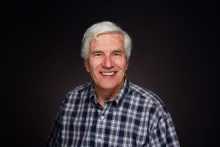
Steve Shafer was born and raised in Seattle. He graduated from Queen Anne High School in 1959 and later graduated from Ambassador College, Big Sandy, Texas in 1967, receiving a degree in Theology. He has been an ordained Elder of the Church of God for 34 years and has pastored congregations in Michigan and Washington State. He and his wife Evelyn have been married for over 48 years and have three children and ten grandchildren.
