

Roy Holladay
This transcript was generated by AI and may contain errors. It is provided to assist those who may not be able to listen to the message.
Chapter 15 case in chapter 4 – Advent 4 Rather than there are fundamental principles that every Christian must build his life on. I think most of us are striving to do that. However, without doing them, we won't be in the kingdom of God. We will not obtain the resurrection. In society today, it's often you hear people referring to having a worldview.
If I were to ask you, what is your worldview, do you know what I'm talking about? How do they view the world? How do they view life? How do they view their families? How do they view themselves? One's worldview refers to the framework of ideas and beliefs through which an individual group or culture interprets the world. It's how you look at the world and how you're going to react or interact with it.
To just illustrate, if your worldview is, there is no God, and there are a lot of people today in the Western society who do not believe there is a God, then your approach to life will be quite different from those who believe in God. If you believe in God, then you try to serve that God.
You try to obey Him. If you don't believe in God, then you have no morals, but you don't have ethics based upon the Scriptures. It will be the opposite of what many of us believe in and in many respects. What is your worldview as it pertains to God, to the Bible, to politics, to warfare, to ethics, to marriage, to family, etc. What would you say your worldview would be? Many times you hear politicians today talking about family, marriage, ethics, but when you pin them down and you begin to talk to them, and you hear their definition, their definitions are quite different from our definition.
As an example, there are people today who consider themselves to be quite religious, or they may use the term spiritual. They consider themselves spiritual. But don't go to church. Don't read the Bible. They couldn't tell you what's in the Bible to save their lives, and yet they feel they're spiritual. Why? Because they have their own religion. They borrow a little from Eastern religion. They may take a little Buddhism, Hinduism. They'll take a little bit out of Christianity from Islam. It's sort of like a cafeteria they pick and choose. Then they create their own religion. So they consider themselves spiritual because they're doing what they think are spiritual things.
How they live their lives, how they conduct themselves, would be totally opposite in many cases as to what we do. They're not going to be keeping the Sabbath, the Holy Days, and you observing God's law. So what does our worldview build on? We all have a worldview. What is it built on? Let's look at some of the fundamental principles that we need to build our lives on and our actions. Once you understand those foundational principles, they are a foundation you build on, we will see what it is that God requires of us.
If I were to ask you to put down on your paper, which I am, what are the basic fundamental principles that you think your worldview should be based upon? What would you put down? Let me start with the most fundamental of all. Is there a God? It has to be based upon the fact that God exists.
Did Jesus Christ really come to this earth as God in the flesh? What do you believe? Let's notice in Isaiah 46. We'll go over to the book of Isaiah, chapter 46, and begin to read here in verse 9 what God says. The God of the Bible. Isaiah 46, verse 9 says, Remember the former things of old, for I am God, and there is no other. God says, all these idols out here and all the creations of man, none of those are gods.
I am God, and there is none like me, declaring the end from the beginning, and from ancient times things that are not yet done, saying, My counsel shall stand, and I will do all my pleasures. He is God, and there is none like Him.
Now, in John, chapter 1, we read about Jesus Christ and His pre-existence and His coming to this earth. John, chapter 1, verse 1 says, In the beginning was the Word, and the Word was with God, and the Word was God. In the very beginning, you have the Word and God coexisting. They have coexisted from eternity together. The Word was God. He was with God. He was with the one that we know as the Father. He was God. He was in the beginning with God. Notice, all things were made through Him, through the Word. Without Him, nothing was made. That was made.
In Him was life, and the life was the light of men. Now, verse 14 of this chapter, The Word became flesh. Notice, the Word, who had existed with God from the very beginning, had become flesh, and the Word, in other words, dwelt among us. How? Well, as God in the flesh. We beheld His glory. The glory is the only begotten of the Father, full of grace and truth. Now, you cannot get any more fundamental than this.
That is, our worldview must be built on the fact that we believe in God. That we don't doubt God. That we know that there is a God. I'd like to mention a couple of booklets here that the Church puts out. I would encourage all of you, in fact, I would like for us all to begin studying as a group certain booklets together. Maybe within a couple of years, we can actually cover all of the booklets that the Church has and go over them and review them.
One is, who is God? Who is He? What's He like? The second one here, not that one, it's this one, does God exist? There are a number of proofs in this booklet that show the existence of God. We are constantly publishing booklets, articles on the existence of God. If you will go and look, just go to our website and type in, does God exist? Proof of God? You'll find that there are literally dozens of articles that will come up. You can study, you can read, that will just confirm and establish and give you that solid basis to know that there is a God.
Now, there is an additional aspect to that point. We must worship the God of the Bible, the true God. Many today worship a false God. There are many Gods taught in this world today who are not true Gods. Look at Hinduism and the pantheon of Gods that they have. Buddhism, different religions around the world. If you go and Google, just type in Gods, a number of Gods, you will find all kinds of religions will pop up.
You can click on those and you can begin to look. They'll have pictures and little write-ups about the various Gods that are worshiped within those religions. Our booklet, as I said, Does God Exist and Who is God? gives much information about God and His existence. How can our worldview be biblically oriented if we don't believe there is a God?
That is so fundamental. Everything is based on that principle. It might sound so simple to us, but as we will see, it becomes extremely critical in how we deal with the world and with one another. There is a second foundational principle. It goes something like this. The Bible is God's revelation to mankind. That is the second fundamental principle. That the Bible is God's revelation, not to Quran, not to Book of Mormons, not any other quote-unquote holy book written by some other religion.
Only the Bible is God's revelation from God through His true servants that has been preserved and passed down. There are dozens of books that claim to contain the revelation from God, do they? How can we know? How can I say that the Bible is God's revelation? Let's go back to Isaiah 41 again. Isaiah 41 verse 21, Book of Isaiah again. Isaiah 41, 21. God tells mankind, Present your case, says the Lord. Bring forth your strong reason, says the king of Jacob.
Let them bring forth and show us what will happen. Let them show the former things, what they were, that we may consider them and know the latter end of them, or declare to us the things to come. Show the things that are to come hereafter, that we may know that you are God's. Yes, do good or do evil, that we may be dismayed and see it together.
God gives a challenge to the critics and to all these other religions. He said, you prophesy what is going to happen. If it comes to pass, then we know that you are God. The Bible is one of the greatest proofs that the Bible is the Word of God. If prophecy proves that the Bible is the Word of God, then you know what that proves also? That there is a God. Because there had to be a God who inspired the prophecy, who brought it about, and then it was recorded for us.
Now, our booklet, titled, Is the Bible True?, is an excellent booklet to study. I would suggest that over the next month you read these three booklets. If you haven't read them recently, you can go through them because they are very good booklets. The booklet, Is the Bible True?, offers a number of ways of proving that the Bible is the Word of God. Notice some of the chapter headings in this booklet. The Bible and astronomy, that astronomy, looking at the heavens, the power in the heavens, the design and all of that is a proof of God.
The Bible and archaeology, that every time they dig something up, they claim, well, the Bible, the writers didn't know what they were writing about, but every time they dig something up, it proves the Bible. It doesn't go against it. The Bible and science, and how science, and the more we learn about science, dig deeper into the human body, or dig deeper into creation, the more proof there is that there is a God. The Bible and prophecy is another one. As quoting from the booklet, God alone can foretell the future and then bring it to pass.
It stands as irrefutable proof of His existence and the divine origin of the Bible for those willing to look into it, accept it, and believe Him. Now, why is this a fundamental point of our worldview? Why are we going to base our worldview on? It has to be based upon God's revelation, because we don't know the right way. It is not within man to know the right way. God has to reveal it to us. That brings us to a third fundamental point. Number one is there is a God. Number two, the Bible is His revelation. The third fundamental point is the Scriptures were given to mankind to explain to us on how to live.
This is God revealing to us how He wants us to live, what He wants us to do. Let's go over to Luke 4.4. You'll remember this Scripture. Luke 4.4, Matthew 4.4. In Luke 4.4, Jesus answered Him, saying, it is written, Man shall not live by bread alone. Man is not to live by the physical. But notice, but by every word of God. You and I are to live by every word of God.
So if it's written here, God wants us to live by it. It's His revelation. He expects us to do something with it. Remember 1 John 2, verse 6, that we are to walk as Christ walked, meaning we are to live as He lived. He has set us the example. 2 Timothy 3, verse 15. He says basically the same thing in different words.
Paul, writing to Timothy, said, From a childhood you have known the holy Scriptures, which are able to make you wise for salvation. So how to be saved comes through the Scriptures, through faith, which is in Christ Jesus. Then he says all Scripture is given by inspiration of God.
Not some of it. Well, in the New Testament, maybe, not the Old. Some people would reason. It says all Scripture is given by inspiration of God and is profitable. So it profits us. How does it profit us? The word profit means to provide assistance and to help. Scripture was given to help us. It is good for doctrine, reproof, correction, instruction, and righteousness. That the man of God may be complete, thoroughly equipped for every good work. You and I may be complete. We can grow and mature and be a complete spiritual person.
The word here, when it says all Scripture is given by inspiration of God, in the Greek, means it is God-breathed. God inspired it. It came from Him. Let's notice in John 6, verse 63. We read it is the Spirit that gives life. You cannot have eternal life any other way except through God's Spirit. The flesh profits nothing. The flesh is not going to assist us when it comes to eternal life.
He says, I speak the words that I speak to you, Christ said, are spirit and they are life. The words in the Bible, even though they are typed or written on a page, are spiritual principles that affect our lives. They are spirit and they are life. They point the way to eternal life. Now, in Luke 6, verse 46, we find an interesting Scripture. Christ said, why do you call me Lord, Lord? Do not do the things which I say. Somebody claimed to be a Christian.
Many talk about God, but they don't do what He says. He goes on to say, whoever comes to me hears my sayings. They read what the book says, the Bible, and does them. It's not just a matter of hearing. You have to do them. I will show you whom He is like. He is like a man building a house who dug deep, laid the foundation on the rock. Christ is the rock. When the floods came, the stream beat vehemently against the house and could not shake it, for it was founded on the rock.
You and I must be doers. We have to build our lives on Jesus Christ. We have to do what He says. Notice, He goes on in verse 49, but He who heard and did nothing. So you hear, you don't do. You hear, you compromise. He is like a man who builds his house on the earth without a foundation, against which the stream beat vehemently and immediately it fell in the ruin of that house. It was great. So if we just hear and don't do, and we are like somebody who builds a house without foundation, what I'm talking to you about here are three major foundational principles that you and I have to build our spiritual house on.
God's existence. The Bible is His Word, and the Bible must be lived by every word of it. 1 Corinthians 3, verse 11, tells us that Jesus Christ is the foundation on which we build. No other foundation can anyone lay than that which is laid, which is Jesus Christ. So He is our foundation. Verse 12 tells us, if anyone builds on that foundation. Notice, you have to build on that foundation.
What I've been talking about so far are foundational principles. But you have to build, and if you build with gold, silver, and precious stone, wood, hay, and stubble, each one's work will become manifest for the day we'll declare it. The trials, life, what we go through, things that we face, all of that will show what we're made of. Because it will be revealed by fire, by the trials we go through, and the fire will test everyone's work, what sort it is.
If anyone's work which he has built on it endures, he will receive a reward. So, brethren, it has to be built on the rock. We have to build gold, silver, precious stone. When those go into the fire, the dross, the impurities are eliminated. Wood, hay, and stubble go into the fire. They're burnt up. So our character has to endure. Notice what God says back here in Isaiah. Isaiah 55 and verse 9.
Isaiah 55 and verse 9.
Well, let's go to verse 8 first. God says, My thoughts are not your thoughts, nor are your ways my ways, says the Lord. So mankind, how he thinks, how he reasons, and his ways, they're not God's.
God goes on to say, For as the heavens are higher than the earth, so are my ways higher than your ways, and my thoughts than your thoughts. So there's no comparison. Our thoughts are not God's thoughts. Our ways are not his. Where do we find God's thoughts? Where do we find God's way revealed to us? Right here in the Bible. God shows us how we should think. We don't know the right way. None of mankind does. But God reveals it to us. So those are the foundations that we have to build our worldview on. Now, let's have some practical application of what we've learned here. If we're going to have a worldview, let's see how that worldview might apply to some things that God tells us to do. Let's take a look at some of the things we need to build and base upon that foundation. The question we should ask ourselves is how does this, God's existence, the Bible is His Word, and we've got to live by every word of God, impact our lives. How does it affect our ideas, our actions? How should we live in light of those principles? Because you see, the word of God has been given to instruct us on how to live, how to conduct ourselves, how to relate to God and to others. We are to live by every word of God. As Jeremiah 10, verse 23 tells us, Jeremiah 10 and verse 23, O LORD, Jeremiah understood, I know the way a man is not in himself. We don't naturally know the way to go. It is not in man who walks to direct his own steps. We don't know how to direct our steps. So he said, LORD, correct me, but with justice and not in your anger.
So, brethren, it's not in man to direct his steps. Man, who is cut off from God, will have a faulty worldview, a false worldview, or approach to life and the solutions to life. What has the last 6,000 years taught us? That man doesn't know the way to peace. Man doesn't know the way to solve his problems. He strives to do so, but he doesn't do such. Let's take a look here very quickly at some of the things that will be very much affected by our worldview. 1. Sabbath Attendance What about Sabbath attendance? In Hebrews 10, verse 23, Remember the principle, we are to live by every word of God.
I've noticed that over the years, approximately one-third of us don't show up on any given Sabbath for church services. I realize that a lot of times we travel. We've got some down in Gadsden today, as I mentioned, for orientation for Camp Woodman. We all understand that there are times when you're sick and you can't be here, those type of things. Notice what God tells us here. In chapter 10, beginning in verse 23, He says, He says, Then He says, in verse 25, As is the manner of some, that some do forsake. But exhorting one another so much the more you see the day approaching. I think sometimes we can come up with every excuse in the book. I'm tired, had a hard week, didn't get enough sleep, didn't do this, didn't do that. Well, I hardly slept last night at all. But somebody had to go to Rome and it fell in my lot. You have to do what you have to do under given circumstances. We need to eliminate the excuses. And if at all possible, we need to be at services. Ask yourself, how many services do I miss? Do we say it's just a tough week, or I'm tired, or I just need to rest more, sleep more? That might be true once in a while, but it shouldn't become a habit with us. Because the Bible is very clear. We are not to forsake the assembling of ourselves together.
Leviticus 23 verse 3 tells us that the Sabbath is a holy convocation. It is a commanded assembly. Now, if you and I are going to live by every word of God, and that the word of God is spirit and life, then we are to obey these commandments. This is part of what we build on that foundation, that superstructure. We read back in 1 Corinthians chapter 3. Take heed how we build our lives, what we do, how we approach life. We are to obey the commandments of God. Only we can answer if we truly are doing that. The Sabbath attendance would be one of those things. What about being anointed? James chapter 5 verse 13. The next book over here is James chapter 5. Notice beginning in verse 13. Is anyone among you suffering? He says, let him pray. Is anyone cheerful? Let him sing psalms. Is anyone among you sick? What are you supposed to do when you are sick? He says, let him call for the elders of the church, and let them pray over him, anointing him with oil in the name of the Lord. The prayer of faith will save the sick, and the Lord will raise him up. If he is committed to sins, they will be forgiven.
I find today that many do not do that. A lot of times we will find somebody even in the hospital. They have never asked to be anointed. Somebody will call and say, so-and-so is in the hospital. You ask, do they want to be anointed? I have no idea. They didn't say. You don't know. It seems like the first thing we do is go to the doctor, and as an afterthought, oh yeah, I should be anointed. The first thing we should do is, if we are sick or we discover we have a major problem, is we should be anointed.
It is not just a matter of being anointed. The real question is, do we believe that God heals today? Do we believe what the Bible says? That there is a God that He heals by Christ's stripes. We are healed. Do we believe in healing, or do we believe it is only a ritual? We know that God will deal with each one of us in His way. We need, I think, to answer that. Do we have faith today? Do we live by every word of God?
I would suggest that this is an area that we just tend to, after a while, begin to let down, and we begin to forget what God says. But if our worldview includes every word of God, this is part of that word. What about tithing? Tithing is one of those words when you mention it. I remember years ago, people visiting people, and they called it, what is this thing called tithing?
They would call it tithing, tithing. You would explain it is giving 10% of your income to God. How many of us are faithful in saving our second tithe, our festival tithe? How many of us give or set aside that tithe? Or do we even save our first tithe? Let's go back to Deuteronomy chapter 14. Deuteronomy 14, and we'll begin to read here in verse 22. I want you to notice Deuteronomy 14 verse 22.
God says, You shall eat before the Lord your God in the place where he chooses to make his name abide, the tithe of your grain, of your new wine, of your oil, of the firstlings of your herd, of your flock, that you may learn to fear the Lord your God always. Now, why does God want us to do it? Well, there are two reasons, actually, numerated here. We learn to fear God. When you tithe and you put him first in your life, you are showing God that you are willing to obey him.
You are willing to do what is right. And then, you believe God. We have all kinds of reasons, especially why we don't save our second tithe. I lost my job. I don't have enough money to pay my bills. I have to dip into my second tithe to pay off my debts. I don't have many people I've talked to over the years who've told me. Well, once I get my debts paid off, and I get my credit cards all paid off, then I will begin to tithe. And the idea is that when it's easy, I'll tithe. But, brethren, do we believe what God tells us?
If we make a dollar, then we give ten cents to God to do the work of God, and we set aside ten cents. It all belongs to God, and He says, look, you can have the majority of it. All I require is ten percent. I want you, as it says here, to learn to fear God. You learn to fear God by saving the tithe. You also learn to fear God by attending the annual Holy Days, so that you can assemble with God's people, hear sermons and fellowship.
So, we need to think about that. Malachi 3, verses 8-12, talks about, will a nation rob God? Do we believe what God says here? God indicted the nation of Israel, the nation of Judah, because they did disobey. So, do we believe what God tells us? It's easy to tithe when God gives us sufficient money. That's easy. If you've got enough, so tithing lets no sweat. The difficulty with tithing comes when we go through a trial. That's when our real character comes out. Do we put God first, or do we take that money? That's a struggle sometimes that we have.
But what does the Word of God say if we are going to live by every word of God? If our worldview is built upon the fact that there is a God, He's alive, He's real. The Bible is His Word, and it shows us how to live. That brings us to a fourth thing. We could enumerate a number of things here, but I'm just touching on some things that I know tend to be situations that we're all confronted with. What about politics?
We're all disturbed, I think, about the drift of our country, where it's going, the direction the country is going in, some of the policies perhaps that are passed. We'd like to do something about it. How are we going to do something about it? Are we going to vote them out? Is that what we're going to do? Is that what the Bible tells us? Is voting or supporting a political candidate or supporting a political party? Is that what God commands us to do? Does mankind know how to solve these problems? I don't care who you put in there. Man doesn't know how to solve these problems. Remember Romans 3, verse 10? None does good. None seeks after God. None knows the way to peace. God is very explicit that none seek his way. None know really the right way. In John 18.36, as a principle, sometimes we forget. John 18, verse 36, Christ answered, My kingdom is not of this world. Talking about this age, this society that we live in today. It's not of this world. Now, we know that the kingdom of God is going to come to this earth. Christ will return, set up his government over all nations. That hasn't happened yet. So he says, My kingdom is not of this world. If My kingdom were of this world, My servants would fight. So when Christ comes back, we will fight. We'll take control of the governments of this world. We'll set up God's system. So that I should not be delivered to the Jews. But My kingdom is not from here. Today, I understand the desire to get in there and throw the bombs out, so to speak. And change things. And then that one doesn't work. So we try to get somebody else in there. We're always looking for the Savior. The Savior is in heaven at the right hand of the Father. He's going to come back and save us in the future. You know what the Bible tells us to do? Pray for our leaders.
Do you pray for the President? Do you pray for those who are in office? That we may live a quiet and a peaceable life, as the Bible says. That God will bless us. Over the years, we've written an article, a title something like this. Who would Jesus Christ vote for? And we've never deviated from what we have taught. In fact, United Church of God has put out a paper on this, on getting involved in politics. That you can study paper if you'd like to look it up. We are ambassadors who represent the kingdom of God. And what does that mean? An ambassador is one who represents his kingdom, his government, to another government. Now, the ambassador from Russia comes over to the United States. And he's representing Russia in the United States. Does he take part in the politics in the United States? Does he vote? Does he have any authority? Well, absolutely not. He's representing his government. You and I represent the kingdom of God, the government of God on Earth. And so we are representatives of that kingdom. We do not get involved in the politics. We pray. I pray all the time. Things bother me. We see the direction our country is going. We realize where it's headed. And obviously, it's like Ezekiel 9. You can read Ezekiel 9 sometime. It talks about those who sighed and cried over the abominations that they saw taking place within Jerusalem at that time. And certainly, we sigh and we cry over what's going on. But we also realize it's going to be Christ who will set up rulers. The Bible says he sometimes allows the basis of men to rule.
Now, when you look at all of this, what I've been covering is the foundation. And if we believe in that foundation, I'm just giving you some examples of what we will do, how we will apply God's law, if we're going to live by every word of God. Why is this important? Why is it important? Because it demonstrates to God an attitude and approach that he's looking for.
Look at all of the lessons that these points teach us that I've just covered. What do Sabbath observance, anointing, paying our tithes, and not getting involved in the politics of this world, all have in common? There's something they have in common. In fact, there are a multitude of things they all have in common. Well, let me show you. Number one, it shows God that we are trusting in him, does it not? When you keep the Sabbath, and you might lose your job because of the Sabbath, or you're not able to get a job because of the Sabbath, then is God going to take care of you? Will he provide for you? What does God say? You obey me, and I'll bless you. What about anointing? Isn't that trusting God? Isn't that saying, I'm looking to you for healing? What about tithing? Isn't that trusting God? It's not our money. We realize, okay, maybe I could pay this, but I'm going to put God first. So we put God first. We're relying on God to provide for us, are we not?
Remember Matthew 6, 33? Seek you first, the kingdom of God, and his righteousness. What does he say? All these things will be added to you. All of what things? Food, clothing, shelter. God says, you seek me first, my kingdom, and my righteousness. I'll add all of this. With politics, it indicates to us that God is in charge. He's the one who is responsible. He will carry out prophecy. He will set up who he wants in charge. So we're telling God and showing God by our actions that we trust Him. That is a continual action. Tithing isn't a one-shot deal. I tithed. Every time you earn money, you have an increase. You tithe on that. It is a continual action. The Sabbath comes every week. It's a continual action. You get sick. That's a continual action. All of these things are continual. It's not just once and it's done, but it's something that we have to do constantly. A second thing they all have in common is that we put God first. It shows that we're putting God first. That's a little different from what we just covered. Let's notice Luke 14, verse 26. You might remember when you were baptized, as Scripture was read to you. You agreed that this was how you would live.
Luke 14, verse 26. If anyone comes to me and does not hate his father, mother, wife, children, brothers and sisters, his own life also cannot be my disciples.
So it means that we have to love God more. It's a comparative term here to love less. We have to love God more than we love any other human being. So when we do the things that I mentioned, keep the Sabbath, tithe, whatever it might be, we show that we are putting God first. That he's first in our lives. Another thing that all of these have in common is that we show God that we love him. 1 John 5, 3 says, This is the love of God that we keep his commandments. So we are showing God that we love him, that we keep his commandments.
And lastly, I'm sure there are any number of others, but lastly, what I have written down, we acknowledge the wisdom of God, the depth of God, the understanding of God. We acknowledge that we don't know how to live. That only God knows, as we read back in Isaiah 55, My thoughts are not your thoughts, my ways are not your ways, God says. So we acknowledge the wisdom of God. We wouldn't necessarily take money and say, Well, I think I could pay this bill, but God says, Ty, I'm going to put him first. That's not the way most people would reason. But God gives us wisdom based upon the Scriptures. We are given the hidden wisdom of the ages. God says the understanding that we have is something that's been hidden from mankind. And in these last days, God has revealed to us His plan, His purpose. So God reveals to us His purpose for our lives. And that's what drives us and motivates us.
See, we are acknowledging the power of God in our lives, are we not? We're acknowledging that God is able to do what He says He will do. And we believe Him. Ultimately, there's one great spiritual characteristic that we develop as a result of everything I've mentioned so far. You know what that is? There's one great spiritual characteristic that God is looking for in us.
It's called faith.
Called faith. Hebrews 11.6 says, without faith, it's impossible to please God. So you and I have to have faith. Without faith, we will eventually compromise with the Sabbath.
If we don't have faith, God will do what He says. We'll compromise. We'll work on the Sabbath. If we don't have faith, we'll compromise with tithing. We will compromise. We'll get involved in politics or whatever it might be. It takes faith to trust God for healing, to provide work for us, to feed us, clothe us, to do what He says He will do. We know that faith is a gift from God. Faith comes by hearing and hearing by the Word of God. But one way that faith develops and grows is by doing. When we do, when we obey, our faith multiplies and it grows because we learn to trust our God.
Faith and humility are twins that work together before God in our lives to help us to have the right approach. Humility is recognizing our own humanness, our own limitations, and recognizing how great God is. That's humility. Once we realize our limitations and how great God is, then faith will motivate us to obey and serve God. They work together. So, brethren, as we stop and think about it, ask yourself the question, Is my worldview based on the right foundation?
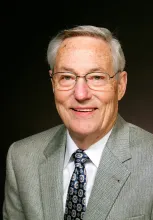
At the time of his retirement in 2016, Roy Holladay was serving the Operation Manager for Ministerial and Member Services of the United Church of God. Mr. and Mrs. Holladay have served in Pittsburgh, Akron, Toledo, Wheeling, Charleston, Uniontown, San Antonio, Austin, Corpus Christi, Uvalde, the Rio Grand Valley, Richmond, Norfolk, Arlington, Hinsdale, Chicago North, St. Petersburg, New Port Richey, Fort Myers, Miami, West Palm Beach, Big Sandy, Texarkana, Chattanooga and Rome congregations.
Roy Holladay was instrumental in the founding of the United Church of God, serving on the transitional board and later on the Council of Elders for nine years (acting as chairman for four-plus years). Mr. Holladay was the United Church of God president for three years (May 2002-July 2005). Over the years he was an instructor at Ambassador Bible College and was a festival coordinator for nine years.
