

David Mills
This transcript was generated by AI and may contain errors. It is provided to assist those who may not be able to listen to the message.
We'll get right into the sermon this afternoon with a question. Where is the abundant life? I mean the life that is happy and joyful and full of meaning and is so much fun to wake up every day for another day of it. Today we live in a very uncertain and stressful world. There's a lot of economic uncertainty. People wonder about their future as far as their jobs and savings. We read about problems in the world every day that are of real concern to us all. We have our own trials and stresses as well in our personal lives. Sometimes there's trying and testing in the church as well. Where is the abundant life? We want to discuss and think about that today. How about you? Is your life abundant, would you say? Or is the stress getting to you? And is your life not as happy? Is it more stressful than you would like for it to be? Or is it indeed joyful and full of meaning and purpose? Can I just imagine all of us could have a life that is even more abundant, even if we are already very happy and joyful overall?
I'd like to read an article that came out in ARP magazine a few years ago. In fact, it came out in the May-June issue 2007, the AARP magazine. And on page 56 is an article, Live Better with Less. The subtitle, Our High-Powered Economy, is based on growth, growth, growth, which means consume, consume, consume, as we know. But the author of this article says that it, or asks the question, is all our stuff making us less and less happy. In fact, this is before the economic crisis that we have right now. And he mentions the word stuff. And I have heard people talk on television and read articles also that many people are reevaluating their need for more stuff. You mean stuff? By stuff, we mean all the physical things that are involved for consumers to purchase more and more stuff. My wife and I went to one of the shops this past week looking around, and there are things there that you never even knew existed. So much stuff. It's amazing. You've been to stores, and of course you can go to Walmart or a lot of stores and see things that you never even knew existed.
Well, this man in the Art Magazine article is a Harvard-trained economist and activist. He says the idea that more is better, which has been orthodoxy for the past 50 years, no longer matches reality. More stuff doesn't make people happier. In fact, once our basic needs are met, the very opposite seems to be true. Once your basic needs are met, then all the stuff just kind of actually takes away from your happiness, it seems. You know, in the United States, once we were measured as as having the happiest citizens in the developed world, but we have dropped it down to number 23.
That was four years ago. We may have dropped down even lower. And there are major problems in our country with alcoholism, suicide, and depression rates, which have soared, and fewer than one in three Americans claiming to be very happy. So less than a third of our citizens, fellow citizens, claim to be very happy. If you were to be in a survey, where would you fit? Would you be happy?
We'll say very happy, happy, not so happy, frustrated, downright unhappy. Where would you fit? So many Americans are very stressed out right now, and you would have to say that their life is not really the abundant life. So where is the abundant life? After all, this article goes on to say that what we've been doing in the United States, maybe it does go back as many as 50 years, somewhere after World War II, is as if we've done an experiment in whether consumption produces happiness and determined that it doesn't.
And yet we even hear politicians and others saying that we need to somehow get the American people spending more, consuming more, so that we can have jobs at factories and plants where more stuff can be manufactured. So we're kind of in this cycle of consumerism and consumption, and it's really not working at all, and it's not producing the abundant life. So you know, this is where the abundant life isn't. This is where it is not. This article goes on to make the comment that the pursuit of mammon, interesting to use a word that is used in the Bible, the pursuit of mammon has turned us ever more into individuals and ever less into members of the community, isolating us in a way that runs contrary to our most basic instincts.
We scrap and save for the bigger house only to find ourselves more cut off from friends and family. And that is so true. People have more stuff than ever before, but their relationships have suffered in their community and in their communities and their families. So that's where, obviously, where the abundant life is not. You know, we really did not have to go through the last 50 years to prove this. The Bible has much to say that this is not really the right direction to discover life that is interesting, that is enjoyable, that is rewarding, that has purpose and meaning.
Let's turn over to a book in the Bible that is devoted to proving that the physical things can never really produce the abundant life. Turn please to the book of Ecclesiastes in chapter 2, and we will read just a little bit of this book. You can read all of it if you would like sometime if you've not done this recently. And you will see an experiment showing that seeking after physical stuff will never help us to realize and discover the abundant life that we all desire.
In Ecclesiastes chapter 2 and verse 1, I said in my heart, come now, I will test you with mirth. I'll see how much I can laugh and how much I can be giddy and how much I can joke with others.
Therefore, enjoy pleasure. But surely this was vanity. A set of laughterous madness. It came to see that this did not really bring a lasting joy and happiness. It was all momentary. Of mirth, what does it accomplish? I searched, verse 3, I searched in my heart how to gratify my flesh with wine while guiding my heart with wisdom and how to lay hold unfolly and how until I might see what was good for the sons of men to do under heaven all the days of their lives.
He wanted to see if just drinking wine and laughing and having fun would do it. Verse 4, I made my works great. I built myself houses. He had a second house, maybe a third house, maybe more. Now this was Solomon, who certainly had the wealth to do all of these things. I planted myself vineyards. I made myself gardens and orchards. I planted all kinds of fruit trees in them. I made myself water pools from which to water the growing trees of the grove. I acquired male and female servants. Of course, we know that he had 300 wives and 700 concubines, and that was only 999, too many women in his life. He just needed one. That was all.
Yes, I had greater possessions of herds and flocks than all who were in Jerusalem before me. I also gathered myself silver and gold and the special treasures of kings and of provinces. I acquired male and female singers, the delights of the sons of men. You talk about today we listen to CDs and music, you know, recorded music. He had them there alive performing beautiful music for him. Musical instruments of all kinds. So I became great and excelled more than all that were before me in Jerusalem, and my wisdom remained in me. So he was thinking, is this really what is making me happy? Is this bringing me the abundant life? Is it rewarding and meaningful? So his wisdom remained in him. He was in an experiment. Verse 10, whatever my eyes desired, I did not keep from them. Then he had the means to do it. He was like a billionaire. He could do whatever he wanted. He had the money to do it. I did not withhold my heart from any pleasure, from my heart rejoiced in all my labor, and this was my reward from all my labor. Then, verse 11, he looked at everything he had done. Maybe some passage of time had gone by, even a few years in this experiment, a number of years. I looked at all the works that my hands have done, and on the labor in which I had toiled, and indeed all was vanity. And grasping for the wind, there was no profit under the sun. He came up empty, totally empty. He had spent all this money, done all these things. We don't have that kind of money to spend. We can't do that sort of thing, can we? Even so, many of us have acquired a certain amount of stuff. I know my wife and I, we now have been married for over 46 years, and we started out with nothing. I guess we had some debt. You might even say we started out with less than nothing. And down through the years, we've accumulated some stuff. But I can't say that, you know, looking at it, that I'm any happier, I don't think she would say that she would say the same than when we started. We were very happy with each other, and very happy to be a part of God's Church, and seeking after God's Kingdom. The stuff we have accumulated has not made us any better or any happier. I've told her many times, because you've got to, in some ways, it's much more problems to have all this stuff, because you've got to maintain it. You've got to keep it clean, you've got to sometimes repair it, and it takes a lot of time just to take care of some of the stuff that we accumulate in life. And I have told her, with a certain amount of sincerity to it, it would be much better just to go get a tent and put it under an oak tree, and just make life simple, you know? But so far, she will not agree to that. I've even promised her a color TV set and cable. She won't go for it. So, you know, the stuff has not made us any happier, and it won't make you any happier either. I mean, here's an experiment here, an ancient experiment by King Solomon. And he discovered that physical things is not the way for the abundant life. Not at all. Just as in our own country, in the last four or five decades, we have proven—and I think that we all agree with this article—we have proven that consumption does not produce happiness, and determined very much that sometimes it might even get in the way, might make things worse.
Let's turn over to Luke 12. And Jesus brought out the same thing. He brought out that stuff, the physical things, is not where the abundant life is. Where is the abundant life? Where's the life that is full and meaningful, that we all desire? A life that is full of purpose, and we wake up each day excited for another day to go on toward fulfilling the meaning and purpose of our lives. Where is that meaning and purpose to be found? In Luke 12 and verse 13, one from the crowd said to him, "'Teacher, tell my brother to divide the inheritance with me.'" This man was after things. He was after some stuff that would come from the inheritance. Jesus said, "'Man who made me a judge or arbiter over you?' And he said to the people gathered around..." And this is a very important verse, verse 15. And it'd be a good one for you to mark in your Bible. "'Take heed and beware of covetousness. For one's life does not consist in the abundance of the things he possesses.'" Let me substitute a word in there. "'One's life does not consist in the abundance of stuff he possesses.'" And so we have to beware and take heed of covetousness. And yet our very society, our very country that we live in, does promote and advertises constantly. I mean, on television and in newspapers and magazines, then constantly there's the advertising that we need this item. We need this stuff. Which in some cases we didn't even know existed until recently, maybe. So suddenly they're trying to convince us that we need it. "'But one's life does not consist of the abundance of the stuff he possesses.'" And he spoke a parable to them, saying, "'The ground of a certain rich man yielded plentifully.' And he thought with himself, "'What shall I do since I have no room to store my crops?' He said, "'This I will do. I'll pull down my barns, and I'll build greater, and there I'll store my crops and my goods.' "'And I'll say to my soul, "'Soul, you have many goods laid up for many years. Take your ease. Just take it easy. Eat, drink, and be merry.' "'God said to him, "'You fool. This night your soul will be required of you.'" And you know, let's take this in another direction. What if he didn't die that very night? What if he went on for another year or five? He still, you know, is going to die, and where will he be? He comes up empty-handed, and not having really discovered the abundant life at all. "'This night your soul will be required of you. Then whose will those things be which you have provided?'" In verse 21, Jesus summarizes by saying, "'So is he who lays up treasure for himself and is not rich toward God.'" This verse begins to show where the abundant life is not, and it also shows where the abundant life is. The abundant life we're going to discover is when we are rich toward God. That is where the abundant life lies. It's the life that is in harmony with God. It's not the one that is full of stuff or things.
William Barkley said it very well, "'Joy'—and that's what the abundant life is—is the life of joy and happiness. It's a good life. Joy has nothing to do with material things or with man's outward circumstance. A man living in the lap of luxury can be wretched, and a man in the depths of poverty can overflow with joy." So it doesn't depend upon the physical things or stuff that we possess at all. A person living in luxury can be absolutely miserable. Totally unhappy. Happiness, then, has to do when we are rich toward God. It has to do when we have set our goal on the right thing, the very meaning and the purpose of life.
Yeah, where is the abundant life? That's what we're talking about today. Where is it? Where is the abundant life? Do you know that Jesus went on to describe where it is? Right in the very next verse he begins, verse 22. He said to his disciples, "'Therefore I say to you, do not worry about your life, what you will eat, and about your body, what you will put on.' Life is more than food, and the body is more than clothing. Life is more than the physical things, the physical stuff. It's much more. Consider the ravens. They neither sow nor reap, but God feeds them.
Can you, by worrying, add one cubit to your stature? And then verse 27, "'Consider the lilies how they grow, and neither toil nor spin.' They don't labor, but even Solomon and all of his glory was not a raid like one of these. If God so clothes the grass, which today is in the field and tomorrow is thrown into the oven, how much more will he clothe you, O you of little faith? And do not seek what you should eat, or what you should drink, nor have an anxious mind. For all these things the nations of the world seek after, and your Father knows that you need these things." You know, I don't think Jesus is saying that we should not have a job and that we should not have income, that we should not have education and be able to even have a better job and better income.
But the focus, what is the focus of your life? Is it on the physical things? Is it being able then to get more stuff, to get better stuff? Or is this just a means of being able to provide so that you can set your mind on the true riches and be working toward them? What is the focus in your life? Plus number one. And then he gets to where that focus must be if we are to find out where the abundant life is.
He gets to that in verse 31. Seek the kingdom of God, and all these things shall be added to you. You know, it is going to be impossible to find the abundant life without getting in harmony with this verse in our lives. Truly seek God's kingdom first. And Jesus went on to say, Do not fear little flock, it's your Father's good pleasure to give you the kingdom.
So as far as our attitude and as far as the importance of the physical stuff in life, then verse 33, sell what you have and give alms. It would be generous then with the blessings God has given to us. Provide yourselves money, money bags that do not grow old, and a treasure in the heavens that does not fail.
Put your affection on things above. Where is your affection? I tell you what, it's going to be impossible to realize the abundant life unless our affection is truly on things above. A treasure in the heavens that does not fail where no thief approaches nor moth destroys. For where your treasure is, there your heart will be also. And our treasure must truly be God's kingdom. It's the only way that we can possibly discover the abundant life that we all desire. How does this begin? How do we get started with the abundant life?
You know, it begins with a major redirection, a major reorientation of our lives. You know, just humanly, naturally, it's kind of natural to go along and, you know, you set your mind on the physical thing. What Jesus said, all the nations, people in the world, they... what do they set their minds on? Stuff. They want to be able to buy and get more stuff and better stuff. But Jesus is saying that we should instead set our minds on the kingdom of God.
And so, repentance is a major redirection of our focus, a major reorientation. And I'll say that it is not just easy to keep that redirection in our lives. We're just human beings. We're always trying to revert back to seeking after the things that are here below. And we can begin to get our minds on the stuff of life. Even though we have begun to set our minds on the things above, we can still, if we are not careful, we can begin to revert back.
We begin, then, by really turning to God's kingdom and seeking, as Jesus said, to seek the kingdom of God. Let's notice in Matthew 13 that when God shows us the truth about His kingdom, I think it's good to go back and remember when you first heard about the kingdom of God.
And I remember when I was around 16 or so, I began to really take interest in the message that was being proclaimed. And by Mr. Armstrong and in the magazine and looking in verses in the Bible, I began to understand about the kingdom of God. And it was exciting then, and it is still exciting today, the message about God's kingdom.
In Matthew 13 and verse 44, the kingdom of heaven is like treasure. Oh boy, I'll say the greatest treasure that one could ever discover. There's no other treasure that, you know, there's no other treasure than God's kingdom anyway. It is enduring and lasting. All other treasures are just momentary and fleeting treasures that soon fade away. But this one never fades away. The kingdom of heaven is like treasure. Real, true, enduring and lasting treasure. Eternal treasure hidden in a field which a man found and hid. And for joy over it he goes and sells all that he has and buys that field.
Okay, there's an excitement when one begins to understand the truth about the kingdom of God. And there is a joy and we do give everything in order to have it, to have this treasure. We give up everything. In verse 45 again, the kingdom of heaven is like a merchant seeking beautiful pearls. Who when he had found one pearl of great price went and sold all that he had and bought it.
So, you know, God's kingdom then is where the true riches are to be found. It's where we will find the abundant life. Where is the abundant life? It will be in the kingdom of God. And it will be in that pearl of great price. Jesus came with that message. Let's turn to Mark chapter 1. I'll tell you his message was about this treasure that we may be members of God's kingdom, that we may enter the kingdom of God and become sons of God and have eternal life and also inheritance of the universe, inheritance together of the universe.
That's what God has in mind for his sons and daughters. In Mark chapter 1 and verse 14, after John was put in prison, Jesus came to Galilee preaching the gospel of the kingdom of God. Jesus came preaching about this pearl of great price, this treasure, God's kingdom, and saying the time is fulfilled and the kingdom of God is at hand. It's available to us as God's opening the door. Of course, today is only to a few, actually, but eventually everyone. And the message to everyone is to us today and to others later. The message is, repent. Redirect your mind. Redirect your focus. Reorient yourself and believe the gospel. Direct yourself to word God's kingdom.
In the process, guess what? We do indeed, in our minds, we forsake all. Nothing else really matters whatsoever. Nothing else. Our closest family relationships. Every physical thing in our lives. All the stuff. And including even our own physical lives, we forsake it all. For God's kingdom, we do indeed sell everything. Let's go to Luke chapter 14. And so, repentance is our start toward the abundant life. It's when we come to be humbled. We humble ourselves and we surrender and yield ourselves into the hands of Almighty God.
Real repentance is the start toward the abundant life. It's where we are sorry for our sins of the past and we ask God to forgive us. And we intend to make the future different. It is where we set our minds on the future, preparing to be a part of God's kingdom. Repentance is more toward the future than it is toward the past. It is because we cannot change the past, but we can have the past forgiven.
We can have it wiped out. We can have a clean slate. God will give us that through the blood of Christ. And then we can begin to set our mind on a changed life, living by God's laws, and taking on the nature and the character of Almighty God. And then working with God's Spirit in us toward becoming members of God's family. But it is a forsaking of everything for God's kingdom. In Luke chapter 14 and verse 25, these great multitudes followed Christ. And He said, if anyone comes to Me and does not hate his father and mother, wife and children, brothers and sisters, yes, his own life also, he cannot be My disciple.
You know, we cannot discover this abundant life without then coming to put our own closest relatives second to God. We cannot be disciples of Christ until we have this attitude and our own life as well.
This present life we come to realize is nothing.
God plans to give to us eternal life, never-ending life. What are a few short decades, maybe seven decades, 70 years? Or what is eight decades? Maybe you live to be 80 or maybe 90.
But you know, all of those who get to be around 80 or 90 or 100 begin to show some wear and tear, don't they?
And we know that physical life then does not go on and on and on. What is—what are seven or eight or nine or ten decades of life compared to eternity? Nothing.
So that's why this life, we don't consider it as anything.
It's just a preparation for real life. Jesus said, whoever does not bear his cross and come after me cannot be my disciple. He said to count the cost, it's not going to be easy to be a Christian. It's not going to be easy to make that pearl of great price our goal and to seek after God's kingdom first and foremost. It's not going to be easy to finish. We can even get started. He warned about starting and then not finishing. A person can start the race, but unless he finishes it, he will not cross the finish line.
And he talks about even going to war with less on your side than against you. So we need God's help along the way to be able to win this battle.
So verse 33, So likewise, whoever of you does not forsake all that he has cannot be my disciple.
So we do have to forsake all.
We have to forsake all.
All this stuff doesn't mean a thing.
This physical life itself doesn't amount to anything, not by comparison to God's kingdom.
You know, at the time of repentance, a person then comes to have a total change of heart and mind. It's a start toward the abundant life.
Repentance is the start toward the abundant life. I want to read to you from the autobiography of Herbert W. Armstrong. Many of us have this autobiography of Mr. Armstrong, and this is in volume number one, chapter 17.
And the chapter has the title, At the Crossroads and a Momentous Decision.
I want to read just for a couple of minutes from this chapter.
The opening of my eyes to the truth brought me to the crossroads of my life.
It meant being cut off from the high and the mighty and the wealthy of the world, to which I had aspired.
It meant the final crushing of vanity. Mr. Armstrong admits he had a lot of it.
The crushing of vanity.
It meant a total change of life.
It meant real repentance. For now, I saw that I had been breaking God's law. I had been rebelling against God. It meant turning around and going the way of God, the way of His Bible, living according to every word in the Bible, instead of according to the ways of society or desires of the flesh and vanity.
It was a matter of which way I would travel for the remainder of my life.
I had certainly reached the crossroads. I had been beaten down. I was broken in spirit. It was a battle, truly a battle for life, a life and death struggle. And in the end, I lost that battle, as I've been losing all worldly battles in recent years. In desperation, I threw myself on His mercy. If He could use my life, I would give it to Him, not in physical suicide, but as a living sacrifice to use as He willed.
This surrender to God, this repentance, this giving up of the world of friends and associates and of everything was the most bitter pill I ever swallowed. And yet it was the only medicine on all my life that ever brought a healing.
For I actually began to realize that I was finding joy beyond words to describe in this total defeat.
I had actually found joy in the study of the Bible, in the discovery of new truths, heretoforehidden from my consciousness. And in surrendering to God in complete repentance, I found unspeakable joy in accepting Jesus Christ as personal Savior in my present High Priest.
I began to see everything in a new and different light.
Why should it have been a difficult and painful experience to surrender to my Maker and my God?
Why was it painful to surrender to obey God's right ways? Why?
Now I came to have a new outlook on life, that reorientation, that redirecting of His life.
Somehow I began to realize a new fellowship and friendship had come into my life. You know, that's what happens at repentance.
A new fellowship and a new friendship enters our lives. It is that of Almighty God.
I began to be conscious of a contact and fellowship with Christ and with God the Father.
When I read and studied the Bible, God was talking to me. And now I love to listen. I began to pray and knew that in prayer I was talking with God.
I was not yet very well acquainted with God, but one gets to be better acquainted with another by constant contact and continuous conversation.
So you know what begins at repentance, then, is an eternal relationship with Jesus Christ and God the Father.
And Mr. Armstrong came to that point of repentance, and he began then at that point, he began to have a fellowship which he had never had before. A fellowship and a communion with Jesus Christ and with God our Father.
You know, real repentance, then, is the start of the abundant life. Where is the abundant life? It begins with repentance. It begins with having the self crushed.
It begins with a broken and contrite heart and spirit that wants to obey God and do his will.
He wants to obey his laws and commandments.
Then there is baptism and the receiving of God's spirit.
And baptism is described in the Bible as a resurrection to newness of life.
A death and a burial of the old self, and then a resurrection of a new way of life, a new person, a brand new creation now beginning.
That's exciting to think about. The brand new creation is a Son of God.
And here's an individual before that did not have any connection with God and his reason for existing and why he was even born, who now realizes why he was born and begins to make changes so that he can be prepared for what God has in mind.
Brother, it's exciting to think about.
The abundant life then is one that each and every Christian is working toward.
And that abundant life, he is able to experience more and more and more as he takes on more of God's nature and character.
Is your life then joyful and abundant? The answer to that would be to the same degree that your heart is set and focused on God's kingdom.
Because there's no other purpose, nothing else that can ever give our lives meaning and purpose and joy.
Jesus made this very clear in Matthew 6.
It parallels closely what we read earlier in Luke 12.
But we'll read this. It brings out some additional things. Matthew 6, verse 19.
The abundant life is one that depends upon us and how much we are tuned in to the things above, the spiritual purpose that God is working out here below.
And if we are tuned in to that, then our lives will be joyful and abundant. Every day we're making progress toward God's kingdom then.
Every day we're getting closer to becoming a son of God and having the mind of God.
But if we are not, if we're seeking the things below, if our minds are tuned into stuff, then our lives will not be joyful and abundant. We'll just have the temporary and fleeting pleasures of this life, not the enduring ones that go on and on. In Matthew 6, verse 19, do not lay up for yourselves treasures on earth. That's what human beings normally do.
Lay up treasures here. See who can get the most money, the most stuff.
But moth and rust destroy, and where thieves break in and steal. And that, you know, may not happen with somebody holding you up, but guess what? Inflation eats away at the value of your savings, your pension, and corruption sometimes occurs. Here's this one situation up in our country now where a billion dollars, or I think over a billion dollars, are missing.
Where'd it go? The man that was responsible for it says he doesn't know.
So, one farmer had $400,000 involved in this, and he says he may be able to survive, but it's not going to be easy. And that some maybe will not survive. But moth and rust do destroy, and thieves do break in. There is corruption and evil.
So Jesus said not to be all concerned about the physical things and stuff of life, but lay up for yourselves treasures in heaven.
That's where the true riches are, the spiritual treasures.
And that comes about with a close relationship with God. It comes about with a lot of prayer and study, occasional fasting. But if we lay up these types of treasures, the true treasures and riches, where neither moth nor rust destroys, and where thieves do not break in and steal, for where your treasure is, there your heart will be also.
How about your heart?
Where is it?
Is it in the physical things?
Again, this is not wrong to God and buy stuff, but it is wrong to set our hearts and minds upon that. We have to be real careful that our hearts then are not set upon physical things, the things here below, but instead on the things above. And that our treasure, what we really think about and want with all of our heart, is our things above, the true riches. And he brings out that our heart has to be then set upon God's kingdom. God's kingdom is where the true riches are, the true treasure that will endure and not be rust away or be stolen.
But Jesus then brings out something about our eye.
In verse 22, the lamp of the body is the eye.
And that is true, isn't it? The lamp of your body, your car has a headlamp, and you turn it on and you can see at night, it turns on the lights.
The lamp of our body is our eye. These two little balls here, we were to pluck them out, and we'd be in total darkness, wouldn't we?
Those two little balls are very important to bring. They're the lamps of our body. They bring in the light.
And if our eye is good, then the whole body will be full of light. If our eye is on the spiritual riches and on God's kingdom, then we'll just be full of light. But if your eye is bad, and the margin has evil or unhealthy, your whole body will be full of darkness.
If we are seeking just the here and the now, the physical stuff, we're going to be full of darkness. If therefore the light that is in you is darkness, if that hope of God's kingdom, that light that God has shown us, becomes darkness, how great is that darkness? We don't want to ever let that happen.
We want instead to turn the lights up and seek God's kingdom more than ever before.
And Jesus, in verse 24, said, No one can serve two masters, for either he will hate the one and love the other, or else he will be loyal to the one and despise the other. You cannot serve God and mammon. We cannot serve God and stuff.
It can't be both.
We have to seek God in his kingdom and make sure that that's what we're really seeking. That's what we want.
So he goes on down to say in verse 25, Therefore I say to you, do not worry about your life, what you will eat or drink. We do, I think, worry too much about that, or your body, what you will put on. Look at the birds, verse 26, and again he talks about, in verse 28, the lilies of the field and how God takes care of them.
Verse 31, Therefore do not worry, saying, what shall we eat?
So, you know, the emphasis on worry here. We certainly can prepare, and it's not wrong to lay up for retirement, but is that really what we put our trust in?
Or is our trust toward God and toward his kingdom? Is that what we really love?
And is that really what we really love, deep inside? And we're not kidding ourselves about it. But do not worry, saying, what shall we eat? Or what shall we drink? Or what shall we wear? After all these things, the Gentiles, people in the world, seek after these things. Your heavenly Father knows you have need of these things, but seek first the kingdom of God and his righteousness, and all these things will be added to you. God will take care of us.
Brethren, I think our faith very well will be tested in the years ahead.
You know, we have, at the end of this age, and we certainly appear to be getting closer to the end of this age, our faith will be tested that we just do trust God to provide our food and drink and clothing and our needs.
You know, we have to be careful, then, that we do seek God's kingdom first, and that we do not allow anything else to creep in. We can, if we are not careful, get off the track. Human beings do tend to go astray.
And one verse says, we all, like dumb sheep, have gone astray.
I have. In my confession as to where God, you know, we don't have to confess to each other, but all of us go astray, and we can let down, and we can begin to get our eyes off of God's kingdom, and begin to get our things onto the physical things.
We can depart from God to the point that we can do something serious. One man, the man after God's own heart, got his eyes off of God. He did something very serious. He committed adultery, and he tried to connive when the woman got pregnant, so that this was palmed off on her husband, which did not work, and then he had the husband put to death. He had the power to do that.
But when he came to see what he had done, he really did repent. But, you know, his sin did a number on him, and indications, I think, it sobered him up. He was never quite the same. But notice in Psalm 51 that when we sin, as King David did, it takes away from the joy and the purpose of life.
We're not happy. Sin is not the way to happiness.
It's the way to unhappiness. It's the way to curses and penalties.
And David must have always felt guilty, some guilt about what he had done. And he never quite lifted down, no doubt, what he had done.
As far as being able to remember, that was some very horrible things that he had gotten into. It sobered this man. It knocked him down.
We read about his attitude, which was very good here in Psalm 51.
Notice in the small print at the top of right under the chapter heading that this is a psalm of David when Nathan the prophet went to him after he had gone into Bathsheba.
And so when David came to really repent, here's what he said.
And he gets into the joy and the abundance of life, and that sin does not produce joy and abundance of life, but the opposite. Have mercy on me, O God, according to your loving kindness, according to the multitude of your tender mercies. Blot out my transgressions. Wash me thoroughly from my iniquity and cleanse me from my sin. I acknowledge my transgression. My sin is ever before me. I feel so bad about what I've done. Against you, you only have I sinned. Brethren, you know, this is not a very happy camper right now, is it? Is he? He's very unhappy at what he has done.
And he says in verse 7, Purge me, clean me up with hyssop, and I shall be clean. Wash me, and I shall be whiter than snow. And so we there is forgiveness. God is merciful, but again, David probably never quite lived down what he had done. Make me hear joy and gladness, because in sin there is not joy and gladness. Make me hear joy and gladness, that the bones you've broken may rejoice.
He had lost that abundant life momentarily. Hide your face from my sins and blot out all my iniquities. Create in me a clean heart, O God, and renew a steadfast spirit in me.
Do not cast me away from your presence. He begged to God not to give up on him. You know, have you ever sinned and said, God, please forgive me. Don't give up on me. Give me another chance. That's what David is doing here. Do not give up on me. Do not cast me from your presence. And do not take your spirit, your Holy Spirit, from me. And look at verse 12, as far as the abundant life. He had lost it, and he said, restore to me the joy of your salvation, and uphold me with your generous spirit. We can pray that prayer. When we lose the abundant life, when we sin, we can ask God to restore the joy of his salvation. He will do that, but he may let us remember what we did so that we will never want to go that way again.
You know, God's allowing the aversion therapy. He'll allow us to make mistakes, and make mistakes, and make mistakes until we ourselves get sick and tired of it, and we no longer want to go that way. God is letting man as a whole have his nose rubbed in sin until man doesn't want to live that way. And he'll let that happen to you and me until we don't want to go the way of sin. That's not the way to the abundant life.
The way of obedience to God's laws is the way to the abundant life as led by God's Spirit.
Let's go to Isaiah 55. And so if we want the abundant life, we're going to have to set our minds on the things above. We're going to have to redirect our thinking away from physical things and stuff. We're going to have to resist the downward poles of the human flesh and nature. And we're going to have to get in harmony with God's holy and righteous way according to his laws, and set our minds on God's kingdom first. In Isaiah 55, verse 1, Ho! Every one who thirsts is thirsting. Every human being has a yearning, has a craving for meaning and purpose and for the abundant life. So that's what this is talking about. You know, my heading in my New King James Bible even has an invitation to abundant life. I just noticed that just now. At the heading of that, anybody have the New King James? All right, notice that right above the beginning of this chapter, an invitation to abundant life. Yes, that's a good way to put this, an invitation to abundant life. Ho! Every one who thirsts, come to the waters, and you who have no money, come, buy, and eat. Yes, come buy wine and milk without money and without price. Why do you spend money for what is not bread? For stuff. Why do you spend money for stuff and think that's going to satisfy you? Your wages for what does not satisfy? Why are you a consumer out here thinking that's where it's at? That's okay to be a consumer for those things you need. And we probably all buy some things we don't need sometimes, but it's not to be our, it's not to be what we set our minds upon. It's just something maybe to add to the enjoyment of life a bit, but certainly not something that is all that important at all.
God says in the middle of verse 2, listen diligently to me, and eat what is good, and let your soul delight itself in abundance. Brethren, here is where we find the abundant life. It is setting our minds on God's kingdom and his way of life, the purpose that God has for mankind. Incline your ear and come to me, and hear, and your soul shall live. That's real abundant living.
And I will make an everlasting covenant with you. If it is an everlasting covenant, an everlasting agreement that God makes with us, that must include eternal life, isn't it?
If it's everlasting, it would be eternal life. God will enter that kind of covenant with us. But it does say in verse 7, we have to... the wicked has... and all of us have done wickedness, and still we sin and fall short. Let the wicked forsake his way, and the unrighteous man his thoughts. Let him return to the Lord, and he will have mercy on him and to our God, for he will abundantly pardon. So God is very forgiving toward us.
How can we maintain our focus, then, if we have set our mind on God's kingdom? And many of us have done that many years ago. How can we maintain that focus? It is certainly easy to lose it. Is it possible to have the joyful, abundant life every day, and stay focused on it? It is. But it's going to require adequate daily prayer. You just got to get down on your knees. David said, evening, morning, and night, I will pray to you. You got to get down upon your knees and pray and spend adequate time thanking God and asking him to be with you and making your request known to him. It's going to take some regular reading and study of God's Word. The Bible is a big book, and this book is God speaking to us, and praying to God is us speaking with God. So it's part of that fellowship, part of that communion we have with God. As Sturmstahl mentioned, he began to realize that new relationship when he repented. A new relationship was starting with Almighty God. So that's exactly what we must maintain and carry on and improve even our relationship with Almighty God. And walk with God and be close to God. There's constant meditation day and night about God's ways and God's laws. So there is this constant contact and communication and fellowship that goes on with God. Sometimes we go along and we're doing fine, and week by week we're keeping the Sabbath and season by season we're keeping the holy days. We fast on the day of atonement. We go on forward, we work on our jobs, we're faithful in our tithing, we're doing everything to the best of our ability, we're not committing any major sins, though we do all sin and fall short in attitude, word, or deed. But things are going pretty well, but we still aren't quite as much in contact with God as we need to be. Or maybe just don't feel that we're sharp anymore.
Kind of like a car that needs a tune-up that's kind of sputtering along. What do you do? That's when we need to fast. And let's read Isaiah 58. There are times, then, that we need to proclaim a day of fasting in order to get everything in harmony as far as our primary and really only goal in life, seeking after God's kingdom. And things aren't just clicking along quite as well as they should.
And so fasting will be necessary. Isaiah 58 and verse 6, is this not the fast I have chosen?
To lose the bonds of wickedness and undo the heavy burdens, and let the oppressed go free, and that you break every yoke. You know, we do that. When we fast, we go without food and drink, and we get weak and puny, and we realize our dependence upon God. And we do confess our sins, and we do let go, certainly, and forgive, and we don't have any grudges or anything in our hearts and minds. We get a cleansing of our hearts as we cry out to God. Is it not to share your bread with the hungry, and that you bring to your house the poor that are cast out? We look out and we find ways to serve and to give to others. You see the naked that you cover and not hide yourself from your own flesh. And look at the good things that happen with this spiritual tune-up. Verse 8, your light shall break forth like the morning. Your healing shall spring forth speedily. Your righteousness shall go before you. The glory of the Lord shall be your rear guard. You will call, and the Lord will answer. You shall cry, and He'll say, Here I am. I'm right here. I'm near to you. I'm right beside you. You know, why do we not fast more often than we do? I guess it's not the natural thing, is it? But look at what it accomplishes. It goes on to say that in verse 11, the Lord will guide you continually and satisfy your soul and drought and strengthen your bones. And you'll be like a watered garden and like a spring of water whose waters do not fail. So, yes, fasting helps to refocus us when we go astray. It helps us to maintain and sharpen our focus on God's kingdom. Fasting strengthens, restores, and strengthens our relationship with God, and therefore it restores our joy, and it leads us closer to the abundant life.
Brother, in spite of all of the stresses and trials and struggles that go on around us, and will go on around us in the years ahead, if we are close to God and our relationship, what's going to get in the way to hinder us from having a life that is joyful and abundant? Nothing at all. Because the hope and the joy of God's kingdom will not change.
In Romans chapter 8, the Apostle Paul said it very well. This man went through a lot.
You can read about some of the things he went through in 2 Corinthians. He went through all kinds of things and problems, but he looked to God and he stayed focused on God's kingdom.
He pressed on toward the high calling, he said, in Philippians chapter 3.
In Romans chapter 8 and verse 35, who can separate us from the love of Christ?
And once we set our minds on God's kingdom, once we sell out everything for the kingdom of God, what's going to separate us from that? Shall tribulation? We're going to have plenty of that. We are even having that already. Distress, persecution, famine, nakedness or peril or sword. These are all pretty bad things. Will they hinder us as it is written, for your sake?
We're killed all day long. We're accounted this sheep for the slaughter.
Yet in all these things we are more than conquerors through Him who loved us, through Jesus Christ and through our Father. I'm persuaded that neither death nor life, neither death nor life, angels or principalities, powers or things present or things to come, height or depth or any created thing shall be able to separate us from the love of God, which is in Christ Jesus our Lord. So as conditions worsen, what's going to diminish our hope and joy? Nothing. Nothing's going to get in the way. So where is the abundant life? Where is it? Let's go to just a couple of verses.
In conclusion, three passages will be fine. Psalm 144 and verse 15.
Psalm 144 and verse 15.
This has always been a verse that has stood out to me.
Because I think we all want to be happy. We all want to have joy, be full of joy.
And we want an abundant life. And if we are God's people, we will certainly experience that. We'll have life. Jesus said that he came that we might have life and have it more abundantly.
We will have an abundant life if we are God's people. Let's read also Psalm 16 and verse 11.
Psalm 16 and verse 11. You will show me the path of life. In your presence is fullness of joy.
You know, that's what happens when we repent and we begin that relationship with God. We come into his presence. We live our lives in his presence all the time, every day.
And in God's presence there is fullness of joy. That's where the abundant life is. And at your right hand are pleasures forevermore. Forever and ever and ever.
We will enjoy the abundant life. And one final passage in 1 Peter chapter 1. 1 Peter chapter 1 beginning in verse 3.
You know, this which we experience is impossible to even put words to, as Peter says here.
And in the midst of trials and difficulties, he points people and us as we read it toward God's kingdom.
1 Peter chapter 1 and verse 3. Blessed be the God and Father of our Lord Jesus Christ, who according to his abundant mercy has begotten us again to a living hope through the resurrection of Jesus Christ from the dead to an inheritance incorruptible. 1 Peter chapter 3. Undefiled and that does not fade away.
That's not the physical stuff. It's the spiritual. It's the imperishable. It's the eternal.
Who are kept by the power of God through faith for salvation, ready to be revealed in the last time.
In this you greatly rejoice, though now for a little while, if need be. You've been grieved by various trials, that the genuineness of your faith being much more precious than gold that perishes, though it is tested with fire, may be found to praise, honor, and glory at the revelation of Jesus Christ. Whom have you not seen you love, though now you do not see him, yet believing you rejoice with joy inexpressible and full of glory, receiving the end of your faith, the salvation of your souls. So what we're talking about today, you can't even really quite put words to. Joy, the King James, says joy unspeakable. But that means, and the new King James says joy inexpressible, that it's not possible to describe the abundant life and the joy that it provides you. But it's something spiritual. It is something so great and so awesome, we cannot even fully describe how awesome and how great it is. So where is the abundant life? I hope we've made it abundantly clear where it is today, and that we may live our lives then in God's presence, where there are pleasures over war and experience the fullness of joy and that joy that is inexpressible.
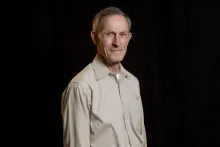
David Mills was born near Wallace, North Carolina, in 1939, where he grew up on a family farm. After high school he attended Ambassador College in Pasadena, California, and he graduated in 1962.
Since that time he has served as a minister of the Church in Washington, Florida, North Carolina, South Carolina, Oregon, West Virginia, and Virginia. He and his wife, Sandy, have been married since 1965 and they now live in Georgia.
David retired from the full-time ministry in 2015.
