
Robin S Webber
This transcript was generated by AI and may contain errors. It is provided to assist those who may not be able to listen to the message.
Every Sabbath? Thank you for that beautiful piece of special music. We really have a professional here. Mr. Morrion is not the kind of person to toot his own horn. Maybe he is, but anyway.
We really have a professional musician here. He's written hymns in our hymn book. He's played professionally for many years, and that was beautiful. And also, a wonderful segue into a discussion of the Feast of Trumpets, which we're going to be talking about. I just want to mention that we did have a number of prayer requests, and so I do hope you remember all of those in your prayers. Maurice, my mom, and I had a chance to visit Neil Boynton in the hospital today. We were running a little bit late because of that, but he really was looking at a triple bypass in the mid-50s, and that's a pretty big deal for him. And as we faced a lot of trials, and it was wonderful to start with the encouraging one. I almost wanted to clap about Jan. I was holding myself back. But anyway, we know that God hears our prayers, and he does heal, and so please do keep all of them in your prayers. Well, I want to ask, to begin here, where were you on 9-11? Remember you on 9-11?
Now if you're under 20 years old, you're probably thinking, well, I don't know. I wasn't born. I was in a crib. So if you're under 20, that question may have less resonance with you.
But for most of us over 20, it does mean something. Our daughter was five years old that day, and our son was nine years old on 9-11, 2001, and we got them out of bed that morning in the craziness of the morning as we had the TV on, and we told them that today was a day that they would remember for the rest of their lives. That today was a day of great sorrow, and we brought them in front of the television, and we explained what was happening, that there had been this attack on these big buildings in New York, and that there had been one plane, and then there was another plane, and then there was another plane in another location, and there was going to be a fourth plane at the White House, and yet it had been diverted.
Our optometrist lost his nephew that day in the plane that went down that should have hit the White House if it wasn't for the bravery of those people on the plane. And in the slow hours of that day, as I went to work, and I think many of you remember, I went to work, and my work colleagues and I sat around the television, and we watched the aftermath, and we hung on every scrap of news and information that would come out. We said, wow, you know, I mean, how many people were in those towers? Could there be 5,000 or 10,000 or 20,000 people killed in these two towers? And there was, in those moments, then, an indelible mark made in my mind of where I was. The burning towers, the images of people jumping to their death to escape being burned alive, the smoke, the tens of thousands of pieces of paper that were raining down on New York City. All these important things that mattered just that morning and became so unimportant in the events that unfolded. The exhaustion, the despair, the confusion. The makeshift bulletin boards that we remember that were put up with pictures of people. Have you seen this person? They're missing.
You know, I heard people talk about how they remembered just where they were and what they were doing when President John F. Kennedy was shot. That's not part of my life experience. I wasn't born. But growing up, I heard that all the time. I knew just where I was. And people would say, where were you? Where were you when this happened? Just like a generation previous, and there are few of them among us now who remembered where they were and what they were doing when the Empire of Japan attacked Pearl Harbor on December 7, 1941. Where were you on 9-11? Where were you when the Empire of Japan attacked when John F. Kennedy was shot? Now, we've passed through another anniversary of the worst attack on the United States soil.
Nearly 3,000 people killed. And from this event have come cascading impacts, the overthrow of the Taliban in Afghanistan, and now an 18-year war to continue that overthrow. And even just recently, we heard this thing about a potential peace negotiation that was going to happen in Camp David. The war in Iraq, the war on terror, ISIS, attacks in Paris, in London, in cities around the world. We understand that the world changed forever on September 11, 2001. And we live with those impacts today.
Ariel Durant, co-author with her husband Will Durant, on five volumes of his 11-part series on the history of civilization, wrote in a fairly simple and easy-to-read book called The Lessons of History. I recommend it. It's a very short read. She said, the present is the past, rolled up for action. That is, if you want to understand the present, just roll up all the past, and it just is spilling out on us right now. And the past is the present, unrolled for understanding. That is, if you want to understand the present, just look at the past. It's all unrolled and all unfurled there for you, and you can just see it right there. If you just look, the present is the past, rolled up for action, and the past is the present, and rolled for understanding. Let's look at the past as the present, and rolled for understanding in Matthew 24, verse 21. Matthew 24, verse 21, I think this is exactly what Mrs. Durant was describing when she said, if you want to understand the present, just look at the past. It's just unrolled for us to see. Matthew 24, verse 21, a prophecy of times ahead, a prophecy of times ahead from our elder brother sharing insights and understanding of things that were revealed. For then there shall be great tribulation. Much has not been since the beginning of the world until this time, nor ever shall be. And unless those days were shortened, no flesh would be saved alive. But for the elect's sake, those days will be shortened. Ariel Durant's husband, Will Durant, writing in that same book, Lessons of History, says this, in the last 3,421 years of recorded history, only 268 have not seen war. This past week, as we remember 9-11, we also now look forward to the annual reminder of where this is all going. And I appreciated this sermonette about the Feast of Tabernacles. On Monday, September 30, we will observe the Feast of Trumpets in the San Ramon Community Center. And then in October, we will observe the Day of Atonement, the Feast of Tabernacles, and the Eighth Day. Now I can't be with you for the Feast of Trumpets, as I'll be with our brethren in Cotonou Benin. And they also will endure that awkwardness of the photo that you just endured.
We'll share that. And from what I understand, they're supposed to put a collage together of something like, you know, 50 congregations. So that's how that all comes together. But today I would like to turn our attention to preparing physically and spiritually for the upcoming Fall Holy Days, commanded to be observed for all times in Leviticus 23. And in the case of the Feast of Tabernacles, specifically mentioned as a required celebration for all mankind upon Jesus Christ's return. Are we prepared for these days?
It's at this time of the year that we often ask, where will you be for the Feast? Where will you be for the Feast? But I would like to rephrase that question. I would like to rephrase that question as if it had happened. And I would like to ask the question, where were you? Where were you when that light in the sky came and Jesus Christ returned? We understand that there are prophetic events that will lead up to that.
A place of safety is described. The Church being taken on the wings of a great eagle to a place of safety, where they will be protected for a three and a half year period. And so, just so we have confusion, I don't think we're going to be just coming out of work like everything is normal. But the fact is that it will be a time that we remember, just like we remember 9-11, or we remember these events in our lives.
Because I think the phrase, where were you, evokes that kind of awe, that kind of reverence for that moment, of when our soon coming King Jesus Christ is going to return to this earth, and he is going to establish a world ruling government for a thousand years, assuring in a time of peace. And the resurrection of all those who have lived and died after that thousand years. And he is not just going to come on his own, but as Paul says, all those who have died in the faith will be resurrected at that time.
And all those who are still alive will be caught up in the air to meet him. And so today I want to share some thoughts on the meaning of the Feast of Trumpets, including how we should respond to world events. And also, I want to ask you to take two actions in preparation for the Feast of Tabernacles, and I'll share that with you when I get to that section. So again, the title for today's message is, Where Were You?
Let's start our discussion in Psalm 81. Psalm 81, verse 1-6. Psalm 81, we don't often go to this Scripture, but we sing it all the time. So as I read this, you'll be like, Oh yeah, I know that.
We've sung that. Well, we sing it because, yeah, it describes an important part of God's plan. Psalm 81, verses 1-6. It says, Sing aloud to God our strength. Make a joyful shout to the God of Jacob. Raise a song and strike the timbrel, the pleasant harp with the lute. Blow the trumpet at the time of the new moon.
And this is a reference to the Feast of Trumpets. The new moon here is capitalized in my Bible. It's a reference to the Feast of Trumpets. And at the full moon on our solemn feast day. And again, likely a reference to the Feast of Tabernacles, which will take place this year, beginning on the evening of October 13th. For this is a statute for Israel and a law of the God of Jacob. This he established in Joseph. He established it in Joseph. Sometimes people want to say these holy days were given at Sinai by Moses and so forth.
But it says here, this was established in Joseph for a testimony. When he went throughout the land of Egypt, where I heard a language, I did not understand. I removed his shoulder from the burden. His hands were freed from the baskets. And so what is likely being described here is that there was a prophecy and Joseph understood it and that this would be the time of freedom as well for God's people.
On the first of Tishri, the Feast of Trumpets is a pivot point in human history. A pivot point when human governments give way to godly government. We don't have to turn there. In Matthew 24, verse 31, it says that he shall send his angels with the sound, the great sound of a trumpet, and they will gather together his elect from the four winds from one end of heaven to the other.
That's what's going to happen. His saints are going to be gathered. 1 Corinthians 15, 52 says, For the trumpet will sound, and the dead will be raised incorruptible, and we shall be changed. That's what's going to happen on the Feast of Trumpets. Revelation 11, verse 15 says, Then the seventh angel sounded, he sounded his trumpet. And there were loud voices in heaven, saying, The kingdoms of this world have become the kingdoms of our Lord and of his Christ, and he shall reign for ever and ever. Christ returns. The dead are raised.
We are changed in the twinkling of an eye for those who are still alive. And we are gathered from the four corners of the earth. Whether you're in Benin, or you're in Australia, or you're in San Francisco, or you're in Santiago, Chile, we are gathered. All these references refer to the events that are going to take place on the Feast of Trumpets. But let's turn to Isaiah 27. I do want to read that reference. Some of these references I've read, I just referred to, we may have read before, but I want to just go to some that maybe we don't go to as often.
Isaiah 27, verse 12 and 13. Isaiah is called one of the major prophets. He's a prophet. This is a prophecy. This is actually a sermon on prophecy. Isaiah 27, verse 12 and 13. Let's read this together. And it shall come to pass in that day, that the Lord will thresh. That's an interesting term. He'll thresh. The New Living Translation says, gathered together like hand-picked grain. Young's literal translation says, beat out. He's going to find, he's going to actively find his people. He's going to beat out. He's going to thresh. From the channel of the river to the brook of Egypt.
And you will be gathered one by one. And you, children of Israel. Children of Israel. We don't need to turn there, but you can make a note. If you want to make a note in your Bible, Galatians 6, verses 15 to 16 says, that we are the Israel of God. We are the Israel of God. Those who understand and are a new creation in Christ.
In verse 13 it says, And so it shall be in that day that the great trumpet will be blown. They will come who are about to perish in the land of Assyria, and they who are outcast in the land of Egypt, and shall worship the Lord in the holy mount at Jerusalem. God will gather his people, and he'll begin it with a blast of a shofar on the Feast of Trumpets to announce that the grand experiment of human governance has failed. This grand experiment that we had 6,000 years to try and figure out, like we could do this on our own. Yeah, we've done amazing things as humankind. You know, it's the tree of the knowledge of good and evil. We've done amazing things. We talk about a triple bypass. That's an amazing thing. Life can be extended because of these things. In fact, our lives are being extended because of that. Amazing things. And yet, we can't figure out how to get along. We can't figure out how to be at peace with one another. We have at every chance. But in our own arrogance, we thought we could run the world better than God. That's what the decision was made back in the Garden of Eden. And because of that, we have put ourselves on the brink of extinction. This week, we reflected on 9-11. But I want to take us back to another September day. September 2, 1945, when General Douglas MacArthur gave a radio address from the deck of the battleship Missouri in Tokyo Harbor. It was at the conclusion of the surrender ceremony that he gave a short radio address. And I would like to read from this address, as I think it sums up very well, the situation we face today. This is quoting from General MacArthur. He says, quote, Today, the guns are silent. A great tragedy has ended. A great victory has been won. The skies no longer rain death. The seas bear only commerce. Men everywhere walk upright in the sunlight. As I look back on the long, torturous trail from those grim days of Bataan and Corigador, when an entire world lived in fear, when democracy was on the defensive everywhere, when modern civilization trembled in the balance, I thank a merciful God that he has given us the faith, the courage, and the power from which to mold victory. We have known the bitterness of defeat and the exaltation of triumph, and from both we have learned there can be no turning back. We must go forward to preserve peace, what we won in war. A new era is upon us. Even the lesson of victory itself brings with it profound concern, both for our future security and the survival of civilization. The destructiveness of the war potential through progressive advances in scientific discovery has, in fact, now reached a point which revises the traditional concepts of war. Various methods through the ages have attempted to devise an international process to prevent or settle disputes between nations. From the very start, workable methods were found insofar as individual citizens were concerned, but the mechanics of an instrumentality of a larger international scope have never been successful.
Military alliances, balances of power, leagues of nations, all in turn failed, leaving the only path to be by the way of the crucible of war. We have had our last chance. If we do not devise some greater and more equitable system, Armageddon will be at our door.
The problem, basically, is theological. Again, I'm quoting General MacArthur. The problem, basically, is theological, and it involves a spiritual recrudescence. Recrudescence, that's a 50-cent word. We don't generally use that word. It's a very powerful word, and it's a type of renewal, but it's a renewal that describes an immense multiplication, an immense growth, a spiritual recrudescence, an improvement of human character that will synchronize with our almost matchless advances in science, art, literature, and all material and cultural developments of the past 2,000 years. It must be of the spirit if we are to save the flesh. I thought that was a very powerful quote. Will and Ariel Durant, along with thinkers and philosophers, have bemoaned our inability as human beings to learn from the mistakes of our past. I remember years ago listening to a sermon by a pastor at that time in the World Wide Church of God named John Halford. Mr. Halford had traveled extensively through China. He was involved at the highest levels at that time when contacts in the World Wide Church of God were having meetings with Ding Xiaoping and other leaders. The church was very involved in the early development of Chinese industry and so forth.
He described sitting across the table from some of the leaders in China and from other world leaders. He was reflecting on the election of Bill Clinton. You might not realize this, but John F. Kennedy was a soldier in World War II. He led a PT boat. There was a very famous swim where he saved his PT boat crew from certain death. George H. W. Bush, who just passed away, was World War II's youngest pilot. He was a pilot in World War II. In fact, he jumped out of planes. He would jump out of planes for the D-Day commemorations and so forth. Mr. Halford was reflecting on how Bill Clinton had no experience with World War II and the trauma that came from that. He described the fact that at that time, world leaders had all come out of that enormous conflict, the greatest conflict the world had ever known up to that point, and that their decisions were tempered by what they saw and what they experienced. But that a generation would arise, a generation that began with Bill Clinton in the United States and continues today, that has no experience with World War II. And that when that generation of world leaders around the world comes to a point where they have no experience with World War II, that is when the world will be at risk of repeating that same mistake. And that's where we are today. That's where we are today with our world leaders. It is not in their life experience of the trauma of what World War II meant. We live in that day today. We saw the last commemoration with living participants of the D-Day invasion, the 75th anniversary of the D-Day invasion, just a few months ago. And I think that is why the Bulletin of Atomic Scientists reaffirmed that humanity's doomsday clock should remain at two minutes to midnight for a second year in a row in 2019, because we are at the highest risk setting ever. We are at the same risk setting that was given by the Bulletin of Atomic Scientists in the 1950s at the height of the Cold War. That's where we are today. Where were you? Now is the time to consider the meaning of these days, not by being a doomsday prepper. That's not what we're talking about. We're not talking about going out and stocking ammunition and figuring out how to hunker down in a bunker with a lot of preserved cans and food. That's not how we prepare for that day. Now is the time to be right with God.
Now is the time to be right with our fellow neighbor, to confess our sins to God, to reconcile with our brother. Now is the time to commit to following God's laws and also following God's grace.
Now is the time, as I said, to not hunker down and wait for the end of the world, but to do what our elder brother said, which is to fill our lamps with the Spirit, that we might be ready. Let's read his words. Let's go to Matthew 25. Because when I hear people talk about the end of the world, well, it's the end of a world. That's what we're talking about. It's not the end of the world. It's the end of a world. And when I hear people talk about the end of the world, as they say, the end times, all these types of things, typically what I hear are conspiracy theories and biblical codes and stocking ammunition and so forth. But when I think about it, it's Matthew 25, because we read in Matthew 24 about how this is going to be. Unless those times are shortened, no flesh would be saved alive. This will be the worst time of all. And after he gives these prophecies in Matthew 25, he says, how do we respond to it? Matthew 25. Let's start in verse 1.
I encourage you to read the parable of the ten virgins who went out to meet the bridegroom tonight. And then in verse 14, we have the parable of the talents. It says, for the kingdom of heaven is like a man traveling to a far country who called his own servants and delivered his goods to them. And to one he gave five talents, to another two, and to another one, to each according to his own ability, and immediately he went out on a journey. But we know the story. The servant who hunkered down, who hunkered down and like, you know, I don't know what's going to happen, I'm just going to bury my talent. That's the servant who was the unprofitable servant. The rest of the servants had to go out, they had to work. They had to get to work. They had to be doing things, they had to be active, they had to be letting their light shine, they had to be the salt of the earth. They had to be producing something so that when their master came back, they could give him a good report. That's what we should be doing. And then, in verse 31, we see that there is going to be a judgment when this time comes. It says, in verse 31, when the Son of man comes in his glory and all the holy angels with him, then he will sit on the throne of his glory, and all the nations will be gathered before him, and he will separate them one from another as a shepherd divides his sheep from the goats. And he will set the sheep on his right hand and the goats on his left. And the king will say to those on his right hand, Come, you blessed of my father, inherit the kingdom prepared for you from the foundation of the world. And what does he say about this? Why is it those people get to be on that right-hand side?
He says, For I was hungry, and you gave me food. I was thirsty, and you gave me drink. I was a stranger, and you took me in. I was naked, and you clothed me. I was sick, and you visited me. I was in prison, and you came to me. See, that's active. There's no hunkering down there. That's involved. That's active. That's engaged. That's showing love for our brethren. That's showing love for our communities. That's showing love for our fellow man, for our neighbors.
That's how we prepare. We understand what things are going to happen in the future, and we are filled with God's Holy Spirit. We are actively engaged, and we are serving one another.
And they said in verse 38, When did we see you a stranger and take you in, naked and clothed you? When did we see you sick or in prison? And the king will answer, and say to them, Assuredly I say to you, Inasmuch as you did it to one of the least of these, my brethren, you did it to me.
In verse 41, Then he will say also to those on the left hand, Depart from me, you cursed into everlasting fire, prepared for the devil and his angels.
And as we read verse 42, you can almost hear, Where were you when I needed you? Where were you when the person was hungry? Where were you when the person needed help? Where were you?
For I was hungry, and you gave me no food. I was thirsty, and you gave me no drink. I was a stranger, and you did not take me in, naked, and you did not clothe me, sick and in prison, and you did not visit me.
Where were you?
That's what the Feast of Trumpets is about, and that's how we prepare.
We have to prepare spiritually for this day. And that's what these annual Holy Days are about, to remind us of these things.
To remind us. Now, we have to prepare physically for the Feast of Trumpets, but it isn't quite as involved. It's a Monday. You need to be there on time. It's 10.30 at the San Ramon Community Center. Don't be late. It's not that complicated.
But the Feast of Tabernacles is a little more complicated, and so I want to transition and talk about the Feast of Tabernacles just a little bit, because again, I'm talking about the entire Holy Day season.
After the Feast of Trumpets, we're going to observe the Day of Atonement on Wednesday, October 9th at Brotherhood Way in San Francisco.
And I'm going to be in Bordeaux there on that day. We're going to be hosting a virtual live service for all those in Europe and Africa who desire to join us, to hear services in French that day.
And over the coming weeks, I expect that you'll be hearing more about the meaning of the Day of Atonement, and I encourage you to read Leviticus 16 in anticipation of that. I encourage you to read Leviticus 16 to understand the ceremony of the Azazel goat and the underlying prophecy of what that would mean for Satan taking on responsibility for what he has done.
Then, beginning on Sunday evening, October 13th, and continuing to Monday evening, October 21st, we will observe the Feast of Tabernacles and the Eighth Day.
I'd like to share a few thoughts on that festival as you are preparing. So let's turn over to Deuteronomy 14.
This will complement well our sermonette where we went to Deuteronomy 16, but let's go to Deuteronomy 14 in verse 22.
Deuteronomy 14 and in verse 22.
And let's read verses 22 and 23.
Deuteronomy 14, verse 22 and 23.
It says, Now, speaking of the requirement to save a tenth of our income, Now, speaking of the requirement to save a tenth of our income, to observe the Feast of Tabernacles, Moses, under inspiration, tells us that this is so that we might learn to fear God.
It's the second tithe. It's the second tithe, and it's traveling to the feast and observing the feast and having a great time.
That's what teaches us to fear God.
Now, going to the feast and tithing requires planning.
It requires work. It requires prioritizing our spending.
You know, we stay in a temporary dwelling. We read that in other places here, but we have to stay in a temporary dwelling.
And why do we do this? Well, we do this to recognize God's saving power in history.
We read that in Psalm 81. We do this to rejoice. We're going to read that in a moment.
But we do it primarily to learn to fear God, to learn to fear God.
And fearing God means we have respect. We have awe. We have reverence.
Fear often is a negative thing. But even in a negative thing, sometimes when we fear something enough, we are more motivated by that than we're motivated by love.
God wants us to do the things that He's told us to do.
And when we do that, we recognize that we fear God in the right way that we want to do what He's told us to do.
Jesus Christ kept the Feast of Tabernacles, as we read in John 7.
The early church certainly kept the fall feast, as we know Paul marked time by the Day of Atonement in Acts 27.
And He went up to Jerusalem, Paul went up to Jerusalem to keep the feast day in Acts 18, verse 20-21.
It's a little unclear which feast that was, but clearly the Feast of Pentecost is extensively discussed in Scripture as well in the New Testament.
We observe these days as a way of learning to fear God.
Look over in Psalm 112. We'll come back to Deuteronomy, but I want to read this psalm, because it reminds us just how important the fear of God is.
The fear of God, a lot of times we think about fear as trying to avoid something, but with God, godly fear is about being blessed.
Psalm 112, verses 1-3 says, That's what comes from fearing God.
Solomon wrote in Proverbs 9, verse 10, We save a first tithe for the modern Levite to preach the gospel and to prepare a people, but we save a second tithe to spend on ourselves on these feast days, and specifically on the Feast of Tabernacles, to learn to fear Him.
Last year, around this time, Bob Cozery gave a great message on how to think about saving the tithe and, you know, separating a separate bank account and good uses of second tithe and how to enjoy second tithe and guidelines. I encourage you to go back and listen to that message. It's online. It's a very good message.
But go back to Deuteronomy 16, and let's read the instruction directly regarding the second tithe. Deuteronomy 14, and now we'll read in verse 24.
Deuteronomy 14, 24.
Deuteronomy 16, 24.
Deuteronomy 16, 24.
And you shall spend that money for whatever your heart desires, for oxen or sheep, for wine or similar drink, for whatever your heart desires you shall eat there before the Lord your God, and you shall rejoice you and your household. Whatever your heart desires, good meals, fine wines, aged scotch, right? It's in the Bible. Nice things to enjoy at the time of rejoicing. And many might say, well, how can I rejoice when I see all this craziness around me? How can I rejoice when there's so many people suffering the way they are and people have so little? Well, that's why we understand the Feast of Tabernacles in the context of the Feast of Trumpets, the Day of Atonement, and the Fall Holy Day season, and we understand that God has a plan for all mankind. And specifically in terms of those who have less, well, we understand that God has a plan to make sure that those people are cared for. And those people are cared for, too. Verse 27, You shall not forsake the Levite who was within your gates, for he has no part nor inheritance with you. And so we're going to introduce now and understand this third tithe. At the end of every third year, you shall bring out the tithe of your produce of that year and store it up within your gates. And the Levite, because he has no portion nor inheritance with you, and the stranger, and the fatherless, and the widow who are within your gates, may come and eat and be satisfied that the Lord your God may bless you in all the work of your hand which you do. And so there is a third tithe that's saved every third year. Today in the Church we understand that in many modern societies, including ours here, we are taxed well beyond 10% for social welfare programs to provide food stamps, to provide SSI, to provide other forms of financial support, the earned income credit, disability. All those come from our taxes, and those taxes are generally more than 10%. And so the Church, recognizing that, has said that it is certainly appropriate to save a third tithe every three years. Technically, this would be an annual tax of about 3%, just over 3%, because there's a rest every seven years, and we are certainly taxed more than 3% for this. And so the Church said you can certainly save that third tithe according to this, or if you decide not to, that is fine too, because we are taxed and we provide that. And so today we pay this in the form of different social programs. But the principle is still there. We are to care for the poor. We are to care for those who have needs. And not just poor physically and monetarily, but those who are lonely, those who are suffering. We are to think about them all the time, and especially at the feast. Especially at the feast. Where were you when you realized this was important? Where were you when you gained the courage to step out in faith and save a second tithe? Where were you when you stepped into the auditorium of people for the first time and kept the feast? Let's turn over to Zechariah 14, verse 16. I made reference to it, but let's just make sure we read it together.
Because going to the feast, observing the feast, is a way that we understand to fear God. It's a way to be blessed. It's a way to rejoice. It's a way to remember God's saving power. But God also has a sanction if we don't keep the feast. It says, Zechariah 14, verse 16, And it shall come to pass that everyone who is left of all the nations which came against Jerusalem shall go up from year to year to worship the king, the lord of hosts, and to keep the feasts of tabernacles. And it shall be that whichever the families of the earth do not come up Jerusalem to worship the king, the lord of hosts, on them there will be no rain. At Christ's return, people are going to be sanctioned. It's a sanction, right? You're not getting your hand cut off. It's not the death penalty. It's a sanction. It's an incentive.
Guess this isn't very helpful if you don't get any rain. It's a sanction. If they don't keep the feast, why would it be any different today for those who are called and have an understanding? If we don't go to the feast, why would God not sanction us? Give us a little reminder of like, that's not what I really want for you. It's important that you go to the feast. Now, you might be thinking, well, that isn't me. I keep the feast every year. I save my second tithe. I've been faithful and so forth. Well, I'd like to put something into your thinking. If you go over to James 1, verse 27. James 1, verse 27. So, for most of us in the room, we go to the feast. We keep the feast. We save our second tithe. We're very thankful for the feast and what it means. We are lights. We migrate, as we heard in the sermonette.
But for most of us, I'd like us to consider James 1, verse 27. It says, pure and undefiled religion before God and the Father is this. To visit the orphans and widows in their trouble and to keep oneself unspotted from the world. When we keep the feast, we cannot forget the orphans and the widows. And by extension, this means those who are alone and who are less fortunate. Sadly, I have spoken to people who have kept the feast for the first time, or unmarried people, who are by themselves keeping the feast. And they've told me they felt lonely at the feast. And nobody likes to feel lonely in a crowd. That's the hardest. It's one thing when you're alone and you know you're alone. And you can like, okay, I'm alone, but pretty soon I'm going to be with friends, or pretty soon I'm going to be with these people. But when you're alone in the crowd, that's a certain kind of painful loneliness. Why? Well, because they go to the feast, and I just had this conversation with somebody. They go to the feast, and after services, guess what happens? Boom! Everybody's gone! Where did everybody go? I thought I was going to keep the feast! Everybody's gone! Because? Why? Well, because there's plans. People have plans, you know? It's like, we're heading off to here, we're heading off to there, you know, we're getting together with these people, we're getting together with those people. And guess what? If you're not in all those plans, you're kind of looking around at a kind of, you know, a little echoey hall. And that's hard for people. That's hard. Those who have kept the feast for years have made plans on how they want to rejoice and spend their second tithe. But that single mom and her daughter, who don't know many people, can feel alone. That first-time feast-goer can wonder what happened. So right now is the time that you're finalizing your budget, that you're making your plans for the feast. And I ask you to consider two things. Two things. One, pray that God would lead you to that first-time feast-goer that you can invite them out and build a friendship. Pray that God will lead you to that first-time feast-goer, that first-time feast-goer. I want to share a story that my wife and I, when my wife and I went to Australia, 2005, I think it was, we had the opportunity to rent a house near the beach. And it was the first day of the Feast of Tabernacles. It was the morning. We got up and we ran out to the beach and we took a walk on the beach. And it was just such a beautiful, beautiful morning. And a lot of interesting sea creatures kind of rolling up there. And we were saying hello to people as we would pass people on the beach. And we stopped at this, we were looking at something and there was this other young man there. And we started talking to this guy. And we struck up a conversation. We were talking like 20 minutes. And eventually it kind of dawned on us to ask him why he was here. Or, you know, because he didn't seem like he was from Australia. He says, I'm here to keep a religious convention. We're like, oh, us too. Well, yeah, he was there to keep the feast. But he was by himself.
He grew up in a small Church of God community. Not part of the United Church of God, but keeping the feasts in the Holy Days. Just a very, very small group. And this was his first feast outside of that group ever. And he was on his own, guy in his early 20s. So we invited him up for breakfast. We had a wonderful breakfast. And we got to know him over the feast. And a few years later we saw him together on his weekend here in Placerville.
And so, you know, that was very meaningful for us because we were just happy to have the conversation with the guy. We had no idea who he was. He was just a guy on the beach. And then we realized, well, he's actually part of the body of Christ. So pray that God would lead you to that first time. Now, it wasn't a first-time feast-goer for him because he had been keeping the feast his whole life. He had grown up. But that was really his first time on his own. He was in a new place. So I think you understand that first time can mean a lot of different things.
And two, ask God for an extra measure of his spirit to lead you to those people after church who need encouragement.
Ask God for an extra measure of his spirit to lead you to those people after church who need encouragement. The orphaned, who have no place to go.
Let's commit that no one will feel alone at the Feast of Tabernacles.
That everyone keeping the feast for the first time will feel welcomed.
This is pure and undefiled religion. Because we're looking after the orphan and the widow, even if maybe they aren't orphans or widows, but they are in that condition, in that state.
Where were you?
Where were you when those people needed help? Where were you when that moment came and you realized the feast was important? Where were you when Jesus Christ returned?
Now is the time to engage in actively preparing for the fall holidays. Whether it's thinking about your budget, planning, making sure you get all your documents together so you don't show up and realize, oh, I'm in the wrong airport. I was flying out of Oakland. I thought I was flying out of San Francisco. These things happen. You miss your flight. So forth. All your documents are together. All your ducks in a row. We have a role in attending the Feast of Tabernacles to learn to fear God. We have a role in preparing for the Feast of Trumpets to understand the meaning of that day and to support our brothers and sisters. Let's prepare now to rejoice.
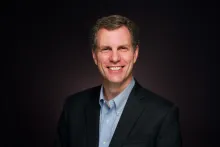
Tim Pebworth is the pastor of the Bordeaux and Narbonne France congregations, as well as Senior Pastor for congregations in Côte d'Ivoire, Togo and Benin. He is responsible for the media effort of the French-speaking work of the United Church of God around the world.
In addition, Tim serves as chairman of the Council of Elders.
