


Robin S Webber
This transcript was generated by AI and may contain errors. It is provided to assist those who may not be able to listen to the message.
The title of today's message is simply this, that you may learn to fear the Lord always. That you may learn to fear the Lord always. Perhaps we've heard that before. You say, I've heard that one. It's been given to us before. Can any of you out there perchance give me the context in which that has spoken? The Feast of Tabernacles. Mr. Howe has broken the suspense, and he has saved all of you, biblical scholars. Join me, if you would, in Deuteronomy 14.
Let's take a look at God's revelation to all of us. And we'll begin in verse 22. In Deuteronomy 14, in verse 22, let's focus on some spots, and then we'll move along. You shall truly tithe all the increase of your grain that the field produces here by here. So it speaks of a tithe. It speaks of a tenth. And you shall eat before the Lord your God, and in the place where he chooses to make his name abide.
The tithe of your grain, your new wine, and your oil, of the firstborn of your herds and your flocks. Why? For what purpose? That you may learn to fear the Lord your God, always. But if the journey is too long for you, so that you are not able to carry the tithe or the place where the Lord your God chooses to put his name is too far from you, when the Lord your God has blessed you, then you shall exchange it for money. Take the money in your hand and go to the place which the Lord your God chooses. And you shall spend that money for whatever your heart desires, for oxen or sheep, for wine or similar drink, for whatever your heart desires.
And you shall eat there before before the Lord your God. And you shall rejoice, you and your household. Sometimes people kind of say, well, what kind of a church do you belong to? I say, I'm in a church where we read that God commands us to rejoice. They say, well, that's pretty interesting. Now let's review for a moment some of the key words that we have read over here for a moment before we advance. Number one, we hear of a tithe, which is a tenth that is spoken of. We also come across this concept in verse 23 that we are to learn to fear the Lord always.
What is very interesting if you're jotting down notes, verse 23, verse 24, and verse 25 has a certain important rhythm to it, just like the hammer of the blacksmith pounding away on the anvil in the barn. And I'd like to point it out to you. It says, where he chooses, where he chooses, where he chooses. In other words, friends, there is a profound centering that is occurring in the course of this reading, and that is that this particular feast is not about us at all. It's about God, and that's an important realization to come to.
And verse 26, another major word that we look at is that indeed we are to rejoice. Perhaps the key phrase that comes out of all of this, the collection of words that we want to center on for a moment, is the word fear, because it says that the reason why we are to collect this tithe and to utilize it is for a very specific purpose, and that is to learn to fear the Lord always.
Now what does that mean? And sometimes we have some young people, especially over here to my left, that are young, and it sounds like, well, what are we getting into? A fear religion? And that's not what we're talking about at all.
The word fear there can best be rendered. I like to use the American Heritage Dictionary. It is defined as a feeling of profound awe and respect. Profound awe and respect. This collection of tithes, this transaction, especially back then in an agrarian community, in antiquity, to where if it was too far that they would actually change the grain, they'd change the livestock, they'd change the whatever and put it into money so they could travel.
And all of this time, and all of this energy, and all of this effort was devoted towards one specific end result. And that is that they might learn to fear the Lord always. I'd like to kind of put it this way for a moment. You might say what these verses are telling us in Deuteronomy regarding the upcoming Feast of Tabernacles 2010 is that we are offered a prime directive. Some of you that watch television, perhaps have even watched Star Trek, know of the term the prime directive. Well God gives us a prime directive right here regarding this festival, and that is that we are to experience God, where He has placed His name, where He selects, where He chooses, that He does not come to us but we go to Him, to learn to experience Him, to revere Him, to come to an awareness of the all of His purpose and His plan, not only for us but for all of humanity.
Now when we look at this term that we see in verse 22 of tithes, we recognize many of you that our Bible students that the tithe means a tenth, and we recognize that in other portions of Scripture it talks about a tithe to God which goes specifically to Him, to honor Him.
This tithe is a different tithe. It's for a different reason. I'd like to talk about that for a moment because the tithe that is also mentioned in the Bible, the other tithe, is to honor God and to give to Him. And so we collect it and we offer it up to God to honor Him, to bless Him, to praise Him, and that it might be used for His work.
This tithe now is a little bit different. I want you to stay with me for a moment because this is interesting. In this passage that we're reading, it's another tithe. And we do spend it on ourselves for traveling and eating expenses associated with the biblically mentioned annual Holy Days. And this tithe, even though we spend it, this is where we've got to think this through for a moment, okay? Are you with me? And even though we spend it on ourselves, it is designed for the specific purpose of honoring Him. We collect it. We spend it on ourselves, as it were, during that time, but it's all about Him.
Are you with me? Now we've got to think this through because we can't do this with our own human, natural spirit. That's why we need the Spirit of God during these annual festivals, quote-unquote, to get it spiritually right so that we can come up to the prime directive, that we can learn to give God respect and awe and deep reverence, and even in that sense, fear Him. It's interesting that it says back there in Deuteronomy, it says that we might come to learn. It's not an event. It's a process, and that's why we have to come back year after year and after year to not only rehearse the meaning, but to rehearse the process and understand it.
Now why am I sharing this with you today, you that are here in San Diego, and our delightful visitors that are with us today? Simply this. Very basic. What we call this tithe, sometimes we call it the festival fund or the second tithe, is not simply play money for a church convention, but in the greatest sense, is reserved for God through you to be set aside for a holy purpose. Going to the feast is not about a vacation. It's about a vocation to learn God's will and to experience Him.
Now I'm going to use that term for a moment. You might want to jot it down. Important term. Think about it. We go to the feast to experience God. If you're just planning to drive to a destination, you're missing the point. We go to the feast to experience God, to receive His revelation, to receive His blessings, to understand our own lives as they happen day in and day out, because you and I know not everything always works just like we planned at the feast. Am I talking to the right crowd? Or, is Susan and I the only ones? We come to the feast to understand that a holy God has called a holy people to reserve a holy tithe for a holy purpose. And that's a unique challenge.
We have a challenge, two key phrases that come out of this book. There's the scripture right here, which is our foundation for our discussion today. Two things. You might want to jot them down, and we're going to connect them together by the end. So don't leave halfway through the message.
We are to fear God, and we are to rejoice. But we're not going to be able to rejoice the way God wants us to learn to rejoice. We first of all don't fear God and understand the reason why He has us keep this tithe. So today I want to offer you four ways in which the festival tithe can develop your faith. Four ways in which the festival tithe can develop your faith. Well, you say, well, Weber, that sounds like about a two-minute sermon. Stand by. There's more.
Because we're going to expand upon that. Let's understand that all of the festivals of God center on Jesus Christ. They are also festivals of faith, and mission and money so often go hand in hand. God has created a system by which He not only gives us mission, but He also provides a means for us to save and reserve for Him through us that we might at this time learn to fear Him and also to rejoice. First point I want to give you then. Are you ready? Number one, the festival tithe allows us to renew our faith. Festival tithe allows us to renew our faith. Join me if you would in Deuteronomy 31. In Deuteronomy 31, and let's pick up the thought in verse 10. If you'll join me there, please. Now, as I go to verse 10, I want to share with you this was in the scripture a specific feast of tabernacles that is being spoken about. You may notice that, and if you did, good. That means you're reading. But the principles tie in with every feast and every feast of tabernacles. So with that stated out ahead, now join me in verse 10. Deuteronomy 31. Moses commanded them, saying, at the end of every seven years, at the appointed time in the year of release, at the feast of tabernacles, when all of Israel comes to appear before the Lord your God in the place he chooses, you shall read this law before all of Israel in their hearing. Gather the people together, men and women and little ones and the stranger who is within your gates, that they may hear and that they may learn to fear the Lord your God and carefully observe all the words of the law. And that their children who have not known it may hear and learn to fear the Lord your God as long as you live in the land which you cross to Jordan to possess. We notice in this set of scriptures there are very specific items that God wants us to incorporate and to experience. Number one, we are all to appear. Number two, where he chooses, not where we plant the flag. Number three, during that holy time, we are to carefully observe the words of God. During that time, we as ministers and our ministers around the world are preparing right now. They're not just simply preparing poetry, they're not just simply preparing psychology, they're not just simply preparing their own personal stories. Wherever you are attending, in Canada, the United States, over in Europe, down in South America, the prime directive says that we are to share the words of God with the covenant people. Number four, we are to pass it on to our children, to never take it for granted that they are just absorbing it. We're going to discuss that because so often when you notice what happens in the Old Testament, they had the instructions of old that it said that when your child asks you, Father, why did this occur? That we must be ready to have an answer for them. So what we're really talking about as we look at Deuteronomy 31 is really incorporated in a phrase that I picked up many, many years ago from Mr. Vern Hargrove, a down-home Texan. When he said the feast that we are going to observe basically has three parts. Number one, we gather the family. Number two, we break the bread. After all, it's a feast.
And number three, we tell the story. I think that's the most beautiful way of really sharing when the family of God comes together to observe the annual holy days of what it's all about.
But now let's take it a step further of why again the festival tithe allows us to renew our faith. Because God gives us a mission, we save the tithe, the tenth, reserved for him to work with us during the feast. But what is the story that is to be told? Join me, if you would, in Leviticus 23.
In Leviticus 23, because this is essential in understanding the mission, understanding what the tithe funding is about, and to understand then why we are to have deep awe and respect towards God. Leviticus 23 in verse 39. I will share this that so often in Church of God culture, if I can speak freely and honestly for a moment, so often we consider the Feast of Tabernacles in a forward motion. We think of the Feast of Tabernacles basically being a discussion of what the world will experience under Jesus Christ in the future. And we're going to get to that in the course of this message. But its antecedence and its foundation does not begin in the future.
The Feast of Tabernacles first points to the past. Let's understand that in verse 29. Leviticus 23 in verse 39. Also, on the fifteenth day of the seventh month, when you gathered in the fruit of the land, you shall keep the Feast of the Eternal. It's not the United Church of God Feast. It's not Robin Weber's Feast. It's not your Feast. It's the Feast to the Eternal. You're going to keep it seven days. On the first day there shall be a Sabbath rest. And on the eighth day, a Sabbath rest.
And you shall take for yourselves on the first day of the fruit of beautiful trees, branches of palm trees, the boughs of leafy trees, and willows of the brook. And you shall rejoice before the Lord your God for seven days. Notice how these words keep on coming back from chapter to chapter, verse to verse. Fear the Eternal and rejoice to learn that true spiritual tension that comes between those two concepts. You shall keep it as a Feast of the Lord for seven days in the year, and it shall be a Statute forever in your generations. And you shall celebrate it in the seventh month. And you shall dwell in booze for seven days. All who are native Israelites shall dwell in booze. Now why? Here we come, verse 43. Why was the Feast of Tabernacles instituted? That your generations may know that I made the children of Israel dwell in booze when I brought them out of the land of Egypt, and I am the Lord your God. It has the same sway as the beginning of the first commandment.
I am the Lord your God, which brought you out of the land of Egypt. You shall have no other gods before me. God always takes a people, a covenant people, whether of Old Covenant and or, if I may say, New Covenant, back to where He found us, back to where He discovered us, back to where we became a part of His mission and His purpose.
He always takes us back. Why? Last we forget. When you and I save that tithe, keep that tenth, it reminds us and it renews our faith that a good God not only rescued a slave people, but also rescued us when we were in spiritual slavery, when through Christ He broke the bonds in the chains of sin. It reminds us that there was a rescue. It reminds us that there was a champion. It reminds us that there was a deliverer. It reminds us that it was not a man. It was not a Moses. It was not, in whatever figure, whatever identity, whatever person you want to use over the last 50 to 80 years or the last five years, it is not about a man. Our champion, our deliverer, our rescuer is none other than God Almighty. Hearing about this plan at the face of Tabernacles bolsters our faith. Once again, surrounded by others, people of faith, that we have a champion God who has a plan. He does not do things accidentally. He knows where we are, whether he knew where Israel was of old on the mud banks of the Nile or where you were in La Mesa or Santee or Chula Vista or National City and or even the Valley Center. He knew where we were. He rescued us. He not only rescued ancient Israel, but he rescued you and me. The reason why you diligently save a tithe in the course of the year is so that you can begin with this end in mind and begin to have your faith renewed that God is your champion. We save this tithe throughout the year for a very specific purpose to remember that what God is doing is not about a destination, but it's about a way of traveling. God does not just simply want us to bump into his holy purposes on a holy day, but he gives us this methodology of matching mission with money, mission with funding, mission with tithe, that every day that we move along in the course of the year that we can remember about what? The good God, the champion Savior, the one that we are come to respect and love. Deuteronomy 4 and verse 9. One more verse and we'll go to the next point. Deuteronomy 4 verse 9.
Only take heed to yourself and diligently keep yourself lest you forget the things your eyes have seen, unless they depart from your heart all the days of your life. And it says to teach them to your children and your grandchildren. There's something about human nature that allows us to forget to remember and or we remember to forget and we begin to either give credit to ourselves or to a man other than to the almighty God. The feast days are an intensive time of focusing on this book of faith. We're going to be at a service every day. Open heart surgery. Here we come.
For God to reveal to us, to take us to the next steps of His spiritual creation.
This is why we tithe before God. What a blessing and what an honor to be able to do so.
God has given us the responsibility of saving a festival tithe throughout the year to renew our faith in Him as our deliverer, as our champion. Point number two.
We faithfully save the festival tithe as a test of faith. We faithfully save this festival tithe as a test of faith. And it is a testing. Join me if you would in Malachi. Now, the principles here basically are towards the... Malachi is right there at the end of the Old Testament.
And the principle here is basically regarding, shall we say that, what we might call the tithe towards God. But the principles carry over as well to the tithe that we maintain for the feast.
Malachi 3 in verse 10. Bring all the tithes into the storehouse, that there may be food in my house. And it says to try me now in this, says the eternal host, if I will not open for you the windows of heaven and pour out for you such a blessing that there will be no room enough to receive it. God says that tithing is a test. And absolutely it is. It proves God.
But it also proves our end of the relationship. Physically, financially, tithing test and proves our faith that God will provide, even when we don't necessarily see it. And I realize right now, brethren, and I'm speaking to many of you, I realize the challenges, the times that we live in, which are some of the most challenging economic times that we've had since our grandparents.
And I realize the challenge that sometimes you can look at a budget and it just doesn't seem to add up. And I can appreciate that. I do not say that standing up here, just propounding a scripture without thought and being in your shoes or in your moccasins, and recognizing the challenge. And it is a challenge. But also recognize on the other side how our God does bless us and how God will and does indeed make up the difference.
I have no way around it that it does take faith to tithe in this day and age. It also takes a certain kind of responsibility not only to tithe in the letter, but also with the right spirit.
I'd like you to join me for a second in the book of Matthew 6, right there in the Sermon on the Mount. Matthew 6 in verse 19. It says, Don't lay up for yourself treasures on earth where moth and rust destroy and where thieves break in and steal, but lay up for yourselves treasures in heaven where neither moth nor rust destroys and where thieves do not break in and steal. Verse 24, No man can serve two masters, for either he will hate the one, love the other, or else he will be loyal to the one and despise the other.
You cannot serve God and mammon. Therefore I say to you, do not worry about your life. When it says, Do not worry, that does not mean to have rightful and needful concerns. There is a difference between concerns and worry. God does want us to plan ahead, and He does want us to plan, but He doesn't want us to worry. Nor about your body, what you will put on it, is not life more than food and the body more than clothing. Verse 31, Therefore do not worry, saying, What shall we eat, or what shall we drink, or what shall we wear? For after all these things the Gentiles seek, for your heavenly Father knows that you need all of these things.
These verses speak about the treasures that are in heaven. The Feast of Tabernacles that you and I are about to observe are about the Kingdom of Heaven coming to this earth. Saving this festival tithe in the course of the year allows God to know your you do treasure that time that is coming up.
Keeping the tithe, keeping the tithe, is a test of faith that God renders upon us to see and know that we will come before Him and worship Him. I'd like to go to point number three.
The festival tithe allows us to express our faith. Express our faith.
Christians, we that are believers in this book that's on our lap, we firmly believe in the literal return of Jesus Christ. As Christians who observe the biblical holy days of God, we recognize that the feast days not only depict a festive celebration of a past rescue or of a physical nation, but that God has asked us to celebrate in advance and live out in advance a type of His rescuing Kingdom that is coming to save all of humanity. Gentiles as well as Israelites.
I believe that this is a revelation that God has given us. It's not something that we came up with.
It's not something that landed on our head, but to recognize that through the Holy Spirit that is in us as we look at the breadth of the scripture, we recognize that God is in a saving work of the past, with Israel, with the present, ourselves, and yet has a saving work through Jesus Christ for all of humanity. Now, when we go to the feast, let's understand something. We do not go to the feast just simply as Israelites of old and Jews to look back on Egypt of old. That's where we start.
That's a part of the scrapbook, but we don't stay there. We come to our present, recognizing God's saving grace upon us. But then the feast also, as we look at the words of the prophets and as we move into the New Testament, we recognize that it talks about and portrays an entire world that is going to be saved from a spiritual Pharaoh. Satan. Egypt is going to be delivered once again. And you and I go to the feast, not only to look back to the old, but to celebrate in advance and live out in advance in a type of what the wonderful world tomorrow is going to be all alike, when the world is going to be ruled by Jesus Christ for a thousand years. Join me, if you would, in Isaiah 25. Let's pick up the thought in verse 6.
And in this mountain, and mountain is a biblical term for kingdom or government, the Lord of hosts will make for all people a feast of choice pieces, a feast of wines on the lees, of fat things full of marrow, of well-refined wines on the lees. What world's going to look like Temecula? Napa and Sonoma. Just going to be a promised land. The surface of the covering cast over all the people. See, verse 7, let's back up. And he will destroy on this mountain that surface of the covering cast over all the people and the veil that has spread over all the nations, and he will swallow up death forever. And the Lord God will wipe away tears from all faces, the rebuke of his people, and he will take away from all the earth, for the Lord has spoken. And it will be said in that day, which means it's not today, but in that day in the future, Behold, this is our God.
We've waited for him, and he will save us. This is the Lord. We have waited for him, and we will be glad and, what? Rejoice in his salvation. Sounds like the book of Deuteronomy, doesn't it?
We are to rejoice in that day. We have the supreme privilege given to us by God to live out in advance in a type for a week, what the wonderful world tomorrow is going to be like. That takes us back then to Deuteronomy. Join me now in Deuteronomy 14. Verse 26, and you shall spend the money that tithe, that festival tithe, for whatever your heart desires, for oxen or sheep, for wine or similar drink, for whatever your heart desires. You shall eat, though, before the Lord your God, and you shall rejoice you and your household. God says, let's put the verse together so we understand it, friends. God says, I want you to go out to the Feast of Tabernacles and experience this calling, this vocation, of portraying the wonderful world tomorrow.
You have whatever you want, but remember there's somebody sitting beside you before the Lord your God, so that whatever we are doing at the Feast represents that kingdom in type.
That Jesus Christ in that sense is sitting beside us. Now, you know what? He can be even sitting beside us on a roller coaster, kids, because, well, he was one too, and he wants us to have a good time at the Feast. Roller coasters are neat, especially when you're young, and you have a strong back. So we can go and we can have fun at the Feast, fun without any regrets.
Because what we do, whether we're having a good wine, a good piece of meat, wonderful fellowship, maybe over at a condo on the beach, or maybe at a Motel 6 over here in Escondido.
Because it's about the spiritual environment that we're setting.
You know, somebody asked me about before the Feast, about going somewhere for the Feast, and I said, I have in my lifetime, I have spoken on Feast days before 12 people and 1200 people.
And it's never the size of the audience. It's the size of the message. It's the size of our hearts.
It's where we're at because God has called us together. Whether it's out there in the nifty zones of Carlsbad or Encinitas or Del Mar, which I do enjoy, or whether it's at Motel 6.
It's not about the space. It's about the Spirit. And it's about you keeping the Feast under the Eternal that we might learn to fear Him always. Festival tithe, I'm properly saved, and you should allow us to express our faith in the second coming of Jesus Christ.
I think at times when I've gone out and I think of places that we've been to here on the coast during the Feast in Escondido, whether it's Jakes in Del Mar, or whether it's the Chart House down there at Cardiff by the Sea. Am I getting anybody hungry? Okay. When we have that good wine at our table, when we have that lovely fish or we can cut that steak in half, it's not about it. It's not about us. If we don't have the vision on that plate and see beyond that plate in that room an entire world that is being healed, children that are no longer going hungry to bed, and a Savior and a Shepherd that knows everybody in His realm and His kingdom, and they are not only now physically fed, but they are now spiritually fed.
If you don't have that experience during the Feast, you're just on a vacation. You're not about your vocation. You're just experiencing a good piece of meat or a fish that was in from the ocean.
You are not experiencing God and the fullness of what He wants us to understand. He wants us to have both. He wants us to sample a wonderful meal, but most of all in whatever we do during the Feast, He wants us to sample Him. He wants us to bite into the good things of life.
I'd like to go to point number four, our last point in conclusion. The Festival Tithe allows us to share our faith. God speaks of the Feast days in a communal and a family context, and I really appreciate it, Mr. Star Wars opening message, because we can now be an army of dandelions, and that will kind of fit with this point. Join me if you would in Deuteronomy 16.
And let's pick up the thought in verse 13.
You shall observe the Feast of Tabernacles seven days, and when you have gathered from your threshing floor and from your winepress, and you shall rejoice in your feast, you and your son, and your daughter, and your male servant, and your female servant, and the Levite, and the stranger, and the fatherless, and the widow who are within your gates.
In seven days you shall keep a sacred feast to the Lord your God. It's a sacred feast.
It's not just simply the Feast of Condos.
It's the Feast to the Eternal.
If it's just simply the Feast of Condos, you might as well join the Beach Boys and go to Kokomo.
It is we whose citizenship is up above, not in Kokomo, but we look to the Mother of us all, which is that heavenly Jerusalem of which our citizenship is in, that we anticipate as we save this festival tithe, recognizing that God has given us the tremendous privilege of keeping that tithe on his behalf. And then when this feast awakens upon us, we use it with him ever present so that we can experience him. But it's not just simply for us. When you notice the context of the feast, it's about your children, it's about your stranger, it's about others that basically may not have it. No, let me say something to you as a congregation that I am so pleased that our local council sets aside every year a large amount of money so that a lot of our members here can experience the feast. Well, you say, well, they're already in San Diego County, but we bring a lot of them right heart and center to Escondido.
Those that wouldn't have a way otherwise, they don't have a car, they don't have a vehicle, that at the end of the day might just be able to afford a tube steak. You know what that is, don't you? Hot dog. By the way, beef. But all of you and the council here wants our people also to experience the Feast of Tabernacles. So I always get to be the one that kind of gets around to, you know, I'm your representative, I get to go around and tell everybody the good news. We're going to take care, you know, that is the greatest joy of a pastor, to be able to go around and tell people gifts from the congregation because of your generosity that in a sense, congregationally we are fulfilling this. But now we go out to the Feast of Tabernacles and do it individually.
Susan and I are going to go and we're going to meet a congregation we've never met. We're going to be up there with 200 or 300 Canadians, most of them we've never met. My first words will be A, how's that? Anyway, but we're going to plunge in. We hope to go aisle by aisle. We hope that God is going to direct our steps. You know, whenever Susan and I pray, and I've mentioned this to before, like we do when we come down to you or we go to Redlands or on a feast day, Father, guide our steps, help us to meet the people that need us and help us to meet the people that we need on that day. Because it works both ways, doesn't it? And that we're going to go and it is our hope that we are going to be directed to people that are in need, not just minister types that maybe I've seen at a conference. We have to go right in there and be that dandelion that Mr. Star Wars mentioned. And when we're at the feast, pray that way, whether you're in Escondido, or whether you're in Bend, or whether you're in Florida, or whether you're over in wherever you are, God direct our steps today. I am on a vocation, and I'm going to have a lot of fun along the way, and I'm going to be able to go out to that nice spot maybe tonight with my wife. We need some space and we need some time, but is there somebody that is in spiritual or physical need that maybe we can take out for lunch? We were going to go to this site, we were going to take this ride on a lake, and we were going to enjoy it, but who can we bring along? You know, the great story of the Bible, especially in Leviticus, is about the story of where the people of God were always asked to set aside a portion of the land, a portion of the farm, so that those that had not could come in and glean. Remember Ruth? Remember Boas? That's how they met. I wonder if Boas had not been doing that. Maybe his name would not have been in the book of Ruth.
Hmm. And to recognize that wherever we are, let's remember this, friends, the prime attraction at any feast site is God's people. Now I understand we're going to be going to Collingwood, Ontario, and there's a nice lake, there's some cave tour, we'll go down and meet the bats and sample the mushrooms, and this and that. But if Susie and I are just going there to go down a dark cave or to see a blue lake, we're missing something, aren't we?
Now I know some of you have already planned ahead, you've planned your time, you've planned your budget. I know some of you type A types, because I am one, probably gone through your calendar and oh, I'm going to do this, and we're going to do this, and we're going to do this, and we're going to do this.
I have a question for you. How much room have you set aside for God to act in you, through you, towards others to share your faith?
Big question, isn't it? You want to have the best feast yet?
Understand that by being faithful with God's tithe throughout the year, He has called you to express and to share your faith with other. You know, the most beautiful things that Susie and I look forward to when we go to the feast, and whenever we talk to everybody, is we love to hear the stories. You know, gather the family, break the bread, tell the story. What is the greatest story that you and I can be sharing as we meet people that maybe we've never met during the feast? That God is going to direct us to. See, right now, I can speak with confidence, and I know that our Father above is going to direct Susie and I to people that need us, and that in turn we need. I just know it. I get so excited just thinking about how God is going to utilize us during the feast, and it's not just us. Each and every one of us is that dandelion.
Each and every one of us has that essentiality in the body of Christ to make a difference, to share the story that I'm looking forward to sitting down at the feast there in Collingwood and meeting people and hearing how they came into this way of life, how they surrendered themselves to God. That's a whole lot more interesting to me than about how the Dodgers are doing.
Or the economic woe that is affecting this world right now.
I want to get into people's minds and hearts during the feast and share and be encouraged to recognize that the miracle of salvation, the episode of rescue, is still occurring.
And that while we are in the present, we look forward to that future.
Now Jesus Christ, when He was on this earth, He loved to feast. In fact, He was sometimes pilloried for who He feasted with. Because to the religious crowd and the church folk of His day, those were not acceptable dinner companions. Hm, some things don't change, do they?
Who will you have at your table during the feast?
I think in the course of this message, first of all, we've come to recognize that the prime directive is that we keep this festival fun that we might learn to fear the Lord always.
So we better reserve a seat for Him in our heart and our mind and then thus at the table.
And that we reserve a seat for all of those that are in the family of faith.
I'm not going to have an opportunity again to talk to you about this.
I think it's an important subject, especially in the Church of God community, because we do this feast year in and year out.
I'm looking forward to having you come home after the feast and to say to Susie or me, we had not the best feast ever, but the best feast yet. Because it is always yet.
Because the feast is not just simply an event. It's a process. That's why we talk about it year in and year out, to straighten our hearts out, to straighten our minds out, to recognize why God asked us to do what we do, to recognize, friends, when it's all said and done, that it's more than a vacation. It's a vocation. May you have the best feast yet.
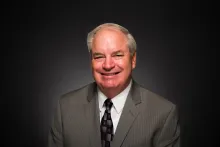
Robin Webber was born in Chicago, Illinois, in 1951, but has lived most of his life in California. He has been a part of the Church of God community since 1963. He attended Ambassador College in Pasadena from 1969-1973. He majored in theology and history.
Mr. Webber's interest remains in the study of history, socio-economics and literature. Over the years, he has offered his services to museums as a docent to share his enthusiasm and passions regarding these areas of expertise.
When time permits, he loves to go mountain biking on nearby ranch land and meet his wife as she hikes toward him.
