

Where Your Attention Goes Your Energy Flows!
Given on
Given in
Downloads
Downloads
To download a file, right-click (or long press) a link above and choose Save As.
As we approach the Day of Pentecost, our thoughts turn to the amazing power of God’s Holy Spirit. However, this great gift, this great power can be rendered ineffective if we don’t properly use it. This sermon demonstrates that in order to properly utilize the great power of God’s Spirit we must understand key principles. These principles would be an understanding of Godly priorities and time management; an analyzation of the challenges at hand and the bringing to bear of the powerful action of God’s Spirit in such a way that we, as Christians, are actually transformed.
Transcript
This transcript was generated by AI and may contain errors. It is provided to assist those who may not be able to listen to the message.
I've used the Life Application Commentary and the Preachers Outline and Sermon Bible Commentary for the sermon today. When I'm preparing sermons, I prepare these things weeks in advance. When I say prepare, they are percolating in my mind. I mean, I put much in the way of paper or on a computer, but I've got various ideas that are floating around in my mind. I've had this idea for probably about the last three weeks, four weeks. And as I'm thinking about this, as I'm driving around doing various tasks, I'm meditating and from time to time thinking about the message and various points I'd like to make. I happen to be watching TV, and as I was watching TV, a commercial came on that intrigued me in terms of this sermon. Now, typically, and as Mary knows, when commercials come on at home, I mute them. I find that that gives me a great deal more peace in life when I'm not listening to these inane commercials. But there are some commercials I will listen to and enjoy looking at. The commercials that... I forgot the name of the company. I think it's E-Trade. It has a little talking baby. I listen to all of those. If the commercial's going to have a little puppy in it, I listen to those. And if the commercial is a Dodge Ram pickup truck commercial, narrated by Sam Elliott, I listen to those. If Sam Elliott was able to bottle his voice and sell that, I would buy it by the gallon. Sam Elliott's got that deep, bass voice, just unmistakable. Well, on this particular commercial, he was talking about the Dodge Ram and how much towing capacity and how much pulling capacity, how much you can load onto it, and this and that and the other thing. And I got to thinking about, that's not a real truck. If you want a real truck, you need the Caterpillar 979F. 979F. Now, let me tell you a little bit about this dump truck. Its payload is 400 tons. Now, you and I can't picture 400 tons. So allow me to help you understand what 400 tons is. I was thinking about Mary's little bug, her beetle. She's got a beautiful little TDI. Mary always enjoys a diesel stick, so she can, she will not, she cannot comment on automatic transmission. She's got to have her stick shift. How many, 400 tons, how many Volkswagen Beetles would that be? 277. Now, we're not talking about volume, we're talking about weight. Can you imagine a vehicle where you can put on its back 277, that's actually 277 plus, Volkswagen Beetles. That's what that thing can carry. That's a truck. Now, the weight of the truck unloaded is 1,375,000 pounds. Now, again, you and I can't comprehend a truck that weighs that kind of, in terms of our Mary's Beetle. How many Beetles would you have to have to equal 1,375,000 pounds? Well, you'd have to have 476. Almost 400, you know, that's a pretty big parking lot full of cars that equal the weight of that truck. Now, this is not the sort of thing you're going to park in your driveway. You're not going to park it in your driveway because empty, just as it sits, the truck is two stories high. When the truck is dumping its load and the back end of the truck is up, it's dump its load, it's 51 feet high, five stories high. And you're not going to just walk, you know, you just can't drive it into any place where it can fill up the tank. It's got a thousand gallon capacity.
Diesel, roughly four bucks a gallon. You drive and you think you pay money for gas? How would you like to drive up, say, fill it up, and it's four thousand dollars for a fillup? Four thousand dollars. Horsepower. I know you ladies are tuning out. I'll get you back in a little bit. Horsepower. You know, back in the day when I was growing up, if you had a road runner, what was it, Plymouth? I think those were Plymouths, a road runner. You had a 383 in there, or maybe if you're really lucky and really at the muscle cars, you've had maybe a 410 Hemi or something like that in the car. It's 410 horsepower. This truck has 3,793 horsepower. Almost 3,800 horsepower to move something that's probably bigger than some people's homes.
Now, I go through all this because here you obviously have a truck. And when you think about power, we're approaching the day of Pentecost, the Feast of Pentecost. Talking about God giving us His power. You think about this. This is a lot of power. I told you what the truck weighed. I told you what the truck would carry. But if you combine both of those, when this truck is fully loaded, the weight of the truck, the weight of its load, how many Volkswagen Beetles do we have?
We've got 753. I simply don't know what road that would travel down, what wouldn't destroy the road. But you're talking about the need for a lot of power. And, brethren, this truck has it. And I'm not trying to sell the truck. But when that thing is fully loaded, fully loaded, it can move at 42 miles an hour. That's a lot of power. That's a lot of power. Now, I want to combine this, what I've told you so far.
Obviously, I'm leading up to something regarding the Day of Pentecost, and power, and God's Holy Spirit. Two weeks ago, Mary and I and Lee Kadju were over in Windsor for services. And after services, we went over to Joe Brediars' home. And I've known Joe for a number of years now. I've been over to his house on a number of occasions. But I've never really asked Joe what he did for a living. He said, Joe, what did you do for a living? You're retired now. What did you do for a living? Well, Joe blew things up. Joe was a demolitions expert. He handled dynamite for a living. And I said, you've got interesting stories to tell about you and your dynamite?
He said, yeah, there was one. I think he said, and Mary and I correct me, but I think he was early on in his career where I get the story right, and I don't know if I do or not, but I think he was a little rushed or, you know, you know, that's a real science. When you're dealing with dynamite, it is a real science.
You better know what you're doing and how much you're putting into each hole. Well, he said, you know, I think this will do it. So he started guessing and so on and so forth. And when the time came, everyone gets away and he says, okay, you know, fire in a hole or whatever they say. And boom! Well, the shockwave basically woke everybody up in Windsor, Ontario. Rattled windows. Joe was lucky.
He didn't lose his job and his boss was lucky. He didn't lose his job after an explosion like that. But again, you're looking at something that we talk about as power. Now, the last time I was with you, I gave a sermon and during the course of the sermon, I made a certain statement. As I made that statement, I said, you know, I think I'm going to come back and give a sermon on that. And that's exactly what I'm going to do here today.
Because one of the statements I made is, where your attention goes, your energy flows. And if you like to take notes, that's my sermon for today. Where your attention goes, your energy flows. And, brethren, you think about it. Where is your attention? Well, and what are you focusing on in your life? Well, your energies are going to go that direction. The question we need to be asking ourselves, is God and the things of God, is that what has our attention?
Is that where we're going? Or is the world and the things of the world, is that where our attention lies? And is that where we're going? You know, the truck I talked about, all the power that that truck has, I can even give you how fast it goes in each of the seven forward speeds. Tremendous power, but you know something, that truck fully loaded doesn't do any work at all until it's put into gear. You have one of the greatest gifts, all of us in this room have some of the one of the greatest gifts God has ever bestowed upon mankind, and that is the power of God's Holy Spirit.
But if you and I don't put that Holy Spirit into gear, so to speak, it doesn't do us any good at all. So we need to ask ourselves today, as we go through the material, are we properly using, are we efficiently using that power that God has given to us?
Where is our attention? Where is the energy flowing in our life? Is our attention on the physical things? Making a living? You know, the the illness of a family member? Our illness? Interpersonal issues? Where is our energy flowing? Because that's where, that's where, that's where our attention is? That's where energy is going to go. So one of the first things we do, I've taken a sermon, I've chopped it into three parts. The first two parts deal with our attention.
In this first section deals with having an appreciation for godly priorities and godly time management. Godly priorities and godly time management. Experts will tell you people basically will fit all their activities in life into four categories. If you're taking notes, you might want to take these down. You can take these down shorthand. You don't need to write a whole lot here. The first category is things that are important and urgent. And you know, she went to this job down important dash urgent. That's the first priority, that's the first category where people list some of the activities of their life. Important things that are urgent. The second category are things that are important but not urgent. Important but not urgent.
A third category are things that are urgent but not important.
Urgent but not important. When the phone rings, that's considered urgent. You have no idea who's on there, you know, unless you look at your call waiting, you don't know who's calling you, so it's urgent. But it may not be life-threatening, may not be that important, maybe just somebody who wants to...could be a wrong number. Could be somebody who just wants to call and kind of shoot the breeze. So you have things that are urgent but not important. And then the last category are things that are neither important nor urgent. Neither important nor urgent. Now obviously, most people take care of the first area. Things that are important and urgent. You know, and that's very understandable. But so many times, brethren, we have things in our life that are important but not urgent. Bible study. That's important, but you know, if you and I miss Bible study, we're not going to drop dead 10 minutes after we decide we're not going to do it today. Prayer would be the same way. Fast thing would be the same way. Meditation would be the same way. All those are very important things, but are they urgent to the place where if you don't do it, you're going to drop dead? No.
So what tends to happen is we can have important things in our life, and we don't prioritize those because we don't see the... we don't think they're as urgent as they really truly are.
So we need to think about that. Think very deeply about that. The things that are important, we may not think are as urgent as they are, but they actually are very urgent. You know, brethren, none of us in this room are guaranteed the next breath of life. You know, I don't want to be morose by saying that sort of thing, but you all know it's true.
If you would turn to Ecclesiastes chapter 3 and verse 1.
Ecclesiastes chapter 3 and verse 1. I'm going to read this from the God's Word version. Ecclesiastes chapter 3 verse 1, where it says, everything has its own time, and there is a specific time for every activity under the heavens.
And that's pretty true. Everything does have its own time. And you and I need to prioritize our priorities in a godly fashion. We need to look at time management in a godly fashion. So let's do that, because we want to pay attention to the things that need to be paid attention to from God's perspective. So a couple of three pointers here, three pointers here, recognize the urgency of the time that you have. Recognize the urgency of the time. And brethren, our time is very, very fleeting and urgent. We need to appreciate that. Let's go to Romans chapter 13. Romans chapter 13 verses 11 through 14. Romans chapter 13 verse 11, where it says, And do this, knowing the time, that now is high time to awake out of sleep, for now our salvation is nearer than when we first believed. Now there's a lot of meat here. Let's take this verse and dismantle it bit by bit and get some of the meat that is here. Verse 11 says, we have to know the time. But I think most of us believe that the return of Jesus Christ can't be that far off. Even if you and I don't even look at the people in one sense, if we take a look at the planet, our physical planet earth, we are depleting its resources. Now how long can we continue to live on our earth that we're doing this to it? Then you add, of course, the human factor and what humans are doing to this planet. But the New Testament passages that center on the return of Christ talk about how we need to be prepared. How do we need to be spiritually alert? How do we need to be diligently serving? And that's what it's talking about here in verse 11. Knowing the time.
How spiritually alert are we? How diligently are we serving?
As I've said to you on so many occasions in the past, you look in the New Testament, you see two different sets of snapshots of the New Testament church. You see the snapshots of healthy Christians who are close to God. They're fasting, they're praying, they're growing. Christ says, I'm so delighted in what I see in you. That's one set of photographs. Hopefully you're in that set. But then there's another set of snapshots where Christ says, well, when I come to the earth, am I going to find faith? There's another snapshot that shows in Matthew 24 where Christians love are growing cold. It's as many growing cold and being offended. You've got Revelation chapter 3, where it talks about the church, the Laodicean church, in their lukewarm judgmental, looking down their nose, I know everything, I've been in a church all these years, don't you dare tell me what I need to do approach. Now, what set of snapshots are you and I in? We need to know the time. It says further here in verse 11, we need to awake out of sleep. Jesus Christ was with his men, and he told them what was going to be happening at the end of his life. They should have known by the Scriptures, they were Jews. They should have known by the Old Testament Scriptures they heard since the time they were young men who could understand the Old Testament Scriptures, that a Messiah would come. He tried telling them who he was and what was going to be happening. In a day that Jesus Christ needed some of their help, but he went to go pray in the garden. What did they do? Time and again, they fell asleep. Brethren, you and I have been in the church for decades, and we've seen the prophecies and heard the prophecies, and now, brethren, it says, oh, we can reach out and touch those prophecies. We see what's happening on the world scene. We see where the actors are being staged on the world scene. It's as if we can reach out and touch what's about to happen. But are we going to fall asleep spiritually, like those disciples fell asleep physically? Are we the Laodiceans? Are we the people that Christ says, well done, good and faithful servant? That's a decision you and I individually need to make. We need to make sure we're not sleeping, make sure we're not spiritually comatose. It says here, salvation is nearer than when we first were called into the church. And of course, that's accurate, very accurate. Verse 12, the night is far spent, the day is at hand. Of course, the night is far spent. You know, here talking about analogy, the time God has given man, those 6,000 years, we're well into that period. The night is far spent. It's night. It's dark because it's the time of Satan, the God of this world. The day is at hand. When Jesus Christ will come, a time of light, therefore let us cast off the works of darkness and let us put on the armor of light.
And so we have to ask ourselves, you know, as you and I are paying attention to things, are we paying to the proper attention of things in our life? Matthew 24 says, you know, in the days of Noah, people are eating and drinking and so on and so forth. It doesn't mean they were just getting drunk all the time and having six marriages and all that sort of thing. It just meant life was going on. And so many times, we can be so caught up with just the day to day. We're caught up with the day to day. Well, I've got to get up. You know, I overslept a little bit. I was so tired from working so hard yesterday. I overslept. Well, I'll pray when I get back home. And then when you get back home, well, that doesn't happen. It's not that urgent. It's important. We all say it's important, but it's not so urgent and it goes by the wayside. So, you know, we need to be sure we're people who are watching things properly. Verse 13, let us walk properly. And my march is as decently as in the day. So, God tells us that we need to recognize the urgency of the times. And in our minds, in terms of the attention, are we recognizing the urgency of the times we're living in? And brethren, let's be honest. Even if Christ is not come in your lifetime or mine, when you and I close our eyes and our life is done, it's as good as that's it. That was our opportunity. So, we always have to be urgent because this is our opportunity.
The second point in terms of godly priorities and proper godly time management. The first thing I said is to recognize the urgency of the time. The second thing here is make careful to make wise choices. Be careful to make wise choices about where you put your time.
Somebody can walk up to you on the street corner and rob you. Take your money. You can go out and make more money. You know, you can have a house fire. Your house burns to the ground. Well, you can go out and get another house. But brethren, you and I, as we have gone through life, we have used up time and we can't go and buy back that time. It's gone. And we have a personal record. God can look at that record. What have we done with our time? It comes and it goes and there's no getting it back. And so you and I have to make wise and careful choices as to where our attention is because that's where God's energy is going to flow if we want to use God's energy. Where is our energy? Where is our attention? Where's it going?
Are we making wise choices about where it's going? Ephesians 5.
Ephesians 5.
Verses 15 and 16.
Ephesians 5. 15-16. See then that you walk circumspectly. See that you walk carefully, not as fools but as wise, redeeming the time. Redeeming the time. The time is precious. It needs to be redeemed. Brethren, if you and I find ourselves being controlled by our circumstances, we are not properly utilizing priorities, Godly priorities, in our life. If we go from one issue to another and we're reacting to life, that's not how a Christian should be living.
We as Christians need to take control of our situation in terms of what we can do. Now, there are outside forces we don't have control over, but you and I have control over what we're going to do, our own planning, what we're going to do here and there and in other places. And we shouldn't just be going through life reacting to what's happening around us. We need to be planning very carefully. We need to be making wise choices about our future and making sure that we've got things together where they need to be. And the last thing we want to discuss when we're talking about attention, proper Godly priorities, and proper Godly time management is we need to put God first. Now, that sounds so simple. That sounds so basic, but we don't want to overlook the most simple and basic things. Put God first. Let's look at Matthew 6. I'm sure you know what I'm about to read to you. Matthew 6. The whole chapter in my Bible is red letter. Every word in this chapter is red letter. Matthew 6 and verse 33.
Matthew 6, 33. But first seek the kingdom of God and his righteousness, and all these things shall be added to you. First seek the kingdom of God. And the word seek here is a perpetual, in the Greek it's a perpetual meaning. That we don't just seek it once before we're baptized. We don't seek it time to time. We seek it all the time. And brethren, this is a very important, very important concept that we have here that we need to appreciate.
And I want you to listen to this next statement because, you know, as I was doing my research, there was a gentleman that I was reading, and he made this comment. And I thought this comment is deserving of a great deal of meditation, because I think so many times we approach this idea of putting God first. We might do it in a sort of a backward fashion. And here's what this gentleman said. I want to read you the quote here. He said, when we attempt to assign the appropriate amount of time to the kingdom of God and his righteousness so we can figure out how much time we have left for other activities, we reduce Jesus' words to a lesson in sequence and planning rather than the command about the whole life. Now, I feel that is extremely important. I thought that was very well said, very well written. When we attempt to assign the appropriate amount of time to God and his kingdom, his righteousness, so we can figure out how much time we have left for the other activities, we reduce Jesus' words to a lesson in sequence and planning rather than the command about the whole life. See, the whole idea here is what Christ said himself in verse 33. See first the kingdom of God. And it's perpetual. We're always seeking. If we're always seeking the kingdom of God, the things of God throughout our whole life and every activity, then we don't, the other activities will fall in place. But if we're saying, well, I'm going to put God in this sequence, we're never going to give him the kind of time that we really should. The Bible talks about praying instantly in season and out. And so here we've got a tremendously big principle that I don't know that we've seen as like we should have seen all along. Yes, we do plan, but make sure that we just continually got us first, foremost in our mind in all things and all aspects of our life as we walk down the road. That's why we have the, what's it called? The Shema? Shema? How do you pronounce that? Shema? Shema? Shema. You know, teach the children. You know, here's, you know, we've got one God, one Lord, and then of course the idea is we want to teach our children about that one God, that one Lord. Okay, so the first thing, the first part of the sermon we talked about, the appreciation of Godly priorities, the appreciation of proper time management from God's point of view. That's kind of the what, as we're thinking about attention. Let's think about now the how of attention.
If we have our priorities properly placed, if we've got proper time management from God's perspective in our life, then we've got the how. We've got the, and this is the next section here, the analyzation of the challenges at hand. We've got to analyze the challenges at hand. We've got to focus our attention in a proper way on those challenges. Do those challenges, and our focus on those challenges, do those draw us closer to God and word and deed? Or when you and I are analyzing the challenges, are we coming about it from a strictly physical, worldly perspective? Are we really getting closer to the world in a way the world would handle the situation? How you and I cope with stress is key. How we're going to handle the analyzation of the challenges that face us is very much a key. As I was doing the research for the sermon here, as I always do, I go to one of the greatest places that you can research anything, and that's our United Church of God website. Brethren, a great deal of the sermon you're hearing today is from our own website. An article here, an article there, a thought here, a thought there, some of my own thinking, some of my own study, and so forth, kind of a commingling of all of us. But we have such a resource available to us. Virtually every Good News article, virtually every United News article, virtually every Vertical News article, we've got Bible study courses, and you name it, we have it. But as I was going through and studying this aspect of the sermon, there was one article, and the author of the article asked the number of people, what's in your life right now in terms of stress? And here are just four responses. I'll just read them quickly here to you. And I quote, At the moment, the most stressful things for me are dealing with my health issues, paying the bills, and feeling worthless because they can no longer do what I used to do. Obviously, a person probably who was getting on in life in terms of age, just not able to do things that they did when they were younger. Another person wrote this, I tend to worry over a matter. What if this happens? What if that happens? Or how can I solve this? I worry over problems, real or not real? The job status, money, my anger that comes at me at times. A third person wrote, I take on things I feel I can't handle. I don't know how to say no and say, that's too much for me right now. I stress over everything. A fourth person wrote, It's very hard for me not to be able to please everyone. So this causes the stress of my life. So here again, we're looking at how we should properly analyze the challenges that lie ahead of us from God's point of view. How do we put our attention to this from God's point of view? Let me give you some pointers here that we find in the scriptures. Philippians chapter 4 and verse 8. Philippians chapter 4 and verse 8. Yeah, you probably know this one by heart.
Philippians chapter 4 and verse 8. Now, who wrote the book of Philippians? Fellow by the name of the Apostle Paul. Did the Apostle Paul know some deep, dark times in his life? He was beaten on many occasions. He was jailed on many occasions. As he took care of the churches, he knew privation. Toward the end of his life, many of those who were close to him left him. He knew loneliness on the road. He knew what it was like to be ill, and God not heal him. He went through an awful lot. The bottom line is Paul was no Pollyanna. Paul knew real trials. He knew real life. But notice what Paul says here in Philippians chapter 4 and verse 8. Philippians chapter 4 and verse 8. Finally, brethren, whatever things are true, whatever things are noble, whatever things are just, whatever things are pure, whatever things are lovely, whatever things are of good report, if there's any virtue, if there's any thing praiseworthy, meditate on these things. He's no Pollyanna, but he says we've got to have a positive mindset. We're putting our attention on something. We're focusing. Let's do it from a positive angle. The last time I was here, we talked about how do you deal with difficult people that you simply have to deal with. They're the 800-pound gorilla in the room. It could be your boss. It could be a co-worker. It could be a family member. It could be a next-door neighbor. But you've got to deal with them. There's no getting around that. And as I gave the sermon, I talked about why we should even attempt. Well, they're that 800-pound gorilla, and there's got to be some kind of dealing with it. And as I was going through the message, I was talking about how we need to be aware of the leaven of negativity. The leaven of negativity. Where if we allow our minds to get negative on one issue, you know, our boss or our co-worker or our next-door neighbor or whoever, family member, so that it gets toxic, then that negativity, like leaven, spreads into other areas of our life. And we as Christians don't need that. Our energy then is going into all this negative. We're fighting the negative. Too much energy in that one direction. We're not going down the road. We're God what? We're in reverse. We're not in drive. That's why Paul says, focus on the positive where you possibly can. Let's look at Mark chapter 10. Let's see some other pointers here. Scripture's out for us. Mark chapter 10. Here we're looking at how to properly pay attention to the matter that is hovering over us, the challenge that is before us or challenges. Mark chapter 10 and verse 27. Mark 10 27.
Now let me get there. It was in Matthew 10 27. Mark 10 27. Mark 10 27 says, but Jesus looked at them and said, with men it is impossible, but with God, but not with God, for with God all things are possible. All things are possible. When you feel overwhelmed, remember who your daddy is.
Last weekend, it was a day much like this. We were at the Shuts' home there in Traverse City. It was a beautiful Sabbath, bright sunny skies like this, temperatures in low 70s. We got up in the morning and you looked out our window and you saw these beautiful trees. About 50 yards past the trees was the bay, Grand Traverse Bay. Beautiful, beautiful blue watering blissfully. You know, the sun dancing on that you saw almost like so many little diamonds. And of course, they had their beach there. You got the beautiful water, you got the beautiful trees, you got the squirrels and chipmunks and doing all their things. Gorgeous thing, gorgeous thing. But remember something, brethren. Your dad. He made that. Your dad made that. Who made all that lovely stuff? Daddy did. Who's daddy? Your daddy.
Now, we're not talking about Go Daddy here. We're talking about our real dad. We're talking about our father. When you feel overwhelmed, nothing is impossible with your dad. Please keep that in mind. 1 Corinthians chapter 10. 1 Corinthians chapter 10. I think, brethren, sometimes we are overwhelmed because we no longer have God on our sight. We've taken a path where we have walked away from God. We're no longer holding Daddy's hand. We're going through life on our own. And things are going to be impossible for you and I whenever we feel that we can't overcome because we're not asking God for the help. We're not looking to that great power. We are. The power train is disconnected, going back into the automotive analogy.
Chances are we're out of gas spiritually. You can have that great big beautiful pet caterpillar truck. But if you don't have that diesel gas in there, it's going nowhere doing nothing. 1 Corinthians chapter 10 verse 13. No temptation is overtaking you except that such is common to man. But God is faithful. Remember this, brother. Our Father, your Dad, my Dad, He's faithful. If we couldn't rely on the faith of God, we couldn't rely upon Him for salvation. He is faithful to what? He's faithful to His Word. He is faithful to you. But God is faithful who will not allow you to be tempted beyond what you are able, but will the temptation make a way of escape that you might be able to bear it? Notice very carefully, God doesn't say, well, when you have these temptations, when you have these problems, when you're at the end of your endurance, when you are overwhelmed, I'll take it all away. He doesn't say that. He says, I'll give you the power you need to endure it, to go through it, to go through it. And remember the Scripture. I'm not going to turn to it. 1 Peter chapter 5 verse 7, if you want to write it down. In the Phillips translation, it's one of my favorite verses, and it's in the Phillips, where it talks about how we are God's personal concern.
We are God's personal concern. 1 Peter 5, 7. So if you feel overwhelmed, if you feel you're at the end of your wits, remember there's nothing impossible for God. You're only a miracle away. And if God doesn't take the thing away, He will give you the power you need to get through.
He will give you the power you need to get through.
Colossians chapter 3 and verse 15.
Colossians chapter 3 and verse 15.
Verse 15. Again, this is Paul writing, and Paul knows a thing or two about trials in life. Colossians 3 and verse 15.
I think sometimes, brethren, we've got such an erroneous concept of the peace of God. We think peace is the absence of conflict. Now, in human terms, that's probably correct. But when we're a Christian, and we're thinking about the peace of God, there's all sorts of conflict in our life. You and I aren't going to go through too many portions of our life where there's not a lot of things happening that are negative. There's a lot of times things are happening that are negative. But remember when Jesus Christ said there in the book of John, He said, I'm going to give you peace. Not the kind of the peace the world has. I'm going to give you peace. And when did Jesus Christ say that? Jesus Christ said that just before He was about to be crucified. Jesus Christ inspired the scriptures that talked about how He was going to be crucified, how He was going to be tortured. Can you imagine yourself going through what He went through? And then can you imagine yourself saying, I'm at peace? Knowing what you're going to go through in a matter of days? Hours?
It gives a whole new meaning to the concept of peace.
So how do you and I attain peace?
Peace, brethren, comes from faith in God. Faith is where the peace is found. Faith in God. We have faith in God's plan, His overall plan. We've got faith in God's plan for us individually in our lives. And we realize that we are at peace because we're walking with God to the best of our ability. Now, that doesn't take away all the trial. It doesn't take away...we've got cancer. We've got this, we've got that. We're unemployed. We're about to lose our house. Is that going to remove all that? No, it's not going to remove all that. But when we understand who God is, what we are, where we are in the scope of things, we've got peace because we understand the greater picture. Okay, so now we've gone through the first two aspects of the sermon, showing the attention. We've looked at Godly priorities, Godly time management. We looked at analyzation of the problems at hand, the challenges at hand from God's perspective. Now let's take a look at the last portion, which is the power portion. I may mention where your attention goes. We've talked about proper attention. Your energy flows. And here, brethren, we've got the most beautiful thing. The third part of the sermon deals with bringing to bear the powerful action of God's Holy Spirit. Bringing to bear the powerful action of God's Holy Spirit.
And we're so fortunate that our great loving God has given us a spirit, a power, that will transform us. Transform us. We can't do that of our by ourself. But God's Spirit is a spirit that is transforming in nature. Romans 12, verses 1 and 2. Romans 12, verses 1 and 2.
Verse 1, I beseech you therefore, brethren, by the mercies of God that you present your bodies, a living sacrifice, wholly acceptable to God, which is your reasonable service. Here we see where people are paying attention. They're properly focused. They've got their priorities right. And because they've got their attention where it needs to be, we see the spirit of God working and flowing there. Verse 2. And do not be conformed to this world, but be transformed by the renewing of your mind. And that word, transformed there in the Greek, is the same word that we get for metamorphosis.
Our mind can be changed. It could be just like we've got it in nature. We learn so many things from nature where we've got a beautiful butterfly. But it wasn't born a beautiful butterfly. It began its life as an egg. And there were several stages before it became the beautiful butterfly. It was a slug-like creature. Brother and I saw there's a tremendous analogy for us. Part of our development is we were kind of an egg, and then we became these slugs. At the time of the resurrection, we'll be the beautiful monarch butterfly. But we're not there yet. We're not there. But a change needs to take place. A beautiful change. And that change, brethren, has struggle attached to it.
You know, I've given you the example on a number of occasions, but it fits so well here about the little boy who had the cocoon on his window. And one day he saw the butterfly trying to get out of the cocoon. He thought he was going to be a nice lad. The butterfly was having a hard time getting out. So what did he do? He took some scissors. He snipped the cocoon. Butterfly got out much easier. He was happy to see that. He's all good. He's on his way, and the little boy went to go play. And then later on he came back. They hardly had moved. Just crawling around the windowsill. And the next day, same thing, things crawling around the windowsill. And the little boy was wondering what was going on. And he did some research and found out that what he thought was help was not help at all. Because when that butterfly is struggling to get out of the cocoon, it's working those wings, and it's working those wings. It's pumping fluid out of those wings. So when it gets out, there's no more fluid in the wings than it can fly. Well, here we had the little boy who thought he was being helpful. Many times in our life we feel we're being helpful, but we cripple people. We enable people. And that's the situation here where the little, the poor little butterfly had all that liquid in its wings, and it would never get it out. It would never fly. It was doomed to walk around and be eaten by something. Brethren, we're just like that butterfly. We've got to struggle. We've got to work. We've got to overcome. And we're pumping that liquid out of our wings. So when the time comes, we'll be resurrected and be creatures of God fully. But there's a lot of struggle that takes place. That struggle is good. It's God-ordained. But God gives us the power to deal with it. Romans 8. Let's go back a few chapters. Romans 8, verse 14. Romans 8, verse 14.
For as many as are led by the Spirit of God, they are the sons of God. Brethren, where their attention was, that's where the energy was flowing. They're being led. They're in the flow of God's power. They're the sons of God. So God's Spirit transforms us. How does God's Spirit do all of this? The last part of the sermon, I see I've got just a few minutes left. I'll probably take you a little bit over time today. I've not been here for a few weeks, so I've got a little bit of a debt in terms of time I can use here. How does God spare you this? Let's go through some scriptures on this. 1 John 3.24. There's a number of principles here we're going to look at. I'm not going to spend a great deal of time here. The food is back there cooking. It's going good.
I've been told we may have some lemon pie back there. We certainly don't want to let that go to waste. 1 John 3.24. Now, he who keeps his commandments abides in him and he in him. And by this we know that he abides in us by the Spirit whom he has given us. 1 John 3.24. Here's a principle. God's Holy Spirit keeps us in contact with God's mind. How do we overcome? How do you and I do this tremendous energy? Well, that energy keeps us in contact with God's mind. And if you and I aren't doing our proper spiritual disciplines, we are cut off from that mind and we can't do the things God wants us to do spiritually. But that Holy Spirit keeps us in contact with the very mind of God. 1 Corinthians 2.
2 Corinthians 2.9. But as it is written, I has not seen nor ear heard, nor has entered into the heart of man the things which God has prepared for those who love him. But God has revealed them to us through his Spirit. For the Spirit searches all things. Yes, the deep things of God.
It is through this Spirit of power that God gives us an understanding of his will. This is another area for us to keep in mind. God's Spirit inspires a deeper understanding of his will. That's how we can grow and get into that flow of energy and use it properly. Philippians 4. Philippians 4 and verse 13.
Philippians 4.13. I can do all things through Christ who strengthens me. The Holy Spirit, the power of God's Spirit, makes overcoming possible. It makes the overcoming possible.
Do you think you've got something you can't overcome? Yes, you can.
You know, brethren, I've seen people in the church who were alcoholics. I've seen people in the church who were heavily onto drugs. I've seen people who were sexually addicted to various activities. I've seen...you name it in the church, and basically, you know, those of us in the ministry, we've seen it. Don't ever sell the power of God short. Well, I simply can't do it. Well, are we going to put that power into play in our life? Are we going to properly focus our attention? Are we going to allow that energy to flow into us and out of us and accomplish? We've got that big old Caterpillar truck, but are we going to move the freight? Are we going to put the truck into gear and forward gear and move? Well, those are decisions only we can make. The power is there. Our God is faithful. What am I and what are you going to...you know, I'm not going to be able to stand before God and say, Father, I just didn't have the wherewithal to overcome. I'm not going to be able to look God in the eye and say that. You're not going to be able to look God in the eye and say that. Our Father, I'm sure it would be very loving to say, Look, Randy, I gave you every opportunity. I gave you so much slack. I gave you this. I gave you that. I gave you the sacrifice of Jesus over here. I gave you my Holy Spirit. I can bring forth thousands of your brothers and sisters in the faith who overcame that very same thing. Now, you didn't overcome it, but it wasn't because you didn't have help. You had me, your father, you had your elder brother, you had a whole family, you had the Scriptures, you had my spirit. There is absolutely no reason why you couldn't overcome whatever it was you were facing. I don't want to have to have that kind of conversation with God. I don't think I'm that good of a lawyer. I don't think I'm that good with logic to be able to take God on eyeball to eyeball and say, you know, you just didn't help me enough.
You know, we talked about a few weeks ago that God doesn't want any cowards in his kingdom. Are you and I cowardly? Are we afraid to face what it is we need to face in life? As I made mention in that sermon, there's all sorts of heroism. You can be a hero by charging an enemy position. You can be a hero by running into a building that's burning as a fireman would, or being a police officer and getting at the bad guys. Those are all types of heroism. But it's also, you know, to be brave, to look at your own issues in life quietly and realize, I can overcome that. I can face that now. I don't have to knuckle under to Satan. I don't have to knuckle under to my own selfish desires. I can beat this. And that's a type of courage, brother. And we need that type of courage. And God gives us that type of courage. John 16, verse 8. John 16, verse 8.
Once again, read lettering talking about the words of Jesus Christ, John 16, verse 8. And when He has come, the Holy Spirit, when He has come, He will convict the world of sin and of righteousness and of judgment. The Spirit of God convicts our conscience. Our conscience is always in a state of being educated. Mine, yours, all of us. About any number of issues. He convicts us. We shouldn't be watching that TV program. We shouldn't be doing this activity or that activity. We shouldn't be addressing. You know, one of the things, brother, that I think that is so easy for us in a church to do is talk about politicians, Republican, Democrat. And I've been as guilty of this as anybody else.
Oh, that President Bush! Oh, that President Obama! Oh, that President Clinton! Whoever it's going to be next time around. But you know, the Bible talks about how we shouldn't speak evil of dignitaries. I've been a little too much that way through Republican presidents, through Democratic presidents, through any kind of elected official. Yeah, you know, God's going to deal with all of them. But I need to realize as a Christian, my conscience needs to convict me. But you know, I shouldn't be mouthing off like that. I shouldn't be popping off like that. And, brethren, as I look at you in your face and your eyes, how many of us in this room have done that? Oh, that George Bush! Oh, that President Barack Obama! I think we've all been guilty of that. Lastly, John 14, verse 16. John 14, verse 16.
And I'll pray to the Father, and He will give you another helper, that He may abide with you forever. A helper. That's what my new King James says. In the New Living Translation, God says, I'll give you an advocate. And the King James says, I'll give you a comforter. All those are good translations, because that's what the Holy Spirit is. He's a helper. He's an advocate. He's a comforter. So God's Spirit also encourages us. God's Spirit helps us.
Brethren, today we've asked, we've taken a look at the thought, where your attention goes, your energy flows. And I've asked all of us, and I started this with myself, where is my attention? What am I looking at? Because where I'm spending my time, my discretionary time in my mind, in my heart, that's where my energy is flowing. I don't always like what I see. I don't know about you, but I don't always like what I see. And I'm spending much too much energy in the wrong areas. And that needs to change. How about you? How about you? Where your attention goes, your energy flows.
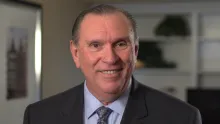
Randy D’Alessandro served as pastor for the United Church of God congregations in Chicago, Illinois, and Beloit, Wisconsin, from 2016-2021. Randy previously served in Raleigh, North Carolina (1984-1989); Cookeville, Tennessee (1989-1993); Parkersburg, West Virginia (1993-1997); Ann Arbor and Detroit, Michigan (1997-2016).
Randy first heard of the church when he was 15 years old and wanted to attend services immediately but was not allowed to by his parents. He quit the high school football and basketball teams in order to properly keep the Sabbath. From the time that Randy first learned of the Holy Days, he kept them at home until he was accepted to Ambassador College in Pasadena, California in 1970.
Randy and his wife, Mary, graduated from Ambassador College with BA degrees in Theology. Randy was ordained an elder in September 1979.
playlist
