
Frank Dunkle
This sermon was given at the Oconomowoc, Wisconsin 2016 Feast site.
This transcript was generated by AI and may contain errors. It is provided to assist those who may not be able to listen to the message.
That was just so beautiful. Really appreciated. Most of the special music offerings I've wanted to just jump up and sing along, but I refrained. Like here. Just wouldn't want to disturb that perfect balance. Beautiful tones. Very much appreciated. So beautiful. Well, here we are. Shouldn't be any surprise, but it always does surprise me anyway. It's the eighth day. I knew it was going to go this fast, but I'm still surprised. And today, on the last great day of the feast, the eighth day, we picture after the millennium. We've been talking about the millennium all this time. And that is all these several days. Just heard some wonderful messages. I was reflecting on the variety and the quality. We have such different speakers, such different presentations, and the lengths are different, sermonettes and sermons. And the subjects are different. They all relate to the feast and everything. Just reminded me of something I just thought of, actually, this morning. My mom, I was talking with her back when she could remember something. Her memory is pretty much gone, and we sort of miss her. She's still alive. 92. By the way, this is the first time that she has missed the feast since 1950. This would have been her 67th feast. And dad's, too. We lost him a few years ago. So I've been tagging around that long. I wasn't paying much attention. Did I keep the feast? Well, it's kind of there, you know, when I was short. But my, my, this time passed fast. But you all know that, so I won't bore you with that. But she made a comment a few years ago. We were talking, generally, about the messages and how they were received and how valuable they were and so on. And she said, you know, as far as the value, just pop this aphorism out, I guess, lesson. She said, as far as the value, how much the message, how good the message is, so much of that depends on how hungry the person listening to it is.
The attitude of the receiver. So you can take just about any message and you might judge it in one way or another. It might be short or long or very quiet or bombastic or whatever.
And there is a key element here. We're speaking from the Word of God, which is the living Word of God, a word or a book which you can read.
And the Spirit of God will come through. If you have a right attitude, God will teach you right out of the Word. And of course, that's our textbook.
So I pass that along to you as an extra bonus today. Just remember what my mom said at that time.
So we're picturing the Millennium of Christ's rule, one thousand years. And now we're picturing the glorious extension of all the blessings, the blessing of salvation and of eternal life, which is all the blessings to everyone.
What a fantastic thing! Nobody else has this doctrine. This is the truth from God. And we get to understand it and know it and celebrate it here.
We have the resurrection of Israel, even though they're dead. They're not lost in Ezekiel.
Revelation 20 then, the general resurrection, speaking of the same thing, shows it's everyone. It's all the Gentiles, all the people.
God has created. He wants them to live. He wants all of us to live.
And so these blessings and all the different lessons we've been learning about and thinking about, talking about, studying and praying about, just absorbing during the feast, they're going to be extended to everyone.
In Revelation 20, verse 11, it mentions that John saw a great white throne.
And this seems to be the same throne mentioned in Isaiah 6 and Daniel 7 and other places. Well, probably mainly those, but other places.
It's God's throne. It's absolutely white, symbolizing purity and truth and goodness in every way.
So this is 20, verse 11. From that time forth, the dead are raised and then judged, but from that time forth, the law and the administration and everything will come from the great God that sits on that throne.
This white throne administration will last forever.
We know very little about the glory of this white throne administration. We know the basics of the law, we know the laws, and the spirit of the laws.
You know, what God is love and everything flows from that basic principle.
So we don't know a lot about the old joke. You know, the things I don't know could fill in encyclopedia.
There's just so much that's not said about the meaning of this day and what comes after the millennium for eternity.
But we do have some general descriptions about what we will be like and what we will do in the kingdom during that brief period to kind of wrap this program up and then on to the future, on to eternity.
And those things, that knowledge comes with strong motivation to press forward toward our destiny of glory. Because that is our destiny. That is our destiny. Bring many sons to glory.
So today I would like to study, I'll go through a short study of a huge subject. It'll be a short study of a symbol that's used in Scripture relating to the ultimate destiny of man.
And that would mean that's connected to the feast, as we've already heard.
The meaning of the feast is actually the meaning of the purpose of man.
Everything comes down in the Holy Days. It comes down to the feast and then the added eighth day, including everyone.
And you have the purpose that we are created.
Mr. Kubik mentioned this, I think he's mentioned a couple of other times of this feast here.
That symbol is white clothing. Fairly simple. White clothes.
And that is mentioned in the Bible several times. Have you ever noticed that it's kind of a theme? It's an Old and New Testament.
And it's just simply white clothing. Now, a few things. And by the way, I need to stop and make an announcement.
Sounds awful, doesn't it? Another announcement.
But this is a confession, sort of, and also something for here.
I'm going to go through several scriptures very fast, and then we'll slow down.
I don't expect you to take notes. And for that reason, I have a handout that I'm going to put on the website.
I believe I can do this alongside with whatever recordings are made. And I did forget to mention to you on the first day, with 15 chapters of the Bible, there are short ones in the Psalms, but I do have a handout, because I know people are frustrated.
You start writing, and pretty soon you get writer's cramp, and pretty soon you give up and say, Oh well, or at least some people do. But that's coming, and I just explained that.
It's for three or four of the messages here, I think. So, light in the Bible, or I should say, white clothing.
There are two glasses here. I sure hope I didn't get Mr. Schutz's glass.
Be okay, he's fine. He's healthy. In Daniel 7, the Ancient of Days, God the Father, has a vesture of white like white snow, and his hair is like pure white.
The angels at the resurrection, the resurrection of Christ, there are two angels.
They had clothing as white as snow.
And then also again at the ascension, Acts 1, where they were standing there and the angels said, they were looking in the air.
Christ had just started lifting off and disappeared in the clouds.
As they were gazing there, verse 10, intently into the sky, while he was going, behold, two men in white clothing stood beside them.
So the idea of white clothing is pretty common.
And most especially, I don't think, most especially, in Revelation, the book of Revelation, there are two churches in chapter 3 that have white clothing referred to, as far as the reward.
Chapter 4, Around the Throne, which is inhabited and sat upon by the Father and the Lamb, who is Christ, both of them have white clothing, and the 24 elders have white garments.
Chapter 6, All of the Martyrs, each martyr, those people who have died to worship God in loyalty to God, are given a white robe.
Chapter 7, 144,000, and the innumerable multitude, all of them are given each one a white robe to wear.
In chapter 19, we see that even the armies in heaven, which follow Christ, Christ is riding a white horse, every person in the army has white clothes, white linen.
Well, it's the saints, that's why. And they ride white horses.
So, white is used as a symbol, and we have it explained in Revelation 19.
In verse 8, the context is the marriage of the Lamb, and it says that it was to her, the bride, granted that she should be arrayed in fine linen clean and white.
For the fine linen is the righteousness of saints. And of course, you're familiar with that Scripture that we've read so many times, you've studied, and so on.
So that's the identity of it. More understanding is gained by going to Exodus 28.
And it's in the last half of the chapter. I'm not going to read those verses.
All it says is, and you shall make special white clothing, including undergarments.
Boxer shorts are kind of extended.
Shall go from your waist down to your thighs.
And of pure white linen, so that you will be clothed before God, the priests on certain occasions would go into the main room, the front room, the holy place, and they would take off their vestures and put on special white vestures.
They would do the changing out of sight of the congregation, in other words, before God.
But they always had these white undergarments on, at least the one.
And different translations will give you that sense or that meaning.
And especially on the Day of Atonement, the high priest had to go behind the curtain into the holiest place, the Holy of Holies, and he took off his beautiful red, crimson red, beautiful indigo blue, and brilliant white.
Clothes off, red, white, and blue. Interesting. They were just resplendent.
We are told by the writers of those times, they would take those off and have pure white of linen.
And then the high priest would go behind, and so on. So, in other words, this connects this white clothing with the priesthood.
It has to do with the priestly function and priestly involvement in making sinful man righteous.
Because the lesson is that man must put on righteousness. So the righteousness of the saints is not their own righteousness, because they got rid of their own righteousness, and God put His righteousness in them.
We'll come to it in just a minute.
But the lesson is that we approach holy, a holy and a powerful God and holiness with reverence and humility and obedience, and don't just barge into—we're not welcome at the throne of God with an attitude— it has to be a pure attitude, at least beginning of humility.
You're big. I'm little. You're great. I'm small. You're powerful. I'm weak. You're right. I'm wrong. You're righteous, and I'm sinful.
David sometimes started his prayer in a bad attitude.
But his attitude was, oh Lord, and you can have 73—71 is a real good one—73, I guess. Good one for this. Four sections. He starts out, and he's saying, I know I've got a rotten attitude, and I need help to get out of it.
Well, that's a good attitude, because it's humble before God.
You're addressing God as you should. He's great, and you are small, and all the other things.
So you don't just go barging in. You have to have at least the beginning of a good attitude to come and approach God. Now, isn't that a neat thing?
I read this for many years before I began understanding more deeply.
I said, well, that's really neat. The white clothing stands for the righteousness of the saints.
That's about as far as I went.
It's not just a trivia question or something, you know, some light little thing. This stands for a major doctrine that touches others.
It's a symbol of a major doctrine of God the Father.
It's the righteousness of God that is put into man.
It touches on other great doctrines like law, sin, repentance, the sacrifice of Christ.
This is huge. This is enormous as far as a lesson. So the righteousness of the saints is really the righteousness of God and is the transfer of His righteousness to us, which is in view here.
If you go to Ephesians 3 verses 7 through 11, so I'll read a little bit of it. But Ephesians chapter 3, and Paul is talking about this transfer and just throwing everything away compared to the knowledge of Christ, how valuable that is, that He may attain the resurrection.
And so chapter 3 and verse 7, of which I was made in Ministries talking about the Gospel and taking that to the Gentiles. And he says, I am the least of all the saints. Verse 8 talks about helping others to see and have the fellowship of the mystery of the Gospel, that is, the hidden things of God.
First of all, how did God make Himself into human form? And then He was resurrected. How can He have others become righteous? How could He do that? Because we are sinful even after we repent. We have to keep repenting. And so that's what He's talking about here, not explaining it. That's Romans. But He says in verse 10, "...to the intent that now unto the..." Just a minute, I'll make sure I'm in the right verse here. "...unto the principalities and powers of heavenly places," or the heavenlies, "...might be known by the church the manifold wisdom of God." And I don't think I wrote down the right... That's because it's Philippians chapter 3. I didn't think that sounded quite right there.
I knew that, and I wrote the wrong thing. I guess it's similar, but not exactly right. I'm going to break into verse 9. He's talking about the... "...be found in Him, not having my own righteousness, which is of the law, but which is through the faith of Christ, the righteousness which is of God by faith." That I may know Him, referring back to Jeremiah 9, where God says, if you want glory, don't glory in your money or your prowess or your power, whatever you have. But you can rejoice in glory in the fact that you know me. And Paul goes right back, quoting and referencing Jeremiah 9 here, that I may know Him and the power of His resurrection, verse 11, if by any means I might attain to the resurrection of the dead. And I did read over quickly verse 9, first part of verse 9. And that is, that I may win Christ and be found of Him, not having my own righteousness. And Paul makes a big point here in other places that we don't want. He didn't want His own righteousness. He knew. And he was one of the most righteous persons in the world at that point. He was a Pharisee of the Pharisees. He crossed every tee, dotted every eye, and did every little thing perfectly, at least the best he could. Very much like Job. That's what Paul did. That's what he's saying here. He said he was a Pharisee of the Pharisees, meaning he was extremely picky and righteous.
But he wanted to make a big thing of saying, I don't want my own righteousness. He knew he would never make it to see God with his own righteousness. And so then he talks about, in Romans, he actually explains this. If you would like to read chapter 3 through 8, the process of conversion and how God makes sinful man righteous, how He puts spiritual righteousness, His, into our hearts and our minds and changes us. He converts us. So we won't do that, but we'll go to chapter 3 of Romans and read one verse anyway, the very last one.
It's right in the middle of this. It's hard not to read before and after, but let's just go for the one verse, verse 31. Do we then make void the law through faith? Because he's just been making the point that it's not our righteousness. You can be the best, obeyer around. And that doesn't mean you're converted or any different than any other carnal person or the person you were before. It's the attitude, and that comes from God. And so that's the big point here, and that's actually rather complicated. And he takes several chapters to explain this changeover.
But he says, God forbid, because we rely on faith and God's righteousness, God forbid that we just say, oh, well, then that doesn't matter. You can just go out and disobey God. But that is a major doctrine of many churches, many Christians believe that. Well, Christ did it for us. We have faith, so we just don't really have to obey. Not truly. He bends over backwards in several of his books. And so I won't belabor that. But he says, Yea, when we have faith in God and gain his righteousness through faith, then we establish the law. So what happens when you repent?
There is a change made, but you always think, what is the change that I'm making versus the change that God has made?
If we maintain our own righteousness, it's like God. He was very tender and careful with Job. But he required Job to go through a lot of pain so that he could understand this point of our own righteousness not really doing the trick. That's not what converts us. And that's the whole idea. You know, what I can do. So a lot of people just have that mixed up in their minds. But self-righteousness or thinking that I can do it. There's something that I can do. I've just got to work harder so I can be more righteous. So I'll grow more and God will accept me. And if you have that, you're going to be guilty all your life. There are websites dedicated. I've heard comedians go on about Catholic guilt. And I just heard the other day there's one about Church of God guilt. Funny to some, very, very important because they didn't understand that it's not our righteousness. And there's all this guilt we emphasize obedience, which we need to do. But obedience will never do the trick. You're going to obey and obey and obey. And your obedience won't obligate God to give you anything. Because it's your works. So self-righteousness locks a person into sin that is thinking we can do it ourselves. And you can't get out of it. You can't change by yourself. Because you can't see yourself or God realistically. And that's what God was working on with Job.
So when you repent, talking here, verse 31, God forbid we establish the law. What happens when you repent? Well, you acknowledge that the law is right and God is right. Right? Yeah, right. I'm sorry. I have broken your law. I've done it again. And please forgive me. I know that you will. But help me to do better. What are you saying? You're right and I'm wrong. And your law is right. And so we establish. Or it says, we support, we confirm, we solidify, we obey. There are several different translations that translate the word, establish a little bit differently. So we are establishing the law and our belief in God that He is right when we repent. Every single time we uphold. That's one of the translations. If it is a sincere repentance, we uphold the law and God as true and righteous because the law comes from God. Now, it's not that you can just say, oh, silly me, I did it again. I sinned again. Same old sin. No problem. I repent in dust and ashes. Please forgive me. I know you will. And we skip right along and enjoy life and don't make any changes. Does that make any sense to you? Does that ring a bell?
In other words, if we say the words, give lip service, but we aren't focusing on the desire to keep God's law in the spirit of the law to the absolute greatest ability we can. Paul used the term, if I can remember the term in Hebrews, he said, you haven't suffered into blood or bleeding. You haven't tried all the best you can, said the Hebrews at the beginning of the book. It's chapter 4, I guess. Striving to obey, you haven't put that much effort into it. He apparently was telling some people that he knew that they needed to try harder. So if it really is a genuine repentance with your determined efforts and your attitude fully open before God, I am going to do my very best. Not, well, this will be good enough until the next time.
I'll repent again. You can say those words, I guess, in two different attitudes. But God doesn't accept this little attitude of saying, oh well, silly me. No, it's unrighteous me, sinful me, and I want to be different, and I'm coming to you for help, Father. That, he pays attention to, the contrite attitude that he pays attention to. So if this is genuine repentance, then you are going to try as hard as you can to change.
God gives a spirit of understanding to those who try to obey. Psalm 110, 1, 11, verse 10. To those who obey, those who fear him, those who try hard. And Acts 5, 32, by the way, if you obey God, that doesn't do the trick, but he gives you his Holy Spirit, and the power to change and obey God in the future.
Now what we're doing is we're going through some pretty deep spiritual teaching here, and I can see it on your faces.
Everybody's kind of sober, thinking, pensive, and very serious, which is great. This is exactly what we should do when we come before God and pray about these things. So good.
But when you repent, you redouble your efforts to not sin in the future, and when you're in that attitude of total devotion and trying as hard as you can with no reservations, oh well, you know, probably happen again, or it's not that big of a deal, because I can always repent. Any kind of reservation, which ends up being just plain old rebellion. But if you repent fully with a totally dedicated attitude towards God, and being like Him and having His righteousness, then you put yourself in the mode where God can make those changes. He's the one that converts us. He's the one that puts a different attitude in your heart. I mentioned Psalm 73, where David starts out in a rotten attitude. There are four steps in that particular psalm and others. He's just all looking about the... it's all on the earth. Oh, it's a big mess. You know, I try hard, and I don't get blessed, and everybody else rotten sinners. They have all these blessings, and He moves in three other stages. And finally, He's looking at God. He's looking at Himself in the around, and He changes. God does that over and over and over. So you do your morning prayers, or evening, or both, and you repent of the sins. The attitudes, the thoughts that you know lurk there, and they bust out every once in a while, like a stallion through the fence, if you try to put a wild horse in a corral. Your human nature breaks out every once in a while through the day. You go back, and you say, Father, forgive me for my sins. I just think of this beautiful song we just heard a minute ago. Amazing. It is absolutely amazing. We can say, I know you will. I know you do. But that's you. You're perfect. Help me to have the right attitude. That's the change that we need. And give your good grace, Father. How may it be different? So when you're going through that, and when we repent with that attitude, there's a change, a permanent change, if we make it permanent, if we keep it up in our minds. God is the one that does this, but we've been converted a little bit, a little bit more, every time you repent when you support the law, and you give your faith and your belief and your confidence to God once again, you reiterate and underline and reaffirm your worship of God and your desire to be really righteous because of Him putting His righteousness in you. When you do that, the process of conversion goes forward. A little bit at a time. So He explains this and uses five chapters, so I believe I'll let go of it right now and leave that to you.
This brings up another... well, I'll finish this here first.
It's not the accomplishment that we make in obeying. We do have certain accomplishments, but there are always those times where we fall short, and there will be until the resurrection, when we're made perfect. So it's not our accomplishment, but we have to have the striving. It's the striving. It's the devotion. It's the honest, truthful devotion to God, focusing on obeying Him in the spirit of the law. Not even saying, well, that's okay. There's a little attitude there, but I did the right thing. It's good to do the right thing, but the attitude needs to come all the way around to totally devoted. Absolutely committed. When we get into the point where our attitudes are just totally committed, then we are in the mode where God can change. He could change us all right. He could just make us robots. We'd always do right and never do wrong. He wouldn't have sons. He would have a whole bunch of created robots. But the kind of children He wants is where their mind is engaged, and they, through a lifetime, have gone over and over and over, this repenting, reaffirming our devotion to God. He has been changing us little by little as we go along. So that we come to the place where we are absolutely so much in agreement with God, there is just no other way. God makes that change in us. And what's going to happen when you have a person who has reservations? Well, you know, 90 percent, but I still kind of like that sin. I'll just kind of leave it to last, you know, and overcome it last. That's what you call—the technical term in Hebrew is baloney. That's not being honest with God. No. We're not required to overcome all of our sins before we get to God's kingdom. But we are required to address and strive to overcome every sin He makes known to us. And then He promises there won't be anything—Philippians 3.15—there won't be anything. You know, it comes up right to the end, and you've been striving all your life, and everything you can, you come up. You know the old joke is coming to St. Peter at the gate. It's not going to be him. It's going to be Jesus Christ Himself that we talked to. And He says in different words, Philippians 3.15, you won't get there, and he's paging through your record. Uh-oh! You know, in 1987, you forgot to—or you didn't do—one sin that you forgot. No, no, no. No surprises. You're going to have those sins worked out by the time you get there. The judgment isn't a big revealing in that sense. The relationship will be set by the time you get there to that judgment. Well, anyway, this is real deep, and it's explained by the white clothing. God clothing us like He is clothed with white. It's a symbol. Old and New Testaments.
James 1.4 has a wonderful promise in it, and there's so many—the same promise in different ways. But this is an excellent way to put it. He says, but let patience—which the word means not just patience as we're putting up with stuff. It means patient endurance, maintaining your right attitude with God and towards others, and just enduring, because sometimes it's hard to do that. And a lot of other things, of course. But let patience have its perfect work.
And I didn't turn over there. This time I'll try to find the right book. It's better if you get the right book. It works better ten times out of nine. I've found it in my experience. Okay, so it is actually James chapter 1 and verse 4. But let patience—patient endurance—have her perfect work. What is the perfect work that happens when you let patience or endurance have its—just keep on going? It means endure to the end and you'll be saved. So many ways of saying this. If you keep on keeping on, what will happen to you and to me is we'll be made perfect or completely mature in entire, lacking nothing spiritually that we need to be a member of God's family.
There is a great scripture—excuse my squeaky voice. I wish I had the voice of an angel and I could rattle the doorpost, but I've been working on it and it never happened, you know? How great is this scripture? We always worry about our sins, which we should. We should be concerned. But we also sometimes have a negative attitude. The nagging thought, maybe I might not make it. Forget it. You put your whole heart—to give your whole heart to God. He's the one that's going to accomplish this.
He knows how he can do it. He says, Book of Job, it's to make that point. Job says, now I know you can do anything that you decide to do. I see you. He didn't see God. He didn't see himself. That's what we have the opportunity to do here. Let patience have a perfect work. And our God, who can do everything, is able to accomplish having children like himself with perfect character. If he wants to, he does want to. There are many of these scriptures you stop.
Read them slow. Read them three times or ten. There's great inspiration and power come out of them. This is one of them. Well, just to summarize, it's simply a miracle. It's just the miracle of conversion. It's been called the greatest miracle ever. You can think of all kinds of physical things. Throw the mountain into the lake or the sea like Christ said. No problem. It's physical. This problem actually takes God time because he's dealing with us and he slows down so that we will take the time.
He can do this miracle with our cooperation. We're part of it. It's part of the miracle that's changing our minds. There's a concept that he is simply building or making. We are his workmanship, Ephesians 2. As it were, brick by brick, he is making you and individuals of the same analogy, each individual Christian believer. First fruit is like a stone, a living stone. They made those stones so they fit perfectly off-site. When they got to the temple, they just slipped that stone in and it was a perfect fit for the building.
That's like us. He's working with us individually. By the time we get there, he's going to have every one of us perfectly fit. It's like Jerusalem, Psalm 122. Jerusalem is compact together, just perfectly built, so everything fits. He's working on us individually.
Each one of us will have the perfect job. Anybody here ever had the perfect job? I have never met anybody who said that. They said, well, that's really a great job at the most. No, we won't have that until the Kingdom, but then we will have. Be built and molded ourselves for the job and the job for us. Perfectly fitting in the family of God. It's an astounding study. A few other scriptures.
A gillion other scriptures. Just talking about the miraculous work of God in converting us. Through His law, we already heard of Psalm 19.7. Your law is perfect, converting the soul. Paul explains how. If you keep the law in the spirit of the law, it will change you. Make a dramatic change. Many dramatic changes in you. Okay, that's it. The doctrine of righteousness, that's what white clothing means. It will be converted. And had God put His righteousness in us, and also he talks about clothing us, as He does Himself, with righteousness, brightness, and light.
But there's more. That's what that symbol means, but there's a lot more. And so we have a few minutes to consider something that all that is a symbol of. So this business of white clothing, and it melds into it, and becomes conflated with, or fused with, a greater symbol, and that is light. The white clothing is a physical representation of God Himself, who says, I am light. God is light.
How does that work? I've stumbled over that, or I've wondered about that for years. I guess I have a little bit of a handle on it now, so I can discuss that. In 1 John 3, verse 2. This was also read previously here, and I'll do it again. It's okay to read Scriptures twice. At the feast. So I'll back up. Mr. Caudalue, I think, is the one that gave it, and he may continue this afternoon, but...
Behold, verse 1, 1 John 3, what manner of love the Father has bestowed on us, that we should be called the children of God. Therefore, the world knows us not, because it didn't know Him. We should be the children of God. Now, we understand far more, far more, than most people who read this and who understand and use the word term, children of God.
Some people even think it's blasphemy to think that God could make children like Him. Well, it's not. It's blasphemy, really, to deny that He has the power to. So, verse 2 then, beloved, referring to just addressing the brethren. Now, the time factor is now that the Scriptures back this up. We'll just use the one here.
We are now the children of God already, and it does not yet appear what we shall be in the resurrection in glory. But we know that when He shall appear, we shall be like Him, for we shall see Him as He is. We're not quite sure. We don't know a lot, but we at least know that. We're going to be like Christ when He comes. We'll see Him like He is, and we'll be changed to be like He is. There are a few, and actually just a few other Scriptures, specifically address this.
So, what does Christ look like? Let's go over to Matthew 17 and read about the Transfiguration, which actually Peter talked about. He was there, and he writes about it later in his books, his letters. We can do this very quickly as far as just the instruction. They went up on the mountain to pray, and as he was praying, I'm going to use three Scriptures.
Luke 9.29, coming back to Matthew 17, verse 2. Luke says, as he was praying, Matthew doesn't mention that. It's while he was praying, his appearance of his face was altered, and his clothing became dazzling white. This brilliant white that has to do more with light than it does the color of white, like a white shirt or something. Back to Matthew 17.2, and he was transfigured before them in his face, shown like the sun, not in this full strength, obviously, or it had burned up the earth.
So they understood it, and his clothes became white as light, just like we read earlier, angels and the father on his throne, Daniel 7, and so on. Then Mark 9.3 adds a little bit, and his raiment became shining, exceedingly white as snow, so as no fuller on earth can white them, or no, we would say, cleaner or launderer.
It's just not possible to get that white when it comes to white clothing, showing the clothing is a symbol of the light which God says is his clothing. He is clothed with light. So that's what the symbol of white clothing transforms and becomes a far greater symbol. That is physical light that we can see, and the bigger symbol, or the bigger meaning, is spiritual light, which we can learn about.
We learn the truth, but we have yet to even be able to perceive and see. Through the Bible, light is constantly associated with God. His presence is associated with brilliant light, as we've just seen. His truth, the truth of God, because it comes from God, is called light. Christ's commission was to the prophecy of Simeon, the old man in his 90s who prophesied when Christ was a baby and brought the temple. He blessed him and he said that this little boy would come to be the one who brings light to the Gentiles and the glory of Israel.
I think of that and the emotion that he must have had. He said, Thank God I can finally die. I am cooped. I know what he was thinking, so did several of you. He said, Now I can go in peace. The promise that he had been given was fulfilled. He had seen the little baby that would bring light to the Gentiles.
And of course, the baby himself became the light of the world. So light is constantly associated with everything about God, not just his appearance, which we think in terms of appearance physically, but his presence, his truth, his law, his light. There are scriptures that tie all these concepts together. His character, like love and joy and peace, are all associated with light. Because it is his light that he is bringing to our lives. So when you understand that white clothing turns into its meaning, turns into the light, not only physically, but the brilliance of God spiritually.
That gives even deeper understanding. Let's go then from the transfiguration, which gives us a glimpse. Now a description that is in greater detail in Revelation 21, verse 5.
This is astounding. I've read this so many times. You just have to read it and let it soak in.
It says, That is a thirst of the fountain of water of life freely. If you're not very thirsty, you don't get much water because you don't want it. So he doesn't give it. If we're really thirsting for God's truth, he will give it to us wherever. He will speak to us through his word, by whatever means.
So everything is individual in terms of the relationships. The bride then, the new Jerusalem, comes to earth, the bride, the lamb's wife. He said, He carried me away in the spirit, this angel, to a great and high mountain. He showed me that great city, holy Jerusalem, descending out of heaven from God. He then gives us descriptions that we cannot grasp. They're just beyond. So he gives us physical descriptions to give us some idea of it.
Verse 11 says, Having the glory of God and her light, She was like a stone most precious, even like a jasper stone, clear as crystal. It doesn't mix metaphors. It mixes rocks. There's crystal and water. There's crystal, and there's adjacent, and there's a jasper, and so on. It mixes descriptions so that we get the idea that this is spiritual, ethereal, but spiritual, therefore powerful. There was a great wall, the wall of Jerusalem. Great and high, 12 gates. We sang about this just a minute ago, a few minutes ago. The names of the 12 tribes of Israel, it's not the 12 tribes of ancient Israel.
It's the Israel of God. The 12 tribes of the church, we don't really know how God's going to do that. But we have a little bit of a description. There are different gates, the four gates. Actually, 12 gates. The wall of the city had 12 foundations, and in them the names of the 12 apostles of the Lamb.
So we know at least who they are. But notice how they and all the other saints who are the foundation, because it says God Himself is the temple of this city. No temple, because God is the temple, and the light comes from Him and the Lamb. But it talks about us, that is, those who have overcome in this life, the grubby physical world that we live in, our own physical lives, which are so short and fragile, translated and transferred into glory. So here are some descriptions of us, because we are the city, including the walls and so on.
Here's how we're made. He measures it in the first place. It's enormous, it doesn't fit on earth, it's a symbol, it's symbolic. Verse 18, and the building of the wall of it was of jasper. I've looked up these rocks, and I don't remember. I've done that several times, because I'm not familiar with them.
But they're different, beautiful jewels and gems. It was jasper, and the city was pure gold like clear glass. Streets of gold? No. Spiritual gold, because not only is it golden in color, it's clear. So gold is... this is spiritual. Some physical things to give us some idea of the beauty and the power of the light. And the foundations of the wall were garnished with all manner of precious stones. That seems to answer to individual saints. As I say, seems to. The first foundation was jasper, the second sapphire, the third calcidone, emerald, sardonic, sardius, chrysalaeo. I might as well not read them, but Beryl Topaz in Amethyst, the last one.
What does that mean? Well, it means that we can't understand it. God's thoughts are so high above ours that it's beyond a comprehension. But it does give us the idea that these stones, because I call you Peter or Pebble, but on this rock, Christ, I'll build my house, which he said, Christ is not the only rock. We're going to be like him and be with him. And we will be these stones of beauty that the Old Testament had on the vestment of the priests, the twelve different stones, and especially the Urim and Thummim.
So the stones here are not just rocks, but they, like some jewels, I guess all these jewels, reflect light. They're going to be light. And so the whole city is going to be made first of God the Father, the brilliant light, and Jesus Christ, the second most brilliant, and his face shines like the sun, and the rest of us. And we will be light givers and light bringers as well, just like Christ.
To all the rest of the family. So this is quite a city. We just have a few hints, and it's hard to understand, admittedly. But this is New Jerusalem, the church, and the family of God, filled with all these gems, which are different colored lights. Not just white light, but white has all the colors in it. I have all of us. Now there's one other scripture, which is to me astounding.
I'm going to try to do this very quickly. I just need to mention this. This is in Isaiah 6, and it is where Isaiah in chapter 6, just a short little chapter of 13 verses, is commissioned. But in the first three verses it has an amazing scripture. Well, I guess there are so many amazing scriptures, but I'll look at Isaiah 6.
Isaiah grew up there in Jerusalem, around there. He knew what the temple looked like. So here he says, in such and such a year, I saw the Lord sitting upon a throne, high and lifted up, and his train filled the temple. Above it stood the seraphim, and he describes the throne of God. And one cried unto another, and said, Holy, Holy, Holy, this is the same as we see in Jerusalem, is the Lord of hosts. The whole earth is full of his glory.
That is a prophecy. It's not yet. It's going to happen. But I skipped over and read past something really important. And that would be in verse 1. It says, and Isaiah knew what the temple was. This isn't the New Jerusalem. This is the temple. He saw it, and he saw God in a vision. He didn't see God directly, of course, but in a vision. And the Lord, that is, God was sitting on a throne, high and lifted up, and his train.
What's a train? A train is the length of his robe. And I read this, you know, a long time ago. I didn't really think about it. How do you fill the robe? How does that robe fill the temple? Well, we know! His robe, his clothing, is light.
Even from the time of the pillar of fire, and even the burning bush before that, and the Shekinah glory. God clothes himself with light. Psalm 104, verse 2, I think. His clothes, that's what it is. He is light. God is light. 1 John 1, verse 5. And his clothing is light that he clothes himself with.
Now this was the temple on earth. So what could this mean? Well, he's expanding his righteousness. How is he expanding his righteousness? Well, undoubtedly in more ways that we know, but one way really applies to us here at the feast and our whole life. It's been said that the feast is like a job application for all year.
We're trying to get a real boost from the feast so we can go out of here and live better, be improved closer to God all year. How is God increasing his righteousness in you and me? Through your repentance, day after day, and your study in the Word, as we drink it in, not just, I've got to read a couple of verses. I want to learn what I need to learn today prayerfully. What will you teach me today? And I just went out to dinner with a friend the other night and he gave me a scripture I hadn't thought of in this way. I read past it many times. Psalm 119, verse 18. He shows me wondrous things out of thy law. If you're reading, you'll read the law of God and just come to wondrous and glorious wonderful things. Well, this temple is the church in this lifetime. It's not the new temple. It's the old temple. And so it pictures God in his temple, and who is in his temple, who lives there and offers sacrifices every day, not just once a year. It's the saints. It's us praying. And through our prayers and our hard work and our choices and our repentance and our devotion and striving to keep God's laws, He is increasing his righteousness in the temple so much that it's bursting at the seams. Other scriptures indicate that. This light is going to burst forth out of the temple and go to everywhere on earth. And that would be you and I with the character that we're allowing God to build in to ourselves that is just built into us and make. So, we come to page 7 of the notes. God is building us one brick at a time, as it were. As well as building each temple, he's building each one of us.
Each thing. And he actually calls us a new creature. It's not that he's going to fix our old heart and just tweak it a little bit and help us, you know, mind and body. No, no, no. The old body, whoosh! Out the door. New, powerful body. It's not going to fix this body. Good thing.
It's the same thing with the heart, with our spirit and our mentality and our self, that internal self. He's going to give us a new heart. So, he gives us a new heart. And he gives us a new mind, the mind of Christ, day by day. And eventually, he gives us a new body.
But as we go along, there are several gifts. Mr. Klein mentions this. But these are things that he builds into us to make us different. He gives us love. The biggest one is love. Joy. Peace. He goes through all the gifts and all the fruits of the spirit. And a lot more he is building into us. And he'll bring things that you have to face and repent of. You can count on him to do that. He is changing us, bit by bit, until we come to the point mentioned in Daniel 12. Another astounding and fantastic and amazing scripture that describes us. It's very much like Revelation 21 that we're just reading. And I'm looking for Daniel 12, verse 3. And they that be wise, referring to the saints at the end time, the first fruits, shall shine like the brightness of the firmament. Brilliant! Is the firmament just white light? No, there are all kinds of beautiful colors all through the earth and all through space. And they that turn many to righteousness, that is those people who do the work, the work that goes on between your ears, all this hard work of repentance and growing, as well as the job we have to do, which is spread the word. They that turn many to righteousness, as the stars forever and ever. How do stars shine? Well, they're not all the same. They all have different colors, they all have different brightness positions, and so on. Every one of them is unique, and God says He has a name for each one of them. They're so unique. They're like us. They stand for us. Brilliant! Shining throughout eternity, like Jesus and the Father themselves shine. That's what He offers to us. Is this a great day or what? When you think about these things, this is astounding. It's the truth that we have. There are several reasons. We keep the feast. To rejoice, we've gone over them. To study and learn God's laws so we can know more and do the same all through the year. And learn to obey and fear and love. And those three, by the way, synonyms in this context. To fear the Lord, to obey the Lord, to love the Lord. All three the same. There's a process. And by these means, have God's righteousness put into us, which is the same as saying, Be converted. So white clothing means light, the symbol of God's righteousness in us. And the light, the clothing of God, has to do with sharing it with others, namely us. And then everybody, which we're picturing on this day, putting God's righteousness into man, being a sinful man, brilliantly perfect and righteous and bright. Pretty big day in God's... I'm sure it's a red day, you know, a red letter day on the calendar. This is a big, big time for God. So, brethren, in the coming year, let's remember, with this understanding, to all year, be studying more diligently everything that we need to do, repenting. And put on the white robes of God's righteousness.
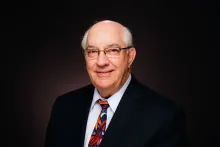
Mitchell Knapp is a graduate of Ambassador College with a BA in Theology. He has served congregations in California and several Midwestern states over the last 50 years and currently serves as the pastor of churches in Omaha, Nebraska, and Des Moines, Iowa. He and his wife, Linda, reside in Omaha, Nebraska.
