


C Mitchell Knapp
This sermon was given at the Oconomowoc, Wisconsin 2016 Feast site.
This transcript was generated by AI and may contain errors. It is provided to assist those who may not be able to listen to the message.
Welcome, everyone! Welcome to the Feast of the Lord! I just think of this every year. We're not coming up to our own party, or some great man, or some organization. This is the Feast of God Himself. I think that is just astounding. When you look at all that we have, and all that we enjoy, everything that God has given, each of us were individually picked carefully by God to understand. Not everybody can. As a matter of fact, I wanted to start out in 1 Corinthians 2 and verse 9. Just as an introduction to the introduction, you understand. Verse 9. But as it is written, I have not seen, nor have your heard. The man did not imagine this, the pagans, all through history. Neither have entered into the heart of the man of the things which God has prepared for them that love him. But we do. Verse 10. But God has revealed them to us. We were chosen, given an individual invitation, to be here at this meeting, to be in God's church, and at a lot of meetings. Skip to verse 14, please. But the natural man receives not the things of the Spirit of God, for they are just foolishness. They are irrelevant. They might like them or not like them. It just doesn't make any sense. So they go on and ignore the truth or don't see the real meaning of what we have been given to understand the truth of God. Today I have a sermon on a portion of Scripture which is known and revered by millions of people who have the Christian Scriptures. They just think they are wonderful and inspiring. It's the Psalms. And they don't see this as personal communication from God to each of those who have had an open mind to know how to pray and its instruction on how to live our spiritual lives. It's just gone. It doesn't really add up. So I'll just warn you in advance. Be careful if you start daydreaming and aren't interested.
I thought I might leave a little guilt trip on them, but it didn't work. We have truly the opportunity to see the spiritual aspect of the whole Bible, and I'm going to go over some of the Psalms here. The Psalms are the book of praises, or Psalms, and they are personal to each of us, those who have been given this gift of understanding. There are many Psalms about the Holy Days in general and some specifically about the Feast of Tabernacles, the Fall Holy Days. There is one section that is 15 Psalms long, and you probably are aware of this. It's the Psalms of degrees, or the Psalms of goings up. It has to do with the symbol of all of Israel coming together and going up to the highest place in the land, and coming to meet the Lord, the eternal God. It's very symbolic. There's also, at times, the Levites, the Levitical choir, stood and sang Psalm 1 of this small Psalter, these 15 songs. When they sang that, they moved up one step and sang the second one, and all the way to the 15th Psalm and finished that out. There are other traditions about it, and they're interesting, but not as important as understanding the spiritual meaning of these Psalms. I'd like to speak on the spiritual meaning of the Psalms of degrees, or the Psalms of ascents, or going up. It has to do with going up to meet God at the Holy Day, specifically the Feast, and worshiping Him. Let's read Psalm 120. We might as well start, if you'd all turn over to Isaiah, chapter 30.
I thought that would work, too. Not much of a reaction here. By the way, speaking of reaction, my wife and I both noticed this, and several others did. Last night, there was just a good spirit of happiness and joy. We had some trouble getting in, kind of a clog at the desk yesterday. I checked and asked around for attitudes. And people were in a good attitude. Well, it's a delay. It's the Feast. We're not letting this spoil it. We get to fellowship in the lobby for two hours. Great! It was just wonderful to see the attitude. We both just noticed it. We came in here and just wondered. It is the Feast. As I was saying, if I can find my... Isaiah was here previously. I checked.
I thought I marked it. Here we are. This is Isaiah 30. This is, without more explanation, a millennial setting. Verse 21, this is the way walk ye in it. We quote that a lot about the millennium. Verse 23, the rain and the plenteous, and so on, and the blessings, rivers and streams of waters. But go to verse 29, if you would. It's talking about, in that time, and it says, you or ye. That's plural. Who is that? Well, that is the first truths.
The ones who are the teachers. You or ye shall have a song. So, we're talking about, it's a millennial setting, holidays and so on. There's a song. Well, what kind of song? And it describes the kind of song. As in the night when a holy solemnity is kept. Oh, have you ever noticed this? All these in the King James, these, your solemn feast days. It's not well translated. It means you're joyful. You know, they're certainly serious in solemn.
Joyful doesn't get the whole meaning of the term. But it would be better than saying you're solemn, like, you know, walk into the feast days and, you know, put your church face on and your righteous frown or something. I'm not sure. But the whole idea is totally different than that. It's a joyous time. So, we're going to say, at that time, you will have a song.
As in the night when you have a nighttime holy day celebration. Well, when is that? Well, there were two. One at the beginning of the feast called Opening Night. That's what we call it. And the other, actually, in the evening, going away from the eighth day, as people left, but that didn't go into the night. But this is the beginning of the feast. We'll come back to that in a little bit. You shall have a song as in the night when a holy, joyful celebration is kept at the holy day, adding some words in there.
And gladness of heart, as when one goes with a flute to come to the mountain of the Lord. It's talking about the processions from all over the land that went up to Jerusalem, the highest point in the land. The idea of the flute is an interesting one because the traditions were that everybody who wanted to, including especially the kids, bring along an instrument. Traveling was hard, as we grumbled and complained, or think, oh, it's a hard trip, 400 miles.
Yeah, but it's in a nice car. Not walking, or some people had animals to ride, or maybe an occasional cart. It was much more arduous. There were very few pianos taken to the feast, but you could bring any instrument you were. A flute was a good pick, probably fewer tubas than flutes. They're lighter. So it's just a fascinating concept, but there's the processions. And the idea of the processions down to the pool of Siloam and so on, a lot of times the kids, especially...
I get this from descriptions. I'm not the scholar that has dug this out. But the tradition is, anybody who wanted to could join the procession behind the priests who had their music, and they could play along or whatever. It's just talking about using music and instrumental playing by everybody who wanted to. It's a part of the feast, and it's a part of the opening of the feast.
And this is a powerful verse. You will have a song in that day. We will have new names, new music, new songs, new all kinds of stuff for a new world. And as in when you're opening the feast with a joyous musical production, thanks very much to the musicians. I wish we had about 20 times the musicians and the crowd and so on. But like this last ensemble, it's just beautiful, just perfect for the occasion, the offering. And then the choir's song... well, of course, it's a lovely, wonderful song and song, and it was done well.
We really appreciate that. God has all kinds of music in his life. He has all kinds of different choirs. A couple are mentioned. I'm sure he has ensembles and solos and duets and trios and everything else.
All kinds of music. It's a wonderful subject to study. But this is the beginning of the feast here in Deuteronomy 30 and verse 29. Now, I mean Isaiah. One of those books. It's in the Old Testament. I know that for sure. Okay. Let's go right then to Psalm 120. There are 15 chapters. There are short ones, but there's still too much for one sermon.
So I'll explain that pretty soon, but I don't want to right now. That is how to approach it. Some of them we're so familiar with that I'm going to sort of summarize and skip over. The first seven are more specific. But let's go to Psalm 120. This is number one in the festival Psalter that was inserted right after what we call Psalm 119. I guess, as we did the final editing and chose the spot, I suppose. So we're starting in a festival Psalter here, a hymn book.
In Psalm 120, as we think of the joyful feast, look how we start. In my distress! That's how you start the feast. Now, these Psalms are realistic teaching on how to keep a spiritual feast. And this is where you start. In my distress, I cried to the Lord, and he heard me. Deliver my soul, Lord, from lying lips and deceitful tongue.
This kind of sounds like the workaday world. One man told me, I want to leave my job behind, leave work behind, and not think of it, and go to the feast. And I imagine a lot of people have. And that's the idea. We come out of a world that is enemy territory. He says, what shall be given into your, what shall be done with these false tongues, sharp arrows of the mighty, gossip, shooting, being shot at, being lied about?
Well, it is me that I sojourn in Meshach and dwell in the land of the tents of Kedar. These are two tribes known for their warfare, and just being wild savages, as whether it was a reputation. But the thing is, the Psalmist wasn't in Meshach. He was in Jerusalem writing a song.
I like one translation, and I can't remember which one it is, but it says, Man, this is just like living in Meshach or Kedar, you know? Like we were over in the Middle East somewhere, dodging bullets. Let me out of here. I feel like I'm in enemy territory, and that's the idea. You realize, yes, you really like your neighbors. You just appreciate the blessings that we have, but in the end, we're not in God's world. We stand out, not all the time, but we will, at times, stand out. There's persecution, and all who live in Christ Jesus will suffer persecution. We will. That's the idea of starting the feast.
You're coming out of the world, symbolizing the change to the new world. Somebody put it like, escaping the reality of this world, and escaping into the reality of the next world. I can't remember the word escaping was not used twice in that quote. But we're going into a taste of the millennium, a taste of the world ruled by Christ. We're escaping out of this world to a taste of it.
Now, there's a big if there. If you just come to the feast and say, Man, extra money and extra fun and games, and kind of skip out on the prayer, maybe a lot, and just focus on the physical, well, you know, you might just have yourself another big taste of the normal, regular world we're trying to come out of. But if you look at the spiritual teachings, the attitudes we're supposed to have, then the enjoyment and the pleasure and the joy of the feast is compounded, and it really becomes spiritual joy.
So we're coming out, and he says, I am for peace. What does the millennium stand for? What's the feast? It's about peace. But he says, they are for war. So it's enemy territory, as it were, and just have a break. Take a big breath, leave the regular workaday world behind on the hassles, and go to the feast.
There's a lot of work at the feast, too. A lot of effort and treasure and work and all that. But it's different when the attitude is different. So that's the first step, where we're coming from. And then, of course, we go from Psalm 121, which is number one in the Psalter. And not surprisingly, we go to Psalm 121, which is number one. Psalm 121 is number two, so let's just read right on to...
I'll figure it out. I've been having trouble counting since third grade, so just give me a break. 120 is number one. 121 is number two, and so on.
121, I will lift up my eyes to the hills. From whence comes my help. It's not clunky in the translation there. But I'll look to the hills. Jerusalem is the highest hill. But the armies went through the plain. And unless they were trying to get to Jerusalem, a lot of times they would keep on going, either south or north, up to the area of Syria and then Mesopotamia, or down to Egypt. The armies, a lot of times, the people would escape to the hills. And so it was kind of a symbol of safety, but he said, I will look to the hills, in Jerusalem especially. But where does my real help come from? Well, it comes from the Lord. This is useful to read in four or five different translations. But my help comes from the Lord. In the end, that's the only help, the only safety we have in this life. We're not going to look to physical things.
And we're not going to be able to find safety and strength in any physical thing. That's the idea here. God offers his protection to his people who love him, and that's what this is talking about. So now, if you look at this, he talks about looking to God for protection, and then he gives a six-fold description of the protection. He says, he will not suffer thy foot to be moved here in verse 3, and who keeps thee will not slumber. There's a beautiful song. We use it for special music on atonement, when we don't necessarily have anybody to get special music. You just have to acquire rendition from YouTube. He watching over Israel slumbers, not nor sleeps. Beautiful song, beautiful music. A very complicated one, I would say, for a choir to address. But it's just beautiful. It comes from this verse. He watching over Israel slumbers, not nor sleeps. In other words, there's never a time when God forgets about you. He doesn't say, oh, that's right, I've got to check on old so-and-so over there. Or, oh, I've got to check the church. He just constantly on watch doesn't need sleep. Behold, he who keeps Israel shall neither slumber nor sleep. The Lord is thy keeper. So that's the second time. He mentions this. The Lord is thy keeper. The Lord is your shade upon your right hand. Sometimes shade is the difference in the desert, you know, between life and death. It can be absolutely vital to have shade. And then the sun shall not smite you by day, nor the moon by night. Just, you know, 24-7. That's the idea of that verse. The Lord shall preserve you from all evil and preserve your soul. The Lord shall preserve your going out and your coming in from this time forth and even forevermore.
Once God commits to each of us, he will not go back. Paul's list of all the things that might separate us from Christ, he says, would it be death or destruction or war, or that long list in Romans 8? He leaves one thing out. There's one thing that could separate us. And that would be ourselves. Those who refuse. Otherwise, we've got it made, and I'm sure you feel I'm not giving up. I'm not letting go of these spiritual blessings, of all the blessings of life. The word, he says, the Lord shall keep you, keep, keep, and then he shall preserve, preserve, preserve. Sixfold in the Hebrew, it's only one word. It's the same word. And it has to do with God putting a military guard around each of us. The word used for a military guard. But it has that meaning, and just generally keep and preserve and protect, and so on. And so that's why the translators divided it, because there are different nuances, different meanings to the word. It's like he puts a guard around you, and the Scriptures throughout, you know, talk about, or several Scriptures, talk about God putting his angels about you. Psalm 34, and the Book of Acts with Peter, and so on. There are a few Scriptures that show that he does put, and he says his angels camp about each of his, that he is called, each of his own. And so that's what this is talking about. Interesting thought. There are only six. It's a sixfold promise or description of God's faithfulness. Some people have noted that's the number of man, and the seventh will come at the resurrection. When it's absolute and total protection from everything, we won't have to learn any more lessons as a physical being. So that's kind of a side point. So we start out coming from distress to the beast, and looking for deliverance. Then we go right to the fact that God has promised to keep and preserve us from the time he gave us that first invitation to come to this meeting and all the others. The blessing of being able to understand the truth. A lot of people read through these, and it's nice, lovely Psalms. I can remember my grandparents just loving the Psalms, but they did not know that what's there is a blessing. It is truly beautiful. But what's deeper there is personal direction from God the Father to us, those who are called, and really understand. This is instruction for the true Church of God in advance of the Second Coming of Christ and the First Resurrection. Okay, so we move from that six-fold promise and reassurance of God's protection onto 122, which is number three. I was glad when they said unto me, Let's go to the house of the Lord. I've heard a few people say, Ho, ho, ho, ho, do we have to go? I'm not sure why. I think it was a lot of work. I noticed those people kind of drifted away. They weren't getting that much out of it. I'm thinking of whatever. I guess I missed several days' work there. I know people just can't afford it.
There are various reasons. Most people, of course, want to come, even if they can't. We've left several people behind, and they want to be here. We have the cards out there. You really need to remember them. Send a card of your own in addition to that, and maybe give them a call.
You summarize this psalm as just the joy of being part of God's church and keeping His feast. It's very simple. I was just glad. I shouted for joy when they said, Okay, it's time for the feast. Let's go to the house of the Lord. It's a spiritual experience that we have, and we look forward to it. Next, when our feet shall stand within thy gate. So, Jerusalem, it can be translated to time. I'm sure I think with the writing of the Hebrew, but we look forward to it. Here we are. Our feet are actually standing here. There's a point. I remember this especially as a child.
Strong enough now, you drive up to the parking lot, and you say, Well, honey, we're here! Here we are at the feast. I remember as a child thinking of all the anticipation. I was not into spiritual things at that point, but I was looking to all the fun, the excitement of the feast. A lot of times, including this year, I had a real rushed time last month, especially up before the feast. I was mainly thinking about the work, getting everything done, prepared and ready. The last few days I've been praying that God would just help me to catch the spirit, as it were, to think of the excitement and the joy and the profundity, and the profundity and just the spiritual strength, that which we need so badly, the joy and the excitement and the glory of the feast. That's probably a prayer that you prayed as well, because we are in distress in the world in general, living in this world. I was glad when they said, Let's go up to the house of the Lord. Our feet shall stand within thy gates. Here we are, finally standing. Jerusalem is built as a city that is compact together. The description means everything fits perfectly, it's beautifully in place, and everything is organized. You go to Jerusalem today and you say, Whoops! This verse is about the future Jerusalem. In the city, I'm sure in the millennium it's going to be absolutely beautiful, but this goes further than that. This is talking of the Church of God. The analogy is, we're living stones, Peter says. Each stone, like in the old days or the previous Temple, was carved and fashioned off-site, miles and miles away, to perfection. When it came to hauling it up to the building and slipping in between the other two stones, or whatever position, fit perfectly. They had technology that we don't have today and could do things that we, maybe the last few years, could do with laser technology, I'm not sure. But the idea is that we're being prepared individually, and when it comes to the Temple, the spiritual Temple, we will all have the perfect job. How many of you have ever had the perfect job?
There are some of us who are in the ministry and we're pastors, full-time.
It is not the perfect job. There's paperwork, for one thing, and other stuff. There's physical stuff to do. In this world, we don't have it. What God promises us is that, and this is so wonderful when you think of it, another wonderful promise, we will have the perfect job, perfectly made for you, and you perfectly made for the function in the family. What a fabulous thought. Jerusalem is built as a city that is perfectly compact together, perfectly organized. It's just perfect in every way. A concept that we don't quite have the ability to understand. Wherever the tribes go up, the tribes of the Lord, even unto the testimony of Israel, that would be the God of Israel, even up to the capital, to give thanks unto the name of the Lord, for there are set thrones of judgment.
The thrones of the house of David. Now, this talks about the church. There are thrones of judgment, or, as the New Testament words, offices of judgment. There are judges that must be made to keep unity, just to keep things going, you know, and to keep harmony. Sometimes it might be a doctrinal judgment, it might be a Christian living judgment, it might be various decisions, just administrative details to keep everything organized.
But unity and success, you know, in any kind of an organization with two people or more, requires some kind of organization and administration and government. And so here is a description of the church that has judgment, thrones or offices of judgment. And it says, "'They shall prosper who love thee, those who love the church.'" God loves His church, and He wants us to. "'Peace be within thy walls.'" Again, another allusion to the world to come, the world of peace, the main difference of the two worlds, meaning being peace.
And it says, "'Peace within thy walls, and prosperity within thy palaces.'" The Bible uses prosperity, not just a narrow meaning of money, but it means your life works. That's prospering spiritually. You might have a tough time of it with money. But if you're prospering spiritually, your life is working. You have purpose. You have joy. You have troubles. You have the solutions, too. Your life works.
It's meaningful. So then we have a direct command by God. Pray for the peace of Jerusalem. Well, if you do that for physical Jerusalem now, you're just looking to the future. And, of course, the peace of millennial Jerusalem, absolutely.
We're looking forward to that. This is talking about the peace of the first roots. The church, which is symbolized by Jerusalem and by Zion, stands on Mount Zion. Pray for the peace of the church. You can put that in there. It's not a direct translation of the word. It is the meaning, the spiritual meaning of it. Peace be within thy walls, O church of God. And prosperity, meaningful lives where people are growing spiritually. Prosperity within thy palaces, or thy office... Christ used the idea of many mansions or offices within thy palaces. Within the church, which every one of us has in preparation and preparing for.
For my brethren and companion's sake, I will now say, peace be within thy walls. There is a loyalty built up between all of us. You might have to sacrifice this, that, or the other thing to keep peace. To make sure others in mind, instead of yourself, to make sure others are taken care of. All this type of thing adds up to a spiritual feast.
So, there are just layers of illusions in here, and symbols. And then, of course, you start out, I'm for peace, therefore war. And so we come back because of the house of the Lord. So we have individuals because of my mom who were taken to the feast, or because of my brother or sister, my sisters who, because of each other, I'm praying for peace, and I'm going to do everything I can do to keep peace. Closing out with verse 9, because of the house of the Lord, our God, what's that? That is the church. Because we love the church! I will seek thy good.
I will do thy blessing. We've come through a period of several years now, a couple of decades, actually, of a lot of turmoil in the church. Split, an evil rotten word, is in our vocabulary. Just hate it. What a horrible thing. And God hates divorce, which is another word for split. God hates disunity and splitting things up. We have a huge job as humans to keep peace with each other, whether it's in our own families or at work.
There's a lot of work that goes into peacekeeping. There is work that we can do with success, keeping peace in the church. And it has to do with making sure others are taken care of, and not going off on our... not getting too big for our britches and thinking that it's all about me. Well, here is Psalm 122, specifically, about the joy of being in the church and coming to the feast, not just for a vacation, but with the church.
It's the joy of the Old Testament, Feast of Tabernacles. But on top of that, it's way greater because this is the church, our spiritual family, keeping the feast. Now, I spent a little bit more time on the first three, and we'll pick up the pace. So, worry not, but don't worry. We won't get them all done. So, let's go to Psalm 123. This is a lovely, short little psalm, and these are all about different attitudes that we're supposed to cultivate so that we can keep a spiritual feast.
This is the prayer of the suppliant, the prayer of the slave, the one, the worshipper, that comes to God. With no other agendas except just to worship, just to give to God, that which he cannot get in any other way. The only thing we have to give to God that is original and that didn't come from him, actually came from him, but what we of ourselves have to give, and that is just our full-throated worship, wholehearted without reservation, symbolized by the Holy Name.
Everything you have, that's the symbol of the two mites. As Mr. Delisander mentioned a while ago, just giving everything to God. "...unto thee I lift up my eyes, O Lord, you who dwell in the heavens, behold, as the eyes of servants look at the hand of their masters, and as the eyes of a maiden, unto the hand of her mistress." You've probably seen this in movies, the one who's waiting for the queen, or maybe it's kind of a... the queen is in a cross-attitude at the moment, or the king, or whoever.
And the servants, the butler, whoever's running around, and nothing is quite right, you know, they're just looking. Here's this girl, this young woman, who is looking at her mistress, "...so her eyes are trained upon the Lord, every nuance, every move of the hand, every twitch of the eyebrow, every expression, looking at the one who has power over them, who has the power of all the goodness that can be given, and can really punish them and throw them out." This is the prayer of a worshipper.
We have nothing when it comes... we don't bargain with God. I've talked with people that say, well, I told God if you do this and that, I'd do that. Well, okay, you can say that. You don't bargain with God. He's very merciful, so, you know, he doesn't...
let you know it necessarily when you go off the reels like that with attitude. But he says, that's how our eyes wait upon the Lord, our God, until He has mercy upon us. Have mercy upon us, O Lord, have mercy upon us, for we are exceedingly filled with contempt. We have nothing. We're hated by others. There is a person in trouble and knows it. It's just a worship... a worshipful, short prayer. Our soul is exceedingly filled with the scoffing of those who are at ease and with the contempt of the proud. Very simple lesson here. A slave was absolutely vulnerable. And we need, when we come to God, to have that as part of our attitude and understanding. We're just vulnerable. We don't have any defense. He talks about protection at first, but in reality, we have no defense except God. Now, these first four are absolutely vital, and so I spent more time on them. The next three are formed the first seven, which is the foundation, and then we'll cover the rest from a different point of view. Okay, 124, then. This is about a flood. And this imagery of being overwhelmed with a flood is used by several, especially in the Psalms, but other scriptures also talk about just being overwhelmed with it. A river is good in the Bible. It brings life, water. A flood is a river out of control, and it brings death and destruction, that contrast in the Bible. Being flooded over yourself and just feeling like you're overwhelmed and just overtaken and out of control, which you are in a flood, that's the imagery, or that's the idea here. I was actually in a flood one time, and the water was only maybe four feet or so. I was in it, and here came a big wave. I said, oh boy. I said, I'll just duck down and let it pass over, and I'll kind of jump into it, and it'll go over me. Well, waves are from the bottom sometimes. I did that, and I was wrong. I learned about floods. The reason I was in the flood, by the way, is in the Pacific Ocean, on the shore of Redondo Beach, or somewhere around there. I thought, well, I'll just jump below the wave. Well, the wave goes to the bottom. That's what pushes it up. I jumped in there, and I didn't sneak by. It just picked me up and turned me over. I said, okay, I've got to close my arms. No. They were going like this, and I don't know why I didn't break something. Then it went, whap, and slammed me right on the bottom. I stood up, the water was about three feet, and I walked on out. I tried to beat the next wave. I have some idea. Fortunately, it was clean water. Fortunately, I had a friend who was terribly injured that way. Oh, it was that stupid. But I did it. I was saved. It was a good lesson. David and others used this, just being overwhelmed by a flood. The water's rising, and it swept downstream, and simply killed. So we have that here in this verse, chapter 24. I'll just read it through. If it had not been the Lord, who was on our side, now may Israel hear? In other words, listen up. Everybody, Israel, read the church. If it had not been the Lord, who was on our side, when men rose up against us?
Then they had swallowed us up alive, and their wrath was kindled against us. Then the waters had overwhelmed us. The stream had gone over our soul, then the proud waters had gone over our soul. This is a poem, poetic writing. Behold, or pardon me, then the proud waters had gone over our soul. Blessed be the Lord, who has not given us as a prey to their teeth. Another different metaphor. Our soul has escaped like the bird out of the snare of the fowlers, and the snare has broken. We have escaped. We've dodged a bullet, many bullets, really, because of God's protection. Our help is in the name of the Lord, who has made heaven and earth. Psalm 124 goes back to the second psalm about preservation. And, 125 and 126 also review the first four lessons. The first seven are the basic idea of the attitudes that we need to come and worship God at the feast. We're going to skip over the other two as far as reading them. We don't need to. 124, 125, and 26.
Well, maybe one thing with 126.
Because they develop the same attitude, and just explain it more deeply, develop the same themes as the first four. The first seven are within a set. And here we come again, talking about the first fruits. We're in 126. When the Lord turned again the captivity of Zion, we were like those that dreamed. It was a dream come true. This speaks of ancient times after they had been delivered. But in modern times in the future, the one who is standing there and says, I've been preserved, I've been through it all, and here I am standing. And it's talking about the resurrection. As the mountains are round about Jerusalem, so the Lord is round about His people.
Just the idea of the mountainous terrain, a lot of people wouldn't attack as far as Jerusalem. Only the larger, more powerful armies would. Verse 4, Do good, O Lord, and to those who are good and those who are upright in their hearts. Who is good and upright in their hearts? Nobody but all those who have been called and who have repented and who have maintained that repentance. For example, this morning when you maintained your baptism vow and your repentance before God, your attitude before God. And it says then, peace will be in Israel. I think actually what I did was...
I jumped back up to 1.25, sorry. I was going to skip that. So, I want to note verse 5 of Psalm 7 in the set. 1.26.5, They that so in tears shall reap in joy, he that goes forth and weeps, bearing precious seed. The farmer that puts out the seed, or the church member, the church that spreads the precious seed of the gospel. That's the spiritual meaning of this. Shall doubtless come again with rejoicing, bringing in the sheaves with him. There's an old song, bringing in the sheaves. The idea is those who have worked and haven't given up and endured to the end, there is a reward for that. It's a promise of reward. So, just a wonderful psalm.
The time will take on those psalms. Now, let's look briefly at 1.27 and 1.28. These are about the blessings of the millennium, of the feast, because of the strength of the family. These two are about the family. And you can summarize them by saying an equation. The feast equals the family. It's the family of God. It has to do with all of our families and how we live, but I noticed...
I was just thinking about this. Years ago, when I was a kid, a teenager, and then it gradually changed, but most everybody in the feast were families with kids and teenagers, and a few singles. And that has changed drastically as the family has broken down in this society, as the devil has done his work. It's reflected in the Church, and there are probably as many single people as married people in different congregations. I wouldn't know the demographics of this group here at Oconawoc, but it is different.
And the one psalm, I think it's 65, it says, God puts singles in families. So we're going to have... I don't know how he's going to do that, but at the first of the millennium, we're going to be healing a lot of families and putting people together. I don't know. He has the answer, and I don't. But I do know that it's important to, if you're here as a family, to make sure that you take care of your family in keeping the feast, that is. Give time to them. But as well, and for everyone here, no matter what your situation is, family is so important.
We are so valuable to each other. If you don't have people who are close to you, what is life? The feast symbolizes a world of peace, where families are in good order, and where the family of God is part of the society. And with that, these two deserve their own sermon. Okay, now, we're kind of winding down to the end of this Psalter. It's fascinating how it does this, the 15 Psalms.
Psalm 129 talks about persecution and deliverance, and that goes back to 124 and 126, and up to the end Psalm, which we'll come to. But it goes back to review this. This has to do with the tie-in with this Psalm and the Feast of Trumpets, where we, the member of the ecclesia who looks back over his life at a time of his reward. This is at the resurrection, right after the resurrection, somewhere in there. And the whole idea is that after 2,000 years of toil and persecution and trouble, the church reaps a huge harvest.
Or a small one, you might say, the first roots. But this has to do with each one of us, and the reward, which was already talked about, and it's directly connected. Or maybe you could say indirectly, it's the same theme as the Feast of Trumpets. So we've already kept the Feast of Trumpets this year. Why are we reviewing? Why are we reviewing? Because the lessons we learned from that are necessary for keeping the Feast in the right attitude, and that applies to 130 and 131 also, both of which are penitential Psalms.
They're tied to the Day of Atonement and the keeping of Atonement. The picture is Israel at the end time, and it applies to all individual worshippers. This is 130 and verse 8. And he shall redeem Israel from all of his iniquities, talking about Christ returning, and then redeeming and bringing everybody together in unity. There is so much more in the Psalm, but as I said, I wouldn't cover everything. 131, the same thing. It's a very short little Psalm, but it goes there with the pair. And so it reviews trumpets and atonements for the Day of Atonement, which was the idea is we've already kept those days, but they have to remain a part of the keeping of the Feast, or else we lose the meaning of the Feast.
And so everything makes sense so far. It's tied together, and they come to 132, and it seems to be a Psalm out of place. For one thing, it's a long Psalm, 18 verses, and it's about the covenant with David, the Davidic covenant. And as I say, we're talking about the millennium, and we're talking about all the lessons of the Feast coming out of the world, a Feast of Peace looking forward to the millennium, and protection and family and all those.
And then it talks about the Davidic covenant. It doesn't seem to fit except that, when you look at it, here we go. This is kind of a conclusion, the first part of the conclusion. Psalm 132, apparently written by Solomon, Lord, remember David and all of his afflictions, Solomon prays.
And it comes down here, it talks about the ark, and verse 9, Let the priests be clothed with righteousness, and let the saints shout for joy. Okay, this takes it out of the ancient context, and shows this is a future prophecy. This is about the resurrection, at least, the saints being clothed with righteousness and shouting for joy. And then, what we see then is that everything, all the keeping of the feast, our Christian life, everything is based on our covenant. We have a covenant with God, each one of us. And that's the same covenant that's tied in with the covenant to David, the Davidic covenant.
Which, if you've studied the Davidic covenant, you have to go all the way back to the first prophecy of Genesis 3.15. About Christ coming, and all through the prophecies, and up through Abraham, Isaac, Jacob, Judah, and the kings of Israel, and the promise to David.
The end result of which is that Christ will inherit that throne and become the king of all. David remains forever the king of Israel, but Christ is the king of all! He's the king of Israel, too, but the king of the whole universe, all that are living. What this psalm placed in here in the festival Psalter does is it ties everything together. The reason we're here keeping the feast is that in Genesis 3.15, a Savior was promised, all through the prophecies, all through the history, and up through the church, and up to the very day He comes back for the second time as a conquering hero the king conquers and sets up his government.
That's what we're here for! We're talking about the millennium as we sit. That's why we're keeping the feast. This psalm is not a place at all. It's perfect in the succession of festival psalms. How to keep a spiritual feast. We've got to remember the beginning of the movie. You come in the middle, you don't know what's going on. You go back, review the beginning, and then you understand how the movie comes out.
Understand how the plan comes out when at the feast you remember the covenant to David ending in Christ resulting in all of our salvation and in the millennial world that we picture here. So it's just absolutely a fabulous, spiritually enlightening journey through a spiritual keeping of the feast. Up through Psalm 132, which is called, by the way, a psalm of the temple.
It's a psalm of the church. That's what it is. Where we began? The Garden of Eden. And right after. All the way up to the first resurrection and into the kingdom of the millennium, which is symbolized by this feast we're keeping. And then we come to the end. The result.
Psalm 133. And this is number 14, 2 times 7, possibly significant. But 133 is that wonderful psalm, which we sing almost every time at the feast, the psalm of unity at the feast. Two symbolies are used. The use of oil and water. The oil of anointing for Aaron that dripped down on this beard. And the dew that descended on Mount Zion. Both symbols of the Holy Spirit coming down upon mankind. First the priesthood, Aaron, and then the whole world, the Mount Hermon. It's just so beautiful in its description. And it just talks about the unity of the church and of the world, and of God himself, and of his family.
Spiritual unity. The alternative to this is like a kingdom divided, like Satan's realm. And it will not happen, because we're here being molded by Christ, keeping his feasts, looking to him for everything. So we should make a great deal of effort to be in unity, at least in the unity of the Spirit, even when we aren't completely aligned in opinions and viewpoints. Anybody who's married knows that he's a wonderful guy, she's a lovely woman, but she has a few things wrong, where she disagrees with me, or vice versa. Nobody's in perfect unity in this life. The church says, we need to make a huge effort.
Our unity in the Spirit and attitude is more than vital. It's our very life. We have to have that. And keeping this feast shows, we understand that, that that's one of our purposes, and in one sense, the main purpose. That's the end result. So we're done, right? Because it's unity. But not so. There is something beyond unity that is absolutely so important and vital. And that is mentioned in Psalm 134, another short one, to end out three short verses.
And it's just the most fabulous conclusion to a spiritual keeping of the feast. You can imagine, we have the symbol of the old, and the new becomes obvious. Behold, bless you, the Lord, all you servants of the Lord, who by night stand in the house of the Lord. That kind of narrows it down. This is the priests and the Levites. They were the ones standing there, who were at the gates.
The priests and the Levites stood at the exits, and all the people filed out of the court of the temple, which was a huge court around the temple. And sometimes around the gates of Jerusalem, when there were too many people. And then, verse 2, lift up your hands in the sanctuary and bless the Lord. The custom was, all the people blessed the Lord and blessed the priest or the Levite that was standing as they went out the door.
That was the idea. To bless each other as you would leave. It says, lift up your hands in the sanctuary and bless the Lord. The Lord who made heaven and earth bless... and then it adds another element, because the people were supposed to bless the priests as they go. But then, the Lord who made heaven and earth bless the out of Zion, the priests and the Levites, the tradition is...
I believe it, I think that's preserved well... They would give an individual blessing to every family, every person that left. So it kind of held you up at the doors.
And we don't have that custom of giving a personal blessing, but we do give a personal blessing. If you notice, the prayers so far have been for blessings, God's blessings, on the people of God who are here keeping the feast. And everybody else it is around the world. This is the prayers of the firstfruits and specific salutations and goodbyes and blessings as we go. But these are the prayers of the firstfruits.
The personal blessings that Aaron and his children, the priests and the Levites, blessed the church with the church in the wilderness, ancient Israel. It's an example for us today, certainly. And the scene is of mutual blessings, as everybody goes. And finally, a final receiving of a blessing for the coming year. The Aaronic benediction probably was stated specifically, but they're various blessings. The duty of the priest to bless Israel. And he says in number 6, And put my name upon them, Remind them, they are the children of God. They have had a special blessing to be here. They are blessed because they're keeping the feast. So if things are tough at the feast, they are, don't go home, stick it out. They'll get better. Look at the spiritual blessings. We have these fabulous surroundings that we get to meet in these wonderful places. In America, especially, the blessings of Abraham. And we leave keeping the feast with a special blessing. And I'd like to finish out with another psalm, 1 verse 89 verse 15, which talks about these psalms. 89 verse 15, like we did in Isaiah. Verse 14, Righteousness and injustice are the habitation, the foundation of Thy throne. Mercy and truth shall go before Thee. Blessed are the people that know the joyful sound, and what would that be? The joyful sound. They that walk in the Lord, thy Lord. They that walk, O Lord, in thy light, of thy countenance. The word there, and it's translated, the festival psalms. Blessed are those, the people, that know the sound of the festival music. Let's put it that way. In other words, those who have kept the Feast of Tabernacles. All the Holy Days aren't like this, but the special psalms you hear at the Feast. It says, blessed are they. And it means that we have a special blessing for keeping the Feast. And here we go with the conclusion. It says, in verse 15, Blessed are you when you walk, because you'll have the light of your countenance. This talks about the glory. We're here because Christ is bringing many sons to glory. And you have been blessed by being here, and we are blessed by keeping the Feast of Tabernacles.
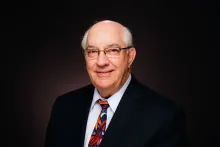
Mitchell Knapp is a graduate of Ambassador College with a BA in Theology. He has served congregations in California and several Midwestern states over the last 50 years and currently serves as the pastor of churches in Omaha, Nebraska, and Des Moines, Iowa. He and his wife, Linda, reside in Omaha, Nebraska.
