

Robin S Webber
This transcript was generated by AI and may contain errors. It is provided to assist those who may not be able to listen to the message.
It's been said that home is where the heart is. Home is where the heart is. And that's what we're going to be talking about. That's the vision of one day being at home with God. Intimate. Bound. Forever. What is the difference between a home and a house? Let's consider for a moment that a house can be built with hammers, and with nails, and wood, and concrete. That's a house. That's a structure. But that's not a home. A home is not about where, but who is there. A home is about relationships. It's something beyond the wallpaper. It's something beyond the plumbing. It's something beyond the furniture. It's the people that are in that structure that make it a home. It's about hearts that are bonded. And that's what the good news, that's what the gospel is about. It's about hearts. It's about God's desire from the very beginning, before time began, that He wanted us to be at home with Him. And ultimately, Scripture and that good news, and that gospel does reveal to us where home is and who waits for us. That's what I'd like to talk to you about this afternoon. When you think about Scripture, and in the Church of God, and in our congregation, we look at the Scripture basically being one book. It's divided into testaments by man, but this is one story. It's an ongoing story of God's love through Jesus Christ, from time immemorial. It's the story of Exodus. It's the story of drawing out. It's the story about going towards a promised land, whether it be across a gulf of water, whether it be across a river, or whether ultimately it be across life and death.
Scripture is the ongoing story of God's desire for we, humanity, to dwell in this specially prepared home. Remember what Jesus said before he died? He says, I go to prepare a place for you. God's been doing that all through human history. Did you know that? You know, just think of the Garden of Eden. He wanted to walk and he wanted to talk. He wanted to be with Adam and Eve. He wanted them to be at home in that sense in Paradise. That didn't work out on man's part. He also offered Israel, who has been slavery, he offered them a home. He says, I've got a land of promise and I will lead you there myself. And I'll open the door. He opened a couple doors, didn't he? He opened the Red Sea and he opened the Jordan River. And he opened up the land, even though there were people that were already there, and he gave it to Israel. Later on, later on, those people did not want to be at home. And God had to allow them to be taken into captivity and they went to Babylon.
But then they came back. God was still offering a home. God said that of that tithe of the Jews that came out of Babylon. He said, I will be your God and you will be my people. Not going to look a lot like it used to. It's been 70 years. You can imagine what your house would look like after 70 years if you weren't taking care of it. But I'll be there with you and I'll make a home with you.
Then came the coming of Emmanuel to be that ultimate door, that ultimate gateway, back to the ultimate home, back to paradise, back to that time before the caribs guard at the gate, back to a time when you and I can walk and talk with God as much as we can in this human framework. And then one day to literally be with him forever in his home and with him. And to recognize that home is not just eternal life. Are you with me? But it's who you're spending eternal life with. The one, the creator, the great lover, the unmovable force of all wants you and me to be with him.
Think of John 17, 1-3, where Jesus says, and this is eternal life. How did he describe eternal life? That you might know my father and might know about me. It wasn't about brick. It wasn't about nails. It wasn't about a house. It was about a relationship. As we go through Scripture, we recognize in this journey, this exodus down through 6,000 years, that it's taken all kind of twists and turns with the people of God that he called to be first fruits gem. Like Israel was a nation of first fruits. Jeremiah 2 and verse 3 are about verse 4.
And then he's calling the Israel of God today to be first fruits, but it's taken some twists and turns. There's been some ruinous choices made by the people of God. There's been displacement. There's been repentance. There's also been reconciliation of dwelling not merely before, but with God. There's a difference between coming before God. Many people come before God even during the feast days.
They come before God. But there's a difference between coming before God, but with God. What we call the with factor, the intimate factor that God desires. A part of this is described in a group of Psalms that we're going to be going through in a few minutes. And I'd like to just throw this down to you, this phraseology. Mr. Beatty gave a message on this year or two or three years ago, and it's always good to expand upon where Sandy leads off.
These 15 Psalms, you can write down 15 if you're taking notes. This is note taking time for those that want to take notes. And that is our 15 Psalms. They are known as the Psalms of Ascent. Psalms of Ascent, like you're climbing, like you're going up, not smelling. So we've got to get our senses correct. These Psalms go from Psalm 120 through Psalm 134 and are all about getting back home. I want to share that with you.
That's kind of the thrust. The Psalms of Ascent are about getting back home to where it all begins, to Him who has no beginning and has no end, the Creator, God above. And not only that, but another thought I like to share, it's the story of return. The Bible is always about the great return. I shared some of the chapters of God's people. Sometimes they make bad decisions. Sometimes they reject Him. Sometimes they are displaced. They are taken away, as we know when when Israel and or Judah were taken by Assyria or by Babylon.
But then there's repentance. Then there's reconciliation. Then there's an Embracement again by God. I will be your God. You, you will be my people. So we see all of that in the stories of Ascent. A couple of background items, and we're going to tie it all together. Okay, let's just tie it all together here from the Psalms of Ascent have also been called the songs of degree. They've also been called the Pilgrims songs, as well as the gradual Psalms, or the graduated Psalms, because there are steps to this.
So think of that way. Ascent is climbing, graduation. Sometimes it's thought that they were sung on the 15 steps of the temple. Different background material like this. One reason why they are normally called the Psalms of Ascent is that is normally how they appear. If you go to Psalm 120 through 134, when you see under the Psalm, you'll see a song of Ascent. You find that in the New King James. It is interesting in the New Living Bible translation, though, they are called again, as I mentioned earlier, they are called the the songs of the Pilgrims.
And that's what I'm going to focus on today. The songs of the Pilgrims. As they ascended to Jerusalem, that they were singing these songs. The Hebrew term coming back again, just for a second to the term Ascent, which will be germane to the verse I'm about to go to. The Hebrew term is meh a lot, meh a lot, which means going up. And isn't that what we're going to be doing here next week? We are quote unquote going to what? We're going to be going up to the festival. Let's center on a one verse and I'll give you my specific purpose statement.
Let's go to Isaiah 2. You can also find this thought over in the book of Micah, but we normally turn to Isaiah because it comes first in the scriptures. Isaiah 2.
And let's pick up the thought here in verse 2. Here we go in Isaiah 2. Notice what it says. And now it shall come to pass in the latter days that the mountain of the Lord's house shall be established on the top of the mountains and shall be exalted above the hills, and all the nations shall flow to it. We're talking about a total change in human history.
As to who is in charge. Mountains are Bible talk for kingdoms or governments or empires. There's going to be a tremendous change as Jesus Christ comes back to this earth. Now notice verse 3. For many people shall come and say, here it is, come and say, come and let us go up to the mountain of the Lord, to the house of the God of Jacob. And he will teach us his ways, and we shall walk in his paths. There's three things out of this verse I'd like to acquaint you with. Number one, let us go up to the mountain of the Lord.
God has given us an invitation. He says, come. Number two, then, let's notice what it says here, and he will teach us his ways. His ways. Not just what man thinks about his ways, but we're going to have a direct ability to understand what God would have us to do as his children. Number three, and then, because it's covenantal in approach, and we shall walk in his paths. God always has a relationship. He asks us to do something. He does only what he can do, because that's what makes him God.
And then he asks us to do something. So we are taught his ways, and then we will walk in his paths. So with that thought, here's the title of my message. Let us go up to the feast with the song of the pilgrims. I know it's a little long title, but I wanted to get it all in. And you're Christian, so you have to forgive me anyway, okay? Let us go up to the feast. But with these, the songs of pilgrims. For a moment, let's ask ourselves, what does assent refer to? What is the depth and the breadth of this term, the songs of assent? Now, again, they're the songs of the pilgrims, but what does it mean, assent?
Because that's important when it says, let us go up. This has led some to believe that these 15 Psalms are representatives of 15 steps that lead up to the temple. That could be one explanation. You know, there's often more than one handle on something that's in the Bible. That could be one explanation. And it does seem that in the ceremonies of the festival days that oftentimes the Levites, the Levitical choirs, would sing step by step at the site of the temple.
Others refer to this in a larger framework of history. Others also see this as an assent back to Jerusalem from the exile around 516 BC. Might be. But let's settle for a moment on what most scholars, though, believe that the assent is referring to. And it's referring to, in their thought of the Israelites, later, the Jewish pilgrimage during these three annual feasts. You can jot down Deuteronomy 1616. In the world of antiquity, there were three seasons. There was the first part of the spring season, then there was the the Feast of Ingathering, then there was the Fall Festivals. There were three, and this is important, there were three pilgrimage festivals that got a sign that you go up to where he has placed his name.
Now, this is going to be germane as we go further. They were pilgrimage festivals. Now, let's understand the world that Jesus was in. By the time Jesus is there, there were more Jews that were abroad than were in Jerusalem or even in Judea. You know, you had great Jewish populations then, Alexandria.
You had great Jewish populations in Babylon. Both cities had more Jews than were in Israel. You had Jews that would come down from Asia Minor. You had Jews that would even come from, as it says in the book of Acts, strangers from Rome. So, but they would do this. They were like bees to pollen. They were on a drive that was deep in them that they had to be, to where God would have them assemble. Now, with all that stated, let's understand then, Jerusalem was positioned on a hill. It meant that the pilgrims had to go up. When we say, you know, sometimes you just think it's prosaic, and oh, isn't that beautiful language, you know, oh, come let us go up, you know.
You say, oh, that's wonderful. We're all big family and we're going. Let's go. But also, you have to recognize that it was a geographical term. Jerusalem is at about 2,500 feet in elevation. It actually snows at time in Jerusalem, kind of like Beaumont or Banning. It's about 2,500 feet up, and you're used to live up there, the Clarks, that it could occasionally, hasn't done it for years, but used to.
And so that Jerusalem is high, and not only that, but then there are these deep valleys around it, and there's these dried riverbeds. So, once you come down from the Mount of Olives, which is kind of the pathway, then you're down there in these low, then you have to kind of go up. So, there's a lot of terminology here about going up in order to worship at the temple complex. A little bit more background before we go further. The authors, not just one author, sometimes say, well, I thought David wrote all of the Psalms. He was really busy underneath that tree looking after the shepherds.
No, the Psalm, many of them are written by David, but there are other authors of the Psalms. Some are written by David. Some of these Psalms of Ascent or these songs of the pilgrims are by David. Some are by Solomon. Others are, in that sense, thought to be in the post-exile period, probably written in the 400s BC. With all of that, what I've just stated, which might be a lot of facts, and I try to go slowly over all of this with all of you, rather than dogmatism on who's right, who's wrong, we're going to integrate all of these into a holistic picture to gain entrance.
And here's what I'd like you to write down. To gain entrance, our entrance, as we are about to undertake a pilgrimage festival, gain an entrance into the hearts of the pilgrims, the hearts of the pilgrims then and ours here and now. What are we taking up to the feast? Jim mentioned, don't forget this, don't forget that. I know about a month ago, Susan Smith with me, I was over in Las Vegas and you know, normally what happens on Las Vegas stays in Las Vegas, but I'll share something with you, okay?
I'm, I'm, I'm getting, I go, oh, you know what? I didn't bring my suit for church.
So Jim, write down suit, okay? Bible first, then suit. But they loved it. They loved it. They, they thought I was right out here in San Diego with all of you, you know? They, they, they were enjoying it, you know? So what is in our hearts? What story do they tell? For a moment, let's just share this thought for a moment. Let's, let's consider the post-exile account, which would have been written probably in the, around, around 500 to 450 BC. Imagine when we, when we're going to read some of these, imagine that you have been years in exile. Just think about it for a moment. You've been years in exile. You've been booted out of your land because of your disobedience and the disobedience of your people. Just as Daniel said, we, in Daniel 9, we have sinned. We did not take, we did not take what you gave us. God given. We rejected you. And here we are now in Babylon. This was a thought that was going around. They'd been booted out of their land because of the disobedience. The temple had been destroyed. The walls of their city had come to nothing but ruins. The rebuilding process had begun, but questions were still lingering in these people's minds. Is God still angry at us? Will this always last forever? Is God's covenant with David still in force? Has the Davidic covenant failed because of our sin? These questions, and many more, would have permeated the post-exile community surrounding Ezra, Nehemiah, and Zerubbabel.
How do you encourage? Here's a point. How do you, how did they, how did the psalmist encourage people to go up when the temple was no longer present? And they now called to, were they now called to a pilgrimage of emptiness when they first got back there? Here's what I want to share with you.
As we go up to the feast. The bottom line is the temple, which would take time to build, even Zerubbabel's temple, the temple was never an end in itself.
Take that through a second. The temple was never an end in itself.
Festivals are not an end in themselves. We can go to a festival. We can go where God has placed His name.
But if we don't have the song of the pilgrim, if we don't have the heart of the pilgrim in us, you might as well stay home. Because again, the home that God has for us is not where it is, but who's there. And are we conjoined? Are we intimate in our relationship with Him? Is He truly our God? And are we truly acting like His people?
Even when this second temple was built, the Herodian temple under Christ, it was never just about the temple. And that's a mistake that we make sometimes as Christians, especially when we look at the fundamentalism of the Bible and we say this and this. We always want to make sure that we have the right goal post. We have the right goal post. I remember when I used to play basketball. I was young. I played basketball in high school and college. And you've all seen this before, where somebody grabbed the ball. They were so excited. They'd been put in the game. You know, there's the tip wall. They were so excited. They didn't know what to do with it. And they ran and put a layup in the other side. Have you ever seen that?
They say, Ben, I am so quick. There's nobody following me. You know, this is wonderful. They do this layup. Then they're looking around and they know, oh, I scored for the other team.
We've got to know what the right goal post is. What is the goal post? The goal post is beautiful that we're all here today as simple before God, isn't it? I think we can all nod on that. And it's going to be beautiful that we're going to experience the Day of Atonement. We're going to experience the Tabernacles. We're going to experience the eighth day. We talk about, in a sense, Christ coming back. We talk about the Millennium being established. But the goal post that God has established is ultimately eternity, which moves beyond all of that. Home with Him and with Jesus Christ. And as Jim is trying to go to 1 John 3, and we shall see Him as He is.
And as it says in the book of Revelation, there will be no going out or coming in. We are there.
We, as firstfruits, are going to be able to experience God, as they say today, up close and personal. That's home. That's God. These Psalms of Ascent that we're going to be discussing here are about the restoration of the presence of God in our lives. Something that I've always shared before, and I think Jim was hinting at that, is simply this. As we experience holy time with God in these festivals. Let me just throw out the Feast of Tabernacles in the eighth day, because they're conjoined. They come together. We are about a vocation, first and foremost.
God has said, I am holy, therefore you be holy. The echo that comes out of Leviticus, that goes to 1 Peter, I am holy, therefore you be holy. That's the calling. That's why we go to the Feast.
Vocation and vacation only have one letter difference. If we go to the Feast to just simply have a vacation, good luck. Enjoy it. But that's not the Feast. That's not what the pilgrims were about, as they would go up to Jerusalem, as they would ascend, and they would sing the songs of the pilgrims. They were proclaiming God, even as they went up.
What is the Feast about? Just be holy as I am holy. We remember that God says, I am your God, and you will be my people. Let's consider, just for one, let's go to Psalm 127. Psalm 127. Let's take a look here. One of the songs of the pilgrims. Let's get some background on this. This is probably the seminal Psalm within this series of Psalms. In Psalms 127, and you'll know where we're turning to. We've read it often in church time. In Psalm 127, it knows what it says. Unless the Lord builds the house, they labor in vain who build it. Unless the Lord guards the city, the watchman stays awake in vain. It is vain for you to rise up early, to sit up late to eat the bread of sorrows, for so he gives his beloved sleep. Behold, children are a heritage from the Lord. The fruit of the womb is a reward, like arrows in the hands of a warrior, so are the children of one's youth. Happy is the man who has his quiver full of them, and they shall not be ashamed, but shall speak with their enemies in the gate. Now, let's think this through as it's the 400 BC, and the pilgrims are from Judea.
Maybe the Galilee coming up towards Jerusalem. What would this have meant to them?
Here it was Solomon that had written this 500 years before that, but notice first things first.
Bottom line, you might want to jot this down. First fruits always put first things first.
Okay, notice what it says. And they'd learned a lesson from their ancestors who rejected God, who rejected it. They made the temple of Solomon a tourist attraction. They came before it, but that they did not experience the presence of God in their own lives. So it says, unless the Lord builds the house, it's all for naught. Unless the Lord guards the city. How exciting it must have been for the post-exile Jews to say, God has given us the city back. You have to put this in their mind.
There's a tension between Scripture, past, present, and future.
And at least they're talking about a city. It says, Behold, children are a heritage from the Lord. In verse 3, as they're going up to keep the Feast of Tabernacles, or the Feast of Weeks, or they're going up to keep the Passover, they're going up with their family. And I'm going to describe that in a few minutes. So this is exciting, and they're singing this as they're going up, and we're going to talk about singing what they would do. This encouragement of God through Solomon centuries later still resonates today to the Israel of God. You know, one thing we recognize, and I think Susan Moore and I ever appreciated these past couple of weeks with some of the conversations we had with people, I want to share something with you as your pastor and your Shaffella Christian. This is one revelation. Are you with me? It's one continuing, expanding story of an exodus where God calls out a people, whether it's people in physical slavery or we that were in the bondage to Satan into our human nature. And it moves forward, and to recognize then that God is still with us. And maybe we've had a year, you know, all of this that's been happening, you know, whether it be the COVID, whether it be the challenges of the economy, whether it be the global scenarios with the challenges that have recently happened over in the Asian continent, and on and on and on. And maybe the challenges in our own life.
Maybe we've wandered away from God. Maybe we have not experienced His presence. Maybe we have not acted upon the revelation that He has given us.
Maybe we have wandered out like that stray lamb. And God calls us back.
Susan and I were having this conversation. Susan and I have many conversations about God in the Bible, but Susan was saying because just that she was with a lot of people that are the world. And she just knew that she, this past week when she was back in Ohio, she know that she needed to be where God called her to appear and to be able to hear the word of God on a holy day. That's like a beacon in the dark. Don't ever take that for granted. And to know that we are the Israel of God. Israel means prevailer. And it's not we that prevail that God's Spirit prevails in us and we're called the Israel of God. It goes on.
I ask all of you that have felt separated from God to recognize that we can be reconciled with God during this festival period. And the Psalms of Ascent, the songs of the Pilgrims are a call to once again pursue, pursue moving towards the home. Say, you know, Jim quoted Matthew 6.33, seek ye first the kingdom. Kingdom, yes. Ruler, law, subjects, and territory. I've been drilled on that since I was 11 years old.
But I also want you to think of the Kingdom of God ultimately in its final but opening moments of eternity. The Kingdom of God is home. The Kingdom of God is home. And our direction beacon has got to be that way towards home. What would happen as these pilgrims that would come from Greece and Asia Minor, what would they experience? Or from maybe Babylon or from Persia or from Bactria, wherever they might have come through, what would they be doing as they would come up to Jerusalem? What were they going to experience? They were going to experience something. As they came up, they would sing these songs. I'm going to go back to that in a moment. But then they would come into the temple complex. What would they experience? Join me if you would in number 622. In number 622, they would experience the same priestly blessing that God inspired Moses to give to Aaron.
In number 622, the Lord spoke to Moses, saying, Speak to Aaron and his sons, saying, This is the way you shall bless the children of Israel. Say to them, The Lord bless you and keep you. The Lord make his face shine upon you. Be gracious to you. The Lord lift up his countenance upon you and give you peace.
And so they shall put my name on the children of Israel, and I will bless them.
They would have a blessing from God in front of the tabernacle or in front of the temple.
They would receive that. God had not cut them off. They were blessed of God. And then if you'll turn with me over to Jeremiah 29 in correlation with that in Jeremiah.
And sometimes we can wander off course, not only back in ancient Israel, but here in southern California. And the festivals bring us back to the plan of God, the purpose of God. The plan of God is not just a plan. It's not just a four-letter word. There's a purpose. He wants us to be a part of this family forever. He calls us out of this kingdom of dust, this realm of mud. And we get all excited. You know, dust we are and dust we will be. And yet we all get excited for 50 or 70 years and say, well, my dust is better than your dust. My dust is higher than your dust. It's all dust.
And God says, I'm granting you to have so much of me and live the rest of eternity with me. Jeremiah 29 verse 11, where it says, for I know this is after Jerusalem, after Judah's coming, for I know the thoughts that I think toward you, says the Lord, thoughts of peace and not of evil to give a go on to give you a future and a hope. And then you will call upon me and go and pray to me and I will listen to you. And you will seek me and find me. And when you search for me with all of your heart, not your suitcase, going to the feast, you can pack in a Bible. You can pack in whatever you're going to do on the off days. The most important thing is to pack in your heart.
God wants our heart. He wants our surrender. He wants our movement towards him. He wants to be intimate with us during the feast. And while we do plan some, I'll just add, leave some room in your festival schedule. Don't get too tight. You can write down some things. Leave room for God to do something new with you that you haven't planned or even imagined it during the feast. Make room for God. Don't get so tight on planning things with people, thinking you're doing God a favor, that you forget God. He may want you to meet new people. He might want you to have new experiences.
Be open. Be flexible. Be ready. I want to share a thought with you. What would happen is, as people, the pilgrims came up singing these songs of the pilgrims, I want you to think of a young lad, his name is Yeshua. He is from Nazareth. And he would go up with Joseph and he would go up with Mary. He would go up with his family. He'd go up with his brothers. He'd go up with his cousins.
And during the festival seasons, Jerusalem would swell. It was a fairly large city for that part of the Middle East. It wasn't a Rome or an Alexandria or Ephesus, but it's pretty big. But it would swell. About a quarter of a million people would all of a sudden start moving down the Mount of Olives and down those dry riverbeds. And they'd all be moving up. They'd be moving up 20- to 2500 feet. Pretty good move up, you know. They're moving up towards Jerusalem. And they would all be singing. I want you to picture your Savior as a young boy, along with his family. And maybe he'd moved away. Maybe he was with the kids too. But they were singing. A young Jewish lad in that day would basically, by the time he was 12 years old, would know most of the Old Testament down pat. And especially these Psalms of Ascent. You know how during Thanksgiving we sing, we gather together. That's it. Okay. So, you know, we know the, or come, you thankful people come. That's it. Thanks, Dennis. You're still nodding. Okay. But we've got it in our, just down. We hear the melody. We hear other singers. And this is what they do. The people would be singing. They would all be singing, boys and girls and men. They were coming up to where God was, the presence of God. The temple was a house, but God's home he made in the temple. And they were coming up and they would be singing. And think about it this way, that, just imagine what that'd be like. You should think of being like in the Rose Bowl. You know, I remember being in the Rose Bowl years and years ago. Susie would be there with me on New Year's Day and we'd be at a game and the whole, the whole hundred thousand people singing the national anthem.
Awesome. But imagine what it's like when you're singing these Psalms.
I want you to think about it this way. Jesus himself was the original pilgrim. During this time of pilgrimage festival, Jesus himself was a pilgrim. He came from above and he came down below. And he came down as it says in John 1 and verse 14, it says, and he dwelt amongst us.
He that was uncreated came and encapsulated himself in the tabernacle of flesh. When it says, and he dwelt amongst us, the word there is in the Greek, it's skenu, s-k-e-e-n-o, skenu. Which means, kutabernacle. He came amongst us. But he didn't put roots down in this society. His attention was always to God the Father, not my will, but your will be done. Is that what we're going to say as a pilgrim following he who is the way, the truth, and the life during this time of spiritual exercise of getting to know God? Will we say that he is the way? Will we be singing the praises of God? Will we be filled with our purpose? Or are we just going to another religious seminar?
I'm going to give you an assignment. Homework, heartwork. I'm going to ask in the days ahead, that you and Susan I've already done, as I gave a form of this message a couple of weeks ago in Redlands. I'm going to ask that you read the Psalms of Ascent. I haven't asked you to do a lot since last... No, I don't often do this, but I will tell you that read the Psalms of Ascent, the songs of the pilgrims, with this thought in mind. As we read through these 15 Psalms, we are introduced to themes of repentance, God's presence, God's protection, God's mercy, God's help, God's goodness, and his sovereignty. Most importantly, when you read the Psalms of Ascent, the reader is introduced and encouraged to seek help in God alone. To seek help in God alone. Now, I've got some encouragement. I said Psalm 120. From Psalm 120 to Psalm 134, all these Psalms are really short. They do follow Psalms 119, if you know what Psalms 119 is. So, I'm not giving you hard homework going into to the feast. Here's my encouragement to you. This is what I've been doing and think Susie's kind of been doing this in the same sense. Just take two of them every morning. Just take two and just really mull over, recognizing that these are full of our spiritual pilgrimage. It will allow us not to put our tap roots down into this world because that's not a pilgrim. A pilgrim is the one who is devoted to move towards something greater and further than themselves. When we sink into this world, when we put our tap roots down in this world and we put our anchor down in this world, we're no longer a pilgrim. We're not a pilgrim and we've been called to be a pilgrim. I want you to go to 1 Peter 2 and verse 9.
1 Peter 2 and verse 9. Well, Mr. Weber, how can you say that we're a pilgrim? Okay, 1 Peter 2, verse 9. Let's notice what it says here. 1 Peter 2, verse 9.
And 2 Peter. 1 Peter 2. But you are a chosen generation, not because of who we are but who God is in his grace and in his mercy, to call us as was brought out in the first message as those ahead of time and to be graced and to be gifted that we might be first fruits unto God, to show his miracle in our kingdom of dust and to make us spiritual, a holy nation, his own special people, that you might proclaim the praises of him who called you out of darkness into his marvelous life. That's the pilgrim song. That's the Psalms of Ascent. It's about God. It's singing his praises. Look what he's done. He did this through our times in the past. He preserved us through Babylon. He brought us back to Jerusalem. And yes, even though we've experienced the Persians, we've experienced the Seleucids, we have experienced Antiochus Epiphanes, we've experienced the Romans for 100 years, yet God is God. He is our God, and he is God alone, and his promises are true.
No matter what we're going through right now, dear friends, God is God, and he has a purpose, and he has a plan, and these holy days link us up, that no matter what's happening right now, God will prevail, and he wants us to be a part of it. Notice what it says here. You who are once a people in verse 10, but are now the people of God, had not obtained mercy, but now have obtained mercy. Beloved, I beg you, as sojourners and pilgrims, pilgrims abstain from fleshly lust, which war against the soul. And so we look at this, that we are pilgrims. We are pilgrims. I'd like to just acquaint you a little bit.
In Psalm 98 verse 1 for a moment, then we're going to go real quickly here. I'm going to go about five minutes. We'll be over Psalms 98.
Come with me, please. Psalms 98. Remember how I mentioned that all the Jewish community would come up seeing at the top of their lungs man and woman. Well, let's look at Psalm 98.
And this is my question to me. I'm in this too. I'm a human being. You already knew that, but here it is. And I say this is one and I know with Susie, we've been in this way of life since we were like twins. I didn't say twins. Tween's. Susie was 11. I came into this way of life when I was 11 from my home. Been through a lot. Challenging year this year. Maybe even a challenging month. Maybe even a challenging day today. We won't go any further. It's been a wonderful day actually today. But here's my encouragement to you. What will you be proclaiming as you go to Tucson? What will you be proclaiming as we go to St. George? What will be proclaiming as we're yodeling up there in the mountains of Glacier National Park or wherever we're going to be? Notice God's encouragement. Oh, sing to the Lord a new song. For He has done marvelous things, His right hand and His holy arm have gained Him the victory. The Lord has made known His salvation. His righteousness He has revealed in the sight of the nations and He has remembered His mercy and His faithfulness to the house of Israel and to the Israel of God today under the new covenant.
All the ends of the earth have seen the salvation of our Lord. Are you ready to sing a song? Whose song are you going to be singing? I'm going to share a thought with you. Sometimes they haven't seen people for a long time, but then we come together.
And are we sharing God and or are we sharing self? Are we sharing what God has done with us?
Or are we sharing our belly aching like the children of Israel did?
Do we bring in the rhythms and the tunes of this world? Or are we there to worship God to celebrate? And you can't celebrate our calling that He's given to us. And are we sharing His ways of how we're growing spiritually, of what God's done in our life? Or is it we might as well be at some country club talking to our neighbor next door? Is this feast going to be about God or is it going to be about us? That's the decision that's before each and every one of us. And to the degree that we make it for God, it's going to go wide open. No, Susie and I, whenever we come down here to visit you or any congregation, or as the feast opens up before we go out every day, we ask God to be with us. We ask God to guide our heart steps or footsteps. We ask God to open doors that we might not see. Some of those doors are people. And we ask God, help us to be your light, help us to be sensitive, help us to be caring. And also, yes, Father, and also help bring people into our lives that we need. We need. Just not from the pulpit, but we need that can help us change. Are you ready to do that wherever you go for the feast? Are you going to sing a new song? Or is it just going to be that old song? You know what the old song is? And like Henry VIII, I am about 1965's second verse, same as the first, if you remember that one. Let me just share. I'm going to go down real quickly. Let me just read some things to you. Psalm 120, verse 1. I took my troubles to the Lord and cried out. And he answered me. Israel and the Jews were thinking back to the Exodus, how long God had delivered them as a people. Psalm 121, verse 5. The Lord himself watches over you, stands by you. He even gives you shade. Psalm 122, verse 1. I was glad when they said to me, let us go up to the house of the Lord. Psalm 130, verse 6. I long for the Lord more than centuries long for the dawn. Think about that for a moment. I long for the Lord more than centuries. The night watch longs for the dawn. And actually in that verse it says, he says twice and longs for the dawn. Psalm 133, verse 3. O Israel, put your hope in the Lord.
Now and always. Psalm 133, verse 1. You'll know this one. How good and how pleasant it is for brethren to dwell in unity or harmony.
So, dear friends, are you ready to hum and to sing the songs of the pilgrims? I know April is. I'm just watching your face. The arm is going to go up any moment. I know you, April. Okay, so that she's excited. But join me in conclusion with one verse. Join me if you would in Philippians. In Philippians 3.
And let's pick up the thought if we could here in verse 12. Verse 10, pardon me, Philippians 3 and verse 10. Paul speaking that I might know him speaking of Jesus Christ and the power of his resurrection and the fellowship of his sufferings being conformed to his death. If by any means I might attain to the resurrection of the dead. Now notice what this says, verse 12. Not that I have already attained or am already perfected, but I, like a pilgrim who does not put roots down into this world and into this society alone. But I press on that I may lay hold of that for which Christ has also laid ahold of me. It's called the double hold. Jesus grabbed ahold of us. And now we've got to grab ahold of what he's asked us to do. To sing his praises. To sing the Father's praises. To move towards a spiritual vocation. To be a light and be an example of whatever fossil site that we go to. Brethren, I do not count myself to have apprehended, but one thing I do. Paul says, I'm not there yet. The journey is still ahead of me. But this is the one thing that I do.
And simply this. For getting those things which are behind and reaching forward to those things which are ahead. There's more of the journey. I have more opportunity to sing a new song.
Verse 14. I press towards the goal for the prize of the upward call. The upward call. The higher calling. The ascent. The steps that God will offer each and every one of us to become likened to the image that he wants us to be. His son Jesus Christ. Therefore, let us as many as our mature have this mind. And if anything you think otherwise, God will even rebuild this to you.
Fellow pilgrims, let's be ready to walk. Let's be ready to journey. Jesus who led ancient Israel through the wilderness, in the pillar, and the cloud.
It's the same one today that says, I am the way. I am the truth. I am the life. He is the captain of our salvation. He has already run his pilgrimage and bids us welcome, as he always does, to say simply this. Follow me.
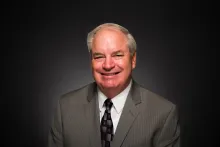
Robin Webber was born in Chicago, Illinois, in 1951, but has lived most of his life in California. He has been a part of the Church of God community since 1963. He attended Ambassador College in Pasadena from 1969-1973. He majored in theology and history.
Mr. Webber's interest remains in the study of history, socio-economics and literature. Over the years, he has offered his services to museums as a docent to share his enthusiasm and passions regarding these areas of expertise.
When time permits, he loves to go mountain biking on nearby ranch land and meet his wife as she hikes toward him.
