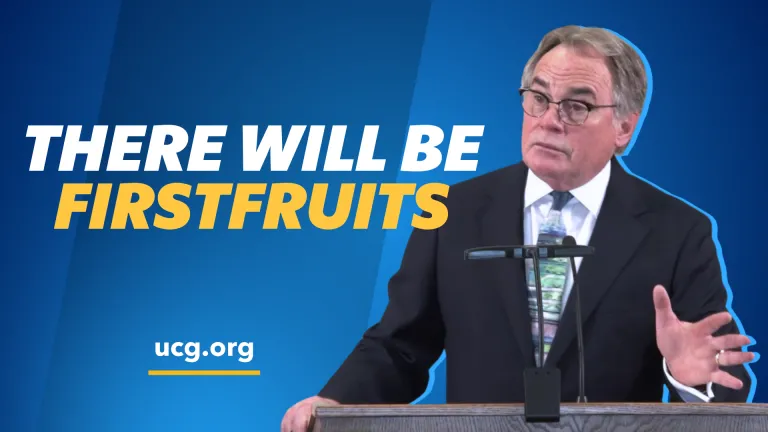

Darris McNeely
This transcript was generated by AI and may contain errors. It is provided to assist those who may not be able to listen to the message.
How many of you are devotees of the television series that is ending tonight called Lost? Go ahead, admit it. Raise your hands if you are. We're not going to be checking this out. Quite a number of you are. How many of you have no idea what I'm talking about? Okay, a few others. Lost is the name of a television series. It's been running for six seasons now on ABC. And it concludes tonight. I think it's a two-hour finale, one of those big extravaganzas. To kind of wrap up six seasons and a whole lot of questions and mystery as to the reasons of this island, this place, that people have found themselves on in this particular series. I have to admit to you that I started to watch that series, the first season that came out, and watched quite a number, I guess, the first season. But I just lost interest in it, and after the first season, I didn't go back to it. And I couldn't tell you too much other than what I've read. I did read one article. I was going to read a little bit to you as far as some of the other things that have developed. I just lost interest in it. Not that I have anything against Lost or the science fiction aspect of it or whatever. I got hooked on NCIS, and I don't miss NCIS. I think I've seen every episode of NCIS.
Half a dozen times, probably, in reruns and everything else. So that's my show. So you get yours, and maybe something else is for someone else. But this particular series, Lost, is a typical scenario. It's not a new idea. It's a story of an airliner that crashed in the Pacific. I think it was on its way from Australia.
Is that correct? Back to the States. The survivors are on this deserted island. They didn't know each other. They were on a passenger manifest. The survivors are on this deserted island in the middle of the ocean. It's a typical plot line that goes all the way back to Robinson Crusoe, or probably even further back than Daniel Defoe got it from someplace else, I'm sure. But it's been told and retold in many different movies, books, stories, and whatever else. But this one is perhaps the latest. They got six episodes out of it. I think it's been shot in Hawaii.
I was reading another article about it, not this one I'll share with you here, but another one that I saw this morning. It certainly has provided a lot of jobs for people in Hawaii on the set. One of the biggest jobs it provided for was this company that makes foam. Because so many of the sets and the props on Lost have been nothing but more than foam that have been made into whatever it was, a plane or whatever else.
So this company that provides this unique type of foam that can be formed and shaped into anything that's been made of killing for the last six seasons. Their business is going to take a little reorientation as a result of this. But it ends tonight. They hope to wrap up things. Let me read just a few excerpts from an article in the Wall Street Journal this week talking about this.
What this has to do with the Day of Pentecost, which some of you are really wondering. Stay with me. There is a point to this. In the beginning, Lost was simple. It was a television series. A plane crashed on a Pacific island leaving survivors looking for food, shelter, and rescue. But polar bears, skeletons, and rattling smoke soon made it clear that this was no Gilligan's Island. Oh, that's the one I forgot. Gilligan's Island that we all know about. ABC's critically acclaimed television series approaches its Sunday finale. Aficionados are still crying for promised answers to lost, many unresolved questions.
The show's writers have hooked an invested group of about 11 million viewers. And these devotees want to believe some larger purpose exists in the storytelling. Something meaningful that makes six seasons of watching worthwhile. Each week, however, every answer seems to lead to more questions, leaving enthusiasts with grave angst. And so there's a lot of questions. It's kind of turned into a lot of science fiction and people searching for the meaning and lost and looking at it in a larger scale. And why this island? What's behind the island?
Is it play some bigger part in some greater cosmic scene? And all these questions. And who knows what they've cooked up in terms of the season finale tonight. But this article goes on. And one says that there's one theory that the island represents purgatory. And it reminds us that in real life we attempt to answer questions about the unknown.
Many people of religious faith, like viewers of lost, are waiting for closure. Granted, much more is at stake for the religious. For instance, Jews who've been waiting for a messiah, and Christians who await the messiah's second coming. For many, lost has already transcended mere entertainment. The show's first episodes portrayed characters developed through flashbacks who were merely hoping to escape. As they became aware of the island's supernatural elements, one paralyzed survivor can suddenly walk, and another survivor's cancer is healed. These are some of the things that have happened along the way in the show.
But their questions have gradually shifted from, where are we, to why are we here? Why are we here? And then it gets into talking about the great battle between good versus evil, and what's behind the smoke monster, and individuals, and named Jacob. I guess, I don't know who Jacob was. There is. But he was one of the mysterious characters as well.
But it comes down to this, as this writer put it, maybe a quest for specific answers is the wrong idea. One of the most fundamental questions a human can ask is, why are we here on Earth? For people who are religious, the answer usually lies in faith, a confidence in things unseen. We believe in fundamental truths, and yet we leave a little room for unanswered questions. And so, it appears that part of the interest in this particular television series speaks to some of the greater questions, or the greater question, of why are we here?
As it says that some of the ideas and themes in that television series shifted from, why are we lost, or why are we on this island, to really, why are we here? What part does this island play in the bigger scheme of life? I have no idea what the answers will be according to this particular series tonight. Maybe it will be intriguing. Maybe it will let people down after all these years. Who knows? I do know one thing, that there will be another television series.
There will be another movie. There will be another plot line written, thought of by somebody, somewhere along the line, that will then bring together a lot of people into, again, a continuing search, probably, for answers to life's bigger questions. I think most of us in this room, long ago, back to the point where we stopped looking for the answers to life in a television series, or in a movie, or in a book other than this book, which I hope is the one book we all go to to find the answers for life.
I, long ago, decided to sit down and watch a television show, go to a movie purely for entertainment, and hopefully get some redeeming moral value out of what I watch and for the time that I spend there as well, and try to choose wisely in that regard to pick something that is encouraging and uplifting or instructive or speaks to some higher purpose. But I never looked for the meaning of life in some type of television show or a series.
It's pure entertainment, first and foremost, and if there's anything else that I get out of it, I guess that's just a little bit of icing on the cake. But after this particular series concludes, people will move on to another story and another, and another. And for many, looking sincerely for something to answer that question is to, why are we here? What is the purpose of life?
And when I read that article and was reminded of the series, which I basically had not really kept up with, as I said, it brought back that question, which is a big question that we grapple with and deal with, certainly in the church. And we feel it has been answered by so much of what God reveals to us, particularly when we come together on these holy days.
And we rehearse the meaning of God's plan and purpose that the Bible reveals to us through each of the annual festivals that God has given to us. We, in our lives, you and I, have come at some point in the past, and we continue to come before God with each one another on these holy days, week after week, on the Sabbath, to reaffirm that knowledge, that understanding that we have of life, its purpose of God, what God is planning, and what He is doing. We have those answers in front of us, and we have them to hold on to. And I think we all recognize that there is a continual need to reaffirm what we know, because we live in a life that is one of struggle. There are many forces that are working against us to rip that knowledge from our lives, or to diminish it and its influence and its impact within us. We constantly deal with that. We must be alert to it. Not that we fear it. Not that we get ourselves all worked up at any given time to doubt God. But a wise, cautious awareness of the struggle and the world in which we live, and the fight that is there to rip that knowledge from us, is one that is continually there. Which is why I know, looking at you, year after year, week after week, as you come before God in our location here, and so many other places, we know where to go to be reaffirmed. To have those answers once again kind of dusted off in front of us, and the components of the answers to why are we here and the purpose of life brought clearly in front of us. When we come down to the Feast of Pentecost, our main intent here today, we probably are more confronted, and I come back in my thinking, to the questions of who are we. Within our own internal matters of the Church, as we look at ourselves as a Church, the question of who are we and why are we here on this day, this day of Pentecost, is one that I feel continually needs to be revisited each year on Pentecost. Because this day, of all the Holy Days, specifically is aimed at teaching us in the Church, the Church of God, who we are and what we are as the first fruits, which we have already heard, which we have talked about. We, in essence, are not lost. We're not marooned on any spot of the earth in any way. We should not even feel marooned spiritually, without hope, with cut off from reality, cut off from a source of strength or power. We should not feel limited by that, because when we come to this day and we look at the Scriptures and we examine them carefully, we are affirming who we are and why we are here. More and more, in recent times, it seems that I've been convicted of the fact that we certainly need to know and remember individually who we are. It is so easy to lose sight of us as first fruits and what God is doing with us and how that fits within His larger plan. It is so easy for us as members today, in the 21st century, to lose sight of who we are.
We can meld together differing ideas, religious ideas of faith and belief, and they can get caught up within us and dim that light and that understanding of that unique understanding that God has given to us in the Church that, again, has brought out through the meaning of the Holy Days.
Life itself can just dim that if we allow it. The problems that do come up can snuff that light out very carefully, very easily, and we forget who we are. We forget what God has called us to. By being a first fruit, exactly what it is that God is working out in our lives. Turn, if you will, over to James. Let's begin there this afternoon. James 1.
The first fruits of God's plan are those who are called, in this age, to have their minds and attitudes changed to become like Jesus Christ through God's Spirit working within them.
James notes this in chapter 1, verse 18, where he says that God chose to give us birth. I'm reading from the New International Version. God chose to give us birth through the word of truth, that we might be a kind of first fruits of all He created. He brought us forth, as the new King James puts it, that we might be a kind of first fruits of His creatures. This is where it starts. The church is a part of a body of people who are called first fruits, who are called first, who are among the first of God's plan and purpose to be called now.
In this age, in this time, ahead of all others, to begin a life of preparation for the ultimate goal of the family of God and the kingdom of God.
In Ephesians 1, the Apostle Paul seems to have been confronted with this and wanted to put it square in front of the members in Ephesus, that area of Asia where he wrote to whom he addressed this letter.
In the first chapter of what is a very phenomenal book that talks about the church, in one sense you can look at the book of Ephesians. It speaks in chapter after chapter about the church and outlining various dimensions and aspects of the church and its role, how it is structured, what it is to do, the uniqueness of the calling.
Ephesians is really a very interesting book just to look at it in that way.
Beginning in verse 3 of chapter 1 in what is really a prologue to the rest of the book, Paul starts off in a very lofty description of really the individuals within the church.
In verse 3 he says, Blessed be the God and Father of our Lord Jesus Christ, who has blessed us with every spiritual blessing in the heavenly places in Christ, just as He chose us in Him before the foundation of the world, that we should be holy and without blame before Him in love. So here he shows that before the foundation of the world, God chose us in Him in Christ. Not that He chose us individually, knew who you and I and the person sitting next to you would be, but us in a sense of a group of people called out, firstfruits if you will, as he's going to later say, that there was a purpose in God's plan before the foundation of this present world, a group of people that would be holy without blame before Him. And Paul is saying to the members in Ephesus, you are part of this foreordained group. This is who you are. If I can bring in from the beginning here, you're not lost. Don't let yourself get lost. This is to anchor you. This is to orient you. This is your compass. To go to and to look at if you think that you veered off the path in the woods, and you don't know which way is north, south, east, or west in the direction you should be going, and you get a compass check.
And you take a reading. I'll go in this direction. It reaffirms that you're either going in that right direction, or it causes you to alter course just a little bit to get back on track. These are verses that Paul wrote that are meant to do that, and we should look at in that way. In verse 5 he says, having predestined us to adoption as sons by Jesus Christ to Himself, according to the good pleasure of His will. We're sons of God. This group would be adopted. Paul spent a lot of time in the book of Romans furthering this concept of adoption. But we've been grafted in. We have been adopted into the family of God and are sons of God by Jesus Christ Himself, according to His will. We are sons of God. That carries with it opportunity, responsibility, duties, significance. This is who we are. Don't forget that. Remember that on this day of Pentecost.
We are sons of God. We are sons of God.
We were sons of God. We are sons of God. We are sons of God.
I remember as a young impressionable student thinking, must be an important chapter then. It's probably not until the recent years that it's perhaps been seen even more so why he would choose that chapter and say that was his favorite chapter in all of the Bible. But he said it was because of the role of Jesus Christ that is outlined completely in this. Verse after verse, this is brought out. In verse 7 it says, In him we have redemption through his blood, the forgiveness of sins, according to the riches of his grace, which he made to abound toward us in all wisdom and prudence, having made known to us the mystery of his will, according to his good pleasure, which he purposed in himself. So again, Paul is just reminding the members, as we should be reminded, that that mystery of God's will has been made known to us by God's good pleasure. It is by his pleasure we sit here today, knowing what we know, focusing on this role of the first fruits on this particular holy day. Verse 10, that in the dispensation of the fullness of the times, he might gather together in one all things in Christ, both which are in heaven and which are on earth, in him. In him also we have obtained an inheritance being predestined according to the purpose of him who works all things according to the counsel of his will. Again, a predestined group, not an individual concept of predestination, but that of a group according to his purpose and will, again speaking to the church, that there would be a group of people. First it was Israel in the Old Testament, and then the church in the New Testament called to be holy according to his will. Verse 12, that we who first trusted in Christ should be to the praise of his glory. We who first trusted, if you will, among the first fruits. Again, a group of people, a body who are first. Not first because of their skills, their speed, their stamina, anything that makes them worthy, but first according to God's will in his plan and in his purpose. A group of people who would be first fruits. This is what he is describing. In him you also trusted, after you heard the word of truth, the gospel of your salvation, and whom also having believed you were sealed with the Holy Spirit of promise, who is the guarantee of our inheritance until the redemption of the purchased possession to the praise of his glory. Then he goes on to complete the chapter. I won't read the remainder of it here. But again, just in these first 14 verses, you see time and again the reference to who you are, who we are. We are a part of those who trusted first, believed first. We are a part of a predestined group before the foundation of the world.
When you think about that and let it sink in, you begin to get a feeling, not again of us being special of our own, but of God's special plan and what he is doing in calling a group of people first as first fruits in this age, at this time, to live out his purpose and to be a part of the church. He goes on in Ephesians and continues to talk about many different aspects of the church. In chapter 2 and beginning in verse 19, he says, Now therefore you are no longer strangers and foreigners, but fellow citizens with the saints and members of the household of God, having been built on the foundation of the apostles, the prophets, Jesus Christ himself being the chief cornerstone, in whom the whole building, being fitted together, grows into a holy temple in the Lord. The analogy here of a building on a solid foundation, fit together to where everything has its place, everything is orderly, is by design, is growing into a holy temple to the Lord. That is what God is doing. That is what Christ is going to return to. It is a holy temple that He is creating, in whom you are also being built together for a dwelling place of God in the Spirit. So again, you just see throughout this book how Paul illuminates various aspects of the church and the individual members of the church and what it is being built on here. Over in chapter 5 and in verse 23, this instruction about the roles and relationships of a husband and wife, which will not get off into that subject today, just to emphasize what he says in verse 23, that the husband is head of the wife, as also Christ is head of the church. He is the Savior of the body. He shows that the head of the church is Jesus Christ. It is a spiritual body, a spiritual organism, if you will, being fit together, built upon a solid foundation. Christ is involved in every aspect of it. By the time Paul gets through here in Ephesians, discussing and talking about the church, it can be quite well known as to exactly what we are, what we are a part of, how God looks at the church, the importance of the church, and the plan of salvation, all of which again point us back to the day of Pentecost. As we've already heard from Acts 2, this was the day upon which the New Testament church began in Acts 2. This is where that miracle of the hearing and the flames of fire were manifest on that day of Pentecost. And the church began and has been in existence ever since. It has not ceased to exist. It has been large. It has been small. It has been persecuted. It has been driven out. It has had certain power at any given time because of what God has given to it. It has had that stripped and diminished. But it has never ceased to exist. It has always been. It will always be.
And in the end, in God's purpose and plan, far beyond what you and I can even begin to imagine, it will grow into that spiritual temple in the Lord. It will be that bride prepared to which Christ will return in Revelation 19. It shows and will marry in that way Christ at His return. And will be transformed into spirit beings at that time. This is what this group of firstfruits are being prepared for and working toward. Paul brings this out very, very clearly in the book of Ephesians. This is what we have to keep in our minds, keep upon our hearts and never forget. This is why we come together on the day of Pentecost. This is something that has not been lost, this knowledge. It has been given to us. And it's up to each one of us individually to make sure we don't lose what we have. But we hold on to that light, that knowledge, and that understanding. That story was told to me recently by a fellow minister. He and I talk all the time and he never told me this story. It deals with the time back 15 years ago, just as we were organizing the United Church of God. In the midst of the doctrinal confusion that was all there at the time. This pastor was getting ready to come to the conference here in Indianapolis in the gathering of the ministers. Things were still a little bit loose and not quite well organized. A bit of uncertainty as to what was going to take place. He wasn't looking for answers. He knew the truth. But he at the time decided to look up in his town where he lived, to look up the pastor of a Seventh Day Baptist congregation. The Seventh Day Baptists were among the first Sabbath keepers in America. They're still a viable denomination. He went and visited with this pastor. He was talking with him and he was explaining to him what was taking place in the church at that time. The abrogation of the Sabbath and the Holy Days. This pastor asked him, Explain to me why you keep the Holy Days. In about five minutes he went through the Holy Days. He said, What are you going to do? He said, Well, there's about 150 of us that are going to get together in Indianapolis. Try to sort it all out and see what we can do to move forward with another organization. As he was getting ready to leave, this Seventh Day Baptist minister said, Can we pray together before you leave? He said, Well, sure. This pastor came out from behind his desk and they had a short prayer. He said, The man laid hands on him as they were praying. He said, Lord, be with this man and his fellow men and help them to hold on to the light that they have.
He said he was struck by that statement, to help them to hold on to the light that they had. This Seventh Day Baptist minister at least had the courtesy to recognize that here were a group of men struggling to hold on to the light that they felt they had. We were talking about it a few weeks ago and he was telling me what had happened there.
That was a remarkable story for someone there, a Sabbath keeper. He doesn't keep the holy days. He probably has a lot of other differences with us, but at least he keeps the Sabbath. You'll find that when somebody keeps the Sabbath, you're at least a kissing cousin. You've got something in common and you may not have much more beyond that, but you'll have enough there more than some other religious folk to at least have a discussion.
This gentleman said, Help them to hold on to the light. Well, that's exactly what we have. We have a light. We have a full-blown beacon, brethren, in our hands, really, is what we've got. When it comes to the whole knowledge of God's purpose and plan of salvation and what the Sabbath and the holy days and all of this bring out to us. We have knowledge and understanding in this present age that is special and is unique.
We must and we will hold on to it. As God works with us today and works to ultimately save this world in the world to come, in that age, through his carefully laid out plan, which is being done in stages by what we know from the other holy days.
We know why we are called now instead of later. It would seem that it would be easier for us to be called later. Very often, when you sit down with somebody to explain this whole picture that the holy days tell us about the first fruits and then the knowledge that comes with the last great day. That knowledge hits people sometimes and people are discerning. These are brand new people I'm talking about. Very often, I've heard people come back to me and say, Well, why should I do this now?
Why don't I wait? Why don't I wait? How would you answer that? How would you answer that? Think about that. Sometimes, again, it depends on what's leading up to it, where you sense that they are. Sometimes, I've said, look, we don't have a choice. When God calls us, we have to act on that calling. That calling is not up to us, that's up to God. If we sense it and know it as God's Spirit leads us to it, then one sense we don't have a choice.
You have to be careful as you would explain that to somebody, that you don't overly discourage them. Sometimes, it's uncanny how many times I've heard people ask that question to me. Well, why don't I wait longer? And probably some of us have thought that, too. Why did God call me now? Why did it not happen later on? Maybe it would have been easier. Maybe it would be. Maybe it wouldn't. I don't know. But this is our time. In this present age, during this time of firstfruits, this is the time that God is working with us and bringing us to the time of preparation for the job that is ahead.
As we will experience when we keep the rest of the Holy Days and rehearse in that knowledge. So, in Revelation 5, we find certain things that are said in Revelation in terms of what lies ahead for this group of firstfruits. For instance, in Revelation 5 and verse 10, it says that, "...and have been made kings and priests to our God, and we shall reign on the earth." A very specific statement that we are very familiar with when it comes to, within this new song that is being sung by the creatures before God's throne.
That we are made kings and priests, and we will reign on the earth. And I think it was already read in Revelation from Revelation 20, about reigning with Christ in verse 6 for a thousand years. And when you go back to Revelation 2 and 3, you find, mentioned there several times, about overcoming.
And verse 26 of Revelation 2, Christ says here to one of the groups of the church, "...he who overcomes and keeps my works until the end. To him I will give power over the nations." That's repeated several times.
"...to him who overcomes, keeps my works until the end. I will give power over the nations." This is part of the message to the church. And not just to, in this case, the church at Thyatira, when and wherever they may have been, but it's really a message that applies to the church at any and all times. As the people of God. That the people of God of any given age who overcome and keep God's works will be given power over the nations. This speaks to rulership. This speaks to preparation. Because by overcoming and keeping the works of God, that implies a lifetime of doing something on a regular, systematic, continual basis of preparation. It involves understanding who you are, what you are, and what you're a part of. Now how, you have to ask at times, of course this was Christ speaking and giving the revelation through John here, but it also represents what John and the apostles of the church knew in this time as they wrote it and taught it. How did they know that? How did they discern that they would be kings and priests, ruled over the nations for a thousand years? Okay, God's Spirit revealed it. That's true. But how did they really understand that? How did they come to know that? Well, if you go back to Luke chapter 19, you will see a parable that has a theme, repeated more than once by Jesus during his ministry. Luke 19 is one of the clearer statements on this fact, that this life now, prior to Christ's Second Coming, is a time of preparation, which again is what this period of the firstfruits is all about. It is one of a preparatory stage in God's overall purpose and plan of the church that is being fitly knit together of people who are called now, who are part of this group of firstfruits, part of this predestined group. In Luke 19, Jesus was on his way for his final trip to Jerusalem, and verse 11 tells us that because many thought that the kingdom would appear, he decided to give another parable. They thought the kingdom was going to be brought by his presence in Jerusalem then and there. And he knew it wasn't. He knew that there was going to be this time gap. They didn't understand it, so he told it, explained it through a parable. And this is the parable of the miners, or as it's listed here, but verse 12 immediately gets to the point. A certain nobleman went into a far country to receive for himself a kingdom and to return. And right there is a time gap of multiple hundreds of years, over two centuries, over, I'm sorry, two millennia, virtually, nearing on to it. A large gap of time. Christ is the nobleman, going to a far country to receive a kingdom and to return. And so he called ten of his servants and delivered to them ten minas, ten units of value, of money. And he said, do business till I come. In other words, be about my father's business, just as I was and as you've seen it, you continue it on.
This is how they knew Peter, Paul, later, and John as they taught about overcoming, and power would be given over nations. This, along with many of the other teachings, all came together, clicked into place in their mind, as to who they were, what they were doing, and why they were doing it in their time and their place. And as they wrote it down, and as we read it, we continue the understanding. We continue to hold the light. We are to do business until he returns.
But his citizens hated him, sent a delegation after him saying, we'll not have this man to reign over us. There would be conflict in that church. It came and it destroyed the faith Christ and the apostles originally put into the church. There was a struggle for that.
Other competing religions rose from the Gentile world that history shows us. And verse 14 speaks to that struggle that would go on in many different forms. Verse 15 says it was that when he returned, so the pace of action moves quickly in this parable, having received the kingdom, he then commanded these servants to whom he had given the money to be called to him, that he might know how much every man had gained by trading. The servants, the members, the firstfruits are to be trading, or if you will, to be in training.
Not in trading, but in training. That's the purpose of the church, is to conduct the business of the nobleman, who is the head of the church. The business of the church is to carry on that work. And the individual servants at any given time within the church are to be engaged in its work at whatever level they find themselves, and certainly at the spiritual level of training, being fit together neatly, carrying on the work of this group of people who are firstfruits.
Then came the first in verse 16 saying, Master, your mina has earned ten. He said, well done, good servant, because your faith will, over very little, have authority over ten cities. A second came saying, Master, your mina has earned five minas.
Likewise, he said, you'll be over five cities. And so you get a sense, again, of accomplishment. Tempting to read the practice of capitalism into this, but that would be too simplistic, I think. It's far more involved and better than any human-devised form of economics.
But it certainly does contain the elements of productivity, of initiative, and certainly moving forward with what you have and increasing one's value, one's worth, spiritually speaking, through this. You don't want to be tempted to go off into developing an economic theory off of this. But this is really a spiritual theory, not an economic theory that he's getting to. But there are lessons to be drawn from the economic sphere to help us appreciate certain things. Then there was the third person that came, saying in verse 20, Master, here's your mina.
I'm giving it back. Which I've kept put away in a handkerchief, for I feared you because you're an austere man. You collect what you did not deposit and reap what you did not sow. So three different individuals, three different results. One person was kind of a zero-growth person. They must have been living in a time when interest rates were about zero. Kind of like they are now, heading south in other directions.
They saw no value in doing anything with what they had just to exist with it. Others took one and increased it five times. Others took one and increased it ten times. And produced value. Individually, collectively, in terms of the value, you could take this and say, well, you can use the Holy Spirit, which everyone is given a measure of at baptism. Whatever that amount is, Christ said that if you had faith as a grain of mustard seed, you could move mountains.
So I imagine that if everyone of us had just a mustard seed amount of God's Spirit, and really did use it, we could do wonders. So it's not so much the inherent power there in what we do with it, but we allow it to develop in us, grow, share it, share its fruits, extend ourselves to one another, manifest the fruits of love and joy and peace and all the other fruits of the Holy Spirit in our own lives. We heard this morning that it's a spirit of love and joy and not of fear.
It's a spirit of a sound mind and not fear. And to let it develop those good qualities within us, and then again, share it with others. Wealth of any sort, whether it's financial wealth, spiritual wealth, if it is not shared with others, will be squandered, ultimately. God intends that wealth be shared for the benefit of others. That's how it grows. God is not into zero growth.
There's a theory of economics that's sometimes called zero sum. Essentially, if you had one pie, it's a mindset or it's an approach to money things or whatever you might want to be measuring, and you look at it only as the amount that's in that 10, that one pie. And if one piece is taken out, someone else takes it, you have one less. Not that they have more, and you can grow more. The zero sum mentality is that if you lose anything, be it money, be it prestige, be it power, whatever it might be, you've lost something, you have less, you can't get it back, therefore you've got to hoard all of it, you've got to keep it all, whatever it might be.
The alternative to that is that you divvy up the pie, you share it, wealth grows, influence grows. Goodness or power or whatever the product of the organization is grows as it is shared. You delegate responsibility, you delegate power to someone within a business, they grow, they develop, they're part of the business grows, the sum of the whole develops and grows. But if you try to hoard it all and keep it all yourself, this third person, my point is this third person here in this parable who had the one mind and put it in a handkerchief and didn't do anything with it, was a zero sum attitude.
Could not recognize that what he had been given was meant to be developed, nurtured, augmented for the development of himself and for the others. This whole parable really speaks to the calling that we have now in this age as first fruits. Luke 19 is what speaks to us in the church right now showing us the stewardship that we have with the knowledge, with the calling, with God's Spirit, with every aspect of our calling as first fruits now in this harvest of the first fruits.
This is our time. This speaks to us. Our present calling connected to the work of the Gospel of the coming Kingdom of God and preparing to reign and to rule with Christ in a very special calling and a better resurrection.
That's how you understand Revelation 5 and 10, or 2 and 26 and 27 that I just read. The church is a place of training for the future leaders in the age to come. That's who we are. That's what we do. That's why we're called now.
Back in Revelation is another section that I like to read on the day of Pentecost because it also talks about the first fruits. Revelation 14. This is speaking of the Lamb and 144,000. Now, let's move beyond trying to figure out who, necessarily, 144,000 are at any particular time, where they're going to come from, and all of this. Just look at what it says about that group of people and recognize that it's really talking about the qualities of this group or qualities of a first fruit and of a Christian at any given time, regardless of the exact number and specification of it. In verse 1, John says, The saints come marching in, something else, I don't know, but it'll no doubt be a happy, upbeat song. These are the ones who were not defiled with women, for they were virgins. These are the ones who follow the Lamb wherever He goes. These were redeemed from among men, being first fruits to God and to the Lamb. And in their mouth was found no deceit, for they were without fault before the throne of God. Now, why is this group valued by God? Well, they're described first as having the Father's name written in their foreheads. In other words, God's foremost in their mind and in their thoughts. Every day. Every day they're letting the words of this book wash over them. They're feeding on it every day. They know that they can't live by bread alone, but by every word that proceeds from the mouth of God. Every day. It's like the Israelites. Every day. For 40 years. What did they eat? Manna. Every day. Same dish. Every day. A bread. Or whatever it was. The Word of God, first and foremost, in their minds and in their hearts. They have not been seduced by a false religious system at this specific time or any group of time in the past. They have come out of a political and religious system that dominates the world at the close of the age. This particular group of people will be specifically noted for that. Called by Christ, they understood who they were. A first fruit understands that. That we are to come out of this world and to be separate from it while we live within it, exist within it, work within it. But spiritually, and in some cases even emotionally, to be separate from it as we pursue our calling as first fruits.
Verse 4 says that they were not defiled with women. They were their virgins. They follow the Lamb wherever He goes. Which is speaking to a faithful devotion to Christ, to the Lamb.
Not letting anything come between them and the personal loyalty and a personal relationship to the Lamb, to Jesus Christ. He is the one who is preparing, planning, working within, bringing the knowledge of salvation to them. First fruits are going to be those who are going to be forever true and loyal to their Lord and Savior, Jesus Christ. That's what verse 4 is saying. They follow Him wherever He goes.
I guess that's where you get the old nursery rhinetail, everywhere that Mary went.
The Lamb was sure to go, except it's turned around there. Here, the true first fruits follow the Lamb wherever He goes and wherever He leads, with their eyes firmly fastened upon Him.
The challenge of the first fruits at any given time in their development is to keep focused upon Jesus Christ. To keep focused upon Him.
It says that they've been redeemed from among men here in verse 4 as well. It means, obviously, purchased by the blood of Christ, bought by God.
Which means that we know that our lives no longer belong to ourselves, but to Him, to God.
And we are to glorify God.
Verse 5, what I find the most intriguing statement, In their mouth was found no deceit, or guile, as the margin puts it.
In their mouth was found no deceit, or guile, for they are without fault before the throne of God.
Reminds me of Psalm 15, Who shall stand in your holy hill? One of our hymns.
He walks with upright heart. You read through that list, and it speaks to the same thing here that verse 5 does.
A man who is upright, who speaks no iniquity. Here it says, in their mouth was found no deceit, no guile, for they are without fault.
In other words, it's speaking of a character that has learned to deal with the normal malice that's found in the hearts of people.
Hatred, evil, suspicion, jealousy, slander, accusations, you know, the usual suspects that are lurking there, waiting to find expression through our mouths at times. As we think about situations, as we think about people, as we get worked up, and they come out, a first fruit here is described as someone that doesn't have that in their mouth, because they've either learned to suppress it or eradicated it from their heart because they've been close enough to God and to His Spirit that's pushed it out. There's no deception, no desire to lie to somebody, to keep, you know, to deceive in any way someone.
No plotting, no feigning, no maneuvering, no effort to control, no effort to manipulate anybody emotionally, spiritually, in some way.
Which is something, if you ever learn the art of doing it or have it worked on you, you don't like it.
These people, described here, without dial in their mouth, have learned about genuineness and sincerity and the simplicity of Christ.
In other words, they've come to grips with deceit of their own heart and have fully submitted to the pure, unspotted life of God dwelling in them.
This is what these individuals have. I find verse 5 to be the most intriguing description of this group of people, these people that are called first fruits here, to God and to the Lamb, as people without any deceit or guile in their mouth and certainly in their heart.
I read that and I ask myself, when will I ever come up to that? When will I ever have a day, a week, a season, without any guile, without any deceit, without any suspicion coming out?
It is a goal that every one of us should have because we're first fruits. It is a goal that is very much needed at any given time among the first fruits of God.
Because these are those who are without fault, it says, before the throne of God.
If we could ever live up to that individually, God could do a mighty work through each one of us.
Fear would be banished. Doubt would be banished. Conflict would virtually disappear.
If we could live up to that.
All of these scriptures that we've read here this afternoon, I've tried to emphasize from Ephesians to Luke to Revelation, point to what Christ is doing with us as first fruits.
So that we have a focus for a few minutes here today on this reality of who we are.
Sons of God, first fruits, in training for a job to come.
And read these and many others that we've had read either this morning, yesterday, or weeks leading up to this. That role and relationship that God is looking to have with us.
If there is one thing that is so important, I think, and so needed within God's church today, it is to recognize Jesus Christ as the head of the church, knocking at the door, wanting to come in and dine and suck and eat with the church and its members.
Revelation 3, verses 20-22. I won't turn to it this afternoon. I've read it many times in recent months, it seems.
And that one message to the church where Jesus says, I am outside and I'm knocking and I'd like to come in.
And so necessary, so needful. But it begins with us individually. It begins with us as recognizing our role as a first fruit.
To be able to open the door of our mind, first, to the Spirit of God to work within us.
And then let that, if it will, seep into whatever and wherever the heart is, to change our heart, to soften our heart, so that no longer do we engineer, devise, concoct feelings of suspicion, accusation, envy, jealousy, hate, all the works of the flesh, regulations talks about, that from our heart eventually find themselves in our mouth.
That's the process. That's where it begins. It all begins with God's Spirit working within us, in our minds, in our hearts, to produce better fruit coming out of our mouths, so that there's no more... At some point, we find that there's less guile.
Guile rhymes with bile, and no one likes to have bile coming up.
Because that's about as bitter as it gets. And that's exactly a good description, I think, of guile, or deceit, when it finds itself on our tongues, in our mouths, and comes out.
Firstfruits have begun to get a handle on that. So that's who we are.
We're not lost. We have right before us, in these days, in these truths, from God's Word, we have that knowledge that answers those questions for the purpose of life.
That makes for fascinating episodes of television shows, books, movies, and other dramas, built upon the perpetual question that the world continues to search for, for an answer, Why are we here? Why is human life on Earth?
And finds itself manipulated and discussed in many different ways. Makes for a good story, can be entertaining, but for our firstfruits, the knowledge is right here.
And as we keep the Day of Pentecost, and as we observe all of God's days, we rehearse that.
We remember it. And it tells us who we are. And when we remember that, we should have no fear of ever being lost.

Darris McNeely is a retired elder in the United Church of God. He and his wife, Debbie, have served in the ministry for more than 53 years. They have two sons, who are both married, and four grandchildren. Darris continues teaching at Ambassador Bible Center and is a member of the Council of Elders. Darris and Debbie continue to travel and keep up with the many friends and relationships around the world.
