
Frank Dunkle
This sermon was given at the Branson, Missouri 2019 Feast site.
This transcript was generated by AI and may contain errors. It is provided to assist those who may not be able to listen to the message.
I appreciate Mr. Simkoyak for many reasons, one of which, his last name is longer than mine. By one letter. And we live about an hour away from Buffalo, where he has his roots from many years ago. We send your greetings from Canada, where we presently live. My wife is from this neck of the woods, being very familiar with the Springfield Church in Branson, Missouri. Her family in attendance here, and mother-in-law in particular, my mother-in-law. We have our son and his family attending the feast in Midland. He phoned last night to say greetings to all of you. And I asked him as I was outside talking with him on a cell phone, trying to increase connectivity, because he was breaking up. Can you see the big beautiful moon overhead? And he said, I can't. It's overcast and raining and light snow flurries.
But you didn't hear that from me, because we're looking for transfers next year, so I'm sure that won't happen. We are still wondering, as Canadians, when global warming will actually occur. If there is such a thing, we're not entirely opposed to it. We wouldn't mind seeing some of it materialized between now and the coming of the millennium.
Wonderful to be here with you. We were last here four years ago, and what a beautiful location Branson is, and this theatre in particular, and wonderful to share this festival week with you.
For the preamble for this afternoon's sermon, and I appreciate the messages we've heard thus far on day one, a true story of a mother relating to me from the Ruston-Louisiana congregation going back to 1970, of her little boy, who, unlike many little boys, was eager, anxious, could hardly wait, as someone said earlier today, could hardly wait to go to school. He urgently, desperately wanted to go to school. But he wasn't yet old enough. But eventually, day one of school drew closer and closer, and finally, the day arrived when he'd be going to school the next day, and his mother got his lunch gift ready, and his clothes out, and he was so anxious and eager to go to school for day one. And off he went, came back at the end of the day. How did you enjoy it? She asked. He said, I had a wonderful time. Did you think it would have all of the excitement that it had? Yes! Well, she was so thrilled that this was going to be fairly easy to educate her son. Next morning, she got his clothes out, prepared his lunch. True story. Woke him up in the morning to get ready for school and said, Sonny, it's time to go to school. And he said, I don't want to go.
And she asked, why not? And he answered, I went yesterday.
That was the end of his career. No, she made him go anyway. One of the questions we're asked is, how many feasts of tabernacles have you observed? For some of us, it might be year one. If it is, together, we particularly welcome you. For others, it's between 10 and 20, 20 and 30, 40 and 50. I think my mother-in-law is keeping her 65th feast. How many feasts would you have to keep where you would say, I don't have to keep anymore? I've kept all the feasts I need to keep. It's like maybe birthdays. I've kept all the birthdays I need to keep. I can stop counting. Of course, that doesn't apply to the feast of tabernacles. However, what is repetitive sometimes loses its edge. What we do again and again, sometimes we fail to see the purpose thereof. So what I wanted to do in today's afternoon sermon is to share with you 10 reasons why I'm here to keep my 54th feast. 54, along we are from 65, but I'm aiming for 65. Why are you here to keep your feast this year? You kept it last year. You could say, well, I kept a feast last year and year before and year before and year before. I don't have to keep anymore, but you do and I do. I want to share 10 reasons that convicts me or compels me to keep yet another feast and this particular feast here this year with you in Branson. There are more than 10 reasons. You will probably share most of these. You can even add more to them. Reason number one, we'll go through these one at a time, of course, 10 points, 10 scriptures. The first reason that really compels me to be here year after year, keeping the feast wherever it may be, is this, to obey the great God of the Holy Bible. To obey the great God of the Holy Bible. That's the first and foremost reason that compels me to be here with you in 2019. Leviticus 23, let's turn there for our first scripture for today's afternoon sermon, and you will be turning to Leviticus 23 often. I suspect throughout this week, and we have already. Let's start, please. Pardon me, verse 34. Actually, verse 33. Leviticus 23, verse 33. Then the Lord spoke to Moses, saying, Speak to the children of Israel. And the church, as you well know, is the Israel of God today, according to Galatians.
Speak to the children of Israel, saying, The fifteenth day of the seventh month shall be the feast of tabernacles for seven days. To whom? To the Lord. Not to the church, not to one another, but we're here to make an appearance before the Lord for seven days. And it's the fifteenth day of the seventh month, which is why the moon is big and beautiful and full. It would have seen that last night.
And furthermore, we are reminded each year that as we observe the Feast of Tabernacles, and we see that full moon, as you'll see it again this evening, we're at the halfway mark between last year's Passover and next year's Passover. And then when you observe the Passover and you see the full moon overhead, as you come home from services, you are reminded, I'm at the halfway mark from last year's Feast of Tabernacles and next year's Feast of Tabernacles. These markers in God's digital clock overhead. Meaningful, memorable.
On the first day, there shall be a holy convocation. You shall do no customary work on it. So here we are assembling for the second time on this first day, this high holy day, having a holy convocation, morning and afternoon, following on what the Scripture here delineates for us. And we do not do customary work on this day, although we do other kinds of work. We've seen parking attendants helping us find parking spots, ushers helping us to find places to be seated, and many other people functioning in many capacities here today.
But you're not at your work for employment or at school. You're here, instead, keeping the feast. It goes on to say in verse 36, For seven days you shall offer an offering made by fire to the Lord. On the eighth day, a week from today, you shall have a holy convocation. You shall offer an offering made by fire to the Lord. It is a sacred assembly, and you shall do no customary work on it.
And just reading part of verse 37, these are the feasts of whom? Feasts of the Lord, which you shall proclaim to be holy convocations. And we do proclaim these festivals by literature, by the Beyond a Day television program, Beyond a Day magazine, and by not being at work today. People are wondering, how come you're not at work?
No, you wouldn't. It's Columbus Day. And by the way, it's Thanksgiving Day in Canada today. We keep it a month and a half early because we're more thankful. No, our growing season is shorter. That's why we keep it earlier. But it's Columbus Day, and probably it's a day off for many, many people. But tomorrow, people will wonder, why aren't you at work? Why aren't you at school? And when you get back to work or school after the feast, they'll ask you, where were you? And there might be an opportunity to let them know a little bit about why you are here. Before we get to point two, I wanted to share with you a card that my wife and I received just a few days ago.
It's postmarked from James Bay Retail Post Office, Victoria, B.C. And this is from an individual we have communicated with for decades, literally decades and decades. She and her husband, years ago, ran a store on the island of Montserrat. I didn't know there was an island of Montserrat, but there is one, and they operated it for many, many years. And so we've stayed in touch. We kept the first feast in United together with her in Victoria. Sorry, Whistler, a bigger part.
It was Whistler when we were there. And she writes, October the 6th, with your Newsy Feast greeting card. It's a beautiful hummingbird, as you can see. It's a magnificent card. And her handwriting does not in any way indicate that she is the age she is. And I'll tell you momentarily how old she is.
And she also included a photograph from a periodical that she writes for. She looks younger than I am. I won't tell you how old I am, but I'll tell you momentarily how old she is. I will spend the feast on my own for the very first time. So for years and years, she's kept the feast with others, immediate family, then close brethren. Those I've shared with on island prior to this are away this year.
I will have sermon tapes and full services on some, so have no need to feel alone. Something I have never think about that's always much to keep me busy. Friends are busy working on a party for my next birthday when I will be reaching 100. So much has happened in all these years. Good and not so good, but I'm glad to have them. Have a wonderful feast. Love Nancy. So she's keeping the feast. Still keeps not a year off for her. She's keeping the feast by herself. Soon to be 100 years old.
Amazing. Point number two. So the first reason why I feel compelled to keep the feast, and I'm sure you do too, this year and every year, is to obey the great God of the Holy Bible. Point number two. To follow the example of Jesus Christ of Nazareth. To follow what He did. To walk in His footsteps. That's point two. To follow the personal example of Jesus Christ of Nazareth. John chapter seven. Turn the next please, brethren, John chapter seven verse one.
After these things, Jesus walked in Galilee. For He did not want to walk in Judea because the Jews sought to kill Him. This is mind-boggling. These are nice religious people. But a businessman in the church many, many years ago taught me the following principle. You never improve your own product in business or in sales. You never improve your own product by trying to get rid of the competition. How true! You never improve your own product by trying to get rid of the competition.
That's why they wanted to get rid of Christ. That's why in today's political world, opposing political parties try to get rid of the opposition or the competition, which is foreign to Christian principles. Now the Jews' Feast of Tabernacles was at hand. Now, which is read, it belongs to God, He invented it, gave it to Israel, and here it's referred to as the Jews' Feast of Tabernacles.
How come? Because the Gospel of John was written principally to a Gentile audience. And so the author wanted them to know who was keeping the Feast. And the only one keeping the Feast at that time were the Jewish people.
So this identified which Feast of Tabernacles He was referring to. It's like saying Canadian bacon. We're not the only ones that produce bacon. But when you want to think of the best bacon, beef bacon, or maple syrup, Canadian maple syrup, well, there's Vermont maple syrup. It's just as good. But after a while you have a certain identity or affiliation or branding, as it were. Now the Jews' Feast of Tabernacles was at hand. His brothers therefore said to Him, depart from here and go into Judea, that your disciples also may see the works that you were doing, for no one does anything in secret while He Himself seeks to be known openly. If you do these things, show yourself to the world, for even His brothers did not believe in Him.
Can you imagine? The immediate family of Jesus Christ of Nazareth was skeptical about their oldest brother. And I would imagine they had all kinds of names for him. Goody two shoes. You never answer back to Mom. You always do what Dad says. If you've been the older brother or older sister in the family, you know you're the enforcer. This person's in charge. My Mom and Dad are gone. And then they resent you. I love to hear siblings talk to their older sister about what she used to do when my wife, being the older sister, I shall say no more.
Depart from here. I've read that part in me, verse 6. Then Jesus said to them, My time has not yet come, but your time is always ready. The world cannot hate you, but it hates me, because I testify of it that its works are evil. You go up to this feast. So Christ's instructions to his family was to do what? To go to the Feast of Tabernacles. To go up, because of the elevation of Jerusalem.
You go up to this feast. I am not yet going up to this feast, for my time has not yet fully come. When it said these things to them, he returned in Galilee, or remained in Galilee, but when his brothers had gone up, when his brothers had gone up, then he also went up to the feast, not openly, but as it were in secret, low profile, and said, let me start over, and the Jews sought him at the feast, verse 11, the Jews sought him at the feast and said, Where is he?
This is a really telling point. They didn't say, Is he here? Did he come this year? Did he take a year off? It was presumed by them that he would be there. Where is he? Not is he here. Where is he? So Jesus Christ, our Savior, endorsed observing the Feast of Tabernacles in two ways. One, instructing his brothers to keep it, and two, keeping it himself. He instructed his family to keep the feast, and then he kept it also himself. So that's why I continued to keep the feast, because the God of the Bible still commands it, and Jesus Christ set the example of keeping the feast himself.
Point number three, third reason and objective for keeping the feast is to come out of the world. To come out of the world. Second Corinthians 6, verse 14. For point number three, the third objective, a reason to keep the Feast of Tabernacles year after year after year is to come out of the world. Second Corinthians 6, verse 14. Do not be unequally yoked together with unbelievers, for what fellowship has righteousness with lawlessness, and what communion has light with darkness?
Believers like you and me, and many believers like ourselves across the country around the world, must be careful not to compromise with sin in any manner, shape, or form, because it will consume us sooner or later. Verse 15. In what accord has Christ with Belial, or what part has a believer with an unbeliever? Some things are simply incompatible. They are opposites. They do not go together. Verse 16. And what agreement has the temple of God with idols?
We heard about idols in this morning's sermon. What agreement has the temple of God with idols for you, the church? You are the temple of the living God. As God has said, I will dwell on them and walk among them. I will be their God, and they shall be my people. In the instruction then, verse 17, as a follow-up, as a corollary is, come out from among them, and be separate, says the Lord.
We do that to a lesser degree during the Feast of Unleavened Bread, by how we conduct ourselves in terms of eating, and more so at the Feast of Tabernacles, by coming out of the workplace, school setting, and attending a feast such as we find ourselves in here at this beautiful location in Branson.
Remember, if I'm recollecting the correct song, Stop the World, Stop the World, and Let Me Off. I'm tired of going round and around. Wasn't that Patsy Cline, who sang that with gentleman Jim Reeves, so beautifully sung together as they were such a remarkable pair? Stop the World, and Let Me Off. Here we are at this wonderful Feast of Tabernacles. Twice in the year, we disconnect from our usual way of life. Twice a year, we have a chance of getting out of our comfort zone, getting out of the rut that we get into, getting out of the habits we fall into in iron grain with.
And we have this wonderful change of pace, a change of scenery to get away from it all, to break our routine. They say the only difference between a rut and a grave is its depth. And so we have this wonderful way of coming out of the world for the duration that we're here together.
It's important that we do it year after year after year. Point number four. A fourth reason, or fourth objective, that we want to achieve year after year, including this year, is to learn the finer points of fearing God. To learn the finer points of fearing God. Deuteronomy 14. These are scriptures we've touched on already. We'll touch on again. You can be sure. Deuteronomy chapter 14, and we'll start reading in verse 22 and read only 22 and 23. Four point number four. To learn the finer points of fearing God. Chapter 14, Deuteronomy, and verse 22. You shall truly tithe all the increase of your grain that the field produces year by year.
So God's people are instructed to save a festival tithe from our increase, be it rural, agricultural, or through employment, and we do that faithfully year by year by year. It's a wonderful thing, really, where God says, save first, go later. The world says, go now, pay later. And then people get into a lot of financial difficulty by going now and paying later. Or how they sell a lot of vehicles in this day and age or other high ticket items, and where the promoters say, can you afford, not can you afford the purchase of X, Y, or Z, is can you afford the payments?
And these days you can buy a car that'll last five years, but your loan is seven. And then you find that you're getting an extension on cars that you can't quite pay off. So as God's people, God tells us, save first, spend later. Not spend now, pay later. It's an interesting financial plan. You shall truly tithe all the increase of your grain that the field produces year by year, and you shall, what?
You shall eat before the Lord your God and the place where he chooses to make his name abide. And so for us this year, it's right here in beautiful Branson. And next year for you, it'll probably be Midland and Ontario, or somewhere else, where much earlier in the season next year, I think the fee starts and ends entirely earlier this year, and certainly the year after.
The tithe of your grain, your new wine, your oil, the firstborn of your herds, and your flocks, that, here's the objective in this point, that you may learn to fear the Lord your God always. That you may learn to fear the Lord your God always. Godly fear doesn't come automatically. It doesn't occur naturally. It has to be acquired. It has to be learned. Like certain foods. There are certain foods that you have to...
they are an acquired taste, like broccoli. You know it's good for you. And your children and grandchildren should eat broccoli, and so you eat that veggie because it's dark and green and leafy, and so it's beneficial. There are any number of... and this is the kind of time of year, pardon me, where we try different luxury items.
That's not quite the right term. Gourmet foods. We try foods that ordinarily we don't have an opportunity to sample, like different cheeses. And you think, oh, well, I want to try this cheese. On the way here, there was a store on the right-hand side from Springfield, Branson, and it was featuring different cheeses, and unfortunately we passed it before we pulled in. But we might go back and try different cheeses that you haven't tried before. People serve you Limburger cheese or Gorgonzola cheese, and you ask them, how can you tell when this is spoiled?
Because it seems to come in that condition. But those are the kind that you have to acquire a taste for. It's really yummy after a while, and it takes a while to acquire a taste for it. So similarly, godly fear has to be learned. Godly fear has to be acquired, and it needs to be reinforced. At the Feast of Tabernacles. A good definition for godly fear. What is godly fear? One gentleman attended the feast one year in Europe, came back to the congregation I was pastoring at that time, and quoted one of the sermons he heard there, and he said, The definition I heard that has helped me in good stead is, godly fear is, take God seriously. But he says, fear me, he wants us to take him seriously.
One of my grandsons, to not identify him when he was little, I used to tease him fairly often. Not in the mean way, but in a playful way. I was teased growing up, and once in a while he would say he had a lisp at that time. Grandpa, yes, are you a therieth? And I would say, no, I'm just kidding. But there are times when I am serious with him, so he's able to know the difference. Our Heavenly Father wants us to take his instructions seriously.
He doesn't want us to be afraid of him, but he wants us to take his instructions seriously. Point number five. The fifth objective for being here at the feast this year, and any feast you observe for a lot of time, God still has in mind for you, is to learn the finer points of rejoicing before God.
For point four, finer points of fearing God, and for point number five, the finer points of rejoicing before God. If you're on to Matthew 16, turning a page from where you are now to verse 13.
We have a beautiful harvest or automotive here on the stage, which is highly appreciated. Chapter 16, Deuteronomy verse 14.
This is called commanded happiness. It's not optional happiness. It's required happiness. You shall rejoice in your feast. You and everybody is included. You and your son and your daughter, your male servant, your female servant, the Levite, the stranger, the fogglest, and the widow, who are within your gates. We are required to be happy. It's a command. Everyone is included.
Now, can emotions be... What if I'm not happy, but I'm pretending to be happy? Am I being hypocritical? I find that if I'm not happy and I smile or sing a happy tune after a while, I can be happy. Emotions can be coaxed. They can be worked with. It's like you and your wife are having a disagreement and you're having words. I know this is imaginary and it doesn't happen at your house, but let's pretend that occasionally you have words and you're having a heated discussion and blood pressure is rising a little bit, and then a doorbell rings.
Unexpected company. And then you answer the door and it's brethren or family visiting. Oh, come in! Come in! So nice to see you! We didn't know you were coming and you're happy and friendly and you're spending time with them and you're engaging them in a social way and they stay for a half hour and the one needs to be accomplished is accomplished and they leave. When you wave goodbye to them, you're both smiling.
Close the door. And then you look at each other and say, okay, now where were we? Where were we? You pressed the reset button. Okay, so emotions can be worked with. We can have a way of massaging them and recapture what perhaps we might have lost and recapture what we need to recapture more often. Seven days. You shall keep a sacred feast. Notice that. Seven days you shall keep a sacred feast. The first and last days are holy, but in a sense the whole week is holy.
Not in the same way, but it's still sacred. Notice that. Seven days you shall keep a sacred feast to the Lord your God in the place which he chooses because the Lord your God will bless you in all your produce and in all the work of your hands so that you shall surely rejoice. In verse 15, verse 14, it said, Rejoice. Here it says, surely rejoice. It gives extra emphasis that we are this is required happiness during the Feast of Tavernacles to be truly appreciative of God's wonderful blessings. Pack up your troubles in your old kit bag.
Smile, smile, smile. Count your blessings. Name them one by one. And one of the most memorable events I have from the Feast of Tavernacles, some of you may have been there, Squaw Valley, California, and the song leader there was David Albert, and he had us sing one of the songs according to, You Can't Be a Grump at the Feast of Tavernacles.
Remember that one? You can't be a grump at the Feast. You can't roller skate in the buffalo herd. It was the actual song, and then we sang, You Can't Be a Grump at the Feast of Tavernacles. The cadence didn't quite fit, but it came close, and I've never forgotten. And I always smile, and I think how important it was to have that as a mindset.
So that's point five, to learn the finer points of rejoicing before God. Point number six, to receive daily Christian living training and instruction. A wonderful objective for us to keep the Feast year after year after year. Nehemiah chapter eight, please. Nehemiah chapter eight. Nehemiah chapter eight will read toward the latter part of that chapter, which captures so effectively where we are right now. Nehemiah chapter eight and verse 14. Nehemiah chapter eight, and he found written in the law, which the Lord had commanded by Moses, that the children of Israel should dwell in booths. During the Feast of the Seventh Month, we ran into a young man at the Feast. I'll tell that story to you later, if I have time.
They found written in the law, which the Lord had commanded by Moses, that the children of Israel should dwell in booths during the Feast of the Seventh Month. And so we do. We refer to this as temporary dwellings. There was a time when many of us, when we went to the Feast of Tabardacles, we actually lived in tents. We were a camping church. And I remember early days of Feast planners that we would have mailed to us. The last part of the Feast Planner was a catalog for the Coleman Company.
So that you could order tents and cots and lanterns and stoves. And you go to the Feast and you tent it. There was Tent City in Big Sandy, Texas, in the Piney Woods. And those were the good old days. It's far more comfortable to keep the Feast the way we keep it now. But there was a certain mystique to it in so many ways. It goes on to say, verse 15, And that they should announce, not only announce and proclaim in all their cities, and in Jerusalem, saying, Go out to the mountains and bring all the branches and oil trees and myrtle branches and palm trees.
And make booze as it is written. And make yourselves booze and so on. It gives further instruction. And I'll drop down to verse 18. Also, day by day, from the first day unto the last day, He read from the book of the law, and they kept the Feast seven days. Let me reread that. And also, day by day, from the first day unto the last day, He read from the book of the law of God, and they kept the Feast seven days. And on the eighth day, there was a sacred assembly according to the prescribed matter, which we will have one week from today.
So we receive daily Christian living training and instruction. I'm so looking forward to all the messages that we have had prepared for us, and that we've had a number of them today. So I counted, and probably you did too, that in 2019, here in Branson, we will have how many sermonettes? Seven. How many sermons? Eight. How many split sermons?
Two. We'll have seven sermons, eight sermons, two split sermons, a live webcast from our president, three Bible studies, and then a whole host of beautiful, special music. We have so much to look forward to, plenty of variety, plenty of topics, plenty of approaches, all kinds of speakers. We effectively have two months of church services in one week. That is a superb seminar opportunity. So that's point six, to receive daily Christian living training and instruction.
It's worth so much. Point number seven, to experience a foretaste of the world to come. To experience a foretaste of the wonderful world to come. Micah chapter four, please, and we'll read the first four verses of Micah chapter four. Point number seven, to experience a foretaste of the wonderful world to come. Micah chapter four. Remember Mr. Waterhouse saying at one time he couldn't understand. He was in United for the first few years. As he got older, he lost a stick in his fingers and had a hard time flipping through the pages.
I think we're all there now. Amos chapter four, verse one. Now it shall come to pass in the latter days. This sounds familiar, doesn't it? That the mountain of the Lord's house shall be established on the top of the mountains, and shall be exalted above the hills, and people shall flow to it. There'll be a huge response and popularity of serving God. Many nations shall come and say, come, let us go up to the mountain of the Lord, to the house of the God of Jacob.
Can you hear the melody? We certainly can hear the beautiful melody of these words. To the house of the God of Jacob, he will teach us his way. We will walk in this path. For out of Zion, the law shall go forth, and the word of the Lord from Jerusalem. And he shall judge many people, rebuke strong nations afar off, and they will beat their swords into plowshares, their spears into pruning hooks. Nation shall not lift up sword against nation, neither shall they learn war anymore.
There'll be an arms race in reverse. We have an arms race in the usual direction presently. Then there'll be an arms race in reverse. How many tanks can you convert into tractors? John Deere tractors, or any kind of other tractor that you prefer. Nation shall not lift up sword against nation, neither shall they learn war anymore. Instead, everyone shall sit under his vine and under his fig tree, and no one shall make them afraid, for the mouth of the Lord of Hosts has spoken it.
One of the examples that Mr. Antion, Gary Antion gives at the feast is, See the Kingdom at the Feast. If you're familiar with his sermon repertoire, that's one of the articles he writes periodically. It's like standing on Mount Nebel and then looking into the next world, and you see a glimpse of the Kingdom of God at the feast. One of the places I like to go to from time to time is a Costco store, like Sam's Club. Why? Because if you time it right, about 11.30, half hour before noon, you can have samples after sample after sample and not buy anything.
You just leave the store and say, thank you, and you've tried all of their products, because their intent is you'll try it and then buy it. But you don't have to. You can try it and say, See you tomorrow, about 11.30. No, you don't do that. They can afford it. You can sample their wonderful products, and eventually you will buy. They know what they're doing when they plan their marketing plan the way they do.
But it's a way of promoting products in Costco's or Sam's Club. It's a marvelous way to be here for us at the feast and to have a sample of what the world tomorrow is going to be like. Except it's going to be a lot better. Because in this society, in the world in which we live today, the expectation always exceeds the realization. When I go to a hamburger store, like we do on a once in a blue moon, and I stand at the counter, I think, I wonder what I should buy?
I think, well, that hamburger looks really good. It's big, it's juicy, it has all these vegetables piled on it, the bun looks fresh, and I order one of those with fries. And then when it arrives on my tray, I look at it, look up at the picture, look at the burger again, back at the picture, and there's hardly any similarity between the two. Whereas in the world tomorrow, it's going to be the opposite, that the realization will exceed the expectation. It'll be the opposite of what Peggy Lee used to say. When I was a little girl, my house caught on fire, and my dad took me out, and we watched it burn, and I said, you know the song?
Is that all there is? Is that all there is, my friend? Or when I was a little girl, he took me to the circus, and I went to the circus, and I saw the different acts, and after the circus, I said, is that all there is? Is that all there is? Well, if that's all there is, let's break out the beverage, and let's keep dancing.
But in the world tomorrow, we'll be saying, you mean there's more? Instead of, is that all there is, we'll be saying, you mean there's more? You mean, because remember the harvest and those who are planting? There'll be so much harvest that they won't be able to clear the fields soon enough for those to start sowing. It's time to start planting the crop. I know, but we have so much to harvest, we haven't finished harvesting yet.
How wonderful that will be to have those particular problems, and they are prophesied to happen. Point number eight. To be reminded of the temporary nature of this life. That's one of the objectives, to keep the feast year after year, to be reminded of the temporary nature of this life. As we get older, we don't need that reminding as much, but when we're younger, we do.
To be reminded of the temporary nature of this life. Leviticus 23. Leviticus 23, starting to read, please, in verse 39. Leviticus 23, starting to read in verse 39.
And also, on the fifteenth day of the seventh month, that's today, when you have gathered in the fruit of the land, having to do with harvest. And we see the beautiful automotive on the stage, as I said. You shall keep the feast of the Lord for seven days. The gentleman once shared with me some years ago, when we were going through our doctrinal turmoil and our previous administration, previous affiliation, would be a good way of putting it, is that he was being chided by his spouse, and saying, now, she accepted the new teachings. He did not. And she said to him, well, look, you still keep the feast.
We no longer keep the feast. We celebrate the feast. So you're legalists. You keep the feast. And we're not legalists. We celebrate the feast. And yet here it clearly says that keeping the feast is okay. You shall keep the feast of the Lord for seven days. And on the first day, there shall be a Sabbath rest, which we're doing. And on the eighth day, a Sabbath rest, which we'll do one week from today. And you shall take for yourselves, on the first day of the fruit of beautiful trees, branches of palm trees, and the boughs of leafy trees, and willows of the brook.
And you shall rejoice before the Lord your God for seven days. Come in. When I was a trainee, still working in Louisiana. And occasionally it would be my desire to send somebody some flowers. I was still single at the time, getting a lot of tutoring from my mentoring pastor, who himself was an associate pastor. And he taught me something. He said, when you send flowers, then don't send cut flowers, because they don't last long. Send instead a potted plant, because a potted plant will last so much longer.
Sometimes you can even take it and put it into the ground, transplant it, and it'll last a lot longer, even still. And so that was the differential. Potted plants last longer. Cut flowers are beautiful, but they wilt, and their shelf life is a lot shorter. Notice here what they're being told to do, to send or use, as it were, cut flowers. Have you had certain branches that you brought into the house? Eventually, if you put them even into a vase, they will still wilt, and then they're gone.
That's the idea. That's the lesson. Boughs of leafy trees, willows of the brook, you shall rejoice before the Lord your God for seven days. You shall keep it as a feast to the Lord for seven days in the year. It shall be a statute forever in your generation. And notice the word, and you shall celebrate it in the seventh month. So you can keep the feast, and you can celebrate it both at the same time. Not a contradiction. And you shall dwell in booths for seven days. All who are native Israelites shall dwell in booths.
Why did they dwell in booths? Well, that's all they had. The tabernacle was a big booth. Tents are temporary accommodations. The feast here in Branson, even in motels, is a temporary accommodation. I cannot begin to comprehend how it is that we unpacked yesterday, and it'll be time to pack tomorrow.
Well, a week from today, it goes by so fast. We think, oh, we've arrived. Eight days ahead of us. It'll last forever. And next thing you know, it's time to pack up and leave. And I wonder, how is it that the feast keeps getting shorter year after year? But it's still eight days long, but somehow it goes by more quickly. And the older people become, the faster time elapses, because we are temporary creatures. We wear down. We wear out. We're like cut flowers, not potted plants. We were designed to run out, and we have a short shelf life.
So, a reminder of the feast is, life is temporary. Live one day at a time to the full Carpe Diem. Seize the day. I remember visiting a gentleman some years ago. He was 85. That seemed really old to me one time. Doesn't seem so old anymore. And we asked him, his name was Tom, Tom. Very nice man. He was a retired cook. Are you having a good day? And he would reply, when I wake up in the morning, and I find out I'm still alive, I know I'm having a good day.
So, day by day, it's been said that each day is a new life to a wise man. So, we live one day at a time, and we enjoy the feast, realizing life itself is as temporary as the feast. And similarly, how quickly will the millennium go by? The millennium starts. A thousand years are about to begin. But Scripture says a thousand years is like a day once it is passed. It will go by fast, too. The next thing we know, the millennium is over. How can that be? Well, because we're looking forward to eternity. One, number nine. A ninth objective for keeping the feast year after year, including this year, point seven, to experience the foretaste of the world to come, point eight, to be reminded of the temporary nature of this life, and point nine, to be surrounded, enveloped by God's people for a week and a day.
To be surrounded or enveloped by God's loving people for a week and a day. This has been touched on already. Acts 2, verse 44. Acts 2, verse 44. At the Feast of Tabernacles, unlike the local church, even though your local church or congregation is wonderful, I'm sure, but at the Feast of Tabernacles, we develop a sense of community that is not possible for us to develop the rest of the year. It's a wonderful thing. Acts 2, verse 44. Acts 2, verse 44. Now all who obeyed were together and had all things common, describing those who were there keeping the Feast of Pentecost, and they stayed longer than they intended to.
Beautiful description. Now all who believe—these are believers, these are converted Christians— were together. They had it together. There was a sense of community among them and between them. Now all who believe were together. They had all things in common. They shared as need required it. They sold their possessions and goods and divided them among all, as anyone had need, because they were staying, as I said, longer than they had intended to. And so continuing daily, how? With one accord, with unity, commonality in the temple.
They were worshiping and breaking bread from house to house. They ate their food with gladness and simplicity of heart, praising God and having favor with all the people. And the Lord added to the church daily those who were being saved. For eight days, we are privileged to rub shoulders with fellow believers. While we worship, eat our meals, attend services, attend any number of activities. And so for eight days, a week and a day, we spend quality time with our immediate family, our extended family. We develop bonds, reinforce bonds, and strengthen them with those we've known. It's wonderful to bump into someone that you haven't seen for 10, 15, 20 years. A remarkable thing. You know, we need each other. We can't do without one another. And in the 12-step program, you know what it is. Alcoholics Anonymous, 12-step program, is God's gift to mankind. That tells me that I, and I will be quite honest to say to you, I can get into trouble all by myself. I don't need help to get into trouble. But to get out of trouble, I need help. I need others to help me get out of a jam, usually more so than not. And so it is for the church to learn the importance of community. And so we're surrounded by God's people for a week and a day. Make it a goal to meet someone new in the role in front of you before services each day. To meet someone new in the role behind you after services each day. And to stay in touch, perhaps, after the Feast of Tabernacles. It's a wonderful point to be surrounded by God's people for a week and a day, and to experience this wonderful sense of community. Finally, point number 10. The 10th reason to observe the Feast, year after year after year after year, is to come away more spiritually fit to fight the spiritual fight. This is a principle takeaway. To come away from the Feast, to go back home, more spiritually fit to fight the spiritual fight. I used to dread the last great day in the afternoon in Squaw Valley, California, because we'd say, God be with you till we meet again. We have that inter-hymnal. I don't think we have the chorus in that. I think we have just the main part of that hymn. It's a powerful hymn that really pulls on the emotional threads. To come away more spiritually fit to fight the spiritual fight for our last point. Ephesians 6. Ephesians 6. And we'll start reading in verse 10. Ephesians 6. And verse 10. Finally, my brethren, and this is our final point. Finally, my brethren, be strong. How? In the Lord. Can't be strong, often, by ourselves. And in the power of his might. I don't have much might or much strength or much power. And what I little I used to have, it's diminishing quickly. And many of you know how that goes. Finally, my brethren, be strong in the Lord, in the power of his might, and put on the whole armor of God. Not part of it, not a lot of it, not most of it, all of it. Put on the whole armor of God. Why? That you may be able to stand against the wiles of the devil. The devil, our opponent, whom we heard about on the day of Atonement, is wily. He's crafty. He's sneaky. He fights dirty. Never fights fair. Wiles of the devil. For we do not wrestle against flesh and blood, but against principalities, against powers, against the rulers of the darkness of this age, against spiritual hosts of wickedness in the heavenly places.
There are times when you have a sense, the devil's really been after me today. And there are other times you have a good day. Nothing seems to go wrong. Other days are bad days. Everything goes wrong. People cut you off on the road. The people are mean to you. You don't know nothing about them. You think the devil's really stirring things up today. And you think, am I being superstitious or am I not being superstitious? Is the moon full? What's happening? But there are those days. We do not wrestle against flesh and blood, but against principalities, powers, spiritual wickedness in high places.
Therefore, because of this, take up the whole armor of God. Not a lot of it. Not some of it. All of it. Why? That you may be able to withstand in the evil day, and having done all, to stand. Why stand? In order to fight, not run away and hide. To fight. We're in the fight of our lives, as we know from the Day of Atonement. So at the Feast of Tabernacles each year, including this year, we have an opportunity to check out our armor, our spiritual armor. To see if it's all still there. To be sure it's in good working order. To see what repairs need to be made. And after those repairs are made, we try it out. We practice with it as if we were in a flight simulator, and we're training to be pilots. And then we go back home after we have improved our armor, checked our armor, developed it further. We go back home, and what's the first thing we face after the Feast of Tabernacles? Halloween. Every year, right after the Feast. It's there waiting for us. Is that an accident? I don't think so. And who's the main sponsor of Halloween brought to you by whom? Yeah, he's out there. The ghouls and the goblins and the werewolves and all the other diabolical manifestations. We come back from the Feast, and out there is that holiday waiting for us to knock us off-kilter, as it were. We live in a world that's increasingly anti-Christian. We live in a society that's increasingly secular, increasingly anti-Christian biased. In our own country, where our founding fathers were men who deeply believed in the Scripture and its application. And look what's happened. Let me review those ten points for you. Why are we here? As a wise old pastor general used to ask, here are ten objectives to obey the great God of the Holy Bible, to follow the example of Jesus Christ, to come out of the world, to learn the finer points of fear in God, and number five, to learn the finer points of rejoicing before God, and number six, to receive daily Christian living training and instruction, and number seven, to sample the foretaste of the world to come, and eight, to be reminded of the temporary nature of this life, how quickly it goes by, and to be surrounded by God's people for a week and a day, a sense of community for point nine and point ten, to come away spiritually fit to fight the spiritual fight. Have you heard the following treatise, following principle? People usually achieve only that for which they aim. If you aim at nothing, you will hit it every time. So what is your aim for this year's Feast of Tabernacles? One of your best feasts ever? Maybe the best feast ever remains to be seen, but with God's blessing, this will be, for you and for all of us, a truly memorable take-home, take-away feast.
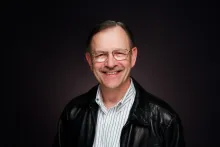
Tony grew up in a small town in Saskatchewan and became a member of the Church of God as a teenager as a result of listening to a radio program on CFQC Saskatoon starting in 1962. Today he and his wife, Linda, wear multiple hats in UCG including working at the UCG-Canada National Office, serving on the Canadian national board and pastoring several congregations. They have served in various pastorates in the United States and Canada.
The Wasilkoffs have two grown children (Paul and Cheri), a daughter-in-law (Coreen), a son-in-law (Jared Williams), four grandsons (Logan, Anthony, Jayden and Colton) and a granddaughter (Calista). They enjoy staying in touch with their grandchildren as much as possible in person and failing that, via the remarkable features of Skype.
