
Robin S Webber
As we begin this festival, I think it is important to ask a basic question: What spiritual lessons can we as New Covenant Christians derive from festivals initially embedded in the Old Testament section of “God-breathed” divine scripture? Even more pertinent to this specific Holy Day message is---what spiritual lessons might we gain from a festival linked with “tents, booths or coverings.” By its very name, we’re reminded our temporary dwellings during this week serve a powerful purpose regarding this specific festival. God, the Master Teacher, uses a physical object lesson to teach and remind us of His spiritual expectations and realities. Download the paper mentioned to view in a separate tab or window.
Well, good afternoon, everyone. Let's do a little Southern California, like you've all heard of the Redlands Echo. It's just like keeps on going through the canyons. So I'm going to say Happy High Day, and I want to hear from all of you. Happy High Day! Now it's your turn. Happy High Day! Oh, man! How millennial! Okay! And we don't even have a thousand voices, but 600 and… Charles, are they all still here? Okay, we're there. Okay. Well welcome to Southern California, and what a joy to be able to be with all of you, to be able to hear that beautiful special music that we just heard.
And I want to welcome those that are on the Zoom cast. Hello to you. And I want to remind you, those that are listening on the Zoom or watching on the Zoom, I always think of what it says in John 4 that Jesus speaking to the woman at the well, the Samaritan woman, and, you know, the Samaritans and the Jews always had issues as to what mountain to worship on.
And Jesus finally said to that woman that there is going to come a time, and the time is now, that those that God is calling are going to be worshipping neither on that mountain or this mountain, but they're going to be worshipping in spirit and truth. And I just want to share that with those that aren't able to be here as much as you would like to, that no matter where we are, we that are here today, those of all of our brethren around the world in the Body of Christ, we come up against a mountain, not just simply Mount Sinai, not just simply the mount that we sing about and we'll be coming up to during the millennium, but all of us today, as we're hearing the Word of God, we are coming up against the Mount of Zion and a heavenly host, and we are not alone.
And I would like to welcome all of you to Southern California. I have to tell you, I see, there's my Susie, and that it has just been such a joy this morning and this afternoon. It's been just like the tapestry of our lives, just unfolding before us moment by moment, person by person, heart by heart, by all the people.
This guy's trying to do me in or what? He's my friend. We can have some fun in church. Okay. But all of you, that over the years, that being in Southern California, which has been unique, most pastors, as you know, our dear friends, go hither and yon, I finally figured out that they're not going to let me and Susie out of Southern California until I get it right. And it's been 50 years being able to be in your lives, your hearts, to see your children, to see your children growing up, to see your children now having children, and to be kind enough to come up to us just this morning, just this afternoon.
And I just want to let all of you know, this is just my love note, Susan's love note to all of you for your prayers and for your support over these years. And I really appreciate my good friend Charles, Charles and Jackie and I, and Susie, we go back a long way. Charles, he hasn't, he's trying to be humble during the feast. Have you noticed with his joke? No, but he's been humble. But that he is an outstanding athlete. He is great at, he would put Curry up in the Bay Area to shame.
He just shoots from the outside. He's really good at racquet sports, or at least tries to be. No, he's very good at racquet sports, as far as he's to be one of my racquetball partners when I could play racquetball. And he also is great at table tennis and playing ping pong. And we've done a lot of that together. We've done a lot over the years with the feast. And Charles, thank you for allowing Susie and I to be here and to be able to speak today. And I want to follow up on what Michael gave us earlier, what you gave, which is the last 10 minutes of your message.
And we did enjoy the first 50 or was it 80? Look, but the last 10, I want to tell you something, the last 10 minutes of Charles' sermon was a keeper for the ages to bring us into what it means to be a first fruit. And so I hope to build upon that today or this afternoon as I have this opportunity to bring the second message and hope to build upon the fine foundation that Michael gave, Charles gave earlier.
And I do have to apologize. I don't have a lot of technical ability. I don't know how to text. Most of the church around the world has already figured that when I don't answer. And number two, remember, I can't do PowerPoint. So people always have to remind you I am the PowerPoint during this message. We were back at the GCE and some woman came up to me and I'm meeting and greeting people. And she just came up to me and she went like this.
She went, I am the PowerPoint. I think she was mocking me. Another one came up to me and said, are you with me? And do you understand?
But it tends to grab people's attention, especially when they're falling asleep on... are you back row? Can you raise your hands? Okay, they're alive. Okay. And all of you that are in front, remember, for a preacher being up here, you always want people to be walking away from you during services rather than walking towards you during services. And so we're all together. With all that set aside, if I can find my glasses, we'll get into the message because it is a very dynamic and serious event that we are a part of. And some of you have come home today. Some of you perhaps have not been in services for years and years, but God inspired you and led you to be here. And some of you are here for the first time hearing the wonderful things of God. And I hope I can share some of that with you this afternoon. As we begin this festival on this opening high day, I think it is of the utmost importance to draw your attention to what spiritual lessons can a New Covenant Christian derive from festivals that are initially embedded in time in the Old Testament and in Scripture.
We might say, what in the—and you can fill in the blank, I'll say blue blazes—would a New Covenant Christian be keeping and observing the Feast of Tabernacles? What does that have to do with us and with our calling to God the Father, from God the Father, and Jesus Christ? I'm going to go a little bit deeper, so stay with me. Even more pertinent to this specific Holy Day message is, what spiritual lessons might we gain from a festival, this festival, the one that we're observing, that has comments about tents, booths, and or coverings?
As one collects all the different words throughout the Scriptures, both in Hebrew and in Greek, whether it is sukkoth or perhaps it might be the situation with skinew in the Greek, we're able to bring together a working definition that I want to share with you. You might want to jot this down by its very name. We're reminded that our temporary dwellings—this is a festival about temporary dwellings—and it tells us something about what God is wanting us to drive as pilgrims that are moving forward to the kingdom of God as it comes to this earth. And we are all pilgrims, and we are always a pilgrim because a pilgrim keeps on going until it's reached its destination. And that's why we have this to bring us into remembrance of the glory and the beauty and the incredibleness of the destination that God has called each and every one of us to. By its very name, we're reminded then that our temporary dwellings during this week do serve a powerful purpose beyond the immediacy, beyond the immediacy of having a seven-day festival. I applaud you. Remember, I'm the powerpoint, so I need to move around a little bit because I've got bad knees. I want to remind you that we are here for seven days, and these seven days represent a thousand years. And you have shown up. You have come. You have yielded yourself by spirit to the first of what is said in Isaiah 2, Come, let us go up unto the mountain of the Lord. Good.
We could also throw in Deuteronomy 16, 16, where it says that the people of God are to show up where He has placed His name. That's good. But the goal that God wants each and every one of us to have from the front row all the way to the back row is not only to show up. Can I be honest? Because honesty is the best policy. Sometimes we've had people that keep on showing up year after year after year. They come. They're here. They go.
But God wants us to more than show up. He wants us to continue to grow up. Now, we're in a beautiful facility. Charles and I, when we were down here, and I think Howard was with us too, when we were down here, we thought, this is just like incredible. This is going to be, there's such a peace, and there's such a charm, and there's such a beauty. It bespeaks of the wonderful world tomorrow so much. We have the Garden of Eden. Look out those windows right now. The Garden of Eden is all around us. But we still have choices to make, just like Adam and Eve did. Choices that we make, whether this is our first year, or like for Susie and I, our 62nd and 63rd year. You probably thought I was the one that raised my hand for 75. Stop it! I'm not that old. But you've got a choice. Because as Michael is just bringing out in his fine message about EMI, it's not what you know. It's not what you know. We all know it's what we're going to do with that knowledge, to move it to understanding, to move it to wisdom, to move it to fuller, greater, deeper, majestic, unbelievable surrender to God Almighty and be blessed and led by His Spirit. That's what, believe it or not, that's why we come in part to be a part of temporary dwellings, of booths and of tents. I'd like you to join me if you would. Come with me if you would. Let's open up our Bibles. That's why we're here. And join me if you would in the book of Leviticus, Leviticus 23. Leviticus 23, which speaks to these days. And let's pick up the thought in verse 39. Also, on the fifteenth day of the seventh month, when you have gathered in the fruit of the land, you shall keep the feast of the eternal for seven days, and on the first day there shall be a Sabbath rest, which we're doing today, and on the eighth day, which is actually a totally separate festival, it will also be a Sabbath rest. And now notice what it says in verse 40. And you shall take for yourselves on the first day the fruit of beautiful trees, branches of palm trees, the boughs of leafy trees, and willows of the brook. And you shall rejoice before the Lord your God for seven days.
Let's notice the accent. Words have meaning. Words have power. And we don't want to skip over them at all. We notice in verse 39 that this is labeled as the feast of the Lord.
We can also say the eternal. The Lord is fine. Lord are eternal. And eternal tells you something about who our Lord is and what He is. It's not about Moses. In part, it's about Moses.
But God is inscribing in the minds of people down for further ages that He is God. That He is the one that delivered Israel out of Egypt. And then we notice then again here where it says, and you shall take of yourselves this. And at the end of verse 40, that to rejoice before the Lord your God for seven days. If I can make a comment, just kind of being a casual observer. I think there's a lot of joy and there's a lot of rejoicing already going on in this crowd. You can just tell by the response. You know what rejoicing is? That's joy on steroids. There's a high level of that. And you want to keep that up.
But that's on the outside. And to understand we can do that. But the true joy, the true joy that even Charles was talking about at the end of his wonderful message this morning. The joy does not come just by green pastures. It does not just come by still waters. But it comes as God molds us in His work in us. And again, a value and a recognized, the incredibleness of being called in this time to be a first fruit. You don't want to settle for being bad fruit. You don't want to settle for being second fruit. You don't want to settle for third fruit. And we'll be talking about that in the course of this message. And if not, about a thousand years plus after this, when I come back on the eighth day, we'll finish the rest of that story. But to recognize what it continues to say, you shall keep it as a feast to the eternal seven days. And it shall be a statute forever in your generations. And you shall celebrate it in the seventh month. Now notice verse 42, you shall dwell in Boos for seven days, and who our native Israelites shall dwell in Boos. That your generations may know that I made the children of Israel dwell in Boos when I brought them out of the land of Egypt. I am. I am the Lord your God. Boos was a wonderful servant. In fact, Scripture tells us, tells you, tells me that he was the most humble of all men. He'd been a prince of Egypt. He'd learned to move an army down into Ethiopia when you read Josephus. He was taught for 40 years to be a shepherd because sometimes with people you have to run it like an army, and other times you have to run it like a shepherd. And he had all of that training. He was fantastic. Wrote the first five books of the Bible, but it's God that leads us towards the Promised Land. And not just one that flows with milk and honey, but one that flows with eternity. Allow me then to give you the title of my message today, here and now. I want to present to you five permanent lessons about the feast of temporary dwellings. I'll repeat that. It's more than five words. I usually try to shrink them down, but this is it. Five permanent lessons about the feast of temporary dwellings. See, the key is here. What is permanent? What are the big lessons that we are to learn in keeping the feast of temporary dwellings? So let's start with this. I'm going to give you point number one. Here we go. Our temporary dwellings remind us our own physical life is temporary. It reminds us that our hour, so that sounds almost plural in a sense, so you might be looking around our own. I'm talking to you, as we say. I'm talking to you. Not the person next to you, not your wife, not your children, not your good friend from your local congregation, maybe somebody that you just bonded with during the lunch and now you're sitting together. Our lives are temporary.
Yes, the temporary nature of our lodgings reminds us of the limitations of mortality.
And help us and keep us into perspective as who is our uncreated, uncreated, eternal source of life. God the Father, the Word, Jesus Christ. And who is the created? That's you and me.
In Leviticus 23, again in verse 42, let's just drop down again. You shall dwell in poos for seven days, all who are native Israelites shall dwell in the booths, that your generations may know that I made Israel to dwell in the booths when I brought them out of the land of Egypt. Now notice this. Here's the drumbeat. This is where time stops for a moment and we look down and he says, I am the Lord your God. I am the Lord your God. Our rescue comes from above, not by our good looks, sorry, not by our good brains, not even by the longevity of our lives. The Weber family usually lives 89 and longer in life. I'll probably be the one that breaks the bank, the demographic code. We don't know how long we have. You say, oh no, man, is whoever going to go into a sad story? Yeah, it's for a moment. We'll get out of it. Susan knows this story. A lot of our people in Southern California know this, but you on the line might not know this, that one time I went into the kitchen. Susan, please stay seated. Don't leave me. I went into the kitchen and I thought, what can I say to my wife that my kind of, wow, that's really important. Because all of you know me as Robin and I've been a preacher and I've been a minister, pastor the last 50 years here. But Susan, and all you people that are married know, I'm just Robin. I'm husband. I'm man.
So I thought, what can I do to kind of say something that's going to make Susan go, yeah, that's really important. So I came and I said, Susan, I've got to tell you something.
All we have is today. I thought that was rather profound. Until I heard no.
And my Susie, who you all know how much I love and respect, she said, but she was good enough to remind me. After I said, all we have is today, she said, no, all we have is the moment.
All we have is the moment. That has come loud and clear the last several months. We think of a beloved minister within the United Church of God who had been just president. And I believe that, from what I've heard, I heard that he came down and kind of spoke to this towards the end of his message. And that night he had a heart attack. And days later, that good man, for the moment, died.
We have a story that has certainly been in the national headlines, the world headlines, about Charlie Kirk, a man that was trained to teach values to a younger generation, to wake them up, that there is more than self. And to recognize that and just like that, his life died, his life ended for that moment. So we look at that and we recognize then that all we have is the moment.
And all we have right now are these days. We have these moments. Now you say, are you limiting me to moments? No, there's this moment and this moment and this moment. And God willing, God will give us more moments. But we're in God's hands. We're in God's hands. And so we've got to make the most of the moments of this message. Tuning in, listening. Where is God proud of me? Where is he poking me? Where does he want me to go as I observe this feast of temporary dwellings? And it's just exactly this point. Our physical lives are temporary and we need to learn to live them with preciousness and to understand that. Join me if you would in that, even as I say that, as we go moment by moment, join me over in Hebrews 13. The author of Hebrews, it's interesting what he is able to share with us here in Hebrews 13, where it says in verse 5, Let your conduct be without covetousness, be content with such things as you have for it. He himself has said, I will never leave you nor forsake you, so that we may boldly say, the Lord is my helper. And I will not fear. When it says I will not fear, it doesn't mean that sometimes your knees aren't knocking. We're only human beings, aren't we? Or maybe we can be trembling because again, we're just human beings. But to recognize as by God's grace and his calling and the example of Jesus Christ and you studying and scouring the Word and asking the Spirit to guide you, that our hearts will remain firm. Firm today. Maybe some of us need to literally firm up this hour with something that's going on in your life. But to recognize that even Jesus Christ himself said in the last words recorded in Matthew 28, that I will never leave you and I will never forsake you. This is the one that was the Word. This is the one that was the I AM. This was the God.
Obviously God the Father is supreme and above that, but this is the one that was guiding Israel, the rock, the one that stayed with them. And so when we keep these feasts of temporary booze, we are stating it to God in faith that we know that we have our own limitations and we thank him for calling us to moving beyond that and understanding what can be.
It's very interesting, just a little research here. It's of note that the Israelites and the Jews for thousands of years have been making these Succoths and you may find this of interest that Succoth, they put up the walls. So in Succoth, here's the PowerPoint, Succoth, they put up the walls. But there's one thing that they don't put up. What is...
I'm an old high school teacher, so I might ask you a question, so don't be nervous and raise your hand. Have you ever, you know, being a teacher, you know, you see somebody out there, say, raise your hand, say, oh no, no, Mr. Weber, I was just scratching my head, you know, they don't want to be answered. Is to go back here a second. Why they could build the walls, but they were to especially leave the ceiling, the boughs and the palm fronds, they were to leave that loose to allow the light of heaven to come down in at night. Why is that? Why did they firm up the surrounding walls, but leave the top open in general? Even maybe when it rained in autumn.
Because by looking up, by looking up, they remembered that they were created for a purpose.
By looking up, they could remember that even when they were on the slimy, muddy banks of the Nile, that a wonderful, loving God called a people who were not a people and said, you will be mine.
I will be your God and you will be my people. And that's the same today for the Israel of God, the spiritual Israel of God. As Paul says in Galatians 5 and verse 26, we are the spiritual Israel of God. We are the separated and we prevail with that name like Israel. We do prevail with God's Spirit by his might, by his power, and to understand that. And to recognize again, like join me if you would in Psalm Z, a good one to look at in this point. In Psalm Z. I'm familiar with Scripture, but I'm a poet right now. Notice verse 3. When I consider your heavens, the work of your fingers, the moon and the stars which you have ordained, what is man that you are mindful of him and the sons of man that you visit him? I have a question for you.
May I? And that is, how many looked out your window last night and saw what came over the mountain?
You don't want to miss it. If you're just beginning to come to our services and understand, you don't want to miss the opening night of the feast because there is a big, beautiful, full moon.
My mother taught you, some of you knew Tommy, Thomasina, my mother. My mother taught me that from the time I came into the church back in age 12, and we would always do that. Then Susie came into my life, thankfully, and we are big moon-gazers. That's a promise from God. It's like a doorbell. It's like a cosmic doorbell to see that moon come up and to recognize that all of God's people around the world, wherever they are, are all together in an assembled spot, and that moon is smiling down on us and shining upon us. And we look up to know that we are not alone down here below. To use a little Hebrew, is that not cool? And we're going to talk about you looking up at the end of this message, so hold on. So they didn't have anything on top so that they could look up and recognize the source of all light. We've been talking about light, the lights from above, and to drink in that they are not alone. We're going to go to point number two. Temporary dwellings remind us that we have limited time to serve the Almighty's purpose. Sounds the same, but it's a little bit different. You and I have only limited time to serve God's purpose.
I'm going to date all of you for a second, see how many of you remember Gone with the Wind?
Always know your audience. And how many of you remember Sweet Scarlet? Sweet most of the time in that movie. And Clark Gable? Not always.
And what is that famous line that Scarlet O'Hara would say at the very end of the movie?
After all, there's always tomorrow. And you know, the heavenly music would come on, the clouds would part. And that was what she was known for in that movie, probably the most famous verbiage out of that. Just a simple question.
A little break into your heart where you're at. What are you saving for tomorrow?
Or the tomorrow after tomorrow that needs to be done when it comes to relationships?
When it comes to somebody that perhaps you've had misunderstandings with, and it's gone south so far, and you're waiting for some place somewhere down the line.
There's a famous minister back in, I believe it was Boston, back in the last part of the 19th century where it was a well-heeled Sunday audience crowd in his church. And he looked out at them, they were all on their, they were all smiling, and they were all on their Sunday best.
And he began to talk and said, you that are here, you that come every week, every Sunday, show up. You're in your best clothing. You do this, and you do that. And yet you ignore the way to your things that are going on. Those whose hearts are hurting, those that you have been separated from, those that if you only knew that something had happened to them just just now, oh, how you would reach over, and oh, how you would go out, and you would change your life.
You wouldn't wait any longer.
For he said the time is short.
Now, I know you're not Sunday keepers, but I also recognize we're human beings. I think we will always have tomorrow.
It's interesting, the story comes from Light for Many Lambs. Afterwards, it said, as people left that church, there were hugs, there were smiles, there was laughter, there was connection that had never been before.
Maybe we have some serious homework, some serious heart work during this feast, rather than going out and eating a lot of calories, which we're supposed to. God says to rejoice at the feast. I understand that.
But rather than that diet, the spiritual calories that God wants us to grow in, and to be brave enough, and to be bold enough, and to be honest enough, that you need to be about your father's business. Remember when Jesus went up to the feast, and Mary and Joseph had already gone back to town, they're headed back to Nazareth, because villages all went up together. It'd be like a village. It's probably about how many people were in Nazareth. So everybody thought, where's Yeshua?
They wouldn't call him Jesus, they would have called him Yeshua, that's a Hebrew.
Where is he? Because they probably thought he's with his cousins, James and John.
Just everybody, let everybody take care of everybody with this whole village that was going up, and he wasn't there. They had to go back to Jerusalem. And they said, you know, I don't know if you could spank the Son of God, but anyway, they were a little miffed out, right? And they said, I've been about my father's business. Now, I know so far that we've been about the business of getting our reservations to hopefully a delightful place to stay for seven or eight days. I know absolutely that we have gotten a hold of Mr. Charles Millire's famous box lunches, and we did make our reservations for that. And I know we got this, and we got that, and we got that. Maybe it's time to make reservations and prayer to God to help you to make breakthroughs rather than having breakdowns during this Feast of Tabernacles. And the person that maybe you need to connect with is not even at this feast site. But how long has it been? How long are you going to let it go? Yeah, but it's like this over here. No, how long are you going to do that? In other words, what I'm encouraging is Robin, I'm just your brother in Christ.
You've seen me grow up and get old. I've seen you grow up and say the same.
But I also know many of your stories. In fact, I know many of your stories.
Allow this festival time of being under God's shelter in these booths that are temporary to recognize that you only have so much time to serve God and in whatever you do to give honor and glory to God, which is important. I want to share one thing here with you if I may. One second. I'm going to get my notes here. Back. There we go.
Here's one I wanted to share with you here. John 9, verse 4.
John 9, verse 4. Gospel thereof.
John 9, verse 4. A simple statement that Jesus makes. Notice this.
I must work the works of him who sent me while it is day. The night is coming when no one can work.
We've got to work while it's day. While we have light. While we have the ability to make things happen. There's that beautiful prophecy in Isaiah 19.25, 20.7 or so where it says that when it's all sudden down, when you look at it, this is my map. Michael was the one that had the map earlier of the Seleucid and the Ptolemies and all of that. This is my map. But to recognize that too much of ancient antiquity. We had Egypt. We had Assyria. And right in the middle was like the middle child, God's chosen people, Israel. And you go to Isaiah 19.25, which this week represents the millennium and bringing people together. And he says at the end of the day that Egypt and Israel and Assyria are all going to come together. How has that worked over the last 3,000 years?
How is that working today in the Middle East? It's almost as if, you know, Humpty Dumpty, all the king's men and all the da da da, can't put Humpty Dumpty back together again. When you go to Isaiah 19.30, thereabouts, it talks about Israel. It talks about Israel is going to be a joy. It talks about Egypt is going to be a blessing. It talks about Assyria being at one with these two. When you see that, when you see that, take a hold of your own story and your own life. Remember that God wants us to be one as He is one, as Jesus is one with Him.
As Jesus said, Father, allow my disciples to see the oneness of you and me and me and you and you know how that one goes in John 17? Because when you do that, you can talk about that you believe in Jesus all the time or power to you. But it's when you go for unity, when you are taking down walls, when you are lowering the moats that surround your personal castle, and you strive, perhaps unsuccessfully, but you are the one that will strive to make things happen.
I'll share again as we go to point number three. The time is short. I'm 74.
I'm no longer 39, like Jack Benny. Don't even go there, say that. I realize my book is winding down. Many of you remember me playing basketball in high school, some of you that are older, and in college, and dating Susan. I know the Hordchecks are here.
Joe remembers Susan and I. Joe, when we graduated from Ambassador College, wherever you are out there, Joe, and family were our first managers of our apartment that we could afford at that time.
$125 doesn't sound bad today, does it? But that was 52 years ago.
You've seen me as a young man, some of you in Pasadena, on the Rose Parade.
Talk, and understand that Mr. Helge's going to be talking about 1979. I was there with Mr. Helge.
Many of you remember the auditorium days coming to the feast. You remember this, you remember that?
That's behind me. I only have so much time now to serve God. And when I recognize my time as precious, I, as a Christian, first, always look at ourselves as a disciple of Christ first, much less the other opportunities I've been given. I'll be able to serve you better.
Number three, let's go to that. Number three is temporary dwellings. Remind us that we have limited time to—oh, did I already do that one? Maybe I did that one already.
One second. Yeah, I did that one. I'll go to number three. Okay, trying to find number three here.
Number three, temporary dwellings remind us God dwells only so long in these human tents. A little bit different. Temporary dwellings remind us that God dwells only so long in these human tents.
All who have God's Spirit dwelling inside of them—and we do. We sang this morning about the indwelling of God's Spirit. 1 Corinthians 3, 16 through 17. 1 Corinthians 6, 19 through 20.
Romans 8, 11 through 14 tell us that God literally dwells in us. He is dwelling in us.
His Spirit is there to stir us up and to remind us at times.
Of Isaiah 13 verse 21. What's Isaiah 13 verse 21 say? This is the way. Walk you in it.
And it reverberates in the spirit of Jesus' voice when it says, follow me. I share something with you. And some of you young kids here, how many are about 12 years of age? Charles, your hand growing up doesn't count. No, I'm just joking. How many 12-year-olds do we have here? Anybody? It's a tucker. Stand up a second. Go ahead. He's falling asleep, so I'm trying to help him. Do we have anybody else that's young? Help me. Help me. Howard, do you want to be young? No. Help me. How many? 15, 16. Stand up. Thank you. We're going to do something. Let's give these young people a round of applause for just even being here. We need young people. The reason I had you go through that exercise is because I started observing these days when I was 12 years old up at Squaw Valley. Susie was back in Jekyll Island or Big Sandy at that time. But I kept on hearing pounding and pounding in every message that I heard. Never—what I'm saying to you young people—never underestimate what you're hearing now that is going to be in your life one day. And the minister, whoever they were, would always get up at the feast and go through Isaiah 30, verse 21. You know what that is? This is the way. Walk you in it. What I'm sharing with young Tuck here and our ladies back there for a moment is simply this. These words are falling on your ears right now, as they did me many a year, many a decade ago. And never underestimate how God is beginning to work with you. Just that one phrase, Isaiah 30, 21, this is the way walk you in it. About 30 years later, I started writing a column on the back of the World News and Prophecies. Some of you will remember it. This is the way. You know I learned about this is the way? During a feast of temporary dwellings, God was activating my spirit. And about 150 columns after that of this is the way, I needed a new window to look through. And so, not just saying, well, this is the way, this is going to tie in with what you are talking about, Michael. There's this, this is the way. But there's a difference when Jesus came along. He said what to His disciples? Follow me. And that's what Michael was talking about in his message. It's one thing to know something. It's one thing to say it's out there. It's a whole other thing to do like Nehemiah. And the modern day Nehemiahs and Nehemiahites, that's you ladies, to do is to do it. Jesus always practiced what He preached. Jesus Himself was never into theory.
He put skin in the game for you and me. In fact, that's one of the most incredible words of which literally means dwell. When you go to the Gospel of John, where it talks about, you know, in the Gospel of John, in the beginning was the Word, the Word was God, the Word was with God, and this and that, and God is light. Well, you know what?
There's a lot of religions that believe in a deity. But what makes being in our way of life, what makes it real, what makes it incredible is that deity, as it says in John 1.14, says, and He came and dwelt. He tabernacled. He sheltered under human skin. You see, Jesus is about tabernacling and not only coming to this earth and tabernacling for 33 and a half years, but He and His Father tabernacled inside of us today. This is why New Covenant Christians keep the Feast of Tabernacles. Point number four.
No, I'm going to go to this point number three. Temporary dwellings remind us God dwells only so long ago. Okay, I mentioned that. One thing I wanted to mention here quickly, very quickly, is something I wanted to share with you. Can somebody out there just keep you awake? Can somebody tell me who the Father of the faithful is?
This is not hard.
Who? Are you sure? Let's have some fun. You really have a thousand years. Let's all say it together. One, two, three. Abraham. Yes, Abraham is the Father of the faithful. And Jesus was the Son of God and the Son of Man, Immanuel, God with us. And so he has real time, real game, skin in this game. Abraham was the Son of the flesh as well. But I want to share just a little bit about Abraham for you for a moment. And I hope this will inspire you. You ever ask what turns Weber's cork?
Why do I write columns? And why do I try to reach people down deep in the heart, God willing, by his grace? It's because I keep this, I read this about every two weeks.
When it looks like, God, what do you want me to do now? Really? Have you ever had that? Really? Now? Me?
But I don't know the way. I'd like to share something from Cahill's book called The Gift of the Jews. And Cahill is just a splendid writer.
Let's allow and learn why Abram, later Abraham, is called the father of the faithful.
And what you're going to find is there are two lines in Genesis 12, verse 4, and also in the Gospels with Mary. I'd like you to write these down for just a second. Very simple. In Genesis 12, verse 4, we just find a simple phrase. He went. He went.
You could also, in other translations, says, he departed.
One of the greatest lines in all of human history.
One of the great stop moments when you're reading scripture, this man that lived in the very nexus of all human civilization and what God asked him to do, which was contrary to everything in human nature. And there's another line out of the Bible I'd like to share. Ladies, something for you.
Another line that just rivets me and makes me stop in my human tracks. When Mary, that young Jewess after Gabriel had talked to her, said simply this, let it be as you have said.
How often when the prompting of the Holy Spirit knocks on our hearts. And it says in Revelation 3.20 that Jesus will come to his people and he will knock on our hearts. And that if we do open up the door, he will enter and dine with us. Maybe you have not had that experience in a long time. Maybe it is time not to work up an experience. That's not what I'm talking about.
That's not our way. That's not how we practice the Spirit. But to acknowledge the Spirit and recognize that God is calling an SOS call to you during this feast. It's not just going to be another feast. That God is going to be doing a work in you during this feast. Going to be molding your human clay. You are going to come out different a thousand years from now than you are today on the opening day of this feast. But allow me to read from Cahill's book.
The word is simply this, Oah, YHKH, LAH, O'ROM. That's my bad Hebrew. I hope you don't mind.
It simply means the ROM went. It means that he departed. Two of the boldest words in all of literature. They signal a complete departure from culture and sensibility in the evolution thereof that went into them. Out of summer, civilized repository of the predictable comes a man who does not know where he is going, but goes forth into the unknown wilderness under the prompting of his God. Out of Mesopotamia, home of canny, self-serving merchants who use their gods to ensure prosperity and favor, comes a wealthy caravan with no material goal.
Out of ancient humanity, which from the beginnings of its consciousness has the reddest eternal verities in the stars, comes a party traveling by no known compass.
Out of the human race, which knows in its bones that all of its striving must end and death, comes a leader who says he has been given an impossible dream. And out of mortal imagination comes a dream of something new, something better, something yet to happen, something, something in the future. I ask you, the saints of God assembled here in Temecula, California, is this just going to be SOS again, same old, same old, same old stuff? Or are you today committed on this first high day of the Feast of Tabernacles 2025 as we've praised God and sung, as we've heard wonderful messages? Are you going to be different? Or are you just all right the way that you are? I know I'm not. Are you ready? Whether you're 15 years old or whether you're 95 years old, are you ready to have something new, something better, something yet to happen, maybe even during this Feast, something in the future to happen? God is not done with me. God is not done with you. And we are not just here to be passing time. We are here to be created in His image. Abram is known for two factors. You may want to jot this down. This is not complicated.
Abram, when you look at all of Genesis, he was known for one thing. Number one, he was the man of pence. He was known for pence. He normally did not go into the city, but he pitched his sukoth.
He pitched his temporary dwelling. Number two, and I think we can all relate with this, and please understand, when I'm talking with excitement, I'm yelling back at myself. Whenever I talk in the sermon, I'm talking to me. Number two is simply this, it's never recorded that he sacrificed on any altar other than to the one true God. He never sacrificed to another altar other to the one true God. Wherever he went, he would build them. He was a pilgrim, and you only remain a pilgrim as long as you do not put permanent roots down where you are. He's a wonderful human example, and is it any wonder then that God said before verse four, blessed are you, and I'm going to bless you. And the blessing that is going to come from you is that all of humanity is going to be blessed. Blessed by what? By the seed of Abraham, by Yeshua, Emmanuel, Jesus, the Lord, the Christ, Messiah, coming from the loins of his family. That is the great blessing. He is the wonderful King of the wonderful world tomorrow that we're here to serve.
I'm actually what I like to do. I've made copies of this. I'd like to ask you to do Robin a favor. I'm going to put them up here afterwards. You don't have to. This is not mandatory, but remember, all you have is the moment. I'm going to put them down here, and Charles is going to reimburse me so that you can have a free copy of just this one sheet. And I would just suggest take it out about every two weeks and give yourself a spiritual health exam. Of course, our ultimate goal, our ultimate image is always Jesus Christ. But take a peek at the Father of the faithful that has been in our sandals, and we've been in his shoes. Real quickly, just in conclusion, then, a couple of these are going to go very quickly. Point number four. Temporary dwellings reminds us even the millennium will be temporary. What? What? It's just beginning. It's the millennium that's a thousand years.
Even the millennium, that thousand-year period of the kingdom of God on earth, is going to be temporary. And you and I are called to get to work and under Jesus Christ.
I remember years ago, one of those snapshots out of past Nita days with Mr. Herbert Armstrong, Mr. Armstrong once said, brethren, he said, do you realize that it's going to take three human generations to begin to get the wonderful world tomorrow working? Sometimes, I'll just say this, that, oh, hi, Nancy. I didn't see Nancy, Nancy. Yeah, okay. Is that, hello. Is that, what are my members? Is that to recognize that, you know, sometimes we hear these whiz wham, you know, they do this, you're going to be able to fly, you're going to be able to do this, you're going to be able to walk through walls. I really appreciate what Mr. Armstrong said. We that are in the spirit and we that are going to be called to take that role of that one Jew that is going to be grabbed by 10 people and ask, how does this work?
It is going to take work. It is going to take time for those that are still alive in the millennium, that in a sense are immigrants to learn the culture of a new kingdom in a new way, just like immigrants here in the U.S. It normally takes about three generations, not always. I know some come right over the border and they're like Yankee Doodle Dandies all dressed up in red, white, and blue, and ready to go and sing the national anthem, blah, blah, blah, blah, blah, blah, blah.
But for the rest, you see this culturalization that takes time. And it also takes time for us today as mortal human beings that really do long for the kingdom. But it takes time. But even the millennium is going to cease. Point number five. I told you this to be short. Our temporary dwellings remind us even the earth is going to be temporary. Even this earth is going to be temporary. Join me if you would in 2 Peter. In 2 Peter, after the millennium, we note this, Peter's words, when it says in verse 10, For the day of the Lord will come as a thief in the night in which the heavens will pass away with a great noise, and the elements will melt with fervent heat.
Both the earth and the works that are in it will be burned up. Therefore, and right now in our prophecy class that we're running in the southwest and also being picked up in Malaysia and Australia and other places, and you're welcome to join us if you'll let me know, but with Darris McNeely and Scott Ashley and myself, but this is our theme verse that we're coming up to.
Therefore, you know, when you hear therefore that God is laying okay with everything that's gone on before now not before now it is the therefore what are the expectations and this is our theme verse in our prophecy class seminar. Therefore, since all these things will be dissolved, what manner of persons ought you to be in holy conduct and godliness?
Jesus spoke to this even while he was on this earth. He said, seek you first the kingdom of God. Are you with me so far? But seeking the kingdom of God is not merely reaching a destination. It's a way of traveling.
It's a way of traveling. Seek ye first the kingdom of God and his righteousness. Righteousness not only on the outside that everybody sees but on the inside of what God sees and says, there's my son. Hey, back there on the back row, there's my daughter.
They get it. They get it.
And sometimes Jesus Christ can look over at God the Father and there's this knowing nod between both of them. And they said, Jesus Christ talking to his Father. It was all worth it.
You know, Dad, it was all worth it. They did. By the way that they are acting, they do believe that you sent me. Let's finish up with Revelation.
Revelation, and picking up the thought in, um, pardon me, 21.
Revelation 21, notice what it says. Now I saw a new heaven.
Can you see it? Can you sense it? Can we understand it? I saw a new heaven and a new earth for the first heaven and the first earth had passed away and there was no more seed. Then I, John, saw the holy city, new Jerusalem coming down out of heaven from God, prepared as a bride adorned for her husband. Now here comes the drumroll. And I heard a loud voice from heaven saying, Behold the tabernacle of God, the sukoth, the skanu, the tabernacle. Notice here, notice, is with men, and he will dwell with them, and they shall be his people, and God himself will be with them and be their God.
Five permanent keys to understanding a feast of temporary dwellings for New Covenant Christians.
I'm going to give you one homework assignment.
For those of you that missed the moon, I'm going to give you this assignment.
Apostle Paul says that we are spiritual Israelites. Okay, great. So tonight, let's have some fun in our homework and just go outside the door. Get off your cell phone. Get off your dock. That's Hebrew for getting off your dock on the couch. And just go outside for about five minutes.
You are in your sukoth. Your sukoth, whether it's an Airbnb or whether they call them or whether we're here in the villas or wherever we are, they all have ruts. So you have to go outside.
And I want you to join Father Abraham, the father of the faithful, as he gazed up to the stars, which God asked him to do. I want you to join the Patriarch David, and as it says, I consider your works and you look up the stars. Look up tonight. I think the small global is going to be down here in the basin. It's going to be all right. And look up at the stars. And as the psalmist would say, be still. Be still and know that I am God.
And he'll look down and bless you with a ray of light, perhaps not visual, but it'll be there. Look forward to seeing you in the course of the feast. And remember that these papers on Abraham will be right here in front of the lectern. God bless you. God keep you.
Next year in Jerusalem.
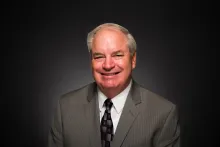
Robin Webber was born in Chicago, Illinois, in 1951, but has lived most of his life in California. He has been a part of the Church of God community since 1963. He attended Ambassador College in Pasadena from 1969-1973. He majored in theology and history.
Mr. Webber's interest remains in the study of history, socio-economics and literature. Over the years, he has offered his services to museums as a docent to share his enthusiasm and passions regarding these areas of expertise.
When time permits, he loves to go mountain biking on nearby ranch land and meet his wife as she hikes toward him.
