

Steve Shafer
This transcript was generated by AI and may contain errors. It is provided to assist those who may not be able to listen to the message.
Here this afternoon. So we can try to end close to our time. It's always very exciting to be observing the Days of Unleavened Bread, and here we are with the first Day of Unleavened Bread. And every year during this time in the season, we recap lessons that we can learn from God's annual Feast and Holy Days. I think many of us here are getting the older congregation. People have been in the church for a long time. Some of you are a little bit newer, but a lot of us have been observing the Feast of Unleavened Bread and Passover in God's Feast and Holy Days for many years.
A lot of you have made for 20, 30, or 40 years or more. I think this is my 52nd observance of the Feast of Unleavened Bread, and Evelyn's about a year ahead of me. I think this is her 53rd observance of the Feast of Unleavened Bread. So we have many, many stories that we could tell, but it's always profitable to be here observing the Feast of Unleavened Bread, God's Feast and Holy Days. But these days have great meaning for us, and they have meaning even for the world as well.
But the observance of the Passover and the Days of Unleavened Bread, and even our countdown to Pentecost following Unleavened Bread, takes us back to the time that God delivered Israel out of Egypt, as we know. But the way that God did it, I was good to review that, because the way God did that, when we look at it closely, is very, very strange. He had a strange way that he delivered them out of Egypt. But I think God planned it that way, he had it planned out that way, did it that way, to teach all of us, even now, many, many years later, thousands of years later.
Some very valuable lessons that we can apply to ourselves that we would not have learned otherwise, that God had not delivered them the way he did. Lessons we can apply today.
And these lessons that we can learn from this give all of us a great deal of hope and encouragement, especially as we see the world getting darker and darker, getting further and further away from God, things developing in this world. We don't know what's going to happen, but we know it's not going to be good. But lessons we can learn from how God delivered Israel out of Egypt can give us great hope and encouragement in these days we are living in.
The story of Israel's deliverance out of Egypt, primarily given to us in one book, the book of Exodus. I want to just give a little bit of a pretext here because we think of the book of Exodus, we think of Exodus, Exodus is given that name. That was not the original title of the book.
When the Old Testament was canonized, that was not the title given to it. That title was addressed later, is given to it later. And of course, it makes sense to us because it's about Israel's exodus out of Egypt. But I think the original title is extremely valuable, important, and an important lesson that we miss by not understanding that title.
The original title was the first Hebrew word at the very beginning of the book of Exodus, the very first Hebrew word of Exodus 1.1. That was the original title. The original title was Shema, S-A-T-M-O-T-H, which is the first Hebrew word. If you're reading it in Hebrew, that would be the first word in Exodus 1.1. In English, it means the names.
In verse 1, it's translated, now these are the names. So the original title was the names or these are the names when that word is translated into English. I want to ask a question. Why is that important to understand? Why is that title important? Why did God inspire that to be the title? Because it's about the Exodus, but why would He entitle it to be that?
Because it was not just their deliverance or their exodus that was important. It was the fact of who they were. That was important. These were God's people. His special people He had a special covenant relationship with.
And I want to apply that to us because what's important to God today? It's who we are and it's our individual names that are important to God. Our names are written in God's book a lot. Our names are very important to God.
Each and every one of us individually are important to God. It's so important that Christ said that the very hairs of our head are numbered. Matthew 10, verse 30.
Now it all comes together, actually. If you look at the first five books of the Bible, you look at the original title of those books. And all the original titles of those five books, which we call the five books of Moses, the original titles were all the first word in verse 1 of each of those books. The first words in Genesis are in the beginning. That was the original title.
The very beginning of Exodus, I said, are the names, or these are the names. In Leviticus, the first word translated in Leviticus is the Lord called.
In New Numbers, the first word, the title was, In the Wilderness.
In Deuteronomy, the first verse says, These are the words. What I found extremely interesting is that those titles of those first five books, they show us God's plan and God's purpose for those who He calls and works with. You put those titles together and they make a sentence, at least the first four. In the beginning, these are the names the Lord called in the wilderness. These are the words. These are God's laws, God's precepts, God's principle He gave to those people whom He called in the beginning. I think that gives us a setting for the entire Bible, the entire Word of God. So the story of Israel's deliverance out of Egypt begins by emphasizing the names of those He delivered, because God had a special love and a special covenant relationship with those people. Thus the original title, The Names, or These Are the Names, as it's translated in Exodus 1, verse 1.
Now let's begin with a little historical background, which is set up to God's heart.
I'm going to start in Exodus 1, verse 1. You can be turning there. Exodus 1, verse 1. As I said, the original title was These Are the Names. That's where it starts. Now these are the names, the original title, have a sign on these people's names, who they were. These are the names of the children of Israel who came to Egypt. Each man in his household came with Jacob. These are the names that God had a special covenant relationship with. And then God lists some of their names. Notice how it goes from there. These are the names. Verse 2. Reuben, Simeon, Levi, and Judah, Issachar, Zebulun, Benjamin, Dan, Naptali, Gad, and Asher. All those who were descendants of Jacob were 70 persons, for Joseph was already in Egypt. What happened right after that? Verse 6. After that, there arose a new king, or region, who did not know Joseph. I want to enter into something here. This new king, or Pharaoh. You know something that's missing here? His name is missing. God doesn't give us His name. He gives us the name of His people. But He doesn't give us the name of this great Pharaoh, who thought He had a great name. God just doesn't even tell us who it is. But there are rules of the new king over Egypt, who did not know Joseph. And He said to His people, look, the people of the children of Israel are more and mightier than we are.
So this king did not know Joseph.
And he became fearful of how fast the children of Israel were multiplying. And so what did he do? He made them slaves.
He then took matters to the extreme, ordering the Hebrew midwives to kill all the first born males of the children of Israel. Verse 17. But the midwives, what did they do? They didn't fear this great king. They feared God. But the midwives feared God, and they did not do so as the king of Egypt commanded them, but they saved the male children alive.
They feared God more than this great Pharaoh, who was the most powerful man on the earth at that particular time, who had the power of life and death over them, but who remains unnamed by God. But how much did God love and respect those two midwives who exercised faith in God to save these children? Now these are the names. Verse 15. God gives us their names. Then the king of Egypt spoke to the Hebrew midwives, of whom the name of one was Shipra, and the name of the other, Pu'ah. These are the names.
And their names are forever recorded in God's Word for their faith that they had, because they feared God.
You know, your name and my name is every bit as important to God as the name of these two midwives.
Don't ever forget that. God then said this to Moses. Let's turn to Exodus 6.
Exodus 6, verse 1. Then the Lord said to Moses, Now you shall see what I will do to Pharaoh, for the strong hand he will let them go, and the strong hand he will drive them out of the land. Dropping down to verse 10. And the Lord spoke to Moses, saying, Go in and tell Pharaoh, king of Egypt, who still remains unnamed, to let the children of Israel go out of the land.
Now, as we know the story here, Moses stammered a little bit, apparently, and he was afraid to speak to Pharaoh. So God appointed his brother Aaron to go with him and to be his spokesman. Chapter 6, dropping down to verse 30. But Moses said before the Pharaoh, Behold, I am of uncircumcised lips. How can I speak to Pharaoh? Well, how would Pharaoh heed me? He's not going to heed me. He's going to look at me as a heathen, so to speak, as far as he's concerned. Chapter 7, verse 1. So the Lord said to Moses, See, I have made you as God to Pharaoh, but Aaron your brother shall be your prophet, you'll prophesy in your place. And you shall speak all that I command you, and Aaron your brother shall tell Pharaoh to send the children of Israel out of his land.
Now, we all know what happened next.
God, through Moses and Aaron, he warned Pharaoh that God would send a devastating plague on Pharaoh and on the land of Egypt, that they refused to let Israel go.
Because we know it took ten plagues.
Any devastating plague. Ten devastating plagues before Pharaoh finally let them go. Why did it take that long? Why did it take ten devastating plagues? It just absolutely destroyed Egypt practically before Pharaoh would finally let them go.
Well, with that brief historical background, let's now see the reason Pharaoh refused to let them go. And this is fascinating.
The truth is, the reason he wouldn't let them go is because God hardened Pharaoh's heart so he would not let them go. Back to the 7, verse 3. He tells Moses here, I will harden Pharaoh's heart and multiply my signs. But I'm going to harden Pharaoh's heart. So God tells Moses here he's going to harden Pharaoh's heart so Pharaoh will refuse to let Israel go.
Did God even prophesy to Moses way back when he met with Moses? I'll talk to Moses about the burning bush. Let's go back just a few verses here. Exodus 4, verse 21. That was his plan from the beginning. Exodus 4, verse 21. And the Lord said to Moses, right after he appeared to him in the burning bush, When you go back to Egypt, see that you do all these wonders before Pharaoh, which I have put in your hand, but, he tells Moses in advance, I'm going to do all these wonders, but I'm going to harden Pharaoh's heart so that he will not let the people go. So God told Moses in advance that even though God would perform tremendous miracles and devastating plagues before Pharaoh, that he would harden Pharaoh's heart so that Pharaoh would not let the people go.
And that point is emphasized and repeated several times as the ten plagues are being carried out. Let's just read that. Let's go to Exodus chapter 9. I think it's important to read it to see if this is the case. Because it's strange. We wonder why did God do it this way?
Exodus 9, verse 12. But the Lord hardened the heart of Pharaoh, and he did not heed them, just as the Lord had spoken to Moses. Exodus 10, verse 1. Now the Lord said to Moses, Go into Pharaoh, for I have hardened his heart in the hearts of his servants.
Verse 27. But the Lord hardened Pharaoh's heart, and he would not let them go.
Exodus 11, verse 10. So Moses and Aaron did all these wonders before Pharaoh. But the Lord hardened Pharaoh's heart, and did not let the children of Israel go out of his land. So that begs the question. Why?
Why would God do that? Because purpose here is to deliver Israel out of Egypt. So why is it then that every time he performs a miracle, or they want to deliver him, he hardens Pharaoh's heart, so he will not let them go?
To do that, God sends 10 miraculous plagues on Egypt. But then after each of those 10 plagues, he hardens Pharaoh's heart, so that Pharaoh refuses to let Israel go.
That then results in God having to put another plague.
It's almost as if God is working against himself.
So the question then becomes, why? Why did God harden Pharaoh's heart? Which is the title of my sermon, if I told you that or not. But that's my title. Why did God harden Pharaoh's heart?
I mean, obviously, God did it in order to teach us some very important lessons.
Lessons that we probably would not have learned if God had done it any other way. God was thinking of lessons that his people would need to learn.
Lessons that may apply to us today, especially in the future years that are just ahead of us.
Lessons that we'll need to learn when the power of the beast is about to rise up out of the sea. Lessons we may need to learn when the power of the fiery red dragon is about to be released. The power of Satan is about to be released, and he was full of fury and wrath. See, what will God's people need in order to see them through all these troubling times that are prophesied to happen in the years maybe not too far ahead of us, maybe just over the horizon? What are we going to need to know? We're going to need to know why God hardened Pharaoh's heart. Now, to keep all this in perspective, these plagues and the hardenings of Pharaoh's heart, of course, we all know they all took place in the time leading up to the Passover in the days of Unleavened Bread that we're now observing. So, these lessons regarding why God hardens Pharaoh's heart not only apply to the time of the end, but they also apply to God's spring, space, and holy days as well. They also apply to Passover, Unleavened Bread, and our countdown to Pentecost.
So, what I want to do here is look at three lessons that we can learn from why God hardened Pharaoh's heart.
So, let's begin. Why did God harden Pharaoh's heart? I think probably you can come up with another lesson as well, but the first lesson I want to give you is to show us that deliverance can only come by and through the power of God.
To show us that deliverance can only come by and through the power of God. The time this actually took place over 3,000 years ago, these plagues were assigned to Pharaoh as well to show Pharaoh who God was. As we read in Exodus 10, verse 1. Let's read that again. The Lord said to Moses, Go into Pharaoh, for I have hardened his heart and the hearts of his servants, that I may show these signs of mine before him. So, he knows that there are things he doesn't have power over. He thinks he's all-powerful and he has control over all things. I'm going to show him that God is much more powerful than Pharaoh is.
Now, this particular Pharaoh, whoever he was, See, he thought he had absolute power and control over all of his people and all of his subjects.
Over all the inhabitants of Egypt, especially the slaves, Israelite slaves.
I'm sure he felt that he was the most powerful man on the face of the earth at that time. I say he had the power of life and death over all of his subjects. At least, that's what he thought. But you see one thing he found out real fast? He had no power and control over any of these plagues. He could not prevent them. He could prevent what happened after the result of them. He had no power over these plagues. No power to control what was happening to Egypt and how it was being systematically destroyed by these plagues. He had no power to stop it. He found real fast that his power was limited. And the last control that he desperately did not want to lose was his power over the Israelite slaves. He had them as slaves. Although most reasonable rulers probably would have let Israel go on before he did. They'd been reasonable. They were reasonable rulers of Egypt. But you know, slaves, of course, are a great asset to a nation. You didn't want to let them go because they were an asset that he had. I mean, free labor is pretty nice, right?
But after only the first few of these ten plagues, Egypt's economy was all but in ruins anyway. So even though he had free labor, his economy was still ruined. But what you want to take a little overview of the situation that God creates here, I think it's very important to understand for all of us. God here creates the most desperate situation we can possibly imagine as far as Israel is concerned. God's people are slaves with no power whatsoever. No power.
And we have a Pharaoh with absolute power ruling over the most powerful nation in the world with the most powerful army in the world. You can't get him with anything more desperate than that. The odds against Israel couldn't be greater.
God sets up a situation where the odds against Israel are ten million to one. They don't have a chance.
And God undoubtedly set it up this way for a purpose. To show us that no matter how desperate a situation we may be and may seem, that no matter how the odds may be stacked up against us, that no matter how powerful the forces of evil, there is no power or authority except from God, as Paul tells us in Romans 13, verse 1.
You see, one of the lessons we can learn here is that the odds can never be stacked against God or God's people.
And there is no situation we can find ourselves in that God cannot deliver us out of if he so chooses. Nothing. I don't care how bad it is. Now, there are examples in the Bible where God's people's lives were saved miraculously by God's power.
And there are also examples in the Bible where God's people died. They weren't delivered. You can read that in Hebrews 11. Both sides. How does all this relate to the days of unmet and bread and to putting sin out of our lives? Let's get personal a little bit for a moment.
You know, if someone pardons their heart against us, and I imagine you've all experienced that at one time or another, or in one degree or another, where somebody's turned against you, what should our response be? See, the normal human response is somebody does something against you, and we want to get them back. But what should our response be? I just quoted Romans 13.1, there is no power or authority except from God.
What does the chapter before that say? What does Romans 12 tell us? Turn there. Turn to Romans 12.
Because Romans 12 tells us how we should respond to evil if someone perpetrates evil against us. Look at Romans 12, verse 1. Paul says, I beseech you therefore, brethren, by the mercies of God, that you present your bodies a living sacrifice, holy, acceptable to God, which is your reasonable service. Verse 2, and do not be conformed to this world, but be transformed by the renewing of your mind. This all ties in to lessons from bread, doesn't it? But be transformed by the renewing of your mind that you may prove what is the good and acceptable and perfect will of God. Dropping down to verse 9, Let love be without hypocrisy, abhor what is evil. Cling to what is good. Even though you may want to react in a way that is not good, don't do it. Cling to what is good. Verse 10, Be kindly affectionate to one another, with brotherly love, in honor, giving preference to one another. Not lagging in diligence, be fervent in spirit, serve God, rejoice in hope, be patient in tribulation. You mean you go through a lot of tribulation and trials? God knows that. He knows what you're going through. Be patient. God's going to work things out in the long run. Continue steadfastly in prayer, just because you pray and you pray for something and you don't see anything change. Just don't give up hope. Keep praying for that person or that situation. Continue steadfastly in prayer, because God hears your prayers. He's listening. He has a plan. Distribute to the needs of the saints. Be given to hospitality. Why should we be given to hospitality? Because we're going to learn our times that are very difficult. When we need to be cemented together as a family, a family of the people of God, we need each other. We're going to need each other for one another. So we need to be given to hospitality so we can be growing together as a family of believers. To help each other through the times ahead of us.
How should we respond to those who harden their hearts against us? As sometimes happens.
How should we respond to those who may persecute us or say evil against us? Verse 14, bless those who persecute you. Bless and do not curse. Don't be tempted to respond the way our human nature would want to respond. Rejoice with those who rejoice and weep with those who weep. Have empathy for one another. Be of the same mind, turn to one another. Do not set your mind on the high things, but associate with the humble. Ty's writing with a lesson about love and bread. Associate with the humble. Do not be wise in your own opinion. Repain no one evil for evil, even though that's what we tend to want to do. Why not? I'll read it. Why not in a minute? Have regard for good things in the sight of all men. If it is possible, as much as depends on you, live peaceably with all men. And why does it say as much as depends on you? Because there are some people you can't live in peace with, no matter how hard you try. But do your best. As much as depends on you, live peaceably with all men. Verse 19, Beloved, do not avenge yourselves, but give place to your wrath. Don't let your emotions run away to respond in an evil manner against those who are performing evil against you. For it is written, why don't we shouldn't we do that? Vengeance is mine, I will repay, says God. God knows everything that's going on. Like as he knows every hair on our head. He understands our situation. He understands what we're dealing with. He understands what others might be doing against us. God says, I'm taking note of that. Hey, I'll get vengeance. Just leave it to me in my own due time, my own way. The way that God knows maybe that will have a positive effect on that person. Who knows? Therefore, if your enemy is hungry, feed him. Wow! If he's thirsty, give him a drink. For in so doing, you will heave coals of fire on his head. And then do not be overcome by evil, but instead overcome evil with good.
Why should we do that? Because there is no power authority except from God. As the very next verse tells us, let every soul be subject to the governing authorities, for there is no authority except from God. And all the authorities that exist are appointed by God, that they are allowed by God to exist in that position therein.
And if we put these ways of God into our lives, as given here in Romans 12, we will in essence be putting sin out of our lives, as we were taught here during the Days of Unleavened Bread. But why did God harden Pharaoh's heart? Well, the first reason is to show us that deliverance can only come by and through the power of God. To teach us we can't deliver ourselves from some situations, but God can, even as he did with ancient Israel and delivered them out of Egypt. And also to teach us not to be overcome by evil, but to overcome evil with good. That then leads us to a second reason as to why God hardened Pharaoh's heart. I think that's an interesting reason we can draw from this as well. To show us, as human beings, the way God can see us and he works with us, to show us it is not in our nature to follow and obey God. We don't do that just by nature, naturally. It's not part of human nature to follow and obey God. We don't tend to follow and obey God of our own accord. We have to voluntarily submit our will to the will of God at times.
Why? Because all human beings can tend to harden their hearts at times. You don't have that tendency. It's part of the nature that we have, especially in this world that's influenced by Satan. All human-scanner times tend to be like Pharaoh, if you will. So you can look at Pharaoh, and if you look deep enough, long enough, and you apply it to yourself, say, Yeah, sometimes I'm a little bit like that. You can see a little bit of Pharaoh in ourselves at times.
If possible, had you come to see that was an aspect of his human nature. Let's look at Paul. Let's go back just a little bit here to Romans 7. Romans 7, verse 9. Romans 7 is a difficult chapter, I should say, to go through. I'm not going to go through and try to explain it all, but it's one of the more challenging chapters to understand. Let's look at verse 9. Paul says, I was alive once without the law, but when the commandment came, sin revived, and I died. What did Paul mean by that? What did he mean when he said, I was alive once without the law?
See, what's Paul doing here? Just to go to overview here, Romans 7. Paul is here giving us his own spiritual biography, if you will. He is laying various hearts and his soul. He is laying various innermost thoughts and struggles that he had as a human being after his conversion. He is telling us what led to his true repentance and conversion. Paul here is telling how he had to deal with a torturing paradox in his mind when it came to the law of God, when it came to dealing with sin.
Because we sit here, I was alive once without the law. What did he mean by that as well? Once I didn't have anything about God's law. I lived my life any way I wanted to. I went out and did whatever I wanted. Like people do today, sometimes, like people do today. He wasn't talking about that. He said, I was a Pharisee of Pharisees. I was a Hebrew of Hebrews concerning the law of Pharisee. Very, very strict. But he didn't realize, of course. He said, Greg brought out in his sermon, yeah? The Pharisees and Sadducees didn't really keep God's law. They thought they did. They were so strict. But they were strict in keeping their traditions. And that their traditions often, as Greg pointed out, they nullified God's law.
Paul was always applying those traditions to others and judging them. He was hypocritical. Because those traditions they have are so strict, they could live up to themselves.
Paul said he was alive once without the law.
He said that in a sense that he did not understand, until his conversion, he did not understand his own inner condition.
He did not see or understand that his own human nature was contrary to God.
But when the commandment came, sin revived and I died. So Paul here is saying, when my mind was open to see and understand my own human nature, and how my nature was contrary to God and God's laws, all of a sudden I saw sin in myself. Sin revived and I saw that in myself was filled with sin. My life is filled with love, and how can I get rid of it? He said, basically, I died. Because he realized the wages of sin is death, Romans 6.23.
Paul makes it very clear that the law is not the problem. Romans 7, verse 12, because the commandment and the law is holy, and the commandment holy, and just and good. What then is the problem that Paul is trying to tell us here? Paul is trying to tell us that he is the problem. Paul is the problem. And sin, which is a part of Paul, it was part of partial to Paul's very nature, was the problem. Which is what he tells us here in the latter verses of chapter 7, verse 14. For we know that the law is spiritual, but I've come to see that I'm carnal.
I'm sold under sin. I've got leaven in me through and through. How in the world can I get rid of it? For what I will to do that I don't practice. But what I hate, and what I condemn in somebody else, sometimes that I find myself doing. If then I do what I will not to do, I agree with the law that it is good, but now it is no longer I who do it. But there's a sin that dwells in me that's a part of me that I don't know how to get rid of. There's a leaven in me. How do I get it out? How do I become unleavened? For I know that in me that is in my flesh, verse 18, nothing good dwells. For to will is present with me, but how to perform what is good, I can't find myself to know how to do that all the time. I keep slipping. I keep reacting wrong. I keep responding wrong. I get mad.
For the good that I will to do, I do not. But the evil that I will not to do, that is sometimes I find myself practicing. Now if I do what I will not to do, verse 20, is no longer I who do it, but there's a sin that dwells in me. This is what he came to say. When the commandment revived, he saw sin in himself. I find in a law that evil is present with me, the one who wills to do good. For I delight in the law of God according to the inward man. But I see another law in my members, in my very nature, that wars against the law of God in my mind, and bring me into captivity to the law of sin, which is in my members. Then verse 24, he asks this question. He says, what in the world can I do? O wretched man that I am, who can deliver me from this body of sin, from the leaven that is in me? How can that ever be taken out? See, Paul was trapped.
Trapped in sin and held captive to sin by his own human nature. And so we, like Pharaoh, can all have hearts that by nature can be hardened against the ways of God at times, not respond to what we should.
What then is a way out of that particular trap?
How can we be freed from the sin that is a part of who we are and what we are? Romans 7, verse 25, I thank God through Jesus Christ our Lord.
So then with a mind I myself serve the law of God, but with a flesh the law of sin. See, through Christ's sacrifice, the death penalty for sin, and the death penalty for the sin, the law of sin that dwells in us, that penalty has been paid. There's a sin in us. What's the solution? Well, that, the penalty for that sin has been paid by Jesus Christ.
And through Christ's sacrifice, we have forgiven, and not just for forgiveness, for the sins that we commit outwardly. But we have forgiveness for the sin that dwells in us. That's a part of us that we can't get rid of.
Christ's sacrifice covers that as well. We have been forgiven for the sins that be set us each and every day by virtue of our own human minds and carnal minds, and by virtue of our carnal nature. Paul said, who will deliver me from this body of death? Well, we've already been delivered. By and through Jesus Christ our Lord, by His sacrifice. He's already delivered us from that. He's looking at our hearts. He wants hearts that are right, as Craig pointed out in the sermon. That's what He's looking at. He's looking at our hearts. There's always faults you can find. There's always sin there. But He's looking at our hearts, and all the sins that we have that are part of us that have all been forgiven. They're all under the blood of Jesus Christ.
But why did God harden Pharaoh's heart? Well, the second reason is to show us that we can all be like Pharaoh. We can all harden our hearts against God and refuse to let go of our very nature at times. And to show us that it is not in our nature to follow and obey God.
This now brings us to the third reason. Our God hardened Pharaoh's heart.
Evelyn's actually going to point this out to me, brought this up, as I believe. But to show us it doesn't work to force us to follow and submit to God.
Because we can tend to want to do that at times. Think about it. Leading up to the Passover, God poured out ten plagues. First the waters became blood. Next came a plague of frogs. Then a plague of lice or gnats. It was at that point that God separated the Israelites and the land of Goshen from the rest of the land of Egypt. And the last seven plagues that only affected Egypt were at one-fourth. There was a swarm of flies. Then all the livestock, not all, but most of the livestock of Egypt died. Then came a plague of boils. Seventh, after that, a plague of thunder, rain, hail, and fire was destroyed nearly all the crops of Egypt. The eighth plague was a plague of locusts, was destroyed that remained of the crops. It was an absolutely devastating of Egypt's economy. The ninth plague was a plague of darkness. So the darkness could even be felt, so no one could even see to leave their homes for three days. Actus 10, verses 21-23.
But even after these nine plagues, which destroyed Egypt and the economy of Egypt, Pharaoh still hardened his heart. If you thought it easier to go, or more correctly, even after these nine plagues, God still hardened Pharaoh's heart, so He would not let them go.
Exodus 10. Let's go back to Exodus once again.
Exodus chapter 10. Let's begin in verse 24. Exodus 10, verse 24.
Then Pharaoh called to Moses and said, Go serve the Lord, only go serve the Eternal, only let your flocks and your herds be kept back. Leave us your flocks and your herds, because most of ours are destroyed. And take your little kids. We don't want to take them. But Moses said, verse 25, he said, You must also give us sacrifices and burn offerings that we may sacrifice to the Lord our God. And our livestock shall also go with us, not a hoof shall be left behind. We must take some of them to serve the Lord our God, and even we do not know with what we must serve the Lord until we arrive there. But the Eternal hardened Pharaoh's heart, verse 27, and He would not let them go. And then Pharaoh said to him, Get away from me! Take heed to yourself, to see my face no more. For in the day you see my face again, you shall die. So basically Pharaoh told Moses and Aaron here not to come to him again.
The fact that they wouldn't leave their livestock behind, and after all, most of our livestock had been destroyed, that was the last straw as far as Pharaoh was concerned.
Don't come to me again, because no matter what you threaten me with, I'm not going to let you go. Besides, what more could you threaten me with anyway? What more could you let me think? Israel was already destroyed by these nine plugs that already were poured out. So what more could you have to worry about? Exodus 10, verse 29. So Moses said, You have spoken well, I will never see your face again. But what did God then say to Moses? Then the eternal said to Moses, I will bring one more plague on Pharaoh and on Egypt. And afterward, he will let you go from here. And when he lets you go, he will surely drive you out of here altogether. He's not going to let you go. He's going to drive you out. He's going to want to get rid of you as fast as he possibly can. This tenth and last plague would force Pharaoh, force Pharaoh to let Israel go. He'd be forced to let them go. What happened to force Pharaoh to let Israel go? Exodus 12, verse 29. He came to pass at midnight, the Lord struck all the firstborn of the land of Egypt, from the firstborn of Pharaoh who sat on his throne, to the firstborn of the captive who was in the dungeon, and all the firstborn of livestock. So Pharaoh rose in the night, he and all his servants, and all the Egyptians, and there was a great cry in Egypt, for there was not a house where there was not one who was dead.
This occurred on the night of the Passover, after God had passed over all the houses of Israelites, who had the blood of the slain Passover lamb on their doorposts. Then, verse 31, then he called to Moses, and erred by night, and said, Rise, and go out from among my people, both you and the children of Israel, and go, and serve the Lord as you said.
I'm going to cross my place here. I was going to say, I was probably communicated to Moses and Erran by a servant of Pharaoh, because he said, I will never see your face again. Verse 32, and take your flocks and your herds, and you said, and be gone. And bless me also, and by the way, was you leave. And the Egyptians urged the people that they might send them out of the land in haste, for they said, We shall all be dead. And he thought they were all going to die. That forced Pharaoh to send them out of Egypt. Verse 51, they came to pass on that very same day, that the Lord brought the children of Israel out of the land of Egypt according to their armies.
They actually then began leaving Egypt that night, after sunset, as it tells us in Deuteronomy 16.1. Just after the day of the Passover had ended, and the first day of Evelyn and Brega was beginning, and that's after sunset. Which is why that night that we observed last night is a night of near much observed, as it tells in verse 42, because the night of solemn observance, the Lord would bring them out of the land of Egypt. This is that night of the Lord, a solemn observance for all the children of Israel through all of their generations. So they began leaving Egypt by night, because Pharaoh had been forced to let them go, because he thought they were all going to be dead if they didn't.
Then something very, very strange happened. There's an old goal of time here, but it's an extremely important lesson. Something very strange happened. Chapter 13, verse 17, Then it came to pass, when Pharaoh had let the people go, he led them the wrong way.
God did not leave them by the way of the land of the Philistines, although that was near.
See, it was not only near, that was the direction they needed to go to get to the land of Canaan. They were in the land of the Goshans, the northern part of Egypt. In the land of Goshen, you headed northeast through the land of the Philistines, and the land of Canaan was above that.
So it was not only near, it was the direction they needed to go.
And God had promised to take them.
They had to go through the Philistines to get to the land of Canaan. But God did not lead them in that direction. Instead, he led them in the opposite direction, away from the land of Canaan. Do you think that made much sense to the Israelites?
Chapter 13, verse 17, It came to pass on Pharaoh and let the people go, that God did not lead them by the way of the land of the Philistines. He did lead them toward the land of Canaan. But that was near, and that was the correct direction to go. But God said, unless perhaps maybe the people will change their minds when they go through the land of the Philistines, then they'll go back to Egypt because of war. Well, God could have taken care of that.
So what happened? Verse 18, So God led the people around by the way of the wilderness to the Red Sea. The Red Sea is south. It was southeast, not northeast. Land of Canaan is northeast. The Red Sea is southeast. Well, he takes them out of Egypt. He leads them southeast in the wrong direction. Not only that, when he leads them into the Red Sea, the Red Sea becomes a blockade. You cannot get past the Red Sea to the land of Canaan unless you go over the Red Sea or through it. And not only that, but he fled them into a trap. He led them where there were mountains on either side, and they couldn't go north, they couldn't go south, they couldn't go across the sea. Then what did he do?
Exodus 14, verse 3, He led them into a trap, and he said, For Pharaoh will say to the children of Israel, In the direction where they got led, and they got there to the Red Sea, and there were camps with mountains on both sides of them, and he said, For Pharaoh will say, then of the children of Israel, They are bewildered by the land, the wilderness that has closed them in. He's got mountains on both sides of the Red Sea in front of them. There's a camp there.
So what did God do next? Now there's a camp there. What does God do at this point? Verse 4, And that occurred, He says, Then I will harden Pharaoh's heart, so that he will pursue them, And I will gain honor over Pharaoh. So God leads them in the wrong direction and gets them trapped. Then what does he do? He then hardens Pharaoh's heart again, So Pharaoh will pursue them and come behind them, And now they've got the Red Sea in front of them, They've got mountains on either side, and they've got Pharaoh and his army behind them. They are dead. They are trapped. No way out. No way to escape.
So why did God harden Pharaoh's heart this last time, Even after Israel had already left Egypt?
One of the main reasons I believe God did this was to leave us a very important lesson. See, God forced Pharaoh to let Israel go. Then God hardens Pharaoh's heart one last time to show us all that it doesn't work to force us to follow God. They were forced to follow God. But that doesn't work. Pharaoh had been forced to let Israel go, and Israel had been forced out of Egypt by Pharaoh. They'd been forced out of Egypt. They didn't go voluntarily. They were a lot to leave, but they had to be forced out. And Pharaoh had to be forced to let Israel go. But what happened? Then Pharaoh changed his mind and pursued them anyway. I think a lesson there is that we can't force people to let go of sin, and we can't force people to let go until they're going to follow God. You can't force people to conversion. Following God in God's ways must be a matter of choice. It must be a matter of free will. It cannot come by compulsion. As the saying goes, a person forced against his will be of the same opinion still. And it's not in someone's heart to love and obey and follow God. The time may come when they could lose faith and turn back to Egypt, if you will.
However, no matter how desperate or how impossible a situation may seem to be, don't ever turn back and don't ever lose faith. Never lose faith in God or God's promises. To conclude here quickly, let's look at one final lesson that reinforces the first lesson as to why God hardened Pharaoh's heart, which was to show us that deliverance can only come by him through the power of God. When God led them out of Egypt, even as God led us out of the world after we repented, when God led them out of Egypt, why did he lead them in the wrong direction, as we just emphasized? And why did he lead them into a trap where it appeared there was no way of escape, where it appeared they would all die with no way to save themselves? He led them into an impossible situation. I think the reason God did it that way is for all of us to learn a lesson. Because God wants us to rely solely on him and solely on his power. He wants us to be in an impossible situation, just like Israel was. You had to see before there were mountains either side, Pharaoh's army behind them ready to destroy them, that God still delivered them, didn't he? God has the power to deliver us out of any situation if he sold so well to do so. And he wants us to understand that he is all-powerful, and there is no situation from which he cannot deliver us. If we continue to vote by faith, God can and will even deliver us from death. And that's what he did with Israel. Israel is in a situation where they're going to die, but he delivered them from death, and he will deliver us from death. That's the biggest trap of all. Listen, at the end of our lives, we're going to die. We don't have to worry, because God has the power to deliver us even from death. God can deliver us through the Red Sea that connects this life to eternal life in the Kingdom of God. See, God can even deliver us from death, and God will deliver us from death. And ultimately, that is why God hardened Pharaoh's heart.
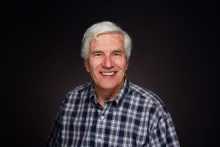
Steve Shafer was born and raised in Seattle. He graduated from Queen Anne High School in 1959 and later graduated from Ambassador College, Big Sandy, Texas in 1967, receiving a degree in Theology. He has been an ordained Elder of the Church of God for 34 years and has pastored congregations in Michigan and Washington State. He and his wife Evelyn have been married for over 48 years and have three children and ten grandchildren.
