
Greg Thomas
This transcript was generated by AI and may contain errors. It is provided to assist those who may not be able to listen to the message.
Well, thank you, Mark. You were singing fast. You almost sounded like Alvin and the chipmunks. Of course, everyone under 40 now is saying to themselves, Ooh, we're Alvin and the chipmunks! Planet is the sky from. Well, again, happy Sabbath to each and every one of you. I would like to continue discussion today of biblical faith and a few other things that are tied into faith, and I have to start out by saying that I encourage you, if you are a visitor, to listen to Part 1, which is already on our website, because just picking it up today will be like looking at a movie halfway through the movie. You don't have the full context of some of the things that I'm going to say today. So I encourage you to listen to Part 1, and then what you hear today will, like puzzle pieces, come together and will hopefully make a little more sense.
Last Sabbath, we discussed the topic of biblical faith, and I ended the sermon by asking the question, a question, but a question throughout the ages, and that question is this.
Why doesn't God answer all of our prayers, even if we have the faith?
But before I answer that question, I think there's something else we need to answer before we get another step we need to take before we can answer that question. And here is the next question. How much faith is required for God to answer our prayers? How much faith is required for God to answer our requests? Some people, throughout history, would like us to believe that it takes enormous faith, that it takes a rare, incredible faith for the Father to acknowledge our requests. Some people believe that. I can remember many years ago, when my mother-in-law died. My father-in-law was a blind man sitting at his kitchen table, and obviously he was struggling with a lot of anxiety, and he was rocking back and forth, and he said to himself, well, I guess I didn't have enough faith. Because obviously that was a time in a different church era when the influence of a culture that said you're never good enough, you know, you always fall short was influencing the way a lot of people were thinking. But in contrast to that, let's see what Jesus Christ said. Let's go to Matthew 17 and verse 14.
As we talk about how much faith is required for God to answer our request, how much is enough is a fair question to ask. Matthew 17 and verse 14. We're going to see an example of what Jesus said when his unconverted disciples came upon a situation they didn't understand. Now, these disciples, when I say unconverted, it means they did not have the Holy Spirit yet. They wouldn't receive that until the day of Pentecost. We could say they were led by the Spirit. They certainly were influenced by the power of the Spirit that emanated from Jesus Christ as learners, but they did not yet possess the Holy Spirit. And up to this point, they were able to go and lay hands on people, and people were healed. It was incredible. But something happens here. It says, beginning in verse 14, And when they had come to the multitude, a man came to him, speaking to Jesus, kneeling down to him, and saying, Lord, have mercy on my son, for he is an epileptic and suffers severely, for he often falls into the fire and often into the water. So I brought him to your disciples, but they could not cure him. Then Jesus answered and said, O faithless and perverse generation, how long will I be with you? He obviously was very frustrated at his disciples. They were doing so well to this point as far as being able to heal.
He says, O faithless and perverse generation, how long shall I be with you? How long shall I bear with you, bring him here to me? And Jesus rebuked the demon, and it came out of him, and the child was cured that very hour. Then the disciples came to Jesus privately and said to him, Why could we not cast it out? And Jesus said to them, Because of your unbelief, for assuredly I say unto you, if you have the faith of a mustard seed. You know, a mustard seed is the smallest of the seeds that people would use to grow crops in ancient paths. Not the smallest of seeds that exist in the world, but it was the smallest of cultivated seed of cultivated crops at that time that Jesus lived. It's a little seed like one sixteenth of an inch, just a little tiny seed. And he said, If you have the faith of a mustard seed, you will say to this mountain, Move from here to there, and it will move, and nothing will be impossible for you. But Jesus does add something that this was a more difficult case. He says, However, this kind, meaning dealing with the dark side, dealing with demons, does not go out except by prayer and fasting. So the disciples could not cast out this powerful demon because they, being unconverted, lacked the spirit within them, and they didn't have the faith to do it. It's interesting. They had the faith to do other things, but they didn't have the faith to do this. And the reason I can say that is that they healed other people who did not have spiritual issues like demons, but they healed other people. Now, it may be that they saw the violence of the demon and it intimidated them. That made them fearful.
That could be part of it. But whatever it is, when it came to dealing with the dark side, they were unable to drive out the demon. And Christ mentions that a degree of faith is certainly required. But I want you to notice He doesn't say, in enormous amount, He doesn't have great faith. He says all it takes is the faith of a little mustard seed. And if you have even that degree, that level of faith, you literally can tell a mountain to move.
So I think that's thought provoking and for something for us to think about. And Jesus also gives us a key to strengthen our faith. If we feel like it's waning, if we feel like we're losing faith or we're going backward, He says it's important to have a deep and personal relationship with the Father. And prayer and fasting are two very valuable tools that we can use to get closer to God.
The incredible thing is that plant that He was talking about is known as the Black Mustard. And it's an annual bush, actually is what it is. And from that tiny little seed in one season in an optimal environment, it can grow to be eight foot tall in just one season. So it can grow quite dramatically. So what does Christ mean when He states that a little faith can move a mountain?
He's using mountain here as a symbol of a big problem or a huge obstacle in our lives. Jesus is saying that even a small degree of faith is so powerful that it can remove any obstacle. No problem or trial is too big or too hard for God to remove.
But the kind of miracle that this required, the casting out of a demon, one has to have a very close relationship with God built upon trust and faith that comes from the effort of building that relationship with the Father. And Jesus is saying there are degrees of faith. Even a little faith can, the size of a 1 16 inch seed, can make big things happen. So what can hinder our faith today?
What can be, I like to use the phrase, a faith buster? You know, my 40 plus years in the Church of God, I have seen a lot of people who once were very strong in the faith drift away and lose all faith, lose their personal belief in God, some lost faith in our teachings and our doctrines. So what are some of the things that can hinder our faith? To take it from being maybe the size of a muskered seed and to gone and just breaking us, breaking us down.
Well, one of the things is becoming jaded and losing our faith in people that we respected or in institutions. It's very easy to become jaded when institutions or people let you down. When they don't live up to the standards that they said they lived up to or when they don't meet our expectations, we can become jaded. It can be a faith buster. We can lose faith. The enemy of faith in our 21st century is also materialism.
The truth is that we live in a world that focuses on physical needs and wants. And if we don't seek the kingdom of God first in our lives, our faith may become weak. We think we can buy it ourselves. We can do it all ourselves. We can achieve it ourselves. God who? We don't need God. We can take a deist view of God. That God, like a clock, just kind of wound up the universe thousands of years ago, and then he went into hiding and he's just letting the world tick on without God's influence. We can kind of have a deistic view of God's presence in the world today.
That weakens our faith. There's no doubt that the theory of evolution has influenced our culture into a belief that there is no God. When evolution first started, the way it was presented by Darwin, they looked at God as the first cause. Most of the books coming out by the so-called preeminent scientists today and those who study evolution are working very hard to show that life can come from nothing from their perspective, that there was no first cause, there is no God, there is no need for a God to have started life.
And that's what many of them are focusing now. And these have an influence on our culture. It has an influence in our newspaper, influence in our media, influence in our schools, and all of this, obviously, can weaken one's belief in God and one's faith in God. Our scientific world rejects anything that can't be tested with the five senses. Science is often opposed to faith, since miracles can't be tested by a scientific method.
When God intervenes and the supernatural intervenes in the natural, you cannot test that scientifically. You just can't do it. So, after that little discussion there about the amount or the degree of faith that is required to move mountains or for God to hear our request, I want to get back to the original question I asked at the conclusion of the Last Sabbath.
Why doesn't God answer all our prayers even when we have faith? And he doesn't! Even when we have faith like that of a mustard seed, we pray in the mountains don't move. We pray for someone, and maybe they're not healed. Why is that? Well, to answer that question, we need to understand who God is and what he's doing, and the best place to begin that, as we talk about this issue for a while, is Isaiah 55 and verse 6. If you'll turn near with me, Isaiah 55 and verse 6.
The prophet Isaiah was inspired to write chapter 55 and verse 6, Seek the Lord while he may be found, calling him while he is near. Let the wicked forsake his way, and the unrighteous man his thoughts. Let him return to the Lord, and he will have mercy on him and to our God, and he will abundantly pardon. So, if you felt yourself the last year, since, say, the spring holy days, drifting from your level of zeal, drifting from your level of commitment towards God, there's certainly hope. It's very simple. Return to the Lord, and he will abundantly pardon. Get your act together and start making it a habit to pray every day and to study God's Word every day, because it says God will have mercy on him. God will abundantly pardon. We thankfully worship the God of second chances and third chances and fourth chances and fifth chances. So, that's very powerful. But beginning in verse 8, here's something that is very thought-provoking. For my thoughts are not your thoughts, nor are your ways my way, says the Lord. For as the heavens are higher than the earth, so are my ways higher than your ways, and my thoughts than your thoughts. God says there is a huge gulf, O man, O human, between the level that you think at, which is totally limited to the physical, which usually means self. There is a huge gulf that exists, O human, between the level that we think of and the purpose and the level that our Creator thinks of. Huge gulf. There is also a huge gulf in the way that we act and conduct our lives, our ways, because we're frail and we stumble and we make mistakes. Sometimes we do the same dumb things over and over and over again. So, there's a huge gulf between our ways and the perfection that resides in the great Creator of the universe.
And here's what He assures us. Because, as I've said before, God has a plan. He has a plan for each and every one of our lives. For as the rain comes down and the snow from heaven, and do not return there, but water the earth, and make it bring forth and bud that it may give seed to the sower and bread to the eater, so shall my word be that goes from my mouth, and it shall not return to me void, but it will accomplish what I please. You know in your life that God is trying to bring forth, get you to bring forth and bud? He's trying to get you, much like He mentions here, to grow, the blossom, the bloom, whatever verb we may want to use. That's what God is trying to do in your life. That's what He's trying to do in my life. And He says He has a purpose for your life, and His purpose will not return to Him void. What He says is going to happen. The plan He has for you is going to happen. We may not like it. We may not agree with the process, but He says it will not return to me void, but it will accomplish what I please. And it shall prosper in the thing for which I sent it. And what was the purpose that God sent it? To develop character in us, to develop us into being sons and daughters in the family of God. And of course, verse 12 is very prophetic about us when we are spirit beings and within the kingdom. For you shall go out with joy and be let out with peace. The mountains and the hills shall break forth into singing before you, and all the trees of the field shall clap their hands. All of nature will even honor you and give glory to you.
So with this scripture, the first thing to understand is that God is not human, and He does not think or reason like we do. Our purpose is a lot different than what God's purpose is. The basic difference between ourselves and God is our basic desires. We both desire different things. As humans, we desire two things, and here are those two things—comfort and longevity. And if you look at the history of human civilization, it's all focused on making life comfortable, and we can be thankful for that. We're in a heated room. The heat is pretty even because of human's instinct to be comfortable. Right? We live in dwellings. We have clean water. We have good medicines. We have all of these things to be comfortable, because we don't like to be this comfortable, right? And we want to live a long time. To us, life is precious. It's the only thing we've ever known. So we put a lot of stock into longevity.
So again, as human beings, we desire two things—comfort and longevity. On the other hand, God desires something different for us—totally different for us. He desires character and devotion. And in case you have not noticed, God is not particularly interested in how comfortable we are. If God could stay up late at night, if it were possible for Him to do so, let me assure you He does not stay up late at night worrying about how comfortable we are because of that huge gulf between what He's doing and what His purpose is for your life and my life and what we think our purpose is for my life and your life. Again, we focus on comfort. We want to live a long time. We don't want to be in pain. We don't want struggle. We don't want stress.
We just want life to be nice and easy. And there's that huge gulf between what we want and what God is doing. We, frankly, are concerned with our right now. On the other hand, God is concerned with our eternity. Again, huge gulf between what we think about, what we instinctively long for and want, and what God, in a spiritual sense, instinctively longs for and wants from us. For us, as human beings, we cling to life, whether it be 20 years that we have human life or 80 years that we have human life. We cling to that and desire that as if it is so precious. The human life is so frail. It is just so precious. We want it to go on. We want to hang on to it. And to God, 80 years is like you taking an eye dropper out and putting a single drop of water in the Pacific Ocean. That's how long 80 years is to God.
So again, there's that huge gulf between the way that we think and what we want as humans and what God thinks and what God wants. Let's go to Psalms 40 and verse 5.
So the first thing to comprehend is why God doesn't answer all the prayers of the faithful is to appreciate this difference in purpose and desires. You know something? If you really think about it, God does answer all of our prayers. He really does. The answer is either an immediate yes, the answer is either an immediate no, which we probably don't want to hear, but it's still an answer. Or sometimes it's an immediate not right now. Those are the answers that God gives us. So the reality is that God always answers our prayers. Yes, no, or not right now. So the real question we should be asking is why does God say sometimes no? Why does God say sometimes later to our request? That's the real question. And God is accomplishing something special in each of our lives. We are all on an individual mission, and that mission has a different length for each and every one of us. As Isaiah stated, God will accomplish what he pleases. God is not interested in our longevity.
God is not interested in our comfort. He is trying to develop and do something else within our hearts and within our minds that transcends this physical tent that we live in. Psalm 40, verse 5. First, I'll read it from the New King James Version, and this isn't translated very well, so I'll read it then in another translation. Here's what it says. I'm going to read that in the translation of the New Century Version, because I think it does such a marvelous job. Lord, my God, you've done many miracles. Your plans for us are many.
I have tried to tell them all there are too many to count. You see, God has a plan for Andy, and he has a plan for Mark, and he has a plan for Lois, and he has a plan for Bob. He has a plan for each and every one of us, and all of us are on a different mission, and those missions are not all of the same length. I want to reinforce what I said earlier. God is accomplishing something special in our lives. We are all on a mission, and each of us has a mission that has a different length. Let's take a look at examples of people who we would say died young, and without understanding that God has something in mind that goes beyond our desire for comfort and longevity, at first these wouldn't even make sense. Let's go to 2 Kings chapter 23 and verse 19. 2 Kings chapter 23 and verse 19. It's an example of King Josiah of Judah. King Josiah reigned from about 640 to 609 BC, and he was eight years old when he came to the throne. By the time he comes to the throne, the northern kingdom is toast. It's already been invaded. The people in the northern tribes, formerly known as Israel or Samaria, had been conquered. The people of Hebrew descent, many of them had been removed and sent somewhere else, so he is reigning at a time when the northern kingdoms don't exist. He's eight years old when he comes to the throne. And let's read about this remarkable individual. 2 Kings chapter 23 and verse 19. Now Josiah also took away all the shrines of the high places that were in the cities of Samaria. So he's a religious zealot. He's a reformer, and he just doesn't stay only in Judah. He decides to go up to the former northern tribes and the wipe-out paganism there as well. He says, We're in the cities of Samaria, which the kings of Israel had made to provoke the Lord to anger. And he did to them according to all the deeds he had done in Bethel. Now at one time, if you remember your biblical history, Bethel was like the northern tribes' counterbalance to Jerusalem. They said, Oh, you can worship in Bethel. Bethel is just as good as Jerusalem. You can do all these things in Bethel. So there's no confusion. He basically goes up there, and he wipes out all the shrines and all the paganism in Bethel. Verse 20. He executed all the priests of the high places who were there on the altars and burned men's bones on them, and he returned then to Jerusalem. Then the king commanded all the people, saying, Keep the Passover, the Lord your God, as it is written in the book of the covenant. Such a Passover, surely, has never been held since the days of the judges who judged Israel, nor all the days of the kings of Israel and the kings of Judah. But in the 18th year—now he's 26 years old—in the 18th year of King Josiah, this Passover was held before the Lord in Jerusalem.
Just to remind you again of your church history, they discovered the book of the law in the temple when it was being renovated. And he read the book of the law. Wow! We haven't been doing any of these things. We need to clean up our act, Judah, because all of these curses are going to fall upon us if we don't clean up our act. So he instituted the Passover and the festivals, and, picking it up here again, continuing in verse 24, moreover, Josiah put away all those who consulted mediums and spiritualists, the household gods and idols, all the abominations that were seen in the land of Judah and in Jerusalem, that he might perform the words of the law which were written in the book that Hekiah the priest had found in the house of the Lord. So he said, we need to line up with God and do what the book of the law tells us to do. Verse 25, now before him there was no king like him who turned to the Lord with all his heart and with all his soul and with all his might, according to all the law of Moses, nor after him did any arise like him. We'll just stop right there.
Can we say that this is a positive commendation on the kingship of Josiah and his commitment to God's way of life? He was indeed a rare human being. He was a rare good king, the kind that you find like once every hundred years. If you look at kingships, if you look at churches, if you look at business organizations, you find that rare leader that arises like once every hundred years.
And he was one of them. He obviously was an incredible, remarkable person, a gift to the nation of Judah. So let's see what happens when he's at the ripe old age of 39 years old.
2 Kings chapter 23 verse 28. Now the rest of the acts of Josiah and all that he did, are they not written in the book of the chronicles of the kings of Judah? In his days, Pharaoh Niko, king of Egypt, went to the aid of the king of Assyria, to the river Euphrates, and Josiah went up against him, and Pharaoh Niko killed him at Megiddo when he confronted him. Then his servants moved his body in a chariot from Megiddo, brought him to Jerusalem, and buried him in his own tomb. And the people of the land took, Jehoahaz, the son of Josiah, anointed him and made him king in his father's place. Well, brother, we can question the wisdom that Josiah had in going out the battle. You know, the Egyptians were a huge war machine, and he actually went into the northern tribes, where he probably shouldn't have been, and tried to confront the Egyptians, which frankly was not a very smart thing to do. And we can question the wisdom of even getting involved in that. But the fact remains that God allowed one of the most dedicated reformers of ancient Judah to die young, and God chose not to intervene. According to the book of Chronicles, their account, he was struck by an arrow. So we can probably assume that he was hit in one of his major organs by an arrow. Think about it. From a couple hundred feet, if that arrow had been 12 inches farther to the right, or 12 inches farther to the left, it may have missed him. It may have grazed his arm. But he died a gift, talented, following God's way of life, a reformer, only 39 years old. So why did God choose not to intervene? It's because Josiah's life mission was accomplished. What God wanted him to do, what God intended him to do, was accomplished.
And for that reason, God allowed the circumstance of time and chance to occur in his life and for him to die. We also see that in the New Testament. In the early church, James Zebedee was the first of the 12 apostles to be martyred in Acts 12. He was executed about 44 A.D. by the order of King Herod, Agrippa of Judah. Now, if he were about the same age as Jesus Christ, which I think is logical, he was only in his mid-40s. Yet God allowed him to die the first of the 12 apostles to be martyred. A young man, by today's standards, and the older I get, the younger that appears to be, I might add. But God chose not to intervene. He allowed him to be martyred. He allowed him to die.
Why? Because obviously, James' life mission was accomplished, or God would have intervened.
Whatever it is that God wanted him to do, whatever within him God wanted him to develop, whatever his mission was, was accomplished. Again, that doesn't make sense to us because we want longevity. We want to live 80, 90, 100 years. We think we're entitled to go on forever. We cling to that preciousness of physical human life. We want comfort. We don't want to think of martyrdom. Why, that could be painful. Right? We want comfort. We strive for longevity. It's that huge gulf between the way that we think and the way that God thinks. Let's take a look at another example in Acts 6. If you'll turn there with me. And we'll take a look at a remarkable individual named Stephen. Acts 6, verse 1.
It says, again, embedded in a Greek culture.
Let's drop down for the sake of time, since I'm already in serious trouble, to verse 8.
I want you to notice that both faith and the power of the Holy Spirit work together in Stephen to perform great signs and wonders among the people. Men of this kind of faith, I have to tell you, are rare. Men of this kind of faith are a great gift to the church. Get what happened when he gave a powerful sermon that offended some of the listeners. Acts 7, verse 54. When they heard these things, they were cut to the heart. He gave a very powerful sermon. And they gnashed at him with their teeth. But he, being full of the Holy Spirit, gazed into heaven and saw the glory of God and Jesus standing at the right hand of God. And said, Look, I see the heavens opened and the Son of Man standing at the right hand of God. Then they cried out with a loud voice, stopped to their ears, and ran with one accord. And they cast him out of the city and stoned him. And the witnesses laid down their clothes in the feet of a young man named Saul. And they stoned Stephen as he was calling on God and saying, Lord, Jesus received my spirit. And they knelt down and they cried out with a loud voice, Lord, do not charge them with this sin. And when he had said this, he fell asleep. Chapter 8, verses 1 and 2. Now Saul, who would later become the apostle Paul, was consenting to his death. At that time a great persecution rose against the church which was at Jerusalem. And they were scattered throughout the regions of Judea and Samaria, except the apostles. And devout men carried Stephen to his burial and made great lamentation over him.
Now, these people who were lamenting over Stephen, they were as human as you and I are. And some of them had to be saying, Why God? He was just ordained a year ago. He was such a gift to the church. Great signs and wonders. We don't have people every day who can attract people because of their great signs and wonders. Why? Why would you allow this to happen? And the answer to that question is because Stephen's life mission, whatever God had designated and wanted him to do, was accomplished. Because God chose not to intervene. If you look at history here, one of the reasons that God allowed this to happen, looking now hindsight being 20-20, is the church in Jerusalem was too comfortable.
The church was only at basically Jerusalem. And they didn't want to get out and preach the word. And it took a persecution that was a result of Stephen's sermon that forced them to get out of their comfort zone, that forced the church to leave Jerusalem.
And by leaving Jerusalem, all the seeds of preaching the gospel went throughout the rest of Judea, instead of only being one church congregation in the city of Jerusalem.
So in Stephen's case, God chose not to intervene. And this occurred very soon after he was ordained. Why? Again, because Stephen's life mission was accomplished.
Now, I'm also going to say something here that is a sidebar. And I'm going to say this. That Stephen had remarkable gifts, and he also had a remarkable vision when he died.
It said he saw Jesus standing at the right hand of God. You know that Stephen never read an epistle of Paul?
Now, yet, in spite of not reading anything that Paul ever wrote, it says that he saw a vision. He saw Jesus standing at the right hand of God.
Martin Luther, when he died, did not see Jesus standing at the right hand of God.
Pope John Paul II, when he died, did not see Jesus standing at the right hand of God.
But a simple man who had a simple faith, because he believed in the Sabbath and the Holy Days and respecting God's law and accepted Jesus Christ as his Lord and Savior, this is the man who saw in a vision Jesus standing at the right hand of God. And he never read a single epistle of Paul.
So, my point is that faith can be very simple, and we try to make it far more complicated than it needs to be.
Certainly, all of Paul's writings are inspired. Certainly, all of Paul's writings enhance the truth in God's way of life.
But no one should look primarily to the writings of Paul to define their belief system and to interpret the rest of the Scriptures through the writings of Paul, because Stephen sure didn't. He didn't see that need.
So, now let's go to Hebrews 7 and 11. Hebrews 7, verse 11.
This will be my final Scripture today, because I'm already a little bit over time, so we'll go another five, seven minutes, perhaps.
We started out the sermon last time in Hebrews, chapter 1 through 6, and now we're going to kind of go back to Hebrews and pick it up in verse 7, and there will be a part 3 to this sermon, by the way.
And here's what the author of the book of Hebrews says, and we're getting back to the concept of understanding faith.
Why doesn't God answer all of our prayers?
It says, So he became an heir of what Jesus Christ was all about. That is, putting within us a righteousness according to faith, not a righteousness according to what we do or who we think we are.
Verse 8, So by faith it says, Verse 12, We're born as many as the stars of the sky and multitude, innumerable as the sand which is on the seashore.
And then verse 13 is so powerful and helps to answer this question that we've been talking about, why God doesn't answer all our prayers even when we have faith. It says in verse 13, Now this physical world, Verse 15, If they had called to mind that country from which they had come out, they would have had opportunity to return. But now they desire a better, that is a heavenly country. They desire, what Jesus referred to as the kingdom of heaven or the kingdom of God, a kingdom that comes from heaven and is established here on this earth, their homeland that they're seeking. Therefore God is not ashamed to be called their God, for he has prepared a city for them. It's in preparation, but again, verse 13, They all died in faith, not having received the promises. The faith of these individuals was their firm reliance on a God they knew to be trustworthy and a God who keeps his promises. So let's put this in perspective. Sometimes when we pray for others and we have the faith, God may choose not to intervene and his answer may be no. And sometimes individuals, what we love and pray for, they die. But what Hebrews is telling us is that the real answer is not no. The real answer is yes. You see, their healing will come in the resurrection when they are welcomed in the kingdom of God on earth. They died in faith, not having received the promise of healing in this physical lifetime. But far off in the resurrection, they are assured that all of those prayers we had, those prayers that we had for Linda Wurzicki, she will be healed. Those prayers that we had for Tim, that God would heal him. God will heal him. Those prayers we had for Mike Roman, God will heal Mike Roman. You see, brethren, they were far off, but they were assured of their promise. They embraced God's promises and way of life and became part of who and what they were.
So they died in faith, not having received the promise of healing in this physical life. But far off in the resurrection, they are assured that every one of those prayers that we've had for our beloved will be yes, yes, yes. Even though from a physical perspective and in the time that we live in, the answer may have appeared to be no.
Well, I've run out of time today, so next time I would like to conclude the sermon. And also, I'd like to give kind of a Q&A on faith and destiny and answered and unanswered prayer, and perhaps answer some questions that have come to our minds over the years. Let us always remember that we worship a great God who has a personal plan and a mission for your life, for each and every one of our lives. And let us cling to that understanding and know that everything that God does, everything that He allows to occur is for our benefit and for the ultimate achievement of where He wants us to be. And where is that in the literal spiritual family of God? Have a great Sabbath.
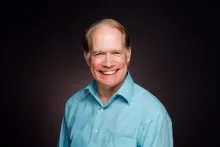
Greg Thomas is the former Pastor of the Cleveland, Ohio congregation. He retired as pastor in January 2025 and still attends there. Ordained in 1981, he has served in the ministry for 44-years. As a certified leadership consultant, Greg is the founder and president of weLEAD, Inc. Chartered in 2001, weLEAD is a 501(3)(c) non-profit organization and a major respected resource for free leadership development information reaching a worldwide audience. Greg also founded Leadership Excellence, Ltd in 2009 offering leadership training and coaching. He has an undergraduate degree from Ambassador College, and a master’s degree in leadership from Bellevue University. Greg has served on various Boards during his career. He is the author of two leadership development books, and is a certified life coach, and business coach.
Greg and his wife, B.J., live in Litchfield, Ohio. They first met in church as teenagers and were married in 1974. They enjoy spending time with family— especially their eight grandchildren.

