
Jorge de Campos
This transcript was generated by AI and may contain errors. It is provided to assist those who may not be able to listen to the message.
Well, thank you again, gentlemen, and again, I wish all of you a very rich and wonderful and meaningful day of Pentecost. Thank you for the offeratory. You will notice that Mr. Housen has lots of duties today. We're helping him to earn his keep in the congregation. I've decided that we're going to pay him three times more than we've been paying him, so he's getting a big raise.
And also, of course, Mr. Waterhouse, thank you so much. You make that cello sing. It's just so beautiful, and it adds a lot to our worship service. So, appreciate the special music that both of you have provided for us today. Again, welcome to the day of Pentecost. If our calculations are correct, it was 1991 years ago that the Church of Jesus Christ received God's promised gift of the Holy Spirit.
So, obviously, I believe it would be beneficial for us to talk about the giving of the Holy Spirit to the Church of God. We are, indeed, a privileged few who have been given the gift in this lifetime, the gift of the Holy Spirit. And even those of you, you may be young, you may be 15 years old, or we have a number who attend with us who have not yet been baptized. You are blessed to be led by the Holy Spirit, even if you do not yet have God's Holy Spirit.
The Holy Spirit is an energizing power. It's a dynamic force that comes from both the Son, Jesus Christ, and God the Father. And we'll see where Jesus literally tells us that the Holy Spirit proceeds from both of them in just a few minutes. But let's go back to the beginning, Acts 1 and verse 1. And I would like to cover a section here in Acts 1, and then I have never, in a sermon before, covered the entire second chapter of the book of Acts. But we will do that today. Usually, I've just taken pieces, and I've heard lots of sermons who took major pieces and sections of the second chapter.
But not the entire second chapter, but we will do that today in a minute. First of all, Acts chapter 1 and verse 1, Luke records, he writes, The former account I made, O Theophilus, of all that Jesus began to both do and teach, until the day in which he was taken up, after he, through the Holy Spirit, had given commandments to the apostles, whom he had chosen, to whom he also presented himself alive after his suffering, by many infallible proofs being seen by them, during forty days, and speaking of the things pertaining to the kingdom of God.
So in that fifty-day countdown between the Sabbath during the days of unleavened bread, and the Feast of Weeks or Pentecost, Jesus was there forty days, leaving approximately ten days between when he would ascend to heaven, and when the day of Pentecost would actually occur. And notice what Jesus is teaching. He's teaching things pertaining to the kingdom of God. Verse 4, Jesus talked about the gift of the Holy Spirit and how it would be given to them. Verse 5, When they had come together, they asked him, saying, Lord, will you this time restore the kingdom to Israel?
They were physical human beings. They were Judeans, and they wanted the kingdom of God now. They wanted the Roman Empire kicked out, and they wanted the establishment, the Messiah, to establish the kingdom of Israel right now. But that wasn't the time, because that was not part of God's plan. Let's continue. Verse 7, Verse 8, And then spreading out father in Samaria, and even to the end of the earth, all over the earth, this message pertaining to the kingdom of God, this message of hope, this message of promise needs to be proclaimed to everyone, is what Jesus is saying here.
The Holy Spirit is a force multiplier. It's a force of great power, even at the creation of earth, by the instruction of the Word, the Logos, who later would become Jesus Christ. The Spirit of God created the physical world, as is written in Genesis, chapter 1. It was the force and the power that at first we read about was hovering, and then commanded and instructed to do certain things, as the Word mentioned them, and they came into existence. What Christ is promising to his disciples is a force of supernatural power to preach the gospel to the world in spite of overwhelming obstacles, in spite of people who will hate you, in spite of people who will reject the message, in spite of people who will be threatened because of their own religious bias, or their own particular religious views.
Jesus Christ is promising the supernatural power to be able to speak of things pertaining to the kingdom of God, going back to verse 3, which is what Jesus was talking about. Jesus is also promising a force to transform us from merely physical and carnal into becoming spiritual beings, a new creature in Christ.
That promise is still true today. It's as true today as it was in 31 A.D. if we are willing to claim it as individuals, and if we are willing to claim that promise as God's Church. All right, let's drop down to verse 9 now. Now, when he had spoken these things, while they watched, he was taken up, and a cloud received him out of their sight. And while they looked steadfastly toward heaven as he went up, behold, two men stood by them in white apparel. These obviously are angels, and they have the appearance, the visage of being human, but they are angels, who said, men of Galilee, why do you stand gazing up into heaven?
This same Jesus, who was taken up from you into heaven, will so come in like manner as you saw him go into heaven. Then they return to Jerusalem from the mount called Olivet, which is near Jerusalem, a Sabbath day's journey. So this is when Jesus ascends back to heaven approximately 10 days before the day of Pentecost, that year.
So let's recap some things that are going to go on before we get to chapter 2. At his resurrection, Christ was with his disciples for 40 days. It said that in verse 3. We just read that. So there's about 10 days until the day of Pentecost. After Jesus' ascension, they all returned to the upper room. Do you remember that? That was mentioned in the final Passover. They went to, quote, an upper room and prepared to be with Jesus Christ in his final Passover.
So it obviously was a place, if I could use a modern phrase, where they'd like to hang out. And so they felt safe there, and they went back there, once again, waiting for the time when the day of Pentecost would come. But they didn't waste their time. A lot of things happened. With them are the apostles in this upper room, the women disciples, Mary, the mother of Jesus. It says the brothers of Jesus are there, and there are other disciples.
And during this 10-day period, Peter rises to a leadership position, and usually that's what happens. Peter had been prepared for leadership, and through the events that occurred, because of his personality, because of his training, he's the one that stands up and begins to demonstrate active leadership qualities to all of those who are together in the upper room. Now, in verse 15, he addresses 120 combined followers. So that's how many people there are approximately attending.
As part of that Pentecost service together is the group of believers in Jesus Christ. Again, that's verse 15, 120 combined followers. And by lot, they choose Matthias to replace Judas Iscariot. And verse 14 says that these all continued with one accord in prayer and supplication. So they're together as a group. They're doing things together as a group. What we're about to read, beginning in chapter 2, happened. Because this small group of 120 people continued to observe one of God's annual holy days.
For them, it was the most natural thing to do to continue to observe God's holy days. So later on, when we read in 1 Corinthians, and Paul decades later telling the Gentile Corinthians, let us keep this feast, it was the most natural thing in the world.
For Paul himself to continue to keep those holy days outlined in Leviticus 23. That's why he's teaching the Gentiles in Corinth decades later to observe God's holy days. So this all happened because of their obedience, because they continued to observe the Feast of Weeks, or the Feast of Harvest as it's called in Exodus chapter 23, also the Day of the First Fruits in Leviticus chapter 23. So they represented his people, a small group of people.
Have you ever considered the fact that 120 people changed the entire history of the world? Changed the entire history of the world! This world, and we may have our discussions on the validity of certain traditions of Christianity, what they did on that day of Pentecost, between 120 people whose presence and example, and Peter's preaching, resulted in 3,000 baptisms. But this day, with only 120 people, ended up changing what we would call Western civilization forever. Because eventually, this belief system—and again, we can have our debates about the validity of parts of it and so on— nonetheless, this belief system, this belief that Jesus is the Son of God, that Jesus is the Christ, changed Europe forever, even to this day.
And when did it begin? It began with just a mere 120 people, maybe 40 people less than we have sitting here today. Changed the world forever. So what are we capable of doing? Acts 2, verse 1. Let's go through the entire second chapter of Acts. When the day of Pentecost had fully come, they were all with one accord in one place. Now, we'll see the comment that Peter makes. It's approximately 9 a.m.
in the morning. So, yes, the evening before the day of Pentecost had begun, the whole evening completed, the night completed, the sun has broken through, it's now daytime, the feast of Pentecost has fully come. It's probably a very beautiful sunny morning. And they were all in one accord in one place. Now, there are debates. Some people say that they're in the upper room, but there's very good scriptural evidence that they are near the southern stair entrance to the temple itself. So, they could be in the temple, or they could be in the upper room. It's not my purpose today to discuss the strengths and weaknesses of each theory, but they are certainly gathered together.
Verse 2, then suddenly there came a sound from heaven of a rushing mighty wind, and it filled the whole house where they were sitting. That whole house again could be referring to the temple, the noise, and everything that's going on shook the temple, or it could be the house that this upper room was sitting in.
And there appeared to them divided tongues as of fire, and one sat upon each of them. And they were all filled with the Holy Spirit and began to speak with other tongues, other known languages, as the Spirit gave them utterance. So, on this ancient feast of firstfruits, or feast of harvest, God's Spirit came in the form of tongues of fire and settled on the new believers. We could say that God's presence moved out of his old physical house, or temple, and moved into a new spiritual house, or temple, the hearts and the minds of his believers on that day. And all of this took place in the framework of the Old Testament prophecies, like Joel, that we will read in just a few minutes. So let's continue, verse 5.
And again, it was expensive. How were you earning an income while you were traveling? It was dangerous. There were highway robbers all over the place, ready to conk in the head and mug you, again to use another modern term, and take your money and your possessions from you. Yet, and that's why they're called devout men, they were willing to do this in order to attend the Pilgrimage Festival, which was the feast of Pentecost, this year.
So men from every nation under heaven, and when this sound occurred, and we read how there came suddenly a sound from heaven, like a mighty rushing wind, we read that a few verses earlier, when this sound occurred, the multitude came together and were confused, because everyone heard them speak in his own language. So obviously, it's a noise that gets everyone's attention. There have been a few times when I'm driving here before services, and Grafton sets off their weekly siren, their tornado siren. And what does that do? That gets everyone's attention. I'm driving, it gets my attention. I'm sure someone who's backyard, who has a barbecue going on, it gets their attention when it goes off, it gets everyone's attention.
That's the idea of a siren. And this got everyone's attention, whether it was someone in a nearby building or other individuals in the temple, the sound and what happened, people said, hey, what's going on? I want to find out about that. So part of this devout people who had traveled from every nation under heaven went to find out where this sound came from and what they could learn from it. And they're astonished, because they heard them speak everyone in their own language. So if I speak Hebrew, I would hear that speaker in Hebrew. The person next to me might speak Latin. That person hears that speaker in Latin. The person next may speak coin Greek. They hear that speaker, and what they hear is coin Greek. This is an absolute miracle. It gets people's attention. Not just the sound, but this miracle that's occurring on this day. And they were all amazed and marveled, saying to one another, look, are not all of these who speak Galileans? Now, that wasn't a compliment, by the way. Galileans were considered kind of poverty-hicks. It would be like someone saying, didn't he come from Cleveland? Did I actually say that?
So are not all of these who speak Galileans? And how is it that we hear each in our own language in which we were born? Same speaker, and I hear it in one language. You hear that speaker in your native tongue. He hears that speaker in his native tongue, etc., etc. Parthians and Medes and Elamites, those Dwelling and Mesopotamia, Judea and Cappodicea, Pontius and Asia, what we would call Asia Minor today, Virgia and Pamphylia, Egypt and the parts of Libya adjoining Cyrene, visitors from Rome, both Jews and Proselytes, so people who had maybe been born Gentiles, but they converted to Judaism.
What we see here, if we plotted this on a map, we would see these people crisscrossing the entire then-known Roman Empire, representing, again, some say 51 different nationalities coming together to Jerusalem at this time, and whose attention is focused on what's going on. And they continue, verse 11, Cretans and Arabs. We hear them speaking in our own tongues the wonderful works of God. So, they were all amazed and perplexed, saying to one another, whatever could this mean? Why? What's the meaning behind this? It's an incredible miracle, and it's got my attention, because I've never seen or heard of anything like this before.
But what's the purpose of it? Others mockingly said, they are full of new wine. But Peter, standing up with the 11, and it gives the impression that all the 11 of the disciples stood up at this time, and that certainly got everyone's attention. Suddenly, they all rise. But it's Peter who speaks, raised his voice and said to them, men of Judea and all who dwell in Jerusalem, let this be known to you and heed my words.
What I'm about to say is both a warning and an opportunity, Peter says. So listen intently to this sermon and what I'm about to tell you. Verse 15. For these are not drunk, as you suppose, since it is only the third hour of the day in Hebrew reckoning. It'd be about 9 a.m. in the morning. And even in our culture today, that's a little too early to go nipping on the brandy at 9 a.m.
in the morning. Verse 16. But this is what was spoken by the prophet Joel, and he's going to talk about a partial fulfillment from Joel chapter 2 verses 28 through 32. Verse 17. And it shall come to pass in the last days, says God, that I will pour out my spirit on all flesh. Now, God at that time didn't pour out his spirit on all flesh, as he will at the end time. He is giving a guarantee. We heard that sermon today, right? He's giving a down payment, a guarantee of his promise to those 120, and then to those additional who later will receive the gift of the Holy Spirit.
So again, this is a partial fulfillment. This is a down payment of Joel's prophecy to humanity. I will pour out my spirit on all flesh. Your sons and your daughters shall prophesy. Your young men shall see visions. Your old men shall dream dreams. And my men servants and on my maid servants, I will pour out my spirit in those days. And indeed, there were men and women who received the gift of God's Holy Spirit on this day.
And they shall prophesy. I will show wonders in heaven above the signs in the earth and beneath, blood and fire and vapor of smoke. Now, getting into the heart and core of Joel's prophecy that has not yet been fulfilled.
As I said, this is a partial fulfillment, the first part of the prophecy, which is the giving of the Spirit. But what yet will occur, verse 20, the sun shall be turned to darkness in the moon, into blood, before the coming and great and awesome day of the Lord. And it shall come to pass that whoever calls in the name of the Lord shall be saved. So that's a profound warning to those who are listening to this message. If you want salvation, if you want to be saved, then you need to call on the name of the Lord.
You need to accept Jesus Christ as your personal Savior. Peter's going to get into that in more detail. Verse 22, men of Israel hear these words, Jesus of Nazareth, a man attested by God to you by miracles, wonders, and the signs which God did through him in your midst, as you yourselves also know. Him being delivered by the predetermined purpose and foreknowledge of God, you have taken by lawless deeds, have crucified and put to death. So Peter's emphasizing here that the entire end of the life of Jesus Christ, including his arrest and his crucifixion, was due to a determined purpose and foreknowledge of God.
It wasn't that Jesus was weak. It wasn't that Jesus couldn't resist being arrested, couldn't stop the Romans from torturing him, from crucifying him. We know definitely that Jesus said that my kingdom is not of this world. If it were, then my army would fight, my angels would fight. But Jesus, due to predetermined purpose and foreknowledge of God's plan, knew that he had to submit himself voluntarily to arrest, to examination, to torture, being scourged, to crucifixion, and the shedding of his blood and his own death.
That was all part of God's plan, is what Peter's telling the audience. Verse 24, whom God raised up. So he's not dead. God raised him from the dead, having loosed the pains of death because it was not possible that he should be held by it. It's not possible because God the Father promised to resurrect his beloved son from the dead. I'm going to read verse 24 from the New Century Version.
God raised Jesus from the dead and set him free from the pain of death because death could not hold him. He was righteous. He was without sin. He wasn't worthy of death. Unlike all of us who are sinners, he was not worthy of death. And the Father promised to resurrect him, and he absolutely did. So Peter points out that on the Feast of Harvest, or the Day of First Fruits, Jesus Christ was the first to be resurrected from the dead to eternal life by the Father.
And then later on it will be our turn. Exactly what happened to Jesus Christ will happen to everyone who hears this message. Whoever calls in the name of the Lord will be saved. Again, that's verse 21. Verse 25. Now Peter talks about something that David said. And his point is that David couldn't have been talking about himself. David was looking a thousand years into the future, and King David is talking about Jesus Christ in this psalm. That's what Peter is going to say. Verse 25.
For David says concerning him, capital H, concerning Jesus Christ. This is Psalm 16. Even though David doesn't refer to it, it wasn't known at that time as Psalm 16. The chapters and verses hadn't been added to Scriptures at this time yet. So again, this is David speaking about Jesus Christ, or speaking for Christ, who will live a thousand years after this was written. I foresaw the Lord always before my face. For he is at my right hand that I may not be shaken. Therefore, my heart rejoiced and my tongue was glad. Moreover, my flesh also will rest in hope.
Yes, I will die, but I'm not dying morose or hopeless or out of fear. Why? Verse 27. For you will not leave my soul in Hades. That's the grave. Nor will you allow your holy one to see corruption. You won't allow me to be dead long enough that my body becomes corrupted and turns to dust over time. Verse 28. You have made known to me the ways of life.
You will make me full of joy in your presence. And that certainly is what Jesus experienced after he was resurrected. He ascended to the Father on that very day to be accepted as the ultimate wave-sheaf offering. Then Peter continues in verse 29. Men and brethren, let me speak freely to you of the patriarch David, that he is both dead and buried, and his tomb is with us to this day.
So he's saying this psalm can't be about David. This psalm said that you will not leave my soul in the grave. Guess what? David's dead. His soul is in the grave. It's said that you would not allow me to see corruption. Guess what? It's a thousand years. David's dust. David is dust by now. He's been dead so long. He is corrupted. Perhaps there might be some skeletal matter, but he is truly dead. So Peter is saying this can't be about David, even though he wrote it.
Verse 30, Therefore, being a prophet, and knowing that God had sworn with an oath to him that the fruit of his body, this is he speaking to David, God told David that someone from your lineage will be a king. Someone who comes from you will be a king and a messiah. So let's pick this up again. Therefore, being a prophet, and knowing that God had sworn with an oath to him of the fruit of his body according to the flesh, he would raise up the Christ to sit on his throne. See, St. David knew that. That had been revealed to David. Verse 31, He, speaking of David, foreseen this, spoke concerning the resurrection of the Christ, and that his soul was not left in Hades, nor did his flesh see corruption.
Verse 32, This Jesus God has raised up, of which we are all witnesses. Just ask any of the 120 of us here. We all are witnesses to the resurrection of Jesus Christ. We've seen him. We've heard him. Some of us touched him after he was resurrected. We know that there's a resurrection. Verse 30, Therefore, being exalted to the right hand of God, and having received from the Father the promise of the Holy Spirit, he, that, speaking of Jesus Christ, poured out this which you now see and hear.
He's saying it was Jesus Christ himself who poured out the Holy Spirit on that day of Pentecost in 31 A.D. Verse 34, For David did not ascend into the heavens, but he says himself, The Lord said to my Lord, Sit at my right hand, till I make your enemies your footstool. So he's saying even Jesus, Jesus is recognized by David as having a conversation with God the Father. This couldn't be referring to David is what Peter is continuing to emphasize. Therefore, let all the house of Israel know assuredly that God has made this Jesus whom you crucified both Lord and Christ.
And I don't think we get the power of Peter's statement here. Sometimes we kind of gloss over it. He's saying this man, Jesus Christ, was more than just the Messiah. The Messiah is simply a physical leader whom God can raise up like David and other mighty men to restore the kingdom to Israel. And that's fine and good, but this Jesus is far more than that. He is both Lord. What he's saying is that Jesus Christ is God. And that was powerful. Both Lord and Christ. Now, when they heard this, they were cut to the heart.
Their consciences were pricked. They were ashamed of themselves. They realized that they needed to respond to this very emotional message in this sermon. Remember, these were devout Jews. These weren't skeptics who were walking around. These weren't atheists who were in the crowd. These were devout religious Jews who were hearing this message.
They were cut to the heart and they said to Peter and to the rest of the apostles, men and brethren, what shall we do? And Peter said to them, repent. In other words, change your life. Realize that the direction that you're heading is not good and that you need to turn around and you need to walk towards God. You need to walk towards the light and stop walking away from the light of the truth and the presence of God. Repent and let every one of you be baptized in the name of Jesus Christ for the remission or the forgiveness, the removal of your sins. And you shall receive the gift of the Holy Spirit. Just like you saw it fall upon the 120, the same thing can happen to you, is what Peter is saying. Verse 39, for the promise is to you and your children and to all those who are afar off as many as the Lord our God will call. To all those who are far off, even people who live in 2022 can be called by God and can receive the gift of the Holy Spirit. So this isn't some one-time event. This was a calling, a calling from the Father that was intended to occur through each generation as people's minds are opened to the spiritual truth of God's Word. So it's for generation after generation after generation. It was for the previous generation. It's for our generation. And if Jesus Christ chooses not to return soon, it'll be for the next generation, as difficult as it may be at that time with the way this world is changing. As many as the Lord our God will call. And with many other words, He testified and exhorted them. What the author is saying, what Luke is saying, is I'm being kind to you. This is the Cliff Notes version of what happened. I don't have enough ink and there isn't enough parchment for me to write everything that was said and everything that happened at this event. So He's saying that there were many other things, but I just haven't written them down. You're getting the core of what the author says of what happened here. Saying, be saved from this perverse generation. Now I can't think of a generation in human history where this more applies to than our very own.
When you look at all of the moral dysfunction and the breakdown of the family and the breakdown of our social fabric, I can't think of a generation in human history who this phrase applies to be saved from this perverse generation.
Then those who gladly received His word were baptized. And that day about 3,000 souls were added to them. And they continued steadfastly in the apostles doctrine or what the apostles were teaching. It wasn't their doctrine like they were making it up. They were teaching what they knew from their personal experience and being mentored by Jesus Christ.
And fellowship. In the breaking of bread, they were sharing meals in most Sabbath services. We break bread here. Did you ever consider that? We have a little meal out there. And the idea is to enhance our fellowship. But in a biblical sense, when we share a meal together, we're breaking bread. When you have somebody over your houses for dinner, you're breaking bread. You're fellowshiping. You're sharing the intimacy of a meal together.
And in prayers. Verse 43, then fear, or very deep awe, high deep level of respect for God's grace and His presence, came upon every soul. And many wonders and signs were done through the apostles. Now all who believed were together and had all things in common. I want to explain this because this was a unique situation that only occurred at this time. Paul never taught to any of the Gentile congregation of taking their possessions in common. Why is this going to happen? Well, this is happening because when you accepted Jesus Christ as both God or Lord and Christ, you were ostracized from the Jewish community. First of all, to accept Him as Messiah was controversial enough, if you told your Jewish father-in-law that He was God, that was outright heresy. So people would be terminated. They would lose their ability to make a living. We have terms in the world today with some religious groups where people are disfellowshipped, they're ostracized, and that's what would happen to these Christian believers from the Jewish community. So to help support them during this unique time, there's one accord, one body, one church. They decide to do something called holding things in common. And here's how it works. Verse 45, And sold their possessions and goods, and divided them among all as anyone had need. Now, they didn't like some religious frauds who exist today who say, well, we're going to hold everything in common. What is mine is mine, and what yours is mine. So send me, mortgage your home, and send me all your money because I want to build an empire here in this property. I want to build all these things so that I can enjoy the finest things in life, and I'm getting away with that. I'm telling you that I can do it because we hold all things in common. No, it says, and divided them among all. Didn't simply send it to some thief under the guise of a religious leader, but to divided them among all as anyone had need. Not decided what we're going to do with this money by a single individual trying to build a religious empire.
Verse 46, so continuing daily with one accord in the temple and breaking bread from house to house, sharing meals together, they ate their food with gladness and simplicity of heart, praising God, having favor with all the people, and the Lord added to the church daily those who were being saved. So that is the entire second chapter of the Book of Acts. A lot there. What a remarkable time to be alive, to have witnessed all of those things. And with this background, let's review some of the qualities of God's Holy Spirit to better understand what it can do within us and what God's Spirit can do for us here in the year 2022. We'll begin with David. Since David himself was mentioned by Peter on the day of Pentecost, and David wrote about the role of Jesus Christ a thousand years before Jesus was even born and lived, let's see what else we can learn from David about the power of the Holy Spirit. If you'll turn with me to Psalm 143, and we'll begin in verse 1. Psalm 143, verse 1. This is an interesting set of scriptures, because at first David starts out kind of gloomy. He's talking about his spirit. He's talking about his personal struggles, and I think we can relate to them. And he's kind of a downer, and it's kind of discouraging, because he's focusing on his own limitations and what he calls my spirit. This is how I feel. These are the struggles that I have. But as we get near the end of what we're going to read, he flips the switch, and he begins to focus on God's Spirit and the positive benefits of getting rid of my spirit, my attitude, and beginning to incorporate God's Spirit more deeply in my life. Let's read it. Psalm 143, verse 1. Hear my prayer, O Lord, give ear to my supplications. Give ear to my prayers, Father. In your faithfulness answer me. You are faithful, God. You keep your promises.
You shed your grace on me. Please hear this prayer. And in your righteousness, not my own righteousness, which is as filthy rags, but in your righteousness I ask you to hear this plea on my behalf. Do not enter into judgment with your servant, for in your sight no one living is righteous. We're all human. We're all flawed. Even the people that God works with, the two loaves that were put together on this day and offered to God from the new green, had leaven in those loaves. So we're all struggling with our own carnality. We need something to help us. We need something extra to help us to finish the transformation that's going on in our life, to give us strength and encouragement. Verse 3, for the enemy, and we know of course our ultimate enemy is Satan the devil the dark spiritual world, for the enemy has persecuted my soul, he has crushed my life to the ground, he has made me dwell in darkness like those who have been long dead. Sometimes David felt despondency in his life, discouragement. We can even say he was depressed at times because of the things that he experienced.
Therefore, my spirit is overwhelmed within me. Maybe he's feeling anxiety, he's feeling discouragement. My heart within me is distressed. I remember the days of old. I meditate on all your works. I muse on the work of your hands. Maybe what he's saying here is when he says, I remember the days of old, maybe he's admitting that he's living in the past too much, that he's spending too much of his time mentally living in the past rather than moving forward and moving on with his life to do the things that God wants him to do now rather than reliving old happy day episodes from the past. Continuing verse 6, I spread out my hands to you, my soul longs for you like a thirsty land. Selah. Stop and think about that for a minute. I thirst for you. My soul knows something is missing. There's something missing in my life, David says. And I'm longing for you, verse 7. Answer me speedily. O Lord, my spirit fails. Do not hide your face from me, lest I be like those who go down to the pit, go down to the grave. Something is missing in my life, David says. Something that would give me purpose, something that would give me hope, something that would pull me out of this funk that I'm in. My spirit fails. Do not hide your face from me, again, lest I be like those who go down to the grave. And then the mood begins to change, become more positive, thankfully, to this point. Cause me to hear your loving kindness in the morning. When we wake up in the morning, one of the first things we think is, thank you, God, for another day. When we shake that grogginess in a conscious, thank you, Father. Wow! I get to live another day. What a beautiful day out there. Listen to those birds singing. Look how green the grass is. Look what a beautiful creation you made. Thank you. Cause me to hear your loving kindness in the morning. For in you I do trust. Cause me to know the way in which I should walk, for I lift my soul to you. Lord, I can't do it on my own. I'm not that smart. I need guidance. I need something within me that's my conscience, that helps to lead and guide me through this day. Verse 9, deliver me, O Lord, from my enemies. In you I take shelter. Verse 10, teach me to do your will, for you are my God. Now he's getting to the heart and core of what he needs to fill that void going on in his life. That's causing the despondency. That's causing him to be down. That's causing him to feel anxious and frustrated. Your spirit is good. Lead me in the land of righteousness. Revive me. Lord, I've been kind of out of it. I haven't been hitting in all cylinders. I've kind of been coasting. I've been on the spiritual surfboard. Revive me, O Lord, for your name's sake. For your righteousness' sake, bring my soul out of trouble, because I can't do it alone.
I'm not capable of doing this by myself. Verse 12, in your mercy cut off my enemies and destroy all those who afflict my soul, for I am your servant. So, brethren, the Holy Spirit is a powerful tool offered by God to David. And we see that in verse 10. Your spirit is good. Notice all the tools David is using to try to build a relationship with God. It begins with prayer in verse 1. He says, hear my prayer and my supplication.
So, prayer is an important tool that we should be using to build that relationship with God. He's trusting in God's promises and grace. It says in verse 1, God's faithfulness. Not David's faithfulness at this point. He's struggling. But he's relying on God's faithfulness, God's trust and love and grace towards him. He's demonstrating humility. He says, no one is righteous in verse 2. He's being very candid about his own weaknesses, his own personal challenges.
He's making himself vulnerable to God. Meditation, he mentions in verse 5, another very powerful tool. Grace, he says in verse 8, loving kindness, God's loving kindness. That's just an Old Testament way of saying God's grace. And the good Holy Spirit, its ability to teach, to lead, to revive. He realizes that he needs a full measure of God's Holy Spirit. How about us, brethren?
King David understood the limitations of his own human spirit. Do we? Are we trying to do it on our own? Are we trying to do it all by ourselves? Well, that's going to be impossible to do, because our own carnal human nature will get in the way and will block any progress we can make. David asked for the presence and the qualities of God's Holy Spirit to dwell within him. And that was very important.
Now let's go to the very words of Jesus Christ himself in the eve of his arrest. John 14, verse 15, Scripture that we read oftentimes during the Passover service. John 14, verse 15. Jesus says, if you love me, keep my commandments. God is not going to give his Holy Spirit to a rebel. He knows what happened with Satan the devil when his spiritual being rebels. God is not going to give that kind of awesome power and gift to someone who is going to rebel against God's value system.
Jesus says, if you love me, keep my commandments. And I will pray the Father and he will give you another helper. Notice, he'll give you another helper. In other words, I, Jesus, is saying, am your helper. But I'm going to be gone from the scene soon.
And God is going to replace me and he's going to give you another helper. Now, obviously, the gender's in here because of the translation. The Holy Spirit is not a male or female, but I'll just read it as it is in the translation. I think you understand that. That he may abide with you forever. Yet this is another helper. The Spirit of truth whom the world cannot receive because it neither sees him nor knows him, but you know him, for he dwells with you and will be in you.
And that's talking about the day of Pentecost. Jesus is saying to this group of individuals that right now you're being led by the Holy Spirit. But soon it will literally be within you, guiding your life. Verse 18, I will not leave you orphans. I will come to you. How's Jesus going to come to them after he ascends to heaven? Ten days before the day of Pentecost, he's going to come to them through something that Jesus Christ possesses and the Father possesses that's going to put their presence within us.
And that's God's Holy Spirit. So Jesus speaks about the Holy Spirit, which he refers to as the Spirit of truth. This Spirit is another helper, like Jesus is a helper. So is this Holy Spirit, a helper. This is a Greek term, paracleptos, for the Holy Spirit. And only the Apostle John used that phrase a few times. No other writers used that Greek word paracleptos. It can be translated as a comforter, as an advocate. It's something signifying one who's alongside you to help you, to be there for you, to encourage you.
Now in John, 1 John, chapter 2 and verse 1, John said that Jesus is a paracleptos. And here Jesus says in John 14 that the Holy Spirit is a paracleptos.
Now the word paracleptos comes from the combination of two Greek words or phrases. Para meaning alongside, and kleptos meaning call to give help and advice. And that's what this promised Holy Spirit is.
The Holy Spirit is not a replacement. It's not a substitute for what we should or could be doing ourselves.
Let me give you a parallel. In Genesis chapter 2 and verse 18, Eve was created to be a helper to her husband. I've actually had people say to me, well, Mr. Thomas, I think that's demeaning that Eve was created to be a helper. Really? Is the Holy Spirit demeaning because it's a helper? How about Jesus Christ? He's a paracleptos. So is that demeaning that Jesus Christ is a helper?
Anyway, Eve was created to be a helper to her husband. Like any wonderful wife, a helper does not do everything for you. She's your wife, not your mommy. A helper assists you in your responsibilities. A helper assists you in your accountabilities. A helper does not do everything for you. It gives advice, counsel, wisdom, and comfort. Its purpose is to help us in our process of Christian life to grow into the grace and knowledge of God. Christ is saying that His presence would be in us through the Holy Spirit.
We would not be left alone, Jesus. You are not going to be isolated. You're not going to be abandoned. Even though I'm not going to be here to teach you physically, you're going to receive another helper who's going to be here for you. Verse 19, You will live also, and that day you will know that I am in my Father, and you in me, and I in you. How is that possible? All sharing the Holy Spirit of God. The Father's Spirit, the Son has the Holy Spirit, we have the Holy Spirit, the gift of the Holy Spirit from them. Verse 21, And Jesus answered and said to him, perhaps to be my favorite scripture in the Bible, in case anyone ever asks, this is my favorite scripture, If anyone loves me, he will keep my word, and my Father will love him, and we will come to him and make our home with him. How intimate is that?
That when you receive God's Holy Spirit, the Father and Jesus Christ, through that Spirit that they both share, give us that Spirit and make it home in our lives.
How awesome is that?
Verse 24, So how many times did Jesus say that if we love God, we'll keep his commandments? In the few verses we read, he just stated it three times.
He said there, in verse 24, it was the third time, he who does not love me does not keep my words. So you think that's important to God? Do you think obedience and respecting God's commandments and being obedient to his value system and his teachings and his beliefs are important, should they be our beliefs? Absolutely. Positively.
The purpose or the phrase our home refers to both the Father and Son being present within us through the conduit of the Holy Spirit of God.
Have you ever considered that God is the greatest giver of wonderful spiritual gifts? God offers us salvation as a gift.
God offers us his grace as a gift. We can't earn it. He offers us a Holy Spirit as a gift.
Well, let's see where this gift includes everyone who responds to God's calling. So we read about how basically devout Jews from a Roman Empire had come to Jerusalem for that pilgrimage festival in 31 A.D. and 3,000 souls were converted.
But what about the rest of the human race? I might say what about the overwhelming majority of the human race who are not devout Jews or not Jewish lineage?
Acts 10 and 44.
Actually, this is a mini version of the Day of Pentecost because many of the same things happen here in the conversion of the Gentile Cornelius, the centurion. A mini version of exactly what happened on the Day of Pentecost ten years earlier, approximately.
Acts 10 and 44.
While Peter was still speaking these words, now Peter had been told by God to go see this Gentile. Peter resisted. He didn't like the idea. The man was a Gentile. He was a centurion. God had to work with Peter to open up his mind, even had a vision of sheets of unclean animals coming down and rising up. And Peter said, no, I'm not going to eat these critters. I'm just absolutely not going to do it.
And then he understands what the vision means. It has nothing to do with whether something's clean or unclean. He said, ah, God is telling me that I shouldn't consider any human being as unclean, because God is going to call Gentiles through this man, and I need to be open-minded. And even though he's a Gentile, I shouldn't consider him unclean if God is calling him. So he finally goes to see Cornelius. While Peter was still speaking these words, is having a conversation, the Holy Spirit fell upon all those who heard the Word, just like in the day of Pentecost in 31 A.D. to the 120. And those of the circumcision, so those other Jews who were with Peter were probably skeptical and probably, I don't know about these Gentiles, I don't know if God called him.
God's got higher standards than that. And those of the circumcision who believed were astonished, while the same thing that happened to us 10 years earlier, on that day of Pentecost, just happened, losing my petals, excuse me, just happened to this Gentile and his household. And as many as came with Peter, again, because the gift of the Holy Spirit had been poured out on the Gentiles also. For they heard them speak with tongues, just like on the day of Pentecost.
As I said, this is a mini-Pena cost demonstrated by God to say the Gentiles are just as equal and just as called into the faith as anyone else. It doesn't matter whether you're Jewish or not Jewish or from the tribe of Napdoli or anywhere on earth. It doesn't matter what your skin tone is. It doesn't matter your previous religious beliefs. It doesn't matter what language you speak. God says, I'm going to call whom I will call. It's my right, and I'm doing the calling, and they are all equal. They all share in the same glory, the same purpose, the same destiny. For they heard them speak with tongues and magnify God in a duplication of Pentecost in 31 A.D. Then Peter answered, can anyone forbid water that these should not be baptized who have received the Holy Spirit just as we have? And he commanded them to be baptized in the name of the Lord. Then they asked him to stay for a few days. Isn't that absolutely incredible? Let's now go to 1 Thessalonians 5 and verse 14, our last scripture today, 1 Thessalonians 5 and verse 14.
What are some of the things that we can do to receive the fullness of God's Holy Spirit? Most of us in this room today have God's Holy Spirit. We've been blessed by it.
But what are some of the things that we can do to make sure that we have a full measure, the fullness of God's Spirit, so that we can reach our potential as an individual, so that we, all pulling together in one accord, can help the Church in our generation to reach its potential and to fulfill its calling?
1 Thessalonians 5 and verse 14. Paul writes, See that no one renders evil for evil to anyone, but always pursue what is good both for yourselves and for all.
In other words, it's just a nice way of saying, live by the fruit of the Spirit. Treat people with respect and dignity and tolerance and pursue what is good and avoid evil. Avoid evil thinking. Avoid associating with evil people, because they'll just bring you down. Verse 16. He says, Always. Are we rejoicing always? Are we going through the week sucking on lemons all the time? We're looking like we're sucking on lemons. Verse 17. Pray without ceasing. And everything give thanks, for this is the will of God and Christ Jesus for you. Do not quench the Spirit.
Don't ignore the Holy Spirit. When it tries to save, when it tries to give guidance in your life, when it tries to prick your conscience, just don't blow it off. Don't become numb to what God is trying to tell you through His Spirit. The warnings or the encouragement that He's trying to give us through His Holy Spirit, don't just push it away. Do not quench the Spirit. Do not despise prophecies. Test all things. Hold to what is good. Abstain from every form of evil. Now may the God of peace Himself sanctify you completely. And may your whole Spirit, soul, and body be preserved blameless at the coming of our Lord Jesus Christ. He who calls you is faithful, so also will do it. Who also will do it. Verse 25, Brethren, pray for us. So here are some of the things that Paul tells the congregation in Thessalonica that they can do to receive the fullness of the Holy Spirit, the whole Spirit. He says, develop a meaningful relationship with God, and aside from formal prayer time, communicate with Him throughout the day. Paul calls this, pray without ceasing. Have an ongoing dialogue with God throughout the day because of that Spirit. Remember, it's His presence of the Father and Son. So rather than just thinking of prayer as this formal thing that I do, I'm going to take 20 minutes. How about throughout the day you notice how beautiful—thank you, Father. What an awesomely beautiful day that it is. Father, I just noticed my arm doesn't hurt like it did yesterday. Thank you for healing my arm. I'm about to go into this business meeting, and these people are like a bunch of piranhas. Please give me strength and help this meeting to turn out okay. So have that ongoing dialogue throughout the day, a prayerful attitude, a prayerful state of mind. That's what Paul means when he says, pray without ceasing. He's not saying we should enter a monastery and just pray and pray and pray all day. Paul says humbly, give thanks for everything. And that's verse 18, show gratitude even for the small things, the small blessings, the small acts of kindness that people do for us. Thank you. Show gratitude for that. He says, in everything, give thanks. Have a thankful attitude. And why? He says, for this is the will of God in Christ Jesus, that you give thanks in everything. Are we a thankful people? Or have we become like most Americans today? Are we entitled? Do we give God our list of entitlements that we expect? The prayers of give me, give me this, give me that, give me this, give me that. Or do we have a thankful attitude of gratefulness for the things that we do have? Radiate joy in your life. That's verse 16 that he mentions. Rejoice always. I've said before, and I'll say it again, it's the one fruit of the Spirit that someone can notice in you 20 feet away, whether you radiate joy or not. They can see it on your countenance. They might not know if you have those other character traits, those other virtues of the Spirit, until they talk to you, until they see you for a while, but from 20 feet away, they can tell if you're joyful or if you're constipated. Listen to the counsel of the Spirit and be led by it. That's verse 19. Do not quench the Spirit. Another translation, God's word for today is don't put out the Spirit's fire. Think of a fire in your fireplace. Is that fire burning brightly in our lives, or is it down to kind of like embers being quenched, snuffed out, through neglect, through us not throwing another log in the fire, not giving it the attention that it needs and deserves?
Paul says, study the Word of God. Even those things that are unsettling in verse 20, some prophecies are horrific, and I don't like to talk about them often, but they're there, and they're there for a reason, or there is a warning. They're there so that we know in advance what God says is going to happen. So if it was inspired to be written, it's something that's beneficial to our lives. He says, put new information to the test and judge it by the fruits of the Holy Spirit. He says that in verse 21, test all things, hold fast what is good, and let go of the slop.
If there's a habit we have, if there's something we're doing that's not serving us well, let it go. Hold fast only to those things that are good and positive and building us in our lives. Let the other stuff go. And we know that Satan, the God of this world, has dozens of shiny objects, dozens of things to distract us from the important things in life. And finally, he says, this is number seven, abstain from things the Spirit tells you to avoid, or that the Spirit uses to prick your conscience.
That's verse 22. Abstain from every form of evil. Be attuned to what God's Spirit is saying within yourself.
If the Spirit is cautious, listen, maybe we should be a little cautious. You ever hear the phrase, look before you leap?
Sometimes the Spirit's trying to tell us, look and look long before you make that decision, before you allow that word to come out of your mouth, before you do that with your hands, or that with your mind, or that with your feet running towards evil or running to do something wrong.
Stop! Listen to your conscience and use wisdom.
Well, brethren, it was 1991 years ago on this day that 120 people changed the world on the day of Pentecost in 31 A.D. and everything we know of as Western civilization and the nations of all Western Europe and all throughout their history were forever changed because of what those 120 dedicated people did by keeping God's Feast of Weeks that we know in the New Covenant as the day of Pentecost.
Their generation fulfilled their mission.
And now it's our turn.
We have a mission, too. Unlike the mission that they had, we may literally be the beachhead that God uses to establish the kingdom of God on earth when Jesus Christ returns.
We could be the very first of the firstfruits along with Jesus Christ, who has our feet also touched down upon the Mount of Olives when we rise into the heavens to meet Jesus Christ and return with Him to this earth.
We could be part of that very generation the Bible talks about.
And there's only one way I know of to prepare for it.
Like David, I know that we are incapable of doing that ourselves.
Our spirits, our minds, the way that we think is right, isn't going to prepare us and get us to where we need to be to be able to be used by God in a profound and powerful way.
What God has planned for you, and perhaps this very generation, is far more than just changing Europe over the next 2,000 years.
Big deal! What God is talking about is changing the world forever.
And that's what you've been called to be part of.
So let's welcome God's Holy Spirit.
Let's use the power of that Spirit to transform our hearts and our minds to develop more of the fruit of that Spirit so that we, too, can fulfill the calling of our generation.
I wish all of you a wonderful and profound Feast of Pentecost, 2022.
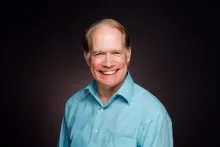
Greg Thomas is the former Pastor of the Cleveland, Ohio congregation. He retired as pastor in January 2025 and still attends there. Ordained in 1981, he has served in the ministry for 44-years. As a certified leadership consultant, Greg is the founder and president of weLEAD, Inc. Chartered in 2001, weLEAD is a 501(3)(c) non-profit organization and a major respected resource for free leadership development information reaching a worldwide audience. Greg also founded Leadership Excellence, Ltd in 2009 offering leadership training and coaching. He has an undergraduate degree from Ambassador College, and a master’s degree in leadership from Bellevue University. Greg has served on various Boards during his career. He is the author of two leadership development books, and is a certified life coach, and business coach.
Greg and his wife, B.J., live in Litchfield, Ohio. They first met in church as teenagers and were married in 1974. They enjoy spending time with family— especially their eight grandchildren.
