

Greg Thomas
This transcript was generated by AI and may contain errors. It is provided to assist those who may not be able to listen to the message.
Thank you, Mr. Gravy, and good morning, everyone. And it is lovely to see you all. And I hope you had a lovely evening last night. I want to thank Linda for the beautiful special music. I really appreciate it. It's such a blessing that people can share their abilities with us. And really, thank you very much for that. When we look forward to some big event, like for instance, the feast, we always look at it with excitement, with joy, with anticipation, and it really is a memorable occasion. Now, I want you to look at one time that the apostles look forward to something very unique. And if you want to turn with me, please, to Acts 1, verses 4-8. Acts 1, verses 4-8. And this is at the end of forty days of Christ being with the disciples after His resurrection. He says here in verse 4, And being assembled together with them, Christ, He commanded them not to depart from Jerusalem, but to wait for the promise, not just any promise, the promise of the Father, which He said, You have heard from me. So Christ had explained to them of this promise, and they were to wait in great expectation and anticipation for this memorable occasion. For John, that's John the Baptist, truly baptized with water, but you shall be baptized with the Holy Spirit not many days from now. You will receive the gift of the Holy Spirit not many days from now, and they were eagerly anticipating and waiting for that. So brethren, today, I want to spend a bit of time to look at the giving of the Holy Spirit on the Diabetic cost as a promise of the Father to all of us and its purpose, so that you and I can better comprehend the meaning and the value of this promise to you and I. So let's turn then to chapter 2, verse 1. When the day of Pentecost had fully come, so the day of Pentecost had arrived, and it could also mean some people that studied the Bible in great depth say that could also mean that the fulfillment of the day of Pentecost had fully arrived on that day because that's the fulfilling was the giving of the Holy Spirit, so that was fulfilling. They were all with one accord in one place. Now who's they? They, if you look at the verse before, which is the last verse in chapter 1, it's talking about the apostles. So they were all together in one place. And suddenly came a sound from heaven as of a rushing, mighty wind. And it filled all ours with the wind sitting. Think about when there's a storm. And suddenly that wind comes, that rush of wind, and shakes the noise that you all hear this wind rushing, and it's awesome. And so it says that there was this sound of a rushing, mighty wind, which draws attention to people, saying, what is this? And we'll see a little bit more of that, how it drew attention to people. And then it goes on. There appeared on them the vibrant tonsils of fire.
In other words, there was some other translation put out that tons of fire were distributed amongst them. Tons of fire were distributed amongst them. And it says, and one sat upon each of them. So they were distributed, and there was a ton of fire in each one of these disciples. The apostles and the disciples that were there, that we know, there were 120. And they were filled with the Holy Spirit. The promise had been fulfilled. They were filled with the Holy Spirit. And as we heard in the sermon, very clearly, they began to speak with other languages. They started speaking with other languages. As the Spirit gave them utterance.
By the way, there were people there, as we're going to see a little later, from many other countries. And therefore, they were able, those people from other countries, to hear what they were saying. So we'll see that in a moment.
Continue there in verse 5. But I want to mention, just before we go on to that, a little point about the times of fire. It is interesting. When you talk about fire, think about examples of God's Spirit and God's presence was invisible with fire. For instance, you can think about Moses when he saw the burning bush.
And that represented God's presence, the burning bush. Think about the example when Israelites lived Egypt.
And there was that pillar of fire by night guiding them, which represented God's presence.
And so, the times of fire represented, among other things, obviously God's presence. Another thing it also represented us, you could think of the John the Baptist, Peter and Paul, referred to as fire representing God's judgment. So it represents God's judgment. Yes, it's God's presence. But God is just. And therefore, there will be justice in the end. Albeit mankind thinks, oh well, you know, we can just go on and do what we want.
But as you know, the end of it is yes. This is young people beware. Do, do the things that you want to do. But remember, remember, there will be time that you will have to give account for everything you do. Because there will be a judgment. There will be a judgment. So the symbolism of the hour of the times of fire could have various meanings. It could be representing God's presence, of course, of course, power. There's God's presence there. There's God's mind. There's God's power. We also represent that God is just, and there will be judgment. But continue them in verse 5. And there, we're dwelling in Jerusalem, Jews.
So there were a lot of Jewish people that come in Jerusalem. And the Tsezia continued, devout men, from every nation under heaven. So there were Jews and devout men. Now, the word devout men means that, that it was also not just Jews, but devout. Later on, you'll see there were proselytes, which basically were Gentiles that were converted to Judaism.
And some were just devout men that were not converted to Judaism, but they believed in God, and they would come there as well. So there were these people, there were Jews and some Gentiles, then were devout, from every nation under heaven. And when the sound occurred, the sound that, as we mentioned earlier on there, it was of a rushing, mighty wind. It was like a cyclone or a tornado. We knew there was noise coming through. When the sound occurred, the multitude came together and were confused.
They said, what is this? And they all came into the South, which happened to be, as you know, as you read elsewhere, it was the temple. They were in the temple, one of the rooms in the temple. So they carried on, and they said, what is this noise? And they were saying it was another look. They were confused, because everyone, so they came together, and then they heard the people speaking, as it says, speaking in other languages, as I read that in verse 4.
And then in verse 16, he says, because everyone heard them speak in his own language. So this gift of tongues was both a question of speaking in other languages and hearing in other languages. So the people came there, and there was this noise. People were talking, but they all could understand.
They all could understand. You can imagine, if I'm talking you, you have to you, and some of you, for instance, are talking English in it. But at the same time, these people, you have to hear in Spanish, or some of you have to hear in Russian, and you hear it. So there is this noise of different voices. Can you follow? I mean, if there's somebody talking in German, or somebody talking Russian, so you can hear the Russian, but at the same time, you hear the English. So there's this noise, but you could understand what it was being said.
You follow that. So there was a gift here that God was doing to broadcast, in a sense, to leverage a message, because there wasn't either that time to do it that way. And God has the power to do it, and he did it. It's a continued ending, verse 6 at the end, because everyone heard them speak in his own language, in his own dialect, in his own accent.
So don't worry about my accent, if you hear it in proper American accent. So anyway, we were all amazed and marveled, saying to one another, look, aren't these old people Galileans? Aren't they people that are just coming from a little town out there in a corner? That, you know, what is that little town? A town out in a corner? I don't know. Yeah, in this area, maybe there's a town that people jokingly call it.
Well, you know, there's a little town out there, you know. Maybe it's Paris, Kentucky. I don't know. I'm just saying. Well, they only come from Paris, Kentucky, you know. What other, you know? Whatever, I don't know. But it's just, aren't they just Galileans? And how is it that we hear each in our own language? We hear them in our own language, in which we were born.
In other words, we heard them in our mother tongue. Because they were Parthians and Medes and Elamards. They were those that lived in Menas of Patania that came, and in Judea, and in Cappadocia, and Pontus and Asia, and Persia, and Pamphylia, and Egypt, and the parts of Libya, adjoining serene visitors from Rome, both Jews and Prasalites.
In other words, both Gentiles and they had converted Judaism and Jews. They were Christians and Arabs. I mean, can you think about all these multitudes of nations, of national backgrounds that come there for this festival? Because Pentecost represents a time of sojourning, traveling to a feast site. And, we say, so Rome, may some complex, thank one another. Whatever, whatever could this mean? Because we hear them speaking in our own tongues, it says in verse 11, Christians and Arabs, we hear them speaking our own tongues, in our own languages, the wonderful works of God.
When God speaks, it's to edify, it's to encourage, it's to build the wonderful works of God. They all heard it.
And therefore, that drew the attention of the people by the sound, and they all could hear the message, and they all could hear the wonderful works of God. God's Spirit always talks about the wonderful works of God. And so, God's first outpouring of His Holy Spirit on the day of Pentecost, when it was fully, that they had fully come, that they was completely fulfilled, it drew attention to the message, the way He did, to the message that was going to be given, which we're going to read in a moment.
The message from Peter. And it drew them attention to listen, because they said, oh, what's wrong? Are these people drunk? Well, can't be, because it was only 9 o'clock in the morning, unless they were already going to get the killers at 7 in the morning, but that was not the case. It was not a clog in the morning, they're not drunk. And so, continue in verse 14, but Peter, standing up with the 11, raised up his voice and said to them, Men of Judea and all who dwell in Jerusalem, let this be known to you and listen to my words.
Listen to what I'm going to say, eat to my words. For these are not drunk, as you are thinking, since it's only the third hour of the day. And it counted from 6 in the morning, the third hour of the day, so it was 9 o'clock in the morning. But this is what was spoken by the Prophet Joel. And it shall come to pass, as in the last day, says God, that I will pour out my Spirit.
God's Spirit was now being poured out. Now, previously had been given, individually, you had to one person, you had to another to divert at one or another. But now it's been poured out in mass to these 120 people. God's Spirit is poured out on all flesh, but it's also prophetic of the future. So it's a duality, yeah, can you see?
It's been poured out, but it's the first truth. It's the first giving of the Holy Spirit. But it's also pointing to a time in the future where it will be given out to all of humanity, as we'll see in a moment. It's referring to the future as well. Continuing. Your sons and your daughters shall prophesy. In other words, they will speak of the wonderful works of God. And it says, that your young men shall see visions, your old men shall dream dreams, and my men servants and not my men servants and not my men servants, and my maid servants, I'll pour out my Spirit in those vials.
And they shall prophesy, and it was inspired, speaking, and I'll show wonders in heaven above, and signs in the earth beneath. So you can see it's talking also about the times to come, just before Christ's coming. Blood and fire and vapor of smoke, the sun shall be turned into darkness, and the morning to blood, before the coming of the great and awesome day of the Lord. That's before Christ's coming. So it's duality. It's Pentecost. But Pentecost, remember, it's a breach that also points to Christ's coming on trumpets. So God's only days all have dual meaning, and point one pass to the next one. So Yahreeh is pointing to that. And it shall come to pass, that whoever calls on the name of the Lord shall be saved.
And so, Yahreeh was, on Pentecost, the first outpouring of God's only Spirit. And it points to a future event. And then he continued in Yahreeh and says, Men of Israel, verse 22, hear these words, Jesus of Nazareth, a man, so he's pointing to him that he was a man. He was a human being, who's fully human, attested by God to you by miracles, wonders, and signs, which God did through him in your midst. As you yourselves also know, and as his second coming will also have additional miracles and signs, as we say in the prophecy that we read in the previous verses.
He says, as you yourselves also know him, that's Jesus Christ, being delivered by the determined purpose and foreknowledge of God the Father, you have taken by lawless hands, you have taken Christ by lawless hands, and you have crucified and put to death, whom God raised, you know, as God resurrected him, having loosed the pains of death, because it was not possible that he, Christ, should be held by death, by him.
Because, continue, as you can see, David says concerning Christ, concerning him, because it was prophesied, and David understood this, because it says, I foresaw the Lord always before my face, for he is at my right hand, that I may not be shaken. Therefore my heart rejoiced, and my tongue was flat, moreover my flesh also will rest in hope, for you will not leave my soul in Hades. Not just as David's thinking, and he's saying, my flesh will also rest in hope.
In other words, my body is going to rest, I'm going to die, and I'm going to be dead, resting. But I'm going to be in hope, why? Hope of the resurrection. Because it says, for you will not leave my soul in Hades, you will not leave my life in a grave.
I will be resurrected one day. David knew that, that you will die, and it will be a resurrection. And then continue, nor, as well, will you not allow your Holy One, there's only one Holy One, that is Christ, your Holy One, to see corruption. You will not allow the Holy One, that is Christ, to see corruption. Now think about it. Christ died. So he's actually talking about you, that Christ would die, but his body would not see corruption. That is very interesting. Because according to Jewish tradition, a body had to be dead for three full days before he was really considered dead.
That's why Lazarus, when Lazarus died during the time of Christ, Christ delayed to come and see Lazarus till the fourth night. Why? Because he was dead, dead. He was legally dead. And, of course, when he came there on the fourth day, the resurrection day. So there was no doubt that there had been a resurrection.
That's why they did not put people, they did not bury people. They would keep them for a while, for three days, before they would do anything else, at least, to make sure they were really dead.
There's even some saying that if some people would do it, they would put them into a grave and put them in a little stream with a bell. And that's where the story comes, you know, to ring the bell or something like that. Because somehow he'd come back a lot and he'd been buried, but he hadn't been quite dead.
And to rear the bell, they would go and take him out. You know, so... But the point is, there was this Jewish tradition or law that legally a person would not be there until they had been three days and three nights. Therefore, Christ had to be the grave, not only buried, but he was in the spot there, you know, and locked beyond the stone, but in a way they could still go and oint then, etc., giving the ointments so that his body would not smell when it would be corrupting.
But three days would be legally dead. And he had to be there for three days and three nights to be legally dead. Can you see why this whole story about Friday through Sunday is alive? Because he would deny his real death. Interesting point there. He had to die, but he did not see corruption, because the corruption would only happen after that.
You know, it was the decaying of the flesh would only happen after that. And that's why they would put the ointments so that the smell would not go. One of the traditions out in those days is that the bodies would be kept with the ointment until it would completely decay, until they would only lift the bones. Then they would put the bones in what they would call an ossuary, and that's why they dig things and they find all these ossaries, because they will leave the bodies to decay.
Imagine leaving the bodies somewhere in the upper room in the house until it completely decays. And then you put it into an ossuary. I mean, it's different traditions the way we do things today, but can you think what they did? It's kind of difficult for us to comprehend. But the point is, in YHWH, is that in verse 27, the end of verse 27 is, nor will you allow your Holy One to see corruption. In other words, Christ would not see corruption. He would be there, legally dead, so he had to be there for three days and three nights. But would not see corruption, it would be resurrected after three days and three nights.
As he fulfilled that prophecy. And then says, and then continue verse 28, And you have made now to me, David knew this. David knew this. He understood this. But not only that, you might not to me the ways of life. You know, make to me that there is a hope, and I've got to do things the right way. And you will make me full of joy in your presence, because he knew there would be resurrection. He knew his body would be in the grave until the right time.
But he also knew that the Holy One would be in the grave, but it would be resurrected and see no corruption. And before he looked for that time, when Christ would then come back and for the change in his body. David understood this. That is amazing to see that David understood this. Men and brethren, now continue to speak. Let me speak freely to you of the patriarch David, that is both dead and buried.
Let me tell you openly, David is dead and buried. He is not in heaven. He's dead and buried. He's not in heaven. He's not resurrected yet. And his tomb is with us to this day. Therefore, being a prophet and knowing that God had sworn with an elf to him that the fruit of his body, according to the flesh, he would raise up the Christ to sit on his throne.
David understood that Christ would be resurrected and will sit on his throne. And he, David, for seeing this, spoke concerning the resurrection of Christ. David understood that Christ would be resurrected. That his soul was not left in Hades nor his flesh to see corruption. This Jesus, God has raised up, of which we are all witnesses.
Yes, at one time there was even 5,000 people that saw that Christ had been resurrected. They all knew that Christ had been resurrected. There was no doubt that this was kind of the real quote-unquote gossip of the village. They all were talking about, what is this? Because they knew, because they had put the guards on the stone. Nobody had stolen the body. They knew that. Otherwise, they wouldn't have said the body had been stolen. They knew it had come and been stolen. The guards over there, and it just disappeared.
And furthermore, he had seen, been seen by many of them, over 5,000 people. So they were all talking and saw him. He's around the yard, touching himself. You know, the whole's on his side. That's him. He's there. He's alive.
This was really the talk of the town. Therefore, being exalted to the right hand of God, and having received from the Father, the promise of the Holy Spirit, Christ went to heaven. And he received the promise of the Father.
He then, which is the Holy Spirit, he then poured out this, this. What is this? The Holy Spirit. He poured out this, the Holy Spirit. He poured it out, which you now see and hear. And you can see the results of the wind. You can't see the wind, but you can hear the results of it. You can see and you can hear the results of the Holy Spirit.
And then he continues in verse 34. For David did not go to heaven. That's what he says here in verse 34. David is not in heaven. In other words, he's in the grave. He's in the tomb, like we read before. We do not ascend into heaven. But he says himself, David says, The Lord said to my Lord. See, there's two Lord's. Not understanding you and I read in Corinthians that he says there's one God, the Father, and one Lord Jesus Christ.
But he says there's two Lord's. So that's not a contradiction. Because yes, to us, there's one Lord, Jesus Christ our Lord, but the Lord of Lords, the highest, is the Father. So sit at my right hand till I make your enemies your foots forward. Therefore, let all the house of Israel know assured that God, the Father, has made us Jesus, that's the Lord, whom you have crucified, both Lord and Christ.
He's made us both the Master, our Master, our Supreme Great Master that we submit to the Lord and the Christ, the Messiah, the Savior. Now, when I hear this, do we cut to the heart? The heart just pricks them. Just pricks them and says, wow!
And they said to Peter, to the rest of the apostles, men and brethren, what we can do? We've actually killed the Messiah. We killed the Lord. And David knew it. And we did it. Then Peter said to them, repent and let everyone be baptized in the name of Jesus Christ for the remission of your sins.
And as we know, there's the whole process, the right, correct process to be correctly baptized upon true repentance, through acknowledgement of our sins and of the faith of what Christ really is. And then we are baptized by the authority of Jesus Christ, in the name of Jesus Christ, for the remission of our sins.
And then you shall receive, through the prayer of God's ministers, of the baptism and laying on our hands, you shall receive the gift of the Holy Spirit, the eyes of promise. This is a promise, which is the gift of the Holy Spirit. For the promise, this is the promise of the Father that Jesus told them, and that Jesus told them to wait until they would receive the promise, not many of their sins, as we saw in Matthew 1. For the promise is to you and to your children, and to all who are afar off, like you and I have now, are far off, many years, thousands of years afar off. As many as the Lord our God will call. As many as God the Father calls. So, here we are, brethren. This is a promise. This is a promise. And with many other words, He testified and exhorted them. He gave them a witness. He testified and gave them a testimony of what happened, and exhorted them to serve God and do His will. Sing, be saved from this perverse generation. Remember, that generation of that time ended up being completely destroyed, because 40 years later, the temple was destroyed in 1870, and they were all gone into exile. So, be saved from this perverse generation. And then, as we heard in the sermon, then those who gladly received this war were baptized, and on that day about 3,000 souls were added to them. Now, many were that? 120. Now, many were added? Times 25. 25, 4. You do not do such. 25 times 120 comes to 3,000. 25, 4.
Besides, by passing 3,000 people in one day, it's quite a job. It's quite a job. So, the report is, and they continued steadfast in the apostles, doctrine, and fellowship. Yes, we follow the doctrine of Christ, which is the doctrine of the apostles. That's what they taught us. And the fellowship. We have to ask to receive fellowship, as we clearly heard in our sermon today, through in the breaking of bread and in grace. And the breaking of bread is actually having Christian fellowship and eating together as a group. As we're going to do today for lunch. We're going to eat together. And of course, we're going to be breaking bread together. Just an expression of the day. In those days, people had bread, and what you did, you took the bread and you broke the bread. Instead of taking a slice and putting butter into it, whatever it is, they just broke the bread.
Sometimes you go into places like Portugal and others. Quite often they give you bread and people just break the bread. It's that awful bread that is easily breakable. And you just break it and open it and put something in your unmit, or a bit of oil and balsamic. Olive oil and balsamic, sometimes you do fry the nuts, you do that with great bread. And we put olive oil and balsamic vinegar and things like that. And we just eat it.
It's actually very pleasant. So that's what they did. They broke bread and had a Christian fellowship in talking. And therefore, they also prayed like we did thanks. We got sick and eat. We did thanks. We thanks God for the meal. And we praise God and we talk about God's things. And we exalt them. And for the innocence, we quote-unquote, to the prophesy. And the fellowship that is so important in the growth of Christians, they never neglect fellowship. That's why Paul, I was really nervous, said, you do not neglect the sin of yourselves together. It's so important for our Christian growth. So brethren, today is symbolic of the fulfillment of the giving of this promise of the Father.
It's an anniversary of that. It is an anniversary of that day. But so what? So what?
What does it mean to you and I, this promise that you and I have received? So what?
Well, the first reason is that through that, you and I are begotten as a type of first fruits. You know, it's not yet born. Not yet born again. Yes, we'll be born again. But a type of first fruits to be born again. So that you and I can grow like a little baby child is begotten in the womb.
We are begotten in the womb, spiritually speaking, which is the church, so that we can grow in the womb till we are ready for birth.
So the giving of the Holy Spirit, the beginning of it in first place, one of them, and there are many, I'm going to cover just a few today. But one of them is that we are begotten by the Holy Spirit, so that we now have been generated as the now, or begotten, so that we can grow as the children of God. That's why we really are the children of God, because we've been begotten by God, the Father, the Spirit of the Father, God's own Spirit. So it's a promise of the Father came from the Father.
Let's look at another little understanding on that in John chapter 1. John chapter 1 is probably read it many times, but I just want to highlight something in here, some brief little point. And there's nothing wrong going back to some scriptures, because as we go back to them, sometimes we just see another little angle to it that we had not seen before. And it says, in the beginning was the Word, and the Word was with God, and it became Christ, and Christ was with the Father, and Christ was God, and the Word was of that species, of that type, of that kind, of God kind. And in Christ, the Word, was in the beginning with the Father. All things were made through Him, that is, through Christ, and without Him, Christ, without Him, nothing was made that was made. In Him was life, and the life was the light of man. In Him was life, in Christ was life. He had life inherent in Himself. And that life became our light, our example, our model, as He became a human being, became our model for us to follow. Yes, sure, it's the light, spiritually speaking as well, for us, but it's also our model for us to follow, for us to grow like He, to become like Him. Continuing in verse 5, and the light shines in the darkness, and the doctors do not comprehend it.
Brethren, if you're going to a room, it's dark, and if normally you're at home, and you wake up in the middle of the night, maybe you have a little night light, and it just keeps you in the middle of the night so you can see where to go. But say you're somewhere else where it's not your normal home, and it's dark, and you can't see anything, you know, you're afraid of bumping your toes onto something and really stub your toes and hurt yourself and things like that.
So you, but imagine how you put on the light, and suddenly you can comprehend.
You can comprehend or see what is there, and you see. But how dark is it that when the light comes in, you can't comprehend it?
How dark that is. I mean, it's so dark, and then the light comes in so bright that you can't even open your eyes, you've got to cover it up because it's so bright, you still can't see anything because it's...
That's the world. The world is so dark that the light shone in the world, and the world did not comprehend. Christ came to the world, and the world did not understand who He was, did not comprehend it. And it goes on, continue this.
He, that's Christ, was in the world, and the world was made through Him. The world was made through Christ. The world was made through Christ. I've had some people say, oh well, when it says that Christ made everything, that is the only representation of the Church. No, it says, yeah, the world, He was in the world, and it wasn't Him. The Church was in the world. The Church hadn't been started yet. It wasn't started on Pentecost. So He was in the world, and the world was made through Him, and the world did not know Him. It's talking about the world. Christ made the world, made everything. You see, the darkness did not comprehend. And it says, He came to His own beyond that. He came to His own. He came to these relaxed. He came to the Jews. He came to His own. He was found and not received Him. Think about some of the parables that Christ gave that, you know, and came there, and the people did not receive, and they actually killed Him. They say, oh well, this is the Son killed Him, the parables, how it points to Christ. It's so amazing when you read these parables and look at the double meaning in there, and you continue in verse 12. But as many as received Him, some did receive Him, some did receive Him, a few, some did receive Him, to them He gave the right to become children of God. Those that receive Christ, to you and I, which receive Christ, He gives to us the right. Now, look in the margin, it says, the authority. And the translation put it as the power to be the children of God. That is amazing. He gave us the power to be the children of God. You see, through the power of the Holy Spirit, we are begotten as the children of God. And that gives us the power, the authority, the right to be God's own children. It's like saying the power to be a member of the royal family. Think about, you know, Prince, I don't remember now his name, was here in the States recently, Prince Harry. Yeah, he was here recently, and everybody looks in as he is of the royal family. He's not the king or the queen, but he's of the royal family. And recognize now to be the children of God is to be the children of the royal family. But the world doesn't recognize us. Like they didn't recognize Christ, they don't recognize us. They won't recognize us one day because we're not born yet. We begotten. We're not born again yet. We ought to be born again, but we're not born again yet. You see, the right to become sure of God to those who believe in His name. Who were born? Who had begotten? The word is ganal, which is begotten. Not of blood, nor of the will of the flesh. Not of begotten, so they become flesh and blood.
Not of the will of a physical mom and dad, nor of the will of man, but of the will of God. We've been begotten as children of God because of God's will.
The word, verse 14, became flesh. The word, which is Christ, became flesh and dwelt amongst us. And we beheld the glory of the only begotten, and that's monogenesis, the only so begotten. Because He was begotten not from a male human sperm in the mother's womb, into an ovum in the egg, but it was begotten by the power of the Holy Spirit through a special miraculous intervention into the womb, into that egg in the mother, in Mary. So it's the only so begotten of the Father, full of grace and truth.
It says here that He's the light, and that light was full of grace and truth. That is the model for us to be like Him, full of grace and truth.
That is our purpose, that we receive God's Holy Spirit to grow in the womb of the mother, which is the Church, till we reach to a point that we have matured to be born. But we are to grow in womb.
So the first purpose is of the Holy Spirit, of the promise of the Spirit, is to be begotten. The second purpose is to grow in the womb, is the help to help us grow in the womb. Look at another example of that, and that's in John chapter 3, just a few chapters ahead. John chapter 3, verse 1 and 2. And it was the man of the Pharisees named Ecedimus, the ruler of the Jews. This man came to Jesus by night and said to him, Rabbi, we know that you are a teacher. Well, they knew that he was a teacher. Well, they didn't recognize him as the teacher, because he was the teacher, not just another teacher. So they told him, well, he's just a teacher, just another teacher. Come from God, for no one can do these signs that you do unless God is with him. Although they didn't recognize he was the teacher. And there he goes on his six. Jesus asked and said to him, most surely I say to you, unless one is born again, he cannot enter or see the kingdom of God. We need to be born again. And then you can see that what he reads in the next few verses, it's clearly saying that he understood that they had to be born again. That was not just begotten. He's talking about being back in a womb and growing, coming out of the womb. How is that possible? Because that's the ultimate achievement of being begotten. The end result is to be born again. And in verse 5 he says, most assuredly I say to you, unless one is born of water, born of water. So unless you are representing two things. Number one is baptism. That's the washing of our sins. That's the first step that we need to have. And secondly, you can read that in Ephesians chapter 5, 25-26. That is, God's Word washes us as well. So God's Word, as we do Bible study, and God's Word washes us. And so there is a teaching there. So that we can become holy without bling. So God's Word is part of that washing. God's Word. So we need to be washed of water, born of water. And that is first, baptism, and then with God's Word and Bible study, growing through that. But secondly is the Spirit. We need to be born of the Spirit. So we need to be begotten by the Spirit and born of the Spirit, which represents a resurrection as a spirit being.
He cannot enter the kingdom of God. We cannot enter the kingdom of God unless we are born of the Spirit.
Now, these of us understanding people sometimes thinking, well, I can't wait for Jesus the Iron of the Church. Quite often we say, well, we can't wait for the kingdom of God to be set up.
Well, you know what? The kingdom of God is already set up, and it's doing very well. Thank you. It's in heaven. It's set up in heaven. And the angels are subject to the kingdom of God, and Christ is subject to the kingdom of God, and He is the kingdom of God. The kingdom of God is set up.
And the problem comes in that sometimes we think that the millennium is the kingdom of God.
You see, the kingdom of God does not come by visible appearance.
The millennium does.
But the kingdom of God does not, because it's spiritual. It's not physical.
You see, so we need to separate the two. We sometimes think the millennium is the kingdom of God. Now, the millennium is when the kingdom of God rules on earth over human beings, and there will be a millennium. That will be an earthly government kingdom on earth, but it will be governed by the spirit beings. But the kingdom of God as exists will come to earth with prices let by kingdom come, which means it already exists, comes to rule on earth. But the kingdom of God will continue into eternity. But the millennium is a period of a thousand years.
And the millennium, therefore, will come with observation.
So the kingdom of God is where God rules. The kingdom of God is totally submissive to God. The kingdom of God is the will of the Father. And you and I can be totally submissive to God and to do the will of God today. So you and I can already be representing the kingdom of God today. We can be ambassadors of the kingdom of God.
But the kingdom of God is not here. And so Christ, when he was on earth, in a sense, he was an ambassador of the kingdom of God. And that's why in other parts he says, you know, the kingdom of God is amongst you.
Because yes, he was. He was Christ.
He was not inside the Pharisees.
So it's just a little side point, then.
But the point he already says is that we need to be born of the Spirit to enter the kingdom of God. And to enter that kingdom of God, that Spirit entity, we need to be born of the Spirit. We're not yet born of the Spirit. We've been begotten. We now can represent the kingdom of God. We can look under the submission of the rules of the kingdom of God. And we in a sense are already citizens of the kingdom of God. But we've not entered it yet.
We are citizens of the kingdom of God. But we're not entered yet. We've got to enter at the resurrection. The verse takes for that which is born of the flesh is flesh.
And you and I are flesh. And that which is born of the Spirit is Spirit. We're not yet born of the Spirit. We are begotten, but we'll be born. So we are in a way to be born. So we're begotten as children of God. And we ought to be born again. We ought to be born again. And that means we ought to grow in knowledge and truth. So as we have God's Holy Spirit, we ought to grow.
We ought to grow.
Now, think about the analogy of a baby in a mother's womb.
The baby in a mother's womb is to grow until it's matured and ready for growth.
What happens if the baby stops growing?
It can happen, it can be begotten, but it can stop growing.
You don't want to think about that, but it's up to us because God says you'll never leave her for seconds. So it's up to us to actually grow.
And use God's Holy Spirit to grow.
So brethren, there are many points that you and I can think about what is the purpose of the Holy Spirit in us.
It is to grow. The Holy Spirit also should be fruitiness. You and I can read, for instance, in John 15.
Christ said, I'm the vine and you're the branches.
And Christ said, without me you can do nothing.
If you've had a vine and you cut the branches off the vine, they don't live very long. We had a vine in our garden in the back, and if we cut those branches, I mean if we cut any branch of any tree, sooner or later it dies, and it dies.
But one thing we notice when we cut the branches off the vine, they died very quickly. They really died very quickly. And therefore, he has the danger of us to cut ourselves off from the vine, from Christian fellowship and all that. We must not. We must stay close to that. And so, we are to bear fruit. You can read many parables that Christ gave, and it says, beware of false prophets.
You shall know them by their fruits. So we, part of the growing process, we are to bear fruit. We also talked about, yesterday, about using the gifts of the Holy Spirit, because with the Holy Spirit, we receive gifts, and we are not to hide them. We are not to put them underneath the bed, or bury them. We have to use them to the heaven, to bear fruits with that. So you and I received the gift of the Holy Spirit. The gift of the Holy Spirit has certain qualities. It is a fruit, think of it.
It has certain attributes, certain qualities, love, joy, peace, long suffering, kindness, goodness, frightfulness, mittness, self-control, all these attributes the Holy Spirit gives us. That's the fruit of the Holy Spirit, what you and I have. Now with that, we need to use that. We need to use that, and as we use that, we produce fruits and results. We bear fruits that we are to bear. So the promise is to bear fruit and to edify the body. And therefore, we are to grow in this process.
But there's one other very important point about the Holy Spirit. And that, I want you to look at in 2 Peter chapter 1. 2 Peter chapter 1. Simon Peter, a bond servant, verse 1, and a possible Jesus Christ, to those who were obtained like precious faith with us by the righteousness of our God and saved in Jesus Christ.
Grace and peace be multiplied to you in the knowledge of God and of Jesus Christ our Lord. As His divine power, in other words, as His Holy Spirit has given to us all things. God's Holy Spirit has given to us all things, all tools. Think about it just that way. Say, please, you're a mechanic. You need all these tools to do your job. God's Spirit has given us all things, all capabilities and things, the right tool for the right job, all other things, spiritual things, that pertain to life and Godliness.
God's Holy Spirit has given us all things that pertain to life and Godliness through the knowledge of Him who called us by glory and virtue, by which have been given to us exceedingly great and precious promise. In other words, God's Holy Spirit has given us all the things that we need that pertain to life, to eternal life, and to become like God, like Christ, to the full stature of maturity of Christ, which Him is, as we saw, full of grace and truth. We have to become like Him. So God's Spirit gives us that that pertain to life, because Christ is the life, and pertain to life, so we have to be like Him and Godliness.
Through the knowledge of Him, through His example of Christ, who called us by glory and virtue, and by which have given to us exceedingly great and precious promise. That through these, through these promises and these tools that we have, you may be partakers of the divine nature. That we may actually grow from whatever we are today, so that you and I can become of the divine nature.
Having escaped the corruption that is in the world through lust, so that we escape the corruption that is in the world through lust. Then it goes on. But also for this very reason, giving all diligence. For this very reason, because we have this great promise. We have this great promise to be children of God.
We have this great promise to be partakers of the divine nature. We have this great promise to be of that royal family, the divine family, to be part of that family. Give all diligence in the world. Give all your effort, all your energy to use these tools that the Holy Spirit has given us. All things that pertain, the Holy Spirit, the power that use all this with all diligence, with all effort, with all energy.
Add to your faith, virtue. In other words, live God's way, live a clean way. And to that, acknowledge, study, learn more. And as you learn more, you learn more that you have to overcome. And therefore, use self-control to overcome, to change yourself. And with that, oh, self-control, perseverance. Stick to it. Don't give up. Keep going. Stick to it. Persevere. And to that persevere, godliness. Here was as you persevere, you're becoming more and more like God, like Christ, and putting on becoming more full of grace and truth. And to godliness, add to that brotherly kindness.
In other words, philadelphia life, phybium, brotherly kindness, brotherly love. And to brotherly kindness, add to it, accompaniment, godly love. For if, it's a spinaural word in English, if, if these things are yours, if you are doing diligence with these things, using God's only Spirit, which is a power to life to do these things, if these things are yours and the power, you will need to be barren.
And my margin says useless. You will not be useless. You will not be barren, nor unfruitful in the knowledge of our Lord Jesus Christ. In other words, you'll be a fruit, so that when Christ comes back and says, good and faithful servant, you're born through it.
You're doing the right things in the knowledge of our Lord Jesus Christ. For he who lacks these things is short-started even to blindness, and has forgotten that he was cleansed from his old sins. So if we lack these things, if we don't apply, if we don't stir up the Holy Spirit with all villages to do these things, it's like as if we blind it.
Therefore, brethren, verse 10, be even more diligent, put even more effort to make your call and election sure. In other words, the promise of the gift of the Father that we've received of the Holy Spirit helps us to make our election and calling sure. Guaranteed sure, making it sure. You see, Christ says, I'll never leave or forsake you. So now it's up to us. He's given us the tools, he's given us the power, he's given us the Holy Spirit. We have to stir it and use it. You know, as I think it was Thomas Edison said, 99% perspiration and 1% desperation. That's what it is. We've got to do our part.
99% of it. We've got to use it with diligence. And so therefore, brethren, be even more diligent to make your calling and election sure. For if, again, this tiny little English word, if you do these things, you will never stumble. You will never leave God's church. You will never, as a baby, stop wrong in other words. You'll never abort. That is a life insurance policy. A spiritual life insurance policy. For so, verse 11, an entrance...enter what? The kingdom of God, right? An entrance will be supplied to you abundantly into the everlasting kingdom of our God and Savior, Jesus Christ.
That is the way to enter into the kingdom of God through the power of the promise of the Father to help us grow. So, brethren, so what does this anniversary today mean? It means that you and I can celebrate that by the power of the Holy Spirit, we are linked like the umbilical cord in the baby. We are linked to the mother of the church to receive that power that feeds us. We are His begotten children. We can be fed daily.
That's why it says, give us this day our daily bread, which represents the Holy Spirit. We can be fed daily so we can grow and mature to birth, so that we can bear fruits, so we can use our talents to serve and edify the church and to grow. And with the power of the Holy Spirit, we can make our calling and election sure.
What a great blessing this anniversary is of what it means to us to be a part of First Truths, because it will be to the whole world, but it's just the First Truths. So, to conclude, I want you to read with me 2 Peter 3, which is just a few pages ahead, 2 Peter 3, verse 17 and 18.
2 Peter 3, 17 and 18. You, therefore, beloved, since you know this beforehand, beware that you fall from your unsteaded fastness, being led away with the error of the wicked, but grow in the grace and knowledge of our Lord and Savior Jesus Christ. To Him be the glory, both now and forever. Amen.
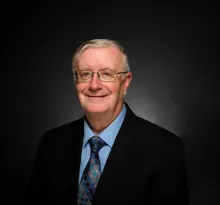
Jorge and his wife Kathy serve the Dallas (TX) and Lawton (OK) congregations. Jorge was born in Portuguese East Africa, now Mozambique, and also lived and served the Church in South Africa. He is also responsible for God’s Work in the Portuguese language, and has been visiting Portugal, Brazil and Angola at least once a year. Kathy was born in Pennsylvania and also served for a number of years in South Africa. They are the proud parents of five children, with 12 grandchildren and live in Allen, north of Dallas (TX).
