

Mario Seiglie
This transcript was generated by AI and may contain errors. It is provided to assist those who may not be able to listen to the message.
As we have mentioned, the feasts are around the corner, the fall feasts, and how quickly time flies by. This year, we're going to have to prepare in a bit of a different way, because we have a worldwide plague that is still with us. This would be the second feast, where we are beset by this. Of course, it's not the plagues that are going to come later. This is just maybe the beginning of sorrows, but there in Revelation 6, it talks about the fourth horseman, and how the pale horse says from those different plagues and problems, a fourth of mankind is going to die, which would be close to two billion people. So, this is nothing compared to what is going to be coming in the future. But it might be a warning sign. It might be a shot across the bow, just to make sure we know. God is aware of what's happening, and as man descends further and further into immorality and sin, of course, God is concerned as a loving parent. He loves everybody. He doesn't want to see people go through all of these heartaches and turmoil. He has a solution. If we can just do what he says, have the faith to put what we read into action. Faith is putting into action what you believe and according to what God's Word is. James mentions that faith without works is dead, because you can believe in something, but if you don't apply it, if you don't live it, it isn't going to produce anything. Just head knowledge is not enough. Heart knowledge is important, but also will power, where you apply things and not just listen to things. Thankfully, this year, the situation is a bit better than last year, though that delta variant is quite contagious. Some will have to keep God's feasts at home, but the important thing is to keep them wherever you're at. If you're in an island stranded somewhere, and you determine the days you count them, and you keep God's ways no matter where you're at, God has set up something like this for all of us, no matter what our circumstances are. So, my question is, why are God's feasts so important? Is the present situation an excuse not to observe them? Oh, I'm afraid to go out too much, not going to be able to do anything. You can keep them in your own home. The important thing is to respect what God has placed and do it His way. So, the purpose of this message is to explain five biblical reasons why the feasts of God are so important. Five biblical reasons. For you to read them in your own Bible. I know it might be familiar, but it's important to go over them.
Let's go to the first one. The first reason is they are God's feasts, not ours. They are not man-made. No man set this up. It came from God, transmitted, placed in His Word, but they are God's feasts. Now, the religions of the world, they have all kinds of feasts, but those are not God's feasts.
For instance, the Muslim or the Islam faith had Mohammed set some up, and so they keep their day of rest on Fridays. They have the month of Ramadan, where they have a month of partial fasting for 30 days. Another one of their commandments is to go at least once in your life to the area of the Mecca, and go to that place where they worship. Inside, there's a rock. It's one of these rocks that came from the sky, and they have it as one of their signs of worship.
But it's actually a meteorite, if you can believe that. In the Kaaba, just look it up. You'll see there's this black rock, and that's what they have inside that shrine where they all go around. But you see, those are not God's feasts. If you believe in God's Word, if He's the authority in your life, He's the one that establishes His feasts. So let's notice, seven times here in the Old Testament, we see that God says these are my feasts. These are the feasts of God. Let's look at these scriptures in Leviticus 23. This is part of God's law.
These five books, the first five books, give God's laws. Leviticus 23, verse 1 and 2, it says, And the Lord spoke to Moses, so this isn't man-made, it is God-made, saying, Speak to the children of Israel, which were His people at that time.
He had not called Gentiles yet into the congregation, as He does now. And say to them, The feasts of the Lord, which you shall proclaim to be holy convocations, these are my feasts. So here twice He mentions the feasts of the Lord. The term means that it is something that belongs to Him. And then He says, They are my feasts. So unless God changes His mind, they will continue to be His feasts. Whether a person keeps them or not, those are holy times.
Notice, as it says here, Which you shall proclaim to be holy convocations, these are sacred times. God is the only one that can make things holy, not man. Notice, in verse 4, it says, These are the feasts of the Lord, holy convocations, which you shall proclaim at their appointed times. God sets them up. And the way He sets up His calendar, you can set up the calendar because it's based on the moon and it's based on the sun. And so every cycle of the moon is approximately one month.
And just to be able to keep it adjusted every third year normally, another month is added because instead of being the 364 days and a fourth, it's 360, and so, or even, I think it's less than that, actually, it's less than that. But every third year you add a month to keep it within the seasons. And this is a cycle of seven years where everything is set up so that you keep the feasts appointed at their times.
It's 354 days, that's what I wanted to say. So every year you basically have about 10 to 11 days, and that's why every third to a fourth year you add an extra, a 13th month. But that's the Hebrew calendar. I'm not going to go into that. But here it says, they are the feasts of the Lord. In verse 37 of this same chapter, it says, these are the feasts of the Lord, which you shall proclaim to be holy convocations.
I'll stop there, but again, how many times does God have to emphasize something for us to believe Him? And then in verse 44 of this same chapter, it says, so Moses declared to the children of Israel the feasts of the Lord.
Now, if you believe the Bible is inspired, and it is guided by God, it's His word, these are the feasts. There aren't any other extra feasts out there. If you follow God's word, and of course they were kept in the New Testament, as we will see as well. But here, then, we went through five times that it says in Leviticus 23 about the feasts of the Lord or God.
Notice in 2 Chronicles 2, verse 4. 2 Chronicles 2, verse 4. Solomon also uses the same term, feasts of the Lord. 2 Chronicles 2, verse 4. This is hundreds of years later. It says, behold, I am building a temple for the name of the Lord, my God, to dedicate it to Him, to burn before Him sweet incense, for the continual showbread, for the burnt offerings, morning and evening, on the Sabbaths, on the new moons, and on the set feasts of the Lord, our God.
So they're set in the calendar. The first feast is the Passover. It's always the first month, the fourteenth day of the month is the Passover that we keep. And that way, we come to this seventh month, Biblical month, and on the first day of that seventh month is the Feast of Trumpets. It's the only one that falls on the first day of the month. So that's why we see that we have basically the beginning of a new month.
We just don't even see a sliver yet of that moon. And then, the Feast of Tabernacles on the fifteenth, then we have a full moon. But now, it's the beginning of the month. And then, let's go to Ezra. Ezra's a little bit farther back.
No, rather, it's a little forward, sorry. Ezra is following 2 Chronicles. Ezra chapter 3 verse 5.
This is hundreds of years after Solomon. And it says, afterwards, they offered the regular burnt offering and those for new moons and for all the appointed feasts of the Lord that were consecrated. And those of everyone who willingly offered a free will offering to the Lord. So, they take up free will offering, as we will do on Tuesday. So that's the first reason. They are God's feasts, not our feasts. They're not man-made at all. Then we have the second reason why God's feasts are so important. These are commandments, not suggestions. These are not God's saying, when you can keep them, when you have time. No, they are commandments. They're God's orders. Notice in Leviticus 23, I'm going to read it. We already read it in the New King James. I'm going to read it in the Bible, in basic English version. It has a good translation. It says, say to the children of Israel, these are the fixed feasts of the Lord, which you will keep for holy meetings. These are my feasts. It says, you will keep. It doesn't say occasionally, if you can. Again, God expects us to set aside this holy time. There are only seven of these holy times in the year where we are to rest and not work. I remember when I was there at Ambassador College, somebody mentioned that they had an evangelical scholar that came by, and he was talking to one of the faculty members, a minister in the church, and the evangelical scholar asked him, Why do you keep these feasts? I thought they were done away with. Don't you know that? Why do you keep them? And this scholar was expecting a very technical answer, very developed and detailed. And the minister looked at him and said, I keep them because God said so. But an evangelical scholar couldn't refute that because that's what the Bible says. So that's a good reason to keep them because God says so. We don't have to have all these convoluted arguments and theories about things. God says, you will keep them. And until he says you don't keep them, those things are binding on us. So we don't need all of these elaborate theological arguments. It's just we are keepers of God's commandments. Notice a good scripture in Romans. Romans chapter 3. Sorry, it's actually Romans chapter 2. Yeah, Romans chapter 2. I'm using my memory. So it says in verse 13, For not the hearers of the law are just in the sight of God, but the doers of the law will be justified. They will be forgiven. They will be made just. So it's not the hearers of the law. Just listening. It's the doers. You just simply follow what God expects. He expects us to keep the Feast of Trumpets, to keep these feasts. If we are His obedient people who love Him, who are faithful to Him, we're going to keep the things that He has commanded us.
Then we come to the third reason. They were kept by God's people throughout the Old Testament and the New Testament. I always like this illustration. It goes back to a time of a famous lawyer here in the United States back in the 1850s. His name was Daniel Webster. He was a very sharp fellow. He was admired at that time. There was a court case which had to do with an accident. It had this cart, this wagon, that had gotten loose and twisted and turned and did some damage. The person was being sued by it. They got a very special lawyer to try to explain how that wagon could not have done the damage. The lawyer was there explaining how the axle, the way it moved, couldn't have turned this way and it must have been caused by something else. Then Daniel Webster just said, when my turn came up, he said, bring the axle. Then he said, look at the axle. Look how it turns. This is what happened. Now it's not some theory. It is practice. You are looking at it with your own eyes. Of course, he won the case because the jury saw that all they were trying to argue about was just a false explanation. This is the same way you ask a question. Show me one person in the Old Testament or the New Testament that did not keep the feasts of God. Then I'll pay attention. But you see, Jesus Christ kept the feasts. His apostles kept the feasts. The apostle Paul kept the feasts. All to the very end of the New Testament. There is no example of a person of God or a woman of God in the Bible that did not keep God's feasts. Notice a couple of examples in Acts 2.
What were the people doing after Christ died? Was with them for 40 days, appearing to them. Then he said, stay in Jerusalem because you're going to be receiving the Holy Spirit very soon. Look at what feasts they're keeping. Acts 4.1. It says, now as they spoke to the people. Oh, I'm sorry. Acts 2. Acts 2.1. When the day of Pentecost had fully come, they were all with one accord in one place. In other words, all these people that had followed Christ, that were disciples of Christ, mentioned there were about 120. In chapter 1, verse 15. And they were keeping the day of Pentecost. And they were all, it says, one accord. They didn't think these had been done away. Christ had already died. Apparently, as people said, oh, the law had been nailed to the cross and all of this. Well, if that's the case, they didn't know anything about that because they were still keeping the feasts of God. They were keeping the feasts of Pentecost. Verse 4. And they were all filled with the Holy Spirit. So Pentecost was very important. That's one of God's feasts. And you see, all of them were keeping it. The apostles, the disciples. And then, if we look in Acts chapter 20, verse 16, Paul is traveling. Some decades later, as one of God's apostles. And what does he say in Acts 20, verse 16? It says, for Paul had decided to sail past Ephesus so that he would not have to spend time in Asia. For he was hurrying to be at Jerusalem, if possible, on the day of Pentecost. He wanted to be at that feast at that time. If this had all been done away, he wouldn't be cared about when he went to Jerusalem. But he was very concerned about keeping that feast.
How about another one of God's feasts in the book of Acts? How about a day of atonement that we're going to be keeping here very shortly? Notice in Acts chapter 27, Paul is in his voyage to Rome at this time in verse 9. Luke is recording this. It says, now when much time had been spent and sailing was now dangerous. So basically the sailing time was like from March to September. That's when you could sail through the Mediterranean Sea. But once you got there to mid-September, early October, when the fall feasts fell, that time became a time of storms. That's a time getting into late fall, early winter. So it was very dangerous. And it says that sailing was now dangerous because the fast was already over. Paul advised them. If you notice here, in my margin, it has the day of atonement, late September or early October. That's what it refers to. And in the Good News Bible version, it says, we spent a long time there until it became dangerous to continue the voyage, for by now the day of atonement was already passed. So that was a time when the Mediterranean basically was closed to shipping because of the dangerous storms that started during that time of the season.
So we see here that God's feasts were kept by God's people. And we're going to even go a little deeper into this in the fourth reason that we have. And that is that the feasts are four runners pointing to the main events of God's plan of salvation. The feasts are four runners pointing to the main events of God's plan of salvation. See, each one of those feasts represent a coming event. There are already three that have happened in history. The Passover came. Jesus Christ died on that Passover. He fulfilled the meaning of that feast of Passover. Then the seven days of Unleavened Bread continued. And that was fulfilled because now people could be cleansed from their sins. Now there's a people that can be forgiven. And so that is also fulfilled after Christ's sacrifice. And now we can receive forgiveness of sins. Let's go to a scripture in 1 Corinthians chapter 5, which makes this very clear. Starting in verse 6, 1 Corinthians 5 verse 6.
He's talking to the Corinthians and he says, He's using the analogy because the days of Unleavened Bread were upon them and they had to remove the leavening that's a symbol of sin. And so if you leave a little bit of sin, it will grow. It will multiply. Verse 7, And here it's physically you have to remove that leavening from your premises, but also from your heart, from your spirit, from your attitude. Purge out the old leaven that you may be a new lump. That's part of the lesson of the days of Unleavened Bread. We have to be a new lump. We have to have a new way of life. Since you truly are unleavened. Well, how could they be unleavened? He's not talking about, well, you're just taking out the leavening from your homes when you do that. No, he's talking about receiving forgiveness of sins. That you are now forgiven and you are unleavened as brethren of God with Christ as our Savior. And then he goes on to say, For indeed Christ our Passover was sacrificed for us. So here he relates the Feast of Passover with Christ's sacrifice. It has been fulfilled for us. And then he goes on to say, And these feasts, it's actually talking about the eight days Passover and the days of Unleavened Bread. Because they're all kind of run together. So they're eight days. Sometimes they're called the Passover. Feasts, which includes the days of Unleavened Bread. Sometimes it's called the days of Unleavened Bread, which include the Passover. But they're eight days, as Leviticus 23 explains. So he says here, Therefore let us keep the feast, not with old leaven, not with the old attitudes, nor with the leaven of malice and wickedness, but with the unleavened bread of sincerity and truth. So yes, we have to remove physically the leavening, but we also have to remove it from inside of us. And have that sincerity and truth. As Mike brought out in the first message, that's a work in progress. We always are being exposed and tempted, and we just have to remove that leavening, not keep it in our lives.
So the feasts are symbols of the events that will be fulfilled. So we've already had the Passover fulfilled. So we actually look back to Christ's sacrifice for the fulfillment of the Passover. Then we look back at the days of unleavened bread, where we received forgiveness through the sacrifice of Christ. And then we have the third feast, Pentecost, which also has been fulfilled. The door was open on that day for people to have access to God's Holy Spirit.
Up to today, we have access to receive God's Holy Spirit, which was not the case before that time. Only select men like Moses, Abraham, David, they were select. God used them. But as a general rule, people did not have access to God's Holy Spirit. They were not being called spiritually. And so the Israelites were carnal, and they died in their sins. But we have the opportunity to receive that Holy Spirit, which is symbolized by the Feast of Pentecost.
We already kept that. Notice in Colossians 2, Paul uses the example of the shadow and the body, which is a very clever way of doing it. Good illustration. Colossians 2, verse 16, he's talking to the Colossian brethren who were being persecuted for keeping these feasts. And so he says, let no one judge you or condemn you in food or in drink or regarding a festival or a new moon or Sabbath.
They were being criticized by a group that they're called Gnostics, which were an ascetic group. They were trying to deny people eating certain things or drinking certain things. He'll bring this up in a moment in verse 20 of this same chapter. He says, therefore, if you died with Christ from the basic principles of the world or the basic tradition, religious traditions, why is there living in the world that you subject yourself to regulations of these ascetics, these Gnostics?
Do not touch. You can't touch this food. You can't touch this drink. Do not taste. Do not eat this thing. Do not handle. So they were all about depriving themselves to try to develop a spiritual attitude, which all concerns, which things perish with the using, according to the commandments and doctrines of men. See, they're not biblically based. These things indeed have an appearance of wisdom in self-imposed religion, false humility and neglect of the body, but are of no value against the indulgence of the flesh. So yes, you can become this very ascetic type of a person.
In the Catholic Church, they had all types of punishments. If you felt bad for your sins, you actually get a whip out and hit yourself and just cut yourself. You'd have all these stripes in your back, and that was supposed to please God. See, these are man-made commandments. God never says you should cut yourself or beat yourself. You should go before God. Confess your sins. We have the sacrifice of Jesus Christ. We don't have to beat ourselves up. So, going back to verse 16, then, he's saying, don't let people get you into this attitude. To judge you in food, in other words, there's very good food that's biblically sanctioned and accepted.
There's drinks. You can drink wine in moderation. Or regarding a festival, talking about a feast day, or a new moon or sabbaths. And what does he say? Which are a shadow of things to come. Notice, they look forward to the fulfillment, but the substance or the body is of Christ.
Christ is the one that fulfills them. He's the actual, not the symbol of it, but he is the one who accomplishes it. But this only is a way to look forward. It's a symbol. It's a forerunner of things that are going to be fulfilled in the future. So again, we see that the feasts are forerunners pointing to those main events of God's plan of salvation.
It's one of the wonderful truths we have in the Church. Other churches, they don't keep the feast days, so they're all over the map. And what God's plan of salvation is. We've got these markers, these guidelines in the Bible that show us how God is fulfilling his plan of salvation.
And this takes us to the fifth and final point of why these feasts are so important. They will be kept when Christ returns, and the millennium is set up those thousand years. And this shows that they are not abolished. Because again, Bible prophecy is talking about events that are going to be accomplished. That God has already said they're going to be fulfilled. And those include the nations coming and learning to keep these holy feasts.
So yes, nobody pays much attention to them today. Everybody's going on the first day of the week to celebrate their religious activities. But one day, when Christ comes back, and we have the Bible to back us up, we actually have a description of Jesus Christ coming back and setting up the biblical feasts. Notice in Zechariah chapter 14, this is a fascinating book. It's filled with prophecy for the time of the end. And when Jesus Christ comes back, Zechariah chapter 14 verse 1.
It says, Behold, the day of the Lord is coming, and your spoil will be divided in your midst. For I will gather all the nations to battle against Jerusalem. We've explained it many times. Armageddon is only the place where the armies reunite, where they gather. But they're going to come to Jerusalem. That's where the battle is going to take place. It says, The city shall be taken, the houses rifled, and the women ravished. Half of the city shall go into captivity, but the remnant of the people shall not be cut off from the city. Then the Lord will go forth and fight against those nations as he fights in the day of battle. And in that day his feet will stand on the Mount of Olives, which faces Jerusalem on the east. And the Mount of Olives shall be split in two. So here it not only describes Christ coming, but it tells us precisely where his feet are going to land on this earth. It's going to be on the Mount of Olives. And that Mount of Olives is still there in Jerusalem. I had a chance to visit it, be up there, go see it. It's kind of a tower now. But that's the location where Jesus Christ is coming back. And then he goes on and just to skip over some of the details.
In verse nine, it says, And the Lord shall be king over all the earth. In that day it shall be. The Lord is one and his name one. It's only going to be one religion. It's going to be Jesus Christ. It's going to take some time for people to accept that. But there's not going to be other kings. All of these rulers are going to be out of business. All of these systems are going to be removed. And then it goes on to say in verse 16, it says, And it shall come to pass, that everyone who is left of all the nations which came against Jerusalem shall go up from year to year to worship the King, the Lord of hosts, and to keep the Feast of Tabernacles. Now, why would people be keeping the Feast of Tabernacles if those have been abolished? If we, as Christians, shouldn't keep them? No, these are still binding today because they're shadows of the substance, the body. When Christ's body comes, then we don't need the shadow casting upon the body. As you know, many times when you turn a corner, you might see a shadow first. But you know that where the shadow is, the body is going to follow later, the same way here. We're keeping the Feast, but the body has not appeared yet in this way. And it goes on to say, three times, it's repeated in these verses. It says, And it shall be that whichever of the families of the earth do not come up to Jerusalem to worship the King, the Lord of hosts, on them there will be no rain. So they'll have a devastating drought. It will dry up all their crops. There will be thirst. People will not have anything to drink. And I think they will reconsider about staying away. Verse 18, If the family of Egypt, and Egypt has always opposed God's ways in the Bible, it's a symbol of resistance from the Pharaoh with the stubbornness. And now they're basically Arabs. They're Muslims. They're not going to want to keep these feasts. It says, If the family of Egypt will not come up and enter in, they shall have no rain. So the river Nile will dry up. And Egypt without the river Nile is just a desert. They shall receive the plague with which the Lord strikes the nations who do not come up to keep the fees of Tabernacle. Again, the second point that I've made is that these are commandments of God. They're not suggestions. He's not saying, Well, if you feel like it, come up to Jerusalem or not. Now, there are going to be measures in place because Christ is not going to have any rivals. He's not going to have Buddha. He's not going to have Muslims and all of these different types. It says, verse 19, This shall be the punishment of Egypt and the punishment of all the nations. So it's not just a few that do not come up to keep the feast of Tabernacles. Three times, talking about the prophecy. Now, we are keeping these feasts because we don't have that stubbornness. We really do put God first in our lives. If we want Him to be with us, we also have to be with Him. We have to do our part. There's a good comment from the Bible Knowledge commentary about this section. They admit this is more of an evangelical commentary, but they do believe that Christ is coming back and establishing a kingdom. So He's one of the few that teaches this, but here's the comment.
One of these aspects is the annual celebration of the Feast of Tabernacles. The need to go to Jerusalem is partly explained by the presence there of the object of worship, the King, Jesus Christ, the Lord Almighty, who will be ruling on the throne of David in Jerusalem. It's like it was promised that He would do.
So I would like to reiterate the five important reasons to keep the coming feasts of God. Number one, they are God's feasts, not our feasts. They're not man-made. Secondly, they are commandments, not suggestions. Thirdly, they were kept by God's people both in the Old Testament and in the New Testament, without exception. Fourth, the feasts are forerunners pointing to the main events of God's plan of salvation. Do we want to be part of that plan of salvation? Well, we should keep these feasts. They're markers. They're guidelines for us. And fifth, they will be kept when Christ returns in the millennium and shows that these feasts are not abolished. They're going to be enforced. People are going to learn about God's plan of salvation through them. It's a wonderful privilege that we have understanding these great feasts that are upon us. So the first one coming up this coming Tuesday, let's make sure we do our part as much as we physically are able to keep this wonderful feast of trumpets as our Father in Heaven wants us to keep.
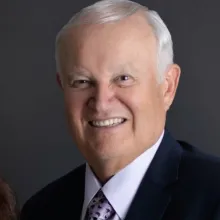
Mr. Seiglie was born in Havana, Cuba, and came to the United States when he was a child. He found out about the Church when he was 17 from a Church member in high school. He went to Ambassador College in Big Sandy, Texas, and in Pasadena, California, graduating with degrees in theology and Spanish. He serves as the pastor of the Garden Grove, CA UCG congregation and serves in the Spanish speaking areas of South America. He also writes for the Beyond Today magazine and currently serves on the UCG Council of Elders. He and his wife, Caty, have four grown daughters, and grandchildren.
