
Greg Thomas
This transcript was generated by AI and may contain errors. It is provided to assist those who may not be able to listen to the message.
Brethren, we are in the month of September, and the fall feasts are just around the corner. For us, they call it feast fever. We start looking forward to these four feasts that fall during most of this month and some in October. But it is very important for God to see us get enthusiastic about it. It's once a year He wants His children to be present at these wonderful feasts that He set up. Now, if I asked you where is the first place in the Bible where the word feast appears as such. Now, we know in Genesis 1.14 it mentions the appointed days that God set that up. We can go there real quickly because this is the first mention of the feasts before man was even created. It says in Genesis 1.14, that then the Lord said, let there be lights in the firmaments of the heavens to divide the day from the night and let them be for signs and seasons and for days and years. Now, the term seasons here is Moed and it means religious festivals as you can see in the Good News version of it. In the Good News Bible it says, then God commanded, let lights appear in the sky to separate day from night and to show the time when days, years, and religious festivals begin.
So, God had it in mind. This wasn't some off-the-cuff idea after He created mankind. Well, maybe I should have some religious feasts. No, He had that planned ahead. God does not improvise.
He is a planner. He plans everything meticulously and in detail. And when was it that He first invited His people to celebrate a feast to Him? In Exodus chapter 5 verse 1, this is a scripture that always has impacted me. God is about to intervene, to fulfill the promises, to take the children of Israel back to the Promised Land. He's planning everything because He needs to educate His people in God's way of life. They'd been probably some 400 years in Egypt. Many of them had lost a lot of the truths that they had received.
And so, God was now going to re-educate them and prepare them to be a light to the world.
His idea was that they would be the shining light there on the hill for all the people to say, look, what a wonderful God! Look what wonderful laws He has and let us get rid of all our pagan and wrong ideas and let's go to Him. Of course, Israel was not very obedient and not everything was done according to what God had hoped. But God has a plan for all of this. Notice in Exodus chapter 5, in verse 1, this is the first encounter Moses has with Pharaoh.
Afterward, Moses and Aaron went in and told Pharaoh, Thus says the Lord God of Israel, Let my people go, that they may hold a feast to me in the wilderness.
So here's the term feast. God is starting to move now after this long hiatus or gap of time that He told Abraham they would be there for hundreds of years and then they would come back to the land. So God now, it's a time to begin the educational system in Israel. Notice in chapter 10, it's reiterated. Chapter 10 in verse 7, it says, Then Pharaoh's servants, they'd already gone through eight plagues.
Oh, or this is rather the, yes, this is the seventh plague. They're about ready to to have verse seven. It says, Then Pharaoh's servants said to him, How long shall this man be a snare to us? Talking about Moses. Let the men go, let the people go, that they may serve the Lord their God. Do you not yet know that Egypt is destroyed?
So Moses and Aaron were brought again to Pharaoh and he said to them, Go serve the Lord your God.
Who are the ones that are going? So now, after these plagues, there was seven already, the eighth one was about ready to fall on them. And so Pharaoh says, Who are you taking? And Moses said, All the people of Israel. Moses said, We will go with our young and our old, with our sons and our daughters, with all the flocks and the herds we will go, for we must hold a feast to the Lord. So this wasn't something that Moses made up.
This was commanded by God. They were going to hold a feast to him.
Then he said to them, The Lord had better be with you when I let you and your little ones go.
Beware, for evil is ahead of you, trying to scare Moses. Oh, you're going to go into this wilderness and how are you going to feed all these people? And Moses then said, Verse 11, Not so! Go now, you who are men and serve the Lord, for that is what you desired.
They were driven out from Pharaoh's presence. Then the Lord said to Moses, Stretch out your hand over the land of Egypt, for the locusts that they may come upon the land of Egypt and eat every herb of the land, all that the hail has left. So when God acts, he doesn't do things weekly. He does do things incompletely. He really carries out. And one day it's going to happen here on this earth. Once he sets off the chain of events, there's no going back. So God had a purpose because he wanted to educate Israel so that they could educate the rest of the world. He didn't want the rest of the world to be submerged in all of these false religions.
Notice what it says in Exodus chapter 19. Exodus 19 in verse 3.
This is after they left. They started keeping God's feasts. They learned about the Passover and the purpose for it. Then the days of Unleavened Bread passed. And now they're about ready to keep the first Pentecost. It says in Exodus 19 in verse 3.
And Moses went up to God, and the Lord called to him from the mountain, Mount Sinai, saying, Thus you shall say to the house of Jacob, and tell the children of Israel, you have seen what I did to the Egyptians. They were the most powerful nation upon the earth at that time, and they were completely devastated. And how I bore you on eagle's wings, in other words, protected. That's from an analogy that if anybody has lived out there in the wilderness areas where there are eagles, and they usually perch, and they have their nests in some crags on some precipice, or the side of a mountain where nobody can get to them.
And so usually when the eaglets are born, they are hundreds of feet from the ground.
And so as they develop, grow feathers, there's a moment when the eagle is programmed to push the little eaglet out of the nest. Of course, the eaglet feels great there. It's getting food, it's warm, parents are there, and all of a sudden it pushes out. And here's this little eaglet, and it starts just flapping its wings and dropping like a rock. And of course, if the eaglet was a human being, he's thinking, my dad and mom are crazy! I'm gonna die! Didn't even get started! No, but God has everything programmed. The eagle knows exactly. And so what they do is, before that little eaglet falls on the ground, one of the wings comes and catches the eaglet, and brings it all the way back to the nest. And then the same thing happens until finally the eaglet is able to fly on its own. So the analogy here is that God bore Israel.
He protected them. He gave them food. He bore them on eagle's wings.
And it says, and brought you to myself. Now therefore, if you will indeed obey my voice, and keep my covenant, then you shall be a special treasure to me above all people, for all the earth is mine. And you shall be to me a kingdom of priests and a holy nation.
These are the words which you shall speak to the children of Israel. And so God had a plan. He started with Abraham's descendants to educate them.
He gave them wonderful laws, a wonderful way of life, which includes these feasts, which the world has forgotten. And without them knowing, they've been substituted by pagan Babylonian feasts where they originated. If you look back, look up, for instance, Christmas, and look at the origins of it. They already had in Babylon that same type of God that on the 25th of December. That time was a little earlier because that's when the equinox took place.
But at that approximate time, the Babylonians had Christmas. There's a book that I have at the house. It's called 4,000 Years of Christmas. It's been celebrated for 4,000 years, way before even the Israelites went to the Promised Land. And so, all of these things, people have been steeped with lies, religious lies. And of course, if it's tradition, if people are just led along, they never examine deeply what they truly believe.
Now, I remember I enjoyed Christmas myself as a Catholic. We had the Christmas tree and gifts and all of that. But when I saw what the Bible said about it, that it was a pagan religion. It was a pagan feast. And you can look it up in Jeremiah 10. Here you have actually the adoration of a tree.
Let's go to Jeremiah chapter 10.
God put this here so that you could see the origin of the Christmas tree. It says in verse 1 of Jeremiah 10, Hear the word which the Lord speaks to you, O house of Israel. Thus says the Lord, do not learn the way of the Gentiles, of the pagans. Do not be dismayed at the signs of heaven.
Like astrology and people start believing in the signs of heaven that they influence your life. For the Gentiles are dismayed at them. For the custom of the peoples are futile or vain. For one cuts a tree from the forest, the work of the hands of the workmen, with the axe.
So you go, you cut down this tree. Then you go, bring it to the house. They decorate it with silver and gold. They fasten it with nails and hammers so that it will not topple. They are upright like a palm tree. And they cannot speak. They must be carried because they cannot go by themselves.
Do not be afraid of them, for they cannot do evil, nor can they do any good. All of these idols that it has happened. Notice in verse 8 it says, but they are altogether dull-hearted and foolish.
A wooden idol is a worthless doctrine. It's not worth it. It's not something God wants us to do.
We have to worship God in spirit and in truth. He's an invisible God up in heaven. He doesn't want us to have these religious objects. People spend billions of dollars on these poor trees that could be alive, that could build houses, that they produce oxygen for us, and they all cut them down. And basically, they, some I guess, are just ground up to sod us, but it's certainly not the best environmental policy at all. And so we are going to keep God in spirit and in truth. That's why we are here. We're not here to be entertained. There's plenty of entertainment outside. We have six days of the week that we can go and be entertained. We're here to listen to God's Word and tremble at His Word and put it into practice because that's what God wants us of us. So the purpose of this message specifically is to explain from the Bible five reasons why it is so important to keep these feasts of God. Five reasons why it's so important to keep the feasts of God. And again, it's from the Bible. It's not our opinion. It's not what Luther said or what the Pope said or what any human being. Have you noticed they use their authority because they can't go to the Bible and say, well, here's where Christmas was celebrated by the Church in the New Testament, or here's where Easter or Halloween or some of these others, they can't show in the Bible. That was the case. So first of all, why do we keep God's feasts? Because they are God's feasts, not ours. They are not man-made. They're right here in the Bible. Seven times in the Bible, they are called God's feasts. Let's go to several of them. I won't quote everyone, but I will give you the seven scriptures so you can look them up later. In Leviticus 23, God emphasizes this.
Remember, he took Israel out of Egypt. And during these years that they were in the wilderness, he educated them. He revealed more truths to them. Now he is going to reveal the seven feasts that they were to keep. In Leviticus 23, verse 2, God is speaking and tells Moses, speak to the children of Israel and say to them, the feasts of what? Is it the feasts of a certain religion or person? The feasts of the Lord, the God of the universe, which you shall proclaim to be holy convocations. And then he repeats it. These are my feasts. That's why in God's people, there are humble people, there are obedient people, and they just want to do what God says. God says these are his feasts, and they're going to be kept by those that are faithful to him. I don't care where we're at. That's always going to be the case. There's always going to be people that are going to keep these feasts.
Then in verse 4 of this same chapter, it says, these are the feasts of the Lord, holy convocations. Remember the term holy? Only God can make things holy. No human being can do so. Holy convocations, that's meetings, which you shall proclaim at their appointed times.
Again, God gives us the calendar in the Bible to be able to keep it. It says here, verse 5, on the 14th day of the first month at twilight, is the Lord's Passover. So that's when we keep it.
We don't keep for calculating these feasts Roman calendars. That was set up by Julius Caesar, and he adopted the Egyptian calendar to have the 365 and fourth days. We can certainly use it as a civil calendar, but not religious. When it says the first month, it's talking about here, the first month of the Hebrew calendar on the 14th. That's when we do it. And guess what? It's so well calculated, as I've brought out, that the calendar has been kept for thousands of years, and it is so exact that after you keep it for about a thousand years, the calendar is only off by two hours. So you can imagine every 19 years, everything returns back. The moons and the sun, they all and the stars, they all come back with just a margin of minutes of the difference. The difference. 235 lunar months to go from one sun with the establishment of the stars and everything. 235 months or lunar months, I'm talking about, you get back to the 19-year cycle. You multiply that then by 100, and you're going to have 190 years, and then by a thousand, you can just go on and do that. So anyways, that's why the church is able to calculate. We know exactly when Passover is coming, because through astronomy and calculating, we know exactly when that first month of the holy calendar takes place. All right, then verse 37 of Leviticus 23, it says, these are the feasts of the Lord which you shall proclaim to be holy convocations.
And so here again, we have another time. These are the feasts. It's talking about the feast of tabernacles. And the feast of tabernacles was very special in the sense that all the other feasts, you could keep them at home if necessary. But this one, you are to leave your home and have temporary dwellings as it is possible. That's why we have these around 53 feast sites around the world to be able to keep the feasts in temporary dwellings. Now, some people say, well, shouldn't we be in tents and things like that? Well, it's only during that wilderness period, those 40 years when Israel was out in the desert and they all had tents and we had the tabernacle, but once they settled into the land, they had homes, and they would go out. They would celebrate and they would go to Jerusalem at that time. That was the place where God had placed his name.
And people would come. They could stay with relatives or put up temporary dwellings. There were also rented places that you could use during that time. And then in the New Testament time, there were over a million people that came for the feasts of God to Jerusalem. And the rabbis, because they didn't want to set up these temporary dwellings as such, the majority of people would use their housetops and put this little shack up and they would just go in it during the feasts of tabernacles. Well, that's not the idea. It should be temporary dwellings. And that's why we leave, because God wants us to stay away from our present lifestyle and all the people that surround us and go and separate. So you can be educated without any, yeah, have undivided attention.
And so you're forced into this area where people can go. They don't have to worry about work. They don't have to worry about phone calls and everything else that they have to do in their home.
So God knows what he's doing because he is an educator par excellence. He's the best educator we can imagine. In verse 44, it's repeated this last time. It says, so Moses declared to the children of Israel the feasts of the Lord. How many times do we have to hear that before we begin to believe it? And then you have 2 Chronicles 2.4, where Solomon mentions the feasts of the Lord and Ezra 3.5 as well. Secondly, these are commandments, not suggestions. We don't have suggestions. We have commandments. God sets up his law, his precepts. I remember a teacher that I had over at Ambassador College, and one time he said, I had a famous evangelist one time come to me and just asked me, why do you keep these feasts? And you know what he said? Because God said so. That was it. What else do we need?
It's there, and these feasts are part of God's commandments. They were kept in the Old Testament and they were kept in the New Testament.
Notice in Acts 5, verse 32, who does God give his Holy Spirit to?
People think, well, it's a person that just gives their heart to the Lord. No, that's not what the Bible says. Notice what it says in Acts 5, 32. These are the apostles.
Peter and the other apostles, in verse 29, answered and said, we ought to obey God rather than men. And then it says in verse 32, and we are his witnesses to these things. And so also is the Holy Spirit, whom God has given to those who obey him. A key word, obey him.
That's not just what you believe, but what you're putting into practice. That is why it is so important. In James chapter 4, here's another principle showing us about obedience. James chapter 4, verse 16, it says, but now you boast in your arrogance. All such boasting is evil.
Therefore, to him who knows to do good and does not do it, to him it is sin. So once we have the understanding, we proved it, then we're responsible for it.
Because it's going to haunt us. It will not leave us alone.
Again, that just reminds me of my own personal experience. I'm sure many have.
But I wasn't looking to stumble into God's truths. I wasn't looking for it, but I happened to stumble across it. But once I knew what God's will was here in the Bible, I didn't want to have a guilty conscience the rest of my life because I was going to not do it and just pursue other goals. I remember a gentleman that when we were here many years ago started really the ministry. Cottie and I recently married. We were in San Diego. One of the visits we had, the pastor, I was a minister at that time. We went to a hospital there in San Diego. And it was a doctor, a physician. We went to his room. And it was one of the saddest visits that I ever experienced.
This gentleman, he's probably in his early 60s, and he said, I have kidney cancer and it's gone from one kidney to the other. So I have just days to live.
But I want you to know, 30 years before this, I learned about God's truths. And I know what I should have done. But I turned my back on it. But before I die, I want to be baptized.
And I realize I haven't done much. But what's left, I want to now look at God with a clean conscience that at least I clean my sins up and I'm sorry. Well, I've thought for a moment, you know, that could have been me. I could have given my back to God and the rest of my life be haunted by what I should have done. So that helped me make the decision. I didn't want that persecution of my conscience for the rest of my life.
Here's the third reason that we have why we keep the feasts of God. They were celebrated by the people of God in both the Old Testament and the New Testament. Let's look at some of these places where God's people were all united to keep God's feasts. In Acts chapter 2, Acts chapter 2, in verse 1, it's no coincidence that they were keeping the feasts of Pentecost when they received God's Spirit. In Acts chapter 2, verse 1, it says, when the day of Pentecost had fully come, because you have to count it, the 50 days.
Pentecost means count 50. They were all with one accord in one place. They were all keeping this feast. This is after Christ's teaching. He never said it had been done away with. And suddenly, there came a sound from heaven as of a rushing, mighty wind, and it filled the whole house where they were sitting. Then there appeared to them divided tongues as a fire, and one sat upon each other, and they were all filled with the Holy Spirit and began to speak with other tongues. In other words, other languages as the Spirit gave them utterance. So we see here what was recorded, keeping of the feasts of Tabernacles and the feast of Pentecost. In this case, we're going to see a couple more in a moment. Notice in Acts chapter 27, Acts chapter 27, in verse 9.
Here's one of the fall feasts that is being kept by the apostle Paul, Acts 27 verse 9.
It says, Now when much time had been spent, and sailing was now dangerous because the fast was already over, Paul advised them. As the Good News Bible says, We spent a long time there until it became dangerous to continue the voyage, for by now the day of atonement was already passed. They were marking time according to the feasts of God. And we have several other mentions. I don't have time. First Corinthians 16 talks about another... Let's go there just for a moment. We do have First Corinthians 16.
It says in verse 8 of First Corinthians 16, Paul talking here says, But I will tarry, which means to stay there in Ephesus until Pentecost. So they didn't know anything about God's law abolishing these feast days. They were being kept by God's people.
Now, the fourth reason is that the feasts look forward to God's saving acts in the future.
God's feasts look forward to God's saving acts in the future. In First Corinthians 5, let's look at another feast day that was being kept by the church. First Corinthians chapter 5 verse 6.
It says, That your glorying is not good. Do you not know that a little leaven leavens the whole lump?
Therefore purge out the old leaven that you may be a new lump, since you truly are unleaven, for indeed Christ our Passover was sacrificed for us. Therefore let us keep the feast, not with old leaven nor with leaven of malice and wickedness, but with the unleavened bread of sincerity and truth. So he's telling him about the Passover and the seven days of unleavened bread and to keep the feast. How can Paul command something if that was all abolished on the cross like so many people teach?
And in Colossians chapter 2, Colossians chapter 2, starting in verse 16, the Colossians were being invaded and infiltrated by false teachers.
These were known later in history as Gnostics. They were an extreme Christian group that mixed astrology. They mixed some paganism and some Jewish ideas, and they were beset by these false teachers. And so Paul tells them in verse 16, because these false teachers were telling them about, don't keep these feasts.
These feasts are not necessary anymore and that you shouldn't drink. You should abstain from drinking wine and other things. You should abstain yourself from keeping the calendar in the Bible and the feast days. Notice it says verse 16, so let no one judge you in food or in drink, because these were all ascetics. As in verse 21, it says they were teaching you do not touch, do not taste, do not handle, which all concerned things which perish with the using according to the commandments and doctrines of men.
That's what these Gnostics were teaching them. And so he said, don't let them change what you eat or you drink or regarding a festival where there's joy, there's merriment, there's good fellowship. They were abstemious. They were Spartan-like. They didn't want people to have a good time because they thought that's part of the flesh. Now you're spiritual. You shouldn't do these things. And then he said, or a new moon, which is when you mark the new month of the calendar for keeping the feasts or Sabbaths.
So even these critics were telling the brethren about don't keep Sabbaths, which are a shadow of things to come. Not things in the past, but shadow of things to come. They show what is going to happen, the events in the future that God has preordained. And he says, but the substances of Christ. The church is the one that decides these things, not these pagan teachers. Notice in verse 18, let no one cheat you of your reward. Don't let them, these critics, take into light in false humility and worship of angels. That's part of the Gnostic teachings. So they're coming in and saying, well, you're too happy. You need to be ascetic. You need to be obstemias. You shouldn't be eating and drinking and having fellowship on the Sabbath.
You should be out there beating yourselves and doing all this harsh type. As he goes on, he says, verse 13, it says, these 23, these things indeed have an appearance of wisdom and self-imposed religion, all that discipline, false humility, and neglect of the body.
See, you shouldn't feed it properly, but are of no value against indulgence of the flesh. That's not going to prevent your thoughts. Your spirit-led mind is a person who is balanced and who keeps the biblical instructions. So then we go to the fifth and final reason, because these feasts will be kept when Jesus Christ returns to establish His kingdom here on the earth. Notice in Zechariah 14, this is a prophecy where it describes the coming of Jesus Christ back to the earth. Let's go to Zechariah 14. This is still in the future, but it shows exactly what Jesus Christ is going to do when He comes.
Starting in verse 1, it says, Behold, the day of the Lord is coming, and your spoil will be divided in your midst. For I will gather all the nations to battle against Jerusalem. This is the time of Armageddon. And it says in verse 3, Then the Lord will go forth and fight against those nations as he fights in the day of battle. And in that day his feet will stand on the Mount of Olives, which faces Jerusalem on the east, and the Mount of Olives shall be split in two.
If you notice there in Acts chapter 1, it talks about when Jesus Christ finished His 40 days of appearing to His disciples, He went up to the Mount of Olives. And from that Mount of Olives, they saw Him rise up in a cloud and taken up to heaven. So the same way, and the angels that were there saying, Why are you surprised?
He's going to come back the same way that He went up. And so now we have His descent upon the earth. And it says in verse 9, And the Lord shall be king over all the earth. And that day it shall be the Lord is one and His name one. That means no more Allah, no more Buddha, no more false religions at all. Neither will there be false Christianity.
With their idols and their mixture of truth and error, none of that's going to happen, because God is an educator. Christ is coming back to educate the earth, and His saints will come back and they will be part of teaching the nations about keeping the feasts of God. Notice what it says in verse 16. It says, Then it shall come to pass after Armageddon and all the people that survive that, that everyone who is left of all the nations which came against Jerusalem shall go up from year to year. So here the calendar is still active. People know when to keep these feasts will come from year to year to worship the King, the Lord of hosts. Who's that? That's Jesus Christ.
And to keep the feasts of tabernacle. Oh, so it has been done away with.
You see, all of these feasts are going to be kept. At that time, though, you're not going to have a choice because you're going to be punished by Jesus Christ if you don't keep it. Notice in verse 17. And it shall be that whichever of the families of the earth do not come up to Jerusalem to worship the King, the Lord of hosts, on them there will be no rain. There will be a devastating drought. They won't have anything to eat. And so I wonder if the next year they'll show up for the feasts of tabernacles or not. If the family of Egypt and the majority of the Egyptians today are Muslim and follow Islam and Allah, it says, if they will not come up and enter in, they shall have no rain. There'll be a devastating drought. They shall receive the plague or punishment with which the Lord strikes the nations, not just Egypt, who do not come up to keep the feasts of tabernacles. That's not a suggestion. God means business. This shall be the punishment of Egypt and the punishment of all the nations that do not come up to keep the feasts of tabernacle. The word here, punishment, kata, means sin, and it's punishment. God's word version says, this will be the punishment for Egypt's sin and for the sin of all the nations that won't celebrate the feasts of booths, which is tabernacles. So, God means business, and we just have to have the faith to believe in Him, to prove it for ourselves, and then to have the courage to put it into practice. Because, as we're going to see in the Bible study about 2 Peter 1, there in the first chapter, Peter says that we need to have a faith that is strengthened and fortified by seven great virtues. And the first one he mentions there has to do with what the term virtue, but it means spiritual courage. That's what God gives us. It's not just basic faith, but the spiritual courage to put God first in our lives and seek His will.
And so, we see that the world is going to have to learn one way or the other. God is right.
Christ knows what He's doing.
I'd like to now end with a comment from the Bible Knowledge Commentary on Zechariah 14.
It says, the armies in the campaign of Armageddon will be destroyed, but not the people of the nations they will represent.
A newly instituted worldwide religious order, embracing both Jews and Gentiles, will center in Jerusalem and will incorporate some features identical with or similar to certain aspects of Old Testament worship. One of these aspects is the annual celebration of the Feast of Tabernacles. The need to go to Jerusalem is partially explained by the presence there of the object of worship, the King, the Lord Almighty, that is Jesus Christ, who will be ruling on the throne of David in Jerusalem.
So, to reiterate, here are five important reasons why to keep God's upcoming feasts. Let's make sure we keep them in their times and in spirit and truth.
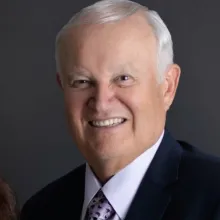
Mr. Seiglie was born in Havana, Cuba, and came to the United States when he was a child. He found out about the Church when he was 17 from a Church member in high school. He went to Ambassador College in Big Sandy, Texas, and in Pasadena, California, graduating with degrees in theology and Spanish. He serves as the pastor of the Garden Grove, CA UCG congregation and serves in the Spanish speaking areas of South America. He also writes for the Beyond Today magazine and currently serves on the UCG Council of Elders. He and his wife, Caty, have four grown daughters, and grandchildren.
