
Why Have We Come to God's Feast of Tabernacles?
Given on
Downloads
Downloads
To download a file, right-click (or long press) a link above and choose Save As.
We have come to God's Feast of Tabernacles and Last Great Day to (1) worship our very special God, (2) fellowship with God's very special people and (3) be inspired by our very special future!
This sermon was given at the Oconomowoc, Wisconsin 2016 Feast site.
Transcript
This transcript was generated by AI and may contain errors. It is provided to assist those who may not be able to listen to the message.
To walk away and have a spiritual high. I ask that you continue to pray for all the men who will be coming up here to get sermonettes or sermons, the fellows who are reading the Bible studies. We need your spiritual help to be able to do the job of what we are doing. And I certainly ask for your prayers as I go through this material tonight. For years and years ago, when we had Mr. Armstrong as our leader, he would many times talk about, why are we here? And I'd love to open the Beach of Tabernacles this year. That would be a very good thing for us to ask. Why have we come to God's Feast of Tabernacles? For those of you who would like to take notes, please write that up at the top of your favor. Why have we come to God's Feast of Tabernacles? I've got three points for you this evening. Relatively simple points, but I feel that they are very profound points. As I've kept the feast, this is my 49th feast. The first few of those feasts I had to keep at home because God called me as a 15-year-old young man. If He called my family, I needed to keep the feast on my own as a young man. So the first few I kept on my own in the 30s and 1970s, I began to keep it with our church.
Why have we come to keep the Feast of Tabernacles? Well, number one, we have come to worship our very special God. We have come to worship our very special God. God has wrapped up in mankind. He's been reaching out for personal involvement with us from the beginning of time, right from the beginning of Genesis. He's still reaching out to each and every one of us.
He loves every one of us. In the Old Testament, we see where Abraham is called God's friend. David is called a man after his own heart. When we are praying, we are children of God. We could say, how about Father? Because He is our Father. God's love is not simply for mankind as a mask. God loves each and every one of us that are here tonight. Each and every one of us. This is not some sort of sentimental, vague, abused feeling.
We're not part of some big machine. We are individuals. And God loves us as individuals. You know, we're all in a certain way of looking at the masses. Charlie Brown once said, I love mankind. I love mankind. That is people I can't sing. Well, that's not that way. God loves mankind. And God loves people, and God loves you. That's why, at some point in your personal history, God reached out to give you a personal invitation to be a meaning like this.
A personal invitation from the being who created everything. Everything. Over and over in the New Testament, we see how Jesus Christ was moved with compassion on those who were unfortunate in many ways, whether it be spiritually, physically, emotionally, mentally. Jesus Christ reached out to various ones. And, of course, we want to follow that example. We want to be here, and we'll talk about this a little later during the sermon. We want to reach out to one another, this piece of theteran.
We need one another. Over the course of the time I spoke at the end of the Wisconsin Delves, I have used this story, forgive me if I use it again, but it really does. In the picture, a little girl one evening became very frightened during a thunderstorm. After one very loud clap of thunder, she ran from her bedroom to her parents' bedroom. She jumped between her mom and her dad. Her folks knew she was frightened.
Her dad, in that deep voice of his, reached over to his daughter to console her, and he said, Don't worry, God loves you. And the little girl looked at her dad and said, I know that, but right now, I need somebody to skin up. Reverend, we need people with skin up.
We're going to talk about that a little bit later, but we want to worship our very special God. Let's take a look at the love of God and Jesus Christ afterwards. Let's turn to Mark 7. Mark 7. We're going to read a story that vividly shows that Jesus Christ did not consider people as merely a case study, as a photo op. Jesus Christ looked at us and does look at us as individuals with all our individual needs.
Mark 7, 30, verse 31. Again, he fired him from the region of iron sight. He came from the midst of the region of the capital of the city of Amalit. Then he brought in one who was deaf and had a impediment in his speech, and they begged him to put his hand on him. So, too difficult, these two challenges this person was facing, the fact that he was deaf, the fact that he had this impediment of speech. Notice what Jesus Christ did. Verse 33. And he took him aside. He took him aside. Jesus Christ wasn't dealing with the crowd.
Jesus Christ was dealing with the one. He wanted this one to appreciate that fact. You know, when you have an issue like this, sometimes you feel that you are really behind everybody because of your challenge in life. And Jesus Christ wanted to realize he understood that. He took him aside from the multitude. He gave him individual attention. You know, our God is so great that no matter what, every one of our issues are, and we all in this room have, our issues, the God of God, Jesus Christ, can address us individually. I'm not going to turn there, but in 1 Peter 5, you're said one of my favorite scriptures in the Phillips, the J.D.
Phillips, New Testament translation. It talks about how we can cast our care upon him. But in the Phillips, it says, it's such a rich translation, it says, For we are his personal concern. We are his personal concern. This individual who had been embedded in the stage of his death was Christ's personal concern, and yet Christ ended up with each other in our lives. So he took him aside from the multitude. He put his fingers in his ears. Christ was coming back into this man.
What was about that? Something with his ears. He spat and touched his tongue. But yet, Jesus Christ wanted to realize what his needs were, that he understood those needs. Then, looking up to heaven, he wanted this man to appreciate where the healing was going to be coming from. Looking up to heaven, he sighed. Christ sighed. Why did Christ sigh? Because he wished mankind didn't have to live so.
Just as when Lazarus died, Christ realized he was going to go to the grave, said Lazarus, Jesus Christ was crying, even though he realized. And in Matthew's moment, he was going to raise that man, his friend, from the dead. Why was Jesus Christ crying? Because he saw people who were grieving, who didn't have hope of their resurrection. And it hurts God to see these kinds of things. It hurts Jesus Christ to see these kinds of things. He wants us to be full of hope.
So he took him aside from the multitude, put his fingers in his ears, down in his tongue, touched his tongue, and then looked at him and said, when he lacked the open, immediately his ears were open, and the impediment of his tongue was loose, and he spoke plainly. Interesting, you know, here's a man who was physically healed, but I think this also shows another layer of understanding. And that is that this man is also going to have true understanding when his spiritual ears are open.
And, frankly, we worship a special God. God so special, he opened up your ears and mind. He opened up your eyes and mind. He allows our tongues to sing special music, which is done so very nicely today, this evening. Our special God treats us with a great deal of love. We need to come here, from this piece of tarenacles, to worship our very special God. Let's turn right now to Mark 1. Here we see the beginning of Christ's ministry. Mark 1. Sorry about a lever here. A lever. You know, brethren, most of us in this room probably have body fissures.
Some of us think we're too fat. Some of us think we're too skinny. Some of us think we're too short. Some of us think we're too tall. Some of us don't like the fact our hair is curly. Others wish we had curly hair. You name it. We all have our hair-reucisions. We're thinking we've got issues. But I want you to think about the life of a lever. According to Leviticus, a lever was not afforded the opportunity to live with this family. He had to live away from the main population.
He was excluded from temple service, from his sacrifices, from religious festivals, from worship services. He basically was a society through him. They kicked these folks to the curb. They were isolated. Whenever they walked down the streets, they had to call, lever, lever. Think about yourself.
I can think about myself. Think about whatever it is you think is not good about the way you look, or the way you dress, or don't dress, or whatever. And if you had to walk down the street advertising what you feel is your most horrible trait, what does that do to your sight?
They had to wear a certain clothing that earmarked them as a lever.
Elrishai reports the standard policy today, and I quote, No one was to salute a lever. No less than a distance of six feet must be kept from a lever or the wind from that direction. A hundred were scarcely sufficient. Clearly the life of a lever was well-isolation and loneliness.
Let's take a look at Jesus Christ, our very special God. Mark chapter 1, verse 40. Now, a lever came in a chlorine kneeling down to him, saying to him, If you are willing, you can make me clean, that Jesus moved with the magic scratched out his hand and touched him. Touched him? How many people do you think would touch him voluntarily? How many people do you think would look at this man with love in their eyes, as opposed to terror? Can you imagine what you'd be going through every place you walked, up and down the streets, into the supermarket, when people saw you, you saw terror in their eyes?
Then Jesus' verse, where the moon, the compacted, stretched out his hand and touched him and said, I am willing, be cleansed, as soon as he had spoken and made the deliverance, he left him and he was cleansed. That, brother, is a very special God. And we have come from worship, a very special God. Point number two. Point number two. I was referring to this a little earlier. We have come through fellowship with God's very special people. We have come to fellowship with God's very special people. Let's take a look at Luke chapter 24.
A bit of background here. At this point, Jesus Christ had been crucified. The events of the week seemed anything but joyous or triumphant. The two people, the people we're about to read about, were confused, they were discouraged, they didn't know which way to turn, they were leading Jerusalem and heading away from Jerusalem. Verse 13. Luke chapter 24. Now behold, two of them were traveling that same day to a village called Emmaus, which was seven miles from Jerusalem. And they talked together these things which had happened. All the trials that Jesus Christ went through, three trials by the religious authorities, three trials by the secular authorities, all of them in a very short period of time, less than a day. They talked together to all these people who had happened. Verse 15. He saw as one neighbor conversing in Mark's name, the reason that Jesus himself drew near and went with them. But their eyes were restrained so they did not know Him. And he said to them, what kind of conversation is it that you have with one another as you walk past that?
Turning to Jesus Christ, no. Why they were sent? Of course, He knew why they were sent. You know, it's an interesting study. Just as we go through the Gospels, it highlights the life of Jesus Christ and what He said and what He did. Here we see an example. He knows exactly what's happening in these people's hearts and minds. But He's drawing them out. He's asking interesting questions. He's asking questions that they want to talk about. They want to get it out of their system. He knows that. Of course, we can do the same thing as we talk with our brothers and sisters in the faith. Sometimes we wonder, what can we do to serve a local church? Your name doesn't have to be on any organizational chart to serve a local church. You know, you've got every day you get on your knees and ask out, to show you opportunities. That only to serve people in the church. It's to serve people where you work, your relatives, people in the community, your next-door neighbor. Any number of things can be done. And He asks how to give you the understanding as to how you can apply these things in your life. Jesus Christ is using the question to bring these fellows out because He's one of the help-tongue. Do you know, folks, in your life, next-door neighbor, relatives, whoever, coworkers, who have real questions? I've not always been in the full-time ministry. I used to be in sale. I was a warehouse manager for two years, and I was in sale for eight before the church fires again. I remember, again, I used the story before in Wisconsin, then also. I remember there was a movie many years ago in the 1980s called, The Day After Fighting About the Newstair Fund, proposed nuclear holocaust.
And I went to my sales office the next day, and my boss said, Hey Randy, you're a holy cow! Tell me about the end of the days. And I said, Casey, do you really want to know what the Bible says about the end of the day? I really want to know. I said, well, ask me a question. What specifically is on your mind? He asked me a question. I answered the question.
Then somebody else asked me a question. On the moment it went, we had, he was the Greek Orthodox, we had a Jewish lady, we had several Catholics, some of the guys from the Paris team, I don't think they were alive. But we talked for two and a half hours. Just back in the 80s, they set the answering machine out of automatic, and for two and a half hours, I didn't bring up anything. They asked questions. I responded. There is a thirst for the truth of God out there. These men want a true thing, and Jesus Christ was going to give it to them, because Jesus Christ loves them so. And I asked myself, I asked of you, are we doing all we can do to show love and to worship without very special people and to be there for one another? I'm sure we all want to do that. But that's how He gave us the variable to understand all the various ways this has taken place. Verse 18, Luke 24, verse 18. Then one whose name was, Clydophos Anson said that, Are you the only stranger in Jerusalem? Have you not known the things that have happened these last days? I mean, you just, if you were there watching, you could just see the smirk on this guy's face. He's looking at us, companion is walking. He's saying, listen to this guy. You know, a guy that we thought was a Messiah, a girl that took place and he was going to lead us way from rolling the bondage and so forth. What's wrong with this guy? That's what this here is saying, basically. And he said to the Christ-setters, what the hell? He said, he called on and on. So he said, The things concerning Jesus of Nazareth was a prophet, mighty indeed, and a word for God and all people. Now the chief priests and our rulers delivered him to be condemned to death and crucified him. But we were hoping that he and Wazim were going to redeem Israel. Besides all of this today, the third day since these things happened. Yes, in a certain moment that our company arrived at the tomb, it really astonished us. When they did not find his body, they came saying that they had also seen a vision of angels who said he was alive. And certainly those who were with us went to the tomb and followed just as the women had said. But then, they did not see. So these two devils were the light of Thomas. Where did he go? Well, you know, maybe he just backed up and moved away.
Remember, the issue with these two devils, and Christ again was one of the children, and none is loved to them. They were missing the point. They weren't seeing. They were not focusing on who Jesus Christ was, how much he loved them. They weren't focusing on all those Old Testament scriptures that talk about this first coming.
You and I have to make sure that we're not focusing on just a lot of things that are on the periphery, focus on the real issues. And one of the real issues, as a church pastor, I can tell you that God's people in so many cases are really hurting. In the feelings, not just physically, but mentally and emotionally, so many of us are so at such need. And just as Jesus Christ laid his hand on that lover, there are those in his room who just want somebody to understand us and to talk with us and to ask what's on our hearts and minds. And certainly, brethren, that's why we're here at this piece of Tabernacles. So, look, God's very special people.
There should be nobody else we want to be. I'm sure there's all sorts of activities that we can do here in the Tableau area. But the greatest activity we have is to be here in one room or another. Let's take a look at it. So, put a marker here for return. Let's take a look at Ecclesiastes chapter 4.
Ecclesiastes chapter 4 verse 9.
Two are better than one, because they have a good reward for their leaver, for if they fall on one, they'll live in that with St. Haman. But what would be over alone when he falls? Because no one can help him up. If he had a two lying down together, they would eat warm, but often one would be warm alone. Though one may be overpowered by another, two can withstand him. And a three-fold cord is not quickly broken.
We've got strength here.
As I've worked with all the various spokes I've worked with over the years and various churches I've passed here, such tremendous strength with the people of God. So this piece of tabernacles, please let's let your light shine. You are here for a very special purpose. You know, we will never have this exact group together again until we do. We'll have a lot more added in a day. But in terms of getting this particular group together, this is a unique occurrence. We want to take advantage of this occurrence. What do you have to give? I'm sure you've got plenty to give. You've got plenty to give. Let's give what you have to give here. We'll go back to Luke chapter 24.
Luke chapter 24 verse 25. Then he says, In the old foolish one, and slow a tired of a leak, and all of the prophets have spoken, all not the Christ who have suffered these things and entered into his glory, notice again as we're studying Jesus and how he did things, notice what he's doing here. Jesus Christ is giving them back to looking at the Word of God.
I've got to admit, and you probably would admit in your life, there have been too many times in my life when I allowed myself to get overwhelmed with looking at things from a physical perspective. And I can look back on those days when some of my friends were saying something to me, and they weren't necessarily trying to correct me or preach at me, but they were just good, spiritual people. And they brought me back to looking at the Word of God and what he asked for us in that Word. To know what the Bible says, to know what that means, to know how to apply that. And in your lives, as you've learned your lessons, you can tell a tale of various things you've overcome. And I call upon you this feast, given the opportunity to serve in that way. Now, I'm not saying that tomorrow morning we all walk through those doors. I have arrived. I'm here to say that or not. Please, all of you come to me, and I'll give you my words of wisdom. That does not go over at all. But people who learn and are humble, that have been through the wars, your heart's in the foreign way, stopped on, put back in, you know how to properly serve. And I call upon all of us to do that. Romans chapter 15 and verse 4, I'll read this here for you. For whatever things were written before, written for our hearing, for our learning, that we through the patience and the comfort of the Scriptures, might have hope. This piece of Tabernacle's list indulged ourselves by having good spiritual conversation. Good spiritual conversation. How does one do that? I remember there's actually an individual in his audience. The values of the pastor at this person came to my back. I really wish that after services we could have some really good spiritual, needy conversation. I really long for that, but we don't have it in this congregation. But you know, there have been too many times. We don't have it in the congregations all over the way we should. How can we show love to one another along those lines? Look at Philippians. Look at chapter 4 and verse 8. Here is a secret to having good, needy, spiritual conversations, not just on Sabbath, but at any time with our brothers and sisters in faith. Look at chapter 4 and verse 8. Finally, brethren, what's more things that are true and noble and just and pure, what are things that are lovely and a good report? If there's any virtue, if there's anything praiseworthy, meditate on these things. So we're meditating on these beautiful things, these uplifting things, these powerful things. Now, what does it say in Matthew? Out of the abundance of the heart what? The mouth speaks. So if we're meditating on these things, then out of the abundance of the heart, our mouth will speak. And we'll have those tremendous set of conversations.
That's Matthew 12, 34. Go back to Luke and finish up there. Luke chapter 24.
Luke 24 and verse 28.
Luke 24 and verse 28. Then he drew near to the notes where they were going, and he indicated that he was going to go further.
You know, I think Christ knew exactly what he was doing there. He understood that the, as some people call it, the salt principle. He knew that these fellows wanted more conversation, but he kind of wanted them to show an interest in having it. So he indicated he was in the world, or he wasn't. Verse 29. But they did constrain him, saying, A five of us were sporting anything, that they as far as Bethany went and instabled them. Now, he came to pass as he said at the table with none, but he took bread and less, and broke every day with his book. Then, their eyes were opened, and they knew him, and he vanished from their sight.
And he said to one another, Did not our heart burn within us, while he talked with us on the road, and while they opened the Scriptures to us? For I look at that verse, verse 32. And I've got to ask myself, how well do I do with that verse?
I ask of you to look at that verse, and you ask yourself, how well do you do with this verse? You know, if we, as a group here, in O'Hana, O'Hana, have this kind of effect on those of the rest of us that are here, we're not going to want to leave this hall. We're going to enjoy it so much, and we'll talk about it so much, and we'll get so much from it. I may mention all of those of you in the group. You know, so I'll write you down in Esther 4, verse 14. I'm not going to turn there. Esther 4, 14, I'll read it for you. More a guy talking to Esther, where he says, Where he remained completely silent at this time, Will leave and deliverance will rise from the Jews to another place. But you and your fathers also perish. Yet who knows, whether you have come to the kingdom for such a time as this? Who knows, whether you're in a final walk in this setting of this group to touch somebody's life in a very meaningful way to cease to tap into this?
So we've come to worship our very special God. We've come to fellowship with God's very special people. And lastly, number three, we've come to be inspired by our very special future.
We've come to be inspired by our very special future. Say a word to Revelation chapter 19.
Revelation chapter 19, verse 7.
Let us be glad and rejoice, to give in glory, where the marriage of the Lamb has come. Notice through thoughts here. Let us be glad and rejoice, one thought. And second thought, the wife is white and made herself ready.
From this is the time these days we're looking at, which represents the millennium, later on, the last great day. These days are such beautiful days. Such beautiful days.
Picture such wonderful happenings.
Recently, in the Chicago area, we've had a number of deaths.
Boy, Wisconsin as well.
Notable people in congregations. Very notable people.
Missioner, Mr. Bob Fay. Others.
And you just want so much to see these people live here. So much!
And they will. And we look forward to that. Let's begin with the first miscello in chapter 4. First miscello in chapter 4. Here in Thessalonica, a little city in Greece, the people there thought that Christ was going to come in their day. I'm guessing that most generations of Christians have felt the same way. I think that's a good thing. It is a good thing. But, in these days, some of them remember God's name.
And because they thought Christ was going to come in their day, and some are dying, they were confused. And so Paul had no right to them, and to the third. First Thessalonians 4, verse 13. So I don't want you to be ignorant, brethren, concerning those who will fall in this sleep, lest your sorrows, others who have no hope.
Sorrow is good. Grief is good. Everybody grieves in their own way. Some people will cry. Other people will differently. Everybody in their own way. But notice Christ says, those who will fall in this sleep. As you and I know, those who have died, have no understanding of the passing of time, if you don't know pain or anything. It's going to be to them, as a blinking of eye, and the next thing they're going to know is that you will die. First, we're going to read that Jesus died and rose again. Even though God will bring them to those who sleep in Jesus. For this we say to you, by the word of the Lord, that we were a lie and remain, until the coming of the word of the Son, by knowing, perceived those who are asleep. For the Lord Himself will descend from heaven with a shout of the voice of our angel, for the trumpet of God and the dead of Christ will rise first, that we who are a lie in our nation, will be brought together within the clouds, and be put forth in the air, and those which will always be with the Lord. Therefore, comfort one another with these orders. I lost a lot of my family. We lost probably a bit of your family over the years. We miss them. We can remember what it's like to have conversations with them. But you know, let's look at this from God's perspective and Jesus Christ's perspective as well. Jesus Christ remembers with crystal clarity, can we prayer the Moses, Christ, or David? Your members of crystal clarity, all things that never did, were married. But their voices are silent. They're not praying now. They're integrating now. They're not studying the Word now, having that conversation along those lines. And when Jesus Christ resurrects his brothers and sisters, He's saying, aha, we're going to get that back. I can converse again with Mary and Martha and Deborah. I can converse again with Peter and Paul and Moses. We think that we're going to rejoice. Our Father and God, Jesus Christ, are tremendously in rejoicing over this. It's a tremendous aspect of our future, a very special future. Let's turn to Isaiah. I always feel a little let down during the beach. We don't turn to Isaiah, at least a little bit. Let's think of Isaiah. Some years ago, I gave a sermon, where the great ball of the sermon was just in this book. We know very well 1 Thessalonians 4. We know very well 1 Corinthians 15 and the Resurrection chapter. Let's take a look at the resurrection from Isaiah's perspective. Let's take a look at your future, from what Isaiah had to say in Isaiah chapter 60 starting on verse 1.
Arise and shine. He's talking about you. For you to arise, for you to shine, for your light has come, and a glory Lord has risen upon you. Verse 2 was a case after, but, oh, the darkness shall cover the earth. The darkness of people, the Lord will arise over you, and it's largely seen upon you. Verse 2 is talking about the end of the age. But then at that time, at the end of the age, after the trumpets, at that last trump, then we see verse 1 there, where we're arising, we're shining, the people of light. Verse 3, The Gentile shall come to your light, and in case of the brightness of your rising, lift up your eyes all around and see, if they all gather together, they come to you, your son shall come from afar, your daughter shall be nursed at your sign. We've got some young people in this room that we wonder, what happens to our children when we're resurrected? Verse 4 tells us, Who better to raise children than a spirit being? Well, my kids are beyond, I wish I was a spirit being. I could use a lot more wisdom back then. Now, my kids are 34 and 31 now, almost 32. Why could I use the wisdom back then? I'm sure you would say the same thing. But look at the tremendous opportunity that we have here. The tremendous opportunity. Let's take a look down at Colossians, chapter 3.
The one thing we can rejoice over in a special poem, a special future, is the resurrection. But notice first, chapter 3 here, Colossians, verse 4.
When Christ, who is our life, appears, then you also will appear authentic in glory. I enjoy reading this scripture out of funeral. I enjoy reading this. Not that I want to do funerals, but if we can also simply adapt to the way we live and the way we die. But it is so comforting for me as a church pastor, as a friend to those who have died, to say that individual, in that casket, or in that burn, that individual's life was not the Father of Jesus Christ. I remember going to the funeral of Jean Noel many years ago in Ohio, during and after many years. It was an interesting situation that we had, because Mrs. Noel, right in front of Mr. Noel, as he was in his casket, she mad at his Bible, open. Open to that you saw all the markings in his Bible. It was amazing! Can you do that? That was a man who is going to be, in that next instant, appearing with Christ in glory. And I'm sure the same thing is true for you. Our resurrected body will be incorruptible.
Changed so radically. Never age. Now you're young, you think you're in this rather long. When you're old, you hope you can just get in the quiet white gate.
Our resurrected body with grace and glory. To possess brilliance, splendor, brightness, magnificence, dignity, majesty, the grace of God without limit. That's you. That's us. That's our family. The resurrected body, the raised in power. You know, God doesn't give us power just for the death of the living of something. He gives us the power so we love others. So we do His will, so we do His bidding. So we perform the works He gives us. That's why He calls us.
Isaiah chapter 30. Isaiah chapter 30 verse 20. And though the Lord gives you the bread, the diversity, and the waters of the plitchen. And some of you are sitting there, amen, brother. I know that. I know that bread of diversity. I've had several loads of that. Water's affliction? Boy, I've said that since Browning. My water's affliction. Yet your teachers will not be moved into a corner anymore but your eyes will see your teachers. Usually when you're overlying, you say, this is the way to walk in it. Whether you turn to the right hand or whether you turn to the left. There's a reason why you've gone through such horrendous trials in your life.
You know, when you think about the beginning of the millennium, which this evening portrays, you think about the fact that if we understand prophecy, then it may well be that nine out of every ten people on planet Earth at the beginning of the Great Regulation, nine out of ten will die before the millennium starts. Only ten percent will survive. And that ten percent will be very battered people. Dysfunctionally little will walk through the worst times humans have ever seen. Three and a half years of Satan's wrath. That last year, not only Satan's wrath, but God's wrath on mankind to all their families. That's something awkwardly under. When they come to Earth and they live into the millennium, they need somebody like yourself, who knows what it is, to go through trials, to be successful at it, to be there for them, to not just quote platitudes, but to hug them and say, you know, I've been where you're at. I've been where you're at. Let's talk about how we get back to where we want to be. That's why you go through the trials. You go through... that's why you can be so... and we'll be so successful. You have a very, very special future. Those who are in the choir, you're going to be up on the stage here to sing the last song, so you can start assembling right now. Because it's up there, we'll ask you to make the announcement. I'm making the announcement. Don't want you to kiss yourself when I'm angry at you. You can bring yourself. Brother, why don't we come to the piece of Dattering Echols? We have come to the piece of Dattering Echols for three very important reasons. Number one, we've come to worship our very special God. Number two, we've come to fellowship with God's very special people. And number three, we've come to be inspired by our very special future. Let's enjoy the fellowship. We're just beginning the piece. Let's enjoy what we have. Let's go back to our rooms. Let's get a good restful evening to sleep this evening. Let's pray for one another. Let's pray for the men who will be speaking up here. Let's pray for all the various people out in the audience who will be serving various capacities. Certainly our choir and all of their doing, all the work they put into their service. Pray, brethren, for peace and safety for this room. There are a lot of people out there who are not well. And they would just love to walk in here and walk up there. So let's pray for safety. Jesus Christ will be in His ministry in Mark chapter 1 and face a demon in the center of God. And if we gain His ministry, then we can face the same thing. So let's pray for God's safety. Brethren, have a good night! We'll see you in our other corner.
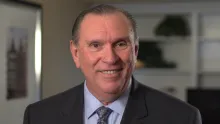
Randy D’Alessandro served as pastor for the United Church of God congregations in Chicago, Illinois, and Beloit, Wisconsin, from 2016-2021. Randy previously served in Raleigh, North Carolina (1984-1989); Cookeville, Tennessee (1989-1993); Parkersburg, West Virginia (1993-1997); Ann Arbor and Detroit, Michigan (1997-2016).
Randy first heard of the church when he was 15 years old and wanted to attend services immediately but was not allowed to by his parents. He quit the high school football and basketball teams in order to properly keep the Sabbath. From the time that Randy first learned of the Holy Days, he kept them at home until he was accepted to Ambassador College in Pasadena, California in 1970.
Randy and his wife, Mary, graduated from Ambassador College with BA degrees in Theology. Randy was ordained an elder in September 1979.
playlist
