
Why Have We Come to God’s Feast of Tabernacles?
Given on
Downloads
Downloads
To download a file, right-click (or long press) a link above and choose Save As.
We have come to the Feast to do three things: (1) We have come to worship our very special God (2) We have come to fellowship with God's very special people (3) We have come to be inspired by our very special future.
This sermon was given at the Pewaukee, Wisconsin 2020 Feast site.
Transcript
This transcript was generated by AI and may contain errors. It is provided to assist those who may not be able to listen to the message.
Brethren, why have we come to God's Feast of Tabernacles? We heard something about that last night. A lot of what I've got here today is going to echo what you heard last night. For those of you who are not here, you'll hear some of the same things we covered last night. Why have we come to God's Feast of Tabernacles? You know, well, first of all, welcome to all of you. It's been a tough year. Very, very hard year. A challenging year. A year unlike any year that you and I have ever experienced. And yet, there are some things that are taking place that have been taking place for many, many years that are still the same. We're so very thankful they're still the same. We've got God's Holy Days. We've got this day-to-day that has such deep and rich meaning for each and every one of us. We have a different look this year at the Feast. This room normally would seat over 600 people. We don't have 600 people here today. So we've got a bit of a different look. We've got a different feel. But God, in His love for His people, for His children, has said His name here. That remains the same. God, in His love for His people, has asked us to come and rejoice before Him. That remains the same. Let's take a look at Leviticus chapter 23.
Leviticus chapter 23.
Speak to verse 34. Leviticus 23 verse 34. Speak to the children of Israel, saying, The fifteenth day of the seventh month shall be the feast of tabernacles for seven days to the Lord. On the first day there shall be a holy convocation. You shall do no customary work on it. For seven days you shall offer an offering made by fire to the Lord. On the eighth day you shall have a holy convocation. And you shall offer an offering made by fire to the Lord. It is a sacred assembly, and you shall do no customary work on it. We're fulfilling those words today. And we'll fulfill what says there in verse 36, on the eighth day, the last great day. We drop down now to verse 40. And you shall take yourselves on the first day of the fruit of beautiful trees, branches of palm trees, boughs of leafy trees, willows of the brook. And you shall rejoice before the Lord your God for seven days. You shall rejoice for seven days. Brethren, as I was thinking about what to offer you as a sermon today, I was thinking about that last phrase, about the opportunity we have to rejoice before the Lord. Why have we come to God's feast of tabernacles? I want to give you a little bit of a head start, let you know what I'm planning to cover with you today. My theme, if you like to write down themes or the essence of the topic, is in the form of a question, which you've heard already me spell out several times. The question is, why have we come to God's feast of tabernacles? And I've got three responses there for you. We're going to go through all three of those today.
Answer to that question, why have we come to God's feast of tabernacles? Number one, we have come to worship our very special God.
Number two, we have come to fellowship with God's very special people.
And number three, we have come to be inspired by our very special future. Truly reasons for us to be here and to rejoice. Yes, there's all sorts of things that you have come through. Some of you have had tremendous challenges over the last year since last feast. Health challenges, economic challenges, social challenges, all sorts of challenges. But you've come from many different states, I'm sure. You know, this is, again, a little different this year because of the COVID situation. But normally here at the feast in Wisconsin-Delles, we can have upwards of 28 states represented. Normally, we'll have a half a dozen or so foreign countries. Not so much this year. But it just shows you God's people's desire to come and worship before Him and to rejoice before Him. So let's take a look at that first response as to why we've come to God's Feast of Tabernacles. Number one, we have come to worship our very special God. Our very special God. Our Heavenly Father and our elder brother, Jesus Christ, have a rich and vibrant love for each and every one of us. In their love for us, they are preparing a very special future. We'll talk more about that as the message goes along. A future that spans all of eternity. This isn't something that just comes up and vanishes like a vapor in a little while. This is something that you and I will enjoy for all time. Something that our great loving God is going to give to us. Tailored to us collectively as the family of God, but also individually as individuals. As God takes a look at you specifically, He took the time to think about when was the right time to call you.
Some of you were born into the church, as we say. You know, Mr. Duran, who is our coordinator. His children are fifth-generation Christians. Fifth-generation, I should say, in the church. Fifth-generation. There may be others of you who are in that same situation. You know, I came in on my own when I was 15 years old. But either way, no matter how you came, you're here. And God is blessing you with tremendous gifts, an exciting future. Maybe your past has not been all that exciting, but you've got an exciting future to look forward to because of a very special God who loves you so very much. Let's take a look at Jeremiah chapter 29. Jeremiah chapter 29.
Jeremiah chapter 29 and verse 11.
I quote this often. It means a great deal to me. I'm sure it does to you. You've heard it, I'm sure, a number of times. I'm sure you enjoyed it as well. Jeremiah chapter 29 verse 11. For I know the thoughts that I think towards you, says the Lord, thoughts of peace and not of evil, to give you a future and a hope. A future and a hope. And what a future God wants to give to us. You know, as I was preparing my message, I wrote in the margins of my notes. You know, I always have everything all printed up, but then the day I'm speaking, I'll take a look at my notes and I've got all these other little additional notes on the margins. And this morning, I penciled in there, or actually penned in there, hymn number 186, which was the third hymn in the opening grouping of hymns. Worthy of worship, worthy of praise, worthy of honor and glory. You know, I'm watching right now in the Smithsonian Channel a series on ancient Rome. And when you look at the ancients and how they worship their gods and what their gods were, they were little more than just, kind of like human figures only given greater powers. I'm so glad that's not our God. Those other things weren't gods, as we all are aware. But our Father, God, is a tremendous God who wants to share His level of living with each and every one of you. Because He loves us so very much, because He's so very special, and views you as being very special. You're His kids. He loves you very, very much. You know, recently I was asking in the Chicago and the Beloit congregations, the Bible is chock-full of great biblical truth. But if I were to ask you to write down what is one of the greatest biblical truths, or maybe the greatest biblical truth, what would you write down? What would you write down? Well, I'm sure there are many good answers to that question, but what I wrote down in my paper, and I suppose in my notes here, one of the greatest, if not the greatest, biblical truth is that our very special God is a God who is love. He is love. Everything He does is love. Like our sun shines 24-7-365, that's what it does. Our God is love. That's what He is. That's what He does. Let's take a look at 1 John 4.
1 John 4.
I always want to make sure we're pegging our thoughts to what it says in the Scriptures.
1 John 4. This is also in another location, but we'll just read this. 1 John 4, 16. And we have known and believed the love that God has for us. God is love, and He who abides in love abides in God and God in Him. So our God, our very special God, is love.
And another question I asked to the group in Beloit, in Chicago. Okay, so we've got that as one of the great biblical truths. It's not the greatest biblical truth. But what does God do with that truth? How does God put that truth into action? Well, let's take a look at something you know very well. John 3.
John 3, verse 16. John 3, 16.
In my Bible, we'll all read lettering here, John 3, 16. For God so loved the world that He gave His only begotten Son, that whoever believes in Him should not perish but have everlasting life. Notice, God so loved. So loved. We use that phrase. We use types of that phrase to talk about, well, we went to this restaurant at the feast, and the meal was so good. Or we had a really great conversation with somebody, and it was so good. So here we see God so loved. An intense phrase, a very meaningful phrase. God so loved the world, what did He do? He gave. He gave His only begotten Son that we should have everlasting life. Ever-lasting life. We have been given, as a gift from our great loving God, the opportunity to have a relationship with Him. A relationship with the great God. We are His kids. You know, if you've got family, you know how much you love your kids or your grandkids or other members of your family. You know how much they mean to you. You would give your lives for your family. And, of course, Jesus Christ gave His life for us because of the great love with which He loves us. But that's not the only gift that we have. We've been given, we've been showered, our loving special God has showered us with tremendous gifts. Again, as I was thinking about where I wanted to go with the message here today, I was thinking about how God has so bountifully blessed us. He's given us the gift of the sacrifice of Jesus Christ. But He's also given us the gift of His Holy Spirit. Let's take a look at something again. You're very familiar. We're not going to go through a lot of new things here today. We don't need that. Let's go to Galatians chapter 5. I'm reminded when every year at the Passover, we read basically the same scriptures every year, but every year it is so very meaningful. Every year we come away so inspired, so motivated. Nothing new there doesn't need to have anything new there. Those scriptures are so powerful. And so is this. Galatians chapter 5 verses 22 and 23. But the fruit of the Spirit... whose Spirit? God's Spirit.
The fruit of the Spirit is love and joy and peace and long suffering and kindness, goodness, faithfulness, gentleness, self-control. These are aspects of God's nature. And God loves us so much. He's such a special God. He doesn't want to hoard these beautiful gifts. He wants to extend these gifts to us. He wants to extend to us the way He thinks, the way He lives, the way He acts. He wants to increase the level of our existence.
And of course we understand that Christ will come on... well, we see in the day of Trumpets, the Feast of Trumpets, the return of Jesus Christ. We realize we're going to be resurrected. We're going to be immortal. We truly are going to be lifted in terms of no longer being fleshly, but now Spirit. And these are cardinal points of character that our Father is sharing with each and every one of us. Cardinal points of character. I mean, if you think about what would the world be like if you took any one of these things and made it wherever you are being lived by that? Take kindness. I don't know how many of you saw the presidential debate the other day. Not a great deal of kindness there. Right? Can you imagine what the world would be like? You know, people can talk about the United Church of God, the Church of God community. Boy, they're a funny group of people. But one thing that they can't resist is when you show them an act of kindness.
It's not a matter of doctrine. When they see that you love them, that you want to help them, that you want to serve them, that you're into their best interest, when you are being kind to them, that means something. And, of course, God is taking all of these fruits, and through various means, trials among them, God is teaching us. These are becoming a part of who we are. He's a special God. He wants us to be special people by all that He's doing. He gives us the power of a sound mind so that we can think and act like God Himself. Over week, we fail. That's why we have the sacrifice of Jesus Christ. That's why God gave us that provision. But God also gave us the provision of His Holy Spirit so we can live in a different dimension altogether. Another tremendous gift that we've been given by a very special God who is worthy of honor and praise and glory is we've been given His precious Word. His precious Word. Tremendous gifts, because our God loves us so very much. 2 Timothy chapter 3. 2 Timothy chapter 3.
Again, this is not new stuff. 2 Timothy chapter 3 verses 15 through 17. Let's just read this and then we'll go back and take a look at what we've got here. 2 Timothy chapter 3 verse 15. Now that from childhood you have known the Holy Scriptures, which are able to make you wise for salvation through faith, which is in Christ Jesus. All Scripture has been given by inspiration of God and is profitable for doctrine, for reproof, for correction, for instruction, and righteousness, that the man of God may be complete, thoroughly equipped for every good work. Our very special God gives us, with ribbons and bows, an opportunity to have this volume. People lost their lives just to have a portion of this over the centuries. We not only have a Bible, physical Bible, on our lap, or maybe we've got one on your phone or whatever you're using there, some sort of a device. We've got Bible programs and we are so blessed as a people to have this. But let's take a look at what is being said here. Verse 15. In that from childhood you have known the Holy Scriptures. The word there is hieros, sacred scriptures, sacred writings. These writings are unique to God, unique to God. For this reason, the information that flows from the scriptures is powerful. It's unlike any other writing anywhere in the world. It's inspired by the great God. And from childhood you've known the Holy Scriptures which are able to make you wise. These scriptures are enabling their dynamic. They have power. And what do they give us the power to do? They give us the power to understand our Father, our elder brother. They give us the power to think and act and be motivated the way God would have us to be motivated.
Verse 16. All scripture is given by inspiration of God and is profitable. Now here in verse 16 we have a formula for godly change.
A formula for godly change. It's very simple but very powerful. All scripture is given by inspiration of God and is profitable for doctrine, number one, for reproof, number two, for correction, number three, for instruction in righteousness. Now there are other words we can use for these four things, these four elements of the formula for godly change. Doctrine is nothing more than teaching. Through the Word of God we are taught who God is, who Christ is, what they want us, how they want us to live. What is important to them? What should be, what is important to us? We have conviction. Once we are being taught as to where we should be going, we are convicted. We see where we fall short. You know, reproof and conviction, same thing. Here's where our need to change. We're convicted. And then we have correction and third item there. You know, all of God's holy days are so beautiful they interlock in their meaning. What we see here now is kind of what we see during the days of Unleavened Bread. We have correction. Okay, let's get this in out. We don't want to think like this. We don't want to live like this because our special God who has called us wants us to live quite differently. So we want to get sin out. Then it says instruction, number four, instruction and righteousness. Now, in the original, this could be translated, disciplined training in righteousness. Discipline training in righteousness. So we're getting the sin out and with God's help we're bringing God's righteousness in. We don't want our righteousness. We want God's righteousness. So we're taught, we're convicted, we repent, we start living the way God would have us to live. Tremendous blessings. And what does that do for us? Verse 17, that the man or the woman of God may be complete, thoroughly equipped for whatever life has. You know, we don't need to go through life feeling so inadequate when it comes to the Christian walk. If you and I feel we're inadequate, it's not because God's inadequate. It's not because the Bible is inadequate. It's because we don't know the Bible adequately enough.
So we have to keep our noses in the book at all times. Our special God wants to teach us. He loves us and He wants to teach us how we can be more complete, how we can be thoroughly equipped, as it says there, for every good work. So why have we come to God's Feast of Tabernacles? Point number one, we've come to worship our very special God, who's given us the sacrifice of Jesus Christ so we can have a relationship with Him. So we can use God's Holy Spirit to have that sound mind to think with, to think in another kind of dimension altogether. So we can have the precious Word of God to learn how to live. Final scripture along this first point is over here in Jeremiah chapter 9. I believe it was read last evening. Jeremiah chapter 9 and verse 24.
If you would, please turn there. Jeremiah 9.24. Jeremiah 9.24. But let him who glories glory in this, that he understands and knows me, that I am the Lord, exercising loving kindness, judgment, and righteousness in the earth. For in these I delight, says the Lord. We are here to rejoice. We are here to rejoice in the things God rejoices in. You're going to hear one sermon and Bible study and sermon it after another that teaches us how to do exactly that. We're such a blessed people. We are blessed just to have a feast this year. No one likes wearing the masks. One of the things I miss most is, some of you have got the shields, but so many of you are wearing these masks. I miss seeing your smiling faces. I really miss that. Some people say, well, you look for the twinkle in the eye. Well, some people's eyes twinkle more than others.
Over in Chicago, we're not required to wear masks during services, but by decree from on high, from the state, we can't sing. So we hum.
I'm enjoying that. I remember a walk as I was going to the stage to present a sermon. I walked past one of the ladies who was in our choir there in Chicago, and I can tell you, some people hum better than others.
We've come to worship our very special God. Point number two. We've come to fellowship with God's very special people. Now, brethren, here at the Feast of Tabernacles and the last great day, the eighth day, we have a unique annual experience, a family reunion. We enjoy the weekly Sabbath so much, and we should because it gives us an opportunity to be with people of like mind. And yet, here at the Feast, we don't need to worry about looking at a clock. We're going to be here for eight days. We can come to church early.
We can stay late. We can go out for dinner. We can have activities. We can just really saturate our lives with our fellow brothers and sisters. It is such a tremendous blessing. And you know, brethren, I don't know if you've ever thought of this, but this is a unique congregation. We've come from, I don't know, how many states to be here. This group of people will never be together again until the resurrection. So it's a unique collection of people that God has brought together here. Let's take advantage of that. Let's take advantage of what we have here. Let's not be rushed. Let's not keep our eye on a clock.
Let's realize everyone here is a walking miracle. Let's turn to Ephesians 4. Ephesians 4. You are a walking, talking miracle. Now, you may not feel that way. Maybe your mate doesn't feel that way. But you are a walking, talking miracle. Ephesians 4. Ephesians 4. And he himself gave some to be apostles, some prophets, some evangelists, some pastors and teachers. Okay, so we've got here a listing of different types of people who serve the congregation. Great. But notice verse 12. For the equipping of the saints for the work of service, for the work of ministry. Brethren, how have you been uniquely tagged for service in your local congregation? And more specifically, how have you been tagged for service here at the feast?
And I'm not talking about some manpower chart where you're, you know, doing this or that or the other. You know you're helping take up an offering or you're an usher or whatever you're doing, special services. Let's go beyond that. What do you have to give to the rest of this congregation here in Pewaukee, Wisconsin? God wants you to give what you've brought. You know, you gave an offering just a moment and that offering is going to have reverberations that last into eternity.
As people who never understood the truth will at some point have their minds and hearts open because they've seen a broadcast or they've read some literature. Just like what happened to many of you, you know, even if you were fourth or fifth generation Christian, there came a time at a point in your life where you said, this may be grandpa or great grandma's church, but I'm accepting this as mine. I want to live this way of life. You made the choice.
You could have walked away, but you made a choice. You want to be here. You want to give. You want to serve. You don't want to put a basket over your light, over your candle. And that's what we have here. We have been given the opportunity. We are being equipped for service. For the edifies is there at the end of verse 12. For the edifying, for the building up of the body of Christ. So we all come to the unity of the faith, to the knowledge of the Son of God, to a perfect man, to the measure of the stature of the fullness of Christ.
You know, I've always thought that verse 13 is one of the great verses in all of Scripture. That verse is so powerful that we all come to the unity of the faith. That's a beautiful statement, the unity of the faith and the knowledge of the Son of God. Not just academic knowledge, but we know Him because we've lived like Him. We followed His example. We appreciate what He's teaching us.
We've come to love the truth, to a mature man or a mature woman, to the measure of the stature of the fullness of Christ. That's where it's all at. That's where it's all at, to be a mature individual of the measure of the stature of the fullness of Christ. That we should no longer be children tossed to and fro, carried about with every wind of doctrine by the trickery of man and the cunning craftiness of deceitful plotting, but speaking the truth in love may grow up in all things into Him who is the head Christ, from whom the whole body joined and knit together by which every joint supplies.
Every one of us has something that we supply, something that's unique to us. Not that our experiences are, you know, only we have gone through some of these things, but the way that we can express them, the way we can reach out to somebody and touch them by what we've experienced, is a way of understanding what we've experienced. God has put you in your local congregation. He's put you in this congregation for a very special reason.
Please don't just come and sit and be quiet. Come. Well, touch elbows or whatever you're going to do. I'm going to say shake hands, but you know, do the touch-elbow thing, but get to know your brothers and sisters. There are people here who are longing for just the right word of encouragement. And maybe you're the one to give it, because of what you specifically have gone through, from whom the whole body joined and knit together by which every joint supplies, according to the effect of working by which every part does its share.
We want to make sure we're doing what God is asking us to do. We want to make sure we are doing our share. In your notes, you might turn to or write down Proverbs 27. I'm going to read this in a new living translation. I think from a technical point of view or from a corporate point of view, maybe I should say, the New King James Version is the version we use most often for our publications and so forth. And it's a great translation. I use that all the time. But the New Living helps really give some real vital color to the Scripture. And I enjoy that about the New Living Translation. Proverbs 27, 17 in a New Living says this, as iron sharpens iron, so a friend sharpens a friend. We are here to help sharpen one another. Let's do that. Again, in Hebrews 10, verse 24, I'll read out of the New Living. Hebrews 10, 24.
Let us think of ways to motivate one another to acts of love and good works.
Can't do that if we're coming to church and just taking a chair and being quiet and not reaching out to our brothers and sisters. Of course, we've got to be careful how we do that. We don't want to walk in the back door or the side door here and say, have arrived. Please, somebody come to me. I'll give you the word you need. We don't want to come in. Arrogance is not enjoyed by anybody. But allow God to lead and guide and direct you. Ask in your prayers for God to say, Father, if you want me to say some things to somebody, help me to meet them. Help us to get onto that conversation. Give me an opening. You've brought me here. There are things I can give, and there are things I can learn. I need to hear things, too. Not only do I want to give things, I want to hear things. So we want to make sure we fellowship. But let's add something else to fellowship. As I was, again, putting my thoughts together, I was thinking about Matthew 6. Let's go over to Matthew 6.
We've got the model prayer. Notice Matthew 6, verse 9. In this manner, therefore, pray, our Father in heaven, hallowed be your name. Hallowed be his name. Worthy of worship, worthy of honor, worthy of reverence and respect and awe. Tremendous deference. But notice something else in that verse. Our Father in heaven. It's not Randy De Los Andros only, Father, or you put your name in the blank. It's our Father.
Brethren, we have a whole family in the church that we see in the pages of Scripture. And certainly when we're talking about fellowshiping, we can say to ourselves, well, maybe tonight I don't have anything on my calendar. I'm going to go off to have dinner by myself. But when I come back to my room, I'm going to have fellowship with Abraham. I'm going to have some fellowship with David. I'm going to have some fellowship with Paul. We get into the Bible and we start reading about their lives and letting God talk to us. We fellowship with these characters in the Scriptures so that we can be more like what our Father wants us to be. So, point number two, we've come to fellowship with God's very special people.
Lastly, point number three, we have come to be inspired by our very special future. We've come to be inspired by our very special future. Let's take a look at Matthew 16. Matthew 16.
Verse 27.
Matthew 16, 27.
My Bible all read lettering. My new King James here. Verse 27, For the Son of Man will come in the glory of his Father, it with the angels, and then he will reward each according to his works.
He's coming to reward us. And what reward are we going to receive? I'm sure we've all thought about that from time to time. There are unique rewards you individually will receive. That's going to be between God the Father, Jesus Christ, and you. But there's also some collective rewards that all of us will receive together as a family. I want to point out some of those rewards that are just so beautiful. I was remarking back home in both Beloit and Chicago that when I come to the feast and I don't hear my quota of Isaiah, I feel gypped. There's a word for you. Our younger generation has not really come to embrace that word. But I feel gypped. So I'm not going to leave you be gypped here. Let's take a look at Isaiah chapter 60. You know what it says in 1 Thessalonians chapter 4. You know what it says in 1 Corinthians chapter 15 about the resurrection. Let's take a look at what Isaiah has to say about your resurrection. Your resurrection. Isaiah chapter 60 in verse 1. Arise, talking to you, come out of your graves, arise and shine. Wow. And your light, for your light has come, and the glory of the Lord has risen upon you. Obviously God is glorious. Christ is glorious. That glory rests upon us. We become glorious as we are resurrected into being spirit beings. For behold, the darkness shall cover the earth. So here we've got a time frame. We discuss this on the day of trumpets. The time Jesus Christ returns, it is going to be a very dark time. For behold, the darkness shall cover the earth and deep darkness the people. But the Lord will arise over you, and his glory will be seen upon you. The Gentiles shall come to your light and kings to the brightness of your rising. So people from all over, physical people, from the commoner to kings, we're going to come before you because now you are a resurrected saint. You are a glorified saint.
You are a different creation altogether now. You are spirit. And God gives us tremendous tools, godly tools. We are resurrected in glory. What does that mean?
Glory means to possess and be full of brilliance and splendor and brightness, magnificence, dignity and majesty, the grace of God himself.
I'm looking forward to that day because I don't know about you, but when I get up in the morning and I look in the mirror, I basically go, ugh. I still don't look like Tom Selleck.
Another Detroit boy. But no, I want to be full of brilliance and splendor and brightness and magnificence and dignity and majesty and the grace of God. That's you.
Our resurrected bodies will be incorruptible. Our spiritual bodies will differ radically. They'll be incorruptible, never age, never deteriorate, never die, never decay, never decompose. We won't have to worry about whether we're hungry or not hungry, whether we're hot or cold.
And that will be true for all eternity.
The resurrected body will be raised in power. We shall have a body and mind filled with strength and might and health and authority and control, all enhanced by God. I mean, God has blessed us with the five senses, but we can't begin to imagine what those senses will be like on a spiritual plateau when our vision and our hearing and our sense of touch and taste and all the very various things are so enhanced, are so enhanced. Truly, our God is a very special God who offers us a tremendous future. Let's take a look at a few more scriptures in Isaiah here, Isaiah 32. Isaiah 32, verse 1.
Behold, a king will reign in righteousness, and princes will rule with justice. We will rule with justice. You know, part of our great reward, brethren, is the reward of the challenge of serving. The challenge of serving in the millennium, the challenge of serving in the Great White Throne Judgment period, and whatever else God has in mind. You know, when you think about it, you and I as we're resurrected to everything I just made mention of a moment ago. If God doesn't give us something to really bite into and chew into and work with, we're going to be bored. And God is not a boring God. He doesn't want you to be boring. He loves you. He wants you to be thrilled and excited and looking forward to future growth and development. Well, what does that mean? Well, I don't know what that means. God's going to tell us, you know, we'll probably have a nice meeting together, the family getting together, and the Father's going to stand up. Okay, we've gone through all the holy days. We're out of all the holy days. Now, where do we go from here? I'll be on the edge of my seat listening to that. Well, where are we going to go from there? But it will be exciting. It'll be thrilling. It'll be challenging, no matter what God has in store. We can debate and we can think about various issues and speculate and so forth, and some of that can be inspirational, but we don't know. But we do know God. And we know the way He thinks, and we know He loves us and wants us to really have a fulfilling existence. So, just with those thoughts alone, we know our future is going to be absolutely exciting. Absolutely exciting. But here in Isaiah, okay, we're going to be ruling with justice. How much justice do we see in the world today? I am sickened by what I see in the world today. I'm sickened by what we see nationally in our country. But, you know, we have been preaching for decades about what's going to become of our country. And it's very hard for us to take a look and watch this as it happens. And yet we realize this is God's plan unfolding. We can't get to the kingdom of God unless these other prophecies take place. So, yes, we're going to have to wade through the muck and the mire of what's happening to our decaying world. But we've got to keep our eyes focused on the vision. You know, Isaiah, it was thought, was a man who was stuffed into a log and saw in a half. But what kept him lively? You look at his writings, and the thing that kept motivating that man was the vision of the future. And knowing God, and knowing what God wanted for each and every one of us, that kept those fires burning in one of the greatest men who ever lived, the man Isaiah. Let's go to Isaiah chapter 30. Let's back a couple of chapters.
Isaiah chapter 30, verses 20 and 21. Isaiah 30, verse 20, And though the Lord gives you the bread of adversity and the waters of affliction, yet your teachers will not be moved into a corner anymore, but your eyes shall see your teachers. Your ears shall hear a word behind you saying, This is the way walk in it, whenever you turn to the right hand or whenever you turn to the left.
One of the great challenges we have in the world tomorrow is the challenge of working with people. And you know, the beauty of it is, when you think about what you have gone through in your life, and you know, brethren, as a minister over the years, I've seen where some, you know, everybody goes through their shared trials. But I've seen some of our people, some of my brothers and sisters in the faith, it's like the waves of the ocean. I mean, it's one trial after another after another, and there's no rest. My heart goes, and my prayers go out to those folks. But through all of that, we are learning valuable lessons so that when we're resurrected, and we start working with people who also go on through similar things, we go to them, we talk to them, and work with them, and teach them, and we're not using just platitudes. We have lived it. We have experienced it. We know what it means to sin. We know what it means to repent. We know what it means to be victorious in Jesus Christ. And we'll be able to reach out and teach because of what we have gone through. The people who live on into the Millennium, brethren, they are going to be a shattered group of people. They are going to be one dysfunctional group of—after what we've seen on the day of trumpets, and all the great carnage that takes place on that picture in that time period, the millions upon millions who are sacrificed, who die. I don't care if your father knows best than Donna Reed, but the time you go through all that, you're not going to be that anymore as a physical human being. That's why we, the resurrected saints, have the challenge to reach out with God's grace to help those people. It's going to be a tremendous challenge for us. Isaiah 11.
Just have two more scriptures and we'll be done, putting some early today. Isaiah 11.
And this is a scripture that says so much. Isaiah 11, verse 9, They shall not hurt nor destroy, and all my holy mountain for the earth shall be full of the knowledge of the Lord as the waters cover the sea.
This is due in great measure—obviously God is going to do his part, Christ is going to do his part—but in great measure, you're going to do your part as a teacher, as a leader, as a king, as a priest. The earth shall be full of the knowledge of the Lord because you're helping to teach, because you're helping to reach out, because you're helping to give what you've learned.
And verse 9 is also a symbolic of the success we will have as the family of God. The success we will have as the family of God. The challenge of worldwide re-education. Last scripture for today is found over here in Isaiah chapter 65.
Isaiah chapter 65.
Verse 21, Isaiah 65, 21, Isaiah 65, 21, Isaiah chapter 65, verse 21, Today, too many of us—not me, because I'm so fortunate God has allowed me to work with his people.
Something I enjoy immensely.
I've said so many times, and those of you who have come to Wisconsin for the feast have heard me a number of times make mention that I don't know that we've ever really tasted an apple, the way God had designed an apple to taste. Tomorrow, after the earth, God helps with various things regarding the earth and replenishing the earth and so forth. We're going to have food that really is good for us. Nourishing food. Water that is pure and clear and something that is healthy for us. Verse 23, So, brethren, why have we come to God's Feast of Tabernacles? Today we've taken a look at three different reasons. Number one, we have come to worship our very special God. Number two, we have come to fellowship with God's very special people. And number three, we have come to be inspired by our very special future.
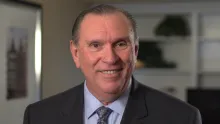
Randy D’Alessandro served as pastor for the United Church of God congregations in Chicago, Illinois, and Beloit, Wisconsin, from 2016-2021. Randy previously served in Raleigh, North Carolina (1984-1989); Cookeville, Tennessee (1989-1993); Parkersburg, West Virginia (1993-1997); Ann Arbor and Detroit, Michigan (1997-2016).
Randy first heard of the church when he was 15 years old and wanted to attend services immediately but was not allowed to by his parents. He quit the high school football and basketball teams in order to properly keep the Sabbath. From the time that Randy first learned of the Holy Days, he kept them at home until he was accepted to Ambassador College in Pasadena, California in 1970.
Randy and his wife, Mary, graduated from Ambassador College with BA degrees in Theology. Randy was ordained an elder in September 1979.
playlist
