

Scott Ashley
This transcript was generated by AI and may contain errors. It is provided to assist those who may not be able to listen to the message.
Well, thank you once again, Joe, and again. Welcome to Sabbath Services. In just a few weeks we are going to be celebrating the fall Holy Days. And in preparation for that, I believe it's important that we understand about the Holy Days that according to the Father's plan, the Holy Days are about the central role and presence of Jesus Christ.
As I've mentioned before, and I think this is very important for us to appreciate as we approach the Holy Days, they represent what Jesus Christ has done in the past, what Jesus Christ is doing today as high priest and advocate, and prophetically what Jesus Christ will be doing in the future. So today, let's see why what I just said is true and why it's so very important and why it's actually part of the plan of God.
We're going to begin by going to Philippians chapter 2, and we'll begin in verse 5. We read Philippians chapter 2 here quite often in talking about the importance of being a servant leader. We oftentimes don't talk about verses 9 through 11 with as much clarity, but we will attempt to do that today. First of all, Philippians chapter 2 beginning in verse 5. Paul writes to the congregation, let this mind, some translations say this attitude, being you which was also in Christ Jesus, who being in the form of God did not consider it robbery to be equal with God.
And again, that's a, as we've mentioned before, that's not a very good translation. As the New International Version says, he didn't consider being equal with God something to be grasped. In other words, he was willing to let go. He was so servant-oriented, so loving towards those who were in need, that he didn't say, well, I have all this glory.
I'm not letting it go. I'm just hanging on to what I got. It's about me and my presence and my authority and my power, and I'm just not going to let it go. In contrast to that, he says he did not have that mind or that attitude. Verse 7, but made himself of no reputation. Again, the New International Version says nothing. He made himself a nothing. Imagine going from God to a nothing, the mere human being, taking the form of a bond-servant and coming in the likeness of men, and being found in appearance as a man, he humbled himself and became obedient to the point of death, even the death of the cross. So these verses tell us that Jesus set an example of complete humility and service.
He accepted the greatest demotion ever experienced in the universe. Yes, you may have had a job and you were supervisor one day, and they called you in and said, you're just not really good supervisor. You're being demoted, or you may have had a title, or you may have had some responsibility that was taken away from you. But compared to what Jesus Christ and the demotion he was willing to accept, so that you and I could have an opportunity to be part of the family of God, whatever we experience in this life is just so shallow, so silly, so selfish, and so meaningless when we consider the kind of demotion and sacrifice that Jesus Christ was willing to make for us.
And as a result of that humility and that ultimate sacrifice, it's dropped down now here to verse 9, therefore God, this is referring to the Father, has also highly exalted him and given him the name which is above every name. So the name of Jesus Christ is highly exalted. It's above every other name. At the name of Jesus every knee should bow of those in heaven, of those on earth, and of those under the earth, and that every tongue should confess that Jesus Christ is Lord to the glory of the Father.
You see, the Father isn't like you and I. Human beings, they want glory to themselves. They want to take all credit for everything. They want attention. But the Father is God. He isn't like that. You see, when Jesus Christ is glorified and honored, it honors and glorifies the Father. The Father doesn't have a sense of entitlement or how come Christ is getting attention, how come this focus is on Jesus Christ? Because when the focus is on Jesus Christ, when he receives the glory and honor, it glorifies and honors the Father. So how is it that God the Father has desired for Christ Jesus to be exalted? How is Christ Jesus exalted?
And how is it that his name is above every other name? Well, there are a number of ways, but one major way that the Father established as part of his plan is that all of the Holy Days reflect what Jesus Christ did, is doing today, and will do in the future, as biblical prophecy tells us. So today what I'd like to do is review the annual Holy Days and remind ourselves how they are all founded on the role of Jesus Christ. Every single Holy Day is about Jesus Christ, his role that the Father established as part of the Father's plan. It's the Father's will that the Holy Day festivals are Christ-centered, and we'll see that very clearly today. As Paul mentioned to the Philippians here, the Father has no concerns, no issues, no problems with Jesus Christ being highly exalted. So let's begin! We all know that in the springtime, a new calendar year begins according to the Hebrew calendar, and we begin with Christ is our Passover and Savior. So it all begins in the Passover. Who does the Passover represent?
Who is the center of the Passover? Well, obviously it's Jesus Christ. Let's go to 1 Corinthians chapter 5 and verse 7. Let's see who provides salvation and how that salvation is provided. In 1 Corinthians chapter 5 and verse 7, Paul writes an interesting couple of verses here to the church at Corinth who is a Gentile congregation. He says this, therefore purge out the old leaven that you may be a new lump since you truly are unleavened. They're observing the days of unleavened bread. They get it. They understand what leaven represents, that it represents sin. For indeed, Christ, our Passover, was sacrificed for us.
Therefore, let us, including you Corinthian Gentiles, let us keep the feast, not with old leaven, nor with the leaven of malice and wickedness, but with the unleavened bread of sincerity and truth. So we're going to keep the days of unleavened bread in a new way as part of the new covenant relationship, which is from the heart. It's about attitude. It's about our lives. It's not about sacrificial animals and priesthoods and shedding of blood of animals and those kinds of things. It is Jesus Christ who became the ultimate Passover sacrifice for all humankind. So from the very beginning of celebrating God's holy days, we see that they center on the role that Jesus Christ plays. It's He who volunteered to empty Himself of His full glory and come down to earth as a man to fulfill the role of being the Passover Lamb of God. The sacrifice in the Old Covenant, that Lamb, first mentioned in Exodus chapter 12, pictured the future shed blood of the Lamb of God, Jesus Christ. It represented and pictured what Jesus Christ, the ultimate Lamb of God, would do when He would come to earth. Anciently, God passed over the firstborn of Israel because of the Lamb's blood. In a similar way, God passes over His spiritual firstfruits by forgiving us of our sins and our transgressions because of the shed blood of the Lamb of God. As Paul wrote in Romans chapter 8 and verse 29, for whom He foreknew, He also predestined to be conformed to the image of His Son, that He might be the firstborn among many brethren. You and I are the many brethren whom God predestined before we were even born, that God said, I'm going to call that person in their physical lifetime and offer them my spirit and give them an opportunity to live my way of life. So the first thing that we see regarding God's festivals, guarding God's holy days, is that Jesus Christ is our Passover and Savior. There are very few theologians or experts who would argue with the fact that the original Lamb in Exodus 12 pointed to Jesus Christ and His shed blood on the cross. All right, then we have the Days of Unleavened Bread. The Days of Unleavened Bread represent the need for spiritual growth and the process of sanctification.
Sanctification is the process of removing sin and selfishness out of our lives and replacing that with the fruit of God's Spirit, with all of the fruit of His Holy Spirit. 2 Corinthians 5 and verse 17, if you will turn there with me, 2 Corinthians, we were already in 1 Corinthians, chapter 5 and verse 17.
Paul here, again writing to the Corinthian congregation, this was another letter. Therefore, if anyone is in Christ, he's a new creation. Old things have passed away. Behold, all things have become new. And there's a newness that we're able to have when we receive God's Holy Spirit, that when we're able to take the Passover every year and renew our baptismal covenant vows as we take that Passover each and every year. Verse 18, now all things are of God, that is the Father, who has reconciled us to Himself through Jesus Christ. So it's all possible, that reconciliation is possible because of the role that Jesus Christ portrays and has given us the ministry of reconciliation. That is, that God was in Christ reconciling the world to Himself, not imputing their trespasses to them, and has committed to us the word of reconciliation. Now then, we are ambassadors for Christ, as though God were pleading through us, and we implore you in Christ's behalf, be reconciled to God. So we are representatives of the kingdom of God, when people see us shopping, the neighbor across the street, the people that we work with, our own family, when they see us, do they say to themselves, this person is an ambassador for Jesus Christ? They have the attitude and the lifestyle. They can do approach the life that represents being an ambassador for Jesus Christ. This is what Paul says is the opportunity that all of us have. And then he says something in verse 21 that's very profoundly meaningful. For he made him who knew no sin to be sin for us. That's Jesus Christ.
Jesus Christ was perfect. He was sinless, and he allowed him to accept our sins, to be crucified, so that our sins could be forgiven. He took that sin upon himself, that we might become the righteousness of God in him. So we're righteous in God's eyes, not because we're so special, not because we keep all the commandments. We should keep the commandments. And as I said earlier, through the process of sanctification, we should be growing and changing, becoming more spiritual. But that in itself doesn't save us. It's Jesus Christ who became sin for us. And when Christ is in us, that righteousness of Christ living in us makes us perfect in God's sight. You know, during the spring holy days, we remove leaven from our homes to remind ourselves of the continuous need to remove sin from our hearts and from our minds. But also, we eat unleavened bread during the spring holy days. And eating that unleavened bread reminds us and represents to us our understanding that Christ is in us through the power of God's Holy Spirit and reconciles us and makes us righteous to God the Father. This truth doesn't give us a pass for our sins. It's not a get-out-of-jail-free card, simply because God demonstrates His great love or mercy for us. We are to be profitable servants. That's why we've been called. And we need to be growing in grace and in understanding. Our goal is through that process of sanctification to develop spiritually and eliminate from our hearts and minds the human weaknesses of the flesh, the works of the flesh, and to replace that with the fruit of God's Spirit. And that's a process that's a lifelong calling and commission we have been given. So what is the center of the days of unleavened bread? The center of the days of unleavened bread is Jesus Christ our righteousness. And as we eat that unleavened bread during all of those days, it represents Christ in us, working in us, through the power of His Holy Spirit and making us righteous in the eyes of God. All right, the next holy day, Pentecost. That's God's outpouring of His Holy Spirit to His Church. Let's go to John chapter 14 and verse 23. John chapter 14 and verse 23.
One of the final discussions that Jesus is having with His disciples, John chapter 14 verse 23. Judas, not as scary, had asked him a question and it says, Jesus answered and said to him, if anyone loves me, he will keep my word and my Father will love Him and we will come to Him and make our home with Him. So my Father and I have a very special gift that we both share that we're going to give you that's going to make a home inside of your mind, inside of your life, inside of your thoughts. He who does not love me does not keep my words and the word which you hear is not mine but the Father's who sent me. These things I have spoken to you while being present with you but the Helper, that paracletus, that comforter, the Helper, the Holy Spirit whom the Father will send in my name, He or it will teach you all things and bring to you remembrance all things that I said to you. So again, Jesus Christ affirms that He does the will of the Father and that will is to send out the Holy Spirit in the very name of Jesus Christ.
Remember, it said in Philippians chapter 2 and verse 10, it said that at the name of Jesus every knee should bow in heaven and in earth and under the earth. Now let's take a look at chapter 16. Just go a couple of chapters forward and see, let us see clearly who gives us the Holy Spirit. Obviously, Jesus Christ and the Father share the Spirit. Chapter 16 and verse 7. Nevertheless, I tell you the truth. It is to your advantage that I go away, for if I do not go away, the Helper will not come to you, but if I depart, I will send him to you. So who gives us the Holy Spirit? Obviously, originates from the Father. The Father and Son share the same Spirit. Who gives us that Holy Spirit? Jesus Christ does. He is the center and the heart and core of what the Day of Pentecost represents, the outpouring of the Holy Spirit that comes from Jesus Christ and is shared by him and the Father. Verse 8, and when he or it has come, it will convict the world of sin and of righteousness and of judgment of sin, because they do not believe in me of righteousness, because I go to my Father and you will see me know more of judgment, because the ruler of this world is judged. And that, of course, is Satan, the devil. So the Father is given Christ the direction to send the Holy Spirit. Do you know there was a time before the Day of Pentecost when Jesus gives the Holy Spirit as a foretaste of what's going to happen on the Day of Pentecost? Let's go to John chapter 20 and verse 19. Very powerful scripture that we don't talk about a lot, but it's in the Bible. It's there, and it's a foretaste of the outpouring that's going to occur in the Day of Pentecost. This is just involving those individuals in this closed room, but it's a foretaste of what God is going to do on the literal Day of Pentecost. It's going to be an outpouring, not reserved just for those who happen to be here at this time. John chapter 20 verse 19, then the same day and evening being the first day of the week. So this is when he was resurrected. First day of the week, only it's the evening now. He met folks when he came out of the tomb, and he's done a number of things. Now it's evening time, the first day of the week when the doors were shut, where the disciples were assembled for fear of the Jews. Jesus came and stood in the midst and said to them, peace be with you. When he had said this, he showed them his hands and his side. Then the disciples were glad when they saw the Lord. So Jesus said to them again, peace to you, as the Father has sent me, I also send you.
So Jesus is saying, the Father gave me a commission, preached the gospel to do his will, and now I'm ready to give you the baton. It's time for you to run your leg of this journey. Men, women, are you up to it? Then notice in verse 22, and when he had said this, he breathed on them and said to them, receive the Holy Spirit. He literally breathed on them, and he, Jesus Christ, said, receive the Holy Spirit. If you forgive the sins of any, they are forgiven. If you retain the sins of any, they are retained. So when you baptize people and my name, their sins will be forgiven. And if for some reason you choose not to baptize them because they're not showing fruits, leading them up to what understanding baptism is all about, then they're retaining their sins. I think it's very important for us to realize here that just as physical life was given to Adam and it was imparted by God's breath, the gift of spiritual life was given to the Apostles. It was imparted by the breath of Jesus Christ. The disciples were instructed to receive the Holy Spirit, and their receiving of it was in anticipation of the great outpouring to occur on the day of Pentecost. Who's doing this? Who's giving the Holy Spirit? Jesus Christ is giving the Holy Spirit because of the will of the Father. The piece of trumpets. You know that's a time we very clearly understand in the Church of God of the Second Coming of Jesus Christ and the resurrection of the saints. Let's go to Zachariah chapter 14 beginning in verse 1. Zachariah chapter 14 in verse 1.
Prophet Zachariah wrote very powerfully about the return of the Lord. Capitalized, Yahweh is as the original Hebrew would have been, YHVH, known as the tetragrammaton.
Zachariah chapter 14 beginning in verse 1, Behold, the day of the Lord is coming and your spoil will be divided in your midst for I will gather all nations to battle against Jerusalem. The city shall be taken, in other words Jerusalem is going to fall. The house is rifled and the women ravished. Half the city will go into captivity but the remnant of the people shall not be cut off from the city. Then the Lord will go forth and fight against those nations as he fights in a day of battle and in that day his feet will stand on the Mount of Olives which faces Jerusalem to the east. The Mount of Olives will be split in two from east to west making a very large valley. Half the mountain shall move towards the north and half towards the south. So when the feet of the Messiah touch the Mount of Olives it's literally going to split. Talk about our earthquake, right? You talk about environmental movement that Mount is literally going to split into. So it states here that it's the Lord who will return again. Capital letters, YHVH, who is this speaking of? Well, for those of us that have been in God's church for a while we understand exactly who this is speaking of. Let's go to 1st Thessalonians chapter 4 and verse 13 and see Paul's New Covenant interpretation of this same event. Different focus. Here he's focusing on the resurrection in the church rather than the geography and the nations and the battling nations as Zechariah did. A little bit different perspective. 1st Thessalonians chapter 4 and verse 13 he says, but I do not want you to be ignorant brethren concerning those who have fallen asleep lest you sorrow as others who have no hope. So don't be sorrowful for those loved ones who die. Have hope and realize that the resurrection is a promise. He continues, verse 14, for if we believe that Jesus died and rose again even so God will bring with him those who sleep in Jesus.
For this we say to you by the Word of the Lord that we who are alive and remain until the coming of the Lord will by no means proceed those who are asleep. Those who have died in the faith and are unconscious and are sleeping without an awareness of the world or consciousness waiting for the resurrection. Verse 16, for the Lord himself will descend from heaven with a shout with the voice of an archangel and with the trumpet of God. And that's why and we understand the meaning of the Feast of Trumpets is this literal return of Jesus Christ when he descends from heaven to earth to establish the kingdom of God. And the dead in Christ will rise first. Then we who are alive and remain shall be caught up together with them in the clouds to meet the Lord in the air and thus shall we always be with the Lord comfort one another with these words. And if we want to know what's going to happen right after that we can go back to Zachariah chapter 14 where it says, and in that day his feet will stand on the Mount of Olives. So Jesus Christ is descending to earth. The first resurrection occurs.
Those who had died in the faith, those who are still alive of the faith, they meet Jesus Christ in the air and join with him. And everyone, Christ and his saints, come back to earth and his feet will stand on the Mount of Olives. And he begins after a battle to establish the kingdom of God. What's the Feast of Trumpets all about? The Feast of Trumpets is about Jesus Christ who returns to earth. The Lord spoken of in Zachariah is none other than Jesus Christ. In the book of Acts, when Jesus was taken up into heaven after speaking some final words to the disciples, here's what Luke recorded in Acts. Why don't we turn here?
Take a minute. Just turn here with me. I was going to read this, but this is important. Acts chapter 1 and verse 9. Let's take a look at this. I just want us to understand that Jesus Christ is returning, not as some religious theology say, to gather his saints and then fly away to heaven somewhere. He is coming to this earth. He is gathering his saints in the sky through a resurrection and he is returning to this earth to establish the kingdom of God.
Acts chapter 1 and verse 9. Now when he had spoken these things, while they watched, he was taken up and a cloud received him out of their sight. And while they looked steadfastly towards heaven as he went up, behold two men stood by them in white apparel. These obviously are angels. Who also said, men of Galilee, why do you stand here gazing up into heaven? This same Jesus who was taken up from you into heaven will so come in like manner as you saw him go into heaven.
So what are you standing around for? Just like you saw him leave this earth and go up to heaven and ascend to heaven, he is going to descend from heaven and come back to this earth someday. And he's going to do that, obviously, to establish the kingdom of God. It's Jesus Christ who returns as Revelation chapter 19 and verse 16 gives him the title of King of Kings, and he returns to earth to establish God's kingdom.
Next, as we go through the Holy Days, is the Day of Atonement. That's the judgment upon Satan and his removal of any earthly influence that he has over the earth. He's been a poison to humanity since the Garden of Eden.
It was his influence and his poison that tripped up Atonement, even caused them to sin. His spiritual influence and the attitudes that permeate the earth from Satan caused defeatism and selfishness and is the cause of war and all of the ills that mankind suffers from is because of that influence of Satan the devil. The Kingdom of God can never be successful if Satan is allowed to continue to roam the earth like he does today. Let's go to Leviticus chapter 16 and verse 7. Take a look at just a couple of verses here. Again, we're talking about the Holy Day, the Day of Atonement or at One-ment.
And here's what the priest was instructed to do in Leviticus chapter 16 verses 7 through 9. On the very Day of Atonement, this was only to occur one time a year on that Holy Day. There were two goats. It says, he shall take the two goats and present them before the Lord at the door of the Tabernacle of Meeting. Then Aaron shall cast lots for the two goats, one for the Lord whom God determines represents him and the other for the scapegoat.
The Hebrew is the Azazel and of course the scapegoat represents Satan. This goat is going to be sent into the wilderness. Verse 9, and Aaron shall bring the goat which the Lord's Lot fell and offer it as a sin offering. So this goat for the Lord represents the future role of Jesus Christ on earth and he makes atonement possible by shedding his blood for the sins of Israel and ultimately for the sins of all humanity the entire world.
The scapegoat, we don't have time to go into those verses today but we will on the Day of Atonement, the Azazel goat is judged and sent into a wilderness and that wilderness pictures him being removed from having any influence in the nation of Israel. So he can no longer send those negative attitudes and that despondency and that desire for selfishness and war and all of the sad human conditions that we see in the world today. Let's now go to Matthew chapter 4 and verse 8 and see where there was a confrontation and at the end of this confrontation between Jesus Christ himself as he walks in the earth and Satan, that Satan realizes his days are numbered.
Matthew chapter 4 and verse 8, we are familiar with these temptations. This is the last of the temptations that Jesus Christ experienced. Again, the devil took him up on an exceedingly high mountain and showed him all the kingdoms of the world and their glory and he said to him, Satan says to Jesus, all these things I will give you if you will fall down and worship me. Jesus doesn't dispute the fact that Satan owns all of these kingdoms. Satan says, see this great empire in China? I own it. Lock, stock, and barrel.
I'll give it to you. See these Indian civilizations in North America or South America? I own them. I control their thoughts. I control their kingdoms. Fall down and worship me and I'll give that to you. See the tribes that exist in Africa? I own them. I'm the prince of the power of the air. They do what I tell them to do. I influence them and I'll give them to you if you fall down and worship me. See the great Roman Empire? I control the Roman Empire as I do every kingdom and nation on this earth. They're mine and I'll give them all to you right now. No pain, no suffering, no crucifixion. You can have it all. You can have it right now. So what do you say, Jesus? And Jesus said to him, away with you, Satan, for it is written, you shall worship the Lord your God and him only will you serve. Then the devil left him. With his tail between his legs, not that he has a tail, but slinking away, Satan says, I give up. He can't be tempted. I can't trip him up. I've tried his ego. I've tried everything that I know of to get him to crack and he won't do it. Then the devil left him and behold angels came and ministered to Christ and he realizes from that moment on that his time is short that he in essence has been defeated. Now he's still going to have time to influence the world and he does it this very day, 2,000 years later.
But he knows that it's over and in time someone else has qualified to be King of Kings. Reminds me of Revelation chapter 12 and verse 12. It says, therefore rejoice, O heavens, and you who dwell in them, woe the unhappiness of the earth and the sea for the devil has come down to you having great wrath, knowing that he has a short time. So let's take the next step in understanding this day of atonement. Revelation chapter 19 and verse 9. Let's go there. Revelation chapter 19 and verse 9.
Revelation chapter 19 and verse 9. Then he said to me, write, blessed are those who are called to the marriage supper of the Lamb. So someday the Church of God is going to marry Jesus Christ and that marriage represents all of us being one Spirit. And we will have a new relationship with God and we will be of one Spirit. That's what physical marriage always pictured. We had a wedding here last Sunday and it represented two individuals different but yet becoming one flesh family working together being together. And the marriage supper of the Lamb are people who were different, different backgrounds, called at different times, who yield to God and all become one Spirit. And marriage, human marriage, has always represented that. 99.9999% of human beings who live in this earth do not understand what the purpose of human marriage is and what it represents. They just think, oh, it's because he was so cute and he had a nice bank account and that's why I married him because he asked me. They don't understand what the purpose of marriage is. So blessed are those who are called to the marriage supper of the Lamb and he said to me, these are the true sayings of God and I fell at his feet to worship him. But he said to me, see that you do not do that for I'm a fellow servant and of your brethren who have the testimony of Jesus. So don't stop and worship me. I'm nobody. We should only be worshiping God.
So what's being said here? Worship God for the testimony of Jesus is the spirit of prophecy. In other words, prophecy is designed to reveal who and what Jesus Christ is and his role. Now we're going to drop down to chapter 20. Remember that originally there were no chapters or verses when this was written. So the context has been on the testimony of Jesus Christ, on Jesus the spirit of prophecy, chapter 20 and verse 1. Then I saw an angel coming down from heaven who sends this angel. Well, obviously Jesus Christ sends this angel.
After all, what this angel is going to do is do something to a being who's become so powerless, so impotent, that Jesus Christ personally doesn't need to do this. Then I saw an angel coming down from heaven, having the key to the bottomless pit and a great chain in his hand. He laid hold in the dragon, that serpent of old, who is the devil and Satan, and bound him for a thousand years.
And he cast him into a bottomless pit and shut him up and set a seal on him so that he should deceive the nations no more till the thousand years were finished. But after these things, he must be released for a little while. So this is the Day of Atonement. Who's the center of the Day of Atonement? Jesus Christ of the two goats, anciently, in the book of Leviticus. One, the one for the Lord, represented who and what Jesus Christ would be. The one who overcame Satan and didn't succumb to his temptations. We read about in the book of Matthew, the one who stood up this Satan and confronted him. And one was Jesus Christ.
This Jesus Christ here, the testimony of Jesus, is the spirit of prophecy, the same Jesus Christ who sends the angel down to put Satan the devil in a spiritual wilderness, just like that goat in the book of Leviticus on the Day of Atonement, was sent into the physical wilderness. That is, Ozil, Satan is sent into a spiritual wilderness. So he cannot influence humanity anymore. The next step in God's great plan is the establishment of the kingdom of God. And again, I want to emphasize that when we talk about the Feast of Tabernacles, and that represents the kingdom of God on earth, it can only be successful if Satan the devil is in a spiritual prison and removed from his influence. As Paul wrote in Ephesians chapter 2 and verse 2, that he is the prince of the power of the air, the spirit who now works in the sons of disobedience. Again, that's Ephesians chapter 2 verse 2. So human beings are inclined to disobedience as long as Satan's presence is there to trip us up, to tempt us, to put the wrong attitudes and wrong thoughts in our minds. The Feast of Tabernacles, that represents the establishment of the kingdom of God on earth. Revelation chapter 11 verse 15.
You'll turn there with me. Revelation chapter 11 and verse 15.
Chapter 11 verse 15. Then the seventh angel sounded, and there were loud voices in heaven, saying, the kingdoms of this world have become the kingdoms of our Lord and his Christ, and he shall reign forever and ever. And the 24 elders who sat before God on their thrones fell on their faces and worshipped God, saying, we give you thanks, O Lord God Almighty, the one who is and who was and who is to come, because you have taken your great power and reigned. So who's the king in the kingdom of God? Of course, it's Jesus Christ. He is the central figure. His role is central to the kingdom of God. He ushers in the kingdom of God beginning in Jerusalem. And as the prophet Zechariah was inspired to write back there in chapter 14, later beyond what we read, verse 16, and it shall come to pass that everyone who is left of all the nations which came against Jerusalem shall go up from year to year to worship the king, the Lord of hosts, and to keep the feast of tabernacles. Now why? Why do these Gentile nations come up every year to worship the king and to keep the feast of tabernacles? Because they are important to God. They are a part of His plan. This will be a world that has a thousand years of peace and prosperity and joy. Let's go to Matthew chapter 16 and verse 27.
Matthew chapter 16 and verse 27.
It says, For the Son of Man, this is Jesus speaking here, for the Son of Man will come in the glory of his Father with his angels and then he will reward each according to their works. Assuredly, I say unto you, there are some standing here who shall not taste death till they see the Son of Man coming in his kingdom.
Now I've known some people personally and there are some individuals who are atheist who jump on this particular scripture and say that Jesus didn't come in their lifetimes, that Peter and James and John L died while still waiting for the return of Jesus Christ. Therefore, the scriptures a lie. Therefore, there is no Savior. The Bible is not true. There are some who believe that and who point to this scripture and say that it was not fulfilled. These men grew old and they died. Well, again, originally the scriptures didn't have chapters and verses, so what I'm gonna do is I'm going to allow Jesus Christ to answer what he meant here. And it's in Matthew chapter 17 beginning in verse 1. And again, remember originally there are no chapters or verses in the scripture. They were written as letters. It says, now after six days Jesus took Peter, James, and John as brother, led them to a high mountain by themselves, and he was transfigured. This is a Greek word metamorpho in which we get metamorphosis from like a caterpillar changes. And the word in the original Greek means changed or transformed. So he was transfigured before them. His face shone like the sun and in clothes became as white as the light. And behold, Moses and Elijah appeared to them, talking with them. Then Peter answered and said that Jesus, Lord, it is good for us to be here. If you wish, let us make here three tabernacles, one for you, one for Moses, and one for Elijah. You see, Peter sees this vision, and it's a vision of the kingdom of God. It's short, it's temporary, it's going to all vanish away in just a minute or so. And he says, this is the Feast of Tabernacles. This is what the Feast of Tabernacles represents, the glorified Jesus Christ, talking to those who were part of the first resurrection and having a conversation. And it's what the Feast of Tabernacles always represented. Can we build you some tabernacles? That's the first thing that enters Peter's mind here. But that's not all. It says, while he was still speaking, behold, a bright cloud overshadowed them, and suddenly a voice came out of the cloud, saying, this is my beloved son, and who am I? I am well pleased. Hear him! And when the disciples heard it, they fell on their faces and were greatly afraid. But Jesus came and touched them and said, arise and do not be afraid. When they had lifted up their eyes, they saw no one but Jesus. Only the visions ended. It didn't last very long. It's gone! Back to reality! Back to the present! This is often called the Transfiguration, and it was a prophetic vision of the kingdom of God.
It included a resurrected Moses who gave the law. It included a resurrected Elijah who represented the prophets. He was a great prophet. And, of course, Jesus Christ is there. The law and the prophets heralded the coming of the Messiah.
That's what the three of them represent in this vision. Peter understood this to be in the kingdom of God, suggesting the construction of tabernacles to celebrate the feast. So Peter, James, and John saw the kingdom of God in vision before they died. So that scripture was actually fulfilled.
And the final part of God's plan, one that so many of us look forward to, because we have so many loved ones who we hope to see again someday in a far better world.
This week I had a cousin who I spent a lot of time growing up with who died. He was not in the faith, and we grew apart over after our teenage years. He lived in a different part of the country. We lived our two separate lives, but I'm encouraged in knowing that God has a plan for him too. Revelation chapter 20 and verse 4. Revelation chapter 20 and verse 4. It's going to talk about thrones here, and on these thrones are God's faithful saints, including us if we remain true and faithful to the end of our calling. It says here in Revelation chapter 20 verse 4, and I saw thrones, and they sat on them, and judgment was committed to them. So Jesus Christ gives the authority to make righteous judgment.
And I saw the souls of those who had been beheaded for their witness to Jesus, and for the Word of God, who had not worshiped the beast or his image, and had not received his mark on their foreheads or on their hands. These are what we might call the later day or the latter-day saints, just before the return of Christ in those events at the Great Tribulation and Day of the Lord. And they lived and reigned with Christ for a thousand years. That's their reward. But, verse 5, the rest of the dead did not live again until the thousand years were finished. And this is the first resurrection, speaking, of course, of those who will reign with Christ for a thousand years. Blessed and holy is he who has a part in the first resurrection. Over such the second death has no power, but they shall be priests of God and of Christ and shall reign with him a thousand years. So those who are part of the first resurrection and those who were in advance, trained and prepared to serve as leaders and priests, will serve in this massive resurrection of billions of people, everyone who has ever lived and died and didn't have an opportunity to know God or have a relationship with him.
And during this time, there's going to be a massive resurrection and also massive building project. This time will be used to prepare for the enormous needs of billions of resurrected souls. Those thousand years, we're not going to be sitting around and playing checkers and just growing roses, even though I hope we can grow some roses. Part of those thousand years is to prepare in advance with homes and sanitation and cities and communities and church buildings and schools. All of these things need to be provided in advance before that great event of the eighth day, what we traditionally call the last great day, when billions of billions of people are resurrected from the dead. They need a place to sleep. They need to be educated. They need place for sanitation. They need villages and cities to live in. So all of those things have to be provided in advance. John chapter 5 and verse 26. Take a look at just three scriptures in the book of John and we'll conclude our sermon for today. Here's the question.
Who does the resurrection? Who is involved in resurrection? Let's allow the Bible to tell us. John chapter 5 and beginning in verse 26. This is Jesus speaking in third person, as he often did, rather than saying me, me, me, I, I, I.
Oftentimes he talks in third person. For as the Father has life in Himself, He has also granted the Son to have life in Himself and has given Him authority, talking about the Son, to execute judgment also because He is the Son of man. Do not marvel at this, for the hour is coming in which all who are in their graves will hear His voice. And in context, the His here is Jesus Christ and come forth. Those who have done good to the resurrection of life and those who have done evil to the resurrection of condemnation. I of myself can do nothing as I hear I judge and my judgment is righteous because I do not seek my own but the will of the Father who sent me. So what He's saying here is that the Father has given Jesus Christ life inherent in Himself and the authority to resurrect people from the dead and to judge. John chapter 6 and verse 39. This is unmistakable. John chapter 6 and verse 39. Jesus says, this is the will of the Father who sent me. That of all He has given me I should lose nothing but should raise it up at the last day. And this is the will of Him who sent me that everyone who sees the Son and believes in Him may have everlasting life and I will raise Him up at the last day. So who does the resurrection? Jesus Christ does the resurrection. John chapter 11 and verse 23. We're all familiar with the story of the death of his friend Lazarus and he was delayed before he arrived and by the time he got there Lazarus had died. He was dead and he begins a conversation with Martha. We're gonna pick it up here in verse 23. Jesus said to her, your brother will rise again. Of course, he means now and she's thinking of the future. Martha said to him, I know that he will rise again in the resurrection at the last day. And Jesus said to her, I am the resurrection and the life. I have that authority. I have that ability. I am the resurrection and the life. He who believes in me, though he may die, shall live. And whoever lives and believes in me shall never die. He says to Martha, do you believe this? Do you have this kind of faith? Do you have this level of faith? So, brethren, today what we have done is we reviewed how Jesus Christ is at the center of every one of the holy days according to the Father's plan. Every holy day, every festival reflects what Jesus Christ has done, what he's doing today, and what he will do yet in the future. And we should all be very thankful for the Father's plan, and we should be in awe of his goodness and his mercy. And we should also be very thankful for the role that our Lord and Savior, Christ Jesus, is playing for the salvation of all humanity. So it's very fair, it's biblical to say that Jesus Christ is the center and the core of all of God's holy days, and that's according to the Father's plan. How wonderful is God's plan? It's so wonderful that it even includes you and me. And Jesus himself reminds us in Matthew chapter 25 and verse 34, then the King will say to those on his right side, Come you, blessed of my Father, inherit the kingdom prepared for you from the foundation of the world.
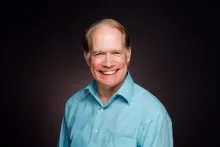
Greg Thomas is the former Pastor of the Cleveland, Ohio congregation. He retired as pastor in January 2025 and still attends there. Ordained in 1981, he has served in the ministry for 44-years. As a certified leadership consultant, Greg is the founder and president of weLEAD, Inc. Chartered in 2001, weLEAD is a 501(3)(c) non-profit organization and a major respected resource for free leadership development information reaching a worldwide audience. Greg also founded Leadership Excellence, Ltd in 2009 offering leadership training and coaching. He has an undergraduate degree from Ambassador College, and a master’s degree in leadership from Bellevue University. Greg has served on various Boards during his career. He is the author of two leadership development books, and is a certified life coach, and business coach.
Greg and his wife, B.J., live in Litchfield, Ohio. They first met in church as teenagers and were married in 1974. They enjoy spending time with family— especially their eight grandchildren.
