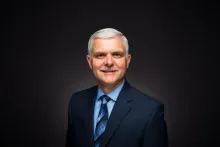


Jorge de Campos
This transcript was generated by AI and may contain errors. It is provided to assist those who may not be able to listen to the message.
In recent years, we've been paying much more attention to Christ's instruction about humility and our need to have loving service to others.
And those who follow Christ must be developing the humble mind and heart of a loving spirit.
An example of Jesus set for us of watching his disciples' feet that night prior to his crucifixion, and that image should rest with this in our minds throughout the year, and impresses upon us our daily need to practice giving, not getting, and also our need for selflessness instead of selfishness. Foot-washing pictures, humility, and loving service to others, and that includes our need to forgive one another. We may never have thought of forgiving as a need, but truly it is. We need to forgive.
Now, a need is defined as a requirement or a lack of something deemed necessary.
In the 1950s, any of you have been involved in education through the years, in the 1950s, a man named Abraham Maslow became famous for his hierarchy of five levels of basic needs. It's usually called Maslow's hierarchy of needs. Perhaps you've heard that. If you've ever had a psychology class somewhere, you may remember that. A human being, Maslow theorize, cannot achieve self-actualization. A person cannot be that person unless other basic needs are met. And so some of those needs began at the very bottom level include the physiological needs, such as food and water, oxygen to breathe, shelter, safety needs or security needs, and the next level we need. Then follows third level needs for love and affection, belongingness, he called it, which involves both giving and receiving love. The next level was needs for esteem, meaning self-respect and respect from others. And then came the fifth highest level, the need for self-actualization, having a healthy personality.
He claimed a person cannot be a fully functioning person unless those levels of need were achieved, starting at the basic, moving all the way up. Maslow's theory about our human needs did prove very popular. It's still taught in education today, and it's been out there since the 1950s. And it does receive much attention, but there's one other human need that receives far too little attention, and that's a greater spiritual need. That need is, as I've hinted at, the need to forgive. Now, most anyone can understand the need for food and water and shelter. We definitely understand the need for oxygen. But the need to forgive, the need to forgive, our carnal human nature says, nah, we can live just fine without having to forgive people. And in fact, many people do.
Many people live out their lives burdened then by anger, bitterness, and hate, because they have not forgiven those who have wronged them or sinned against them in some way. In their stubborn pride, they will openly and secretly condemn others, but cling fiercely to that little bit of bitterness or anger, perhaps. Their faces may be in demeanor and will look all sweet and kind, but underneath, simmering, maybe deep down below, they hide away a grudge or some kind of hardness of heart against somebody. Now, how do we know these things? Well, if you're like me, you've probably met some of those people at least once or twice in your lifetimes. The other reason we know that is because you and I have been those people, and perhaps we still struggle with those things, and I would be amazed if we don't. We are human. Our loving God does not want us or anyone, any human being, to suffer under the burden of these sinful attitudes. Instead, He wants us to experience the liberty of the heart, the liberty of the spirit and mind that comes from forgiving others.
God has called us to live His way of love towards God and love towards neighbor. And if we had been baptized, at that moment we had our past sins washed away, washed away and forgiven by God. If you're baptized, you're probably perdialated. My baptism is 50 miles from college, and I rolled down the windows by 1970 Nova and sang all the way back home to college. Yeah, it was 30 degrees out, but it didn't matter. It was a great, exhilarating feeling, knowing that God had forgiven me of all those awful, dirty past sins. And after baptism, of course, we know that each day we must go before God and repent of any new sins we have committed, and we know we need to seek Him for His help and for forgiveness for those new sins. We need to be doing that every day. And we should also know that if we hope to receive God's gift of eternal life, then it is also essential that we forgive others for their wrongs against us. There's that need we have. We have the need to forgive. My purpose today is to remind us of why we need to forgive, and that is my title, Why We Need to Forgive.
I want to remind us why we need to forgive, and we'll look and see that in God's holy word, our loving Father provides us vital, specific reasons for forgiving those who hurt us or sin against us, along with the attitudes and actions we need to choose in order to forgive. Forgiveness is a choice we make. When we understand our need to forgive, then we'll be better able and better equipped to follow Jesus Christ and practice real forgiveness. That's our topic for today. So why is forgiveness so important? That seemed like a very simple question when I started out this sermon. Like most things in the Bible, you start digging, and it just keeps getting bigger and bigger and bigger. There's much more I'm going to be able to say about forgiveness in years to come if I have that opportunity. But for now, I'm going to focus on why we need to forgive. We need to consider this question very carefully. Without God's bountiful love and grace—grace meaning our undeserved and unearned gift of forgiveness—we would have no hope of ever receiving eternal life. Let's go ahead and turn to John 3.16. Well known, but perhaps not well fought of and deeply considered. John 3.16 I'll get there. I'll let you get there, too.
In John 3.16-17, we read that God so loved the world that he gave his only begotten Son, that whoever believes in him should not perish but have everlasting life. For God did not send his Son into the world to condemn the world, but that the world through him might be saved.
And so we understand from this scripture, because of the love of the Father and the sacrifice of his Son, Jesus Christ, we now have the hope of salvation, that hope of eternal life. We must always be mindful of this God's precious gift of forgiveness, this gift or grace that we did not deserve because of our disobedient and carnal ways. Let's turn next to Ephesians 2, 1-5. Ephesians 2, 1-5. And let's read the description of what God has done for us, what he has given us. Ephesians 2, verses 1-5.
And we read here, Ephesians 2, 1-5, And you he made alive, and you he made alive, who are dead and trespasses. The word here is paraptoma in the Greek, paraptoma, and it can mean a side slip, a lapse or deviation. That can mean an unintentional error, or it can be a willful transgression of some sort. It's often translated as a fault, an offense, or sin, or trespass.
So we were dead in our trespasses, our errors, whether intentional or willful transgressions. And also in our sins, the word here is harmatia. Literally translated means a sin, an offense. It often means to miss the mark, to not be exactly where we need to be. We're aiming at it, but we missed it. That's a sin. It can also mean to miss or wander from the path of uprightness. It can mean to do or to go wrong, going the wrong way, or to wander from the word of God, the law of God, and violate God's law, which we know is sin.
And so you, he made alive, who are dead in trespasses and sins. Verse 2, In which he once walked according to the course of this world, according to the prince, the power of the air, the spirit who now works the sons of disobedience, among whom also we all once conducted ourselves, including us, in the lust of the flesh, of our flesh, fulfilling the desires of the flesh and of the mind, and were by nature children of wrath, just as the others. You're just like everybody else. But God, who is rich in mercy because of his great love with which he loved us, even when we were dead in trespasses, he made us alive together with Christ.
By grace you have been saved, this gift of God's love. Also then, in verse 8, For by grace you have been saved through faith, and that not of yourselves, it is the gift of God. We must highly value this gift, and I believe we do.
We take it very seriously. It is a gift of forgiveness. We must never treat it lightly. We must never think we deserve to be forgiven. As Paul reminds us here, we were dead, dead without any hope, no hope at all. And it was because of our sin and disobedience to God. But that penalty of death, what we rightly deserve, was paid for us by Jesus Christ. He paid our penalty, he took away our debt of sin, and that has set us free. We are now indebted then and obligated to God.
We belong to Him, Scripture tells us. And so God has called us now and opened our minds to understand His purpose for all humanity, not just our own, but for all humanity, and revealed to us His plan of salvation. He has invited us then to live a new way of life. We call it a calling, but it's an invitation to partake of this new way of life.
And that requires faithful and willing obedience to Him. That means we must love God and we must love our neighbor. And when we believe, repent, and are baptized, then we commit ourselves to living a life of repentance every day, repentance from sin, and again, daily asking Him to help us fight sin, to repent of our sin, and then to give us strength that we might be forgiven and trust Him for that forgiveness.
We thus commit ourselves to becoming less like our old carnal selves and more like God, more like Jesus Christ. That's what Paul exhorts us to do in Philippians 2, verse 3 through 8. Again, we want to review some of these very important scriptures as we investigate this question why we need to forgive. Philippians 2, verse 3 through 8.
Part of the background reason why we need to repent is we've got to change the way we are. We can't stay the old man we once were. Now, I'll just say, with old man, we once were. That old spiritual man or old carnal selves. Philippians 2, verse 3 through 8. Let nothing be done through selfish ambition or conceit, but in lowliness of mind let each esteem others better than himself. It reminds us of the foot washing.
Let each of you look out not only for his own interest but also for the interest of others. Verse 5, let this mind be in you which was also in Christ Jesus. That's the way he thought. Who, being in the form of God, did not consider it robbery to be equal with God. That translation always kind of confuses me, so let me read to you what the New Living Translation reads. New King James Version says, being in the form of God did not consider it robbery to be equal with God. New Living Translation reads, though he was God, he did not think equality with God as something to cling to, reminding us that the word as creator who became Jesus Christ existed co-weekly with God the Father.
But he put that aside in order to become a human being to live, to die, to be resurrected again so that we might have eternal life. Verse 7, referring to Jesus, made himself of no reputation, taking the form of a bond servant and coming in the likeness of men. In verse 8, and being found in appearance as a man, he humbled himself and became obedient to the point of death, even the death of the cross.
And again, Jesus Christ was the Word and Creator. You can jot down John 1, verse 1 through 3, and then also verse 14, and you'll see that connection. Jesus Christ was and is, or is and was, the Word and the Creator.
And so we must put on the mindset of Christ and his attitude that he exemplified. Our role model, as Mr. Bauman was talking about, the mindset and attitude of humility and self-sacrifice.
And included among that humility and self-sacrifice is our need, then, to forgive others, just as God has forgiven us. And when we think about it, God's forgiveness truly is a wonderful gift. I don't know if you've thought about it. I hope you are as we approach the Passover and the Days of Unleavened Bread. We should think about it every day. But God's forgiveness is a really marvelous thing. I shouldn't say marvelous because marvel has something to do with magic and that sort of thing. What I should say is God's forgiveness is truly amazing, wonderful. Borrowing a word from our teens, or maybe it's an old word now, it's really awesome when you think about it. And we need to think about it. And we've got to believe it, we've got to believe it in Isaiah 43.25, for example. Isaiah 43.25, speaking of God's forgiveness.
Isaiah 43.25, Isaiah was inspired to write, speaking of God, "'Even I am he who blots out your transgressions for my own sake, and I will not remember your sins. I will not remember your sins.'" God totally forgets our sins.
That could be hard for us to imagine because we have a hard time forgetting sins. Even our own sins we tend to have a hard time forgetting. But here we read, "'God blots out our transgressions.'" Blots out is an old way of saying he rubs it out. He erases our sins.
It's like when we use a pencil to erase our mistakes on our math homework, or other homework you may have had. Of course, today I guess I'd have to say that God hits the delete button.
He hits the delete button when it comes to our sins. They're gone. You can't get it back. You can't get it back. It's gone. He's forgotten. Our sins or mistakes are gone forever. That's a wonderful thing. Let's also notice Psalm 103.8.
The sense of God's forgiveness for sins should really brighten us, brighten our day, make us happy when we think about it. We all have things we want forgotten, and sin is the thing we want most forgotten. Psalm 103 verse 8.
Here's what David says about God's forgiveness. The Psalm of David. Psalm 103 verse 8, The Lord is merciful and gracious, slow to anger, and abounding in mercy. Abounding in mercy. Verse 10, He has not dealt with us according to our sins, nor punished us according to our iniquities. For as the heavens are high above the earth, so great is His mercy toward those who fear Him, revere Him, respect Him. And as far as east is from the west, so far has He removed our transgressions from us. When we recognize our sins, humbly repent and seek God's forgiveness, ask God to please forgive them, remove them, and He will. And He will remember them no more. God does forgive and forget. That's a wonderful thing. To be more like God again, we must be learning and practicing love towards a neighbor. Our neighbor is everybody, not just our friends. That also means we must be learning and practicing forgiveness towards those who sin against us, who do us wrong. Forgiveness, though, I think we know this, may well be one of the greatest challenges we face as followers of Christ. It's not easy to forgive, and it certainly isn't easy for us to forget. God does forgive and forget, but we do have much more challenging times doing that. And it's primarily because it seems as human beings it's just impossible to forget. I've noticed through the years, as I get older, time does help. The passage of time does help, and it takes away some of the the edge and sharpness of sins we did in the past. Or maybe it sins people committed against us. I think that can be a blessing in its own way, but it's very hard for us normally speaking to forget sin, forget offenses against us especially. But we can decide to do that, and we should try very hard to forgive and forget, and God does help us. When we decide to forgive someone for hurting us, for example, we are choosing at that point to not hold that wrong against him or her, and to not hold a grudge or any bitterness against that person either. We may not forget, quickly forget the hurts and wrongs as God does, but the point is we are choosing, we are choosing, making the choice to forgive, to treat that person as if we have forgotten the hurt. And sometimes we have to do that as we start to forgive people. It's just a necessary requirement.
We remember it, but we try not to remember it. Forgiving others is challenging at times, especially when the hurt is deep and profound. We have suffered hurt from others. Our natural tendency is what? Our natural tendency is to lash out, react, and turn with anger, spite, vindictiveness, perhaps. Normally, I think our carnal nature says, we want vengeance. You did that to me, buddy. I'm going to do it to you. I'm going to let you know. But that's carnal. That's something we said we were going to give up.
And sometimes we would rather cling to our hurt without at all attempting to resolve the problem.
We don't even try to reconcile. We don't even try to forgive. I guess that can mean sometimes when you say, I'm sorry, or we could say to somebody, I forgive you, but deep down we really don't. Interactions may unveil that. But in time, we can get better at it. So we might tell ourselves we forgive that person, whoever he or she might be. But if we don't truly mean it and do it, then we are only allowing a root of bitterness to grow and to fill our hearts. Now, bitterness, we must not allow to grow within us.
Bitterness can grow quietly at first, but in time it festers. Have you ever gotten a sticker in your thumb and your finger? You know how it can become really inflamed and ugly. And bitterness in our hearts can be the same way. We can't allow that bitterness to grow in our hearts and minds, because that's where God needs to dwell. We ask God to live there. We can't have terrible things like that in our hearts. So we must be forgiving. We must practice forgiveness as our way of life, as all followers of Jesus Christ must. We must try to. And as those who bear within us God's Holy Spirit, forgiving is not easy to accomplish. It goes against our carnal nature. We don't want to let go of those grudges. We kind of like our anger at times. And in space of time, hard feelings become normal to us. We don't even think about it. And we keep holding on those grudges against all manners of hurts. And I've noticed sometimes, even in my own life, those hurts can be imagined or very real. Perception is reality sometimes. And so I've come to recognize, and perhaps you have too, that as perverse as it truly should seem, as perverse as it truly should seem, we human beings sometimes like cuddling up with our harmful, sinful thoughts, with the bitterness and the anger. There is a poem I came across many years ago. It's from a small collection of poetry. It's entitled In the Desert, and they are written by Stephen Crane. Stephen Crane is the one who wrote The Red Badge of Courage probably years ago. Some of the older members here, that was probably on your reading list. You probably read it back in school, maybe in ninth grade or whenever that was, Mr. Bowman. Stephen Crane wrote The Red Badge of Courage, but he also wrote this collection of poetry called In the Desert. And there's one poem in that short collection, and these are all on in the public realm, so I can read the poem to you, and I'm not breaking copyright laws or anything like that. This particular poem I found interesting because it speaks to our human appetite. It speaks to our human appetite to enjoy grudges and to savor the bitterness of our hearts.
It doesn't have a title, it's just numbered number three, but in this poem he writes about a man. A man, and now I'll quote, a creature naked, beastial, who squatting upon the ground, held his heart in his hands and ate of it. Not a pretty image. He held his heart and his hands and ate of it. And I said, is it good, friend? It is bitter, bitter, he answered, but I like it because it is bitter and because it is my heart. Kind of creepy, but I found it very compelling, very reminding me of something about my human nature.
Maybe it reminds you something about your human nature, too. Sadly, at times, I think we may find ourselves relishing the bitterness of our hearts, but we're deadly wrong when we do that, and if we don't repent and be rid of it. Bitterness, anger, resentment, hard-heartedness. Today we may call it issues, whatever we might call it. Having issues against somebody, that's not godly. Such attitudes, as we'll see, do not reflect the way of God. And left unchecked, they will literally demolish our relationship with God.
1 John 4.20. That's what we are warned against. Look at 1 John 4.20.
As brethren, as members of the body of Christ, we especially have to make sure we get along with each other. And as members of the human race, with all so many neighbors out there and people that haven't had a chance to know God yet like we do, people are going to be our brothers and sisters in Christ one day. We need to learn to forgive. 1 John 4.20. If someone says, I love God and hates his brother, and I'm expanding that to any human being, if someone says, I love God and hates his brother, he is a liar.
For he who does not love his brother whom he has seen, how can he love God whom he has not seen? And so that becomes a benchmark for us, doesn't it? That becomes a way of evaluating how well we're doing in our relationship with God. If we have trouble with our neighbor, then maybe there's something there we need to work on. Maybe our relationship with God is quite what it should be either. But the good news is God helps us to recognize that. He's given us his spirit so we can see that maybe we're not having the best relationship with people, and I need to let go of something that I'm holding against another person. God has given us a mind, and he's given us his word, the mirror that we can look in and see where it is we error, where it is we're falling short of the mark. We're missing the mark we need to be aiming at. And if we see those things in us, whether it's bitterness or an issue or hard feelings that we can't quite let go of, well, there's something we need to work on. There's something we need to forgive. We must forgive others now. Get to the nitty-gritty.
We must forgive others for one very strong and I think a very compelling and convincing reason. And it's this. If we do not forgive others, God will not forgive us.
And we need to understand this.
Please turn with me to Matthew 6, verse 9 through 12.
Matthew 6, verse 9 through 12. Matthew 6, verse 9 through 12.
And this is what's often called the model prayer.
This is often called the model prayer that Christ taught his disciples. Matthew 6, 9 through 12. And I would like to read the first part of this in verse 9. Jesus taught his disciples. And in this manner, he says, therefore pray. And he says, in this manner, therefore pray, Our Father in heaven, hallowed be your name. Your kingdom come, your will be done, on earth as it is in heaven. Give us this day our daily bread, and forgive us our debts as we forgive our debtors. And we probably know the rest of it by heart, don't we? And so do I, it seems, almost everybody in this country. Somehow we know this, if nothing else, from the Bible. But let's look at verse 12. Forgive us our debts as we forgive our debtors. The Greek word for debts here is offalema, and it means something owed. Something owed. Figuratively, it can mean a debt. We owe somebody something.
The New Livy translation reads it this way, verse 12, forgive us our sins as we have forgiven those who sin against us. Debts are our sins, just to make that clear. Now, it seems that Jesus is saying that God's forgiveness of our sins, and my sins, your sins, it depends on whether we forgive others. That seems to be what he's saying.
In fact, that's exactly what he's saying. That's exactly what he's saying. Our forgiveness for our sins against God is conditional, then, upon our forgiving those who sin against us.
Now, after so many years of reading these scriptures and hearing it, repeated over and over and over, I am still stunned when I really focus in on that verse 12. I'm still stunned by the unambiguous and very clear meaning of Christ's words. There's little doubt. Let's look for just a few scriptures down. Look at verse 14 here, Matthew 6, 14. Christ is making sure here that we don't mistake his meaning. Verse 6, 14, for if you, he tells, he's explaining to his disciples and to us, for if you forgive men their trespasses, here it's parabtonma. Again, this unintentional error we saw earlier, false sins trespasses. If you forgive men their trespasses, your heavenly Father will also forgive you. But if you do not forgive men their trespasses, neither will your Father forgive your trespasses. He's reiterating what he says in verse 12. Let's also look at Mark 11.25. Mark 11.25 reads—there's a similar statement here in Mark 11. Mark 11.25 through 26. Here, Jesus says, he's recorded as saying, and whenever you stand praying, if you have anything against anyone, forgive him, that your Father in heaven may also forgive you your trespasses. But if you do not forgive, neither will your Father in heaven forgive your trespasses. It's not a mistake, and no mistake here in the differences between the Gospels. The message is consistent. The warning is clear. If we do not forgive those who sin against us, if we do not forgive those who cause us offense or harm or somehow wrong us, our Father will not forgive and forget our sins against him. That should really startle us. That should really wake us up, spiritually. At times, I catch myself getting a little lazy and procrastinating about things. Well, this kind of helps me to perk up. It makes me set up straight.
Now, this means that we must be learning to forgive. I put an ing on there because this is something we're constantly learning. You don't forgive in an instant. We may say it in an instant, but it takes a lot longer to feel sometimes. It's somewhat of a process, letting go and forgiving. But when it says we must forgive, that means we must be learning to forgive. That means we must be striving to let go of any grudges we bear against others. We must be putting aside resentment and hard feelings. We must be removing away the bitterness in our hearts. We need to be forgiving. I think sometimes in the past, I have beaten myself up so much. Maybe you've done this to yourselves, too, because I know I should forgive somebody. I should just get over it. What they did. I know I read, I'm supposed to forgive. I just want to get over it.
I say, I forgive him. I think the words. Then I say the words out loud to myself in my room. I forgive him. I forgive him. I've got to practice this before I go out and try to tell him. Then I finally go out there and say, I forgive you. Maybe my heart's not quite there yet. Am I the only one? But I recognize this is what I need to be doing. Perhaps you've noticed this, too. Through time, the more you start thinking it and believing it and letting God help you forgive, you do. You could start letting it go. That hurt, that bitterness, it gets washed away. It gets eroded away with God's help and your choice to forgive. Sure, I want to forget it. And like I said, through time with God's Spirit, I think we can. Possibly. But you see, I don't want to go back and start thinking about it. We go back and start thinking about things we've forgiven people. There it is again. We've got to leave it alone. Let it stay in the past.
So, the meaning is clear. We've got to be learning to forgive, striving to let go of grudges, those bad feelings, putting aside resentment. We need to be forgiving. If we go back to Matthew 18, I should have warned you to hold your place there, but it's not that many pages to turn back. Matthew 18. In Matthew 18, it seems Christ wanted to make sure his point was well understood. Because we find here in Matthew 18 a rather sobering parable that illustrates and emphasizes these statements about our need to forgive.
Matthew 18.21. Matthew 18.21. Peter, before we get to the parable, Peter has approached Jesus. It's recorded. And he asks, Lord, how often shall my brother sin against me, and I forgive him? Up to seven times? And Jesus said to him, I do not say to you up to seven times, but up to seventy times seven. Well, that's 490 times. I don't think you really meant for him to keep track. I don't know if anybody could do that. Now, Peter's question may seem a little bit strange to us today. It did to me. But it seems limitless forgiveness was not customary. Limited forgiveness was in his time.
According to Adam Clark's commentary on the Bible, and if you have e-sword software in your Bible on your laptop computer, it's Adam Clark's commentary on the Bible. When I look this verse up, Clark mentions that Peter uses the number seven in the literal sense. And as Christ responds to me, he meant it literally seven times. He's counting. And it may be that he's attempting to sound especially big-hearted in offering up the option of forgiving somebody seven times. Wow! Clark tells us that it was a maxim of the Jews of that day, never to forgive more than thrice. Three times. So the practice at that time, you forgive somebody three times. Well, it sounds like baseball. Three times, you're out. I'm not going to forgive you anymore. And so Peter enlarges this. His charity, his love, charity, his love, has shown when he offers to increase by more than one half, he doubles it. And then some. Not three times. I'm going to forgive him seven times. Lord, what do you think of that?
And Jesus, though, makes his enlargement. September Clark says, you know, 490 times. So what he's really talking about is unlimited forgiveness. And I think Peter points out to us a fact about human nature, that human nature is challenged by this idea of limitless forgiveness. We want to be done forgiving somebody. They keep messing with me. I'm done with it. I'm not going to say I'm sorry anymore. We don't want to do that.
And then to make his point clear, Jesus tells the parable of what's often called the parable of the unforgiving servant. Let's read it together. It starts in verse 23.
Therefore, the kingdom of heaven is like a certain king who wanted to settle accounts with his servants. And when he had begun to settle accounts, one was brought to him who owed him 10,000 talents.
Now, the New Living Translation, happy for me because I didn't really understand what is 10,000 talents. The New Living Translation states that this would amount to 375 tons of silver.
375 tons of silver. Now, just to give a comparatively rough idea of what the servant owed his master and how much would those tons of silver talents be worth today, I pulled out a calculator. And yesterday, April 10, 2016, silver was priced at $15.42 an ounce.
And Mr. Holcomb here, a math professor can verify this for me later, not in front of everybody, please. I did my math and I had to erase a little bit, had to bawt it out to get it right. But I found that there are apparently 32,000 ounces in one ton. So 10,000 talents of silver would roughly equate to over $185 million today.
But again, this just gives us an idea of what is being compared here. Now, continue in verse 25. But as he was not able to pay, now we know why, roughly $185 million worth. As he was unable to pay, his master commanded that he be sold with his wife and children and all that he had, and that payment be made. He's wiped out. He's going to slavery. That's what it's going to be. The servant therefore fell down before him saying, master, have patience with me, and I will pay you all. The master probably knew, no, there's no way you're going to be able to pay this all. And what are you going to do with your family while you're trying to do this?
Then the master of that servant was moved with compassion. He was moved with love, and he released him and forgave him that debt. I bet he was singing on the way home. Verse 28, but that servant went out and found one of his fellow servants who owed him a hundred denarii, and he laid hands on him and took him by the throat, saying, pay me what you owe. Pay me what you owe. How much did this fellow servant owe? The first servant? Well, one denarii was the equivalent of one day's wages around 30 AD, and that time one denarii weighed about 3.9 grams, and it was about 97 percent silver. I tried to do my homework. So 100 denarii means this fellow servant owed him about 14 ounces of silver, about 14 ounces of silver. How much is that? Well, it's only 97 percent pure, so it was roughly 200 dollars. The other servant owed him 200 dollars. The one had been forgiven 185 million, roughly speaking. It was only owed 200 dollars. Back to verse 29. So his fellow servant fell down at his feet and begged him, saying, have patience with me, and I will pay you all. And he would not, but went and threw him into prison till he should pay the debt. So when his fellow servant saw what he had done, they were very grieved, very upset. And they came and told their master all that had been done. And then his master, if he had called him, said to him, you wicked servant, I forgave you all that debt because you begged me. Should you not also have had compassion on your fellow servant, just as I had pity on you? And his master was angry, and delivered him to the torturers until he should pay all that was due to him.
Now, Jesus makes clear the meaning of his parable in verse 35. So my heavenly Father also will do to you if each of you from his heart does not forgive his brother his trespasses. The lesson is pretty clear. So the first servant with this huge debt pictures you and me in our relationship with God. We have a huge debt, and God has forgiven it.
The second servant pictures our relationship with our fellow man who have inflicted injuries on us, and they're quite small and insignificant in comparison.
The parable helps us to understand the sharp contrast then between the debt Christ forgave for my sin and for your sin when compared to the small debt God expects us to pay or to forgive when others sin against us. God has been so merciful to us. What he expects is for us to have that same sort of mercy towards others. He wants us to be like him.
So we must take this parable seriously. It's kind of ridiculous when you look at the debt, but when you realize, wait a minute, he's talking about us, suddenly I think it puts things in perspective for us, doesn't it? We cannot expect God to forgive our debts, our sins, then, if we do not choose to forgive those who sin against us.
We need to be merciful. We need to be becoming like God is. And when we forgive others, we reflect the love of God. He loved us first, remember. And now he wants us to love others, to practice what he has taught us. And that's the commitment we make at baptism, and that's the commitment we remember each year at Passover.
So is there anything we can be doing? Is there anything we can do to be better able and willing to forgive others? On this topic, you can come up with any number of to-do lists. How to forgive your neighbor. And that's pretty daunting, because there's so much. Where do I start? Where do I end? Instead of having a to-do list, per se, I want to share some things I think that would help us. Sometimes we've got to figure out our own way to forgive somebody. Maybe for you it's just going up and saying, I'm sorry. Maybe for another person, you make up a batch of muffins and you deliver it. Oh, how wonderful. Yeah, I need to talk to you. You know, sometimes if you're you need to forgive them because they did something wrong to you, you kind of shocked them. You're giving me something after what I did to you?
Yeah, it's pretty cool when you do that. If you've never done it, try. It's pretty cool because it knocks aside all barriers that may be in them and in you. And it makes your need to get rid of, your need to repent and get rid of bitterness, it makes it so much easier to get rid of.
And it's so much more pleasant to give in the process, literally giving in the process of forgiving. But again, you have to choose a place and time and situation. So there are some things we can do to help us forgive others. The first thing I would say we need to do, we need to keep this in the forefront of our mind. We need to remember Christ's sacrifice with profound gratitude. It's the perfect time of the year to be doing that, of course. But it's something we need to be doing all year round, not just at the annual reminder of Passover and the spring holy days or any holy day. As we read earlier from Philippians 2, we need to be mindful of how the Word made Himself of no reputation, took on the form of a bond servant, and came in the likeness of human men, physical men. And how found in appearance as a man, He humbled Himself and became obedient to the point of death, even to the point of death on the cross.
The Creator, Emmanuel, died and lived, that we might have eternal life. Let's look at Colossians 1, 20. Excuse me, Colossians 1, 12.
Colossians 1, 12.
We should be so grateful, incredibly grateful, and our lives should reflect that gratitude. And so, Colossians 1, 12 through 20, Paul gives an explanation of why we are and should be so thankful to God for His love. Colossians 1, 12 and 20. Breaking into the thought, Paul writes, giving thanks to the Father who has qualified us to be partakers of the inheritance of the saints in the light. He has delivered us from the power of darkness and conveyed us into the kingdom of the Son of His love. I just want to make sure it veres. The kingdom of the Son of His love. I must be reading from the New Living Translation. I'm sorry. I didn't think that sounded like the New King James. Is it New King James? My wife's saying yes, it is. Okay. It is the New King James. It sounded strange to my ear. Let's see. Verse 13 again. He has delivered us from the power of darkness and conveyed us in the kingdom of the Son of His love, in whom we have redemption through His blood, the forgiveness of sins. Verse 15. He is the image of the invisible God, the firstborn over all creation. For by Him all things were created that are in heaven and that are on earth, visible and invisible, whether thrones or dominions or principalities or powers. All things were created through Him and for Him. And He is before all things, and in Him all things consist. Remember, we're talking of the one who came down, Emmanuel, God with us and gave His life for us. This is what He did. And He is the head of the body, the church who is the beginning, the firstborn from the dead, that in all things He may have the preeminence. Verse 19. For it pleased the Father that in Him all the fullness should dwell, and by Him to reconcile all things to Himself by Him, whether things on earth or things in heaven, having made peace through the blood of His cross. If we can keep these reasons that we read here in Colossians 1, 12 through 20, and remember what Christ has done, we had death, now we have the hope of life. And it's a done deal if we stay with God. We should be so grateful that it should make it much easier for us to bend a little bit ourselves and forgive those who have sinned against us. The second thing we should do is maintain a humble and repentant mindset. Maintain a humble and repentant mindset.
We need to be very serious about keeping God's law, obeying what He tells us. We need to be serious about practicing love towards God and towards neighbor. When we remain humbly reverent towards God in His ways, and with regard and respect to all people, remembering that all people, even though they may spit on us now and do worse things, we need to remember that those people are going to have a chance as future members of God's family too. And they are going to know about His plan of salvation too. Also, if we can think like that, we might find it easier to put aside the hurt and to forgive.
Let's turn to Colossians 3, we're right here in the same, just over a page of my book.
Colossians 3 verse 1. Here we read a little bit more about the repentant mindset we need to develop.
Colossians 3 verse 1, if then you were raised with Christ, seek those things, you know, if we've taken on baptism, we're following Christ, seek those things which are above, where Christ is, sitting at the right hand of God. Set your mind on things above, not on things on the earth, for you died. New Living Translation says, you died to this life, this old worldly life, and your real life, New Living Translation says, your real life is hidden with Christ in God. And then skipping down to verse 8, but now you yourselves are to put off all these anger, wrath, malice, blasphemy, filthy language out of your mouth. Do not lie to one another, since you have put off the old man with his deeds, and have put on the new man, who is renewed in knowledge according to the image of him who created him. In the New Living Translation, verse 10 reads like this, put on your new nature, and be renewed as you learn to know your Creator and become like him.
Verse 12, therefore as the elect of God, holy and beloved, put on tender mercies, that's that new nature, put on kindness, humility, meekness, long suffering, bearing with one another, and forgiving one another. And if anyone has a complaint against another, even as Christ forgave you, so you also must do. And I especially like how the New Living Translation plays words, verse 13 here. It says, make allowance for each other's faults, and forgive anyone who offends you. Remember, the Lord forgave you, so you must forgive others. There's the same message again, and again, and again. Verse 14, but of all these things, put on love, which is the bond of perfection, and let the peace of God rule in your hearts, to which also you were called in one body, and be thankful. Verse 17, and whatever you do in word or deed, do all in the name of the Lord Jesus Christ, or other translations say, do it as a representative of Jesus Christ, in giving thanks to God the Father through him. So if we struggle at times to forgive others, we need to consider our own desire, I would say, as we look at these attitudes and old ways versus new ways we're supposed to take on, if we struggle at times to forgive others, switch places, just like we switch places when we wash one another's feet at Passover. Switch places, remember, we want to be forgiven by others, too. I want that person to forgive me for the terrible things I've done to them. So yeah, I need to forgive him for the terrible things he's done to me. We sin against our neighbor and desire his or her forgiveness, so we must willingly forgive those who sin against us. Matthew 7, 13, 14, you know these scriptures. Matthew 7, 13, 14, let's go ahead and turn there. Matthew 7, did I say 17? Matthew 7, verse 13 through 14.
These are the scriptures Jesus taught when he compares the process conversion to walking in a difficult way or path. Matthew 7, 13, entered by the narrow gate, for wide is the gate, and broad is the way that leads to destruction. And there are many who go in by it, because narrow is the gate, and difficult is the way, which leads to life. And there are few who find it. I find it interesting when you consider, when you stop and consider verse 12. Before we hear this description of the difficult path in the narrow gate, look at verse 12. This is the verse just preceding it, and it's commonly referred to as the golden rule.
Therefore, whatever you want men to do to you, do also to them, for this is the law and the prophets. We need forgiveness from God and from our neighbor, so we also need to practice forgiveness because we want to receive forgiveness from God and neighbor. This is a requirement that leads to eternal life. God to love one another. The third thing, must, as this already hints, perhaps I'm repeating myself, we need to practice love. Practice loving all people God's way. God instructs us that if a brother or sister repents, then we must forgive him or her. Luke 17 verse 3. Luke 17 verse 3. Luke 17 verse 3.
Jesus said, Take heed to yourselves. If your brother sins against you, rebuke him. It doesn't mean go cuss him out. It means go talk to him. Let him know you've done something. Something's happened and he's not right. And if he repents, forgive him. And if he sins against you seven times in a day, which sounds like Peter, and seven times in a day returns to you saying, I repent, you shall forgive him. And the apostle said to the Lord, increase our faith. It almost sounds like a joke. Yeah, you know, seven times, 490 times he keeps coming back saying, I repent, I repent, I got to keep forgiving him. Really? Yeah, really. As many times as he repents, we must forgive him. Even if you get exasperated and frustrated, well, then you better ask yourself, how many times would you want God to forgive you for your sins? That's what I ask me. That's what I ask myself.
Many times that it takes, it's not going to hurt us to forgive people to say, I forgive you. I'm not going to hold it against you. But if people do not repent, oh, we don't have to forgive them, right?
Right? No, that's not right. And sometimes we may get that in her head because we look at this Luke 17.35, but that's not right. If people do not repent, we must still forgive them.
We're trying to practice unconditional love. We got to love. Whether they repent or not, God will take care of that. Our job is to love them, not to hold a grudge, not to condemn them. That seems to be the example Christ gave us in his final minutes of life.
He was on the stake being crucified in Luke 23.34. He said to the Father, He said, Father, forgive them, for they do not know what they do.
Most people crucifying Him, the soldiers, Roman Gentile soldiers, the Jews, priests, and leaders, people mocking Him, they didn't understand what they were doing. And so don't most people who sin against us. They don't understand they're sinning against us most of the time. Christ forgave them all. And He died for all humanity, for the ungodly, we're told in Romans 5-6. While we're sinners, oblivious of our sins, our sins against God and neighbor, what did Christ do for us? He died for us. We didn't know what we were doing with sin. We know now, and now we know what we're supposed to do and how we're supposed to treat people.
We've got to forgive all those who sin against us. So perhaps that means a rude co-worker where you work. Perhaps that means that person that stole your credit card information off the gas pump. Anybody else you can name, we've got to forgive them. Love your enemies, Matthew 5-44. Let's turn there real quick. Matthew 5-44. Matthew 5-44.
This makes it pretty clear we've got to forgive everybody. Matthew 5-44.
But I say to you, love your enemies, bless those who curse you, do good to those who hate you, and pray for those who spitefully use you and persecute you, that you may be sons of your Father in heaven.
Pretty clear. No matter what people do to us, good or bad, and if they're doing bad, we've got to forgive.
And so today, I spent a lot of time just focusing on that question, why we need to forgive. There's so much more the Bible tells us about forgiveness.
And that gives us much to read and study on our own, and more to hear about in days to come. We do need to forgive. As God's scriptures made very clear to us, there's no way around it. And we've got to choose. We've got to choose. And the choice is kind of stacked in God's favor, He makes the need to forgive so compelling and so obvious, we're absolutely fools not to choose to forgive. Yes, it's hard. Yes, it's difficult. But we share in the same difficulty.
And I'm still learning to forgive, and so are you. But I know it begins with the right attitude, remembering Christ's sacrifice force, and trying very hard to live by the things that God teaches us in His Word. We all need God's forgiveness, and we can ask Him for the help we need to forgive others. We need to forgive. We can forgive. With God's help, we will forgive.
