

Jorge de Campos
This transcript was generated by AI and may contain errors. It is provided to assist those who may not be able to listen to the message.
Brethren, how would you react if somebody made the following statements about you? Publicly and privately. What if they called you a fraud, said you were a liar, that everything that you stand for is false and misleading, that you've misled people, you've misguided people, you've misdirected people, that your only goal in life is to keep people from really enjoying life, that people want to do things and you're teaching against it, that your ideas about marriage and sex are crazy, they're old-fashioned, they're out of date, they don't work in this age of progressive knowledge and understanding.
You hear people curse you, belittle you, put you down, call you names. They may hate you outright, they may despise you, they may despise your family. They make fun of you, they despise what your family stands for. People ridicule you. You're mocked, made fun of, laughed at. You're one of the most controversial individuals in your community. They're always saying something bad about you.
Many would like to see you dead and buried and hope that you will be forgotten completely. Now, I think, you know, I could go on and on with some of these type of things, but I think, humanly speaking, you'd be very resentful over this kind of treatment that you and your family are receiving. You wouldn't appreciate it very much.
You might even have a desire to retaliate against somebody and poke him in the nose. You'll get back, say something, you know, the same to him. I think you would obviously feel hurt. You might be unhappy, you could be offended. I'd be wounded, indignant. You might be insulted, outraged, incensed. You know, you could go on and on. Obviously, you would be emotionally distraught because of this type of treatment, because that's not how you're supposed to treat somebody.
Your heart might be broken and fragmented, and you might have feelings that are just deeply hurt. You could carry anger around, resentment. You'd be hurt. You might have all kinds of emotional feelings that you're dealing with, and you just don't know how to handle. It'd be very difficult for you to overlook this and move forward into the future. Now, maybe some of us have had things like that said. Maybe not to the degree I'm describing here. Have any of you ever had somebody say something bad about you? You know, somebody make fun of you or ridicule you?
I think all of us have, and I think some of us have more than others with these type of things that have gone on. But I'm actually talking about God here, and let me analyze the points I just mentioned to you as they might pertain to God and to Jesus Christ. Jesus Christ, especially when He was alive during His day, you might remember they called Him what? Eligentment, bastard, drunkard. They had every type of thing that you could think of that they threw out at Him that He was not the Messiah, that He was misleading people, that they got all irritated because He claimed to be the Son of God.
And they said, well, that makes you equal with God, so therefore they wanted to kill Him. He was so despised by them. But look today at all of the attacks that come on Christianity. Today, Christianity, in this growing secular society that we live in, and especially those who tend to be of liberal progressive education, background, many cases, they don't believe in God. They believe in their own humanness and their own human intelligence. There are so many today who are atheists, and they think that religion is a fraud, that ministers lie.
They're not all dumb and deaf, either. They can see what the history books say, and they can read and research, and they know that Christmas comes from paganism. They know that Easter and some of these things are not found in the Bible. So based upon that, they say, well, look at Christian religion. It's based upon all of these frauds.
And all they're looking at is, quote-unquote, so-called religion. They don't really know the true religion of the Bible and the Scriptures, as you and I do. They think that Jesus Christ was somebody who was a fraud, that he had illusions of grandeur, and they think that he was married, he had children, and that how could he not sin and that he didn't really die for our sins the way the Bible says?
You could go on and on. But this is the way the world, in many cases, looks at Christ, elk-used Christianity, and wouldn't necessarily be wrong of starting so many different wars, and war-fares and fighting and all of this going on. So we can see on two levels that these type of things happen to all of us as human beings, but they also are directed towards God himself and towards his son, Jesus Christ.
Now, what is God's reaction to all of this? How does he respond? We know that the Bible is very clear that if an individual sins, and if he does not repent of his sins, and there's going to come a day when he's going to be held responsible, and if he never repents, then he will be thrown in the lake of fire. The wages of sin is death.
But God has a plan, and in that plan he sent his son, who would be a sacrifice for all mankind. He would become a sacrifice so our sins could be forgiven. God has a plan for reconciling all men to himself and to offer salvation to everyone. But let's look at what God's attitude and approach is. I described to you a little bit about what we humanly might do.
Humanly, somebody comes up and spits in your face, slaps you, beats you with rods, and everything that Christ went through the night before he was crucified. I would say the average person is going to want to do something. Yet Jesus Christ did not respond in that way. Notice in Romans 5 and 6, we'll begin in Romans 5 and 6. Notice what it says here, God's approach and attitude.
For when we were still without strength, in due time, Christ died for the godly. Is that what it says? He died for the ungodly. While you and I were still ungodly, still in our sins, still doing wrong, Christ died for us. He died over 1900 years ago. We weren't born yet. Yet he died for the ungodly. For scarcely for a righteous man will one die, yet perhaps for a good man some would even dare to die. But God demonstrated his own love toward us, and that while we were still sinners, while we were still sinning against him, going against everything he stands for, Christ died for us.
Much more than having now been justified by his blood, we shall be saved from wrath through him. For when we were enemies, still sinners, and enemies of God. I didn't say that. Paul did. That we were enemies of God. We were reconciled to God through the death of his Son. Much more having been reconciled, we shall be saved by his life. Jesus Christ was willing to die for us while we were ungodly sinners and enemies.
Now, what motivated Jesus Christ to want to do this while we were in such a state? John 3, 16. The love of God. For God so loved the world that he gave his only begotten Son that whosoever would believe in him should not perish but have everlasting life. So God, because he loves us and because he has a plan that he's working out, God is willing to overlook that.
You can be the worst sinner in the world. You could have done every despicable act you can think of. And if you truly get on your knees and repent before God, God says, I will forgive you. And God is willing to do that. Notice God's attitude. Back here in Ezekiel 33, verse 11, Ezekiel chapter 33, verse 11, tells us what God's attitude is towards those who disobey. Ezekiel 33, verse 11, Say to them as I live, says the Lord God, I have no pleasure in the death of the wicked. So God doesn't take pleasure when the wicked die. But that the wicked turn from his way and live. What is turning from your way?
Well, that's repenting, changing. Return from your evil ways. For why should you die, O house of Israel? And when God looks down on the house of Israel today, on Ephraim and Manasseh, on the descendants of Israel, he cries out, why do you want to die? He doesn't want us to die. He wants us to change and to turn from that. Can you see the value of the broadcasts, the work that we're doing, the booklets to reach out to people so that they can know and change?
What is God's desire for mankind? Well, something we normally read back here in 1st Timothy 2.4 on the last great day, but notice this. 1st Timothy 2.4 says, Who desires all men to be saved? See, that's God's desire. Not just, quote-unquote, the good people, but all people, all men to be saved and to come to the knowledge of the truth. The problem is, not everybody's had that opportunity yet, but God will extend that opportunity. And as 2nd Peter 3.9 says, it states that God wants all to come to repentance.
That's His desire. All come to repentance. All be forgiven. All be saved and be a part of His family. That's why He created the human family. He didn't create the human family because He was looking for somebody to destroy.
Now, He created the human family because He wants to share eternity with us, but we have to accept His conditions, His calling, His way of life. Now, when we truly repent before God, the Bible clearly demonstrates that He's willing to forgive all of our sins and forget them.
God doesn't hold grudges. He doesn't bear grudges or hatred. He has no desire to kill us.
In fact, in Psalm 103, Psalm 103, Psalm 103, Psalm 8, we find God's attitude toward us, in which we can certainly be glad for. Psalm 103, and we will begin here in verse 8.
The Lord is merciful and gracious, slow to anger and abounding in mercy.
So He abounds in mercy. He's gracious. He's slow to anger. He will not always strive with us, nor will He keep his anger forever. For He has not dealt with us according to our sins, nor punished us according to our iniquities. For as the heavens are high above the earth, so great is His mercy toward those who fear Him. So, brethren, if we fear God, God's mercy towards us is like the heavens, billions of light years out there. His mercy is so great. And as far as the east is from the west, God says, so far has He removed our transgressions from us. They're so far removed that God doesn't remember them. He's removed our transgression, and as a father, pities His children. So the Lord pities those who fear Him. For He knows our frame. He understands who we are, and He remembers that we are dust. So God understands who we are. And Isaiah 1, verse 18, I think, puts it very well about all of us, and this certainly applies to every one of us. Isaiah 1, verse 18, Come now and let us reason together, God says.
Though your sins are like scarlet, they shall be white as snow. Though they be red like crimson, they shall be as wool. So God says, even though our sins are just like blood, they can be cleansed and covered by the blood of Christ, and we can be as white as snow in His sight.
So God wants that for every one of us. Rather than we know that the Passover is coming up here, and it's not that far off, and once again, Passover night, we will be reminded of what God and what Jesus Christ did for us. There's an annual reminder that God gives to us of the sacrifice for sin that Jesus Christ had. No matter how sinful we've been, no matter how ugly we've acted, no matter how evil we've been against God, no matter how much a human being may have cursed God, God is still willing to forgive that individual, and God will based upon a person's repentance.
Now, if you go back to Isaiah 53, well, first of all, let's go over to Ephesians 5, verse 2. And if you're trying to find Isaiah 53, we'll come to that next. Ephesians chapter 5 and verse 2.
Ephesians 5, verse 2 talks about and shows the approach that Christ had. It says, Walk in love as Christ also loved us, and He's given Himself for us, and offering He was willing to offer Himself up, and a sacrifice He was willing to shed His blood, give His life to God for a sweet-smelling aroma. So this is what Christ was willing to do.
It's difficult, I think, for us to understand the depths of that type of love, because human beings are not made that way. Human beings don't react in that manner or that way.
What motivated God in His desire to show mercy, to extend grace, and forgiveness, all of that is motivated by His love for us. So going back to Isaiah 53, then, in Isaiah chapter 53, and we'll pick up the story here in verse 3, you realize what the great sacrifice that Christ performed was like. Now, I'm not going to try to expound on these, but I would like to read over these, because these are scriptures that we normally cover leading up to the Passover. It says, He is despised and rejected by men.
Remember what I started out by saying that people would despise you, call you different names, you know, and all of those type of attributes. Notice, He was despised, and He was rejected, or forsaken, by men. He was a man of sorrow, or a man of pain, and acquainted with sickness, not His own sickness, but the sickness of people that He came in contact with and healing them.
And it says, And we hid as it were our faces from Him. He was despised, and we did not esteem Him.
Surely He has borne our griefs, or our sicknesses, and carried our pains, or sorrows, and we esteemed Him stricken, smitten by God, and afflicted. But He was wounded for our transgressions.
He was bruised for our iniquities. The word there, bruised, means He was crushed.
The chastisement for our peace was upon Him. And by His stripes, or by the blows, the word means by the blows that cut, the beating, the scourging that He went through, we are healed. And we, like sheep, have gone astray. We have turned everyone to His own way.
You see, that's what human beings do. There's a way that seems right in a man's eyes.
We follow that. Everyone goes his own way. And the Lord laid on Him the iniquity of us all.
Beginning in verse 7, it says, He was oppressed and afflicted.
So He was oppressed and afflicted. Verse 8, last part, says, For the transgression of my people, He was stricken. So why did He die? Because of our transgression. That's why.
Then verse 10, Yet it pleased the Lord to bruise Him. He put Him to grief when you made His soul an offering for sin. And verse 11, last part, says, My righteous servant shall justify many, for he shall bear their iniquities. Put your name in there. He shall bear your iniquities. And verse 12, middle part, He has poured out his soul unto death.
And then at the end, he has borne the sin of many. And so we find Jesus Christ did all of this. Rather than the love of God and the reaction of God are not the same type of reaction that human beings have. God functions on a much higher level. God functions on a God level in dealing with these type of things. Does God appreciate people cursing Him? People go out on the golf course, hit a ball in its slices, or you know, goes off some way. And who do they blame? They don't say, Devil, damn. You know, they curse God. And they don't, you know, they don't look at themselves and say, well, I need to improve my stroke or my technique. No, they gotta curse somebody else. So, you know, God has to hear that and know all of that's going on all the time.
And yet the grace and mercy of God come from godly love. They are the love of God in action.
Stop and think about that. How does God demonstrate His love to us?
What's through grace? It's through forgiveness. It's through mercy. It's through all of these attributes. How does a human being demonstrate His humanness to others?
Wars, fighting, taking life, violence, anger, hatred, frustration. All of these flow from within, out of the heart, as Christ said in Matthew 15, Mark 7. These are the things that defile a man, Christ said. And so we need to realize that the love of God is different. That's the basis. God is love. That's the basis of how He operates. And these ways we find is how God shows that love to us.
Now, what does God require of us?
This is the way God is. This is how He reacts. What does God require of a true Christian?
What does God require of you and me and how we react? Two weeks ago, I was struck by a statement that Gary Petty mentioned on the Beyond Today program. An honorable mention. I jumped up and ran into the office and got a notepad and came back in. And I said, he just said something profound, and I wrote it down. And he was discussing Isaiah 58, for those of you who might remember the program. The right and wrong reasons for fasting. He mentioned that the right reasons are to see our faults, our sins, to be willing to change and to serve other people.
Humility is the cornerstone of true heartfelt repentance. Because humility means we come to recognize who we are in relationship to who God is. We understand who God is, that He's perfect and holy. We come to understand how far short all have sinned and come short of the glory of God, how far we have come from the glory of God, the standards of God that God wants us to observe. And so, therefore, we repent. Without that proper humility, a person is not going to have the depth of repentance that they ought to have. Now, Isaiah 58, turn over here a couple of pages.
Beginning in verses 6 and 7, let me read the section he was referring to.
Then I'll comment on what he commented on.
Isaiah 58, verse 6, is this not the fast that I have chosen? To loose the bonds of wickedness?
To undo the heavy burdens? To let the oppressed go free? And that you break every yoke?
Is it not to share your bread with the hungry? And that you bring to your house the poor that are cast out? When you see the naked, you cover him. And here's the point that struck me.
And hide not yourself from your own flesh.
Now, Gary went on to mention that we are not to hide ourselves from our own family. This is the way that he applied it to our children.
And he said that he was talking about having the proper relationship with those in our family, and especially our children, between parents and children. And you could go back and you could read Malachi about how God turns the hearts of the Father to the children, the hearts of the children to the fathers. This expression here actually refers to any relative or family member which can include our children. Notice the NIV translation of Isaiah 58 verse 7.
It says, Is it not to share your food with the hungry, to provide the poor wanderer with shelter when you see the naked to clothe them, and not to turn away from your own flesh and blood?
Own blood can refer to our kindred, blood relatives, our family, and obviously includes those of our own flesh, our children. Gary went on to say this is discussing drawing close to our children and our family that it's about relationships. It talks about extending forgiveness to those who might hurt us. Brethren in the past, I've talked to a lot of women in the Church over the years who've been hurt in the past by an abusive father or by an abusive husband. Some have been raped, abused, physically, emotionally, and sometimes they carry those hurts, those hatreds, those emotional responses to those who have spoken against them. They feel hurt and offended, and they struggle. It leaves an imprint on them the rest of their lives.
I can this day remember something my mother told me when I was small.
And, you know, it's been, what, 60, 65 years since she said this.
She said, you're so lazy you stink. I never forgot that. Well, I think from that point on, I set out to work as hard as I could. And I've never, I don't know if that still drives me or what, but it's one of those things that's just been etched there. She didn't say, well, you need to get with it, work harder, anything of that nature, but just that one statement that, you know, has stuck with me all these years. Sometimes we can carry hurt, we can carry hatred, emotional responses to those who've spoken against us, hurt us, offended us, and we carry about, sometimes, for decades, decades of hurts and emotions that become almost set in stone.
It's like concrete hardening. The longer it goes on, the harder it gets to the point to where you can hardly break out of it. And it takes the Spirit of God to blow that to bits and to heal those. Now, God doesn't get to the point, even if God has to throw somebody in the lake of fire, it's not because He's sitting there delighting, well, they wouldn't go my way, I'd delight to throw them in the lake of fire. No, He hates that they didn't repent. And that's, you know, you sin, you don't repent, there's the judgment of death. God puts people out of their misery. He does it out of love because He doesn't want to see them go on forever, living in misery, suffering, you know, constantly fighting, angry, hurt, and all of those type of feelings.
Everything that God does is always motivated by love. It's His nature. We generally in discussing topics talk about our children. When we talk about children and forgiveness, normally it's about children who did not receive the proper care from their parents or who were abused, who went without, were owed love by their parents, and it always seems to go in that direction.
We seldom talk about, sometimes, how our children have hurt us. Have your children always done everything you wanted them to do? Have they always turned out the way you wanted them to turn out?
Do they hurt us? Do they sometimes say things that hurt us or what they've done to us?
We can also carry hurts, pains, and burdens against our children, and vice versa. I knew it's a two-sided coin. It can flip either way. Do we believe that people can change?
Can they mature? Can they grow up? Can they be a different person? Well, let's key in on a major principle, which we're going to base in part the rest of this sermon on.
Matthew 6, verse 12. Let's go over to Matthew chapter 6 and verse 12.
There's a key that's brought out in the model prayer for us.
Beginning in verse 12, it says, and forgive us our debts as we forgive our debtors.
Now, verse 14. For if you forgive men their trespasses, your Heavenly Father will also forgive you. But if you do not forgive men, their trespasses. If we're unwilling to forgive others, neither will your Father forgive you your trespasses. So we see this isn't a minor thing.
If we're not willing to forgive others, the hurt, the pain, the suffering that they may have caused us, then God may not forgive us. The two tie in together, just like this. The word debt here in verse 12 comes from the Greek word, meaning debt. It simply means to owe.
Debt, which is owed, which is strictly due. A debt or an obligation.
I borrow a hundred dollars from you. I'm not able to pay the hundred dollars back.
I'm in debt to you. The only way I can get out of debt to you is to pay the hundred dollars back. I don't owe it to you. But what if I'm not able to pay the hundred dollars back?
And you say, well, I know you'd do it if you had it. I forgive you. Forgiving the debt means it's wiped clean and you no longer owe it. And that's what God is talking about. We have a debt that we owe to God. And God is willing to wipe that debt out and forgive us all of our sins.
We've earned the death penalty. And God is willing to overlook that and put us on the path of life.
Notice what the Loniada Greek English lexicon has to say about this.
To commit sin against he who commits sin thus incurs a moral debt.
Sinner, offender, as we forgive those who sin against us. And it quotes Matthew 6 verse 12.
I want you to notice how we'll come back here, but how this is written over in the book of Luke.
Luke chapter 11 and verse 4. Parallel account here, Luke 11.4 model prayer.
Forgive us our sins, for we also forgive everyone who is indebted to us, then do not lead us into temptation.
So it says we forgive everyone who sins against us.
We don't always want to do that. That's not in the nature, what we call human nature, but it is in God's nature. Now, when you come back here where it says forgive us our debts, as we forgive our debtors, the first view is talking about the spiritual debts to God.
That's the first thing that comes to view, or he's speaking of.
Our plea to God when we get down on our knees and we know we've sinned is, Father, please forgive me. And we request that God will forgive our sins so that we can know that we have a—it restores our relationship and fellowship with God. And we don't want sin standing as a barrier between us and God and creating an alien nation between us and God.
But God says part of that is predicated on the fact that we're willing to forgive others. If we're not willing to forgive others, then we've got a problem. As verse 15 here in Matthew 6 stresses, that without this interpersonal forgiveness on the human level, that we cannot be reconciled to God. I want you to notice what the Jameson, Fawcett, and Brown commentary says about this section. Let me just quote two or three paragraphs. But as no one can reasonably imagine himself to be the object of divine forgiveness who is deliberately and habitually unforgiving towards his fellow man. If we're habitually and deliberately unforgiving, God sees his own image reflected in him or in his forgiving children. When God looks down, he wants to see his image. He wants to see his attitude. But to ask God for what we ourselves refuse to give men is an insult to him. We're insulting God. So much stress does our Lord place upon this that immediately after the close of this prayer, it is one point in which he comes back upon verses 14 and 15, for the purpose of solemnly assuring us that the divine procedure in this matter of forgiveness will be exactly what our own is. So our own willingness to forgive has a lot to do with God being willing to forgive us. Now, we know when we are baptized, perhaps we didn't fully understand all of these things. And God does forgive us. I have no doubt about that. We don't have to understand everything the Scripture says, but as we begin to learn what the Bible teaches us, begin to learn some of these basic principles of what God says, then God begins to hold us accountable. The word forgiveness here means to remit sin or to remove the sin from someone.
Now, only God can forgive sin. I mean, I can't come up to you and say, you say, well, I sinned this week. Well, we're not like the Catholics. Come and confess to the priest.
Now, I can't forgive you. God forgives sin. To forgive sin is not to regard them and do nothing about them, but forgiving sin helps to liberate a person from their guilt and their power. You know, God has created us to where we can have guilty consciences. And many psychiatrists try to say, we shouldn't have a guilty conscience. You know, that's what causes people all this anguish. And I will admit there are some people who have guilty consciences to the point where they would never forgive themselves. We know when we repent, God forgives us, so we have to be willing to forgive ourselves also. You know, that's a basic principle. So, we're asking God to forgive us of our sin and remove them from us so that we can stand before Him. And we don't have to have that guilt and be under the power of sin and what it produces. So, we must also be willing to forgive. Sometimes we bear hard feelings against our parents, our mate, our children, our friends, church members, society in general. There are some people who just have an attitude towards almost anyone. We're unwilling to forgive because of the way they've treated us or the abuse that we've gone through. We are the ones who suffer from wrong emotions. Sometimes a person may hate another person, and the person they hate has no knowledge. They don't know they're even being hated. But, the wrong emotions, the hardened attitudes, the mental and physical difficulties lead to health problems. And that's where the problems come in. Let's notice Matthew 18, verse 21.
Matthew chapter 18, verse 21. Remember, I said that God is looking for His reflection in us. He wants to see His image in us when it comes to this approach. Matthew 18, beginning in verse 21, then Peter came to Him and said, Lord, how often shall my brother sin against me? And I forgive him. Up to seven times. And Jesus said to him, I do not say to you up to seven times, but to 70 times seven. Now, again, that's hard for us to phantom. 70 times seven. Therefore, Christ explains what He means. The kingdom of heaven is like a certain king who wanted to settle accounts with his servants.
And when he had begun to settle accounts, one was brought to him, owed him 10,000 talents.
Huge sum of money, like several million dollars. But he was not able to pay, and his master commanded, that he be sold his wife, children, all that he had, and payment be made.
The servant, therefore, fell down before him, saying, Master, have patience with me, and I will pay you all. Then the master of that servant was moved with compassion, and released him from his debt, and forgave him the debt.
So debt's just wiped out. And the servant went out, found one of his fellow servants, who owed him 100 denarii. That'd be like, you know, $10, $50, compared to what he owed, was nothing.
Grabs him by the throat, lays hands on him. Pay me what you owe me, he said. So his fellow servant fell down at his feet, and begged him, have patience with me, and I'll pay you. But he would not, when he threw him into prison, till he could pay the debt. Well, his fellow servants, everybody else, so what was going on? They know how much he was forgiven, and then he's not willing to forgive him. Then the master, verse 32, after he had called him, said to him, you wicked servant, I forgave you all that debt because you begged me. Should you not have had compassion on your fellow servant, just as I had mercy or pity on you? And his master was angry, delivered him to the torturers, until he should pay all that was due to him. So, big word, so, my Heavenly Father will also do if each of you from his heart does not forgive his brother, his trespasses.
So, God will do the same thing. Notice, compassion and mercy are part of extending forgiveness.
We must have the godly approach, not the worldly approach.
Now, the huge debt being wiped out is talking about each one of us and our sins being forgiven.
We owe God, at the moment of our baptism, a humongous debt. Our life in the past had not been dedicated to God. We had sinned. We had piled up mountains of sins, long doings, and God was willing to forgive that. A debt, a moral debt, was owed God. Then we come around and somebody kicks sand in our face. We get angry and hold a grudge for the rest of our lives. And we're not willing to overlook that little debt in comparison to everything that we've done.
God is willing to cancel the debt. Luke 6, 35. Notice the book of Luke, chapter 6, verse 35.
Here's another thing that we find that's hard for us to do. Love your enemies!
Do good in land, hoping for nothing in return, and your reward will be great, and you will be sons of the Most High, for he is kind to the unthankful and evil. Therefore, be merciful just as your Father is merciful. So, we are to be merciful like God is. God forgives, and so should we. But notice verse 37. Judge not, you should not be judged. Condemn not, and you will not be condemned. Forgive, and you will be forgiven. Now, why does he add verse 38?
Give, and will be given to you. Good measure, pressed down, shaken together, running over, will be put into your bosom. For with the same measure that you use, it will be measured back to you. Same measure that we are willing to forgive others, it will be measured back to us.
What God is talking about here, as we give and forgive others, the same will be measured back to us.
If we want forgiveness over abundant and flowing over toward us, then we need to have the same attitude toward others. And in that attitude of being willing to forgive and being able to extend mercy, God will return the favor to us. Remember, only God can forgive sin. He is given to his son as a sin sacrifice. He died so we could not have to die forever. This is what is called judicial forgiveness. The future sins can continue to be covered and hidden if we repent. So, what am I talking about when we say we must forgive our brother?
What do we do? Forgive our parents, church members, our children, or those who tried to hurt us or harm us, those who have afflicted deep emotional scars upon us.
What is forgiveness? Let me give you two or three points that help to describe forgiveness.
It is moral. It is a response to an injustice that's been done to us.
A moral wrong. We should not have been treated that way, but we were.
Two, we are exhibiting the love of God in action by showing mercy and forgiveness.
Three, moral love are contributing to the betterment of the other. We don't want to see the other person suffer. We want to see them better. Paradoxically, it is a forgiving of resentment or revenge when wrongdoing, wrongdoer's actions might deserve it. Instead, giving the gift of mercy, generosity, and love when wrongdoer does not deserve it. Not talking about him deserving it.
Do you and I deserve to be forgiven by God? Is there anything that we can do to say to God, now I deserve your forgiveness? That's God's mercy, his generosity, and forgiveness.
As we give the gift of forgiveness, we also are healed. That's where forgiveness comes in on the human level. What is forgiveness not? It is not denial. It's not saying nothing happened.
Time passes and we ignore the wrongdoing, so we just sort of deny it and let it go by.
It's not condoning. You know, nothing bad happened. It was only one time. It won't happen again, so we condone the action of the individual and we overlook it. It's not excusing the person.
It's not saying this person did this because. We say this person did it. They shouldn't have been responsible for it. How often do we as human beings want to say, yeah, but? Yeah, you don't understand, but. We try to explain away. Condemning.
You know that they deserve something because they maybe have wronged you.
You don't come up to somebody and say, I'm going to forgive you.
I know you don't deserve it, but I'm going to forgive you. In other words, out of a sense of moral superiority. I'm so good I'm willing to overlook your fault. You don't do it that way.
You don't seek justice or compensation. Now, that's not part of it either. Forgiveness is not a quid pro quo deal. It doesn't demand compensation. You do this for me, I'll do this for you. No, you're forgiving. Clinical psychologist Everett Worthington gives this definition of forgiveness.
Forgiveness is when an individual who's been hurt or offended decides and practices giving up his or her desire to avoid the person who hurt him or gives up the desire to exact revenge on that person and also seeking reconciliation between the two people if it's safe and possible.
It's not always possible. What if you were mistreated by a parent and you finally come and say, I want to reconcile with my parent and they've died. How are you going to reconcile with them? Reconciling means the two of you sit down and talk and you both say, yeah, I did this, I did that. You hug, you both reconcile. It's like a husband and wife. You're at odds with each other. You ask for forgiveness, you reconcile, you restore the relationship the way that it should be.
Sometimes it's impossible and sometimes it's not safe. If you've grown up in a family where somebody has abused you sexually or in that type of way and you know that they haven't changed, you'd be foolish to go over and necessarily try to reconcile with them, but you can forgive them and there's a difference. Many researchers offer this two-fold definition. Forgiveness is releasing the other person from retaliation and wishing the other person well. See, that's another way.
Definition of forgiveness offered by the International Forgiveness Institute involves an integrated approach, thought, emotion, and behavior. Quote, it is a response to an injustice, a moral wrong. It is a turning to the good in the face of the wrongdoing. This definition also includes merciful restraint from pursuing resentment or revenge, generosity, or offering good things such as attentiveness or attention, time, remembrance, moral love or contributing to the betterment of the other. It's the foregoing of the resentment, revenge, and the giving of the gift of mercy and generosity. That's what forgiveness is.
Our forgiveness of others helps us. See, that's where forgiveness comes in. Who is it helping?
It helps us to get rid of bitterness, resentment, hatred, hurt, anger, wrong feelings and emotions.
Our emotions of harbor and nurture make us sick. And a lot of people have a lot of physical ailments, and they're sick because they've never been released from that burden. They continue to hold it.
Remember the important distinction between forgiveness and reconciliation. Forgiveness is one person's moral response to another person's injustice, things that they've done wrong. Reconciliation is two parties coming together in mutual respect and trying to restore the relationship. In Romans 12 and verse 19, Romans 12 and 19, I want you to notice. Let me read this out of the New Living Translation.
Dear friends, never take revenge.
So how often can we take revenge? Never! Never take revenge. Leave that to whom?
To your uncle who's got a gun and set of knuckles? No. It says, leave that to the righteous anger of God. For the Scripture says, I will take revenge. I will pay them back, says the Lord.
So just as we are to love everyone, including our enemies, those who mistreat us, God requires us to forgive those who sin against us, regardless of whether they repent or change or not. I was amazed a few years ago about the Amish community. You might remember this man came in, killed these children in the schoolhouse, and they were willing to forgive him. He came out publicly and talked about it, and a lot of people were shaking their head at them. Well, they had lost their children. Being bitter and resentful wasn't going to bring them back. They were willing to look at it from that way. So the point is not whether a person is worthy or not.
Forgiveness is a fundamental quality of godly love that seeks the ultimate good of the other person.
Forgiveness is fundamental to healing physically, emotionally, and spiritually, and all of us as human beings. Jesus Christ is the master healer. He offered up his life so that we had the forgiveness of all of our sins. And we read back in Isaiah 53, he did this so that we might be healed. We tend to think of that only on the physical level, but it's a physical, emotional, mental, and spiritual level that we need healing. He set the perfect example of forgiveness, and he's dying breath. 1 Peter chapter 2, you might remember, in verse 23. Well, let's go back and read that. 1 Peter chapter 2 verse 23. Jesus Christ, when he was being dealt with, says, Who when he was reviled did not revile in return. When he suffered, he did not threaten, but committed himself to him who judges righteously. And it goes on to talk about how he abor his sins, our sins, and his own body, and by his stripes were healed.
Also, you remember on the cross, Christ said, Father, forgive them. They don't know what they're doing. And what were they doing? They were crucifying him. They were killing him. They just beaten him. He said, Forgive them. They don't know what they're doing. So forgiving one another, as God in Christ forgave you, involves costly forgiveness. It's going to God, getting on your knees, and saying, Father, this person has hurt me. They don't realize the degree of the hurt, the pain, the suffering that I've suffered, you know, for years, maybe. And I need to be released from that pain, that suffering.
I'm willing to forgive them. I'm willing to say, I forgive you. I know only you can forgive their sins that comes under the blood of Christ. But I can let go of the hatred, or the anger, or the resentment. Help me. Help me to have your attitude of love and forgiveness.
There are three principles that are involved with this that I could summarize very quickly.
Forgiveness is a realistic view, number one, of the hurt and the hurt.
Number two, forgiveness is releasing the right to get even. You put it in God's hands. He said, He'll take vengeance. Number three, forgiveness requires admitting that forgiving is not merely difficult, it's humanly impossible. To really forgive the way God wants to, we need the love of God to be able to do so.
So to make sure we remember the importance of forgiveness, Jesus instituted a most meaningful ceremony to commemorate His death for our sins. We will be partaking of the symbols of the bread on the cup to begin the spring holy day season.
And as we observe the days of unleavened bread, we're reminded of the magnitude and the importance of God's forgiveness of our sins and to seek to practice forgiving in every aspect of our own personal life. So to let us learn and practice the benefit and benefit from the power of forgiveness, a most important key in putting out sin.
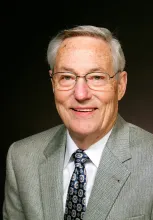
At the time of his retirement in 2016, Roy Holladay was serving the Operation Manager for Ministerial and Member Services of the United Church of God. Mr. and Mrs. Holladay have served in Pittsburgh, Akron, Toledo, Wheeling, Charleston, Uniontown, San Antonio, Austin, Corpus Christi, Uvalde, the Rio Grand Valley, Richmond, Norfolk, Arlington, Hinsdale, Chicago North, St. Petersburg, New Port Richey, Fort Myers, Miami, West Palm Beach, Big Sandy, Texarkana, Chattanooga and Rome congregations.
Roy Holladay was instrumental in the founding of the United Church of God, serving on the transitional board and later on the Council of Elders for nine years (acting as chairman for four-plus years). Mr. Holladay was the United Church of God president for three years (May 2002-July 2005). Over the years he was an instructor at Ambassador Bible College and was a festival coordinator for nine years.
