

Gary Petty
This transcript was generated by AI and may contain errors. It is provided to assist those who may not be able to listen to the message.
But we want to welcome all of you. We want to welcome those that are going to be listening to this message in the weeks, the months, and sometimes the years ahead. There is a shelf life to these presentations. Sometimes when I travel or when people call me, they'll say, I remember when you spoke in such a time or in such a year. And that's very rewarding because God's truth never goes out of style, no matter who preaches it. And when they preach it effectively and the whole truth and nothing but the truth, the gospel truth, how wonderful a picture that is. And that's what we're trying to do during these open house messages that we're offering in the United Church of God. I mentioned to our guests that are with us today when we say open house here in the United Church of God, that is somewhat of a misnomer. Because the house of God is open every week. And we are a church that has open doors. We open our Bibles in church, and God willing, we also open up our hearts to one another. And that's not something that you can schedule. That's got to be by the prompting and by the activity of God's Holy Spirit in each and every one of us. Let's move right into the message. Before I do, let's rewind for just a moment and talk a little bit about last week. Because we don't want you to just kind of come right into the middle of the movie, but understand what we did talk about last week.
In the opening message, I answered from the Bible the vital question of why were you born?
You know, a lot of people don't really think about that. They just don't stop and think about it because of this life that we live in. The hustle and the bustle. And always thinking that they can move through it, and one day somehow they'll get to it.
We did get to it last week, and we came to glean from the Scripture humanity's incredible destiny that lies ahead to literally, and I do mean literally, be born into the family of God and share in the divine nature that Paul and Peter and John, the writers of the New Testament, give us in the Word of God.
As we added, shall we say, meat to that scriptural bone, we came to grasp that God is not just making a whole bunch of more angels. He's not just making spiritual pets. He's not just creating more spiritual robots.
But He is creating us individually to have the mortality, to be kings, and to be priests in the wonderful world tomorrow, in a spiritual kingdom that's coming to this earth.
And there can be no higher calling. There can be no greater purpose than that which is laid out in the Bible.
But as I concluded that message, we came to realize something, and I centered on that as simply this.
We don't receive something for nothing.
The biblical reality is that before we bear a crown, and the Bible talks about wearing a crown. Before we bear a crown, the equation of the Bible tells us that before we bear a crown, we have to bear a cross. And not one necessarily of our own choosing, and or our own timing.
And that is a part of God's unmistakable molding process. And if we do not understand that, then that can be one of the greatest thorns in our personal crown. If that suffering and those things that come into our life that maybe we don't understand as we heard in the first message. If we don't have the context, if we don't have the overall panorama of what God is doing down here below.
Then we will not be able to move forward with the purpose that God has given us.
With these thoughts in mind, allow me to share an analogy with you. I'm going to take you from church to the ball field, and then we'll come right back. There's a pitch that is, yes, pitched in baseball. It's called the curve ball.
A good pitcher has this as a part of his program. And he throws that curve ball in such a way that it will fool the batter as it moves in and out to where the batter will strike and not be able to hit it.
For a batter, it is the most difficult pitch, and it really separates the average players from the good players.
A batter that does not come to the place where he can figure out the curve ball is not going to move up the ladder in professional sports. To not be able to handle this pitch called the curve is the kiss of death for any developing ball player. The inability to adjust and to be able to hit that curve ball, if they do not, means that they will not be able to graduate to the next level.
We've been to the ballpark. Let's come back to church. Baseball and life have a lot in common, especially with our well-scripted plans. And then, not if, but when the curve ball of life comes our way, the big question is, will and what will we do with it? Let's define some of the curve balls of life to maybe where he can spread the net and bring everybody into this message. I'm talking about curves like sudden heart attacks or strokes, as we mentioned in the announcements before this message. Tragic car accidents, plane accidents, train accidents. We just had this situation up in Los Angeles where 18 people were commuting back home, and they're dead. And they're dead! The question is, how are the living, their wives, their husbands, their children, their friends, how are they going to handle this curve ball that they weren't prepared for? What about a crib death? We've never had that in our own family, but I've dealt with members and been in a hospital, over a little body, on a hospital, a little baby that has suffered from a crib death. That's a curve that is very hard for anybody to wrap their mind around, much less a bat. Dry by shootings. A freak accident while hunting or on a camping trip that was supposed to bring the whole family together, you know, fun time in the wilderness, and something happens. Johnny falls into the stream. A gun goes off that wasn't supposed to go off, that everybody thought was checked and disarmed. And then there's tragedy, and those curves come in. Couldn't help but the other night, my wife and I were up and turned to the History Channel, and there was the commemoration of 9-11. I began thinking about what happened at 9-11 when those New Yorkers, and for anybody that has ever been to New York, to recognize what it's like moving into downtown, which we call Wall Street, and to recognize those people were coming over from Jersey, or they were coming from Queens, or Brooklyn, or coming in from the island, and they were going through their regular routine that day. They had gotten off the subway downtown, and they'd moved into that building. Those two buildings that housed, I think, almost 50,000 people, they were going about their routine that day. It was a beautiful day in New York! The sky was clear, as you'll remember. It was just a super gorgeous day. Good people. Many of them family people. Trying to do an honest day's work.
And they became a part of history. Life threw them a curve, but they're dead. What about their survivors in Connecticut, and in Jersey, and up in the island, and up in Yonkers?
Those that remain behind and have to say, where were you, God? Where were you when these people needed you? These are the kind of curves that we're talking about. And that is a question that so often arises when we can't hit the curve ball, or when the curve ball of life comes, and the suffering seems so very, very intense that we don't know if we can bear another second of what's come our way. And we say, where were you, God? And why did you allow this to happen? It's not a new question. It's been around for thousands of years. Join me if you will in Ecclesiastes 9. In Ecclesiastes 9, Solomon, one of the wisest individuals that ever walked this earth, an analyst of human condition, as it were, came up with these thoughts, reckoning that the curve balls of life are not a respecter of persons. And we have to be ready. It is not if, but only when those curve balls of life will come.
Ecclesiastes 9, verse 11, I returned and saw under the sun that the race is not to the swift, nor the battle to the strong, nor bread to the wise, nor riches to men of understanding, nor favor to men of skill. I mean, it talks about all sorts of people that had, frankly, a lot going for them.
That in a sense were ahead of the game, ahead of the clock, ahead of the curve. But time and chance happened to them all. For a man also does not know his time, like fish taken in a cruel net, like birds caught in a snare. And so the sons of men are snared in that evil time, when it falls suddenly upon them.
Solomon is sharing a profound observation, friends. The unexpected happens even to the best and the most prepared. It happens to sinners.
It happens to good people.
It happens to the holy people of God.
Are you with me? It happens.
Sometimes we think we're the exception, just because we are, and or just because we believe perchance that we are a part of the holy people. And therefore we have this Teflon shield all around us that God's work in us, or His molding process in us, is complete. But the story's not over. But we think we're the exception. It reminds me of the story of a tourist who came up into an old New England town and was kind of looking around and went up to an old timer up on the porch, one of those rocking chairs, and saw the old timer.
And he asked the old timer, he said, What's the death rate around here? What's the death rate around here? And the old timer thought about it for a moment, and thought about it for a moment, and had a glint in his eye, and looked at the guy and said, Same as in New York City.
One per person. One per person. Which reflects the biblical reality found in Hebrews 9. That it is appointed unto all, all men, once to die. But, you know, even so, death is never a welcome guest. Nobody wants to deal with those kind of curveballs. Kind of reminds me of what Woody Allen once said, you know, the comedian, he says, you know, I don't mind dying, I just don't want to be there when it happens. And so this is something that all of us go through. But again, let's make it personal.
Because sometimes when the curveballs of life have occurred, it is others that have suffered. It is others that, to use the phrase, are now gone. We're left and we're the ones that have to come up with the answers to the big questions of life. Why did those people suffer and why do we now suffer? Because they're no longer with us. Was their life, are you with me? Was their life, was any life, lived in vain or for naught?
Be it a six-month-old baby that dies of SIDS, or one of those individuals that jumped out of the 90th or 100th floor of the World Trade Center. What's going on here? Is there something beyond this that we need to understand? Why is it that bad things can happen to good people?
We need to understand that, and I want to do that. And beyond that, I want to take this up to another level and another question. Because oftentimes there are people that, when this does happen, they wonder, well, did that individual ever come to a relationship with Jesus Christ? What about, and you'll know what I'm talking about when I say this, what about Uncle Charlie? All families have an Uncle Charlie in them. You know Uncle Charlie, it's just got a different name in your family. Kind of a character, kind of a nice scoundrel, kind of a person that made Thanksgiving interesting.
When you got together as a family, you know we all have that in our family. You know those. I see some smiles out there, and there's a lot of good religious women out there that worry about the Uncle Charlie's of life and wonder where he's going to land or where he's going to end up. Did Uncle Charlie know Jesus Christ? What is God going to do with Uncle Charlie and all the Uncle Charlie's of the world?
What is God also going to do with all of those individuals, those 3,000 individuals that died in the World Trade Center? Some of them were not Christian folk. Some of them were maybe thinking they were Christian folk but did not understand the entire revelation of God. Some of them were agnostic. Some of them were atheist, good folk, good Americans. Others that were international that were working there in Wall Street. But curveballs are not necessarily selective.
It happened to all of them. What is going to happen to all of those individuals? And what is going to happen to all of those individuals that for millennia have gone through hurricanes, have gone through tornadoes, have gone through deaths and family, have gone through the front line of battles? The individuals that were in Africa or Asia or in Europe before the Bible came to them? Does God have a purpose? Are they lost? Now, there's an important reason why I'm bringing this up. Because oftentimes people will say, well, where was God?
And or allow me to use this example. We had a very dear lady that lived in our neighborhood in another city that I will not identify to protect the innocent. Only the names have been changed. But I remember years and years ago when a very well-known singer that you hum a lot of his tunes to died by going down in a private plane down in Santa Monica Bay. And the first thing that this dear religious lady thought was, oh my, I know where he is.
And ain't in the ocean. Somewhere down there was in her mind because she did not think that the individual had a relationship with Jesus Christ. The question is this. Is that performer lost? Are those that have suffered and are going through suffering right now and have at this moment separated themselves from God? Are they lost? It's very important because if we look at God simply being a God of which events in life slip through his hands and he doesn't know what's going on.
If we worship a God that we think is a butterfingers. You know what I mean by that phrase butterfingers. Butterfingers means it kind of just slips through your hands or things get sticky. Butterfingers. I might have to find a better phrase next time I give this message.
I can tell. Okay. Do we worship an accidental God? Or do we worship a God by design? Now why is that important? Stay with me a second place. How you approach God and how you understand God is how you will live your life. If we believe that somehow God blinked or we believe that somehow God fell asleep on the switch.
How will we live our life? But if we believe that even beyond the curve ball some of those that we did not ask for. Some of those that we did not choose. Or some of those as Mr. Miller brought out that we don't fully understand at this given moment. But if we can understand that we serve a God that has a purpose beyond those things that come our way. And that nothing is lost. All is for a purpose. All will yet be rectified. That begins to change our life. And that's one of the reasons why today I want to move the focus of not only why do we suffer.
But to understand a God that proclaims throughout the Bible that this is not the only day of salvation. This is a very important understanding. I believe it's one of the cardinal understandings that we have in the United Church of God. I think it's one of the cardinal revelations that God gives members that are in the body of Christ.
And I'd like to talk about it a little bit. I hope your Bibles are ready to be opened because it's very important to understand this in relationship of why God allows good things, bad things to happen to good people. Why we go through suffering and that there is a hope and that there is a power beyond the grave. Join me if you would. Let's first go to John 11. John 11. And notice something here.
In John 11, because this deals with just a very, very fine family. No, just the kind of people that you would like to have live next door to you. I know right now we have a house for sale next to us. You probably do, and your neighbor do. So every time a car kind of pulls up, you know, I look out the front door, or Susan looks out the front door because, you know, we'd like to have nice neighbors. But of course, also, God may just give us the neighbors that we need to, as well, to grow.
Who knows? I'll let you know as that house gets filled. But you couldn't want nicer neighbors, and these were good people. Let me introduce them to you. Their names were Lazarus, Martha, and Mary. And not only that, one of their best friends was an individual named Yeshua, Jesus, the rabbi that was talked about in the first message this afternoon.
And it's very interesting to come to this story because when we talk about the curveballs of life, of which one of the biggest is death, and the death of beloved ones, it's interesting to note that in this story that many of us are familiar with, that Christ purposefully allows one of His closest friends to die. When we go there, we need to look at this and ask ourselves, was He distracted? Was this by default, or was this by design? Because, after all, this was Lazarus. John 11, verse 1, Now a certain man was sick, Lazarus of Bethany, the town of Mary, and her sister Martha.
And it was that Mary, who had anointed the Lord with fragrant oil, and wiped his feet with her hair, whose brother, Lazarus, was sick. These were good people. This was the gal that had gone above and beyond, and caring for Jesus when nobody else would in that room. Therefore the sister sent him, saying, Lord, behold, he whom you love is sick. Verse 4. And when Jesus heard that, He said, This sickness is not unto death.
This curve ball that has come your way is not a dead end, but that the glory of God, that the Son of God, might be glorified through it. Now, Mary and Martha did exactly what you and I would if it was our family member that was sick. If it was our dear wife, or our dear husband, or our children, or grandchildren, we'd go find the good man of God and say, Come, come, please pray over my loved one.
Come right away. You've always been here before. You've always been there besides us. Jesus said, This sickness is not unto death, but it was for a purpose. The suffering and not only that Lazarus was going through, but the heartache and the emotional trauma that the sisters were going through was for a purpose. Notice what it says here as it goes to verse 14. Then Jesus said to them plainly, after he said it wasn't unto death, he said, Lazarus is dead, and I am glad for your sake that I was not there.
How does that not sound just horrible? Glad I missed the plane. Glad I didn't pay for the ticket. Glad I wasn't there. Glad I didn't arrive. Sometimes that's where we leave it when we say, Oh God, where were you? Comma. That you may believe. Nevertheless, let us go to him. To make a long story short, which is interesting about the story of Lazarus, are you with me?
That Jesus did not appear until after three days. Very important in understanding Jewish culture. Jewish culture had this perception that there was somewhat of a spirit that actually hovered over the individual for the first three days. And it was a time of shock and a time of grief. After the three days, things were settled.
In other words, anybody that was dead was like Rover, the dog, dead all over. They weren't coming back. There was a very succinct purpose of why Jesus stayed away as long as he did. Because remember what I've tried to share with you over the years? God never wastes a miracle. And this was not just somebody that had fallen asleep, had sleek apnea or whatever. Lazarus was dead. And he comes. And we know that story, what occurs. We go to the story as we look at it in verse 32, where we see this point.
Let's actually go to verse 32. And Mary says basically what we often say. Mary came where Jesus was, saw him approaching, and she fell down his feet saying, Lord, if you had been here, my brother would not have died. God, where are you? I've tried to do everything for you. I've tried to be a devoted woman in your cause. I've been one of your disciples.
I've been a good Jewish woman. I've been under the law. And not only that, but I've followed you, and I've even done what other people wouldn't do when they were in the house and they didn't recognize who you were, that I put that oil on your feet. And I've done all of that. And where were you? I'm sure some of us in this very room have gone through situations in our life where there's a little bit of Mary in us.
And we said, God, look, look, look, look. Look what I've done. Look what I've done. Look how devoted I have been to you. Why are you allowing me to suffer this way? That's not the end of the story. Join me if you would in verse 42. Because they took that walk on that dusty road out of Bethany to the sepulchre where Lazarus rested. And Jesus went there, and it says that He cried out with a loud voice as He faced that grave. A loud voice saying, Lazarus, come forth, and He who had died came out bound, hand and foot, with grave clothes, and His face was wrapped with a cloth.
And Jesus said to him, Loose Him and let Him go. Early on when Jesus was in that other spot, He said He is not dead in the sense that you think He's dead, but that it might be to the glory of God. There was something that God was working up to. One of the greatest verses in the Bible that I love and that I've held on to for many a year, many a decade, is when I first heard it for the first time, John 5 verse 17, where Jesus, in his self-disclosure, that means you're talking about yourself, said, My Father works, and so do I.
They never stop. And there was a work that was in progress here. The work that would allow Jesus, going back to John 11 and verse 25, to identify His role in the Father's hands. Jesus said to her, speaking to Martha, the sister of Mary, who met Him first, I am the resurrection and the life, and He who believes in Me, though He may die, though He may die, He shall yet live.
And whoever lives and believes in Me shall never die. And then here comes the question, do you believe this? And that is a question that comes down to us 2,000 years down the line. And our answer to the question that is put before Martha, that is put to each and every one of us, is how we live life, and how we will swing at the curved balls of life as they come our way.
And when all of life seems out of control, especially when it's not in our time or in our choosing, that it comes down to this cardinal thought, do you believe that there is life beyond the grave? You know, this very word resurrection is very interesting.
The word resurrection, which is a multisyllabic word, otherwise meaning many syllables, basically just has one meaning, means to stand. Now we say resurrection in the Christian culture, but it's really neat when you get to the root of the word, to stand. Sometimes we don't think about it because, well, as was mentioned in the first message, we've had this 2,000 years of knowing the story. I have a question for any of you, and if you answer this in the affirmative, you will be on the news tonight. Have you seen anybody recently that died standing on all twos?
Nobody wants their 15 minute of fame right now. The power of the Scriptures, the good news of the Gospel, is that every individual that has ever lived is going to have an opportunity to stand. To stand. That little baby that I saw on that hospital emergency room table, just this big little guy, is going to stand. Mothers and fathers and grandfathers that have never known the name of Jesus Christ are yet going to be able to stand.
Sailors that have gone down in the ocean are going to be able to stand again. People that jumped out of the windows with those two skyscrapers in Wall Street, they're not just simply going to go down, they're going to stand again. They are not lost. I cannot worship a God. I'm sorry, I just kind of got to give some self-discipline. I can't worship a God that's a Butterfingers. I can't worship a God that doesn't move beyond accidents and has a purpose for every human being that has ever lived.
Join me, if you would, to clarify this point coming to 1 Corinthians 15. 1 Corinthians 15, which sometimes is given the nickname, the resurrection chapter, adds to this point that I'd like to share with you. 1 Corinthians 15 and verse 19. Because Paul, who is the apostle to the Greek community, is trying to explain this biblical concept to people that did not have a concept about the resurrection.
And we find in verse 19, but now Christ is risen from the dead and has become the first fruits of those who have fallen asleep. That's terminology that is similar to that which is used in the story of Lazarus. Because that's just how God looks at it. That when people die, it's just like falling asleep. You know how it is when you go to sleep at night? If you do fall asleep at night, I know some of you are suffering from the other thing.
But when you fall asleep and you wake up the next morning, it's like no time has gone by at all. Right? Where did the time go? So God looks at it. What's going on right now is just like sleep. And it says, and it's become the first fruit of those who have fallen asleep. For since by man came death, by man also came the resurrection of the dead. For as in Adam all die, even so in Christ all shall be made alive.
But maybe you've never noticed this next verse. Let's take a look at it together. But each one in his own order. Now what does that mean, each one in his order? Is that like standing in a line at McDonald's? Beat me up, Scotty. Beat me up, Scotty. You know, when you go into McDonald's, you always want to kind of in order, otherwise you get a lot of what? Customer rage. Have you ever tried to step in front of somebody at a McDonald's? It's not a good idea. There's no discount on human nature. Things begin to happen. It says, each in his own order. Christ the first fruits after those who are Christ that is coming. And then comes the end when he delivers the kingdom to God the Father. When he puts an end to all rule and all authority and all power. What we need to ask ourselves as we look at this one set of scriptures is simply this. Are we talking about one event? Or are we talking about a process? And if it is a process, then stay with me, please. How is this made possible? Very important to contemplate. And let's understand that. What are the parameters that are talked about? First of all, let's center on this. It tells us that Christ is risen from the dead. Now let's consider this for just a moment. When we say that Christ was risen from the dead, that means that the Son of God died just like we did. He suffered. Unlike us, it was by his own choosing and in his own time. But nonetheless, he suffered. Why do bad things happen to good people? Let's think about that when we think of Jesus. Jesus was a good person. When you think about the story of Jesus Christ, when you boil it all down, the worst thing that he ever did – think about this for a moment – the worst thing that he ever did was be perfect. In other words, he was perfect. He was the exact image of God on earth, on two lakes, and with a heart, wrapped in human skin. He never did one wrong thing. And yet he suffered, and yet he died. And in that sense, was cut off. And that's kind of what makes it very special for us, and why Christianity is such a beautiful thing when you allow it to be revealed to you, because he's one of us. The very name Emmanuel means God with us. And he understands exactly what you and I are going through when these curveballs of life come and when there is suffering. You know, it's like Shakespeare once said, he just had scars that never felt the wounds. He is one of us. And he understands what it's like when these curveballs come through. But notice what it says, For since, in verse 20 and by man came death, by man also came the resurrection of the dead. We recognize, going back to that story in the Garden of Eden, that the first human parents rejected the ways of God. God had always wanted to have a relationship with a special creation called humanity. The one thing that God wanted to do was to walk and to talk with this special creation in this beautiful garden called Eden. He wanted to have a relationship. Now, I know some people just want to look at the Bible as a book of rules. And rules are important. And there are ten commandments. But they point to something beyond that which is simply black and white. It's a relationship directed towards holiness. From the very beginning, God wanted us to be like Him, not only in physical similitude, but heart-like similitude. He's calling us to holiness.
He's calling us to holiness. The call of God in both Testaments says, I am holy, therefore you be holy. Adam and Eve rejected that. Because they rejected that, death came upon man. At the same time, the second Adam came along, as is a term for Jesus Christ, and that second Adam, Jesus Christ, is our return ticket, as it were, back to Eden. And as death affects every man, through Jesus Christ, all can have that opportunity to live again. But each one in his own order cries the firstfruits after those who are Christ at His coming. Join me if you wouldn't, 1 Thessalonians 4. Keep your finger there. 1 Thessalonians 4. Again, Paul had to explain a lot of this to the Greek community that was not familiar with, shall we say, like the words of Job, about, I await my Lord's voice. If you'll come with me to 1 Thessalonians 4.
Let's pick up the thought in verse 16. What had happened here is that, again, here is the church at Thessalonica. Good Christian folk. Greeks that had left everything behind and had become a part of this Christian community. Good folk! And yet they were getting nervous because people were dying amongst them. Christ had not yet come back, and they were looking forward to that coming. Maybe they had done something wrong.
Paul is using these words to settle them, to help us understand that, yes, Christians are going to die as well in this lifetime. Christians are going to suffer. It's a part of the process. If Jesus himself died and he's the head of the body, and he sets the example, and he bore a cross, he says, if I bear a cross, you're going to bear a cross. But this hopeful scripture is put out, For the Lord himself will descend from heaven with a shout, and with the voice of an archangel, and with a trumpet of God, and the dead in Christ will rise first. Now, that voice is very important. The commentaries will tell you that it is twofold, that as he comes, it is not only the archangel shouting, but the commentaries will tell you that it is also the voice of Christ.
It is twofold in sense. One, it is a war cry. That you can discover in the book of Revelation, as Jesus Christ comes back to claim this earth for his Father, and to save humanity from itself, and to establish the millennium, that thousand-year period. The other part of that cry is that same loud voice. I'll not get louder. The loud voice that Jesus used in Bethany to raise Lazarus, which is only the first paragraph of the story of what God wants to do for the rest of humanity. And it says, and with the trumpet, and the dead in Christ will rise first. Now, if they're already up in heaven, I have a question for you. If they're already up in heaven, then why are they rising down here?
Then we who are alive and remain shall be called up together with him in the clouds to meet the Lord in the air, and thus we shall always be with the Lord. Those are the people that are going to be a part of that resurrection that follows Christ. But then, let's come back to 1 Corinthians 15 again. 1 Corinthians 15. And it says, and then comes the end. Then comes the end. Well, what does that mean? Does the end mean the end?
Now, normally, you know, end means end. But may I say that I believe that we need to go to the fullness of the Bible to understand a part of the story before that end. And that's very significant to be able to do. Join me, if you would, in Revelation 20. In Revelation 20, I'd like you to look at something that may be your eyes, maybe your heart has never fallen on and been able to grasp. Notice what it says in Revelation 20 and verse 4. Speaking of those end times, speaking of that time of when that trumpet is going to sound, and I saw thrones and they sat on them and judgment was committed to them, and then I saw the souls of those who had been beheaded for their witness to Jesus, and for the Word of God, who had not worshiped the beast or his image, and had not received his mark on their foreheads or on their hand during that time of tribulation that's going to be in the future.
And they lived and they reigned with Christ for a thousand years. And that's where the term millennium comes. But the rest of the dead, now that's very important, the rest of the dead, not the saints that are resurrected during that time. Now we have this terminology we've got to deal with. What's it mean, the rest of the dead? Did not live again until the thousand years were finished.
This is the first resurrection. I suggest to you as you look at verse 5 that but the rest of the dead did not live again until the thousand years were finished is a parenthetical thought. It's an insertion. In other words, if you go back to verse 4, and let's look at the very last phrase, and they lived and reigned with Christ for a thousand years. Then look at the end of verse 5.
This is the first resurrection. It's defining that that is the first resurrection, but there's this parenthetical thought that after that first resurrection, but the rest of the dead did not live again until the thousand years because they're going to reign for a thousand years, but the rest of the dead don't live till after that thousand years. We might ask ourselves, what's going on here?
And how can we explain that? It's explained in a wonderful, fantastic story. Would you join me over in Ezekiel 37? Ezekiel 37. In the book of Ezekiel, it was given a wonderful story. Many of us know what is classically defined as the old Negro spiritual. Them bones, them dry bones. Now hear the word of the Lord. The knee bones connect the way it wants to sing out there. Okay. Just checking. This is not anatomy class. This is a church. But let's look what happens here, and let's understand the significance for a moment. Verse 3.
Because Ezekiel, you need to understand at this time, the house of Israel is fallen. Seemingly, there is no hope for this covenant people of God. Some of them were not all scoundrels. Some of them had tried to continue to obey God, but the nation had, shall we say, gone south.
Moved into Baal worship. Stopped keeping the Holy Sabbath. Stopped tithing to God. Alliances with the Gentile nations around them to try to get by, rather than rely and have confidence that God was their sovereign. So a lot of people died. And a lot of people had hope that was cut off. That's a horrible thing, to have hope cut off. When you have dreams and you have purposes, everybody wants to live a full. Don't you? Doesn't everybody want to live a rich, a full and a prosperous life?
And then they have hope cut off. Those people, those towers, the Manhattan, had hope cut off. I tell you, every time I watch that, I don't tune in on purpose, and there it is, and you'll watch it again, and you say, No, I need to watch this. I don't want to watch it, but we need to remember what happened. And when I saw that again, that whole story of 9-11, I recognized that even as those people were fallen, that God still yet has a purpose for them as well as for me. Their existence is not over. They are going to be resurrected, and it's right in this story where it says, And he said to me, speaking to Ezekiel, Son of man, can these bones live? And so I answered, O Lord God, you know. And again he said to me, prophesy to these bones, Speak to them, and say to them, O dry bones, hear the word of the Lord. And thus says the Lord God to these bones. Surely I will cause breath to enter into you, and you shall live.
And I will put sinew on you, and bring flesh upon you, and cover you with skin, and put breath in you, and you shall live. And then you shall know that I am the Lord.
The reason that we are going through what we're going through is that many a year ago, our first human parents rejected the ways of God.
God offered them relationship through the tree of life. A relationship that would have allowed them to have a wide-open, transparent relationship with the Creator. A wonderful relationship with one another as husband and wife, and those that God would bless them with. A wonderful relationship with the environment that was around them as humanity had been given dominion over the creation. And God said, this is how it's going to work. One plus one equals two. And just believe that everything I have for you is going to be enough, and you don't need to add to it. But we know what happened. We know that serpent came in and fed the first couple the biggest lie.
That has ever been hatched. You shall not surely die.
You don't have to rely on God. You've got your own immortal soul. You can do your own thing. In your world, one plus three can equal two. You can make your own equations, have it your own way, and don't worry, you'll still get the same results down the line. And they bit into that. And you and me and all of those in between have been in that same line and have rejected the way of God until He came to us by His grace, began to work with us by His Spirit, and we began to surrender in a fashion that neither Adam or Eve or most of humanity has done for the last 6,000 years, or as Israel did.
But God is going to offer a way of return because Jesus is not only the resurrection and the life, He is the Lord of return. And it says, I prophesied all of this, that you should know that I am the Lord. Just as much as this story fits in with Lazarus, you've got to put the Bible together. Why did Jesus stay where He did so that He didn't go to Bethany, so that Lazarus did die, so that they might recognize that it's when it's all said and done. It's not by what we're doing. It's not by our good works. It's not in our hands.
It is only by the grace and by the miracle of God that life can be in His time, and that He wants to give it to each and every one of us. And so all of this began to develop. And indeed, as I looked around, the sinews in the flesh, verse 8, came upon them, and the skin covered them, and there was no breath in them. And so He said, prophesy to the breath, prophesy, Son of Man, and say to the breath, Thus says the Lord God, Come from the four winds, O breath, and breathe on these that are slain, that they may live, that they might stand, that they might be resurrected.
And then He said in verse 11, Son of Man, These bones are the whole house of Israel. And they indeed said, Our bones are dry, our hope is lost, and we're cut off. Where's God? Where is He? This is it.
There's no hope. And God says, There is an open door back to Eden. There is a way of return. Now, I don't have the time to go into all of this. I'm just wetting your appetite today because, allow me to say this, I've said, the house of Israel. I believe Ezekiel 37, as I understand it, gives us a peek, and only a peek at the glory of God. Israel, while beloved of God, does not have a monopoly on God's attention. Israel was to be a model, but it doesn't have a monopoly on the love of God or the sacrifice of Jesus Christ.
Because under the New Covenant, it is not only about the Jew or about Israel, but it is about grace for all races, for all peoples. God said at the very beginning, Let us make man in our image and after our likeness. And thus He made Adam, and thus He made Eve, who were neither Israelite and or, are you with me?
Because of Hebrew. Because of Eber, the granddaddy of Abram, had not yet been born, so there were no Hebrews. Adam and Eve represented what God desired for all of humanity. And Israel as a nation had the opportunity to live out what God ultimately desires for, are you with me? All of humanity. And it's a wonderful hope that God has a purpose and a time and a place and a resurrection. When you go back to Revelation 20, and you might just want to jot that down if you're taking notes, and I'm going to let you fill in the rest of the blanks.
It says, and this is the, are you with me? The first resurrection. What does a first demand? If something is first, that means something else follows along. That there are other resurrections. But I'm just going to put that out there for you to consider for right now. The point that I want to get across today is simply this, brethren.
There is a reason of why things are happening in your life today or have happened. And maybe you don't have all of the answers today. And maybe some that are listening to this message today or will listen to it in the future, are almost, well, not even almost, just not moving. Because they don't have the answers. The answer is recognizing that there is life beyond the grave. That this is not the only day of salvation. The God that you and I have the privilege of worshiping, Peter says that it is His will.
The Apostle Peter says it is His will that none should perish. None should perish. And His purpose and His plan is so vast that He wants every opportunity for every individual that has ever lived to be able to squarely understand what He offers through Jesus Christ. And if they didn't get it in Africa in the 14th century or in Asia in the 16th century, or may I say America in the 21st century, God is not through.
I don't know what you're going through right now. Some of us are suffering individually or as a family. But allow me to point you to the words of Paul as we begin to conclude. 2 Corinthians. Join me there, please. 2 Corinthians 4. And you know at first when you read this, it's hard to visualize because some of us are still in pain because of the curveballs that have come our way.
But notice what Paul says here. A guy, if I can put it that way, that knew something about suffering for any of us that are at all familiar with the missionary work of Paul and everything that came his way from being fed to the lines of Ephesus to shipwrecks to beatings to being lowered down walls and baskets, you name it, it happened to Paul.
But notice what he said here. Verse 16. We do not lose heart. And even though our outward man is suffering, oh excuse me, perishing, but if you're suffering and you don't have any context or any purpose behind that, you are indeed perishing. Yet the inward man is renewed day by day.
And then notice what he says, which is just frankly incredible and can only have by Jesus Christ living inside of us. Therefore we don't lose heart. Verse 17. For it is our light affliction, our light affliction. So the first thing he says that whatever we are going through right now is light. Well, you don't know what I'm going through and you don't know the curve ball that is firing my way. Paul says it's light. Which is but for a moment. Now, while it can seem like a thousand years, Paul reminds us it's but for a moment.
And is at work for us a far more exceeding and eternal weight of glory. God is a God that works. Jesus says, I work and my Father works. There is nothing that is simply a dead end in God's will but for a purpose that the glory of God, the wonderment of God, the divinity of God, the eternity of God might be revealed and shared with us. And while we do not look at things which are seen, but the things which are not seen. For the things which are seen are temporary but the things which are not are eternal. Sixty years ago, and I'll finish with the story.
Now nearly 70 years ago, excuse me, there were good people in the heart of Europe. And they were people that tried to, wherever they go, try to be the very best citizens that they could be. They had to be because history was already against them. Because everywhere that they went, sooner or later they were kicked out. They were the Jewish people. And we know that 70 years ago that the final solution began to be wrought. And these people that looked upon themselves as fine Czechs or fine Germans or fine Frenchmen or fine Italians that happened to be Jewish, we know what happened.
We know how they were rounded up into the death camps underneath the Nazi regime. And you talk about a curveball. You talk about life being taken away from you, where your whole life comes down to an addict.
You're hiding in a wall. Then finally that's discovered. And then you're no longer hiding. You're with thousands and thousands and thousands of people in a concentration camp. God, where are you? You talk about a curve. I want to share the thoughts of a gentleman that survived that experience, that survived the curveballs of life and that had a purpose.
His name is Victor Frankel. He wrote in his book something that's very interesting. Victor Frankel was not only an observer, but a survivor of the Nazi death camp at Auschwitz. It says that Frankel looked around at all of those who died and those who survived. And he asked himself, why some with good health and intelligence and survival skills did not survive, while others who lacked these attributes endured and lived. Remember what Solomon said? The race does not go to the swift or to the strong.
He concluded, that is Frankel, that the single most significant factor for survival was a sense of a future vision. That is a conviction of those who survived, that they had something yet to perform, a mission yet ahead of them. Some important work to do. That's what our Father above offers each and every one of us through Jesus Christ.
Through this book called Holy Scripture, God has told us that you were born for a purpose. And I want you to be a part of my family. I want you not because of what you are, but because of what I am and what I want to work in you. I want you to be a king and I want you to be a priest for me. I want you to be a part of the divine family.
I want you to be a partaker of my nature. And I want to share with you what I want you to share with others, that when they are going through suffering, and when it just seems like they can't put the pieces together, or they wonder if somehow has God lost his way to remind them that there is hope, that there is a way of return. That this is not the only day of salvation. That all things, what does the book say in Romans? Romans 8, 28, All things work together for the good.
Does not say that all things are good. Ask Martha and ask Mary, but all things work together for the good. Let's go away from this meeting place today with that reality, with that truth, and with that hope in us. And let's go away with the confidence and with the vision that Jesus Christ came, that we might live life, and not only live life, but live it more abundantly.
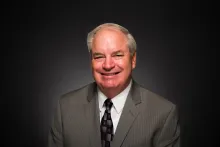
Robin Webber was born in Chicago, Illinois, in 1951, but has lived most of his life in California. He has been a part of the Church of God community since 1963. He attended Ambassador College in Pasadena from 1969-1973. He majored in theology and history.
Mr. Webber's interest remains in the study of history, socio-economics and literature. Over the years, he has offered his services to museums as a docent to share his enthusiasm and passions regarding these areas of expertise.
When time permits, he loves to go mountain biking on nearby ranch land and meet his wife as she hikes toward him.
