
Robin S Webber
This transcript was generated by AI and may contain errors. It is provided to assist those who may not be able to listen to the message.
Well, thank you very much, David, and Sharon certainly appreciate that. Well, brethren, let's open up our Bibles and join me if you would, and let's turn to Deuteronomy 18 and verse 15 to begin this message. I turn to here because we are moving into the spring festival season and preparations. Here we are on the 1st of March, and my message will be directed to that today. There are similarities and there are differences when you think of days gone by and pass over of old, and the New Testament pass over that we are going to be keeping.
And perhaps this verse is a good place to begin. In Deuteronomy 18 and verse 15, it says, This is a messianic prophecy embedded right within the books of the law. And Moses is speaking of, in that sense, a second Moses that would come along and would, in a sense, be likened unto him. He would be a deliverer, and he would be a lawgiver. And like any type or anti-type, there are similarities and there are also differences. He was speaking of that greater Moses and that second Moses, none other than Jesus Christ.
There are similarities that are very interesting when it comes to Moses and to that second Moses, Jesus Christ. Let's just talk about a few of them for a moment. The first Moses was, in a sense, sent. And he was trained by and of God for the position that he would hold. That same Moses also would land on the doorstep of Pharaoh and give him a message. Very interesting, the training that went on with Moses, when you think about how God prepares somebody, that you think of Moses. We read from Josephus that Moses was, in his early life, being a prince of Egypt, was also in the army.
Josephus says that his name was Murmashoi Kinkari. And that same... How did I say it? I got it the first time. It's all Greek to me. Anyway, that he was actually the the the conqueror of Ethiopia. And Ethiopia came into the realm of the Egyptian Empire under Murmashoi Kinkari. There you go. But it's interesting, that was a part of the training that he was going to need to guide Israel to the promised land, to move people from one point to another and have that background. But then later on, it's very interesting that, rather than the the training of an army, God sent him out into the wilderness for 40 years to learn how to herd sheep.
And sometimes, in dealing with people, there's a time when you have to move them like an army, and you also have to kind of recognize that you're dealing with, yes, sheep, and sheep can wander. And so all of that marvelous background that was in the training of Moses, one who was sent, one who was called, one who was drawn from the Nile for a purpose.
And at the end of the day, at the end of the day, sent by God, and he landed on the doorstep of Pharaoh to give Pharaoh a witness. Let my people go. At the same time, that second Moses, that that greater Moses that we know of as Jesus Christ that Deuteronomy 1815 speaks of, he also was sent. He was sent from heaven above. And he came to this earth, and he was here. He had all that which was from above encapsulated in human flesh. And he also had a calling, and he also had a destination.
Whereas Moses landed on the doorstep of the Pharaoh of Egypt, Jesus ultimately would land on the doorstep of Jerusalem, and would give them a message, and would give them a witness from God. It's very interesting when you think of Moses on one hand and Jesus on the other, both of them in that sense were men that accomplished many signs and many wonders showing that they were sent of God. But then differences begin to occur. Moses was sent to Egypt and instructed Israel as to how their lives might be spared, and how that angel, that instrument that God sent, that passed through Egypt as it passed over the people of God.
And their lives were spared.
And that was marvelous, and Moses was a part of that. But join me if you would in Hebrews 3 and verse 1 for a moment before we talk about the second Moses. Hebrews 3 and verse 1. And it's interesting what the author of Hebrews says here in Hebrews 3 and verse 1. Therefore, holy brethren, partakers of the heavenly calling, consider the apostle and the high priest of our confession, Christ Jesus, who was faithful to him who appointed him as Moses also was faithful in all his house. For this one has been counted worthy of more glory than Moses, inasmuch as he who built the house has more honor than the house. For every house is built by someone, but he who built all things is God. The difference between Moses and the second Moses, Jesus Christ, is Moses was at a time and a place in which God spared life. But what God did through Jesus Christ and God in that sense of being in flesh in Christ did more than spare life. He raised life from the dead. And that is what I would address today as I take you now to John 11. Join me if you would there, because this is a message that at times I like to open up what we might call the prep season for the spring festivals to go to John 11. There are so many components here, and I hope that'll be meaningful to you as we understand what and who Jesus Christ was. And I'd like to share some points out front with you. I really appreciated how Scott ended with those concluding three points. I'm going to give you some points out front so we'll not get you lost along the way. We'll also be concluding with those points at the end. But there's a specific purpose of why I really want to bring this message to you today, and that is to understand this. Here what we have is a human story coupled with God's glory. What I really want you to understand as we go through the story of Mary and Martha and Lazarus and the disciples is that their story is our story today, 2,000 years down the line. We need to understand that. It is an event in time frame that happens 30 days before the Passover. 30 days, and here we are just about five weeks out from the Passover this year. In that sense, seemingly where we are right now. What this story is going to show us, it displays God's awesome power and yet also shows Jesus' tender feelings on full display. It is given today for all of us to jolt us out of what we might call faithless familiarity. Sometimes we are so much in the status quo that we really do need what I would like to call positive disruption, something to shake us up, something to wake us up, even people of faith. It also is to prepare us, brethren, to come to expect the unexpected from God. There is nothing routine about God. God will be accomplished, but it's going to be in His way, it's going to be in His time, and it's going to be for our best. And His perfection is always better than our best. Also, to recognize most emphatically, most emphatically, that you and I do not have an accidental Savior. You might want to jot that down if you're taking notes. We do not have an accidental Savior. God does not operate the universe. We heard about that a little bit in the first message. God does not operate the universe by accident, and He is not involved in your life and my life by accident. Jesus did not come down from heaven all of a sudden. I don't know. I have to look into the glove compartment and kind of see what I'm going to do here. God is in that way. He knows exactly what He's doing. He knows where you are at all times, and He knows what is best for you and best for me. And that's very important.
Most important is, in this story, we are going to find as much as we know God and we know Christ, there's always more to go. What I want you to receive out of this story is that God will continue to challenge you and me, as He did Mary and Martha, to go deeper in our understanding of who He is, and that He always has His purpose in mind and our best in mind. To go deeper, to go wider, and to look up. So are we ready to go through the story understanding that? Let's proceed.
John 11 and verse 1. Now a certain man was sick, Lazarus of Bethany, the town of Mary and her and her sister, Martha. And it was that Mary who anointed the Lord with fragrant oil and wiped His feet with her hair, whose brother Lazarus was sick. Now it's very interesting, just in the beginning of this, for those of you that are not familiar with the story, we need to add a little context here. Number one, Bethany was just two to three miles outside of Jerusalem, just two or three miles east of Jerusalem. Today it would be in what we call the West Bank. So we need to understand that Jesus who had been involved in His Galilean ministry and the ministry in Samaria was now right at the door of Jerusalem. And this story sets up a very important point 30 days out, and that is simply this. The timing is right and Christ was inspired to be right there, and this is basically what He was doing. He was knocking on the door of Jerusalem. The Son of God was at hand. Be ready to meet Him, just two or three miles out. And He knew that whatever He was going to do in Bethany was going to travel through the walls of Jerusalem and right into the temple courtyard and into the palace of the high priest. He had to do that. Back in that day, you couldn't tweet from Samaria. You couldn't, you know, do Facebook from Galilee. He had to be present. It had to be personal. It had to be up close. It had to be right there. And at the end of the day, brethren, the bottom line is this. This act, this deed of bringing a man to life would cost him his life, not just simply for that man, but for you and for me. And so there's this man. His name is Lazarus. He's in Bethany. He has sisters. It's very interesting just the name of Bethany. The name Bethany actually means house of the poor or a house of misery. Kind of interesting. It seems that that is where the alms house was outside of Jerusalem to care for the sick, the needy, and perhaps even the lepers. So he goes to visit Mary and Martha and to respond to the call to take care of Lazarus. And it's very interesting that it is in this spot. It's called the house of the poor, the house of misery. And it's very interesting to, as we go through this story, as we go to Passover, is to recognize that all of us are destitute apart from God. All of us are poor apart from God. All of us, even if we don't even recognize it, whether it be human beings or whether it be the creation, as the apostle Paul says in the book of Romans, grown. They grown out, even not knowing what they're groaning for, but there is something that is vacant, something that is missing.
And then it's very interesting, verse 2, it says, it was that Mary who anointed the Lord with fragrant oil and wiped his feet with her hair, whose brother Lazarus was sick. It wasn't just any Mary. It wasn't somebody that didn't know Jesus Christ. It was that Mary, along with her sister and along with her brother, that had given all in all everything that they had and were and were very tight and very good friends with Jesus Christ. It was that Mary. And therefore the sisters sent to Him because Lazarus was sick, saying, Lord, behold, He whom you love is sick. And when Jesus heard that He said this sickness, Jesus said, this sickness is not under death, but for the glory of God, that the Son of God may be glorified through it. It's very interesting that when you look at verse 3, it says that not only Lazarus loved Jesus, but that Jesus in turn also loved Him. And He's sick and He needs you. And you've always been there for Him before, and He needs you more than ever. And when Jesus heard that, He said, this sickness is not under death, but for the glory of God, that the Son of God may be glorified through it. Just a side note as we go through verse 4, when so often in the Gospels and in His discussion with the disciples that they didn't always understand, when He spoke of that glory, He was actually speaking about what would occur to Him on the cross, that Jesus always associated what would occur on the cross and His sacrifice as being to the glory of God, and that it was in that sense His pathway, as it were, back to that glory of which He shared with His Father forever. Now notice verse 5. Now Jesus loved Martha and her sister and Lazarus. There was a double love that was occurring here.
They were bosom friends. They were very close. And you know how it is sometimes as friends, you know, we will always have family, and family is family, but sometimes there are a brother or sister that is even in that sense closer than blood because of the spirit that they share. So when He heard that He was sick, He stayed two more days in the place where He was.
So when He heard He was sick, they say, okay guys, let's get in the bus. We've got to roll towards Bethany. Oh no, my friend Lazarus is sick. Let's get on it. Let's get on the path. Let's get on the trail. We've got to get there as soon as possible. Is that what He did? No, it didn't. He stayed two more days in the place where He was. And then after this, He said to the disciples, let us go to Judea again. Now for time reference, Judea was about 25 miles from where the message had come to. And the disciples said to Him, Rabbi, lately the Jews sought to stone you, and you're going there again? And Jesus answered, are there not 12 hours in the day? If anyone walks in the day, He does not stumble because He sees the light of this world. But if one walks in the night, He stumbles because the light is not in Him. Jesus knew that His time was short, but it was not yet midnight. He was indeed in that 11th hour, but He was about His Father's business, and there was something to accomplish. Something that He was not only going to accomplish for Mary and for Martha and for Lazarus, but for each and every one of us that are in this room. Join me, if you would, friends, for a moment if you turn over to John 15. John 15 and verse 13. Let's take a look at that. And this was spoken about a month after this situation that occurred, but He spoke it on the last night of His human existence in John 15 and verse 13. Notice what it says, greater love has no one than this than to lay down one's life for His friends. And you are my friends if you do whatever I command you. I no longer call you servants, for a servant does not know what his master is doing, but I've called you friends. And you'll see that language of friendship in this story. And what He was about to do was not only for Lazarus, not only for Mary and Martha, but for each and every one of us that are in this room.
This would be the pathway. This would be the course that would wind Him up ultimately on Golgotha and become the ultimate sacrifice, the Lamb of God, the Passover of Passover, that you and I, not only the people that we read about in this story, but that each and every one of us might have life. And then notice verse 11. These things He said to them, our friend. Very intimate terms. You've got to remember in Jewish culture that Jesus was a rabbi. Rabbis had followers, they had students, but they were not necessarily at the friendship level. There tended to be in Judean culture. In Jewish culture there was an altitude between the rabbi and the followers. Jesus said, We go to my friend.
Each and every one of us in this room today, as we approach the Passover, have been called as a friend of God. So many dimensions that not only would He give His life for those people then, but for each and every one of us. Then His disciples said, Lord, if He sleeps, He will get well. Disciples didn't know what He was talking about. Disciples had been with them for three and a half years, and yet they did not understand fully what was going on here.
That's the encouragement I really want to share with each and every one of us. Sometimes we have followed the Christ for more than three and a half years. We've maybe been down that path with Him for 25 or 30 years, but what I really want to encourage all of us as we go into the Spring Festival is how much more is there to understand? How much is it that we do not yet know that He wants us to explore with them, to come to understand the words that are in the Bible? The disciples who were near to Him, walked with Him, slept with Him, ate with Him, were still not getting the fullness of what the message was that Christ was about. They were near, but they weren't on. Close is good in horseshoes, but it doesn't work when it comes to Christianity. But God is patient. Christ is patient. He continues to work with us to allow us to go deeper and deeper and deeper into understanding the message that He wants us to get. And that's what He was doing with the disciples. And I hope I can encourage you as your pastor to recognize that there is still more territory to explore in the Gospel. There is more to understand what it means to be complete in Christ. There's more to understand the revelation of God the Father and what we are to do, as Scott brought out in his fine message, to allow Him to have control in our lives as we likewise surrender ourselves to Him and to understand where He's guiding us. Then His disciples said, Lord, if He's steep, so get well. However, Jesus spoke of His death, but they thought He was speaking about taking a rest in sleep. And then Jesus just had to kind of clobber them over the head with a four-by-four verbally and say this, Lazarus is dead. And I am glad for your sakes that I was not there. This is not your normal bedside manner, is it? Boy, I'm sure glad I wasn't there when they died. You know, what do we usually do if we we know that a family member is dying? We drop everything. We've got to go see grandpa. We've got to go see grandma. We've got to go see mom and dad, many of us that have aged parents. We want to be there. Of all times, we've got to be there. We need to see them. They need to see us. Jesus said, I'm glad I wasn't there. Can you imagine how that must have hit the disciples, who had probably bored it in the house of Mary and Martha and Lazarus? I'm glad I wasn't there for your sake, that you may believe. Nevertheless, let us go to him. And then Thomas, who is called Didymus and or the twin, said to his fellow disciples, let us also go that we may die with him. I love this verse. I'm going to tell you why. Are you ready? Because normally, Thomas gets a pretty bad rap, doesn't he? What do we normally call it? What is, how would you like to have a first name like Thomas? What is his normal first name? Doubting Thomas.
And we read that in the Bible. We freeze frame it. We take a snapshot. And it's like he's always going to be doubting Thomas. How do we do that sometimes with other people that come into our lives? We meet them when they were young, or we meet them when they maybe were first coming into the church and kind of do we dare say a rough jewel in the making. And to remember this person here, remember that person there, and it's like we we pigeonhole him. Rather than seeing how God uses an individual in many, many ways, here's the one apostle, a little bit like Peter walking out of the boat, says, let's go up and die! Sound like a good idea, guys? Down, Thomas, down. And so we look at this story here. Let us go also that we may die with him. And then comes one of the most beautiful parts of this story. I love this, because I know that this has happened in my life as well. And I think when you think about it, it's come in your life as well, too. Verse 17, so when Jesus came.
How often has it been that at times you and I, perhaps in the course of this year, have felt abandoned? Felt that maybe God's alarm clock did not go off, and he's arrived late in our life. Where are you, God? Don't you know what I am going through? Don't you know that I need you more than ever? Don't you realize that I've given my entire life to you?
And yet now, when I need you the most, where are you?
The reason why I'm sharing with you this story that happens 30 days out before the Passover is exactly because when you and I are here that night of the Passover, the New Testament Passover, that when we partake of that bread, and when you and I partake of that wine, we are imbibing of the sacrifice of Jesus Christ in symbol. But by renewing that covenant, you and I are, in that sense, in our mind and in our heart, quoting what it says in Psalm 23 in verse 1, The Lord is my shepherd. I shall not want. That's what Passover is about.
Passover is the ultimate solution and the gift of God, granted upon us, that there is no other, none other like Him. And in Him is complete sufficiency, complete love, complete understanding, and knowing that that Father above and His Son want our very best and their perfection in us. So when Jesus came, He found that He had already been in the tomb for four days. For four days. Now, this is important. In the Jewish culture, in the Jewish culture, there was a way of mourning, as are in many cultures. The first three days were known as the days of weeping because it just shocks you. Somebody has died and you want to have them come back to you. The next seven days are known as the days of lamenting. But why did Jesus come on that fourth day, one day after the days of weeping? Somebody want to help me? Why? What is the purpose for this? Why did He wait four days? Why didn't He come before He died? Why didn't He come on the first day, the second day, or the third day? Anybody know? Byron? They've already given up hope.
Right. They had given up hope. He was dead. He was dead like Rover, the dog, dead all over. He wasn't coming back. In fact, later on, we'll find where Martha said, Lord, don't get too close to the grave. It says, He stinks.
Why is all of this in the account for you and me? Thank you for asking that question. It is simply this, and I'd like to share this with you. And in your own life, when the Father and the Christ visit you in your life, in your time, in your way, and in their perfect timing, here it goes, simply this, God never wastes a miracle. God is the author of perfect timing to show that only He and He alone can create this scenario. God does not waste miracles.
Many of you are the recipients of miracles. I am the recipient of a miracle of divine healing.
And I know that God did not waste that miracle on me when I was in high school, when there was no other way out, when I had a fatal disease, when I was given up, and I did not know if I would wake it in the morning. And God healed me. God healed me.
And you know what? It takes a big miracle to get into the mind of a 17-year-old boy, being a 17-year-old boy. And that miracle has stayed with me the remainder of my life. Why is that? So that when I pray for other people in whatever condition they are, I know that when, as that verse says, when Jesus came and when the sacrifice of Jesus Christ was applied to me through anointing, I was healed. I have that faith. I have that confidence. And that would be the same faith and the confidence that these men would have as they went out because of what they saw Jesus do in the next few verses. Now, let's notice what it says here. Now Bethany was near Jerusalem just about two miles away, and many of the Jews who joined the women around Martha and Mary to comfort them concerning their brother. Now Martha, as soon as she heard that Jesus was coming, went and met him. You know, Martha was always a woman on a mission, wasn't she? Two dots, straight line. Martha is right there. She goes out to meet him. But Mary was sitting in the house. Now Martha said to Jesus, Lord, if you had been here, my brother would not have died. But even now I know whatever you ask of God, God will give you. Now, Martha had to be stretched here, just like you and I have to be stretched. The Jews had waited for Messiah. They had waited for that anointed one, the fulfillment of Isaiah and all the Psalms and all the prophecies. They were looking for a man. They were looking for a leader that would once again galvanize Israel and allow them to come out from underneath the boot of Rome. And Martha had witnessed, most likely, the miracles of Jesus, but he had been there. And what happened was that Martha, in a sense, equated Jesus with a localized holy man that was as good as far as he could reach when he was on the spot. But this was going to be completely different. You see, Jesus in his life, earthly ministry, excuse me, his earthly ministry, resurrected three individuals. You ready to write him down? Number one, there was the daughter of Jareus. Number two, there was the son of the widow of Nan, N-A-I-N. But basically what happened, those deaths had just occurred. And he came upon the spot when they were taking them to their sepulchre or to their resting spot. This would be completely different. He was four days down the line. And Mary, excuse me, Martha here is basically saying that, Lord, if you had been here, my brother would not have died. Christ was there, even though he wasn't there. See, the comments here in the book of John are telling us that Jesus was more than just a local holy man. He was not just another prophet. He was not just another guy that could read good verse. And we're going to find out what is said here in a few minutes. But even now, I know that whatever you ask of God, God will give you. In other words, Jesus, I believe, help thou my unbelief. And in verse 13, Jesus said to her, your brother will rise again. And Martha said to him, I know that he will rise again in the resurrection in the last day. And every Jew and every Jew has had in their mind the words of the book of Daniel, that there was resurrections that are yet to occur. And then comes verse 25. And Jesus said to her, I am the resurrection and the life. And he who believes in me, though he may die, he shall live.
Jesus does something that is incredible. Up to this point, Jesus had said that I am the door.
I am the way, the truth, the light. All the famous I am's of the book of John. But now he takes upon himself something that had been unknown. He claims deity in the flesh. See, oftentimes, I know many of us that are in Church of God culture have often gone to Matthew 729. You know, it's in Matthew 729. And he came as one speaking with authority. So that must have mean that he raised his voice loud and or he knew what he was talking about. And probably at times he did both of those things. But what astonished the Jewish community at that time is that he spoke in the first person. A prophet of old, even Moses, the first Moses, not the second Moses, but in olden times the prophets would say, God told me to say this. Or Jehovah asked me to tell you this. It was always in the inference of God communicating, then you communicating what God told you. This is different. Jesus uses the family name of Elohim. I am the resurrection. I am the life. Resurrection is a Latin term which simply means this if you want to jot it down. That way we're teaching Latin here in Church. That's a good thing. It just simply means to stand. It means to stand. Well, you say, what's the big deal about that? Well, if you're talking about somebody that's dead, normally when you're dead, you're on your back last time I looked at. And so what he's talking about is that dead person standing on all twos. And he says, I am the resurrection. I am the life. I own both worlds. I own life. I own death. They are seamless to me. They are one. And I am, as was mentioned by Scott, I am in control. The Father has given this to me. And he's witnessing this to Martha. And whoever lives and believes in me shall never die. Then the big question comes. Do you believe this? And then notice verse 17. She said to him, yes, Lord, I believe that you are the Christ. You are the Son of God who is to come into the world.
It's the same question. It's the same set up, brethren, as Peter found himself in Matthew 16, verse 15, when Jesus looks at the fishermen and he says, but who do you say that I am? Who do you say that I am? Not not the others. The others say I'm Jeremiah, or I'm a prophet, or I'm a this or that. How do you find me? Who do you think I am? And we know the rest of the story, don't we? Peter said, you are the Son of God. And then Jesus said, blessed are you. For no man has told you this. It comes from above. Brethren, as we come up to the Passover, we are asked that question every year as we partake of that bread and we partake of that wine. What I would like you to think about is you come to the New Testament Passover in this building, and as you have that bread and you have that wine, you are asked again, who do you say that I am? And when you partake of that bread and when you partake of that wine, you are saying you are the Son of God. And you are that shepherd in whom I shall have no one, even when I do not see all the answers in front of me, like a Martha or a Mary. In verse 20, and when she had said these things, she went her way and secretly called Mary, her sister, saying, the teacher has come and is calling for you. And as soon as she heard that she arose quickly and came to him. Now Jesus had not come into the town, but was in the place where Martha met him. And then the Jews who were with her in the house and comforting her. And when they saw that Mary rose up quickly and went out, followed her, saying, she is going to the tomb to weep there. And then when Mary came where Jesus was and saw him, she fell down at his feet, saying to him, Lord, if you had been here, my brother would not have died.
I believe that she probably didn't whisper that. As a loving sister, I'm sure that four days out, she was in anguish. She may have been disappointed. She might have even been angry with Christ. And it's not being angry with God, because sometimes you read the Psalms and David starts out angry, disappointed, upset, depressed. But he stays with it. And normally by the end of any given psalm, by the end, as God allows us to go deeper, as he allows us to go wider, as we begin to look up, we begin to praise him and thank him and understand that he is not late in our lives, but that he has answered in his perfection.
Verse 33, therefore, when Jesus saw her weeping, and the Jews who came with her weeping, he groaned in the Spirit, and he was troubled.
Christ had grown, and he was in trouble thinking, I don't know, I haven't done one of these resurrections for a while. I don't know if this one's going to work or not. He was not troubled in that manner. He was troubled by the human condition, apart from God. To recognize, as the Apostle Paul says in the book of Romans, that the entire creation groans, and that somehow there is something that is within us, as it says in the book of Ecclesiastes 3 about it, verse 11, that God has planted a seed of eternity, as it were, in us. He's planted something in there, and we don't even know it. And because of what Adam and Eve did, the curse came upon the man, the curse came upon the woman, and the curse even came upon the ground. And here's the Creator, now on earth in human form. And he groans. He sees the despair. He sees the hopelessness of mankind apart from God. And yes, our Savior groaned. And he said, Where have you laid him? And then they said to him, Lord, come and see. And then one of the most powerful verses in all of the Scriptures, and Jesus wept. You see, it's interesting that this is a story about God's total power and resurrection, and yet the tenderness. As you and I come up to the Passover 2014, we recognize within Jesus Christ is both the Son of God, total power, all-knowing, all-wise, and yet He's also the Son of Man.
He was in the flesh, and He had feelings. And this is a beautiful verse for each and every one of us to recognize that in this one verse, God wants us to see His gift, Jesus Christ, in the frame of a tear.
And not only His passion for doing His Father's business, but His compassion for each and every one of us to recognize that we truly do have a high priest that does understand what you and I are going through. And the same one, the Creator, Jesus, the Christ, the I AM, that God, what we call of the Old Testament, the One that made tears, the One that created all things is framed in this tear forever to show us how much He cares for you and for me and each and every one of us. And then the Jews said, oh look how He loved Him. And some of them said, could not this man who opened the eyes of the blind also have kept this man from dying? And then Jesus again groaned in Himself and He came to the tomb. It was a cave and a stone laying against it. And Jesus said, take away the stone. And Martha, the sister of Him who was dead, said to Him, O Lord, by this time there's a stench for He has been dead for four days. That's to say, whoo, whoo.
We know when we've taken the lid off of something that's spoiled, that that stone is rolled back from that supple curve and just, it hits you.
And as it says in the Old King James, that Elizabethan tongue, which is sometimes more pungent, it says, He stinketh. It must have been horrible. But you see, this is where the good shepherd, our shepherd, the shepherd in whom we shall not want, is at his best and most sensitive. Let's remember that Jesus, when He came to this earth, was probably most likely born not at the Ritz Carlton down the way. He was born in a place of smells and odors, aromas that we don't want to think about.
He was born probably in a stinky environment. Here again, He meets His people in a stinky environment. And as you and I come up to the Passover, we realize that He met us in our darkest, stinkiest moment and loved us anyway and gave Himself for us anyway.
He calls us friend. And He says, I want you to live. We just don't realize that we're dead like Lazarus spiritually. I want you to live. That stone is rolled away to my sacrifice, and you can come out of that grave and partake of a new life and a new way and be a new creation. Brethren, that is what the Passover is about. That is why we partake of the bread and the wine. Let us not do it by rope this year. Let's not just do it by we know the exercise. Let's understand the power and the majesty and the sensitivity and all that is going into this, that you and I, modern day Lazarus, spiritually might live. Jesus said, or did I not say to you that if you would believe, you would see the glory of God? And then they took away the stone from the place where the dead man was lying, and Jesus lifted up his eyes and said, Father, I thank you that you have heard me. Jesus praised his father. And now when he had said these things, he said, he cried with a loud voice, Lazarus, come forth. It was with a loud voice. He wasn't a shaman. He wasn't a Magi. He wasn't the local magic man. He wasn't muttering, abracadabra.
He wanted people to know exactly what was going on.
And when he and he who had died came out bound hand and foot with grave clothes, and his face was wrapped with the cloth. And Jesus said to him, loose him and let him go. What's very interesting in all of this, as we think of what we do once we take the New Testament, pass over, and then we move along our own way, is simply this. God will do what only God can do. Then he asked us to do what we can do. Only God in the flesh, Jesus Christ, our Lord and Master, could raise the dead from the grave. But isn't it interesting then how he asked the co-workers nearby, okay, I've done my part now, you do your part. You do the unwrapping. You greet him. You welcome him. You bring him back into the family. You be there for him. Just as much as the Moses of old when God used Moses, and you know, God alone could open up the Red Sea.
That was God's job. And then he told Moses, get the people to go on. March. It doesn't change in our lives today. God will do what only God can do. Then he asked us to follow him and to do what we can do. Let's conclude this very rapidly.
It says then, verse 46, but some of them went away to the Pharisees. A lot of people related. Others couldn't believe it. Actually, they were mad. They were upset. And they told them, and they told them the things that Jesus did. And then the chief priest in the Pharisees gathered a council and said, what shall we do for this man works many signs. And if we let him alone like this, everyone will believe in him. And the Romans will come and take away both our place and nation. And one of them, Caiaphas, being high priest that year, said to them, you know nothing at all, nor do you consider that it is expedient for us that one man should die for the people and not the whole nation should perish. Now, this he did not say on his own authority, but being high priest that year, he prophesied that Jesus would die for the nation, and not for that nation only, but also that he would gather together and one the children of God who were scattered abroad. Now notice verse 53 please, then from that day on they plotted to put him to death. Thus, brethren of Los Angeles, what do we gain from this story? It says that there is no greater love than that one man gives his life for another, and that his dear beloved friend Lazarus might rise from the dead, our Savior knew, two miles out of Jerusalem, that he had signed his own death warrant.
One thing I want to share with you in all of this, if I can encourage us in any way, is that God is not only the creator of time, but the master of timing.
Jesus knew exactly when to come and when to raise Lazarus from the dead, so that a miracle might not be wasted. And Jesus knew exactly when to come towards Jerusalem, as it says in Luke 9.51, he set his face towards Jerusalem. We do not have a shrinking Savior, we do not have an accidental Savior, everything that Jesus did. He was God in the flesh. He knew exactly what he was doing on behalf of his Father. And I submit to you, brethren, that if he knew then what was best in doing the will of the Father, he continues to do that for you and for me as our Savior and our High Priest and, yes, our Friend. And I hope that in any way that this story that is in the Bible to be a testimony down through the ages will fill us with God's confidence and God's encouragement. He himself who calls us Friend. And that no matter what has occurred in your life at this point, I don't know if you're on day one, day two, day three, or day four, to use that parallel in the adventure that God has you in right now to recognize that God will not leave you forsaken. Jesus died not only for Lazarus and Mary and Martha, but he died for each and every one of us. What a joy! How much praise goes up to heaven that this story is in the Bible for us to understand that God will yet desire for you and for me, as he did with the Friends of Jesus here, to go deeper, to go wider in understanding what God wants us to be for him and to always look up as Jesus did when he looked up the Father. He said, whatever I do, Father, and even in this resurrection, that men and women all around now and down through the ages will know that you are God. And as Mr. Willing said, that you are sovereign. You are in control. And if that be the case, then the Lord is my shepherd. I shall not want. Look forward to seeing all of you this evening in the course of activities. If anybody wants to come up and see me, I'm up here in about the fourth row. I would love to see you after services.
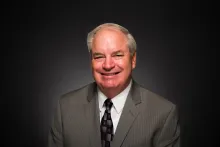
Robin Webber was born in Chicago, Illinois, in 1951, but has lived most of his life in California. He has been a part of the Church of God community since 1963. He attended Ambassador College in Pasadena from 1969-1973. He majored in theology and history.
Mr. Webber's interest remains in the study of history, socio-economics and literature. Over the years, he has offered his services to museums as a docent to share his enthusiasm and passions regarding these areas of expertise.
When time permits, he loves to go mountain biking on nearby ranch land and meet his wife as she hikes toward him.
