

Greg Thomas
This transcript was generated by AI and may contain errors. It is provided to assist those who may not be able to listen to the message.
Well, thank you again, Mark, and a good happy Sabbath once again to everyone. I would like to begin the sermon as we ponder the Feast of Tabernacles today with a question. And the question is this. When God looks at you and he looks at your life, what does he see? How does God view you? The answer to this question, I think, can begin to be understood by drawing an analogy to explain to you how God views us. There is a house in New England that has a unique attached tower. And the owner of that tower, at the top of it, put in four tinted windows. And those windows represent the four seasons. And you go to that tower and realize it's the same outside. But depending on which window you look through, you get a different impression of what the world is like outside. And those windows are brown, blue, green, and red. And when you look through the brown window, you get a feeling and a sense of fall. You get a sense of melancholy when you look out the glass that's tinted brown.
When you look out the blue tinted window, you get a feeling of winter. It seems stark, dead outside, like the world is at rest. When you look at the red window, it seems like the hot part of summer, 100 degrees outside, almost like the world is on fire. And when you look out the green window, you get a sense of new life of springtime.
What the visitor sees in that outside world, which is really the same on the outside, is just looking at it through different tints. What the visitor sees in the outside world depends on what window they are viewing the world through. And when we view our lives and the world around us, we have three windows we can choose to view life from. We can choose to view life from the past, and far too many people look at their lives by constantly looking through that window. We can choose to view our lives from the present, or we can choose to view our lives from the future. Now, being limited physical human beings we are, we can only glimpse really well at two windows. The past, which unfortunately too many people are stuck at and won't walk away from that window, and the present. That's because of the limitations that we have. And because we're physical, we have a hard time glimpsing the future. On the other hand, do you know what window God views the world from? He views the world from the window of the future. While we are focused too much on the past and a little bit on the present, God focuses the window that He looks through is the window of the future. And part of that window is represented by the Holy Day season that we're celebrating now and by the Feast of Tabernacles. So this is an important principle regarding the Fall Holy Days I want to discuss today. Each day and every event in your life is important to God, but He has always been more interested in the long term of your life or the end result of your life than He is with the daily struggles and trials that we go through. Think about what we've done to get to this point that we're ready to celebrate the Feast of Tabernacles, how futuristic it is. During these Fall Holy Days, we are celebrating the good news of the end result of God's plan for humanity. It began on the Feast of Trumpets. And at that time, we looked at a time that would represent the return of Jesus Christ. Then we had the Day of Atonement, which is the reconciliation, the at-one-ment between humankind, mankind, and God, as Satan is confined in a prison, as he is put away. And we're on the verge of celebrating the Feast of Tabernacles, which is the establishment of God's Kingdom on this earth, followed by a wonderful resurrection on the last great day. I want you to notice how these Fall Holy Days all look forward to a positive future of hope and accomplishment.
And we need to understand that that is how God looks at you, and that is how God looks at me. He looks on us with great love and hope and joy and excitement about our role in his family. When God looks at you and me, he's not just interested in now. He's not interested in only today. He looks through that window of the future, and he looks at the long term and the end result of our calling. And that's what he focuses on. Turn with me, if you would, to Revelation 3 and verse 8. Revelation 3 and verse 8. How far in advance has God had a plan? How far in advance does God look through that window of the future? Revelation 3 and verse 8.
Speaking at a time in the future, of course, when too many individuals will be dwelling and worshiping the wrong thing, it says here, So again, this is Revelation chapter 13 and verse 8. Chapter 13 and verse 8, I apologize. When you get my age, numbers start running together, books start running together. I'm just happy I get the testament right half the time. Revelation chapter 13 and verse 8.
So you see here that the Father and Jesus Christ knew in advance of man's creation that we would sin, that we were carnal human beings, that the foundation of when the earth was created, they already made provisions that mankind would sin and would need reconciliation. When Adam and Eve were created, who was already hanging around the garden with nothing to do that God allowed? The serpent, wasn't he? He's already there. He's waiting for them. Because that was all part of God's plan. God has always been interested in the end result more than the process. And that's why he allows suffering. Because what he's interested in when we have suffering and when we go through trials and problems and difficulties, is the end result of those things making us stronger and better and more faithful and being drawn toward him. That's very important to God. God looks at us and our ultimate character and our destiny in his sight, more than our daily struggles and problems. Sometimes, God will choose not to answer our prayers because he can look into the future and he's working out our destiny by the things that we suffer. You know, look at it from God's perspective. We pray for something. We want real bad. And we want it real bad. And God, because he looks through the window of the future, he may say, You know, I'm not going to give you that because you're barely talking to me now. If I gave you that incredible blessing, if I restored your health, if I gave you a phenomenal amount of wealth suddenly, you're barely communicating with me now. What's going to happen when you're distracted by new human toys, by shiny things? If you won't talk to me when you're struggling, why do I believe you'll talk to me when life is good and when things are easy? So, sometimes God doesn't answer our prayers for our own benefit because he knows us. And what he's trying to do is he's trying to create something wonderful and beautiful for the future. Even throw through the things that we struggle with. To understand how God views us through that window of the future, let's take a quick look at the lives of a few Biblical characters. If you'll turn to Romans 4 and verse 16. Romans 4 and verse 16. We know, of course, that the Patriarch Abraham had personal problems. If you studied his life, you see that he sometimes lied. He tried to force God's promise to provide him a son by having physical relations with his wife's concubine. The relationship that he had with Hagar, because of that, caused all kinds of family problems to the point where he had to send Hagar away. I mean, it was obviously a lot of family problems caused for Abraham. He was not a perfect man. He had problems like all of us do. Yet Abraham had qualities that God loved. And when he saw Abraham, he saw more than just the problems and the way Abraham was. He saw Abraham, and he saw him for what he would become. What he could become. Why? Because Abraham was repentant when he made mistakes. He was teachable. And he believed what God told him.
Romans 4, verse 16.
So he's commending Abraham on his faith.
Paul's talking about the Gentile believers here.
In the presence of him whom he believed. Now, I want you to think about how marvelous that is. God is looking through the window of the future. Here's a shriveled up old man who barely could conceive one child. And God, looking through the window of the future, says, You are going to be the father of many nations. Hundreds of millions of people will link their lineage to you. How can God do that? Because he looks through the window of the future. Let's finish this verse.
I'm going to read this verse from the New Century Version. It is written in the Scriptures, I am making you a father of many nations. This is true before God. God Abraham believed. The God who gives life to the dead and who creates something out of nothing.
You know what God is doing in your life? Do you know what God is doing in my life? He is creating something out of nothing. That's exactly what he is doing. Because God knows and can visualize the future, He boldly proclaims things that don't yet exist as if they already do. God looks forward, He sees things in the big picture and in the conclusion of the matter. The conclusion of events is how God views your life and how He views the world. He looks at us and He doesn't get disheartened by simply seeing the way that we are today. Instead, He looks out the window of the future and He sees our potential, as we can be, as we shall be.
Turn to Jeremiah 30 and verse 7. Jeremiah 30 and verse 7. Another biblical character. We know that David was a prominent biblical character. Mind it, he had problems. He broke his marriage vows. He committed adultery with another man's wife. Then he lied about it. He tried to hide it. Then he caused her husband, Uriah the Hittite, who was a very loyal man to David, to be killed so that he could acquire his wife as a possession. David later took a census of Israel's, recorded in 2 Samuel chapter 24. David had a lot of problems, yet as frustrated as God may have gotten toward David at times, he looked beyond David's problems and he saw him.
For what he could someday be, he saw David's potential. Because David had qualities of repentance, and he wanted to be obedient, and he had faith. He believed what God told him. Jeremiah 30 and verse 7.
Prophecy about the world tomorrow, when the kingdom of God is being restored on earth. Alas, for that time is great, so that none is like it. It is a time of Jacob's trouble, but he shall be saved out of it. For it shall come to pass in that day, says the Lord of hosts, that I will break his yoke from your neck. It's the oppressors who remember that Israel is scattered all around the world at this time. The descendants of Abraham. I will break his yoke from your neck and will burst your bonds.
Foreigners shall no more enslave them, but they shall serve the Lord their God, and David their king, whom I will raise up for them. So the prophet Jeremiah reminds us in the 30th chapter of this book that in the world tomorrow, David will be resurrected as a king to serve the physical descendants of Israel. How could the prophet say this?
He could say it because he was inspired by God to look through the window of the future, and not to be looking through the window of the past, which paralyzes us and freezes us so that we can't go forward, but to look through life through the window of the future. Again, this is how God chooses to view his children today. Not as the limited and troubled souls that we are at this period of time, but for what we shall be. Like David, we are living construction sites, and it gets pretty messy around our lives at times.
If you've ever been to a construction site where they're building a home or renovating a building, you'll see before the opening, you'll see junk everywhere. There's pieces of drywall laying on the floor. There's pieces of ceiling tile. There's wood chips. I mean, it is just an absolute mess. There's debris everywhere. If you walk in the site, there's noise. There's hard work. It takes a lot of hard work to complete the architect's plans.
And in a similar way, we may feel that way about our lives. Our lives may appear to be unorganized and fragmented and messy and maybe not very appealing right now. But I want you to trust that the master architect will have his new creation completed and ready before the time of our grand opening.
And that is when the kingdom of God is restored on this earth. Matthew 19, verse 27, another example. The apostle Peter, like David, was an emotional and sometimes impetuous man. He had a bad habit of speaking before he engaged his brain. One of the things he did is he assured Christ that he would never betray him. Everyone else might betray him on the eve of his death, but he would never betray him.
And of course, we know by Scripture that his courage was weak and his faith was shallow that night. Later on, even many years after he's into the church in the book of Galatians, Paul strongly, harshly corrects Peter for being a bigot. Because even after many years of conversion and serving as a leader in the church, he still treated Gentiles as if they were inferior to the Jewish believers. And Paul was very hard on him because of that. Yet Christ loved Peter, and he looked at him through the window of the future. He looked at Peter and he saw what he could be, what he would be. Let's take a look at Matthew 19, verse 27.
So because God looked through the window of the future, he told Peter that he would sit on one of those twelve thrones judging the twelve tribes of Israel. Why? Because in spite of his flaws, in spite of his problems, Peter was repentant, he was teachable, and he believed in the things that God told him. So the point is this. God loved and praised these servants who had personal problems, and they sometimes sinned. He looked at them not simply for what they were, but for what they would and they could become. The same is true of us. God looks down on us and he loves us even with our quirks and our idiosyncrasies, emphasis on the part that says, idio. Take a look at the root of that word. And our personal problems. He loves us because we recognize our limitations, because we strive to change and we repent and we want to grow spiritually. He loves us for our desire to get up and go forward even when we fall on our face. So how can we look at ourselves and others from that window that God looks through the world from? How can we do that? Well, the first thing we can do is we prepare for the feast, is to look to the future and be hopeful. Look to the future and be hopeful. Too many of us become discouraged at ourselves or discouraged at our family members or discouraged at our brethren because we only see them from the window of the present or the window of the past. Remember, it's the end result that's really important to God. It's the conclusion of the matter that counts, as it says in the book of Ecclesiastes. Be patient and try to see the potential in other people as God does. The window we choose to view life from makes a difference in the way that we see other people. We can either look through the window of the past and see other people as limited, as mediocre, as just a bag of problems, or we can look through the window of the future and realize that God has great and wonderful plans for them and that they are a work in progress. Messy, perhaps. Not pleasant to look at like a job site? Perhaps.
But we have to look at the potential that is so important for us to do. And we have to realize that sometimes people have to make mistakes and lose their way in order to truly understand themselves and produce real change in their lives. We don't have time today to go through the story of the prodigal son, but isn't that what he did? He had it all. He had everything offered to him. And what did he do? He went out and he squandered it all, didn't he? He was given so much wealth. He was the proud son of a very wealthy man. He had it all. And he went out and he blew it all. Wasted it in just degenerate living.
But there was something about him that he needed to go through that experience, to discover within himself why certain qualities and principles were so important. And when he came to a point in his life that he was so hungry that the pigs were better fed than he was, that he was feeding, he said, You know, I'm not so smart after all. Maybe I don't have all the answers. Maybe I need to go back to my father and say, Father, forgive me for my idiosyncrasies. And that's what we have to do at times. And I've seen people that I have known within the Church of God that had to go out and had, much like the prodigal son, had to experience certain things in life in order for them to see what God wanted them to see. I've known teenagers who left the Church as teenagers because they knew it all. They were smarter than their parents. And they went out in the world a little while and that figuratively after they got their teeth kicked down their throats. Again, that's figurative talk. They went through some trials and problems and experiences.
A number of them said, you know, that doesn't work. Maybe my parents weren't so stupid after all. Maybe there's something about that Bible that I should go back and revisit. And they came back to church and they're within and they're part of the body of Christ today. So that was the first thing.
Look to the future and be hopeful. The second is we need to endure our sufferings and confront our problems. So many of us become discouraged because we struggle with the same problems year after year.
And given time, our struggles and the right principles will prevail. If you are on the right road and you're doing your best and you're allowing the highest power in the universe to bring the proper outcome, you just keep doing what you're doing. You just keep resisting those trials.
You keep struggling against those issues. Few people live without stumbling and falling. The true children of God are those who refuse to stay down when they go down. More often than not, they get up again and with the power of God's Spirit, they look back to learn that lesson to say to themselves, hmm, that doesn't work. And then they move forward to achieve their dreams and their goals. 1 John 3, verse 1. 1 John 3, verse 1.
The Apostle John was inspired to write these encouraging words because God was helping him to see through the window of the future and not to be frozen in the past, not to just look at the present. 1 John 3, verse 1. Behold, what manner of love the Father has bestowed in us that we should be called children of God. Therefore, the world does not know us because it did not know him.
Beloved, now we are the children of God and it has not yet been revealed what we shall be, but we know this. When he is revealed, speaking of Christ, we shall be like him, for we shall see him as he is. So, what's John doing? He's looking through the window of the future and he's saying that we are going to be radiant. We are going to be perfect. We are going to be in full glory.
We are going to be full-fledged members of the family of God and share his name and share a family role with our Creator. This is a good scripture to remember when you struggle to do your best and for the moment things seem to be going in your life very wrong. If with God's Spirit you've done what you can do with obedience and faith and your direction is right, patiently learn to wait.
Keep doing the right things, even if you don't see any progress. Learn to wait and someday you'll come out exactly where you are supposed to be. I'd like to now go to Isaiah the 60th chapter and spend a little bit of time there because I'd like to take a few minutes to look through the window of the future as revealed to us by the prophet Isaiah.
Most people who read these scriptures look at it and immediately understand it. It's a prophecy about the city of Jerusalem in the world tomorrow called Zion. But I want you to understand that it's more than that. It's also an analogy of what it's like to be spiritual Zion, what it is like to experience the first resurrection and the changes that will take place in your life. And the results of your life, the influence that you will have on the world.
So that's what's so beautiful about this prophecy. As the resurrected children of God and as righteous rulers over many cities, these things will be said about us. Isaiah chapter 60 beginning in verse 1. It says, arise! That's the resurrection. Shine! For your light has come, and the glory of the Lord is risen upon you. For behold, the darkness shall cover the earth, and deep darkness the people. But the Lord will arise over you, and his glory will be seen upon you. God's glory will shine on us as members of his family.
We will radiate the brilliance and energy of God as his children. We will be glorified, and the majesty of God will be reflected off of us to positively influence other people. Just like the sun is reflected off the moon, the glory of God will be in us and will be reflected off of us to have a powerful influence in the world. Verse 3. The Gentiles shall come to your light, and kings to the brightness of your rising.
Gentiles will come and pay honor and respect to us as members of the family of God. We will be designated to rule over a certain number of cities. We will be God's direct representative as a family member to rule over a number of cities of this world. People will be drawn to us. They will be drawn to the light, because we will have wisdom.
We will have the answers that help people understand that your life can be productive, that you were created for a purpose, that God has a wonderful plan. Verse 4. Lift up your eyes all around and see. They all gather together. They come to you. Your son shall come from afar, and your daughter shall be nursed at your side. So all people will desire to come to us, to learn about the law of God, and to be loved.
Our unconverted physical families, including our children and our grandchildren, will come to us and want to be nurtured by us. After the resurrection, pictured by the last great day, our ancestors will be raised up. And you'll be able to meet people, great-great-great-great-grandfathers.
You'll be able to meet people that you never knew existed, and you've inherited their DNA. I can just imagine someone coming up to me now. Greg, this is your maternal grandfather who came from Sicily. And he knows where Jimmy Hoffa's really buried. We'll be able to meet people that we've never known. Our family will be reunited as long-extended families, going back for generations of ancestors that we had, that we'll be able to teach God's way and love them, and nurture them, and it'll be a wonderful time.
Verse 5, Then you shall see and become radiant, and your heart shall swell with joy. Imagine the joy of being changed instantaneously out of this physical tent and flesh that we have into being spirit. We will just radiate, and we will just swell with joy.
It'll be bubbling out from us, and people will be able to notice it. Because the abundance of the sea is turned to you. The wealth of the Gentiles shall come to you. The multitude of camels shall cover your land. The mediaries of the young camels of Midian and Ephah, and all those from Sheba shall come. They shall bring gold and incense, and they shall proclaim the praises of the Lord. So our hearts will leap for joy as we realize we're being changed into spiritual essence. We'll be given incredible wealth, and express great joy as God's very own children. And wealth won't be just for us to grab. Like, okay, we win.
It won't be a selfish acquisition of wealth. We will take that wealth that, unfortunately, in Satan's world, is distributed, usually, among a very small number of governments and corrupt leaders and peoples. And we will take that wealth, and we will channel that wealth into rebuilding the entire world. Verse 7. All the flocks of Kidar shall be gathered together to you. The rams of Nebaioth shall minister to you. They shall ascend with acceptance on my altar, and I will glorify the house of my glory.
Verse 8. Something strikes the prophet. Who are these who fly like a cloud, and like doves to their roosts? Who are these beings that just fly among the clouds and go from here to there instantaneously? As spirit beings, we'll fly like the wind, the travel, the world. We'll travel at the speed of thought, and we'll be able to learn from and worship Jesus Christ in Jerusalem.
And seconds later, the speed of thought will be at the other end of the globe, teaching and serving others in a different nation. Because we will be transformed. Verse 9. Surely the coast land shall wait for me, and the ships of Tarshish will come first to bring your sons from afar. Again, this family reunion that I talked about. They're silver and they're gold with them. To the name of the Lord your God, and to the Holy One of Israel, because He has glorified you.
Why has He glorified us? Because God is a giver, and He wants to give away His name and His glory and His godship to all of us. Generations of our family will be reunited. God owns everything, and He will share both His wealth and His glory with His faithful servants. Verse 10 talks about construction going on in the cities that we will govern. The sons of foreigners shall build up your walls, and their kings shall minister to you. For in my wrath I struck you, but in my favor I had mercy on you.
God says, yes, when you were living your physical life. You know, there were times when I had to give you a good, harsh spiritual spanking to wake you up, to wake you up out of some lethargy or some obsessive compulsive disorder you were having spiritually.
Yes, there were times when I certainly had to do that. He said, but I had mercy on you. Verse 11, therefore your gates shall be opened continually. The dwellings that we live in as we represent the kingdom of God, we won't live in some exclusive, gated community. Who goes there? Well, I'd like to... Well, you're here to see the great and powerful Oz? Well, that won't be the environment of the kingdom of all.
We'll have an open-door policy. Anyone will be welcome to come in and learn from us and learn God's way of life. The grounds that we live on won't be gated communities.
There'll be parks. There'll be places where physical people can come and have joy and radiate and enthusiasm over the blessings that God has given them. Our residences and our dwellings will be public so that people can benefit from them. All right, let's continue here. It says, I lost my place. We are in Isaiah chapter 60. And we are in verse 9. Let's see, we read... Here we go. Verse 10, thank you.
So God is going to establish his kingdom, and he's going to say, this is not a democracy. We don't have an electoral college here in the kingdom of God. He says there is one way, there is God's way. And anything that doesn't conform to God's way is not God's way. And there are severe, dire consequences for living that way of life. But people who live through the latter days will share in rebuilding a new and exciting civilization. They won't be just sitting in lawn chairs watching people wave magic wands and suddenly cities appear. And suddenly schools appear and places of worship appear and gardens pop out of nothing. No, that's not the way it's going to be. There's going to be a lot of work, a lot of sweat, equity involved in building this world. Because when you build something with your own hands, you have an investment in it. It means more to you. It has greater meaning to you. They will build homes and cities and places of work and temples of worship toward God. And they'll live in a culture of love and caring for others. Verse 13, The glory of Lebanon shall come to you, the cypress, the pine, and the box-tree together, to beautify the place of my sanctuary, and I will make the place of my feet glorious. So the most beautiful woods and gems and precious stones will be used in our homes and in our dwellings, all to give glory to God. And we will enjoy the accommodations of the highest quality that befit a child of God. Not because we think we are superior, but because of who we represent, the very God family itself. Verse 14, And the sons of those who afflicted you shall come bowing to you, those who persecuted you in your physical lifetimes, those who mocked you because you're Jewish, those who made snide remarks, or those who worked behind the scenes to get you fired from that job because they just didn't like you because you were religious or holy Joe or whatever label they placed on you. It says, they shall come bowing to you. And all those who despised you shall fall prostrate at the soles of your feet, and they shall call you the city of the Lord's eye and the Holy One of Israel, wherein you have been forsaken in hatred, hated, so that no one went through you. I will make you an eternal excellence.
So God looks out the window of the future at each and every one of you, and he says, I am going to make you an eternal excellence in my kingdom, in my family, a joy of many generations. You shall drink the milk of the Gentiles and the milk of the beasts or the breast of kings. You shall know that I, the Lord, am your Savior and your Redeemer, the mighty One of Jacob. So again, wealth will be distributed, not like we do it in our world, where we extort taxes from people who work to give it to people who won't, but wealth will be distributed so that it can be used to rebuild an entire new civilization from the ground up for everyone to enjoy, in a new city, a new kingdom, a new culture.
So even though we are considered small and unimportant in this age, we will be honored and respected as part of the family of God. We will gather the wealth of the nations to share it with the world, not to hoard it in Swiss bank accounts, or to squirrel it away somewhere so that we can show people an occasional tour of, look how much money I have. That isn't the motive behind it at all. We will not hoard it like the powerful in this age do. Verse 17, instead of bronze, refers to the kind of quality that will exist in these cities, and the culture. Instead of bronze, I will bring gold. Instead of iron, I'll bring silver. Instead of wood, bronze. Instead of stones, iron. I will also make your officers peace, and your magistrates righteousness. Violence will no longer be heard in the land, and neither wasting nor destruction within your borders. But if you call your walls, but you shall call your walls salvation, and your gates praise. So we will bring peace to the cities that we rule. What kind of ruler is so and so? They'll have two words. Peacemaker, righteous, fairer, honest, loving, caring. I'll make your officers peace, and your magistrates righteousness. There'll be no more drugs in the streets, no more terror in our cities, no diseases, no more dysfunctional families, no more starving children, no more people taking their own lives due to hopelessness. There'll be no more partisan politics, no more bloated government bureaucracies that siphon money out of people and waste it on government programs and government re-engineering projects. Verse 19, The sun will no longer be your light by day, nor brightness shall the moon give light to you, but the Lord shall be to you an everlasting light, and your God your glory, your sun shall no longer go down, nor shall your moon withdraw itself, for the Lord will be your everlasting light, and the days of your morning shall be ended. So the glory of being in the family of God will outshine the radiance of the sun.
There'll no longer be nighttime. All the problems and trials that we faced in this physical life will be simply a faded memory. Our days will be filled with vigor and purpose and service to help others. We will not grow old, neither shall we grow tired.
What kind of influence will we have? Verse 20, Also your people shall all be righteous. Those who were blessed by your governance, by your service in the cities, they shall be called righteous. Why? Because you demonstrated righteousness. Because you set the example of righteousness. Because you created a new culture where the fruits of the Holy Spirit could easily multiply, and that everyone had an opportunity to grow and reach that full potential that God has in store for them.
What a wonderful time that we can look forward to. Also your people shall all be righteous. They shall inherit the land forever, the branch of my planting, the work of my hands that I may be glorified. A little one shall become a thousand. And a small one, a strong nation. Because people will live in healthy environments, because they'll be taught God's way of life, because disease will be outlawed, there will no longer be disease, children will not die in childbirth, people will not die before their time, there will be rapid multiplication of peoples. And one person, through a few generations, will become a thousand. A small band of family group of people will become a strong nation. It says, I the Lord will hasten its time.
So again, we looked at Isaiah chapter 60 just to get a foretaste of looking out of the window of the future to see the wonderful things that God has planned for us. So as we prepare for the Feast of Tabernacles, I want you to realize that because of this dress rehearsal that we're going through, and because we continue to stay faithful with God's way of life, there will come a time that the people that we serve will be blessed because of the sacrifices that we make today. As their mentors, many of them will grow into greatness into the world tomorrow. What a grand and fantastic future we have. It is our future if we continue to grow and to endure to the end.
It is our future if we remain faithful disciples of Jesus Christ and never abandon the calling that God has given us.
God inspired the prophecy that we just read to encourage his children.
And you know what? We are closer than ever to being born into the kingdom that we talked about just a few minutes ago.
The festival that we are about to celebrate, the Feast of Tabernacles, pictures this beautiful time that we all long for.
So I encourage you to celebrate the Feast of Tabernacles. It's a time that God has looked forward to since the foundation of the world. He's encouraged himself at times when he's seen human failings and weaknesses by looking through the window of the future. And I hope that when you go to the Feast this year, or if you're staying home, that you'll take some time to think about the difference and the different approach you can take in life.
If you have the courage and the determination to view people and to view the purpose of your life itself from the window of the future, rather than from the limited vision of the present or the past.
God has encouraged himself and countless others by showing us this window of the future today. By doing this, he views things and people more than they are.
He sees them as they shall be. And so should we. Be sure, all of you, to have a wonderful and fulfilling Feast of Tabernacles this year.
Thank you.
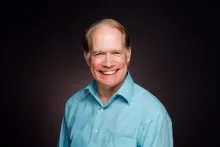
Greg Thomas is the former Pastor of the Cleveland, Ohio congregation. He retired as pastor in January 2025 and still attends there. Ordained in 1981, he has served in the ministry for 44-years. As a certified leadership consultant, Greg is the founder and president of weLEAD, Inc. Chartered in 2001, weLEAD is a 501(3)(c) non-profit organization and a major respected resource for free leadership development information reaching a worldwide audience. Greg also founded Leadership Excellence, Ltd in 2009 offering leadership training and coaching. He has an undergraduate degree from Ambassador College, and a master’s degree in leadership from Bellevue University. Greg has served on various Boards during his career. He is the author of two leadership development books, and is a certified life coach, and business coach.
Greg and his wife, B.J., live in Litchfield, Ohio. They first met in church as teenagers and were married in 1974. They enjoy spending time with family— especially their eight grandchildren.
