

Robin S Webber
This transcript was generated by AI and may contain errors. It is provided to assist those who may not be able to listen to the message.
Here we are. We have the Fall Festivals that are upcoming. They bring us into a focus and allow us to rehearse God's plan of rescue for humanity. Oftentimes, as we move toward that festival that speaks in the Old Testament of the blowing of trumpets, we relate it to the events that are mentioned in the book of Revelation and with the Second Coming of Jesus Christ and the establishment of the ageless kingdom that the Father is going to place underneath Him.
We find that mentioned over in Daniel, and I'd like to bring you to Daniel for a second. It's a verse that I think is foundational to so much that extends from our time forward when it comes to speaking about Jesus Christ coming back to this earth. In Daniel 2, and let's pick up the thought in verse 44, if we could, Daniel 2 and verse 44. Speaking of this, speaking of Daniel as he defines the dream of the image that Nebuchadnezzar, king of Babylon, had seen and wanted to be interpreted. And in verse 44, and in the days of these kings, the God of heaven will set up a kingdom which shall never be destroyed, and the kingdom shall not be left to other people.
And it shall break in pieces and consume all of these kingdoms, and it shall stand forever. And inasmuch as you saw that the stone was cut out of the mountain without hands, and that it broke in pieces, the iron, the bronze, the clay, the silver, and the gold, the great God is made known to the king what will come to pass after this.
The dream is certain, and its interpretation is sure. One thing that I have always noticed in, especially verse 44, are two things. This is an ageless kingdom. And number two, it says that it will not be left to other people. It will not be left to other people, and especially when you are studying western civilization, you recognize anytime you go into a western civ class, you go from the study of Babylon to the study of Persia to the study of the Greco-Macedonians, sometimes known as the Hellenistic empires that follow, and then of course you go to Rome.
You just have this pattern, you have this domino effect, you have this passing of the baton from one empire to the next, and of course even down to our time and to our age when you think of what was once called Pax Britannica. And then in this century it's become known as Pax Americana, which even we see today with world events around us. The handing off of one superpower to another, but the Bible says here that ultimately that is going to cease, and the world and its history and its future is not going to be left in the hands, the hearts, the minds of human beings.
Something else is going to happen. And what this is describing begins to describe a contrast, and the Bible is so much about contrast, of seeing one element versus another element. And this is a contrast. There are two mindsets, there are two different hearts, there are two different lifestyles, there are two different ways of life that bring about two different results and two different conclusions, two different kinds of leadership.
And allow me to make it simple because this is going to be basically the tale of my message today. One is born in Babylon, one is born in Babylon, and that is going out the door of history. The second one was born in Bethlehem. The second one was born in Bethlehem. The Babylonian mindset is perhaps best described in the words of King Nebuchadnezzar. Join me if you would. Let's go to Daniel 4 again, just a few chapters over, and Daniel 4 and verse 28.
Notice what it says. Nebuchadnezzar, in verse 28, and all of this came upon King Nebuchadnezzar. And at the end of 12 months, he was walking about the royal palace of Babylon. And the king said, Is not this great Babylon that I have built for a royal dwelling by my mighty power and for the honor of my majesty? Now, King Neb, if I can bring his name down to a nickname, was walking around the palace and saying, This isn't half bad. In fact, this is pretty good.
In fact, this is great. And there must have been a great man that built this great palace and in this great city, the same one that built the hanging walls of Babylon built the Ishtar Gate. And also, when he didn't have anything else to do, he built the great ziggurat.
And you can kind of imagine King Nebuchadnezzar walking around for a few minutes, and if he had a cell phone with a camera, you know what he would have done. You got it! He would have taken a selfie.
King Nebuchadnezzar was the original selfie. Look at me! My name isn't King Nebuchadnezzar. It's King Narcissistic.
Look what I have done. Me, me, me. My, my, my. It's all mine! Aren't I great? This is wonderful!
That was an attitude.
Though that was a heart born in Babylon. Stiometrically opposite the mindset of Bethlehem, which is given substance by Paul's words. Join me if you would in Philippians 2.
In Philippians 2.
Let's pick up the thought in verse 5.
Philippians 2 and verse 5.
Philippians 2 and verse 5. Are we all there?
In Philippians 2.5. Let this mind be in you, which was also in Christ Jesus. Let this mind. It's a different mind than the natural mind. Who, being in the form of God, did not consider it robbery to be equal with God, or to hold on to, or to clutch to God.
But made himself of no reputation.
Taking the form of a bondservant, or a dulos, a slave as it were. And doing so, he who is God, the one that is the Word, made himself in the form of a man.
And being found in appearance as a man, he humbled himself, and became obedient to the point, even to the death of the cross.
Let me read it in the New Living Translation. Your attitude should be the same that Jesus Christ had. He made himself nothing. And he took the humble position of a slave, and appeared in human form.
The word there for humility, the Greek background of that, means that he chose to be low lying. He chose to abide. His abode was lowliness. And he chose a basement, which means the diminishment of office or prestige. Now, when you see these two mindsets, one that was born in Babylon, and one that was born in Bethlehem, what we do is we find that one is based on self, and pride, and the other is based on faith and humility. The reason why we're talking about the difference between being born in Babylon and born in Bethlehem, that has so much to do with our future as we move into these festivals that bespeak of the future, and our role in it, and our training right now in preparing to be kings and to be priests. As we approach the fall festivals, we must fully grasp that to understand the second coming of Jesus Christ in power and in glory, we must first fully understand and embrace the lessons of the first coming of Jesus Christ. And not only that He came, that is important. But more important is how He came among us. If we only look at and bespeak of future happenings of a world being conquered by the armies of heaven, and don't know how and why Christ is leading that charge on behalf of the Father, it's like walking into a movie halfway. You didn't see the first part of it. You don't know how it got there. You don't know what the stars are doing. And we're talking about, obviously, the superstar. And that is Jesus Christ. And it's at this time of the year. Fascinating. It's at this time of the year of the blowing of trumpets.
It's at this time of the year in which we speak about tabernacling and dwelling in this season of kingdoms that the King came amongst us. And it's not only that He came amongst us, but it's how He came amongst us, and how He entered into time and space, and how He showed Himself to us. So today, the title of my message is simply this.
Bethlehem or Babylon?
It's your choice.
Bethlehem or Babylon? It's your choice. And as we go through this, I want to underline it with the importance of possessing that mind which was in Christ, one of love, one of deepest humility, and also with humility, boldness, into desiring to fulfill His Father's will. And it is that mindset, that which is born in Bethlehem, that pleases our Father above, serves Him best, serves our families best, and allows us to be the lights to the world that Jesus always said, that you are to be a light. And there's nothing more beautiful, more wonderful, than to observe and to come into the presence of a person with a heart born in Bethlehem. And we go through this at this time of the year, because this is the time of the year that Jesus was born. The time of tabernacling, as He came and tabernacled with us. In this season of kingdoms, the King came amongst us. And thus, we must understand the first coming before we move into the second coming, which we begin to talk about on Thursday. Join me if you would in John 1, verse 1. John 1 and verse 1. Let's pick up a very basic theological point that we need to understand, not leave at high theology, but frankly have wonderment about, and say, Thank you, Father, and thank you, Christ, for what you have done for us and for all of the world. In John 1 and verse 1, let's pick up the thought here. In the beginning was the Word, and the Word was with God, and the Word was God. The Word was no less than God. He is a member of deity. He is a member of the Godhead. He is no less than God. And He was in the beginning with God. And all things were made through Him, and without Him nothing was made that was made. And in Him, speaking of the Word, in Him, notice it says, What's life? And the life was the light of men. And the light shines in the darkness, and the darkness did not comprehend it. Now, when we look at John 1 through 3, we understand that we are speaking about, in a sense, what today is called, first cause.
That somebody wound up the universe, and let it go. And let it spin. Let it rip.
And God looked down, and it was made. There are many other religions and other faith communities around this world that believe in deity, and also believe in first cause.
But they are not the same as Christianity. What makes Christianity? Christianity is found in verse 14. And it stuns me every time that I read it. It says, He who was and was everything. Notice what it says.
And the Word became flesh and dwelt amongst us. And we beheld as glory, the glories of the only begotten of the Father full of grace and truth. Deity, God, Word, which is a member of that Godhead, dwelt. Now, what is interesting, because we do observe the Feast of Sukkoth and or the Feast of Tabernacles, the word there literally means, if you like the word dwelt, it comes from the word skinnu. That's kind of a fun word to say for the kids. Skinnu. Skinnu is a Greek word, which simply means this. To tent. To sukkot.
To tabernacle.
Is it any wonder that Jesus was born at this season of the year as He came to tabernacle with us, that we might dwell with the Father and with Him forever.
He gave up everything, came down and became in the likeness of man.
When you think of what the Creator is like, the Creator is greater than the creation. I think that's a general law. And to recognize when it says, in the Word made all things, let's just talk about that for a moment. I've got a rubber band up here. I love carrying rubber bands because then I can pick off somebody in the crowd who's ready. Okay? But, you know, we're going to talk about something for a moment. We're going to kind of... You get a little nervous for a moment. Is that... That's called, about 20 minutes into the message, wake them up. Is that... We've got a rubber band, so we're going to stretch your mind a little bit. It's just fun to... I'm not going to pop it. We're just going to stretch it for a moment. But you know that people today have somehow, through telescopes, mathematics, etc., figured out that the universe is so great and so large that it would take you or me approximately 200 to 500 billion years to travel through the universe. Now, you got that figure in your mind for a moment. 200 to 500 billion years because remember the universe is still expanding, still... Something's still happening out there. Oh, I forgot to tell you for a moment. That would be traveling at the speed of light, which is 186,000 miles per second. Well, you say, well, what does that mean? That means... Watch this.
One second. That means the speed of light goes around the Earth seven times.
That's how big the universe is. Now, you say, that's mighty big. Can we deal with something a little bit smaller? Yes. If I had a glass of water here and only took the bottle, I'd use that. Is that in a glass, it would take all the population of the world, if we could get all the population of the world loving and liking one another only in a group project, to count all of the atoms... Are you with me? All of the atoms in just one glass of water, one per second, all the world counting together, one second, it would take them 180 million years to count all the atoms in that glass of water. Now, if you wanted to speed things up, you could do it, you know, two per second, and that would bring you down to 90 million years, counting all. That is what the word is. That is what the word is about. He is the creator. He is the one that created all that is time and space, and emptied himself of that, and came down to Bethlehem, that you and I might one day meet he and his Father for all eternity. Join me, if you would then, in Luke 2, which is the account about Bethlehem, remembering that again that it said that he did not consider robbery to be equal with God, but took on the form of man. And we find that mentioned over in Luke 2. In Luke 2, let's pick up the story in verse 1. And I hope there'll be some personal encouragement in this for all of us, too. In Luke 2 and verse 1, And it came to pass in those days that a decree went out from Caesar Augustus that all the world should be registered.
Number 1, the Roman emperor wanted to collect taxes. And number 2, he wanted to know how many people were out there in case he needed to move his armies around. And this census first took place while Quirinius was governing Syria. So all went to be registered, everyone to his own city. And Joseph also went up from Galilee, which is in the North Country, out of the city of Nazareth, into Judea, to the city of David, which is called Bethlehem, because he was out of the house and the lineage of David, to be registered with Mary, his betrothed wife, who was with child.
You know, it's kind of interesting. It's just one of those phrases that just come out of the Bible. And it came to pass.
And we can just kind of go over that, or we can say it so quickly, and we really don't know what is occurring here. What came to pass was God, who is sovereign over all nations, all minds, and can even move the minds of a king of Babylon, who was in confrontation to him. And yet God is sovereign, and his will will be done, had prophesied through his prophets nearly 700 years before. Join me if you would in Micah. Let's go to Micah here for a second, in the minor prophets. In Micah 5, in Micah 5, and let's pick up the thought in verse 2, in the story of Micah. But you, Bethlehem, after Ta, though you are little among the thousands of Judah, yet out of you shall come forth to me the one to be ruler in Israel, who going forth are from of old, from everlasting. God called it, hundreds of years before. He didn't say you were going to be born in Babylon. He didn't say you were going to be born in Rome.
He didn't say you were going to be born even in Jerusalem, in a palace, because your daddy is king. You're going to be born in this out of way place that not too many people know about, other than it had a historical thought with the... that's where David was from. That's where it's going to be. God, hundreds of years before, through his prophets, said this is going to be how it's going to be, just as much as when Babe Ruth, 60 years ago, went to home plate, looked out in left field, and he said, it's going out right over there. The Bambino said, I'm going to hit a home run. Get ready. It's going right out over in left field. And we know the Babe did it. That's why he's called the Babe.
The Bambino.
But he's just an earthling, like you and me. God did this hundreds of years, and then moved the forces of earth, moved the mind of the greatest man in the Mediterranean basin of antiquity, and called it to pass that Joseph and Mary of the line of David would come down into this little hamlet called Bethlehem to fulfill the prophecies. In Galatians 4 and verse 4, join me for a second. In Galatians 4 and verse 4, again, Paul's words, speaking of the Christ, he said, But when the fullness of time had come, God sent forth his Son, born of a woman, born under the law. Again, and it came to pass. Now Paul says, and in the fullness of time. Let's understand, and let's bring the story of the birth of Christ into our story to make it relevant. God is not just simply the creator of time, but he's the master of timing. And what we find here that Paul is speaking about is what I would call divine convergence. God moved all the marbles and all the pieces and all the instruments of the earth at this given time because the time was ripe.
And his Son entered earth. And the gospel was spoken. And the message went out. It was at this time when there would be Roman roads, when there would be Roman protection, when the Greek language would be extant through so much of the empire, and where there would be synagogues of Judaism spread around the Mediterranean basin to where the diaspora was. That would be a springboard for the gospel to be spoken. God knew just exactly what he was doing. Now let's understand something. Joseph and Mary and the shepherds. And later on, the wise men, and it was, indeed, later on that the wise men would come and worship the king. They didn't necessarily understand the grand scheme. They didn't understand everything that was going on. That we can now understand looking back in hindsight. Okay, are you with me?
They might not have understand the full scope of things. You see, up until that time, God for 400 years since the time Malachi had been quiet. There had been a quiet in the land. The Jewish community did not speak about hearing the voice of God directly as they had through some of the minor prophets like Malachi. They would speak of it in the sense that they were hearing the voice of an angel. The revelation did just simply not carry the same weight. So you might say it was quiet in the land. It was there's a quiet in the land. But there was a rumbling. There was a hope. There was a fervor because of the boot of Rome. That was on the neck of Judea.
But Mary and Joseph didn't understand all of these things. But what they did understand is a word came to them. A word. And they obeyed.
And we look now today and we say, oh, Joseph is a hero for what he did. That he married this woman who came up and said, by the way, did you realize I'm pregnant? And, you know, it's by the Holy Spirit. Have any of you used that out here recently or not? Just teasing.
And Joseph, it's said, was a good man.
Mary listened to Gabriel. Joseph also listened to Gabriel.
The shepherds would later on hear the angels and respond. The wise men would be beckoned by that star that led them to Bethlehem. They might not have even understood everything that they were doing, but what they did is they responded to the word of God as it came to them. Not even knowing necessarily what was lying over the mountain. May I have a... Let's ask ourselves a question. Take some inventory. Is that what we're doing as we're coming up to the festivals?
Do we take the word of God seriously?
Do we obey that word when it comes to us?
Even when we don't understand the entire full ramifications of where maybe it's guiding us?
Allow me to read the words of Mary, the mother of Jesus. Words that have come down to us through the ages out of Luke 1.38. When Mary heard all this, she said, Let it be to me. Let it be to me according to your word.
What a marvelous attitude.
And that is set up by the verse before that in verse 37, saying this, For with God nothing will be impossible. Mary and Joseph were able and willing to do the right thing, even the hard thing, in the right time and in the right way, even in the quiet of the times and in the plight of their ordinary lives, which were basically based on survival in those days.
Brethren, this is why it is so important to rehearse the great stories of the Bible that God has given us to drink in of those examples that were willingly obedient to the Word of God and to understand that their stories are our stories. Their God is our God. And those miracles are still being worked out today in the lives of ordinary people when we are willing, when we are available, and when we are open. Let's go back to Luke 2. Luke 2.
Verse 7. This God, remember, I hope I didn't leave you out there in the stars, right? Remember the stars? I don't know if you're still going out at the speed of light. But let's understand, He that created the stars, created the expanse. Now notice verse 7. And she brought forth her firstborn son and wrapped him in swaddling clothes and laid him in a manger because there was no room for him at the end. You know, when you think about it, brethren, and you think that here's this God and His arms out here, and figuratively in that sense, He could embrace all that we talked about that kind of snapped that rubber band, that He could embrace that with His arms, as it were. And then to recognize that He came down into the form of a baby. And you know what you do when you have a baby? We've had three. I was there most of the time. Is that, I'm trying to get... Yes, I was. Is that, you know, they wrap that little baby up real quickly. Especially, our girls were born at home. That's kind of what we did back in the 60s and the 70s. But that, what you do is, you know, kind of wrap them up in a little towel. You know, just, you're born, you've had this traumatic experience. You've come out of the birth canal, and all of a sudden, you know, you're wrapped up in a little sausage. You know, and you're in your little bundle. And you're warm and you're cozy again, because you're pretty warm and cozy in the womb, and now you're warm and cozy. And you know, that baby can't move a lot because it's all bundled up, you know. Just that little, little face, looking at you with those big, big eyes.
And that's what our Creator did for us, because He did not think it was robbery to be equal with God, but made Himself in the form of a man.
But not only that, but then there's something that Luke mentions, that nobody else mentions here in Luke 2. And it says that, even as He was bundled in this swaddling cloth, it says this, that there was no room at the end. This meant a lot to Luke, because you have to understand how things are written. There was no room at the end. You've got to understand where Luke was coming from. Luke was a Gentile. Luke was of Greek heritage. Luke was one that was looking from the outside in. Luke might have been a follower of Judaism that would have been called a devout person or a proselyte, perhaps.
And that he might have been able to look through the window, but not able to go into synagogue. Because perhaps he was not circumcised. I don't know. I'm just offering that as a thought. That it's a little bit like, you know, you're good enough to go up to the drinking fountain, but they won't let you drink. So, Luke, in his background, understood what it was like to, in a sense, be off the plate of life. To be so near and yet so far. To all have the window open up a crack, but not able to go all the way in. And so he mentions this, that there is no room at the end. And this is in contrast to Caesar, in his palace on the Palatine Hill over the Tiber. It's in contrast to the Roman governor in Antioch. It's in contrast to Babylon and Nebuchadnezzar, taking a selfie, as it were, in his royal palace. He was born and there was no room at the end. And the lesson that is being driven here to us, brethren, as we move towards those fall festivals, when we look forward to one day, being in the kingdom of God, and being in the throne room of God, and bid entrance, give an invitation, where there will be no going in and no going out, and God wants us in His presence, and wants us by Him. Jesus had to come to this earth and suffer that as a child, and Joseph and Mary turned away, and there was no room in that inn that you and I might have room forever with God in eternity. Jesus gave everything in that sense away, that you and I might have everything. And He entered our human world in that way.
I learned one lesson from this as we go to the festivals, and I think it was very good what Ole brought out. Thank you, Ole. And that is Jesus' entry into our human world, in which there was no room at the inn, should allow us on a daily basis, brethren. Here is an action item. Let's make it practical.
Because His story is our story.
It allows us on a daily basis to contemplate who we are making room for in our lives, and or who we are turning away.
It tells us that we need to pray, we need to study, we need to meditate, we need to be open, we need to be willing, we need to be available, and understand who's knocking on our door.
Who's knocking on our door, that maybe we've turned away? That we've said there is no room in the inn. Let's remember that, you know, when you speak about Jesus, He is because He was, He is and will yet be. And Revelation 3 in verse 20 says, I stand at the door knocking, I stand at the door knocking, and if you open that door, I will come in, and I will dine with you.
That's a promise.
But there's also something else Jesus said. He said, if you have done it to the least of these, you have done it to me.
It reminds me of the old Beatles song, Someone's knocking at the door.
You're going to have that knock. Yes, you will. And yes, I will.
And will we have room in our lives, as Oli was mentioning, even just during this feast, living the wonderful world tomorrow today, and putting not only the hope of the world tomorrow, but the lessons of the first coming into our lives during these days. Again, rehearsing this story allows us to know where and when God is working. Let's fully grasp that Herod in the political industry and religious advisors who were in power at that time misread the events of Messiah's birth.
They couldn't figure out that Mary would give birth to Jesus in an off-and-away place, in an unsettling atmosphere. Why is that? Because it's unnatural. When a woman is to give birth, she seeks ideal conditions. I think you all still do out there. A couple does this not because of a sense of confidence, but actually because of a sense of concern and weakness. When Christ was born, He was born at best in some form of unsettling atmosphere. Let me share a thought on that. The translation says He was born in a manger. Does that mean He was literally in a feeding trough? I don't know.
Was He born in the back of a house underneath in a split-level area? I don't know. You don't know. Okay? Was He perhaps born in a cave in the hillsides of Jerusalem? I'm giving you multiple choice here. Perhaps. I don't know. I have to tell you why. I was not a fly on the wall. Neither were you. What I do understand through the power of the Scripture is that Jesus entered time and space in humility and in lowliness, and it was truly in a deep and a dark and in an unsettling atmosphere, wherever it was. That's what I know, and that's what I gain from the Scriptures. The leaders could not have imagined that because Herod and his ilk were born in palaces. Christ's birth was not a sign of a weak and ineffectual king. Rather, it was a sign of God's confidence. It was a sign of his knowledge of who he is. You know, one of Paul's favorite verses is in 2 Corinthians 2, and verses 8-9, where it says that he became poor so that we might become rich. He became poor. He gave away everything.
Jesus never took a selfie. Jesus always said, Not my will, but your will be done, Father. If you've seen me, you've seen the Father. What I do is on behalf of the Father. And here he was, deity, in flesh. And yet, he had that lowliness. He had that abasement.
He didn't use the I pronoun other than to describe more of what the Gospel was about, but he used that to finally inspire and sparingly. The leaders of that time were acquainted with that form of thought. So they missed it. They missed it and didn't know where to find him.
I have a question for you, brethren, as we're coming up to the fall festivals and as we're moving through these festivals seven in the year. What are we yet missing because we're not thinking like God thinks? Are you with me? What are we missing? That maybe God wants us to grow in or some place to go yet that we haven't imagined or we're looking for love in all of the wrong places just like Herod was looking for Jesus in all the wrong places.
God says in Isaiah 55, 7-8, My ways are not your ways. Neither are my thoughts your thoughts.
This is the value of the story.
It grants us perspective and a GPS towards the kingdom of God.
You cannot prepare for the second coming of Christ unless you embrace the lessons and internalize the attitude and the approach of the king at his first coming.
I want to begin concluding by making this relevant, even more so. Let's go back to Luke 2.
Luke 2.
I just skipped a page of notes, and I'll give that extra about this time of year.
In Luke 2, verse 9, Who were the first people that got the news? Who did the tweet go out to?
Now, when I say the tweet, I know enough about tweets to say tweet. I've never been tweeted, and I've never tweeted. Now, that's pretty difficult for a person named Robin never to tweet. But anyway, Mr. Garnett, did you like that one?
There's nobody like Mr. Garnett. But in verse 9, Who were the first people that got the news? And behold, an angel of the Lord stood before them, and the glory of the Lord shone around them. Speaking of these shepherds that were in the hills, living out in the fields, keeping watch over their nightly flock. And again, verse 9, Behold, an angel of the Lord stood before them, and the glory of the Lord shone around them, and they were greatly afraid. And then the angel said to them, Do not be afraid, for behold, I bring you good tidings of great joy, which will be to all people the same kind of joy that Ole was talking about today. Go up to the feast. Go up and rejoice. Get your mind off yourself. It's not about you, and it's not about me. God is great. God is sovereign. He moves heaven and earth. He moved the kingdoms of old that that prophecy about Messiah might come to pass that the King might be born in Bethlehem. And then we wonder sometimes what God is doing with you and me.
For this day to you is born in the city of David, a Savior who is Christ the Lord. And this will be the sign to you. You will find a babe wrapped in swaddling clothes lying in a manger. And suddenly there was with the angel a multitude of the heavenly hosts praising God and saying, glory to God in the highest. And on earth good will towards men. So it was when the angels had gone away from them into heaven that the shepherd said to one another, let us now go to Bethlehem and see this thing that has come to pass, which the Lord has made known to us. Notice verse 16. And they made haste and found Mary and Joseph and the babe lying in a manger. Now when they had seen him, they made him widely known.
The saying which was told to them concerning the child, and all those who heard it marveled at those things which were told to them by the shepherds.
Okay, Mr. Weber, I've heard about shepherds before. Oh, allow me to put it into perspective. And that's why we need to rehearse the story every year at this time of season. And hopefully every day of our life. And that is simply this.
God appeared to the shepherds. Have you ever thought about that for a moment? Why did he appear to the shepherds? You have to understand that shepherds are spoken in some sense well of in Scripture when we think of the 23rd Psalm, etc. But shepherds of and by themselves were kind of an interesting group. They were not at the high level of society. They were really more at the lower rung. They were, in a sense, looked as consort. Especially in the world of the Middle East, the Egyptians literally actually detested shepherds. And the Hebrews were known to be wanderers and to be shepherds as they moved their flocks around. So by civilized people, they were indeed looked upon. They were not the Nobel laureates. They were not the famous. They were not the rich. They were actually a pretty rough lot. They were an ordinary crowd. They were on the lower rung of the socio-economic ladder. Isn't that a little bit what God says with the Israel of God today that he is calling out? Isn't that what Paul said that, don't you know, that God has called the weak and the base things? Not the noble, not the elite. Oh yes, there are people that are skilled in our midst, and many of you are them. But in general, we're a little bit like the shepherds. We don't have a lot of Fortune 500 people in here. We don't have a lot of Nobel laureates. We don't have a lot of people. We have a few with PhDs behind their names. Yes, we do have some lawyers. We have some people that are this and that are that. But basically what God has chosen to do in this day and age in sharing the good news, in sharing the gospel, and opening eyes and hearts, He's basically done it to a bunch of common folk. Boy, I can't be one of those.
That's not me. Then who are you?
Do you want to be in a palace of cards like Nebuchadnezzar?
Nebuchadnezzar, with all of his brilliance, was not called of God. He was used in spite of himself. He was born in Babylon. But when a person understands that they are in that sense at their rebirth, when they accept God's calling, when they accept the sacrifice of Jesus Christ, when they believe in His life and in His death and in His resurrection, and in that ascension and believe it, they're given a new birth certificate.
It's no longer born in Babylon. And all of us, brethren, because of this culture in that sense, have been born in Babylon. It's not marginal to our existence. It's central to our existence. That attitude of me and mine and what's good for me is central to human nature.
And God's called us out of that.
He says, I'm going to give you a new birth. It's going to be from above.
In that sense, I was born in Berwyn, Illinois, for anybody that knows where Berwyn, Illinois is. But I would hope that more so today that because of the Spirit of God on me and hopefully His molding, I can say, like Jesus Christ, I too, in that sense, figuratively am born in Bethlehem. That's the attitude. That's the spiritual DNA that I want to have.
And while I have an earthly mother, I can also say that my mother indeed is Jerusalem, which is above, because that's where the calling comes from.
Now, brethren, you sincerely believe that, or you don't. If you don't believe that, you go a different direction. You go a different way. You stay in Babylon. You don't follow the example of our King, Jesus Christ, who came down. And then those angels from the Father came down and proclaimed that to them. What is so fascinating... May I share something with you? What's so fascinating? These shepherds have been outside of Jerusalem for hundreds of years. How many of you have been to Bethlehem?
And, Dan, how far is Bethlehem from Jerusalem?
Less than 10 miles. Less than 10 miles, like Pasadena is, or like Eagle Rock is to downtown. And what Bethlehem was, it was the sheep's supply for the sacrificial system in Jerusalem. And those shepherds, you know, had been doing this for hundreds of years, because, can I tell you something? There are a lot of sheep that were killed when the pilgrimage festivals were occurring. Thousands and thousands of sheep. Thousands and thousands of sheep. So the shepherds would, you know, one year in and one year out and one year in and one year out. What do you do? I do sheep. And so that was the routine. They'd always done that. They were doing a good thing because the sheep were for the sacrifice for God, right? That's a good thing. That was the routine. But then God's angel came to them and shook them up and said, this day, born to you in Bethlehem.
I have a question for you.
Are you ready to be shook up by God's Spirit? Are you open to God breaking your spiritual routine? That you have been a part of day in and day out, day in and day out, thinking that you're doing God a service. But God has bigger, better and newer plans for you.
What are we going to do as we go up to the festivals this year? Portraying the second coming of Christ. Same old, same old. SOS. Same old stuff. Been there, done that. Kind of like the shepherd with sheep.
Or are we open? Are we flexible? Are we available? Are we like clay?
Like these shepherds? That when they heard it, they believed it. They responded. They made haste. They glorified God. And they credited God with what they had seen and told it to others.
I have a question for you. Wouldn't that be exciting if we were all shepherds like that during the Feast of Tabernacles and the festivals leading up?
See, the way that Luke wrote this to Theophilus reminds us either what God did in the past or even before our time is always mentioned in the present sense. This day. This day.
Today is your day. Today is the good news that the good God brings into your life. That is not just a first cause, but intervenes not only in world history, but in your personal life. Brethren, we need to get excited about that. We need to get spiritually revved up about that and be ready and be prepared. Be living, loving, willing, open laboratories to the Word of God, whether from this pulpit, whether from His Word, whether from what you're going to hear after services in the pulpit, what you're hearing by a girlfriend or a lady friend or a guy friend or somebody at work. Never dismiss the agent, the instrument that God gives us to give us His Word.
Brethren, it is so exciting.
Here we are.
Moving now towards rehearsing the Second Coming.
But we're still on this earth.
And I'd recognize that, brethren, what I'm sharing with you, I share from my heart, that when we can learn to have that same mindset as Jesus did, it changes our lives.
And I have not yet obtained, but like the Apostle Paul, I do strive and I do hope, and I appreciate God's mercy.
It is easier, humanly, to remain born in Babylon than it is to be born in Bethlehem, apart from God's Spirit.
But when you see it, when you see an individual transformed and changed, and having that mind of Christ in us that was given, that is the biggest billboard. That is the brightest light, that there's something incredibly wonderful about the gospel of Jesus Christ in the kingdom of God. When somebody enters our congregation through that door and comes in our midst, and sees a congregation whose mindset and heart set is born in Bethlehem, rather than Babylon.
And yes, God has given us a wonderful revelation, but not because of us, but because of him. But we treat it, and we handle it, and we deal with it in an atmosphere of humility and wonderment, and give the praise to God rather than men.
Watch us grow. Spiritually, and the attraction, the star will be so bright, that wise men will seek out where that does occur.
When we apply that to our families, that mindset that is born in Bethlehem, myself to my wife, my wife to me, and even if it's not responsive by a maid or responsive by a child, Jesus did that, and he came as the manual. God with us, not looking for an immediate response, because he knew there'd be a second coming, but he did it because he loved us, and because he besought and did the will of the Father. And in all of this, brethren, we are not alone. Remember what it says in Daniel, that there is that mountain that was made without hands. It speaks of that stone that was disallowed, as it speaks in the Psalms about Jesus that was rejected by man. And yet that mountain was made by hands, not made by hands, but by the molding of God Almighty. Let's conclude today by going to, if we could, to Colossians 2 and verse 11. Colossians 2 and verse 11.
Notice what it says.
In Him, speaking of Christ, You were also circumcised with the circumcision made without hands by putting off the body of the sins of the flesh. In other words, changing our birthplace from Babylon, and making a choice and a continuing choice by the circumcision of Christ. Buried with Him in baptism, in which you also were raised with Him through faith in the working of God who raised Him from the dead. I was reading through this. I thought, is it not interesting? That the chief cornerstone, spoken of about in Daniel 2, made out of that mountain, made without hands. In other words, divinely sculpted, and molded, and shaped.
We have a part in that as we accept the call of the Father and come to Him through Christ. That we are molded. We are, in that sense, figured. We, in that sense, are shaped, likewise, in a divine way, without hands.
Brethren, as we approach the festivals, let us rejoice.
But let us be humble. Let us have that mind which was in Christ Jesus. And as we do, not only today, not only through this message, but every day of our life, just remember to ask ourselves by what we do, and our thoughts, and our words, and our deeds, to remember we're making a choice. And it's not a multiple choice of four or five answers. It comes down to two things. By what you do.
And not only by what you do, but how you do it, and the motivation in your heart of why and what you do, you are telling God above as to whether or not you are born. In Babylon, or born in Bethlehem. It's your choice.
And I would suggest, other than God says, stick with Bethlehem.
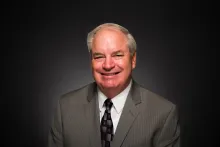
Robin Webber was born in Chicago, Illinois, in 1951, but has lived most of his life in California. He has been a part of the Church of God community since 1963. He attended Ambassador College in Pasadena from 1969-1973. He majored in theology and history.
Mr. Webber's interest remains in the study of history, socio-economics and literature. Over the years, he has offered his services to museums as a docent to share his enthusiasm and passions regarding these areas of expertise.
When time permits, he loves to go mountain biking on nearby ranch land and meet his wife as she hikes toward him.
