
Frank Dunkle
This transcript was generated by AI and may contain errors. It is provided to assist those who may not be able to listen to the message.
Like most of you, I grew up here in the United States of America, taking it for granted that the environment in which I grew up in was a good one, where the needs that humans have certainly are met, and where a lot of things that are impressive and enjoyable are around to make life sort of a pleasurable experience. Having gone to other parts of the world, I have found out that that is not the case everywhere else. Not everywhere, for instance, receives dependable rainfall, and dependable rainfall is necessary for a country to prosper, for them to have dependable food supplies. Not every country has water, water in which you bathe, you drink, you live, you wash, you grow crops. Water is a precious, precious commodity. Not everyone has things like transportation, electricity, information. Not everyone has government that is benign, let alone a government that is helpful, that is there to assist its citizens in one pursuit or another. And so it is that we in the United States of America find ourselves as part of an American colony running from Canada down through the United States and into Mexico that has amazing natural resources, amazing lands that are arable, lands that are cultivatable, lands that are explorable, with the type of difference from coast to coast that brings you all the wood you could possibly need, all the fish you could possibly eat, all the crops you could possibly raise, all the rivers, all the irrigation, the water, just an amazing land here that it really didn't take extremely intelligent people to come be successful in. You know, this country that we call America or the northern part of the Americas, this part is so amazingly rich. Just think of the gold that's been here. I mentioned the timber, the crops, the animals that range around, all edible, the lack of dangerous animals that really prevent people from living life to the full, the lack of diseases.
So many things here, you just could hardly go wrong if you wandered in onto this land as sort of a pioneering western kind of greedy person who wanted to take and create and use the resources to do something with, as opposed to a pastoralist who would come in and graze animals and sort of just live off the land, a hunter-gatherer type of mentality, where you would just live a beautiful life. You just wouldn't have much to do all day. It doesn't take much on this continent to walk around and eat. You can pick it off the trees, you can fish it out of the river, you can build yourself a shelter. The food will almost come to you. In fact, it does come to us at our house. It comes to our bird feeder. There's so much edible food at the feeder every day. It kind of makes you hungry looking out the window. How did this all happen? Let's go back to Genesis 48 and verse 14. Genesis 48 and verse 14. These blessings that we take for granted, actually, were prophesied. And here, Israel, whose name had been Jacob, stretched out his birthright hand, we might say. The one he is going to give the birthright blessing to. And he laid it on Ephraim's head, who would become what we know as England, or ultimately the United Kingdom.
This was the younger of the two, and his left hand was placed on Manasseh's head, which ultimately would become the country in which we inhabit here in the United States. Guiding his hands knowingly for Manasseh was the firstborn. For more information about this, you can read our booklet about the United States and Britain in prophecy. Dropping down to verse 16, this Jacob, who was named Israel, said, The angel who has redeemed me from all evil, bless the lads, and let my name be named upon them. So of 12 children, what is happening here is Israel is being named on these two. They are going to be called Israel, in a sense. They're, in other words, going to be prominent within the other 12 tribes. They at times would just be called, A, you Israelites, because they will be leaders, they will be prominent, they will be more blessed than others. And when Joseph, or then he goes on, he says, and let them grow into a multitude in the midst of the earth. Now when Joseph saw that his father laid his right hand on that of Ephraim, England, it displaced him. So he took hold of his father's hand to remove it from his head to Manasseh's head. And Joseph said to his father, Not so, my father, for this one is the firstborn. Put your right hand on his head. But his father refused and said, I know, my son, I know, he shall also become a people. Manasseh shall also become a people someday. And also he shall be great, but truly his younger brother Ephraim, the peoples of the British Isles, shall be greater than he. And his descendants shall become a multitude of nations. You know, what's intrigued me since I was 17 years old and moved to England, is how this tiny little island with not that many people who have a real, they hate the word quaint, but a curious way of doing things had an empire that was the largest empire in the world, that stretched around the world to where the sun never set on it during World War II. How can a tiny little group of people off on an island have that much power? And how come this country in which you and I live in was never inhabited except by hunters and gatherers who never ruined the land, who never took the resources, but just sort of kept it in check, stayed with it all those many, many centuries until the Manassites came here and started working on it? How did that happen?
It's interesting to go back and look at some of the history, some of which I take for granted.
We'll hear bits and pieces. You hear about things like the Spanish Armada and England defeated the Spanish, you know, okay, so things go on. But again, how does this tiny little nation keep weighing in? You know, there was a time back in history, Pirates of the Caribbean, you hear Pirates of the Caribbean, pirates, you know, black beard, and all these guys. It's interesting if you go back and study who those people were. There was a time when civilization moved from the Roman Empire to the Arab world and ultimately over into Spain.
Spain was quite a country, very well developed, highly developed, very knowledgeable, very educated. There's nothing quite like Spain. Spain was very good with its ships, and Spain had a colonizing mentality to go out, colonize, and bring goods back. And they did this very well. The Spanish were brilliant. When they went over and founded a colony somewhere, that colony had gold, and that colony had unique things to bring back and sell and enhance the economy with. Up in the north, it was quite cold, and the British were getting tired of being raided by the Norsemen and others who would come and mess with them at times.
They were poor people. The masses were very unhappy. The nobility and even the kingdom itself had a hard time getting itself together. Not the Spanish. They were doing extremely well. Spanish gold. The Spanish came down and basically, you know, just rampaged through through Mexico, unfortunately. But wherever they went, they found things. And wherever they colonized, they were able to grow things and bring exotic things back. Not the British. The British didn't have anything going. In fact, the British didn't even hardly have any government going, let alone an economy.
The Dutch did, however. Those Dutch over in Holland were pretty smart people. And the Dutch formed a trade alliance with India. And India was a pretty sharp country as well. They were part of the Silk Road. They had all the stuff coming from China and the influence of the Far East. And the Dutch found this to be very lucrative. The Dutch weren't really well off, but they found a way in which to finance their enterprises.
They created something called a bond. A bond. The government sold bonds to the Dutch people at 8% interest. All you got to do is buy this bond and you'll get 8% a year. That allowed the Dutch government, then, to have enough money to begin its enterprises and set up shop over in places like India.
And it was going very well. They could now sell goods unheard of throughout Europe. And we're doing quite well. The British, in the meantime, weren't doing so good. They thought, well, we'll go get a colony. So they got a colony and the colony wouldn't grow anything.
The colony had no gold. So they said, okay, we're no good at founding colonies. We're no good at finances. We need to step up to the plate here. So what they became good at, since they live on an island and their citizens were used to ships, they became good at robbing the ships of the Spanish. The British became the pirates. And they became good at it.
In fact, the government set them up and supported it in that. Became the noble enterprise of the English, was to raid the Spanish galleons coming back from wherever they were coming back. Why have to go with it and get all that gold? Just get it off the ship. Then the English saw what the Dutch were doing and actually partnered with them for a little while and got this thing of bonds going.
And then they got jealous of India. You've heard of the British India Company in Britain being down there in India and having all this India stuff. What they did, they went and cheated the Dutch out of it. Basically stole the operation from them and created their own East India Company. Then the British decided, okay, we are going to be big like Spain. And they started colonizing places like Kenya.
And Spain had some islands down in the Caribbean. So they got an island in the Caribbean. Spain's Spanish, though, they could grow sugar cane and tea. And the British couldn't grow that stuff on their islands for some reason. So the British send a colony up to Ireland. And that was horrible. It didn't work at all. I mean, what are you going to do in Ireland? It's raining in Collets, further north than England.
So they sent a colony to Jamestown over in the New World. And it died out. And everybody basically died and that didn't go anywhere. The British just weren't having much luck at all. So finally, the Spanish got really fed up with being robbed and came up to have it out with the British. And the British needed more ships. And we know that God was with the British in defeating the Spanish Armada. But there's another part to that as well. The British floated bonds to build ships. And the Spanish had no bonds. It only had one size fleet. And the British simply built and built and built and floated more and more and more bonds and outnumbered them. And then had an amazing sea battle that just worked in their favor. Because those big Spanish galleons with all those guns lined up on the side were almost undefeatable. Now, meanwhile, here in the United States, you have a country that would be the envy of the whole world. Why didn't anybody find it? Well, actually, this country was discovered way back when, maybe in the 10th, 11th centuries, back around 1000 AD, 1100. The world's climate has started getting really warm, I believe around 900 AD. Europe had warmed up, up around Norway, Sweden, Iceland, all that warmed up. Greenland was named Greenland because it was green. That's how warm it was. There was a lot of interest in this new world, as it would be called. And people started to come over here, and some of the Norsemen, some of the Vikings, set up shop in Greenland. They set up a colony in Greenland because it was nice and warm.
And they began to be the pilots and the ship, kind of the trading point, and the progress, the progress of settling the new world began. In about 1100 AD, what is called the Little Ice Age began? God caused an ice age to come on the Western Hemisphere, and it froze out Europe. It froze out all the North Country. Greenland ceased to become green. All the Vikings held out there as long as they could, but they died right there. The Inuit Indians who lived there lived on because they were used to conditions and they ate different food. But the Vikings died out. The road to the new world closed. Europe went into a cold era wherein rain fell a lot and it was cold. They couldn't get any crops to grow. Europe had become dependent on various grains of wheat, especially, various other vegetables, grapes, and things. None of that would grow. It would grow all right, but then it would spoil in the field and became poisonous. Whenever you take a seed and that seed gets too wet, it will turn black, and that is a poisonous seed. So the grain then began to poison those people. Along with that, the rats and other things began to infest. Europe slumped into its dark and middle-aged period largely because people could not build anything. Knowledge went south. It wasn't just the religious opposition. People were starving by the bucket load over there. It wasn't until probably 1400-1500 AD that as people were dying out by the millions across Europe, across Ireland, France, elsewhere, somebody discovered in the mountains of Peru a strange little thing that could be grown in rain. It called a potato.
And the potato was then introduced to Europe as something that could save everybody.
Unfortunately, the Catholic Church immediately declared the potato to be devil's food, something from the devil, and the Catholics were prohibited from eating it. And so, again, millions continued to die. The French just turned up their nose at it and would have nothing to do with it. The Irish, on the other hand, welcomed the thing. And they became totally dependent, pretty much, on two varieties of the potato.
And ultimately, when a blight came through and their potato crops just turned to mush, they were out of food. And so it went until such time as the United States was finally able to be founded because the weather warmed up. And when the weather warmed up and food began to grow, guess what? The Industrial Revolution kicked in. And somewhere along the line, Great Britain, or the colony of England, as it were, was in a very good position with its East India Company, with the Indians who lived in India that were there as conscripts, and with a people that was now pretty well happy.
Because, remember those people in England were very unhappy? Well, two things the nobility found would make them happy. Tea and sugar. The common man could drink tea. It gave him a little bit of a buzz from the caffeine. And sugar was just brought a pleasant thing to life. And so the British went whole hog after tea and sugar. So the colonies became all about tea and sugar.
Kenya still is the world's third producer of tea. It's one of the former British colonies. Down in the Caribbean, sugar was very, very important. And so that's what really drove this for a while. You know, it's interesting. In the colonies that sprung up over in America, they were pretty useless. This country was pretty useless to the British because you couldn't grow tea here. Nobody could figure out how to grow tea. And it was lousy for sugar. And so it was pretty much a useless colony. Beside that, anybody they sent over here tended to do very well for their family. The resources were so available, but then they were just doing well for their family.
Nothing was coming back to England from it. So they sent more people over and hey, they're just doing well over there. So this colony didn't really do much for them. You know, when George Washington's armies defeated the British armies and the British could then just roll back in like rolling thunder could have, the parliament in Britain said, why would we bother? Why would there's nothing in America? You know, why would we go to that work? Let them have it.
And there's just nothing there. And that, of course, was back in the late 1700s, early 1800s, before the natural resources really became known, before this country was really ever explored. When you look at this little country that ultimately fulfilled the biblical prophecy of having a multitude of nations that wrapped the earth, you'd have to scratch your head and say, how is that possible?
What was unique about it was the entire empire could be governed and also militarily policed by a few people. It didn't take very many. And there's a book by Nael Ferguson called Empire that gives the numbers, country by country, of how many were required. It just didn't take that many.
It's just amazing how it went. And throughout the empire, things went rather well at times. There wasn't a whole lot of rebellion. The interesting thing, though, and one of the keys to the British Empire, was the country of India. The Indians had a whole bunch of, let's say, little states. And all those states were not allied or anything. If the Indians could have got it together, they would have had this fabulous, huge, big country.
But they were all sort of warring among themselves. The various punjabs were at it. And the British came in and said, all right, we are now taking over your country. And as your benefactors, you owe us something. You owe us an army. Anytime we need an army, we'll ask you for an army, and you'll provide it to us free of charge. Everything. All the men, all the uniforms, all the expense of the war, you'll bear by yourself. Will do. Many, many, many, if not most of the British wars were fought by the East Indians.
World War I included. World War II included. More Indians fought in the British wars than British did in many cases. And you can't underrate having being a small island and having the country of India do your warring for you and provide the men in Materiau.
However, in 1945, at the end of World War II, Britain had taken on two wars, fighting against very, very evil empires. Britain itself, you cannot go back and say, well, they did everything just right by any means. But there were some far worse empires out there. When you read of the atrocities of some of the other empires that the West fought against during the two wars, it's amazing how this world would be different, or would have been different, had one of those empires won out. The cost of fighting these world empires took the United Kingdom, Great Britain, took them down. And by the end of World War I, they were not able to really bounce back. That's why they didn't go after the Germans in the 1930s. They didn't have the money, they didn't have the funds, they didn't have the resources. That's why after the devastating battle of Dunkirk in World War II, the British lost about 11,000 soldiers in that, but got off and back home okay. The only problem was they left all their armaments behind. They didn't have anything else, and they didn't have any money to procure anymore. So Britain in World War II had all of its colonies around the world draining its funds because it took money to have those colonies. After World War II, and after World War I as well, when Germany was defeated, Britain inherited more colonies than the ones the Germans had lost. Like in World War I, they had picked up Tanyanica, which is now Tanzania, and other countries like that. They had to pick up part of the Middle East. You know, when the Ottoman Empire went down in the time of World War I, right around then. And so now they're overloaded in debt. After fighting World War I, they limp up to World War II, which cleaned them out. And by the end of World War II, Great Britain's Empire had to unravel. It just couldn't keep going. Her former colony, the United States, peaked, and it's been stated that by exhausting Britain's resources in resisting these evil empires, particularly of Japan and Germany, it was money and effort well spent because one of her former colonies then rose to prominence instead of, say, the Third Reich rising to prominence, or the Asian supergiant of Japan rising to prominence, whose leaders considered enemies to not be human, and so anything you did to them was okay. They simply were not human.
But the USA then peaked, and it's rebuilt Europe. We now live in an age where you and I are just awash in every material product, concept that the mind can imagine. You know, you scratch your head and think, what could possibly be invented that is not already out there? We are a people who are, we in the West, the Western Hemisphere, who are pushing pleasure, we're pushing prosperity, we're chasing any and every luxury that is available, and we are all at it as the Western nations. Greedy. God created the physical universe that you and I live in for mankind. It's here for a purpose. It's not here for the purpose we've seen historically, to get all you can get, to get all the gold, to get all the things for yourself, to amass, to accumulate. God didn't create this or even give a blessing to Ephraim and Manasseh because they were good people. He did it simply because Abraham had faith and Abraham obeyed God and this has been gone about all wrong.
This is an awesome world. It is an exciting world that God has created, but the world is not enough and that's the title of the sermon today. The world is not enough. Man wants more. Man wants more and more. Man's already been to the moon. I saw a comic the other day. Here's two astronauts sitting on the moon and they're looking at Mars. You know, it's never enough. If we take a look at the root of society, we see that this society is built on people who want for themselves and what they get is never enough. We need to see where we fit into this universe. What's this universe about? Why is it here? Where do you and I fit into the human race? Where do we fit into the universe that this human race is trying to explore and seeking to conquer? I'd like to look at the book of Ecclesiastes in particular today, beginning in the first verse of the book. It says, These are the words of the Dabar. It's a cool name, isn't it? It almost sounds Arabian. The Dabar.
These are the words of the Dabar is the Hebrew word. That word means the advisor, the instructor, the teacher. This is King David's son who ruled in Jerusalem, Solomon.
In verse 2, it says, vanity of vanities, but it doesn't really say vanity of vanities. That is an Old English word that meant worthless, useless. It meant something that had no tangible or long-term value. Today it means mirrors and makeup and things like that. But that's not what it's talking about at all. That's just an Old English word. The word actually is habel, H-A-B-E-L. I'm sure it's habel in Hebrew. It means meaningless without the ability to understand something that is transitory. It's fleeting just for a quick moment.
So what he's saying here is temporary meaningless, says the preacher.
Meaninglessness of meaninglessness. All is meaningless. And he repeats this many times throughout the book of Ecclesiastes. In verse 8, we see man's ongoing quest. All things are full of labor. Man cannot express it. The eye is not satisfied with seeing, nor the ear filled with hearing. The eye is not satisfied with seeing. You know, you could see it in your mind's eye when the Cubs were playing and Harry Carey was, you know, tossing out the scores. But you couldn't see it until the late 40s, early 50s. Somebody came out with that little round black and white tube. It was a little grainy, but there are the Cubs playing in Chicago and there's the nightly news and people huddled around their little TV set just enthralled and thought, wow, we've seen it all live. Well, black and white TVs got bigger and better and clearer and the programming finally was able to be recorded somehow and played back at a later time.
I remember in the mid to late 1960s when Aaron Dean and his family got the first color TV in the Pasadena church, to my knowledge, and he just lived down the street. Tell you what, when that color TV came in, I made a little trip down there to see that.
And it was amazing and our black and white remote control just didn't cut it anymore.
You know, remote controls back then, you know, as a guy, we always take things apart, right, guys? Well, you take the remote control apart, there were two little bars of metal in there. And when you push the button, a hammer came back and hit the end of that bar. And it made it, it was a tuning, kind of like a little tuning bar, and it made a bing! That was the channel or bong! That was volume. Okay, so bing bong! You didn't really hear it, but that's what was happening and your channel would flip and your volume would go up.
And that was pretty cool, you know, but we're never quite satisfied, are we? Oh, it's great to go down. What you really wanted to see, you didn't want to see color TV programming, you wanted to see the NBC Peacock. Bong bong bong! The NBC Peacock and all the colors would paint that. Wow, do that again! Do that again! It was just amazing! And then, oh, Walt Disney's Wide World of Color, they renamed it. It used to just be called Disneyland, but when color TV came out, it was and the little fairy gal would come with her wand and go black and white. Now it's color! Oh, did you see that? That was so neat! Oh, it was just, well, it was great until they came out with high-definition TV. Now, my TV's gotta go. It's, you know, it was, I don't know, stereo, high-def, whatever, TV, or, sorry, high-fi, but it's not high-definition. High-definition TV on a good set is almost three-dimensional. It doesn't matter what's on it. Who cares what's on it? It's three-dimensional. It's just funny. Just look at it! When I was running an ad agency in Cincinnati a few years ago, I was invited down to Hughes, who is a big producer of high-definition big TV stuff. I mean, mammoth, small, every size. And I got invited into one of their first displays in the country of high-definition TV. I'll tell you what, we were all pretty gaga. You'd just stand around and look and think, wow, and those TVs were cheap. You could get one for $15,000.
You know, and so, as, you know, I think it's January this year or January next year, I forget which one. The whole country will now be high-definition TV. I don't even know if those little sets are going to work. Sadly, there's nothing to watch in high-definition TV, or I would have got one a long time ago. It's just, you know, there's nothing on worth watching, it seems. But I'd sure like to see the three-dimensional look. It's just, wow, it's mat amazing. It was great when I was young. We had a hi-fi set in the living room, you know, speaker, tuner, wow, turn it up, high fidelity. And then somebody came out with stereo. Hi-fis gotta go. You ever heard stereo? It is so, so, so just amazing. You put on the headsets and you hear the instruments and things. So we had a really nice stereo set in our house, and then they came out with surround sound. Five-channel surround sound. And you know the one you go in. If you ever go into a TV store and they're going to sell you surround sound, they have you go in this little room, they always put on the DVD of, I think it's Independence Day, where somebody goes on to a rock somewhere, floating in space, but somehow he's in there, and I think they shoot a can, like a Coke can or something, and they go, and the can go, Bink! See, now that's what you use to show your customers. Listen to the can.
Bink! Now we'll show you a substandard one. You hear the, Bink! See, the can should be over there, and a good, oh, we got to have that one. Yeah, we want that. And now they have six, I've only got two ears, they have six channels surround sound. In fact, my tuner has it, it says, do you want six channel or five channel? I don't have the six channel, but why would I put a speaker in the middle in the back? I've only got two ears, so I never put it in, so I just have five channels.
So we're never quite satisfied, are we? Never quite satisfied with the cars, never quite satisfied with the houses, never quite, you know, always got to have more, more, more, more. And so he's saying here, it's part of our ongoing quest to not be satisfied with what we see, nor with what we hear.
In verse 16, he says, I communed with my heart, saying, Look, I have attained greatness, I have gained more wisdom than all who were before me in Jerusalem. My heart has understood great wisdom and knowledge, and I have set my heart to no wisdom and to no madness and folly. That wasn't good enough to be the wisest person in the world, to have people, kings coming to Jerusalem to check you out. No, let's check out madness and folly.
And I perceive that this was also a grasping for the wind. For in much wisdom is much grief, and he who increases knowledge increases sorrow.
Man spends his life trying to live it to the fullest apart from God. And that's the lesson of the book of Ecclesiastes. That's the lesson of your life. That's the lesson of this sermon. The world is not enough. Apart from seeking godliness, there is nothing that this human life or that this environment around us can give us that is fulfilling.
If we look in chapter 2, beginning in verse 1, it says, I said in my heart, come now, I'll test you with mirth. I'm going to get some comedy. You know, we'll try all the comedians. You know, comedy is so funny. It is so just funny, funny, good, funny. And as soon as the joke is over, I mean, it's over. You can tell it again. It's not funny, is it? But it sure was funny the first time. But you always then aren't satisfied. You need more jokes. And Kings always had the gesture. And we have the comedies and the comedy clubs and the sitcoms. You know, a funny sitcom. You know, I mean, funny sitcom. And then at the end, it's like, oh, is there another sitcom on that's funny? And another one and another one and another one and another one. And we try to entertain and amuse ourselves. And therefore, he says, enjoy pleasure. Oh, there's pleasures. You know, there are a lot of enjoyable things you can do, but those aren't quite good enough. There's bigger things you can do with bigger motors, bigger engines. They go faster. They splash harder. They take you higher. They take you, you know, with more sensations. Roller coasters are getting taller and taller. Buildings are being more and more impressive. The games, the travel, the places you can go, they're just expanding and expanding. But he said, surely this was also meaningless.
I said, of laughter and madness and of mirth, what does it accomplish? In the end, it brings me no satisfaction. There's nothing long lasting in it at all.
I searched in my heart how to gratify my flesh with wine, get those endorphins, those pleasant feelings rolling while guiding my heart with wisdom, how to lay hold unfolly till I might see what was good for the sons of men to do under heaven all the days of their life. I made my works great. I built myself houses. He probably pulled a few down and built them bigger. We tend to do that, you know? Which of us starts out with a little house and then gets a smaller one?
It's usually not the way you go. It's called a starter house. You know, there's a starter kind of everything. But then you get into the better stuff and the better stuff, you see? I planted myself vineyards. And you know, you grow a vineyard, then you get different kinds of grapes. And you branch out and you have clarets and you have whites and you have champagnes and you have dessert wines and you know, you know how it goes. And I planted myself gardens, gardens with many types of plants and orchards. Ooh, imagine all the types of fruit that you could have in the orchard.
I planted all kinds of fruit trees in them. I made myself water pools. We all love waterfront, right? Build yourself water pools and lakes and ponds to water the growing trees of the grove. I acquired male and female servants and had servants born in my house. Yes, I had greater possessions of herds and flocks. You want to be a farmer or rancher? You want to be a vintner? You want to be all these things? Solomon was all of it. I'm sure he had the best of the best. Yes, I had greater possessions than all who were in Jerusalem before me. I became excellent. I became great and excelled more than all who were before me in Jerusalem. Verse 10, whatever my eyes desired, I didn't keep from them. I did not hold, withhold my heart from any pleasure, including 700 concubines and 300 wives. He doesn't mention here.
But then I looked, verse 11, and all the works that my hands had done and all the labor which I had toiled. And indeed, it was all meaningless. It just didn't have any value to it. It was worthless. It was purposeless. It was meaningless. It was indeed meaningless and a grasping for the wind. There was no profit. There was no value came to me from this under the sun. And again, that's what it's like trying to live life without pursuing godliness.
In verse 22, it says, For what is man for all his labor, and for the striving of his heart, with which he is toiled under the sun? For all his days are sorrowful, and his work is burdensome.
Even in the night his heart takes no rest. This is also meaningless. It's just useless.
Solomon wrote in Proverbs, two places in the Proverbs, that there is a way that seems right to a man. But the ends thereof are the ways of death. You can live in this environment. You can enjoy and inhabit the blessings of the promises of Abraham, and you can soak yourself up in them. And you can soak yourself up in them, but it's meaningless. All you're going to do is die at the end. That's what Solomon came to you. All you can do is just die at the end. And what was it all for?
The lesson of life that I want to remind us all today is that life has no value or purpose without pursuing God and godliness. And that is the beauty that you and I know. And I'm preaching to the choir today. We all know this, but this is the beauty that you and I know. And yet, there are those who would like to distract you from this and get you to follow some of the meaningless ritual that goes on in the world, which is the pursuit of the environment and what it has to offer without God or godliness as our main motivation. In chapter 3 and verse 9, he says, What prophet has the worker from all in which he labors?
We come now to some substance of this topic, some things to ponder. He says, I have seen the God-given task which the sons of men are to be occupied. You need tasks, you need to be occupied, you need to be busy, and God has created this environment and your body to create a certain amount of busyness. God didn't make it where you and I can just laze around and loaf around. It just can't happen. Everything is in decay, so everything needs maintenance. God put Adam and Eve in the garden, but he put him in a garden that needed to be trimmed, dressed, and kept. Your own body from the top of your head to the bottom of your feet and all the way in between needs to be dressed and kept. It has to be pruned and trimmed, just like the garden out there somewhere else. The houses that we live in, the food that we eat, it requires a certain amount of labor. And just getting labor-saving devices does not necessarily help us. You'll eventually come back to where a certain amount of labor is just good.
You know, some people love to just get in the dirt and dig it. Well, why don't you do that? Why don't you get you a big old machine to go out there and dig it up and plant it and another one to harvest it? Well, because you just... there's certain things you just want to do manually. To me, it's cutting garlic. Okay? I know you have presses and crushes and blending things, but I just like good old garlic, knife, chop it in little pieces, get it all over your hands, lick the pieces, get really bad breath. Everybody doesn't like you. But it's fun. Don't take that away from me. It's manual. I like to wash dishes when I'm cooking. I like to just wash them by hand. The dishwasher's there. I don't care. I'd rather some... Now, when you come to technology, I want the highest, fastest, quickest, most automated thing that you've got, and most other things in life. But I'm sure there's a few things in your life that you just come back, you like to do manually. You know, maybe it's popping the cork off a bottle of wine or something. You don't want the thing you put on air and hit a button and takes it off. You just want to have to pull on it. Hiking, you know, you don't want a motor scooter. You just want to go walk in the woods. And so it is that there's part of this life that God put for us to need to toil with. You know, there's laundry to do, there's food to eat, there's bads to take, there's hair to fix, there's clothes to wash, there's just a lot of things. There's oil to change. I know God didn't make that, but animals have to be kept and people get sick. And this life occupies us. So with that in mind, He has given us these things to occupy us. He has made everything beautiful in its time. We're now amazed by the environment that's around us, whether it's in the ocean, whether it's on the land, whether it's in the air, just amazing things that can help us appreciate what God has made. Then, He has also put eternity in their hearts. We don't want to be here forever. It's a curious thing about when you're young as a kid, you want to live for everything you want. You want to live forever, you want to be here forever. But when you get older, you hit this point where you say, you know what, this is not where I want to be forever. And the older you get, the less time you really want to spend here.
Paul in the Bible talked about wanting to put off this tent. And at one point, he's saying, you know, do I want to put off this tent or do I want to stay here and teach you guys? This is really what's going on in his mind. And you can go back in the Philippians, I believe it is, and read about that. And he's saying, well, I really want to be out of here. I'd really like to die and be with the Lord. But I really need to be here for you. So, I mean, that process happens as well.
Also, he says, after this eternity in their hearts, he says, except no one can find out the work that God does from beginning to end. So there's a mystery involved here.
An interesting tidbit is Ecclesiastes chapter 3, verse 9 through 11, reveals life's mystery. And then Ephesians chapter 3, verse 9 through 11 answers or solves that mystery. We'll start with the revealing of the mystery here in Ephesians 9. Ephesians 3, verse 9 says, And to make all see what is the fellowship of the mystery, which from the beginning of the ages has been hidden in God, who created all things through Jesus Christ. Even Solomon couldn't really see this mystery. Well, he couldn't understand the mystery. He tried everything and he said, you know what? Everything's worthless. What's going on here? There's the mystery. The purpose is hidden. The purpose of your life and mine is hidden. It's hidden in God who created all things through Jesus Christ. To the intent that now the manifold wisdom of God, Oh, I'm sorry, I'm reading in Ephesians 3.9. I should be in Ecclesiastes. We just read Ecclesiastes 3.9. He put eternity in their hearts, except that no one can find out the work that God does from the beginning. Now we're in Ephesians chapter 3, verse 9. And here he's revealing what this, the, the, the solving of this mystery is. So he lays out, first of all, again, the mystery. It's hidden with God. And then verse 10 begins to answer it. To the intent that now the manifold wisdom of God might be made known by the church. Aha!
Remember I said at the beginning, it's a blessing that you and I know that this life is meaningless without pursuing God and godliness in it. That has been revealed to the church.
To the principalities and powers.
It says in the heavenly places, probably in your Bible. You'll notice places is in italics, so you can take that out. The word heavenly doesn't mean in heaven. It means spiritual.
Spiritually. If you read this again, made known by the church.
To the principalities and powers in the spiritual. Those with God's Holy Spirit will understand these things. Those with the physical carnal will not.
They simply will not.
Verse 11, According to the eternal purpose which He accomplished in Christ Jesus, our Lord. This is the purpose for your life and mine. This is why we have eternity in our hearts.
These things are revealed to us. This missing dimension in life is God's Holy Spirit. The mystery of the ages is God's plan for mankind.
The problem with this is verse 16 of Ephesians chapter 3.
That He would grant you, according to the riches of His glory, to be strengthened with might through His Spirit in the inner man.
That Christ might dwell in your hearts through faith. That you, being rooted and grounded in love, may be able to comprehend with all the saints what is the width and the breadth and the length and the depth and the height. The world doesn't know it. The wisest man in the world didn't know it. And that's the problem.
But you and I have the solution.
We have the solution.
In chapter 4, in verse 4, it says, there is one body, God, the God family, the Kingdom of God, that one body, Jesus Christ, and one Spirit that emanates from that God family, the Holy Spirit. Just as you are called in one hope of your calling. You only have one hope of your calling, and that is the Kingdom of God or death.
That's our one hope. God's purpose in this environment around you and me, in creating you and me, is one. One thing. Join the family of God, or nothing else.
If we don't pursue God and godliness in this time that we have in the environment God created, we miss our entire purpose for being.
Because there's only one purpose for being here. And that is joining the family of God. And if we don't pursue that, everything else becomes totally meaningless and irrelevant.
In Romans 8, verse 16, we find that this process of coming into the family of God is ongoing in some.
Proverbs 8, verse 16 says, verse 16 says, The Holy Spirit itself bears witness with our spirit that we are children of God. We are obtaining that for which we were created, for which our environment is here to encourage and help us.
And if children then heirs, notice heirs of God. We're going to inherit that name. We're going to inherit that family. And joint heirs with Christ.
If we indeed suffer with Him, that we may also be glorified together.
Now he's going to discuss the purpose of our life.
I'd like for you to understand, before we get into verse 19, and the few verses after it, what this word kitesis in the Greek means. It's translated sometimes creation or creature.
And various translations will render it, however the translator thinks it ought to apply.
The Greek word kitesis means either the creation or the thing created one or the other. Either the creation or the thing created.
And so you have the translation will sometimes say creation or creature, the thing created by creation. Which definition is applied is important to understand. The definition I prefer is the one the King James version uses. It puts the application of that word in the right place in each instance.
For instance, if we look in verse 19 from the King James version, it says, for the earnest expectation of the creature, in other words, the earnest expectation of you and me, the created human being, waits for the manifestation of the sons of God.
You and I yearn to be in the kingdom of God. Paul said, I desire to put off this physical tent and put on immortality.
That's what we eagerly wait for. For the manifestation of the sons of God at the return of Jesus Christ.
Verse 20, for the creature, the human being, was made subject to vanity. In that Greek word, similarly means transient or temporary. You and I were created in a transient fashion. We're going to die soon and temporary. We don't live that long. It's just a brief time that we have an opportunity to live here. From the New King James Version, it says, for the earnest expectation of the creation, again, it should be the human being eagerly waits for the revealing of the sons of God. We can't wait for the return of Jesus Christ. We pray for the kingdom to come.
For the creation, or the human being, was subjected to futility, not willingly, but because of God, who subjected it in hope.
For what?
The creature, you and me, we're subjected to futility.
We don't go anywhere, oven by ourself.
But we were subjected in hope.
What is the universe even going to say? Well, this means the creation and it's subjected to futility and hope. What's the universe going to get reborn or something? No, this universe has a date with a destiny that's going to erase it. It's you and I that are subjected into temporariness in hope of becoming a child of God.
Going on. 21. Because the creature, or it should say the creature, or the human being, itself will also be delivered from the bondage of corruption into what? Into the glorious liberty of the children of God. You can read this in 1 Corinthians 15. The corrupt must put on in corruption. We're going to be delivered from the mortal into immortality.
Into the glorious liberty of the children of God.
Now, verse 22, we're going to talk about the creation for the first time. And notice the difference. For we know that the whole creation, the whole creation, groans and labors with birth pangs.
Now, just stop here a second. Who groans and labors with birth pangs?
The mother, not the baby.
The creation here is groaning with birth pangs. That's the environment, that's the universe, that's the earth, that's everything physical God created to help the children God made become children of His family. They're helping with the birth process of you and me into the literal family of God. So we know that the whole creation, God made all of this creation to assist you and me with the process of being born into the family of God. And we know that this whole creation groans and labors with birth pangs. It's the analogy of a mother, a creator.
Together until now, the focus of God is the spiritual and physical universe being used to guide humans into a development of character so that they can ultimately be in the God family. Verse 23, not only that, but we also, in addition to the whole creation, we also, Paul says, who have the firstfruits of the Holy Spirit, even we ourselves groan within ourselves eagerly waiting for the adoption, the redemption of our body. This is the purpose for our life. This is the purpose for the environment, for the world around us, for the fruits and the seas and the oceans and the food and all the wonderful things.
It's not there as an end result. It's there temporarily as a mother that's going to be part of an environment that helps us grow and develop until such time we're ready for birth.
So the point of this passage is not that the physical creation is waiting for the firstfruits to come give it a new life, rather that the physical creation is assisting in the process whereby spiritual children will one day be born into God's family. And after that, if you look in 2 Peter chapter 3, you'll find that this physical universe has done its job and will be dissolved, burned up, done away with. And a new heavens, a new earth, will be created at that point in time.
Our growth process was defined very simply by Jesus Christ in Matthew 5 and verse 48, where He said, Be you therefore perfect as your Father in heaven is perfect. That is our target. That is our goal.
That is our daily job is to seek God, His kingdom, His family first, along with His mind, His perfection, His mentality, His righteousness.
Matthew 6, 33.
But when we come back to the physical realm, you and me, if we merely are here to enjoy and cavort about and try to fill our five senses, the world is not enough.
Although it's everything imaginable to a human being, it is not enough.
Ecclesiastes chapter 5 and verse 10.
Ecclesiastes chapter 5 and verse 10.
It says, those who seek physical materialism will just never get enough.
There's just... you could probably talk all day about how things come up and they're so exciting. You've got to have one of those and a little while later it's just nothing. It's just irrelevant.
He who loves silver, he says here in Ecclesiastes 5 and verse 10, will not be satisfied with silver.
You know, I'll tell you a little story.
When I was in college, I guess I was probably 18.
Yes, I was still 19 years old and got to go on an archaeological dig with the college down in Jerusalem. And it just so happened that gold back then was about 20 something dollars an ounce. And diamonds were very inexpensive there in that area. And I had a little bit of money that my parents had sent over just to buy some things. And I decided I'm going to invest this in gold and diamonds. So I went down to right into the old city, the Arab quarter, and found an Armenian named Kvork Panikian. And Kvork ran a jewelry store called the Golden Workshop. And I'd said, Kvork, what can I get for my money? And I brought a little ring, a picture of a ring out of a catalog, cost hundreds of dollars in the U.S. But I said, Kvork, what would that cost me for you to make that ring? And don't make it out of 10-karat gold, like in the catalog. I want 18-karat gold, you know, almost pure. And six diamonds going across the top and trickling over the side. Kvork looked at that and he said, I'll make you that ring. And 18-karat gold with six diamonds. I'll do it for $77. And I'll say, you're on. And he did it in all in yellow gold and then the top where the diamonds were in white gold. And it was so exciting. It'd come down there every day and see how it was progressing. And he would heat it and bend it. And oh, it's just doing great. And I eventually got to go to his house back in the old quarter there. And oh, this is just amazing. Had some money left over. Kvork, I want some diamonds, just some loose diamonds. Like those jewelers have those little papers. They call them a paper. It's folded kind of like wax paper. You have diamonds. I want one of those. How much can I get for the $33? Oh, he says, I see this. Okay, I get you 12 diamonds for $33. Some will be little chips. Some will be a third carrot. You know, wow. You're on. And so the day came when I got to take those diamonds back up to where we were staying in kind of a... well, we had accommodations anyway. And they were hot and it was sweaty and it was summertime and you were baking in the sun. But after working all day at the dig, I picked up these diamonds and I went back to my bedroom and I closed the door and my roommate wasn't in the room. And so I was safe and I pulled out my paper of diamonds, carefully cleaned off the bed, pushed everything around, and then got on the bed and opened the paper of diamonds. You just don't know how diamonds sparkle. They just take on a life of their own and I own diamonds. Lots of diamonds. And I was looking at those diamonds and then I woke up. No, no, it's all true. It was just, you know, it was hot. And I woke up and oh, I fell asleep and there's the paper and there's no diamonds in it. Not one diamond. And I looked on the bed that I carefully... and there was no diamonds on the bed. And my heart sunk. And as I walked around the room trying to think of who might have come in, I passed the mirror. And I noticed that my chest was very sparkly.
Somewhere in all the sweat, I rolled on top of those diamonds and they were all stuck on my chest.
But you know, it's a funny thing. That ring has been in a drawer at home for many more years than I would like to tell you. I don't like the design. I don't think it looks good. It looks kind of quirky and odd. That would look great back in the 60s and early 70s. Just, you know, you don't want to be associated with it today. And so it is with, as he says right here, those who love silver will not be satisfied with it. Nor he who loves abundance with increase. This is also meaningless. When goods increase, all you can do is eat them. If they're edible and when you eat them, you get bigger. You know, and then you wish you hadn't had them.
So what profit have the owners accept to see them with their eyes? And so we have these things in our homes. I have them. I hope you do. You put things in a cabinet with glass or you put something up there and you can see it and you behold it with your eyes.
Well, okay. You know, what are you going to do with it? I don't know. Look at it. So I have one of those. Do you? Only to realize, probably as Solomon did, that when your kids come over, they say, you know, that stuff's all pretty old-fashioned, you know? And when you're gone, it's going. Well, till then, you know, let's just leave it there because I'm still beholding it.
But I know it's going to go in a garage sale and most of it is going to go on to somewhere else, I'm sure. The curious thing is, if you could have it all, if you could even have the universe, if you could have it all, you would still lose it all. No matter how much you get, you'd still lose it all. In 2 Peter 3, verse 10, it's going to perish. It's all going to perish. My wife did something yesterday that really upset her. There was some wood and some water got on the wood and it sort of spoiled the finish on the wood and she was really fretting over that because she's taking such good care of that piece of wood for so long. And I said, honey, you know what? In the great scheme of things, it's going to be burn up. Hmm. Well, you know, that's kind of how it is. We can't take any... it's good... it's very good to be very careful with things and really appreciate things, but things break. Things get spoiled. And it doesn't matter how much you get, it's all going to get burned up someday anyway. Just keep that in mind as we go forward.
In Luke chapter 12 and verse 19, Jesus Christ brings out this point that we all have in our lives. I say to myself, you know, you have good things laid up here. Laid up for many years. Take life easy. Eat, drink, and be merry. You know, we're all kind of polishing up the 401ks and trying to get things organized, trying to get bills paid out, trying to, you know, end up where we want to be. But God said to him, you fool. This very night your life will be demanded from you. Then who will get what you have prepared for yourself? This is how it will be with anyone who stores up things for himself but is not rich towards God. Again, it's meaningless in the end, isn't it? It's just totally meaningless. Being rich toward God or being rich in godliness is great gain. Let's see this in 1 Timothy chapter 6 and verse 6. 1 Timothy chapter 6 and verse 6. One thing I don't want to convey to you today is any concept that enjoying all the bounty and the goodness of God's environment, including the gold and the silver and the fruit trees and anything else, is to be shunned or not to be enjoyed to the full. But notice what Paul tells Timothy.
Now godliness, that's what's important. Godliness with contentment is great gain. That doesn't mean godliness with laziness is great gain. Godliness with slovenliness is great gain. Godliness and ripping out the book of Proverbs, it tells you to do everything with your full might and that how to do better at this, how to do better at that, should be thrown away. No. Godliness, though, with contentment is great gain. For we brought nothing into this world and it's certain that we will carry nothing out. So in the meantime, what should our focus be? As he said, it's godliness with a certain contentment. Having food and clothing, with these things we shall be content.
Good food, good clothing, opportunities, enjoyment, entertainment, travel, whatever, but we're contented. We don't have to go way overboard or think we're missing something in life if we don't get to Manchuria before we die. But notice, those who desire to be something they're not. In this case, rich, but not just rich, rich apart from God. The desire here excludes godliness. He says in verse 6, godliness is where great gain comes in, but verse 9, those who desire anything without godliness fall into a temptation and a snare and many foolish, harmful, lush which drowns men in destruction and perdition. Why? They're pursuing what Solomon pursued. Everything but not godliness. Notice, for the love of money is a root of all kinds of evil. It's the love of God that we're supposed to have, first and foremost, and the love of neighbor as self. And God says, if you pursue those things, the rest I'll take care of. If you tithe and you give to me, I'll open the wonders of heaven and I'll snow you. And I'll give you things that you won't be able to believe, especially eternal things, spiritual things. But some have strayed from the faith in their greediness. Notice, strayed from the faith in greediness for the self, pierced themselves through with many sorrows. But you, O man of God, flee these things and pursue righteousness, godliness, faith, love, patience, and meekness. Fight the good fight of faith. Lay hold on eternal life to which you are also called. Don't just lay hold on another exciting adventure here on earth, another titillation of the five senses. Lay hold on eternal life. Notice, to which you are also called. That is your purpose for being here, my purpose for being here. We can live in this wonderful land. We can enjoy the blessings, the physical things that came because Abraham was faithful to God. We should not get into the mentality that the inhabitants have and go after those things as if it were the quest of life. We should go after righteousness and enjoy these wonderful things as opportunity brings them to us or as we have the desire or the compulsion to go seek them.
In Ecclesiastes, again, we find a balanced life described. Beginning in Ecclesiastes 6 and verse 9, we see that we should desire what we have and what we see rather than wanting what you don't have and you don't see. That's what I think Paul was referring to. Chasing things you don't have and you can't see. And making that your big quest. Ecclesiastes 6 and verse 9 says, better is the sight of the eyes, what you can see with your eyes, than the wandering of desire.
People who want to create empires and go out and just get things. They can't even see it, but they want it. They can see it in the mind's eye. Better is what you see with the eyes than the wandering of desire. This is also worthless and grasping for the wind. For this balanced life, we really see starts in Ecclesiastes chapter 9 verse 7 through 10. Go eat your bread with joy. Eat some good bread. Don't just go for that 39 cent loaf. Get some really good bread. If you can't buy it, make it. My wife made some bread yesterday that just was outstanding this morning. Had nuts in it and things. Wow! So that was great. Go eat it with joy and drink your wine with a merry heart and get a good wine. Enjoy what you have. For God has already accepted your works. You are in a program whereby you are becoming children of God and I am. We are in a program and God is accepting us. Enjoy these things. Enjoy the parts of life. Let your garments always be white with righteousness, pursuing God, pursuing loving your neighbor. And let your head lack no oil. Always be the anointed one, the one that God has chosen, the one that God has called the child that's going to grow up and be a king. Let your head lack no oil. Live joyfully with the wife whom you love, all the days of your temporary life, because you know it's temporary. But live in a loving your neighbor type of relationship with your spouse. In all the temporary life He has given you under the sun. All your days of temporariness. For that is your portion in life. That's why we're here. This is the ground by which we are trained and these are some of the elements that can be used in our training and the labor which you perform under the sun. And whatever your hand finds to do, don't be slovenly. And we content with that. Do it with your might. Do it well. For there is no work or device or knowledge or wisdom in the grave where you are going. This life has a certain limited purpose and at the end of it there is nothing as far as the physical life is concerned. So you're here for a purpose. Follow that purpose. Live this life. Enjoy the results of cause and effect. If you do nothing else in enjoying the environment in this life you have, enjoy the results of cause and effect. You know, wham! Oh, what happened? Oh, okay, well, I shouldn't have done that. Enjoy that! And then, whoo, that's great! What caused that? Oh, I need to do that more often. That's cause and effect and that's one of the good things of life. Enjoy the results. Grow. Overcome. Be in the kingdom of God. Where, in contrast, verse 7 of chapter 11, a person who is merely pursuing the opportunities of the flesh, these temporary opportunities, will never have enough satisfaction. It just won't come.
The end result is empty. The end result is unfulfilling and it's really worthless. It says in Ecclesiastes 11 verse 7, then the dust will return to the earth as it was. That's coming, folks. It's coming for you. It's coming for me. And the Spirit will return to God who gave it. That's from the new international version where it says in verse 8, meaningless, meaningless says the teacher. Everything is meaningless. If that's what we get tricked into pursuing, it's meaningless. And we simply turn back into dust. In conclusion, Solomon was the ultimate tester, wasn't he? He did it for you. He's the ultimate tester. I'll never be as wise. You won't be. Never as rich. Never as powerful. So he got to test it all out. My wife won't ever let me have 700 concubines anyway. So we just have to look to Solomon and say, you know what? He tested it for everybody. He had wealth, power, wisdom, but without pursuing godliness, he said, everything under the sun is meaningless. It's transitory. It's without purpose. We need to each use this Bible to consider our ways, to consider our purpose, what purpose we have, what future we have. Solomon concluded Ecclesiastes with this, chapter 12 and verse 13 and 14. Let us hear the conclusion of the whole matter. Fear God? That's a deep reverence for God. Not just being afraid of God. That's revering God and wanting to be like God, wanting to be part of the family of God. And do what he says. Keep his commandments, for this is man's all. For God will bring every work into judgment, including every secret thing. We're here to be tested to see if we'll be in the family of God, whether good or evil.
Fear God? Keep his commandments, for this is the duty of every one of us, for God will give us into account for what we do.
The world is never enough if you live your life without pursuing godliness.
It remains meaningless. It remains without purpose. It remains without a future.
But the kingdom of God is everything. For those who are pursuing God in godliness, and if you are living your life for godliness, to the full now, your life will have meaning, it'll have purpose, it'll have joy, both now and forever in the kingdom of God.
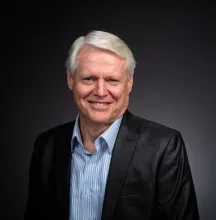
John Elliott serves in the role of President of the United Church of God, an International Association.
