

Don Ward
This transcript was generated by AI and may contain errors. It is provided to assist those who may not be able to listen to the message.
With all the events going on and are being caught up with that, and of course it is obviously we're going to be concerned. And we're going to express our concern and hope for something better. But we can lose our focus to some degree as to why we are really here at services today. So I want to ask the question, why are you here today? And here are some possible answers. It is a commanded assembly. We know that. For Satan, not the assembling of yourselves, but gathered so much more as you see the day approaching.
That's in Hebrews chapter 10. We know that there is a command to hold a holy convocation on the Sabbath. And Leviticus 23, you might say, well, it's expected of me. It's part of my culture. It's what I do. I'm in the habit of going to church on the Sabbath.
You might say, well, I want to be with my family. I want to be with my friends. It's my duty. I want to hear what's going on. But I believe the paramount reason for being here is to worship God and for Him to speak to us. You know, we've seen that Him, God speaks to us by His great hand we're led. So when we come to services, what do we really expect to gain from being here?
Now, possible answers, fellowship, and companionship and fellowship is very important. And we don't know at times just what our very presence does for someone else, just being here. And just our very presence is a testimony within itself, and it's an encouragement to other people. You know, I hear people say that, well, I'm not being fed anymore, or I'm not this or that, and I'm just better off to stay at home and listen to a tape and study the Bible. Well, you might look at it that way as far as you're personally concerned, but what about your brothers and sisters?
They draw strength from you, and you draw strength from them. Someone might say, well, that my social circle, so if I don't go to church, I'm not able to maintain my friendships and social contacts. But, brethren, I hope we're here to be encouraged, inspired, instructed, at times corrected, exhorted, comforted, and edified by the Word of God. So how did we prepare to come today? What was our preparation?
We hopefully spent some extra time in grooming, trying to look our best, and we'll get into the reasons why we should. And we should probably dress the best that we possibly can, and there are reasons for that. So I wore my best clothes, and I studied and prayed through the week, and I asked that God would help us in the Sabbath services. And so we can ask, what kind of attitude did we bring with us here today? Some might say, well, no certain attitude.
Never thought about it, prayed about it. I just sort of showed up. That's what I usually do. And we might say, well, I'm hum-ho. I'm sort of turned off, and I know in a way we are. But I guess to show up, you might say you're discouraged and depressed. I could say to a large degree, I'm discouraged about a lot of things. And I'm sad about a lot of things.
But I know that we have to go on, and I know that we have to, hopefully, that our lives represent an invitation for people to be encouraged, to take strength, to be willing to go on, to go the next mile. You know, back when I was running wind sprints after football practice, especially in August, would run down to one end, and I'd say, I cannot run one more.
Then the coach would blow the whistle and say, on your mark, and I ran one more. Now, I went back down there, and I said the same thing. If he says, I'm going to run one more wind sprint, I'm going to quit right here.
He blew the whistle on your mark, and I ran one more. And he kept on, of course, and you ran the course, as it were. The point is, we reach, oftentimes, our physiological limits way before—I'm sorry, we reach our psychological limits. We think we can't go any farther. Farther has to do with distance, further has to do with furthermore, and that kind of thing. But anyhow, that we can't go any more. We reach our psychological limits, oftentimes, before we do our physiological. Because, generally speaking, we can go a little more.
A little more. And I don't have anything, especially in mind, with regard to that, but oftentimes—and I've said this before— that on Friday evening, I think, well, I just probably can't make it tomorrow. But I wake up on Sabbath morning, and it seems like strength has been renewed, and you make it. Another way we can come to church, of course, is turned off and resentful.
And, on the other hand, we can be cheerful, filled with excitement, anticipation, with a humble, contrite spirit, a broken heart, a perfectly teachable heart that's ready to be taught the Word of God. And then, after we come to services, how do we expect our life to be different from being here today? Do you have any expectations? Is it going to make a difference? After all, many of you have heard. You multiply 52 plus the feast time 50 years in the church, and you come up with how many sermons you've heard? You've heard quite a few.
And we could say, my expectation is I want to learn how to be more like Christ. And we should ask ourselves, what are we going to do with what we hear today? And am I going to have a worshipful attitude, or am I going to ignore it, or am I going to put it into practice?
Brother, I believe we should be here to worship God, so I'm titling this sermon, The Worship of God. We're here to worship God to come into His presence and listen to His words and understand that these words are the words of life and death. Life, if you do them, death, if you don't. We're all familiar with Deuteronomy 30 in verse 19, which I'm going to read. I call heaven and earth to record this day against you, that I have set before you life and death, blessing and cursing. Therefore, choose life that you and your seed may live.
Brother and all of us need to ask ourselves if we're taking our appearance before God too casually. We, in the opening prayer, we ask that God's presence be here. The Sabbath day is said to be a holy day. God Himself says, remember the Sabbath day to keep it holy. He has made it holy because He's placed His special presence in it. In a way, I can't fully explain it, but I know that when, especially when I get up, and it even starts on Friday afternoon as we merge into the Sabbath, I begin to sense a different kind of, I don't know what word to use, that comes over my mind and my body and soul, my total being. There's something different about it. So remember the Sabbath day to keep it holy. Notice Hebrews 1, verse 6 concerning worship. In a moment, we're going, well, while we're turning there and before we read the Scripture, let's go ahead and define worship. Worship defined the rendering of reverent honor or homage.
True worship of the Creator embraces every phase of an individual's life. It's your total being like you heard in the sermon out. It's everything you've got, because we owe everything we have to God who gave us life and who sustains life.
To worship God has a connotation of recognizing God's great power, that He does have the power of life and death, and that when He speaks, we're expected to hear and obey. And God commands us to worship Him. Even the angels worship Christ, and the beings around God's throne, as we'll read here, Hebrews 1, 6. And again, when He brings in the firstborn, to begin with, He was the first begotten. And then in Revelation 1 and verse 5, He is the firstborn. When He brings the first begotten in the world, He says, and let all the angels of God worship Him. Even the angels worship Him. Now, in Revelation chapter 4, John is given a vision of the throne of God, and a description of the great splendor and glory that surrounds the throne of God, and the living creatures, living beings that are around that throne. And notice what they do. In Revelation 4 and verse 10, the twenty-four elders fall down before Him that sat on the throne and worship Him, that lives forever and ever, and cast their thrones before the throne, saying, You are worthy, O Lord, to receive glory and honor and power. To receive worship, for You have created all things, and for Your pleasure they are and were created.
I believe all of us have a lot to learn about worshiping God. I think about it from time to time, and just think, well, am I really worshiping God? I even really understand what it means. So today I want us to spend our time trying to come to a deeper understanding of what it means, really means to worship God.
Notice in Exodus 34 and verse 14 what God says. It is a command to worship Him. Exodus 34 and verse 14. Exodus 34 and verse 14. For you shall worship no other God, for the Lord, whose name is jealous. See, one of the names of God is a jealous God. And of course there is a command. You shall have no other gods before you. You shall not take the name of the Lord your God in vain. You shall not make unto you any graven image. Him alone shall you worship. Time and time again through the Old Testament, the people are warned against worshiping false gods and the pagan gods. As we have noted, God has the power of life and death. And we'll quote what was read in the sermon at Matthew 10.28. Fear not Him who has the power to destroy body. That is this physical life. But fear Him who has the power to destroy both body, this physical life, and soul, your very being, your life potential. One of the meanings of soul is life potential. Your very life potential. Only God can take away your total being, your soul. And when, of course, if a person experiences the second death, then that being, that soul, is history. It's God. It doesn't exist anymore.
The Apostle Paul writing in Corinthians, let's go there, 1 Corinthians 10. In 1 Corinthians chapter 10, this one verse here that we want to focus on, of course I've given sermons just on this one verse. In 1 Corinthians 10 and verse 31, whether therefore we eat or drink, or whatsoever you do, do all to the glory of God. I have a ways to go there. Do I do everything to the glory of God? Or do I do a lot of things to satisfy me or somebody else? Do I really have in mind, and do I really carry with me a worshipful, humble attitude all the time?
Worshiping God has to do, once again, with recognizing who and what God is. Believing God. Doing what He says. And, very importantly, worshiping God has to do with a loving relationship with Him, where we come to reverence Him, behold Him in all with deep respect, deeply desiring to please Him in every aspect of our being. We worship Him. We're just ready to do whatever He wants us to do. God deeply desires a relationship with us. He wants us to come to know Him, and He wants to come to know each one of us, as He came to know Abraham. Let's notice in Genesis 18 and verse 19, we're all familiar with the many trials, and of course, the ultimate trial that Abraham had when he was asked to sacrifice his only son.
In Genesis 18 and verse 19, what God says about Abraham.
I hope God would be able to say this about me and about you in a positive way, as He did about Abraham in Genesis 18 and 19. For I know Him, that He will command His children and His household after Him, and they shall keep the way of the Lord to do justice and judgment. See, this justice and judgment, this judgment, mercy and faith, runs throughout the Bible, Genesis, the Revelation, that the Lord may bring upon Abraham that which He has spoken of Him. Of course, that through Him, through His seed, all the nations of the earth would be blessed. Everything that God does is motivated by love, and He always has our best interests at heart. Let's go now to 2 Timothy 2 and verse 19. 2 Timothy 2 and verse 19.
I oftentimes go here at funerals that I give, and of course, it talks about in a great house, there are vessels of honor and dishonor. If we are ever placed in this great house, that is the Church of God, and God through His love and mercy and His grace calls us at this time, He of course wants to make us a vessel of honor.
In 2 Timothy 2 and verse 19, nevertheless, the foundation of God stands sure having this seal. The Lord knows them that are His.
He said He knew Abraham. He knows them that are His.
And let every one that names the name of Christ depart from iniquity. But in a great house there are not only vessels of gold and silver, but also of wood and of earth and some to honor and some to dishonor.
If a man therefore purge himself from these, he shall be a vessel unto honor, sanctified and fitting for the Master's use, and prepared unto every good work. So of course God is getting to know us and we're getting to know Him. Notice now in James chapter 2, a little more about Abraham. In James chapter 2, James 2.23, and the Scripture was fulfilled which says Abraham believed God and it was imputed unto Him. Imputed means it was laid to his account, his record. God stored it up. He remembered it. It was imputed unto him for righteousness and he was called the Friend of God. I don't know of any higher thing that could be said about anybody than to be called the Friend of God.
You see then in how that by works a man is justified and not by faith only. So it takes obedience, repentance, which has to do with obedience, and faith and the sacrifice of Christ to be justified.
So brethren, we want to be called a Friend of God. We want to be vessels of honor. And God instructed us, He instructed us in His Word on how to build a relationship with Him that leads to respect, to reverence, to awe, desire to please, obedience, and submission. Now we live in a world in which no one is afraid to speak evil of anyone. And I mean, so many of the tell-all magazines, the tell-all kind of yellow sheets, that yellow journalism you see at the checkout stands. I mean, the dirty laundry of everybody is aired throughout the world. Even you give a sermon here in Houston or you give a sermon in name wherever the place, it goes on the Internet. The Internet's around the world. There's virtually nothing hidden today.
Whatever we say, we're going to have to give an account for. And God wants us to build a relationship with Him, once again, that leads to respect. See, this society can rub off on us where we don't really respect even God the way we should. Reverence, awe, desire to please, obedience, submission. And I believe that all of us could develop a closer relationship and a more worshipful attitude toward our loving Heavenly Father. So let's look at man's worship of God from Adam and Eve to the present. Let's go to Genesis 1. Adam and Eve had direct access to God without a mediator. God spoke directly to them, instructed them after He had created them. In Genesis 1, verse 28, And God blessed them, and God said unto them, Be fruitful, multiply, replenish the earth, and subdue it. Of course, this is the verse that the dominion-ness theologians, dominion theology is going to be with us, especially with the advent of some of the political happenings in the nation and some of the political pundits of the day, that we're going to restore America to an eidenic kind of situation, and so Christ can come. Of course, there's good and bad in that. Of course, we want restoration of many things that are good in the nation, but to think that we're going to make the world like Eden again, apart from the return of Christ, would be foolish to say the least. So God blessed them, and God said unto them, Be fruitful, multiply, replenish the earth, subdue it, and have dominion. So there's that word dominion, and that's where they get dominion theology from. Have dominion over the fish of the sea, over the fowl of the air, and over every living thing that moves upon the earth. And God said, Behold, I've given you every herb-bearing seed which is upon the face of the earth, and every tree in which the fruit of the tree yields its seed. To you it shall be for meat, and to every beast of the earth, and to every fowl of the air, and to every thing that creeps upon the earth. Wherein there is nayfesh, the Hebrew word for soul, wherever there is soul, I've given every green herb for meat, and it was so. So God directly communicated with Adam and Eve. Then you look at chapter 2, verses 17 and 18. Genesis 2, 17 and 18.
Well, let's read 16. The Lord God commanded a man saying, Of every tree of the garden ye may freely eat, But of the tree of the knowledge of good and evil, you shall not eat of it, For in the day that ye eat thereof ye will begin to die. And so we see that there was this personal kind of relationship, no mediator in between, and God directly instructed them. And then Adam and Eve severed their relationship with God by listening to Satan the Devil. We're familiar with the story. We've heard it a thousand times, more or less. In Genesis 3, verses 6, And the woman saw that the tree was good for food, pleasant to the eyes, So she ate of it, gave it to her husband. Verse 7, Their eyes were open, they took off for themselves a prerogative to decide good and evil. And they were cast out of the garden. They were cut off from God. And from that point on, there had to be some kind of mediation in order for them to come into the presence of God, to be accepted of Him and to worship Him the way that He had prescribed. See, after they were cast out of the garden, God even placed a flaming sword in the carob of them, as it says. Verse 24 of Genesis 3, He drove out the man He placed at the east of the garden carobims and a flaming sword, which turned every way to keep the way of the tree of life. We've heard that story many times, cut off from God. And how do you get back to God so you can worship Him in spirit and in truth? After man was cast out of the garden, somewhere, I don't know, it's not really recorded, God did instruct Adam and Eve, which they apparently instructed their sons, on how to approach unto God. How do you do it? We see that God clothed Adam and Eve with animal skins, and some have speculated from that, that maybe that's when God instructed them, that's Genesis 3.21, unto Adam also, and to his wife, did the Lord make coats of skins and clothe them. So He covered their physical nakedness. Now nakedness does represent sin in the Bible, but the way sin was covered until the time of Christ was through sacrifice of bulls and goats. So somewhere along the line, there was instruction given about bringing an offering to God and worshipping God. And through that offering, God would be able to determine the attitude of those who brought the offering. Was it from the heart? Were they really coming to God in a worshipful attitude and spirit?
So then we get the story of Cain and Abel, how they brought offerings. Now this is verse 1 of Genesis 4, And Adam knew Eve his wife, so they came together and they were able to conceive, and she bare a cane, and said, I've gotten a man from the Lord. Now remember the prophecy in Genesis 3.15 that talks about a Messiah would come, that this serpent would bruise the heel of the woman, the seed of the woman, which was Christ, and Christ then would bruise his head. Satan is going to be put away into the bottomless pit. So maybe in Genesis 4, verse 1, where Eve says, I've gotten me a man from the Lord, that maybe she thought that Cain was this promised seed. And maybe that was the way Cain was reared, that he was like Messiah complex. I can do no wrong. I'm first born. You know, God was the one who really placed me here, and in a way he did. But he had the wrong approach unto God. He did not have a worshipful attitude.
She again conceived, and they had Abel. Abel was a keeper of sheep, Cain, a tiller of the ground. And in process of time, it came to pass that Cain brought the fruit of the ground and offering unto the Lord. Really, it was a thank offering. You might be reminded of the Pharisee and the publican. The Pharisee went up in the temple to pray that Arian said, I thank God I'm not like other men. The publican, not so much as lifted up his head, said, Have mercy on me, O sinner. That's the contrast of the attitude really between Cain and Abel. Abel also brought of the firstlings of the flock and of the fat thereof. And the Lord had respect unto Abel and his offering. And see, we want God to have respect unto us. We want to be called a friend of God. We want a relationship with God. And a lot of it depends on how we approach unto him. Of course, we don't do it through these kind of offerings today, but we'll get to that. But unto Cain and his offering, he had not respect. Cain was very angry, mad. His countenance fell. And the eternal sent into Cain, Why are you mad? And why has your countenance fallen? If you do well, shall you not be accepted? If you come to understand who you are in relationship to God and what you should really do, but if you don't, sin lies at the door. Don't you understand that you are a sinner? And if you're going to approach unto me, there's a way to do it.
And unto you shall be his desire. Of course, Satan and sin desired him. It could be looked at from the point of view that Cain was the firstborn, and he would have the right to rule as a result of that when Adam passed from the scene. But if he brought the right offering and approached God in a worshipful right attitude, he could rule over sin, and God would accept him and respect him.
So access to God was now through sacrifice. And God shows man that he must approach him in a condition of contrite-ness.
Cain's offering revealed an unrepentant heart that did not understand how to relate to God. He didn't admit that he was a sinner and needed God's mercy and forgiveness. And God will not accept just any old offering, because our offering reflects a condition of our heart as we see right here. Notice 1 John 3, verse 11. 1 John 3, verse 11.
1 John 3, and verse 11. We read this verse last week. It was read, well, I think Mr. Crow read verse 12. In 1 John 3, verse 11. For this is a message that we have heard from the beginning, that we should love one another, not as Cain, who was of that wicked one, and slew his brother. And why did he kill him? Because his own works were evil and his brother righteous. Because of jealousy. One of the first things that Noah did after the flood was to worship God. Let's go now to Genesis 8, verse 20. Genesis 8 and verse 20.
Genesis 8, after the flood had subsided and they came out of the ark, what was one of the first things that Noah did? It was too bad that Noah got drunk and made himself vulnerable to what his grandson did to him, but that's another story in a sense.
In Genesis chapter 8 and verse 20. 8, 20, and Noah built an altar unto the Lord, and took of every clean beast and every clean fowl, and offered burnt offerings on the altar. And the Lord smelled a sweet savor. Of course, this parallels with our prayers today, which are counted as a sacrifice. The Lord smelled a sweet savor, and the Lord said in his heart, I will not again curse the ground any more for man's sake, for the imagination of man's heart is evil from his youth. Neither will I again smite any more every living thing as I have done.
Why, the earth remains seedtime and harvest and coal and heat and summer and winter and day and night shall not cease. So one of the first things that Noah did was to build this altar. There's no mention of a priesthood in the Bible until you see Genesis 14.
Let's go to Genesis 14. In Genesis 14 and verse 18. This can't be. It's ten minutes till four o'clock. Okay. This will have to be a three-part sermon, but anyway. I can't believe it. I thought it might be a quarter after or something like that, but anyway. Okay. I'll have to get over this. Take me just a minute together myself. In Genesis 14 and verse 18. And Melzeth, Kizadah, king of Salem, brought forth bread and wine, and he was the priest of the Most High God.
This is the first mention of a priesthood in the Bible. And he blessed him and said, Blessed be Abram of the Most High God, the professor of heaven and of earth. And in Hebrews chapter 7. Of course, this priesthood of Melchizedek is introduced here in Genesis.
And then in Hebrews chapter 7, we find out that Jesus Christ is of the order of Melchizedek, and the ministry today is of the order of Melchizedek, and that the tithes and offerings, instead of going to Levi, today they now go to the priesthood of Melchizedek. In Hebrews chapter 7 verses 1 through 3, for this Melchizedek, king of Salem, that we just read about, priests of the Most High God, who met Abraham, returning from the slaughter of the kings, and blessed him, to whom Abraham gave a tenth part of all, first being by interpretation king of righteousness.
Now, some of the commentaries will try to make this priest, back in Genesis chapter 14, some human being. I don't know of any human being who would call himself king of righteousness. And I don't know of any human being, as we shall read here and further, who would say that he is without father, without mother, without beginning or end of days. To whom Abraham gave a tenth part, first being by interpretation king of righteousness, and after that also king of Salem, which is king of peace.
Salem means peace. And sometimes Jerusalem, the last part of Jerusalem is Salem. It's anything but that today, but it will eventually be a city of peace. Without father, without mother, without descent, having neither beginning of days nor end of life, but made like an inset of God, abides a priest continually. This part about the priest and how the priest plays a role in worship and what our high priest has done for us, so that we might come before the throne of God and live in the holy of holies.
In verses 15 through 17, and it is far more evident for that after the semantitude of Melchizedek, there arises another priest who is made not after the law of a carnal commandment, but after the power of an endless life. In other words, the Levitical priesthood, they lived and they died. But this one has an endless life, for he testified, you are the priest forever after the order of Melchizedek. For there is very a disannelling of the commandment going before for the weakness and unprofitiveness thereof.
So no longer would the tithes and offerings be paid to Levitical priesthood, it would be paid to Levi, to the priesthood of Melchizedek. For the law made nothing perfect but the bringing in of a better hope did by the which we draw nigh unto God. Now in verse 24, For this man, because he continues ever, has an unchangeable priesthood, wherefore he is able also to save them to the Adamos that come unto him by God, seeing he ever lives to make intercession for them. So in the future sermon we will talk about how this priest has come on the scene.
And through Jesus Christ we are able to worship God in spirit and in truth. Remember what Christ told the woman at the well when they had this conversation? They went back and told about the well and where you should worship. This woman said that we worship in this mountain, Mount Gerizim, where the Samaritans placed a rival temple without a Jerusalem.
And Christ said, I say unto you that neither in this mountain or any other place shall you worship. That those who worship the Father must worship Him in spirit and in truth. And to worship God in spirit and in truth, then of course Jesus Christ has paved the way to make that possible. So we will pick up on this next time, the worship of God. But I hope that we have at least caused you to pause and to think about how we should come to Sabbath services.
And what we are doing when we come here and what we say that we are here to do. And that we are appearing before the Most High God. And we'll find out also that Levitical priesthood, before they went in to do the service of God, they had to go through various rituals and washings so that they would be undefiled as much as you could through physical oblations. And so the same thing applies in the spiritual sense to us today. But it also has a physical component that you do not approach God in just any old way. And we need to be modestly dressed, that we need to put on our best that we can.
And we need to be an invitation to life and an invitation to humble ourselves before God and to be a living witness to our brothers about how we are and how we believe that we should appear before our God.
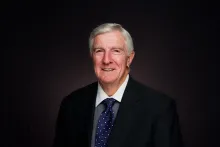
Before his retirement in 2021, Dr. Donald Ward pastored churches in Texas and Louisiana, and taught at Ambassador Bible College in Cincinnati, Ohio. He has also served as chairman of the Council of Elders of the United Church of God. He holds a BS degree; a BA in theology; a MS degree; a doctor’s degree in education from East Texas State University; and has completed 18 hours of graduate theology from SMU.
