

Don Ward
This transcript was generated by AI and may contain errors. It is provided to assist those who may not be able to listen to the message.
This will be Worship of God Part 2 Bible Study Format. Brethren, we're here today to worship God and feed on His Word. Remember the exhortation that Christ gave Peter to feed the sheep three times in the last chapter of the Gospel of John, John 21. Christ implored Peter to feed the sheep, to feed the flock of God. And in 1 Peter 5.2 you find Peter exhorting the elders to feed the flock of God. So we're here today to feed on the Word of God. We have come into His presence, and we're here to eat and drink the words of life. Remember, we talked about two weeks ago how there was something special about the Sabbath, in the sense that when you even feel it coming on on Friday afternoon, it just seems that there's a peace that begins to settle, and there's just something different when you get up on Sabbath morning and Sabbath services and the fellowship and everything that goes with it. And God has placed His presence in the Sabbath day in a very special way.
John 6.63 should be continually ringing in our ears. It is the Spirit that quickens. The flesh profits nothing. The words that I speak unto you, they are Spirit and they are life. So the words of God, they are Spirit and they are life. They are life to us if we do them. And of course, it's death if we don't. And the Bible even tells us, Deuteronomy 13, verse 19, to choose life. I call heaven and earth the day against you that I've set before you, life and death, blessing and cursing. Therefore, choose life that both you and your seed may live. Deuteronomy 30, verse 19. So all of us need to ask ourselves, am I taking my appearance before God too lightly on the Sabbath day? In other words, try to prepare for it in every possible way that we can to make the very most of it, not only for ourselves, but for those that we fellowship with. We talked about in our first sermon on the worship of God, how that our presence here helps other people as well, and that we have a lot to offer, just a very presence to other people. And as we mentioned then, I believe we all have a lot to learn about worshiping God, how we can more fully, completely worship Him in a pleasing and acceptable way.
Let's turn to Exodus 34, verse 14. In Exodus 34, verse 14, we see that God commands us to worship Him, and we're all very familiar with the first four commandments, which I'll briefly rehearse at this time, that teach us about loving God. First of all, you shall have no other gods before me. God will not be willing, and is not willing to play second fiddle to any other God. You shall have no other gods before me. You shall not make unto you any graven image, any representation of God. The first century church made no representations of God, but there's a whole history behind how the Catholic Church led the churches, and how one of the ways that they went into paganism was through the worship of images of Jesus Christ and the baby Jesus, called the Madonna and the Baby. Those icons and relics filled the churches, and they even began to have passion plays and performances way back in the early days after basically the church had been scattered to some degree. But those things continued in the worship services, and one of the things, one of the big items in the Protestant Reformation was to do away with all of these icons and relics and idols that people had set up in their worship of God. And now we see that kind of thing coming back to some degree in the worship services throughout the world and in movies and plays and that kind of thing. And this more recently, in recent years, the Passion of the Christ, Mel Gibson's production, in which a lot of the Protestants and the Catholics said it's one of the greatest evangelizing tools of all time. And it did graphically display, but is that where the answer really lies in worshiping God? In Exodus 34 and verse 14, For you shall worship no other God, for the Yavai, the Eternal, whose name is Jealous, is a jealous guy. You shall have no other gods before you, you shall not make unto you any graven image, you shall not take the name of the Lord your God in vain, remember the Sabbath day to keep it holy. So those four things up front in the Ten Commandments are so important.
Worshiping God has the connotation of recognizing God's great power, that He does have the power of life and death, and when He speaks, we're expected to hear and to obey. It has to do with recognizing who and what God is. God is our Creator. He is our Father. He's the one who loves us and nourishes us. He's the one who was willing to give His only begotten Son, that we might have eternal life. And Jesus Christ, the Son of God, was willing to give His life. Worshiping God has to do with a loving relationship with Him, where we come to reverence Him, to hold Him in awe and deep respect, and to please Him in every aspect of our being. And we worship Him. We wouldn't even have life if it were not for the fact that God had made us. Notice Psalm 100, verse 3. We'll be turning to a lot of scriptures today. I'll be turning there to them as well. But I think this exercise, we have a lot of material to cover today to come to the point where we really understand those who would worship Him must worship Him in spirit and in truth. And so many of the things in the Old Testament were shadows of the greater reality that was to come. In Psalm 100, and verse 3, Know you that the Lord, He is God. Yave, He is Elohim. It is He that made us, and not we ourselves. We are His people and the sheep of His pasture. So God deeply desires a relationship with you. He didn't just make us and say, okay, you're on your own. He made us for that great purpose of being children in His very family. Everything that God does is motivated by love. He always has our best interest at heart. God is love. His law is the summation of His love. And God instructs us in His Word how to build a loving relationship with Him that leads to respect, reverence, to awe, a desire to please Him, to obedience, and to submission. And I believe that all of us, I know that I can, and hopefully I will, develop a closer relationship with God, our loving Heavenly Father. And I believe that all of us need to develop a more worshipful attitude and approach toward God. Let's now look at man's worship of God from Adam and Eve to the present. And some of this, of course, will be a repeat from the first sermon. Many of you were not here, so there will be some duplication. Adam and Eve had direct access with God. Let's turn to Genesis 3. You know that after God created them, male and female, He created them. In Genesis 1, He told them to be fruitful, multiply, and replenish the earth. He set them in a beautiful garden. He instructed them in Genesis 2, 15-17 not to eat of the tree of the knowledge of good and evil, not to take that prerogative to themselves. And then some speculate that Adam and Eve were created on a Friday on the sixth day, and that immediately on the seventh day, Eve went out into the walk of the garden, and thus the devil came and tempted her. In Genesis 3, verse 6, When the woman saw that the tree was good for food, that it was pleasant to the eyes of the tree to be desired, to make one wise, she took of the fruit thereof, did eat, and gave also to her husband with her, and he did eat. The eyes of them were both open. They knew that they were naked. Now, nakedness pictures, of course you can be literally physically naked, which they were at first in the garden, but also nakedness also pictures sin in the Bible. It represents sin.
And that's after Adam and Eve sinned. They knew they had sinned. They tried to hide from God. There are three basic human responses to sin, to hide, and that's what Adam and Eve did. First of all, they tried to hide from God with the fig leaves. Secondly is to blame, and Adam said, well, you know, the woman you gave me, she gave it to me, and I did eat, and that ties in with justify your actions. And of course, the desired response is to repent. The eyes of them both were open. They knew that they were naked. They sewed fig leaves together and made themselves aprons. And to this day, one of the main strategies that people use when they have sinned is to try to hide it. To try to hide it. Hope no one finds out. And then if they do blame, justify, go down that line of human reasoning, whereas God wants us to repent. God had said in chapter 2, verses 16-17, that when you eat of this tree, you disobey me, and you take this prerogative to decide for yourself what is good and what is evil, then you're going to begin to die. So in Genesis 3.15, we say that God promises a Redeemer. We'll read Genesis 3, verse 15. This is the first Messianic promise in the Bible. I will put enmity between you and the woman, between your seed and her seed. See, your seed and her seed. It shall bruise your head. The seed of the woman, Jesus Christ, will bruise the head of Satan and put him away permanently so he will be of non-effect. And you shall bruise his heel. And Satan, from that day forward, tried to thwart prophecy, tried to break prophecy, inspired the crucifixion of Christ, thinking that that would halt the plan of God, that it would break prophecy, but in fact it only expedited the process.
Then, as a result of their sin, verse 22, And the Lord God said, Behold, a man has become at one of us to know good and evil. That means that to know good and evil, in this case, it means they have taken to themselves that which is a prerogative of God. You don't get that full meaning just reading the King James. They have taken to themselves that which is a prerogative of God to decide for themselves good and evil. That's what it means when it says to know good and evil. And now, lest he put forth his hand and take also the tree of life and eat and live forever, therefore the Lord God sent him forth from the Garden of Eden to till the ground from which forth he was taken. So he drove out the man, and he placed at the east of the Garden of Eden, caribims, and a flaming sword which turned every way to keep the way of the tree of life. So humankind cut off. The way back to God, to approach unto God, and to worship him, now is through sacrifice. Exactly when and how God revealed to humankind about sacrifice is not given here in detail. We come to Genesis 4 and we see that Cain and Abel brings an offering.
So because of the sin of disobedience, it caused Adam and Eve their direct access to God. Now humankind has to approach God in another way. And access to God was now through sacrifice, which meant the prerequisites consisted of humility and a repentant contrite heart.
Repentance, humility, contrite heart. The contrast between the offerings of Cain and Abel serves to illustrate the differences between those who worship God and those who don't. Cain's offering revealed an unrepentant heart that did not understand how to relate to God. He did not admit that he was a sinner and needed God's mercy and forgiveness. Abel's offering, on the other hand, revealed a repentant heart.
So let's look at Genesis 4, verse 1. We see here that God will not accept just any old offering. In other words, there is a way. How do you worship God in Spirit and Truth?
There's a certain way, even today, to worship God. God will not accept just any old offering because our offering reflects the condition of our hearts. Our offering reflects the condition of our hearts. The spiritual sacrifices that we offer reflect the condition of our hearts and you might say our conversion quotient. In Genesis 4, 1, Adam and Eve came together and they had a son named Cain. Eve said, I've gotten a man from the Lord. She perhaps thought that he was the Messiah that had been promised in Genesis 3.15. And she again, bear his brother Abel. Abel was a keeper of sheep, but Cain was a tiller of the ground. In process of time, he came to pass that Cain brought her the first fruit of the ground and offering under the eternal, which was a thank offering. He did not come with humility, a repentant, contrite heart. It was like, I'm the Messiah, I'm just here to thank you. Whereas Abel, on the other hand, brought her the first slings of the flock and the fat thereof. And the Lord had respect on Abel into his offering, but under Cain in his offering, he had not respect. Cain was very mad and his countenance fell. And here is the first, I guess you would say, the first case where you really see jealousy injected into human behavior. And jealousy and envy is one of the great causes for the problems of the world from the time that Satan revealed to the present time.
Jealousy and envy. It's called the green-eyed monster. I'm going to do a sermon or a Bible study one day on the green-eyed monster. But under Cain in his offering, he had not respect. Cain was very mad. His countenance fell. The eternal said, under Cain, why are you mad? And why is your countenance falling? If you do well, shall you not be accepted? If you understand who you are in relationship to God. See, that's one of the great lessons of all time. I recently, someone sent me two CDs on the book of Job, and they said, oh, we now understand the book of Job. I can give you a summary of the book of Job here in two or three sentences. What Job is all about is coming to understand who we are in relationship to God, and that God is justified in every action that he takes. Whereas we must judge ourselves, else God will judge us. And then if God judges us, of course, we have the opportunity and the choice to either accept repentance or have our heart hardened and continue to go our own way. Job, his heart eventually came to see the error of his way, and he repented. And as a result of that repentance, he was healed, and he had his wealth restored. He had, I've forgotten what it says, two or three times, whatever it says, more than he had to begin with. So if you do well, shall you not be accepted? And if you do not well, sin lies at the door. And the way for sin to be forgiven, as we have mentioned, is through repentance. At that time, the offerings and the sacrifices that they brought from the days of Cain and Abel up to the time of the sacrifice of Jesus Christ, they provided a kafar, a covering for sin, and God was still looking at the heart, but that allowed them to continue to approach unto God and worship Him under the prescribed manner up until the time of Jesus Christ. God is always looking on the heart. And unto you shall be His desire, of course sin desires to destroy us, and Cain was first born, and Abel should have been under him, as it were, because Abel was second born. Cain had the birthright, and the birthright was a big thing with God. And you shall rule over Him. We can rule over sin by obeying what God says to do. And, of course, as we said, Cain could have had the birthright, and Abel would have been subject to Him under that law that day. And Cain taught with Abel his brother, he came to pass, and when they were in the field, Cain rose up against Abel, his brother, and killed him. And the Lord said unto Cain, Where is your brother, Abel? And He said, I don't know. Am I my brother's keeper? And from Genesis to Revelation, the resounding answer is, yes. So we see the beginning of how man lost his direct access of personal relationship with God, face-to-face, as it were, and then the way he had to approach to God was through sacrifice.
And within 1,650-something years, according to the genealogy that is given in Genesis, the flood came upon the earth because the thoughts and intent of the heart of man was continually on evil, as it says in Genesis 6. So God destroyed what we call a pre-flood world and saved eight people. That is, Noah, his wife, his three sons, and their wives. And one of the first things, we would now turn to Genesis 8, verse 20. One of the first things that Noah did after the flood was to build an altar. In Genesis 8, verse 20, Noah built an altar unto the Lord and took of every clean beast and of every clean fowl and offered burnt offerings on the altar. And the Lord smelled a sweet savor. And of course, today we offer spiritual sacrifices, and prayer is a sweet savor to God. Revelation 8, verses 1 through 3. The Lord smelled a sweet savor, and the Lord said in his heart, I will not again curse the ground anymore for man's sake. For the imagination of man's heart is evil from his youth. Neither will I again smite any more everything living as I have done.
There is no mention of a priesthood until Abraham gave tithes to Melchizedek. In Genesis 14, let's turn there.
Some of this, as I said, is a repeat from the first sermon, but then we're going to go into many other things. But we wanted this background once again. In Genesis 14, the first mention of a priesthood. In Genesis 14, verse 18, in Melchizedek, king of Salem brought forth bread and wine. He was the priest of the Most High God. He was the priest of the Most High God. Salem, Melchizedek, king of Salem. Salem means peace. Jerusalem, sometimes Jerusalem called the city of peace. There's anything but that today. In Revelation 11, in Jerusalem, the end time Jerusalem is called Sodom and Egypt, where our Lord was crucified. So, Jerusalem has a lot of repenting to do in the future and many things to happen. Melchizedek, king of Salem, brought forth bread and wine. He was the priest of the Most High God. And he blessed him and said, blessed be a brahm of the Most High God, a possessor of heaven and earth. And blessed be the Most High God, which hath delivered your enemies into your hand, and he gave him tithes of all. Now that set the background with regard to tithing at this time. Now there was, as we shall see, an intervening link and that was, of course, the priesthood of the Levitical priesthood, which had not yet been established.
One of the first things that Abraham did after he came into the Promised Land was to build an altar. We'll go back now to Genesis 12 in verse 1. Remember that Abraham, the country of Abraham's nativity was Ur of the Chaldees, which is modern-day Iraq.
And Abraham, why God chose Abraham exactly, I don't know for sure. Of course, Abraham descended through Shem, and you know about the prophecies of Shem and Ham and Japeth. And Abraham was a descendant of Shem. And Abraham left his native land and came into what we call the Promised Land or the Land of Canaan. Genesis 12.1, Now the Lord had said unto Abram, Get you out of your country and from your kindred and from your father's house unto a land that I will show you. Verse 6, And Abram passed through the land and the place of Shechem, or Sichyam, unto the plain of Moray, and the Canaanite was then in the land. The Lord appeared unto Abram, and said unto your seed, Will I give the land? And there built it he an altar unto the Eternal who appeared unto him. So this sacrifice and to offer the sacrifice, they would build some kind of altar that was dedicated to God and it was at this place that they would offer up the sacrifice. And that was part of the way of approaching unto God before the time of the Levitical priesthood.
God has changed form and approach in worshiping Him in different dispensations. Now dispensation has to do with a period of time in which God deals with people in a certain way. Now one of the things that a lot of the theologians criticize us for, the Church of God historically, this goes way back to the days of worldwide Mr. Armstrong, the present time of all their dispensation lists. Well, the Bible talks about this is off our track just a moment, but I want to bring this to your attention. If you'll go to Ephesians 3 and verse 1, see, the Bible prescribes a certain way according to Acts 4.12, there is none other name given under heaven whereby men must be saved. And that name, of course, is Jesus Christ. But God has dealt with Adam and Eve in a different way. So let me just, before I read this, recap the basic periods of time. Dispensation is a period of time of administration and testing in a certain way. Adam and Eve, that period of time was a time of innocence. They were put in the garden, had not sinned, they were neutral, and they had a period of testing. Whether it lasted, their innocence lasted 24 hours or 12 hours, I don't know for sure. If they were created on late Friday afternoon and Eve took her walk on the Sabbath and sinned, maybe less than 24 hours. I don't know that period of time, but I know that initially there was a period of innocence.
Then humankind decided for himself the prerogative of good and evil, and we call that prerogative your conscience. You know, you hear this expression, let your conscience be your guide.
But there is a problem with that, because conscience is an educated, trained aspect of your being. If you grew up with some of the headhunters in New Guinea, and I understand there are still some headhunters in New Guinea, that part of your culture, you would think it's all right to take another human being's life, cut off its head, dry off the flesh, put the skull on a pole, and that would increase your spiritual strength. And your conscience wouldn't bother you at all!
That ain't good.
Back about a year or two ago, I read an article in which they talked about how the Pygmies were becoming extinct in Africa. And one of the reasons was because they were being hunted and killed, because one of the aspects of the kind of religion that is motivated by witchcraft and demonology is, one of the brands of this is, if you kill another human being and eat of his flesh, then that enhances your strength, and you become more god-like.
Once again, people could do that, and their conscience wouldn't bother them. So depending on the culture, my point is, when you say, let your conscience be your guide, you better make sure that your conscience has been educated and trained according to the Word of God. Your conscience, if it has not been, and we live in a world in which, you know, you talk about morality.
Morality is a prescribed way of living life. Immorality is to break the prescribed way of living life. We have now come to live in basically an amorality, an amoral society, which means that there are no prescribed standards of right and wrong. And each man does that, which is right in his own eyes, and our conscience, having not been educated properly.
So one of the big studies that came out this week, and you know, some were ballyhooing it. Four out of ten Americans now believe that marriage is obsolete. Oh, isn't it wonderful that we have come to this understanding? Then we're actually saying this. Why? And their conscience doesn't bother them of cohabitation, premarital sex, living together, and all of that before marriage, because we become amoral. We're no longer immoral, we're amoral. Now, there are no standards. So what a pitiful time. Okay, I got sidetracked. Okay, the age of innocence, and then human conscience. Let your conscience be your guide.
Now, we're still basically in that, and the pre-flood world is an example of let your conscience be your guide. Humankind decided for himself what's good and what's evil. And the thoughts and intent of man was continually upon evil, and God said, it repents me, I'm sorry that even ever created man. So the flood came. Then after the flood, this is in Genesis 9, God invested in man eye for an eye, tooth for a tooth, the life for a life principle human government.
Man was given that priority. Human government, to a certain extent, continues to this day. It has had various forms and shapes and various isms. And then, after the flood, God blessed, gave assignments, blessings, in a sense, to Noah's three sons, Shem, Hymn, and Japheth. And through the seed of Shem, Abraham came on the scene. And there were three main patriarchs, Abraham, Isaac, and Jacob. So God, after the flood, dealt with Abraham, Isaac, that's called the patriarchal age or dispensation.
Then after that came the the old covenant. God worked through the Levitical priesthood in the dispensation of the old covenant. And then Jesus Christ came on the scene and He established the new covenant. And we're now in the church age, the dispensation of the church age or the dispensation of grace.
And the final dispensation is the fullness of times. Now we read Ephesians 3.1. For this cause, I Paul, the prisoner of Jesus Christ for you ethnos, if you have heard of the dispensation, yeah, the word is in the Bible. The Greek word here is oikonomia. Oikonomia, it's also the word from which we get economics. Oikonomia. It means administration, period of testing. If you've heard of the dispensation of the grace which God has given me to you.
And some call this the dispensation of grace or the church age. So that's the one we're in right now. But there is one to come. Look at Ephesians 1.10. In Ephesians 1.10, that in the dispensation, the old oikonomia, in the dispensation, the period of time or the administration of the fullness of times, see this is still to come. He might gather together and one all things in Christ, both which are in heaven and which are on earth even in him. See, that's the ultimate goal. All things are gathered together in Christ under God.
And that's the ultimate goal. But you started hearing Adam and Eve, innocence, conscience, human government, patriarchal age, whole covenant, dispensation of grace, and finally going to there. So, Abraham's approach was through offerings indicating Abraham's recognition of who and what God is.
So, we see right after he came into the promised land, Genesis 12.7, Abraham built an altar. Another important aspect, up until the time of the New Covenant Church, those that God was working with, was circumcision. Just notice Genesis 17. You couldn't be in the congregation of Israel as a male.
A male could not be in the congregation of Israel. And of course, it was just part of the prescribed way, a part of the law that on the eighth day, male children would be circumcised. And then, if a proselyte came along, then they were to be circumcised. And you remember the story in Joshua that when they were coming into the promised land, of course, they'd been wandering in the wilderness for 40 years, and apparently they hadn't been circumcised, so they had to be circumcised before they went into the promised land.
And when they were marching around, marching around Jericho there, it was shortly after they had been circumcised. In Genesis 17 and verse 9, Genesis 17 and verse 9, And God said unto Abraham, You shall keep my covenant, therefore you and your seed after you and their generations. This is my covenant, which you shall keep between me and you and your seed after you. Every male child among you shall be circumcised.
You shall circumcise the flesh of your foreskin. It shall be a token of the covenant between you and me. And he that is eight days old shall be circumcised among you every male child in your generations.
He that is born in the house or bought with money of any stranger, which is not of your seed. You see, this came to be even one of the great disputes that arose in the New Covenant Church. And the reason the Acts 15 conference was called, whether or not the Gentile converts had to be circumcised.
He that is born in your house and he that is bought with your money must needs be circumcised and my covenant shall be in your flesh for an everlasting covenant. And the circumcised male child whose flesh of his foreskin is not circumcised, that soul shall be cut off from his people. He has broken my covenant. So it was very serious. I mean, it was a physical thing, but it represented the greater spiritual reality. That's so much of what we're going to be talking about here today is that these things in the Old Testament are shadows of the greater reality that is to come.
In Romans chapter 2 verse 26, Therefore, if the circumcision keep the righteousness of the law, shall not his uncircumcision be counted for circumcision. Remember in Romans in chapter 1, Paul takes the Gentiles to task. In chapter 2, he takes the Jews to task. It comes to the conclusion that all have sinned. Verse 27, And shall not uncircumcision, which is by nature, if it fulfill the law, judge you, who by the letter and circumcision does transgress the law. The Jews made their boast in the law and circumcision, but they weren't keeping the law. That's what Paul is talking about there. For he is not a Jew which is one outwardly, neither is that circumcision which is outward in the flesh. But he is a Jew which is one inwardly, and circumcision is that of the heart, and the Spirit, and not in the letter, whose praise is not of men, but of God. So, if we refuse circumcision of the heart today, we will be cut off. And so our heart has to be circumcised. Now, back to our thread about worshiping God, we go now to Genesis 26 and verse 25. Genesis 26 and verse 25, we're still in the patriarchal age. The patriarchal age, we've gone through innocence, human conscience, human government, been vested. The patriarchal age we're still in, Abraham built an altar, and then Abraham's son, and then Isaac, and then Isaac's son, Jacob, three basic patriarchs. In Genesis 26 and verse 25, and he built an altar there.
Let's back up a little bit. Verse 6, Isaac dwelt in Girar, and in verse 18, Isaac dig again wells of water. Verse 22, he removed from there and dug another well. Verse 23, he went from there to Beersheba. The Lord appeared unto him the same night and said, I am the God of your father, Abraham, fear not, for I am with you. I will bless you and multiply your seed for my servant, Abraham's sake. And he built an altar there and called upon the name of the Lord and pitched his tent there, and there Isaac's servants digged a well. So, we see that Isaac built an altar. Now, let's go to Genesis 31. Genesis 31 and verse 54. Genesis 31 verse 54. Then Jacob offered sacrifice upon the mount and called his brethren to eat bread, and they'd eat bread and tarry it all night in the mount. And early in the morning, Laban rose up and kissed his sons and his daughters and blessed them, and Laban departed and returned unto his place. So, we see the patriarchs built altars, and they offered sacrifices. And one of the main reasons why God freed the Israelites from Egypt was, of course, so his plan of salvation, and he had decided he's going to work through the seed of Abraham, and the Messiah would come through Abraham. And if he didn't deliver Israel from Egypt, then they would lose their identity and prophecy would be broken. And he wanted them to not completely lose sight of him, and he wanted them to worship him, him being Israel, the sons of Jacob. Remember Abraham, Isaac, Jacob. Jacob had 12 sons. 12 sons became the 12 tribes. The 12 tribes became the nation of Israel. God decided he would work through Israel. One of the main reasons that God freed the Israelites was so that they would be free to worship him. Notice Exodus 3, 18. Exodus 3 and verse 18.
Exodus 3, verse 18. They shall hearken to your voice, and you shall come, you and the elders of Israel, unto the king of Egypt. You shall say unto him, the Lord God of the Hebrews.
The Lord God of the Hebrews has met with us, and now let us go. We beseech you three days' journey into the wilderness, that we may sacrifice unto our God. And sacrifice was a vital part of worship. Now notice in Exodus 15 and verse 2. Exodus 15 and verse 2.
This is after Israel came up out of the Red Sea, having been supernaturally delivered from the forces of Pharaoh. Let's read Exodus 15.1. So they came up out of the Red Sea. The Red Sea closed and drowned the host of Pharaoh. Then sang Moses and children of Israel this song unto the Lord, and spoke, saying, I will sing unto the Lord, for he hath triumphed gloriously the horse and the rider he hath thrown into the sea. The Lord is my strength and song. He has become my salvation. He is my God, and I will prepare him in habitation, my Father's God, and I will exalt him. This habitation that it was prepared, first of all, was an earthly tabernacle. In this tabernacle, they would worship God, and a priesthood would be established.
Up until the time of the Exodus, the head of the household served as the one who led the order of worship, and building altars and offering sacrifices. So once again, we go back. The first ones, Cain and Abel. Then the next record, after the flood, Noah. Then we have the record of Abraham, Isaac, Jacob. So it seems the heads of the household, the first mention of the priesthood, Melchizedek, Genesis 14. Now, after the Exodus, and as the Exodus was taking place, God began to raise up the Levitical priesthood, and Aaron, the son, the brother of Moses, was chosen. So an important transition took place when God called Israel out of Egypt and established the Levitical priesthood. So no longer would the altar be built by the head of the household, and the sacrifice given, and so on. Now there was a prescribed priesthood.
Remember, all of these periods of dealing with the people through whom God was dealing, was leading to the greater spiritual reality that we are involved in today. Okay. Let's notice this transition now, Exodus 28 and verse 1.
Let's stop. Well, anyhow, we'll go there for this. Exodus 28, Exodus 28 verse 1.
Exodus 28 verse 1, And take you unto you, Aaron, your brother, and his sons with him, from among the children of Israel, that he may minister unto me in the priest's office. So here we have the establishment of a Levitical priesthood. In that period of time, this fifth dispensation, as it were, the priesthood plays a vital role in this Old Covenant. You shall take unto you, Aaron, your brother, and his sons with him, from among the children of Israel, that he may minister unto me in the priest's office, even Aaron, Nadab, Abihu, Eliezer, Ithamar, Aaron's sons. You shall make holy garments for Aaron, your brother, for glory, and for beauty.
See, there wasn't prescribed. God always wants us to be the cleanest, the best dressed, modesty in every way in approaching unto him. The priests were the ones who administered the worship services, and the brethren were to prepare themselves accordingly. And you shall speak unto all that are wisehearted, in whom I have filled with the spirit of wisdom, that they may make Aaron's garments to consecrate him, that he may minister unto me in the priest's office. And these are the garments which they shall make, a breastplate, an ephod, a robe, a broidered coat, a miter, a girdle. And they shall make holy garments for Aaron, your brother, and his sons, that he may minister unto me in the priest's office. Now in verse 40. And for Aaron's sons, you shall make coats, you shall make for them girdles, bonnet shall you make for them for glory and for beauty. You shall put them upon Aaron, your brother, and his sons with him, and shall anoint them, and consecrate them, and sanctify them, that they may minister unto me in the priest's office. You shall make them linen breeches to cover their nakedness, from the loins even into the thighs they shall reach. And they shall be upon Aaron and upon his sons, when they come into the tabernacle of the congregation, or when they come near under the altar to minister in the holy place, that they bear not of iniquity and die. It shall be a statue forever unto him, and his seed after him. So here's the establishment of the Levitical priesthood and prescribed garments that they were to wear. It was to be that of order and of beauty and cleanliness because they were approaching unto God. Israel was now to worship God and approach him through an appointed priesthood with its legally prescribed sacrifices. In addition to that, there was a specific place and a tabernacle for worship. Now we go back to page 2 to Exodus 24, where they literally enter into the Old Covenant. This is that marriage covenant, the Old Covenant, in Exodus 24 verse 6.
And Moses took half the blood and put it in basins, and half the blood he sprinkled on the altar. He took the book of the covenant and read in the audience of the people, and they said, all that the Lord has said will we do? That was their I do in the marriage ceremony and be obedient. Just like we were standing and reading a marriage ceremony today almost. So they entered into that covenant with God, and it was counted as a marriage covenant. Because eventually of their hordums, their spiritual hordums, of course, usually spiritual hordums are preceded by physical, and that was a case of Israel. And he finally gave them a bill of divorcement. So they entered into the Old Covenant. Now in chapter 25, they began to build this sanctuary, this habitation for God. Remember I read from Exodus 15 verse 2, after they came up out of the Red Sea, they sang the victory song of Moses. They said, we will build him a habitation. Now in Exodus 25, they began to build this habitation. Exodus 25 verse 1, the Lord spoken to Moses, saying, speaking to the children of Israel that they may bring me an offering. And he describes the offerings that they were to bring. And verse 8, for what purpose? And let them build me a sanctuary that I may dwell among them.
So we see the establishment of the Old Covenant and the Levitical priesthood, the earthly tabernacle, the sanctuary. Now the book of Leviticus, you go forward now to Leviticus chapter 1. The book of Leviticus is the book that prescribes the order of worship under the terms of the Old Covenant. The book of Leviticus from the Septuagint, it's called Leviticus because when the Septuagint and the Vulgate were translated, it mainly pertained to the duties of Levitical priesthood.
The Hebrew name, Vayakara, meaning the first word, and it literally means, and he called. What Leviticus literally means, the Hebrew name, this Leviticus is what was put when the group of Hebrew scribes in circa 270 BC translated the Old Testament, the Hebrew into Greek, the Septuagint version. They called it Leviticus because it primarily pertains to the order of worship and the duties of the Levitical priesthood. But the Hebrew name for Leviticus, once again, if you want to write it out, is V, V as in victory, V-A-Y-Y-I-K-R-A. Vayakara, something like that, means, and he called. Where did he call from? He called from the sanctuary. Notice verse 1, and the Lord called unto Moses. And that's what Leviticus is about. The Lord called unto Moses.
The Lord called unto Moses and spoke unto him out of the tabernacle of the congregation, saying, Speaking to the children of Israel and said to them, if any man of you bring an offering unto the Lord, you shall bring your offering of the cattle, even of the herd, and of the flock. So he begins to prescribe, Here's how you worship me now, here's how you approach me, and all of the things that go with it. If his offering be a burnt sacrifice of the herd, let him offer a mayo without blemish. He shall offer it of his own voluntary will.
So then make him do it at the door of the tabernacle of the congregation before the Lord, and he shall put his hand upon the head of the burnt offering, and it shall be accepted for him to make atonement for him. And he shall kill the bullock before the Lord, and the priest, Aaron's sons, shall bring the blood and sprinkle the blood round about the altar, that is, by the door of the tabernacle of the congregation. There's a lot of important things contained in this. I'll touch on some of them.
The Old Covenant was a national covenant. The whole nation entered into that covenant in this ceremony that you read in Exodus 24, verses 6 and 7, where they all said, I do. It was a national covenant. But that did not exclude individual responsibility. So there was still individual responsibility, it says, of his own will, voluntary will. He'll bring his offering, and he will play a part in the role, a part in offering, and sacrifice. Then the priest has this final part with the blood and what he does with it. And you can immediately see the parallels. We have to come before Jesus Christ voluntarily and confess our sins and accept his sacrifice. And he has carried the blood through the veil for us in paying for our sins. So these various things, there are some wonderful books on types and representatives of the various types in the Old Testament, and the corresponding part in the New Testament. So now we have a prescribed way of approaching unto God. And if you didn't follow the prescribed way, it meant death, including the priest. And one of Aaron's sons did not follow the prescribed way. He offered strange fire, and immediately he was dead. So any violation of the prescribed way could lead to death. The priest had to be cleaned, dressed properly. The people of the congregation had to meet certain requirements. And only the high priest could actually come before God in the presence of God in the Holy of Holies once a year, and that on the Day of Atonement. He went in there three times for himself, for the tabernacle, and for the people. Now we go to the New Testament, and we begin to apply today. In Hebrews 9, let's stop in Hebrews 8 before we read that. Hebrews 8. One of the Bible studies that I prepared yesterday as well is on the book of Hebrews, in comparison and contrast between the Old Covenant and the New Covenant. That's what Hebrews does. The various elements of the two Covenants are compared and contrasted in the book of Hebrews. Our calling, the priesthood, the temple, the sacrifices, the promises.
In Hebrews 8 and verse 1, Now the things which we have spoken, this is the psalm, we have such a high priest who has set on the right hand of the throne of the majesty in the heavens.
Jesus Christ is after the order of Melchizedek, as in Hebrews 7, a minister of the sanctuary of the true tabernacle, which the Lord pitched and not man. We read about the tabernacle that they pitched in the wilderness. Let them build on me a sanctuary. Remember Matthew 16, 18, where Christ says, And I will build my church, and the gates of hell shall not prevail against it. So the spiritual temple that is being pitched now and wherein the Spirit of God abides, of course, is each one of us. A minister of the sanctuary of the true tabernacle, which the Lord pitched and not man. God doesn't dwell in buildings made by hands today. For every high priest is ordained to offer gifts and sacrifices, wherefore it is of necessity that this man have somewhat also to offer.
For if he were on earth, he should not be a priest, seeing that there are priests that offer gifts according to the law. Jesus Christ sprang from the tribe of Judah. So Jesus Christ would not be offering sacrifices according to Levitical law, because you had to be a Levi and descended from Aaron under the terms of the Old Covenant, who served under the example and shadow of heavenly things as Moses was admonished of God when he was about to make the tabernacle, for he said unto him, that you shall make all things according to the pattern shown to you in the mount. So God revealed to Moses how to make that sanctuary in a very detailed way.
But now he hath obtained a more excellent ministry by how much also he is the mediator of a better covenant, which was nomotheto. And if you don't get anything else, and I know you hate Greek and all of that, you might want to write down this Greek word because it destroys the argument that anyone tries to use if you understand it, that people might bring saying that the new covenant does away with the law of God. The word is nomotheto. I shall spell it. M-O-M-O. Now, the Greek word for law is nomos, N-O-M-O-S. So, law and they, T-A-T-E, T-E-O, nomotheto. N-O-M-O-T-H-E, T-E-O. Nomotheto. It means furnished with law. It means furnished with law. Now, it can have this meaning of established. Here, the Apostle Paul is saying that the new covenant is established or furnished with law.
He is a mediator of a better covenant, which is furnished with law, and it has better promises. Earthly calling versus heavenly calling. Physical, national blessings versus spiritual blessings and eternal life. Now, in Hebrews 9, then verily the first covenant had also ordinances of divine service in a worldly sanctuary, for there was a tabernacle made. The first wherein was a candlestick and the table and the showbread, which is called the sanctuary. After that was the second veil, the tabernacle, which is called the holiest of all, which had the golden center, the Ark of the Covenant overlaid round about with gold, wherein was the golden pot that had mana, errands, rod that budded, and the tables of stone, or the tables or tablets of the Covenant, the Ten Commandments. And over it the carob beams of glory shadowing the mercy seat of which we cannot now speak particularly.
Now, when these things were thus ordained, the priest went always into the first tabernacle, accomplishing the service of God. But into the second went the high priest alone once every year, not without blood, which he offered for himself and for the errors of the people. The Holy Spirit thus signified that the way into the holiest of all was not yet made manifest, while as the first tabernacle was standing, the way into the holiest of all was not made manifest, to whom? To the people. Only the high priest could go in there, and he went with blood for himself, for the tabernacle, and for the congregation. But now Jesus Christ has gone into the holiest of all, even into the heavens, and purged our sins once and for all. And the way into the holiest of all was not made manifest, while that first one was standing. Now, verse 9, which was a figure or a symbol, a shadow for the time, been present in which were offered both gifts and sacrifices, and could not make him that did the service perfect as pertaining to the conscience, which stood only in meats and drinks and different washings and carnal ordinances, imposed on them until the time of Reformation. See, verse 10 is a summary of the things that were done away with. It was that sacrificial system whereby you would come to approach God and worship Him. Now, through Jesus Christ and the New Covenant, there's a new way of worshiping God.
So, there was a prescribed order for approaching God in the formal sense under the Old Covenant, but after the establishment of the New Covenant, there was a new way. There was one thing in common all the way through all of this. Back from the days of Cain and Abel to Noah to Abraham, Isaac, Jacob, through the Levitical priesthood to the present day, the way that you would come before God to worship Him was through humility, repentance, a humble, contrite heart. See, that never changed. That never changed. And still, one of the big prerequisites today.
Worshiping God consisted of faith, righteousness, truthfulness, and obedience to the express will of God. So, all of these were continually stressed under the Old Covenant. And when the humble, contrite heart was lacking, or when a will to obey was lacking, sacrifices, and fastings, and prayers were actually an abomination unto God. Can you come to Sabbath services and it be an abomination to God?
Well, I guess you would say it depends on your heart, wouldn't you?
Why are you here? Are you here really to worship God?
Now, the fact that there was a prescribed way, as we've already mentioned, did not mean that they could not worship God when they were not in the area of the tabernacle. And we also talked about it was voluntary, an individual responsibility to come and offer your sacrifice.
Notice in Deuteronomy 6, we're trying to tie some of the elements together that are common now, before we launch full scale into New Covenant. The basic parallels exist of the spiritual condition of the heart and what God was really looking for. And today, if we look at our spirituality in comparison to what we're about to read here in Deuteronomy, then I am struck by how short I fall. And I wonder, do we really even begin to do the things that we need to do?
In Deuteronomy 6, verse 4, here, O Israel, the Lord our God is one Lord.
You shall love the Lord your God with all your heart, with all your soul, with all your might. Of course, we know that Christ repeated that as one of the great commandments in Matthew 22.
And these words which I command you this day shall be in your heart.
We know that they did not have such a heart, but today we have the Holy Spirit to write the law of God on our inward parts. It is to be a part of our conscience. It was not possible that the blood of bulls and goats should purge the contents. But today, the Holy Spirit can write it on our hearts and make our conscience into a soft heart, a circumcised heart that is like unto God. You shall teach them diligently unto your children.
You shall talk of them when you sit in your house.
And when you walk by the way... Now this is Old Testament stuff.
Or is it New Testament stuff? Now Christ repeated loving the Lord your God with all your heart, mind, and soul. And when you walk by the way, when you lie down, when you rise up, you shall bind them for a sign upon your hand. They shall be as frontlets between your eyes. You shall write them upon the post of your house and on your gates.
And it shall be when the Lord your God shall have brought you into the land which he swore unto the fathers, to Abraham, to Isaac, and to Jacob, to give you great and goodly cities which you didn't build, houses full of good things. Beware, verse 12, lest you forget. See, that's how intense the educational process was to be in the home of the Israelites, even under the Old Covenant. So where are we today?
You can meet on the Sabbath, and it can be an abomination to God. Judah did, because if you come to offer your sacrifice and your heart is not right. Let's read Isaiah. Isaiah, the good news is, in fact, one time I read one of these scriptures, which I'll read next from Proverbs. There was a teenage girl there, and this teenage girl was one of the...she was just a model kind of young lady as far as presenting herself in church. When we had the Bible bowls back in those days, I mean, she was the star of the show. It was like she memorized the Bible. But there were things in her life that she knew was wrong. And based on reading one of these scriptures, it's like she didn't come back to church, and an elder played a role in it as well because of not understanding that you can repent, and God removes your sin as far as the east is from the west. And in the first part of Isaiah here, God is pleading with Judah especially to repent. Let's notice Isaiah 1.11.
To what purpose is a multitude of your sacrifices unto me says the eternal.
I am full of the burnt offerings of rams and the fat of fed beasts, and I delight not in the blood of bullocks or of lambs or of he goats.
I mean, I'm fed up to the brim with those physical sacrifices.
When you come to appear before me, who hath required this at your hand to tread my courts? Bring no more vain oblations, incense is abomination unto me. The new moons and Sabbaths, the calling of assemblies, I cannot away with it. Of course, I'm trying to use this to do away with the Sabbath. That's not what he's talking about. It's the way you come to worship. It is iniquity, even the solemn meeting. Your new moons and your appointed feasts my soul hates. They are of trouble unto me. I am weary to bear them. And when you spread forth your hands, spread forth hands had to do with prayer, the position of prayer. Put up your hands. I will hide my eyes from you. Yes, when you make many prayers, I will not hear your hands are full of blood.
Wash you, make you clean, put away the evil of your doings from before mine eyes. Cease to do evil, learn to do well, seek judgment, relieve the oppressed, judge and follow. Let's plead for the widow, come now and let us reason together, says the Lord.
You can do the physical what he's saying all day long till you pile up offerings on top of each other. But if your heart is not right, it's an abomination to God. He's sick of it.
Come now and let us reason together, though your sins be as scarlet, they shall be as white as snow. And though they be red like crimson, they shall be as wool. If you be willing and obedient, you shall eat the good of the land. But if you refuse and rebel, you shall be devoured with the sword, for the mouth of the Lord has spoken it. And then he goes on, how is a beautiful city, Jerusalem, becoming harlot? It was full of judgment, righteousness lodged in it, but now murderers and so on. So, as the Bible says, God looks on the heart and not on the outward appearance. Look at Proverbs now, Proverbs 15, verse 8. You have to really be careful, of course, in talking with young people and what you might say to them.
I know that this young person had a particular problem on the one hand, a model. On the other hand, there was something that bothered them, but it depends on how it's brought to them and how they are taught. Proverbs 15, verse 8, the sacrifice of the wicked, and what we've just read here from Isaiah, is an abomination to the eternal.
The bottom line is our heart.
So, it has never been simply one bearing gifts, but the one who is innocent in his hands and clean in his heart. Those are the ones who can ascend to the mountain of God.
Today, we have ascended to the spiritual mountain of God, to Zion itself, the heavenly Jerusalem. Let's turn now to Hebrews 12. Remember the comparison and contrast between the Old Covenant and the New Covenant? We talked about a lot of things in the Old Covenant. In Hebrews 12, Paul talks about when they came to Mount Sinai, how they trembled and they quaked at the site.
Now, verse 22, in Hebrews 12, 22, But you are come into Mount Zion. He's talking about Mount Zion, the church, and to the city of the living God, the heavenly Jerusalem, to an innumerable company of angels. Far transcends physical Jerusalem, whose in bondage were the children, to the General Assembly and Church of the First Begotten, which are written in heaven, and to God the Judge of all, and to the spirits of just men made perfect, and to Jesus, the Mediator of the New Covenant, and to the blood of sprinkling that speaks better things than that of Abel. So, this whole history that we've covered, from Abel to Jesus Christ, and now we have come to not just a tabernacle, not just a temple, not just to the city of Jerusalem, we have come to the city of God, the city of the living God, to Mount Zion, the Church of God. Today we have ascended to the spiritual mountain of the Eternal. Notice Isaiah 33, verse 14. Isaiah 33, verse 14. Isaiah 33, verse 14. The sinners in Zion are afraid. Isaiah 33, 14. The sinners in Zion are afraid. Fearfulness hath surprised the hypocrites. Who among us shall dwell with the devouring fire? Who among us shall dwell with everlasting burnings? He that walks righteously speaks uprightly. He that despises the gain of oppressions, that shakes his hand from holding of bribes, that stops his ears from the hearing of blood and shuts his eyes from seeing of evil. He shall dwell on high. His place of defense shall be in the munitions of rocks. Bread shall be given him. His water shall be sure. Your eyes shall see the king and his beauty. They shall behold the land that is very afar off. Your heart shall meditate terror. Where is the scribe? Where is the receiver? Where is he that counts the towers? Verse 20, look unto Zion, the city of our solemnities. Your eyes shall see Jerusalem in quiet habitation and tabernacle. They shall not be taken down, nor one of the stakes thereof shall ever be removed. Neither shall any of the courts thereof be broken. So that's the city we want to ascend to. Today, God has made it possible for us to dwell in the holy of holies. Today, we have to worship God in spirit and in truth. Let's notice John 4. So we have seen the various ways historically that people approach unto God. Now, what does God want us to do? We have seen where we have come to. We have come to the Mount, not to Mount Sinai. Not to the Old Covenant. We have come to the New Covenant, to the city of the living God. In John 4, verse 14. John 4, 14. Whosoever drinks of the water that I shall give, him shall never thirst. This is a conversation that Jesus Christ had with the woman at the well, the woman, Samaritan woman. The water that I shall give him shall be in him a well of water springing up into everlasting life. The woman said unto him, Sir, give me this water that I thirst not, neither come here to draw. Jesus said unto her, Go call your husband, and come here. The woman answered and said, I have no husband. Jesus said, You've said, Well, you've had five. Verse 19. The woman said unto him, Sir, I perceive that you are a prophet. Our fathers worshiped in this mountain, that's Mount Gerizim, the Samaritans, had built a temple that rivaled that one in Jerusalem on Mount Gerizim. And you say that in Jerusalem is a place where men ought to worship. And Jesus said unto her, Woman, believe me, the hour comes, which shall neither in this mountain nor yet in Jerusalem worship the Father. You worship, you know not what, we know what we worship, for salvation is of the Jews.
But the hour comes, and now is, when the true worshippers shall worship the Father in spirit and truth, for the Father seeks such to worship Him.
God is spirit, and they that worship Him, worship Him in spirit and in the truth. The woman said to Him, I perceive, and I know that you are the Messiah, which was prophesied to come, who is called to Christ. When He is come, He will tell us all things.
Jesus said unto her, I that speak unto you am He. Jesus Christ testified that He was the Messiah in that verse.
So how do we worship God in spirit and in truth?
If you're going to worship God in spirit and truth, you must have the Spirit. You must have the Holy Spirit. The Jews had a knowledge of God and a zeal for God, but not according to the true knowledge of God.
So if you're going to come to worship God, you have to have the Spirit. You can't worship in spirit and truth, and if you don't have the Spirit of God. In Romans 5, we see how that Jesus Christ came, and He made it possible for us to receive the Spirit of God. So worshiping God in spirit and truth is dependent upon receiving the Spirit of God. And to receive the Spirit of God, we have to repent of our sins. We have to humble ourselves, exercise faith in the sacrifice of Christ, be baptized, receive the laying on of hands.
In Romans 5, 6, for when we were yet without strength, in due time Christ died for the ungodly. For scarcely for a righteous man will one die, yet for adventure for a good man. Some would even dare to die, but God commences love toward us, in that while we were yet sinners, Christ died for us.
Verse 10, for when we were enemies, we were reconciled to God by the death of His Son. Much more being reconciled, we shall be saved by His life. And now Jesus Christ, through His Spirit, lives in each one of us. In Acts 2, verse 38, turn back there please. Acts 2, 38, you could probably quote it. Let's read it in Acts 2, 38. The day that the Holy Spirit came. Remember Christ had told them in John 7 that out of His belly would flow rivers of living waters, and He spoke of the Spirit that was to come. And now on the day of Pentecost, when they were gathered together, 31 A.D., the Holy Spirit ascended with a rush of a mighty wind. And we know that what happened there, and Peter stood up to speak, and after He spoke, they said, men and brethren, what shall we do? And Peter said, Repent, He baptized every one of you in the name of Jesus Christ for remission of sins, and you shall receive the gift of the Holy Spirit. So we see that repentance, and faith, and Jesus Christ, and being baptized are prerequisites for receiving the Spirit of God. So to worship God in Spirit and truth, to worship God in Christ in Spirit and truth, we must put on Christ and become new creations, and spiritual sacrifices are required.
We must strive to obey the mind of the Spirit. Notice now in Romans 8, verse 11. Sometimes Romans is called the Holy Spirit chapter.
You know that Paul very often talks about the new mind. He talks about in Romans 7 the struggle between the old mind and the new mind, the old man and the new man.
And now that there is no condemnation to those who walk according to the Spirit, not after the flesh. That's Romans 8.1. Now in Romans 8 and verse 11.
But if the Spirit of Him that raised up Jesus from the dead dwell in you, He that raised up Christ from the dead shall also quicken, make alive your mortal bodies by His Spirit that dwells in you. Therefore, brethren, your debtors not to the flesh to live after the flesh. For if you live after the flesh, you shall die. But if you through the Spirit do mortify the deeds of the body, you shall live. So today we can worship God in Spirit and in truth. We have God's Spirit. We know the truth. Your Word is truth. The Word of God is to be written on our inward parts. And through the Holy Spirit, it is written on our inward parts, as it says in Hebrews 10, verses 14, 15, 16, 17, long and dear, that the Spirit of God has written the law of God on our inward parts. Remember what we read from Deuteronomy, that they were to write the law and to put it on the gates and the doorposts of their homes? The day is written in their heart. That law of God is to be our conscience, our knowing within of what to do. And of course, the old man is still residing there and warring against that.
But you look at this, Romans 8, 13, if you live after the flesh, you shall die. But if you, through the Spirit, do mortify the deeds of the body, you shall live.
Spiritual sacrifices are required. Notice 1 Peter 2.
1 Peter 2, verse 4. They had sacrifices and offerings under the Old Covenant.
Jesus Christ came and offered His life for us.
We are to offer up spiritual sacrifices that are acceptable unto God. 1 Peter 2, verse 4. To whom coming as unto a living stone disallowed indeed of men, but chosen of God and precious. You shall also, as living stones, are built up as spiritual house and holy priesthood to offer up spiritual sacrifices acceptable to God by Jesus Christ. See, when we come to worship God, to worship Him in spirit and in truth, what is the greatest spiritual sacrifice that we can bring to God?
What would you say that it is?
This sacrifice shows that we will worship Him in spirit and in truth.
Look at Psalm 51.
Look at Psalm 51, verse 15. Remember when David had sinned his great sin with Bathsheba and Uriah, and Nathan came to him and he began to repent, and apparently he penned this Psalm, wrote this Psalm, in the face of that repentance.
We come to Psalm 51.15.
What does God really want? What is the greatest spiritual sacrifice?
What condition? What is it that we can bring?
Psalm 51, verse 15.
O Lord, open you my lips and my mouth shall show forth your praise, for you desire not sacrifice, that is physical sacrifice, else would I give it. You delight not in burnt offering. The sacrifices of God are a broken spirit, a broken and contrite heart. O God, you will not despise. So coming to that point where we are totally surrendered and totally submitting ourselves to God, where we have this perfectly teachable heart, and we are filled with earnest expectation, and we worship Him, we hold Him in reverence and awe and respect, and realize who He is and what He is, and realize what He has done for us and what our potential is. Notice now in Isaiah 64, I believe it is. Isaiah 64.
That's Isaiah 66. I mean, Isaiah 66, verse 2. In Isaiah 66, verse 2, For all these things have my hand made, and all these things have been, says the Lord. But to this man will I look even to him that is poor and of a contrite spirit, and trembles at my word. When we can come to that point and bring spiritual sacrifices that are acceptable to God, then we know that we are in a worshipful kind of attitude, and that kind of worship will be accepted. We are worshiping then in spirit and in truth.
And Isaiah closes here with this wonderful time that lies ahead of us. The day is coming in which all of the world is going to worship God. There are several Psalms, verses in the Psalms that say this, but we'll look at this and close with this as our summary one in Isaiah 66.
Verse 22, For as the new heavens and the new earth, which I will make, shall remain before me, says the Lord, so shall your seed and your name remain. It shall come to pass that from one new moon to another, and from one Sabbath to another shall all flesh come to worship before me, says the Eternal.
May God hasten that day.
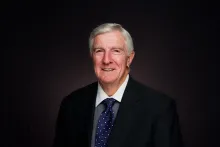
Before his retirement in 2021, Dr. Donald Ward pastored churches in Texas and Louisiana, and taught at Ambassador Bible College in Cincinnati, Ohio. He has also served as chairman of the Council of Elders of the United Church of God. He holds a BS degree; a BA in theology; a MS degree; a doctor’s degree in education from East Texas State University; and has completed 18 hours of graduate theology from SMU.
